Territorial evolution of the United States
Template:Short description Script error: No such module "redirect hatnote".


The United States of America was formed after thirteen British colonies in North America declared independence from the British Empire on July 4, 1776. In the Lee Resolution, passed by the Second Continental Congress two days prior, the colonies resolved that they were free and independent states. The union was formalized in the Articles of Confederation, which came into force on March 1, 1781, after being ratified by all 13 states. Their independence was recognized by Great Britain in the Treaty of Paris of 1783, which concluded the American Revolutionary War. This effectively doubled the size of the colonies, now able to stretch west past the Proclamation Line to the Mississippi River. This land was organized into territories and then states, though there remained some conflict with the sea-to-sea grants claimed by some of the original colonies. In time, these grants were ceded to the federal government.
The first great expansion of the country came with the Louisiana Purchase of 1803, which doubled the country's territory, although the southeastern border with Spanish Florida was the subject of much dispute until it and Spanish claims to the Oregon Country were ceded to the US in 1821. The Oregon Country gave the United States access to the Pacific Ocean, though it was shared for a time with the United Kingdom.[2] The annexation of the Republic of Texas in 1845 led directly to the Mexican–American War, after which the victorious United States obtained the northern half of Mexico's territory, including what was quickly made the state of California.[3]
As the development of the country moved west, however, the question of slavery became more important, with vigorous debate over whether the new territories would allow slavery and events such as the Missouri Compromise and Bleeding Kansas. This came to a head in 1860 and 1861, when the governments of the southern states proclaimed their secession from the country and formed the Confederate States of America. The American Civil War led to the defeat of the Confederacy in 1865 and the eventual readmission of the states to the United States Congress. The cultural endeavor and pursuit of manifest destiny provided a strong impetus for westward expansion in the 19th century.
The United States began expanding beyond North America in 1856 with the passage of the Guano Islands Act, causing many small and uninhabited, but economically important, islands in the Caribbean Sea and the Pacific Ocean to be claimed.[4] Most of these claims were eventually abandoned, largely because of competing claims from other countries. The Pacific expansion culminated in the annexation of Hawaii in 1898, after the overthrow of its government five years previously. Alaska, the last major acquisition in North America, was purchased from Russia in 1867. Support for the independence of Cuba from the Spanish Empire, and the sinking of the USS Maine, led to the Spanish–American War in 1898, in which the United States gained Puerto Rico, Guam, and the Philippines, and occupied Cuba for several years. American Samoa was acquired by the United States in 1900 after the end of the Second Samoan Civil War.[5] The United States purchased the U.S. Virgin Islands from Denmark in 1917.[6] Puerto Rico and Guam remain territories, and the Philippines became independent in 1946, after being a major theater of World War II.
Following the war, many islands were entrusted to the U.S. by the United Nations,[7] and while the Northern Mariana Islands became a U.S. territory, the Marshall Islands, Federated States of Micronesia, and Palau emerged from the trust territory as independent nations. The last major international change was the acquisition in 1904, and return to Panama in 1979, of the Panama Canal Zone, an unincorporated US territory which controlled the Panama Canal. The final cession of formal control over the region was made to Panama in 1999.
States have generally retained their initial borders once established. Only three states (Kentucky, Maine, and West Virginia) have been created directly from area belonging to another state (although at the time of admission, Vermont agreed to a monetary payment for New York to relinquish its claim); all of the other states were created from federal territories or from acquisitions. Four states (Louisiana, Missouri, Nevada, and Pennsylvania) have expanded substantially by acquiring additional federal territory after their initial admission to the Union. In 1912, Arizona was the last state established in the contiguous United States, commonly called the "lower 48". In 1959, Hawaii was the 50th and most recent state admitted.
Legend for maps
- Key to map colors
- <templatestyles src="Legend/styles.css" />United States states (domestic maps), undisputed area of United States (dispute maps)
- <templatestyles src="Legend/styles.css" />United States territories (domestic maps)
- <templatestyles src="Legend/styles.css" />disputed area of United States
- <templatestyles src="Legend/styles.css" />area changed by event
1776–1784 (American Revolution)
| Date | Event | Change Map |
|---|---|---|
| July 4, 1776 | Thirteen colonies of the Kingdom of Great Britain in North America collectively declared their independence as the United States of America,Template:Efn though several colonies had already individually declared independence:[8]
The capital was not specifically established; at the time, the Continental Congress met in Philadelphia.[25][26] Many states had vaguely defined and surveyed borders; these are not noted as contested in the maps unless there was an active dispute. The borders of North Carolina were particularly poorly surveyed, its border with South Carolina having been done in several pieces, none of which truly matched the spirit of the charter,[27][28] and its border with Virginia was only surveyed roughly halfway inland from the sea. Several northeastern states had overlapping claims: Connecticut, Massachusetts Bay, and New York all claimed land west of their accepted borders, overlapping with each other and with a sizable claim by Virginia. Of the three, only Connecticut seriously pursued its claims, while Virginia is considered to have had the most legitimate claim to the vast northwest, dividing it into counties and maintaining some limited control. The entirety of the new United States was claimed by Great Britain, including Machias Seal Island and North Rock, two small islands off the northeast coast which remain disputed up to the present.[29] |
Map of the change to the United States in central North America on July 4, 1776 Disputes: |
| September 20, 1776 | The Counties of New Castle, Kent, and Sussex, upon Delaware enacted a constitution, renaming itself the Delaware State.[30] | Map of the change to the United States in central North America on September 20, 1776 |
| September 28, 1776 | The State of Pennsylvania enacted a constitution, renaming itself the Commonwealth of Pennsylvania.[31] | no change to map |
| December 20, 1776 | To avoid British forces who were advancing on Philadelphia, the Continental Congress began meeting in Baltimore.[25][26] | Map of the change to the United States in central North America on December 20, 1776 |
| January 15, 1777 | The northeastern region of New York, known as the New Hampshire Grants, declared independence as New Connecticut.[32][33][34] | Disputes: |
| March 4, 1777 | The Continental Congress returned to Philadelphia after the threat to it by British forces ended.[25][26] | Map of the change to the United States in central North America on March 4, 1777 |
| June 4, 1777 | New Connecticut was renamed Vermont.[34][32] | Disputes: |
| September 27, 1777 | The Continental Congress fled Philadelphia after the American defeat at the Battle of Brandywine, and briefly met in Lancaster, Pennsylvania[25][26] | Map of the change to the United States in central North America on September 27, 1777 |
| September 30, 1777 | The Continental Congress continued to move away from Philadelphia, settling in York, Pennsylvania.[25][26] | Map of the change to the United States in central North America on September 30, 1777 |
| June 11, 1778 | Vermont claimed what was called the "East Union", consisting of some towns in New Hampshire that petitioned on March 12, 1778, to join with Vermont, out of concern that their state was focusing too much on its coastal region. Vermont never gained full control over the area.[32][35][36][37]Template:Efn | Disputes: Map of the change to the international disputes involving the United States in central North America on June 11, 1778 |
| October 21, 1778 | Under pressure from the Continental Congress, Vermont rescinded the annexation of the East Union; the legislature declared on February 12, 1779, that the East Union should be considered null from its beginning.[35][36][37] | Disputes: Map of the change to the international disputes involving the United States in central North America on October 21, 1778 |
| July 2, 1779 | The Continental Congress returned to Philadelphia following British withdrawal.[25][26] | Map of the change to the United States in central North America on July 2, 1779 |
| August 31, 1779 | Virginia surrendered its claim to southwest Pennsylvania.[20][38] | Map of the change to the United States in central North America on August 31, 1779 |
| March 23, 1780 | North Carolina and Virginia surveyed their border further inland. Virginia's survey reached the Tennessee River on this date,[39] while North Carolina's team stopped at the Cumberland Gap and filed their survey on November 17, 1779.[40] The two surveys were roughly two miles apart, creating a thin area claimed by both states. While the border was intended to follow 36°30′ north, early surveying errors caused it to veer north of that, reaching a distance of almost ten miles off by the time it reached the Tennessee River.[41][24] | Map of the change to the United States in central North America in March 1780 |
| October 25, 1780 | The State of Massachusetts Bay enacted a constitution, renaming itself the Commonwealth of Massachusetts. | Map of the change to the United States in central North America on October 25, 1780 |
| March 1, 1781 | The Articles of Confederation entered into force.[42] | no change to map |
| April 4, 1781 | Vermont again claimed an East Union, consisting of some towns in New Hampshire that wished to join with Vermont; more towns were interested than during the first attempt in 1778, though again, the exact extent of the borders is unknown. Vermont never gained full control over the area.[32][43][36][37]Template:Efn | Disputes: Map of the change to the international disputes involving the United States in central North America on April 4, 1781 |
| June 16, 1781 | Vermont claimed what was called the "West Union", consisting of some towns in New York, mainly to counterbalance Vermont's attempt at eastward expansion. Vermont never gained full control over the area.[32][36][44][45] The specific date this occurred is unclear; sources suggest June 16, June 26, and July 18.Template:Efn | Disputes: Map of the change to the international disputes involving the United States in central North America on June 16, 1781 |
| February 22, 1782 | Vermont abandoned its attempts to annex the East Union from New Hampshire and the West Union from New York.[32][37][45][46] | Disputes: Map of the change to the international disputes involving the United States in central North America on February 22, 1782 |
| October 29, 1782 | The federal government accepted the cession from New York of its western claims, which the state ceded on February 19, 1780, and executed on March 1, 1781; New York proclaimed its new western border to be a line drawn south from the western end of Lake Ontario. At its maximum interpretation, the state had claimed an area bounded by Lake Erie, Lake Huron and Lake Michigan; to the Illinois, Mississippi, and Tennessee Rivers; and north along the Appalachian Mountains, ending at the border with Pennsylvania.[47] It is unclear from where this claim came; many sources state that New York had surrendered it, but very few elaborate on how it was obtained. One source states that it was a cession by the Six Nations, who had conquered much of the region.[48] However, New York never seriously enforced these claims. The cession included the small tip of New York north of Pennsylvania, which came to be known as the Erie Triangle.[49][18] | Map of the change to the United States in central North America on October 29, 1782 |
| December 30, 1782 | The Congress of the Confederation declared that the land that Connecticut claimed in northern Pennsylvania, a westward extension of Connecticut's borders, was part of Pennsylvania, thus attempting to end the Pennamite–Yankee War.[50][20] While conflict would continue for some time, this was the end of the formal claim by Connecticut. | Map of the change to the United States in central North America on December 30, 1782 |
| June 30, 1783 | The Pennsylvania Mutiny of 1783, and the Pennsylvania government reaction to it, caused the Congress of the Confederation to leave Philadelphia for Princeton.[25] | Map of the change to the United States in central North America on June 30, 1783 |
| November 26, 1783 | The Congress of the Confederation reconvened in Annapolis.[25] | Map of the change to the United States in central North America on November 26, 1783 |
| March 1, 1784 | Virginia ceded its claims northwest of the Ohio River to the federal government.[51][24] Connecticut continued to claim its western lands that had overlapped with Virginia's cession. | Map of the change to the United States in central North America on March 1, 1784 |
| May 12, 1784 | Great Britain recognized the independence of the United States, ending its claim to the country.[52][53]Template:Efn The treaty ended the American Revolutionary War, though military action had largely ended after the Franco-American victory at Yorktown on October 19, 1781.
Because of ambiguities and poor knowledge of geography, the treaty was unclear in several areas:
The Peace of Paris also involved treaties with France and Spain, with Great Britain ceding the Floridas to Spain. During their ownership of West Florida, the British had moved its border north, and the cession to Spain appeared to apply to the full extent of the British colony. However, the British-American treaty granted the extension of West Florida to the United States, where it presumably enlarged Georgia south to 31° north, indicating that only the original definition of West Florida was to be ceded to Spain. The local Spanish governors also made a move to occupy forts along the Mississippi River, with claims to everything south of the Tennessee River; it is unknown how official or strong these claims were, and they are not mapped as they are in conflict with the other Spanish claim involving the border of West Florida.[54] |
Map of the change to the United States in central North America on May 12, 1784 Disputes: Map of the change to the international disputes involving the United States in central North America on May 12, 1784 |


1784–1803 (Organization of territory)
| Date | Event | Change Map |
|---|---|---|
| August 23, 1784 | A region in central North Carolina (modern-day eastern Tennessee), unhappy with the state's governance over the area, declared independence from the state as the State of Franklin.Template:Efn[55][56] The government of Franklin held some control over the area, and petitioned for statehood, receiving support from seven of the nine states required, but would only last a few years.[57][58] | Unofficial change: Map of the change to the United States in central North America on August 23, 1784 |
| November 1, 1784 | The Congress of the Confederation moved for a short time to Trenton.[25] | Map of the change to the United States in central North America on November 1, 1784 |
| January 11, 1785 | The Congress of the Confederation moved to New York, and would settle there for five years.[25] | Map of the change to the United States in central North America on January 11, 1785 |
| April 19, 1785 | The federal government accepted the cession from Massachusetts of its extreme western claim, which was never seriously enforced.Template:Efn[47][14] | Change on paper only: Map of the change to the United States in central North America on April 19, 1785 |
| September 13, 1786 | Connecticut surrendered its western claim to the federal government except for its Western Reserve, though it is unclear how much control they held over the ceded region.Template:Efn[9][59] | Change on paper only: Map of the change to the United States in central North America on September 13, 1786 |
| December 16, 1786 | Massachusetts surrendered its claim to western New York, though it is unclear if Massachusetts ever held control over the region, as the claim was to the "soil, not the sovereignty".Template:Efn[47][14] This land was later known as the Phelps and Gorham Purchase. | Change on paper only: Map of the change to the United States in central North America on December 16, 1786 |
| July 13, 1787 | The Territory Northwest of the River Ohio, ceded earlier by Virginia, was organized and commonly became known as the Northwest Territory.[60][61] | Map of the change to the United States in central North America on July 13, 1787 |
| August 9, 1787 | South Carolina ceded its western claim to the federal government,[62][23] though it was a result of inaccurate geography and South Carolina never actually held claim to this land. The claim was of a strip of land between the border of North Carolina and the source of the Tugaloo River but, unknown at the time, the river originated in North Carolina. The eastern part of this cession would be given to Georgia in 1802, despite Georgia technically already having claim to the land.[63] | Change on paper only: Map of the change to the United States in central North America on August 9, 1787 |
| December 7, 1787 | Delaware became the first state to ratify the United States Constitution.[64] | no change to map |
| December 12, 1787 | Pennsylvania became the second state to ratify the Constitution.[65] | |
| December 18, 1787 | New Jersey became the third state to ratify the Constitution.[66] | |
| January 2, 1788 | Georgia became the fourth state to ratify the Constitution.[67] | |
| January 9, 1788 | Connecticut became the fifth state to ratify the Constitution.[68] | |
| February 6, 1788 | Massachusetts became the sixth state to ratify the Constitution.[69] | |
| April 28, 1788 | Maryland became the seventh state to ratify the Constitution.[70] | |
| May 23, 1788 | South Carolina became the eighth state to ratify the Constitution.[71] | |
| June 21, 1788 | New Hampshire became the ninth state to ratify the Constitution;[72] at this point, the Constitution became the active governing document of those nine states having ratified the same (per Article VII). | |
| June 25, 1788 | Virginia became the tenth state to ratify the Constitution.[73] | |
| July 26, 1788 | New York became the eleventh state to ratify the Constitution.[74] | |
| February 1789 | John Sevier, governor of the State of Franklin, pledged allegiance to North Carolina at the February term of the Greene County Court, effectively ending the claimed independence of Franklin.[57][75] | Unofficial change: Map of the change to the United States in central North America in February 1789 |
| August 7, 1789 | The Northwest Territory was reorganized under the Constitution.[76] | no change to map |
| November 21, 1789 | North Carolina became the twelfth state to ratify the Constitution.[77] | |
| April 2, 1790 | North Carolina ceded its western half to the federal government.Template:Efn[78][58] | Map of the change to the United States in central North America on April 2, 1790 |
| May 26, 1790 | The land recently ceded by North Carolina was organized as the Territory South of the River Ohio, commonly known as the Southwest Territory.[58][79] | Map of the change to the United States in central North America on May 26, 1790 |
| May 29, 1790 | Rhode Island became the thirteenth state to ratify the Constitution.[80] | no change to map |
| December 6, 1790 | Per the Residence Act, the Congress of the United States relocated to Philadelphia for ten years until a federal district was built and ready.[25][26][81] | Map of the change to the United States in central North America on December 6, 1790 |
| March 4, 1791 | Vermont, which had been considered part of New York despite acting independently since 1777, was admitted as the fourteenth state.Template:Efn[32][82] | Map of the change to the United States in central North America on March 4, 1791 Disputes: Map of the change to the international disputes involving the United States in central North America on March 4, 1791 |
| March 30, 1791 | A federal district planned to house the federal government by 1800 was formed from land ceded by Maryland and Virginia,[83][84] consisting of a 100 square mile diamond, with its southern tip at Jones Point, straddling the Potomac River. It did not yet have a formal name, being simply referred to as the federal district; in September 1791, the commissioners in charge of planning the city would term it the "Territory of Columbia", and various laws refer to a District of Columbia. The area does not appear to have been formally named "District of Columbia" until the organic act of 1871.[85] | Map of the change to the United States in central North America on March 30, 1791 |
| March 3, 1792 | Pennsylvania purchased the Erie Triangle from the federal government.[20] | Map of the change to the United States in central North America on March 3, 1792 |
| June 1, 1792 | The western half of Virginia, which the state had agreed in 1789 to cede to the federal government,[86] was admitted as the fifteenth state, the Commonwealth of Kentucky.Template:Efn[87][88] | Map of the change to the United States in central North America on June 1, 1792 |
| June 12, 1792 | The Delaware State enacted a new constitution, renaming itself the State of Delaware.[89] | no change to map |
| August 3, 1795 | Representatives of the United States and the Western Confederacy sign the Treaty of Greenville, ending the Northwest Indian War and ceding most of the modern state of Ohio to United States control.[90] | |
| February 29, 1796 | Great Britain agreed to abandon several forts in the northwest that it still occupied, including Detroit. The Jay Treaty also provided for commissions to determine the border between the northwestern point of the Lake of the Woods and the source of the Mississippi River, and which river to consider the St. Croix River.[91] | |
| April 25, 1796 | The northern half of West Florida was ceded by Spain, resolving the dispute over the region.[92][93] | Disputes: Map of the change to the international disputes involving the United States in central North America on April 25, 1796 |
| June 1, 1796 | The Southwest Territory was admitted as the sixteenth state, Tennessee.[58][94] | Map of the change to the United States in central North America on June 1, 1796 |
| April 7, 1798 | In response to the Yazoo Land Fraud, an act authorized President John Adams to appoint commissioners to negotiate with Georgia about ceding its western land. The act created Mississippi Territory from the southwestern quarter of Georgia in the region recently ceded by West Florida, while maintaining that Georgia still held rights over the territory.[95][96] | Map of the change to the United States in central North America on April 7, 1798 |
| October 25, 1798 | Commissioners agreed on the source of the St. Croix River, setting the lower portion of the border between Massachusetts and Great Britain and, thus, where the eastern north–south line originated.[97] | Map of the change to the United States in central North America on October 25, 1798 Disputes: Map of the change to the international disputes involving the United States in central North America on October 25, 1798 |
| June 9, 1800 | Connecticut ceded its Western Reserve to the federal government;[98] it presumably was then considered part of the Northwest Territory. The act doing so was passed in Congress on April 28, 1800, and Connecticut approved it on this date.[99] | Map of the change to the United States in central North America on June 9, 1800 |
| July 4, 1800 | Indiana Territory was organized from the western half of Northwest Territory.Template:Efn[100][101] | Map of the change to the United States in central North America on July 4, 1800 |
| November 17, 1800 | The Congress of the United States moved to Washington, now built and ready to be the capital.[25] This was two weeks before the December 1 date established in the Residence Act; President John Adams urged Congress to move early in hopes of securing enough Southern votes to be re-elected, though this failed.[102] | Map of the change to the United States in central North America on November 17, 1800 |
| January 1, 1801 | The Kingdom of Great Britain united with the Kingdom of Ireland, renaming itself the United Kingdom.[103] | Disputes: Map of the change to international disputes involving the United States in central North America on January 1, 1801 |
| February 27, 1801 | The federal district was organized as the District of Columbia.[84][104] | no change to map |
| April 26, 1802 | Georgia ceded its western half, known as the Yazoo Lands, to the federal government.Template:Efn At the same time, the federal government ceded to Georgia the eastern portion of the land previously ceded by South Carolina, though in reality Georgia technically already held title to the land, as the description of the earlier cession was based on an erroneous understanding of geography.[12] | Map of the change to the United States in central North America on April 26, 1802 |
| March 1, 1803 | The southern half of the Northwest Territory, along with a thin sliver of Indiana Territory, was admitted as the seventeenth state, Ohio. The remainder of the Northwest Territory was transferred to Indiana Territory.[105][60] The western border was a line due north from the mouth of the Great Miami River; the federal definition of the northern border was a line drawn east from the southern tip of Lake Michigan, whereas the Ohio Constitution stated the line should run from the southern tip of Lake Michigan to the most northerly cape of Maumee Bay, essentially the western tip of Lake Erie. The confusion caused by these varying descriptions of the state's borders, combined with inaccurate knowledge of geography, as no one at the time knew just how far south Lake Michigan extended, would lead to the conflict over the Toledo Strip. | Map of the change to the United States in central North America on March 1, 1803 |
| November 3, 1803 | The border between Tennessee and Virginia was resurveyed and established, ending the dispute over that part of the border. The border between Kentucky and Tennessee, despite following the original survey, remained vaguely defined.[41][106] | Map of the change to the United States in central North America on November 3, 1803 |
| November 30, 1803 | The "Southwick Jog" was transferred from Connecticut to Massachusetts, to put to rest long-standing disagreements over the border between the two states.[14] The final report of the commissioners was delivered this day;[107] it is unclear when the change formally occurred. | Map of the change to the United States in central North America on November 30, 1803 |


1803–1818 (Purchase of Louisiana)
| Date | Event | Change Map |
|---|---|---|
| December 20, 1803 | The United States purchased Louisiana from France. This is the date of the formal turnover in New Orleans; the purchase was completed on April 30, 1803.[108] The transfer would be recognized in St. Louis in Upper Louisiana on March 10, 1804, known as Three Flags Day.
The acquisition expanded the United States to the whole of the Mississippi River basin,Template:Efn but the extent of what constituted Louisiana in the south was disputed with Spain: the United States claimed the purchase included the part of West Florida west of the Perdido River, whereas Spain claimed it ended at the western border of West Florida;Template:Efn[109] and the southwestern border with New Spain was disputed, as the United States claimed the Sabine River as the border, but Spain maintained it was the Calcasieu River and others.[108] |
Map of the change to the United States in central North America on December 20, 1803 Disputes: |
| March 27, 1804 | The land between Tennessee and Mississippi Territory previously ceded by Georgia was assigned to Mississippi Territory.[96][110] | Map of the change to the United States in central North America on March 27, 1804 |
| October 1, 1804 | Orleans Territory was organized from the Louisiana Purchase south of 33° north, with the remainder being designated the District of Louisiana and placed under the jurisdiction of Indiana Territory.[111][112] | Map of the change to the United States in central North America on October 1, 1804 |
| June 30, 1805 | Michigan Territory was organized from Indiana Territory, north of a line east from the southern tip of Lake Michigan, and east of a line north from the lake's northern tip.[113][114] The southeastern portion of the border technically conflicted with the definition of Ohio, which claimed the Toledo Strip north of that line; however, the exact position of Lake Michigan was not yet known. | Map of the change to the United States in central North America on June 30, 1805 |
| July 4, 1805 | The District of Louisiana was organized as Louisiana Territory.[112][115] | Map of the change to the United States in central North America on July 4, 1805 |
| March 1, 1809 | Illinois Territory was organized from the western half of Indiana Territory.Template:Efn[116][117] | Map of the change to the United States in central North America on March 1, 1809 |
| September 26, 1810 | The Republic of West Florida declared independence from Spain, claiming the area of West Florida west of the Perdido River. It maintained some control over its territory.[118] | Disputes: Map of the change to the international disputes involving the United States in central North America on September 26, 1810 |
| December 10, 1810 | Armed forces led by William C. C. Claiborne took possession of the portion of West Florida west of the Pearl River, following a proclamation on October 27, 1810, by President James Madison to do so. The United States had considered the region part of the Louisiana Purchase, including the area which had revolted against Spanish Florida and formed the Republic of West Florida. Madison's proclamation stated that it was to be "taken as part" of Orleans Territory.[109][108][119] The land west of Mobile Bay to the Pearl River was occupied and annexed de facto by the military in 1811.[120]Template:Rp(map) | Disputes: Map of the change to the international disputes involving the United States in central North America on December 10, 1810 |
| April 30, 1812 | Most of Orleans Territory was admitted as the eighteenth state, Louisiana.Template:Efn[112][121] The southeastern remainder presumably became unorganized territory, as it had no definition for a short time. | Map of the change to the United States in central North America on April 30, 1812 |
| May 14, 1812 | The claimed portion of West Florida east of the Pearl River was assigned to Mississippi Territory, though the area around Mobile Bay remained under the control of Spanish Florida.[96][122] The United States militarily occupied Mobile and the surrounding area up to the Perdido River in April 1813. | Map of the change to the United States in central North America on May 14, 1812 |
| June 4, 1812 | Since its name was now shared with the state of Louisiana, Louisiana Territory was renamed Missouri Territory.[123][124] | Map of the change to the United States in central North America on June 4, 1812 |
| August 4, 1812 | The remaining claimed portion of West Florida, west of the Pearl River, was added to Louisiana, following the assent of that state to an act passed by Congress on April 14, 1812.[125][126] | Map of the change to the United States in central North America on August 4, 1812 |
| August 16, 1812 | During the War of 1812, the garrison at Fort Detroit surrendered, leading the United Kingdom to occupy Detroit, the capital and population center of Michigan Territory.[127] | Disputes: Map of the change to the disputes involving the United States in central North America on August 16, 1812 |
| September 29, 1813 | The British withdrew from Fort Detroit following the Battle of Lake Erie, allowing American forces to regain control over Michigan Territory.[127][128] | Disputes: Map of the change to the disputes involving the United States in central North America on September 29, 1813 |
| August 24, 1814 | British forces capture and burn Washington, but are forced to withdraw the next day. The functions of the capital were only momentarily suspended, though President James Madison took refuge in Brookville, Maryland.[129] | no change to map |
| December 11, 1816 | The southern part of Indiana Territory, along with small parts of Illinois Territory and Michigan Territory, were admitted as the nineteenth state, Indiana.Template:Efn The remainder of Indiana Territory across Lake Michigan became unorganized territory.[101][130] | Map of the change to the United States in central North America on December 11, 1816 |
| March 3, 1817 | Alabama Territory was organized from the eastern half of Mississippi Territory.Template:Efn[131][132] | Map of the change to the United States in central North America on March 3, 1817 |
| December 10, 1817 | Mississippi Territory was admitted as the twentieth state, Mississippi.[96][133] | Map of the change to the United States in central North America on December 10, 1817 |
| February 6, 1818 | Alabama Territory created Tuskaloosa County with a description that inadvertently overlapped with Mississippi. It described the border of the county as running "a due west course to, the Tombeckbe river; thence up the same to the Cotton Gin Port".[134] Unknown at the time, the origin of the Tombigbee River and Cotton Gin Port were in Mississippi. | Change on paper only: Map of the change to the United States in central North America on February 6, 1818 |
| June 30, 1818 | Per the terms of the Treaty of Ghent ending the War of 1812, the United Kingdom returned Moose Island to Massachusetts, and the United States returned Campobello Island, Deer Island, and Grand Manan Island to the United Kingdom, all of which were captured from the other side during the war.[135] | no change to map |
| December 3, 1818 | The half of Illinois Territory south of 42°30′ north was admitted as the twenty-first state, Illinois. The remainder of the territory, along with the unorganized territory that was recently part of Indiana Territory, was assigned to Michigan Territory.[117][136] | Map of the change to the United States in central North America on December 3, 1818 |


1819–1845 (Northwest expansion)
| Date | Event | Change Map |
|---|---|---|
| January 30, 1819 | The Treaty of 1818 went into effect, setting 49° north as the border with the United Kingdom west of the Lake of the Woods, and also establishing the Oregon Country as a shared region with the United Kingdom.[2][137][138] Oregon Country had no defined northern limit, but it can be assumed that it did not encroach much upon Russian-held lands; this map uses the later-established line at 54°40′ north for simplicity. | Map of the change to the United States in central North America on January 30, 1819 Northwestern North America: Map of the change to the United States in northwest North America on January 30, 1819 |
| July 4, 1819 | Arkansaw Territory was organized from the southern slice of Missouri Territory.Template:Efn[139][140] | Map of the change to the United States in central North America on July 4, 1819 |
| December 14, 1819 | Alabama Territory was admitted as the twenty-second state, Alabama.[132][141] The statehood act provided for a survey of the southern part of the border with Mississippi, which was intended to be north–south, for adjustment if it was discovered to encroach upon Mississippi's established counties; it was later discovered to do so. | Map of the change to the United States in central North America on December 14, 1819 |
| March 15, 1820 | As part of the Missouri Compromise, the District of Maine, the northern and separate part of Massachusetts, was admitted as the twenty-third state, Maine.[142][143] | Map of the change to the United States in central North America on March 15, 1820 |
| April 21, 1820 | This is the earliest known date of the name "Arkansas Territory" being officially used instead of "Arkansaw Territory".[144] | Map of the change to the United States in central North America on April 21, 1820 |
| May 12, 1820 | The border between Kentucky and Tennessee was established. To make up for the fact that the border between the Cumberland Gap and the Tennessee River veered north as much as almost 10 miles from 36°30′ north, a new survey was conducted starting at that latitude on the Mississippi River and moving east to the Tennessee River, hence guaranteeing this last bit of border would fit the original ideal.[41] | Map of the change to the United States in central North America on May 12, 1820 |
| July 19, 1820 | The overlap of the longitudinal southern border between Alabama and Mississippi was resolved, as per the act admitting Alabama as a state, because the provisional border encroached on Mississippi.[132][145] As the result of a survey, the southern border terminus was moved about 3.8 miles to the east, which changed the border up to the then-northwest corner of Alabama's Washington County. The date when this happened is unclear; the sources available give either an unpublished report dated May 29, 1820, or the completion of the demarcation of the new line on July 19, 1820. | Change on paper only: Map of the change to the United States in central North Ameirca on July 19, 1820 |
| December 19, 1820 | Alabama redefined some county borders, ending its erroneous overlap of Mississippi created on February 6, 1818.[146] | Change on paper only: Map of the change to the United States in central North America on December 19, 1820 |
| February 22, 1821 | The Adams–Onís Treaty with Spain took effect.[109] The many changes included:
|
Map of the change to the United States in central North America on February 22, 1821 Disputes: Map of the change to the international disputes involving the United States in central North America on February 22, 1821 |
| July 10, 1821 | East Florida was formally transferred to the United States by Spain.[147] | Map of the change to the United States in central North America on July 10, 1821 |
| July 17, 1821 | West Florida was formally transferred to the United States by Spain.[147] | Map of the change to the United States in central North America on July 17, 1821 |
| August 10, 1821 | The southeastern corner of Missouri Territory was admitted as the twenty-fourth state, Missouri, the rest becoming unorganized territory.Template:Efn[124][148] | Map of the change to the United States in central North America on August 10, 1821 |
| March 30, 1822 | The former East Florida and West Florida were organized as Florida Territory.[149][150] | Map of the change to the United States in central North America on March 30, 1822 |
| May 26, 1824 | The half of Arkansas Territory west of a line south from a point 40 miles west of Missouri's western border was returned to unorganized territory.[140][151] | Map of the change to the United States in central North America on May 26, 1824 |
| January 12, 1825 | A treaty with the Russian Empire established 54°40′ north as the northern border of Oregon Country for American purposes; a separate treaty created the same border between Russia and the United Kingdom.[152] As this was likely the de facto border anyway, the region is already mapped with this line. | no change to map |
| May 6, 1828 | A treaty with the Cherokee moved the western border of Arkansas Territory, returning part of it to unorganized territory.Template:Efn[140][153] | Map of the change to the United States in central North America on May 6, 1828 |
| January 20, 1831 | King William I of the Netherlands, having been asked per the Treaty of Ghent to arbitrate the disputed border between Maine and the United Kingdom, rendered his decision: since reconciling the treaty with the maps given was too difficult, he drew a compromise line. The British government accepted it, but Maine protested, and on January 19, 1832, the American government rejected it.[154] | no change to map |
| July 9, 1832 | The region of New Hampshire north of the Connecticut Lakes, which was disputed with the United Kingdom, declared independence as the Republic of Indian Stream.[155] While tiny, it does appear to have maintained some control over its territory. | Disputes: Map of the change to the international disputes involving the United States in central North America on July 9, 1832 |
| June 28, 1834 | Michigan Territory gained a large parcel of land from unorganized territory, extending west to the Missouri River and White Earth River.[114][156] | Map of the change to the United States in central North America on June 28, 1834 |
| August 5, 1835 | The Republic of Indian Stream recognized the jurisdiction of New Hampshire, thus ending its claimed independence. The date given is of a communication sent to British authorities;[157] other sources note a resolution passed by the citizens of Indian Stream on April 2, 1836.[155] | Disputes: Map of the change to the international disputes involving the United States in central North America on August 5, 1835 |
| June 15, 1836 | Arkansas Territory was admitted as the twenty-fifth state, Arkansas.[140][158] | Map of the change to the United States in central North America on June 15, 1836 |
| July 3, 1836 | Wisconsin Territory was organized from the western bulk of Michigan Territory.Template:Efn[159][160] The two large peninsulas between the Great Lakes remained in Michigan Territory; the upper peninsula was included in exchange for the territory abandoning its claim to the Toledo Strip. The territory initially rejected this plan, but would accept it on December 14. | Map of the change to the United States in central North America on July 3, 1836 |
| December 14, 1836 | Michigan Territory agreed to abandon its claim to the Toledo Strip, ending its dispute with Ohio.[161] | Map of the change to the United States in central North America on December 14, 1836 |
| January 26, 1837 | Michigan Territory was admitted as the twenty-sixth state, Michigan.[114][162] | Map of the change to the United States in central North America on January 26, 1837 |
| March 28, 1837 | The Platte Purchase, obtained from several nations including the Potawatomi, Iowa, Missouria, Otoe, Sauk and Meskwaki,[163] transferred some land from unorganized territory to northwest Missouri, extending its northern border west to the Missouri River.[124][164] | Map of the change to the United States in central North America on March 28, 1837 |
| July 3, 1838 | Iowa Territory was organized from Wisconsin Territory west of the Mississippi River.[165][166] | Map of the change to the United States in central North America on July 3, 1838 |
| February 11, 1839 | Missouri claimed an area north of its border with Iowa Territory, initiating the long dispute known as the Honey War.[167] | Map of the change to the United States in central North America on February 11, 1839 |
| May 21, 1840 | Surveying conducted along the border with Texas concluded that the area claimed by Arkansas for Miller County belonged to Texas.[168] | Map of the change to the United States in central North America on May 21, 1840 |
| November 10, 1842 | The Webster–Ashburton Treaty defined the border with the United Kingdom east of the Rocky Mountains.[169][170] One source also mentions it very slightly altering the maritime boundary between Michigan and Wisconsin Territory.[171] The treaty resolved the disputes over the northern borders of Maine and New Hampshire,Template:Efn the northeastern border of Wisconsin Territory,Template:Efn and Sugar Island with Michigan.
The border between New York and Vermont on the one side, and the United Kingdom on the other, was clarified by the treaty. In 1816, construction began on an unnamed fort nicknamed "Fort Blunder" on a peninsula in Lake Champlain that, while south of the surveyed border, was discovered to be north of 45° north, which was the border set by the Treaty of Paris and thus in British territory. Consequently, construction on the fort was abandoned. The Webster–Ashburton Treaty specified that section of the border was to follow the surveyed line, rather than the exact parallel, thus moving the fort's area into the United States, and a new fort, Fort Montgomery, would be built on the spot in 1844.[172] As the earlier line was surveyed, even though it did not match the definition, it was deemed to be the legitimate border. |
Map of the change to the United States in central North America on November 10, 1842 Disputes: Map of the change to the international disputes involving the United States in central North America on November 10, 1842 |
| July 5, 1843 | Local settlers created a provisional government for Oregon Country. While not official, it did maintain some jurisdiction over the area.[173] | Unofficial change: Map of the change to the United States in central North America on July 5, 1843 |
| March 3, 1845 | Florida Territory was admitted as the twenty-seventh state, Florida.[150][174] | Map of the change to the United States in central North America on March 3, 1845 |


1845–1860 (Southwest expansion)
| Date | Event | Change Map |
|---|---|---|
| December 29, 1845 | The Republic of Texas was annexed and admitted as the twenty-eighth state, Texas, extending the United States southwest to the Rio Grande.[175][176] All of Texas was claimed by Mexico. While many sources state that Mexico recognized the independence of the eastern portion of Texas, the treaties were rejected by the Mexican government. Texas formally handed over sovereignty to the United States in a ceremony on February 19, 1846.[177] The annexation led to the beginning of the Mexican–American War a few months later.[177] | Map of the change to the United States in central North America on December 29, 1845 Disputes: Map of the change to the international disputes involving the United States in central North America on December 9, 1845 |
| June 15, 1846 | The Oregon Treaty established 49° north west of the Lake of the Woods as the continental border (so it did not include Vancouver Island) with land held by the United Kingdom. The sharing of Oregon Country ended, and the United States portion became unorganized territory.[178]
The treaty was vague on which strait should be the border between Vancouver Island and the continent, thus causing a dispute over ownership of the San Juan Islands.[179] It specified "through the middle of the said channel and of Fuca Straits, to the Pacific Ocean". |
Map of the change to the United States in central North America on June 15, 1846 Northwestern North America: Map of the change to the United States in northwest North America on June 15, 1846 Disputes: Map of the change to the international disputes involving the United States in central North America on June 15, 1846 |
| September 22, 1846 | Following the capture on August 18, 1846, of Santa Fe, the capital of the Mexican territory of Santa Fe de Nuevo México,[180] a code of laws known as the Kearny Code was created for the area.[181][182] The region overlapped with Texas' claim, though Texas had little to no control over the area outside of its eastern quarter. | Unofficial change: Map of the change to the United States in central North America on September 22, 1846 |
| December 28, 1846 | The portion of Iowa Territory south of 43°30′ north and east of the Big Sioux River was admitted as the twenty-ninth state, Iowa. The remainder became unorganized territory.[166][183] | Map of the change to the United States in central North America on December 28, 1846 |
| March 13, 1847 | The District of Columbia retroceded Alexandria County back to Virginia.[84] Congress passed the act on July 9, 1846,[184] residents of Alexandria County were proclaimed by the president to have agreed to it on September 7, 1846,[185] and Virginia took possession of the land on this date.[186] | Map of the change to the United States in central North America on March 13, 1847 |
| May 29, 1848 | The southern bulk of Wisconsin Territory was admitted as the thirtieth state, Wisconsin.Template:Efn The remainder became unorganized territory.[160][187] However, the citizens of the remainder decided to continue on with a civil government, and even elected a delegate to the United States House of Representatives who would be seated on January 15, 1849, essentially making this region a de facto continuation of Wisconsin Territory.[188] | Map of the change to the United States in central North America on May 29, 1848 |
| July 4, 1848 | The Treaty of Guadalupe Hidalgo ended the Mexican–American War and ceded a large parcel of land from Mexico, consisting of its territories of Alta California and Santa Fe de Nuevo México, and its claim to Texas.Template:Efn[189] A border dispute began over a disagreement about the southern border of Santa Fe de Nuevo México.[190] | Map of the change to the United States in central North America on July 4, 1848 Disputes: Map of the change to the international disputes involving the United States in central North America on July 4, 1848 |
| August 14, 1848 | Oregon Territory was organized from the unorganized territory that was formerly part of Oregon Country.[191][192] | Map of the change to the United States in central North America on August 14, 1848 |
| February 13, 1849 | The boundary dispute between Iowa and Missouri known as the Honey War was resolved by the Supreme Court of the United States. The resulting border was the Sullivan Line that existed before the dispute, roughly splitting the two claims.[193] | Map of the change to the United States in central North America on February 13, 1849 |
| March 3, 1849 | Minnesota Territory was organized from the region that had been operating as de facto Wisconsin Territory, and unorganized territory east of the Missouri and White Earth Rivers.[194][195] | Map of the change to the United States in central North America on March 3, 1849 |
| March 12, 1849 | A local government formed the State of Deseret and claimed a vast portion of the southwest, including most of the Mexican Cession. Though it petitioned to be admitted to the United States, the proposal was rejected and, in 1850, Utah Territory was formed instead.[196] The claimed area overlapped slightly with Texas' claimed area, as well as part of Oregon Territory. | Unofficial change: Map of the change to the United States in central North America on March 12, 1849 |
| November 24, 1849 | Texas, with consent from the United States Congress,9|245-197|[197] extended its border with Louisiana from the west bank of the Sabine River to the middle of the river.9|245-197|[197][198][199][200] | no change to map |
| September 9, 1850 | The western portion of the Mexican Cession was admitted as the thirty-first state, California.Template:Efn[3][201] The portion of the remainder north of 37° north and west of the summit of the Rocky Mountains was organized as Utah Territory.[202][203] Part of Utah Territory overlapped with the portion of Texas that would be purchased on December 13, 1850, but the law authorizing the purchase was passed on this day, so the borders of Utah Territory assumed that the purchase would go through. | Map of the change to the United States in central North America on September 9, 1850 |
| December 9, 1850 | The United Kingdom ceded less than one acre of underwater rock for a lighthouse in Lake Erie near Buffalo, New York; although it was on Middle Reef, it was named for the nearby Horseshoe Reef.[204] It was surrounded by British waters, thus creating a form of enclave.[205] | Map of the change to the United States in central North America on December 9, 1850 |
| December 13, 1850 | The federal government purchased the western claims of Texas.Template:Efn[176] New Mexico Territory was organized from the part of this land east of the Rio Grande, along with the remaining unorganized territory from the Mexican Cession.Template:Efn[206][207] New Mexico Territory included all of the area that had been governed under the Kearny Code. | Map of the change to the United States in central North America on December 13, 1850 |
| April 5, 1851 | The State of Deseret dissolved itself, its functions and territory largely having been superseded by Utah Territory.[208] | Unofficial change: Map of the change to the United States in central North America on April 5, 1851 |
| March 2, 1853 | Washington Territory was organized from the half of Oregon Territory north of 46° north and the Columbia River.[209][210] | Map of the change to the United States in central North America on March 2, 1853 |
| May 30, 1854 | Kansas Territory was organized from unorganized territory north of 37° north, and Nebraska Territory was organized north of 40° north.[211][212][213] Much of the remaining unorganized territory, east of 100° west, became known as Indian Territory, designated as a place to resettle Indian tribes.
A small strip between the Texas Panhandle and Kansas Territory was unclaimed because it fell south of Kansas Territory's border but north of 36°30′ north, which had been established in the Missouri Compromise as the northern limit of slavery, and thus Texas could not have it. This became known as the Public Land Strip, or sometimes "No Man's Land".[214] |
Map of the change to the United States in central North America on May 30, 1854 |
| June 30, 1854 | The United States purchased a large parcel from Mexico known as the Gadsden Purchase, as it offered a much better route for a southern transcontinental railroad.Template:Efn[215][216] This resolved the border dispute, since the disputed land was included in the purchase.[190] | Map of the change to the United States in central North America on June 30, 1854 Disputes: Map of the change to the international disputes involving the United States in central North America on June 30, 1854 |
| August 4, 1854 | The recently obtained Gadsden Purchase was assigned to New Mexico Territory.[207][217] | Map of the change to the United States in central North America on August 4, 1854 |
| January 11, 1855 | Boston Corner was transferred from Massachusetts to New York because it was inaccessible from the rest of the Massachusetts.[218][219][220] | Map of the change to the United States in central North America on January 11, 1855 |
| March 6, 1855 | The Supreme Court ruled in favor of Florida in a boundary dispute with Georgia, setting the state boundary line along McNeil's line.[221] | no change to map |
| October 28, 1856 | Baker Island and Jarvis Island were claimed under the Guano Islands Act.[4] | Pacific Ocean: Map of the change to the United States in the Pacific Ocean on October 28, 1856 |
| May 11, 1858 | The eastern half of Minnesota Territory was admitted as the thirty-second state, Minnesota.Template:Efn The remainder became unorganized territory.[195][222] | Map of the change to the United States in central North America on May 11, 1858 |
| August 31, 1858 | Navassa Island was claimed under the Guano Islands Act.[4] | Caribbean Sea: Map of the change to the United States in the Caribbean Sea on August 31, 1858 |
| December 3, 1858 | Howland Island was claimed under the Guano Islands Act.[4] | Pacific Ocean: Map of the change to the United States in the Pacific Ocean on December 3, 1859 |
| February 14, 1859 | The western half of Oregon Territory was admitted as the thirty-third state, Oregon.Template:Efn The remainder was transferred to Washington Territory.[192][223] | Map of the change to the United States in central North America on February 14, 1859 |
| July 6, 1859 | A team of surveyors created the "Middleton Offset", a small notch in the border between Kentucky and Tennessee. It is unknown exactly why this was done, though one theory is a local landowner wanted his property in Tennessee.[224][225] | Map of the change to the United States in central North America on July 6, 1859 |
| September 6, 1859 | Johnston Atoll was claimed under the Guano Islands Act,[4] though it had been claimed by Hawaii in 1858.[226] | Pacific Ocean: Map of the change to the United States in the Pacific Ocean on September 6, 1859 |
| November 7, 1859 | A local government was set up encompassing parts of the territories of Kansas, Nebraska, New Mexico, Utah, and Washington, with the name of Jefferson Territory.Template:Efn While never recognized by the federal government, it generally held control over the area until Colorado Territory was established, which adopted most of its laws.[227] | Unofficial change: Map of the change to the United States in central North America on November 7, 1859 |
| December 27, 1859 | Enderbury Island, McKean Island, Phoenix Island, and Starbuck Island were claimed under the Guano Islands Act.[4] | Pacific Ocean: Map of the change to the United States in the Pacific Ocean on December 27, 1859 |
| December 29, 1859 | Christmas Island and Malden Island were claimed under the Guano Islands Act.[4] | Pacific Ocean: Map of the change to the United States in the Pacific Ocean on December 29, 1859 |
| February 8, 1860 | Texas created Greer County, claiming part of Indian Territory based on a different understanding from the federal government of which fork of the Red River was the border between the two.[228]
Atafu, Birnie Island, Butaritari, Caroline Island, Fanning Island, Flint Island, Gardner Island, Canton Island, Kingman Reef, Manihiki, Marakei, Nukunono, Palmyra Atoll, Penrhyn, Pukapuka, Rakahanga, Swains Island, Sydney Island, Vostok Island, and Washington Island were all claimed under the Guano Islands Act.[4] Many additional islands were listed as bonded on this date, but based on the coordinates they were either phantoms or duplicates. In addition, Sarah Ann Island was claimed, which may have existed and would be sighted as late as 1917, but has since disappeared.[229] |
Map of the change to the United States in central North America on February 8, 1860 Pacific Ocean: Map of the change to the United States in the Pacific Ocean on February 8, 1860 |


1860–1865 (Civil War)


1866–1897 (Reconstruction and western statehood)


1898–1945 (Pacific and Caribbean expansion)
| Date | Event | Change Map |
|---|---|---|
| August 12, 1898 | The Republic of Hawaii was annexed.[317] The ceremony to transfer sovereignty occurred on this date; the act was signed on July 7, 1898.[318] Johnston Atoll was not included with Hawaii, nor was Sikaiana Atoll, which had been ceded to Hawaii in 1856 by its residents and approved by King Kamehameha IV. However, the annexation was based on the islands named in a report of the Hawaiian Commission, which omitted Sikaiana.[319][320] | Pacific Ocean: Map of the change to the United States in the Pacific Ocean on August 12, 1898 |
| January 17, 1899 | Wake Island was claimed.[321] | Pacific Ocean: Map of the change to the United States in the Pacific Ocean on January 17, 1899 |
| April 11, 1899 | Guam, Porto Rico, and, on agreed payment of $20 million, the Philippines were ceded by Spain following the Spanish–American War.[322] The Philippines were claimed by the First Philippine Republic. The ceded region for the Philippines included the island of Palmas, which was administered by the Netherlands. This overlap would not be noticed until January 21, 1906.[323] While the United States occupied Cuba for a time, it was not ceded nor claimed. | Pacific Ocean: Map of the change to the United States in the Pacific Ocean on April 11, 1899 Caribbean Sea: Map of the change to the United States in the Caribbean Sea on April 11, 1899 |
| February 16, 1900 | The United States took ownership of the Samoan Islands east of 171° west, per the terms of the Tripartite Convention.[324] | Pacific Ocean: Map of the change to the United States in the Pacific Ocean on February 16, 1900 |
| February 19, 1900 | The newly acquired Samoan islands were established as Naval Station, Tutuila. It included all of the islands granted by the Tripartite Convention, though formal cession of the islands by local authorities would take place later in 1900 and 1904.[324] | Pacific Ocean: Map of the change to the United States in the Pacific Ocean on February 19, 1900 |
| April 12, 1900 | Porto Rico was organized into a civil territory.[325] | no change to map |
| April 17, 1900 | The island of Tutuila was formally ceded to the United States and added to Naval Station, Tutuila.[324][326] As the United States had already claimed the island on February 19, 1900, no change is mapped. The treaty would be ratified by Congress on February 20, 1929. | |
| June 14, 1900 | The former Republic of Hawaii was organized into Hawaii Territory.[327][328] | Pacific Ocean: Map of the change to the United States in the Pacific Ocean on June 14, 1900 |
| March 3, 1901 | The transfer for a thin sliver of Bristol, Tennessee, to Bristol, Virginia, was approved by Congress after having been approved by both states.[329][330] The location of the border along Main Street (now State Street) between the two cities was either the northern sidewalk of the street, or down the middle of the street; Tennessee's cession of the northern half of the street laid the issue to rest. | too small to map |
| March 23, 1901 | The president of the First Philippine Republic, Emilio Aguinaldo, was captured, and the republic was dissolved.
On this same date several islands, Cagayan de Sulu and Sibutu among them, were purchased from Spain and assigned to the Philippines, which was then being governed as a U.S. insular area. The borders specified in the Treaty of Paris of 1898 had excluded these islands; the new treaty simply ceded "any and all islands belonging to the Philippine Archipelago".[331][332] |
Pacific Ocean: Map of the change to the United States in the Pacific Ocean on March 23, 1901 |
| July 1, 1902 | The Philippines were organized.[333] | no change to map |
| October 20, 1903 | The Alaska boundary dispute with Canada was resolved, generally in favor of the United States claim.[279] | Northwestern North America: Map of the change to the United States in northwest North America on October 20, 1903 |
| December 10, 1903 | Land along southern Guantánamo Bay was leased in perpetuity from Cuba for use as a naval base;[334] the treaty took effect February 23, 1903, and the formal handover occurred on this date.[335] | no change to map |
| May 4, 1904 | The United States took ownership of the Panama Canal Zone. At this stage, only the most basic borders were defined; it was a zone surrounding the canal on each side for five miles, but excluded the cities of Colón and Panama City, which remained exclaves of Panama, as well as the water for their harbors.[336] The Hay–Bunau-Varilla Treaty granting it to the United States was ratified on February 26, 1904.[337] A formal border agreement, which also gave the Canal Zone some land and a lighthouse in northwest Colón, would be ratified on June 15, 1904.[338][339] | Caribbean Sea: Map of the change to the United States in the Caribbean Sea on May 4, 1904 |
| July 16, 1904 | The Manuʻa islands were formally ceded to the United States and added to Naval Station, Tutuila.[324] As the United States had already claimed the islands on February 19, 1900, no change is mapped. The treaty would be ratified by Congress on February 20, 1929. | no change to map |
| December 12, 1904 | The "Taft Agreement" was made with Panama on December 3, with one of its sections refining the maritime boundary of the harbor of Panama City and the Panama Canal Zone.[340][341] It became effective December 12. | |
| February 10, 1905 | The border between Arkansas and Indian Territory was slightly adjusted near Fort Smith, Arkansas, transferring a small amount of land on the east side of the Poteau River to Arkansas.[342][343] | Map of the change to the United States in central North America on February 10, 1905 |
| September 26, 1907 | New Zealand became largely independent from the United Kingdom,[344] inheriting the claim on the atolls of Manihiki, Penrhyn, Pukapuka, and Rakahanga. | Pacific Ocean: Map of the change to the United States in the Pacific Ocean on September 26, 1907 |
| November 16, 1907 | Indian Territory and Oklahoma Territory were combined and admitted as the forty-sixth state, Oklahoma.[311][345] | Map of the change to the United States in central North America on November 16, 1907 |
| April 11, 1908 | A boundary treaty with the United Kingdom on behalf of Canada redefined the maritime borders between the United States and Canada.[346] Among other changes, this "de-enclaved" Horseshoe Reef Lighthouse in Lake Erie by making the water around it contiguous with the water on the American side of the border.[205][347] | no change to map |
| January 1, 1909 | The new Constitution of Michigan included some area of Wisconsin within its definition of Michigan.[348] | Map of the change to the United States in central North America on January 1, 1909 |
| August 20, 1910 | A boundary treaty with the United Kingdom on behalf of Canada addressed a slight uncertainty in the maritime border in Passamaquoddy Bay between Maine and Canada.[349][350][351] The border was adjusted to run east of Pope's Folly Island, which previously lay on the border line, and had been the subject of some debate for many years.[352][353] | Map of the change to the United States in central North America on August 20, 1910 |
| July 17, 1911 | Naval Station, Tutuila, was renamed American Samoa;[354] the station continued to operate separate from territorial governance until 1951. | Pacific Ocean: Map of the change to the United States in the Pacific Ocean on July 17, 1911 |
| January 6, 1912 | New Mexico Territory was admitted as the forty-seventh state, New Mexico.[207][355] | Map of the change to the United States in central North America on January 6, 1912 |
| February 14, 1912 | Arizona Territory was admitted as the forty-eighth state, Arizona.[257][356] | Map of the change to the United States in central North America on February 14, 1912 |
| August 24, 1912 | The District of Alaska was reorganized as the Alaska Territory.[357] | Northwestern North America: Map of the change to the United States in northwest North America on August 24, 1912 |
| January 31, 1913 | New Mexico filed suit in the Supreme Court against Texas over the "Country Club Dispute", questioning whether the present course or the 1850 course of the Rio Grande should be their border.[358] | Map of the change to the United States in central North America on January 31, 1913 |
| August 5, 1914 | The Corn Islands were leased from Nicaragua for a period of 99 years; however, this was not a full transfer of sovereignty, and the islands were never administered as an insular area.[359] | no change to map |
| May 1, 1915 | The borders of the Panama Canal Zone were explicitly defined. Whereas the original definition was a simple corridor surrounding the canal, this treaty specified the actual border. Among the changes this caused were: a slice of Canal Zone was ceded to Panama so Panama City would be connected with the rest of the country; the middle island of the Las Tres Hermanas Islands, which marked the border of Panama City's harbor, was wholly made part of Canal Zone; Gatun Lake and other surrounding waters were formally annexed to the territory; and an area of northwest Colón was ceded to Canal Zone.[360][361][362] | Caribbean Sea: Map of the change to the United States in the Caribbean Sea on May 1, 1915 |
| May 27, 1915 | Under Article II of the 1903 Treaty, the United States expropriated from Panama several areas around the mouth of the Rio Chagres, annexing them to the Panama Canal Zone.[363] | too small to map |
| December 8, 1915 | The United States expropriated from Panama a triangle of land, which included the historic Fort San Lorenzo, between the Rio Chagres, Caribbean Sea and the Panama Canal Zone, to which it was annexed.[363] | |
| January 17, 1916 | Navassa Island was formally claimed for lighthouse purposes.[364] | no change to map |
| August 29, 1916 | The Philippines were reorganized to provide more autonomous government.[365] | |
| March 31, 1917 | The Danish Virgin Islands were purchased from Denmark[366] and renamed the United States Virgin Islands.[367] | Caribbean Sea: Map of the change to the United States in the Caribbean Sea on March 31, 1917 |
| July 12, 1918 | The United States expropriated from Panama Script error: No such module "convert". of land at Punta Paitilla in Panama City and annexed it to the Panama Canal Zone.[368] That area was enlarged to about Script error: No such module "convert". within several months.[363][369][370][371] | too small to map |
| August 21, 1918 | The United States expropriated from Panama land between the Rio Chagres and the Quebrada Majagual and annexed it to the Panama Canal Zone.[363][371] | Caribbean Sea: Map of the change to the United States in the Caribbean Sea on August 21, 1918 |
| September 13, 1918 | Minnesota and Wisconsin exchanged islands in the Mississippi River: Island Seventytwo was transferred to Winona, Minnesota, and Barron's Island was transferred to La Crosse, Wisconsin.[160][372] | Map of the change to the United States in central North America on September 13, 1918 |
| September 18, 1919 | The island of Largo Remo was annexed to the Panama Canal Zone under the United States right of expropriation in the 1903 Canal Treaty.[373] | Caribbean Sea: Map of the change to the United States in the Caribbean Sea on September 18, 1919 |
| June 16, 1920 | Script error: No such module "convert". on the island of Taboga Island were annexed to the Panama Canal Zone.[374] | too small to map |
| June 30, 1921 | The "Wedge" dispute between Delaware and Pennsylvania was resolved in Delaware's favor. The disputed land had generally been administered by Delaware, even electing a member of the Delaware legislature in the mid-19th century,[375] but federal maps had included the land as part of Pennsylvania at least as late as 1900.[376] The states had agreed on a resolution, and it was affirmed by an act of Congress on this date.[377][378] Some sources, both contemporary and modern, note that, in the original process of resurveying the border in 1892, a very thin, horn-shaped region along the arc was transferred from Delaware to Pennsylvania;[375][378][379] however, no federal maps found reflect this, and it is unclear if this transfer actually occurred. | Map of the change to the United States in central North America on June 30, 1921 |
| May 10, 1922 | Kingman Reef was formally annexed.[380] | no change to map |
| October 8, 1923 | Michigan expanded its claim to Wisconsin territory, though Wisconsin never lost control over the area.[348] | Map of the change to the United States in central North America on October 8, 1923 |
| November 15, 1923 | The Swan Islands were claimed by Honduras.[381] | Caribbean Sea: Map of the change to the United States in the Caribbean Sea on November 15, 1923 |
| February 1, 1924 | The future area for Madden Lake was annexed to the Panama Canal Zone under the United States right of expropriation in the 1903 Canal Treaty.[339][382][383] | Caribbean Sea: Map of the change to the United States in the Caribbean Sea on February 1, 1924 |
| March 4, 1925 | Swains Island was added to American Samoa.[384] | Pacific Ocean: Map of the change to the United States in the Pacific Ocean on March 4, 1925 |
| July 17, 1925 | The border with Canada was adjusted in several places.[385][386] The only change to a land border redefined how the border between the Lake of the Woods and the Rocky Mountains should be considered; previously, the border followed the curve of the parallel between each border monument, while the treaty changed this to straight lines between each monument. Through this, the United States netted a gain of between 30 and 35 acres of land. Because of the extremely small shift, the lack of specific documentation of where the changes occurred, and the lack of any human impact, this change is not mapped. There was also a change to the border in the Lake of the Woods; a surveying anomaly caused the previous border to intersect itself several times in the lake, creating enclaves of United States water surrounded by Canadian water. The treaty changed the border to use the southernmost intersection as the northwestern point of the Lake of the Woods. Finally, the maritime border in the Bay of Fundy was adjusted, netting Canada roughly 9 acres of water. | too small to map |
| March 1, 1926 | The Supreme Court of the United States resolved the conflict between Michigan and Wisconsin in the favor of Wisconsin.[348] | Map of the change to the United States in central North America on March 1, 1926 |
| July 29, 1926 | Johnston Atoll was established as a federal bird refuge and placed under the jurisdiction of the United States Department of Agriculture.[387] The atoll had originally been claimed by both the United States and Hawaii in 1858, but little activity apart from guano mining had taken place, and it had been largely abandoned for decades.[226] | no change to map |
| November 22, 1926 | The Supreme Court of the United States defined the border between Michigan and Wisconsin, transferring all islands south of the Quinnesec Falls on the Menominee River to Wisconsin, and all islands north of the falls to Michigan; it is unknown specifically which islands were transferred in this fashion. However, an error in the border description introduced a small overlap between the two states over several islands in Lake Michigan north of the Door Peninsula.[388] | Map of the change to the United States in central North America on November 22, 1926 |
| July 18, 1927 | The United States expropriated from Panama another Script error: No such module "convert". of land on the islands of Taboga and Taboguilla and annexed them to the Panama Canal Zone.[363] | too small to map |
| October 26, 1927 | Two bancos along the Colorado River were ceded from Mexico to Arizona.[389][390] | |
| December 5, 1927 | The "Country Club Dispute" between New Mexico and Texas was resolved in Texas's favor.[391] | Map of the change to the United States in Central North America on December 5, 1927 |
| April 4, 1928 | The Island of Palmas Case was decided in the favor of the Netherlands, ceding Palmas to the Dutch East Indies.[323] | Pacific Ocean: Map of the change to the United States in the Pacific Ocean on April 4, 1928 |
| September 24, 1928 | The United States expropriated from Panama Script error: No such module "convert". of land at El Cerro de Doscientos Pies ("200-Foot Hill") near Las Minas Bay and annexed it to the Panama Canal Zone.[363][371] | too small to map |
| July 22, 1930 | The United States expropriated from Panama Script error: No such module "convert". on Jicarita Island and Script error: No such module "convert". at Punta Morro de Puercos and annexed them to the Panama Canal Zone.[363] | |
| April 15, 1931 | The United States expropriated from Panama additional areas around the soon-to-be-built Madden Dam and annexed them to the Panama Canal Zone.[363][371] | Caribbean Sea: Map of the change to the United States in the Caribbean Sea on April 15, 1931 |
| May 3, 1932 | The United States adjusted the border at Punta Paitilla in the Canal Zone, returning a small amount of land to Panama. This was the site for a planned new American embassy, which had to be built on foreign soil.[392] | too small to map |
| May 17, 1932 | Porto Rico was renamed Puerto Rico.[393] | Caribbean Sea: Map of the change to the United States in the Caribbean Sea on May 17, 1932 |
| December 13, 1932 | The Mangsee Islands and seven of the Turtle Islands were ceded by the United Kingdom from North Borneo to the Philippines. The islands were supposed to be included in the 1900 transfer of islands from Spain to the United States. Per the terms of the treaty, the United Kingdom continued to administer the islands until requested, and, after the Philippines' independence, the Philippine government made such a request and took control.[394] | Pacific Ocean: Map of the change to the United States in the Pacific Ocean on December 13, 1932 |
| May 29, 1933 | The Supreme Court of the United States ruled that the border between New Hampshire and Vermont was the low water mark of the west bank of the Connecticut River; Vermont had sought to have the border placed in the middle of the river.[46] | no change to map |
| November 13, 1933 | A treaty created the Rio Grande Rectification Project, which, from 1935 to 1938, straightened and stabilized the path of the Rio Grande through the El Paso–Juárez Valley. By the end of the project, 174 parcels had been transferred between Mexico and Texas, each side receiving an equal area of land.[395][396] | too small to map |
| December 29, 1934 | Kingman Reef was placed under the jurisdiction of the United States Department of the Navy.[380] | no change to map |
| November 15, 1935 | The Insular Government of the Philippine Islands was dissolved and replaced with the Commonwealth of the Philippines.[397][398] | Pacific Ocean: Map of the change to the United States in the Pacific Ocean on November 15, 1935 |
| March 16, 1936 | The de jure overlap between Michigan and Wisconsin was resolved by the Supreme Court of the United States.[399] | Map of the change to the United States in central North America on March 16, 1936 |
| May 13, 1936 | Baker Island, Howland Island, and Jarvis Island were formally annexed and placed under the jurisdiction of the United States Department of the Interior,[400] ending the United Kingdom's claim to Jarvis Island.[268] | Pacific Ocean: Map of the change to the United States in the Pacific Ocean on May 13, 1936 |
| June 22, 1936 | The United States Virgin Islands were organized into a civil territory.[401] | no change to map |
| August 6, 1936 | Canton Island, Enderbury Island, and McKean Island were claimed by the United Kingdom.[268] | Pacific Ocean: Map of the change to the United States in the Pacific Ocean on August 6, 1936 |
| April 6, 1939 | The condominium of the Canton and Enderbury Islands was established with the United Kingdom.[402] | Pacific Ocean: Map of the change to the United States in the Pacific Ocean on April 6, 1939 |
| July 27, 1939 | Panama gained a sovereign corridor that was carved out of the Panama Canal Zone connecting Colón with the rest of Panama, along with a three-dimensional "tube" of sovereignty for a future crossing over an American highway. A corridor consisting of the road from the Canal Zone boundary to Madden Dam was annexed to the Canal Zone.[403] | Caribbean Sea: Map of the change to the United States in the Caribbean Sea on July 27, 1939 |
| August 16, 1939 | This is the earliest date so far discovered for when the United States began claiming Fakaofo, Funafuti, Hull Island, Niulakita, Nukufetau, and Nukulaelae.[404] | Pacific Ocean: Map of the change to the United States in the Pacific Ocean on August 16, 1939 |
| December 10, 1941 | Governor George McMillin surrendered Guam to the Japanese military.[405] | Pacific Ocean: Map of the change to the United States in the Pacific Ocean on December 10, 1941 |
| December 23, 1941 | The garrison on Wake Island surrendered to the Japanese military.[406] | Pacific Ocean: Map of the change to the United States in the Pacific Ocean on December 23, 1941 |
| March 26, 1942 | The government of the Philippines evacuated from the territory in the face of Japanese advance. A government-in-exile would be established in Washington, D.C., on May 17, 1942. The United States Army Forces in the Far East would surrender on April 9, 1942, following the Battle of Bataan, and the final military holdouts would surrender on May 6, 1942, following the Battle of Corregidor.[407] | Pacific Ocean: Map of the change to the United States in the Pacific Ocean on March 26, 1942 |
| October 14, 1943 | The Second Philippine Republic was established as a puppet state of Japan.[407] | Pacific Ocean: Map of the change to the United States in the Pacific Ocean on October 14, 1943 |
| August 10, 1944 | Guam was captured from Japan.[405] | Pacific Ocean: Map of the change to the United States in the Pacific Ocean on August 10, 1944 |
| August 17, 1945 | The Second Philippine Republic, in exile in Tokyo since April 3, 1945, was dissolved. The process of re-establishing the Commonwealth government on Philippine soil had started on October 23, 1944.[407] | Pacific Ocean: Map of the change to the United States in the Pacific Ocean on August 17, 1945 |
| September 4, 1945 | The Japanese garrison on Wake Island surrendered to the United States.[406] | Pacific Ocean: Map of the change to the United States in the Pacific Ocean on September 4, 1945 |


1946–present (Decolonization)
| Date | Event | Change map |
|---|---|---|
| July 4, 1946 | The Commonwealth of the Philippines became independent as the Republic of the Philippines.[408] | Pacific Ocean: Map of the change to the United States in the Pacific Ocean on July 4, 1946 |
| July 18, 1947 | The United Nations entrusted the Trust Territory of the Pacific Islands to the United States.[7] | Pacific Ocean: Map of the change to the United States in the Pacific Ocean on July 18, 1947 |
| January 1, 1949 | The Tokelau Islands were incorporated into New Zealand, which inherited the claims on Atafu, Fakaofo, and Nukunono.[409] | Pacific Ocean: Map of the change to the United States in the Pacific Ocean on January 1, 1949 |
| August 1, 1950 | Guam was organized into a civil territory.[410][411] | no change to map |
| August 3, 1950 | Kansas and Missouri exchanged small portions of land along the Missouri River, to accord with shifts in the river following a flood in 1944.[412] | Map of the change to the United States in central North America on August 3, 1950 |
| May 6, 1954 | Alabama and Florida defined their border around the mouth of the Perdido River.[413][414] | not mapped |
| April 11, 1955 | Panama's corridor connecting Colón with the rest of Panama was realigned within the Panama Canal Zone. Several three-dimensional "tubes" of sovereignty were also created, allowing Panamanian bridges to pass over rivers and a highway at several locations within the Canal Zone.[415][416] | too small to map |
| August 23, 1955 | Several border locations of the Panama Canal Zone were redefined. Punta Paitilla, the land held on Taboga Island, and the remaining American holdings in Colón and Panama City were ceded to Panama.[339][417] | Caribbean Sea: Map of the change to the United States in the Caribbean Sea on August 23, 1955 |
| January 3, 1959 | The Alaska Territory was admitted as the forty-ninth state, Alaska.[277] | Northwestern North America: Map of the change to the United States in northwest North America on January 3, 1959 |
| August 21, 1959 | Most of Hawaii Territory was admitted as the fiftieth state, Hawaii. Palmyra Atoll was excluded from statehood and remained a territory.[255][328] | Pacific Ocean: Map of the change to the United States in the Pacific Ocean on August 21, 1959 |
| August 25, 1961 | About 20 acres of land was transferred from Minnesota to North Dakota near Fargo, North Dakota.[195][418] | too small to map |
| January 14, 1964 | The Chamizal, a tract of land between El Paso, Texas, and Ciudad Juárez, Chihuahua, was divided between the United States and Mexico.[419] | Map of the change to the United States in central North America on January 14, 1964 |
| August 4, 1965 | The Cook Islands became self-governing from New Zealand. It claimed the atolls of Manihiki, Penrhyn, Pukapuka, and Rakahanga.[420] | Pacific Ocean: Map of the change to the United States in the Pacific Ocean on August 4, 1965 |
| December 30, 1966 | Land on Diego Garcia in the Indian Ocean was leased from the United Kingdom for use as a military base.[421] | no change to map |
| April 25, 1971 | The lease of the Corn Islands from Nicaragua was terminated.[359] | |
| September 1, 1972 | The United States recognized the sovereignty of Honduras over the Swan Islands.[359][422] | Caribbean Sea: Map of the change to the United States in the Caribbean Sea on September 1, 1972 |
| March 1, 1977 | The United States claimed maritime borders west of the Strait of Juan de Fuca, within the Dixon Entrance, and in the Beaufort Sea that conflicted with claims of Canada.[423] | no change to map |
| May 26, 1977 | Several parcels were exchanged between Texas and Mexico along the Rio Grande in areas near Presidio and Hidalgo, Texas,[424] including the Horcón Tract, on which the town of Río Rico was located,[425] and Beaver Island near Roma, Texas. In addition, Mexico ceded Script error: No such module "convert". to the U.S., while the U.S. ceded Script error: No such module "convert". to Mexico, primarily to straighten sections of the Rio Grande for flood control.[426] | Map of the change to the United States in central North America on May 26, 1977 |
| December 16, 1977 | A treaty defining the maritime border with Cuba was signed; though it has never been ratified by the United States Senate, it is provisionally enforced by agreement renewed every two years.[351] | no change to map |
| October 1, 1978 | Tuvalu became independent from the United Kingdom. It claimed the atolls of Funafuti, Nukufetau, Nukulaelae, and Niulakita.[427] | Pacific Ocean: Map of the change to the United States in the Pacific Ocean on October 1, 1978 |
| July 12, 1979 | The Republic of Kiribati became independent from the United Kingdom. It claimed Birnie Island, Canton Island, Caroline Island, Christmas Island, Enderbury Island, Flint Island, Gardner Island, Hull Island, Malden Island, McKean Island, Phoenix Island, Starbuck Island, Sydney Island, and Vostok Island. This dissolved the condominium of the Canton and Enderbury Islands.[428] | Pacific Ocean: Map of the change to the United States in the Pacific Ocean on July 12, 1979 |
| October 1, 1979 | The Panama Canal Zone was ceded to Panama. The United States and Panama continued to share operational control of the canal until December 31, 1999, when it would be fully turned over to Panama.[429] The United States retained control over several hundred specified areas to be turned over in piecemeal fashion over the years. | Caribbean Sea: Map of the change to the United States in the Caribbean Sea on October 1, 1979 |
| November 24, 1980 | The maritime border between the United States and Venezuela was defined.[351][430] | no change to map |
| September 17, 1981 | The United States recognized the sovereignty of Colombia over Roncador Bank and Serrana Bank, and the claim on Quita Sueño Bank was abandoned by the United States, as it was no longer above the seas at high tide, and thus the government considered it unclaimable.[359][431] | Caribbean Sea: Map of the change to the United States in the Caribbean Sea on September 17, 1981 |
| September 3, 1983 | The United States recognized the sovereignty of the New Zealand territory of Tokelau over Atafu, Fakaofo, and Nukunono, and defined the maritime border with Tokelau.[351][359][432] | Pacific Ocean: Map of the change to the United States in the Pacific Ocean on September 3, 1983 |
| September 8, 1983 | The United States recognized the sovereignty of the Cook Islands over Manihiki, Penrhyn, Pukapuka, and Rakahanga, and the maritime border with the Cook Islands was defined.[351][359][433] | Pacific Ocean: Map of the change to the United States in the Pacific Ocean on September 8, 1983 |
| September 23, 1983 | The United States recognized the sovereignty of Kiribati over Birnie Island, Canton Island, Caroline Island, Christmas Island, Enderbury Island, Flint Island, Gardner Island, Hull Island, Malden Island, McKean Island, Phoenix Island, Starbuck Island, Sydney Island, and Vostok Island.[359][434]
The United States recognized the sovereignty of Tuvalu over Funafuti, Nukufetau, Nukulaelae, and Niulakita.[359][435] |
Pacific Ocean: Map of the change to the United States in the Pacific Ocean on September 23, 1983 |
| October 12, 1984 | The International Court of Justice made its judgment on where the maritime border should be in the Gulf of Maine between the United States and Canada.[436][351] No land changed hands. The scope of the case did not include the sovereignty of Machias Seal Island, but the judgment enabled defining the extent of the disputed water area around that island (an area of 210 square nautical miles).[423] | no change to map |
| October 21, 1986 | The Marshall Islands District of the Trust Territory of the Pacific Islands became independent as the Republic of the Marshall Islands.[437] The Marshall Islanders had claimed Wake Island as part of their territory since at least 1973, and continued that after independence.[438] | Pacific Ocean: Map of the change to the United States in the Pacific Ocean on October 21, 1986 |
| November 3, 1986 | Most of the Trust Territory of the Pacific Islands was dissolved by the United Nations. The districts of Chuuk, Pohnpei, and Yap became independent as the Federated States of Micronesia. The Mariana Islands District, having already been taking moves towards integration with the United States, became a territory of the United States, the Commonwealth of the Northern Mariana Islands.[437] | Pacific Ocean: Map of the change to the United States in the Pacific Ocean on November 3, 1986 |
| June 1, 1990 | The maritime border between the United States and the Soviet Union was provisionally defined.[439][351] The two countries agreed on this date to abide by the terms of the treaty pending its ratification and entry into force,[440] but while it was ratified by the United States Senate on September 16, 1991,[441] it was never ratified by the Soviet Union or its successor state, Russia. | no change to map |
| October 1, 1994 | The remaining district of the Trust Territory of the Pacific Islands, the Palau District, became independent as the Republic of Palau, dissolving the TTPI.[442] | Pacific Ocean: Map of the change to the United States in the Pacific Ocean on October 1, 1994 |
| June 1, 1995 | The maritime border between the United States and territories of the United Kingdom in the Caribbean Sea was defined.[351][443][444] | no change to map |
| January 16, 1997 | Navassa Island was transferred to the United States Department of the Interior.[445][446] | |
| November 13, 1997 | The maritime border between the United States and Mexico was defined.[351][447] | |
| May 26, 1998 | The Supreme Court ruled that extra land added to Ellis Island since the original island was officially granted to New York in an interstate compact with New Jersey in 1834 belonged to New Jersey, because the island was within the territorial waters of New Jersey. The original natural boundary of Ellis Island remained an enclave of New York.[448] | Map of the change to the United States in central North America on May 26, 1998 |
| December 31, 1999 | All former Panama Canal Zone parcels not turned over since 1979, as well as all joint canal operations areas, were transferred to Panama. | too small to map |
| January 17, 2001 | The maritime border between the United States and Mexico on the continental shelf in the western Gulf of Mexico beyond 200 nautical miles was defined.[351][449] | no change to map |
| November 24, 2009 | Six islands along the Rio Grande were ceded from Texas to Mexico, and three islands and two bancos were ceded from Mexico to Texas. The transfer, which had been pending for 20 years, was the first application of Article III of the 1970 Boundary Treaty.[351][390][450] | too small to map |
| September 23, 2014 | The maritime border between the United States and Niue was defined.[351][451] The treaty was signed on May 13, 1997, but it was not ratified by the United States until at least 2002, and the United Nations shows it as entering into force on this date.[452] | no change to map |
| January 1, 2017 | The border between North Carolina and South Carolina was clarified following years of surveys and negotiation, moving 19 homes across state lines.[453][454] | too small to map |
| November 30, 2020 | The State of Rhode Island and Providence Plantations adopted a constitutional amendment, renaming itself the State of Rhode Island.[455][456] | Map of the change to the United States in central North America on November 30, 2020 |


Bancos along the Rio Grande

The Banco Convention of 1905 between the United States and Mexico allowed, in the event of sudden changes in the course of the Rio Grande (as by flooding), for the border to be altered to follow the new course.[457] The sudden changes often created bancos (land surrounded by bends in the river that became segregated from either country by a cutoff, often due to rapid accretion or avulsion of the alluvial channel), especially in the Lower Rio Grande Valley. When these bancos are created, the International Boundary and Water Commission investigates if land previously belonging to the United States or Mexico is to be considered on the other side of the border.[458] In all cases of these adjustments along the Rio Grande under the 1905 convention, which occurred on 37 different dates from 1910 to 1976, the transferred land was minuscule (ranging from one to 646 acres) and uninhabited.[459][460][461]
See also
- Geography of the United States
- Territories of the United States
- Historic regions of the United States
- American frontier
- List of U.S. state partition proposals
- List of U.S. states by date of admission to the Union
- Movements for the annexation of Canada to the United States
- Manifest Destiny
- National Atlas of the United States
- Ostend Manifesto (annexation of Cuba)
- List of territorial claims and designations in Colorado
- Territorial evolution of Arizona
- Territorial evolution of California
- Territorial evolution of Idaho
- Territorial evolution of Montana
- Territorial evolution of Nevada
- Territorial evolution of New Mexico
- Territorial evolution of North Dakota
- Territorial evolution of Oregon
- Territorial evolution of South Dakota
- Territorial evolution of Utah
- Territorial evolution of Washington
- Territorial evolution of Wyoming
- Territories of the United States on stamps
- List of U.S.–Native American treaties, which indicates tribal land cessions
Notes
References
<templatestyles src="Reflist/styles.css" />
- ↑ Script error: No such module "citation/CS1".
- ↑ a b Van Zandt, pp. 14–15
- ↑ a b Van Zandt, pp. 151–153
- ↑ a b c d e f g h i j k l m n o p Script error: No such module "citation/CS1".
- ↑ Ryden, George Herbert. The Foreign Policy of the United States in Relation to Samoa. New York: Octagon Books, 1975.
- ↑ Script error: No such module "citation/CS1".
- ↑ a b Template:Cite executive order
- ↑ Script error: No such module "citation/CS1".
- ↑ a b Van Zandt, pp. 72–74
- ↑ Van Zandt, pp. 84–85
- ↑ Script error: No such module "citation/CS1".
- ↑ a b Van Zandt, pp. 100–104
- ↑ a b Van Zandt, pp. 85–88
- ↑ a b c d e Van Zandt, pp. 65–71
- ↑ Van Zandt, pp. 60–64
- ↑ Script error: No such module "citation/CS1".
- ↑ Van Zandt, pp. 79–80
- ↑ a b Van Zandt, pp. 74–79
- ↑ Van Zandt, pp. 96–99
- ↑ a b c d Van Zandt, pp. 80–84
- ↑ Van Zandt, pp. 71–72
- ↑ Script error: No such module "citation/CS1".
- ↑ a b Van Zandt, pp. 99–100
- ↑ a b c Van Zandt, pp. 92–95
- ↑ a b c d e f g h i j k l Script error: No such module "citation/CS1".
- ↑ a b c d e f g Script error: No such module "citation/CS1".
- ↑ Script error: No such module "citation/CS1".
- ↑ Script error: No such module "citation/CS1".
- ↑ Script error: No such module "citation/CS1".
- ↑ Script error: No such module "citation/CS1".
- ↑ Script error: No such module "citation/CS1".
- ↑ a b c d e f g h Van Zandt, pp. 64–65
- ↑ Script error: No such module "citation/CS1".
- ↑ a b Vermont 2006 J.R.H. 3, Joint Resolution Designating January as Vermont History and Independence Month Template:Webarchive
- ↑ a b Vermont State Papers, pp. 89–103
- ↑ a b c d Script error: No such module "citation/CS1".
- ↑ a b c d Script error: No such module "citation/CS1".
- ↑ Script error: No such module "Citation/CS1".
- ↑ Script error: No such module "citation/CS1".
- ↑ Script error: No such module "Citation/CS1".
- ↑ a b c Script error: No such module "citation/CS1".
- ↑ Script error: No such module "citation/CS1".
- ↑ Vermont State Papers, pp. 136–137: "Agreeably to the recommendation of the committees, the Legislature of Vermont was adjourned to the first Wednesday of April [1781]; at which time, it met at Windsor, and the union of the grants, east and west of Connecticut river, was consummated"
- ↑ Vermont State Papers, pp. 138–141
- ↑ a b Script error: No such module "citation/CS1".
- ↑ a b Vermont v. New Hampshire, 289 U.S. 593 (1933)
- ↑ a b c Walker, section titled "Areas and Political Divisons of the United States", p. 1 (p. 64 of the entire book)
- ↑ Script error: No such module "citation/CS1".
- ↑ Script error: No such module "citation/CS1".
- ↑ Script error: No such module "Citation/CS1".
- ↑ Script error: No such module "citation/CS1".
- ↑ Van Zandt, pp.10–22
- ↑ Treaty of Paris, 1783; International Treaties and Related Records, 1778–1974; General Records of the United States Government, Record Group 11; National Archives.
- ↑ Script error: No such module "citation/CS1".
- ↑ Script error: No such module "citation/CS1".
- ↑ Script error: No such module "Citation/CS1".
- ↑ a b Script error: No such module "citation/CS1".
- ↑ a b c d Van Zandt, pp. 109–111
- ↑ Van Zandt, pp. 47–49
- ↑ a b Van Zandt, pp. 111–114
- ↑ Northwest Ordinance, July 13, 1787; (National Archives Microfilm Publication M332, roll 9); Miscellaneous Papers of the Continental Congress, 1774–1789; Records of the Continental and Confederation Congresses and the Constitutional Convention, 1774–1789, Record Group 360; National Archives.
- ↑ Script error: No such module "citation/CS1".
- ↑ Script error: No such module "Citation/CS1".
- ↑ Script error: No such module "citation/CS1".
- ↑ Script error: No such module "citation/CS1".
- ↑ Script error: No such module "citation/CS1".
- ↑ Script error: No such module "citation/CS1".
- ↑ Script error: No such module "citation/CS1".
- ↑ Script error: No such module "citation/CS1".
- ↑ Script error: No such module "citation/CS1".
- ↑ Script error: No such module "citation/CS1".
- ↑ Script error: No such module "citation/CS1".
- ↑ Script error: No such module "citation/CS1".
- ↑ Script error: No such module "citation/CS1".
- ↑ Script error: No such module "citation/CS1".
- ↑ 1 Stat. 50
- ↑ Script error: No such module "citation/CS1".
- ↑ 1 Stat. 106
- ↑ 1 Stat. 123
- ↑ Script error: No such module "citation/CS1".
- ↑ 1 Stat. 130
- ↑ 1 Stat. 191
- ↑ 1 Stat. 130, 1 Stat. 214
- ↑ a b c Van Zandt, pp. 88–92
- ↑ Script error: No such module "Citation/CS1".
- ↑ Virginia Compacts, § 1-307. Compact and boundary with Kentucky Template:Webarchive
- ↑ 1 Stat. 189
- ↑ Van Zandt, p. 111
- ↑ Script error: No such module "citation/CS1".
- ↑ Script error: No such module "citation/CS1".
- ↑ Script error: No such module "citation/CS1".
- ↑ Script error: No such module "citation/CS1".
- ↑ Van Zandt, p. 22
- ↑ 1 Stat. 491
- ↑ 1 Stat. 549
- ↑ a b c d Van Zandt, pp. 105–106
- ↑ Van Zandt, p. 12
- ↑ 2 Stat. 56
- ↑ Script error: No such module "citation/CS1".
- ↑ 2 Stat. 58
- ↑ a b Van Zandt, pp. 114–115
- ↑ Script error: No such module "citation/CS1".
- ↑ Script error: No such module "citation/CS1".
- ↑ 2 Stat. 103
- ↑ 2 Stat. 173
- ↑ Virginia v. Tennessee, 148 U.S. 503 (1893)
- ↑ Script error: No such module "citation/CS1".
- ↑ a b c Van Zandt, pp. 23–26
- ↑ a b c Van Zandt, pp. 26–27
- ↑ 2 Stat. 303
- ↑ 2 Stat. 283
- ↑ a b c Van Zandt, pp. 106–108
- ↑ 2 Stat. 309
- ↑ a b c Van Zandt, pp. 127–128
- ↑ 2 Stat. 331
- ↑ 2 Stat. 514
- ↑ a b Van Zandt, pp. 116–117
- ↑ Script error: No such module "citation/CS1".
- ↑ Script error: No such module "citation/CS1".
- ↑ Script error: No such module "citation/CS1".
- ↑ 2 Stat. 701
- ↑ 2 Stat. 734
- ↑ 2 Stat. 743
- ↑ a b c Van Zandt, pp. 117–118
- ↑ 2 Stat. 708
- ↑ Script error: No such module "citation/CS1".
- ↑ a b Script error: No such module "citation/CS1".
- ↑ Script error: No such module "citation/CS1".
- ↑ Script error: No such module "citation/CS1".
- ↑ 3 Stat. 289, 3 Stat. 399
- ↑ 3 Stat. 371
- ↑ a b c Van Zandt, pp. 108–109
- ↑ 3 Stat. 348, 3 Stat. 472
- ↑ Alabama Terr. Acts 1818, 1st session, pp. 17–18 Template:Webarchive
- ↑ Script error: No such module "citation/CS1".
- ↑ 3 Stat. 428, 3 Stat. 536
- ↑ 8 Stat. 248
- ↑ Script error: No such module "citation/CS1".
- ↑ 3 Stat. 493
- ↑ a b c d Van Zandt, pp. 118–120
- ↑ 3 Stat. 489, 3 Stat. 608
- ↑ 3 Stat. 544
- ↑ Van Zandt, pp. 55–60
- ↑ 3 Stat. 565
- ↑ Script error: No such module "citation/CS1".
- ↑ Script error: No such module "citation/CS1".
- ↑ a b Script error: No such module "citation/CS1".
- ↑ 3 Stat. 545
- ↑ 3 Stat. 654
- ↑ a b Van Zandt, pp. 104–105
- ↑ 4 Stat. 40
- ↑ Script error: No such module "citation/CS1".
- ↑ 7 Stat. 311
- ↑ Van Zandt, pp. 15–17
- ↑ a b Script error: No such module "Citation/CS1".
- ↑ 4 Stat. 701
- ↑ Script error: No such module "citation/CS1".
- ↑ 5 Stat. 50
- ↑ 5 Stat. 10
- ↑ a b c Van Zandt, pp. 128–131
- ↑ Script error: No such module "citation/CS1".
- ↑ 5 Stat. 144
- ↑ Script error: No such module "Citation/CS1".
- ↑ 5 Stat. 34, 5 Stat. 802
- ↑ 5 Stat. 235
- ↑ a b Van Zandt, pp. 131–133
- ↑ An ACT defining the northern boundary line of this State, accessed March 16, 2023
- ↑ 5 Stat. 674
- ↑ Script error: No such module "citation/CS1".
- ↑ Van Zandt, pp. 17–18
- ↑ Script error: No such module "citation/CS1".
- ↑ Text from Webster–Ashburton Treaty: "till the line thus run intersects the old line of boundary surveyed and marked by Valentine and Collins previously to the year 1774, as the 45th degree of north latitude, and which has been known and understood to be the line of actual division between the States of New York and Vermont on one side, and the British Province of Canada on the other"
- ↑ Script error: No such module "citation/CS1".
- ↑ 5 Stat. 742
- ↑ 9 Stat. 108
- ↑ a b Van Zandt, pp. 120–127
- ↑ a b Script error: No such module "citation/CS1".
- ↑ Script error: No such module "citation/CS1".
- ↑ a b Van Zandt, p. 18
- ↑ Script error: No such module "citation/CS1".
- ↑ Script error: No such module "citation/CS1".
- ↑ Script error: No such module "citation/CS1".
- ↑ 9 Stat. 117
- ↑ 9 Stat. 35
- ↑ 9 Stat. 1000
- ↑ An ACT to extend the jurisdiction of the commonwealth of Virginia over the county of Alexandria Template:Webarchive
- ↑ 9 Stat. 233
- ↑ Script error: No such module "citation/CS1".
- ↑ 9 Stat. 922
- ↑ a b Van Zandt, pp. 28–29
- ↑ 9 Stat. 323
- ↑ a b Van Zandt, pp. 153–155
- ↑ Missouri v. Iowa, 48 U.S. 660 (1849)
- ↑ 9 Stat. 403
- ↑ a b c Van Zandt, pp. 133–134
- ↑ Script error: No such module "citation/CS1".
- ↑ 9|245_197-0|a 9|245_197-1|b 9 Stat. 245
- ↑ Script error: No such module "citation/CS1".
- ↑ Script error: No such module "Citation/CS1".
- ↑ 394 U.S. 1
- ↑ 9 Stat. 452
- ↑ 9 Stat. 453
- ↑ a b Van Zandt, pp. 159–160
- ↑ Script error: No such module "citation/CS1".
- ↑ a b Treaty between the United States of America and the United Kingdom Concerning the Boundary between the United States and the Dominion of Canada from the Atlantic Ocean to the Pacific Ocean, signed April 11, 1908; accessed June 30, 2015
- ↑ 9 Stat. 446
- ↑ a b c Van Zandt, pp. 160–165
- ↑ Script error: No such module "citation/CS1".
- ↑ 10 Stat. 172
- ↑ a b Van Zandt, pp. 155–156
- ↑ 10 Stat. 277
- ↑ a b Van Zandt, pp. 138–139
- ↑ a b c d Van Zandt, pp. 136–138
- ↑ Kenneth R. Turner, "No Man's Land", Template:Webarchive Encyclopedia of Oklahoma History and Culture, www.okhistory.org (accessed June 4, 2015).
- ↑ Van Zandt, p. 29
- ↑ Script error: No such module "citation/CS1".
- ↑ 10 Stat. 575
- ↑ 10 Stat. 602
- ↑ Van Zandt, p. 70
- ↑ Script error: No such module "citation/CS1".
- ↑ Template:If all, [Script error: No such module "If empty". 58 Template:Delink 478], 480 (US 1854).Script error: No such module "Check for unknown parameters".
- ↑ 11 Stat. 285
- ↑ 11 Stat. 383
- ↑ Script error: No such module "citation/CS1".
- ↑ Script error: No such module "citation/CS1".
- ↑ a b Script error: No such module "citation/CS1".Script error: No such module "Unsubst".
- ↑ a b Script error: No such module "Citation/CS1".
- ↑ a b 162 U.S. 1 (1896)
- ↑ Script error: No such module "citation/CS1".
- ↑ a b c d e f g h i j k l m Script error: No such module "citation/CS1".
- ↑ 12 Stat. 126
- ↑ Constitution for the Provisional Government of the Confederate States of America Template:Webarchive, accessed July 8, 2015
- ↑ 12 Stat. 172
- ↑ a b Van Zandt, pp. 141–144
- ↑ An Act to admit Texas as a member of the Confederate States of America Template:Webarchive, accessed July 8, 2015
- ↑ 12 Stat. 239
- ↑ a b c d Van Zandt, pp. 134–136
- ↑ 12 Stat. 209
- ↑ a b c Van Zandt, pp. 158–159
- ↑ Script error: No such module "citation/CS1".
- ↑ An Act to admit the Commonwealth of Virginia as a member of the Confederate States of America Template:Webarchive, accessed July 8, 2015
- ↑ An Act to admit the State of Arkansas into the Confederacy Template:Webarchive, accessed July 8, 2015
- ↑ An Act to admit the State of North Carolina into the Confederacy, on a certain condition Template:Webarchive, accessed June 29, 2016
- ↑ Script error: No such module "citation/CS1".
- ↑ Confederate Congress 1861, 1:272. (View the page cited)
- ↑ Script error: No such module "citation/CS1".
- ↑ Script error: No such module "citation/CS1".
- ↑ Script error: No such module "citation/CS1".
- ↑ KY Acts 1861 p. 110 Template:Webarchive
- ↑ Confederate Public Law Session V, Chapter I; accessed May 22, 2015
- ↑ Confederate Public Law Session V, Chapter V Template:Webarchive; accessed May 22, 2015
- ↑ a b c Script error: No such module "citation/CS1".
- ↑ a b c Script error: No such module "citation/CS1".
- ↑ 11 Stat. 382
- ↑ a b Script error: No such module "citation/CS1".
- ↑ 12 Stat. 575
- ↑ a b Van Zandt, p. 165
- ↑ 12 Stat. 664
- ↑ 12 Stat. 808
- ↑ a b Van Zandt, pp. 156–158
- ↑ Martis, Kenneth C., "Historical Atlas of Political Parties in the United States Congress: 1789-1989, 1989 Template:ISBN p. 116.
- ↑ 13 Stat. 731
- ↑ Van Zandt, pp. 95–96
- ↑ W.Va. Acts 1863, 1st sess., ch. 35, sec. 1/pp. 33–35 Template:Webarchive
- ↑ W.Va. Acts 1863, 1st sess., ch. 90, sec. 1/pp. 103–105 Template:Webarchive
- ↑ a b Van Zandt, pp. 145–151
- ↑ 13 Stat. 85
- ↑ a b c d e f g h i j k l m Script error: No such module "citation/CS1".
- ↑ 13 Stat. 749
- ↑ Script error: No such module "citation/CS1".
- ↑ 14|43_271-0|a 14|43_271-1|b 14 Stat. 43
- ↑ 14 Stat. 364
- ↑ Script error: No such module "citation/CS1".
- ↑ 14 Stat. 820
- ↑ a b c Script error: No such module "citation/CS1".
- ↑ Script error: No such module "citation/CS1".
- ↑ a b Van Zandt, pp. 165–166
- ↑ Script error: No such module "citation/CS1".
- ↑ a b Van Zandt, pp. 29–33
- ↑ 15 Stat. 72
- ↑ Act authorizing readmission on ratification of 14th amendment: 15 Stat. 73. Florida ratified the amendment before that law was passed, so Florida was readmitted upon passage of the law.
- ↑ Act authorizing readmission on ratification of 14th amendment: 15 Stat. 73. Proclamation of North Carolina's ratification: 15 Stat. 703.
- ↑ Act authorizing readmission on ratification of 14th amendment: 15 Stat. 73. Proclamations of Louisiana's and South Carolina's ratification: 15 Stat. 704.
- ↑ Act authorizing readmission on ratification of 14th amendment: 15 Stat. 73. Proclamation of Alabama's ratification: 15 Stat. 704.
- ↑ Script error: No such module "citation/CS1".
- ↑ 15 Stat. 178
- ↑ a b Van Zandt, pp. 144–145
- ↑ Script error: No such module "citation/CS1".
- ↑ a b Van Zandt, pp. 136, 149–150
- ↑ Template:Cite EB1911
- ↑ 16 Stat. 62
- ↑ 16 Stat. 67
- ↑ 16 Stat. 80
- ↑ 16 Stat. 363
- ↑ Script error: No such module "citation/CS1".
- ↑ 16 Stat. 93
- ↑ Script error: No such module "citation/CS1".
- ↑ Script error: No such module "citation/CS1".
- ↑ 17 Stat. 464
- ↑ 18 Stat. 474
- ↑ Script error: No such module "citation/CS1".
- ↑ 21 Stat. 72
- ↑ Script error: No such module "citation/CS1".
- ↑ 22 Stat. 35
- ↑ Script error: No such module "Citation/CS1".
- ↑ Letters Patent ... for the Annexation of Morant and Pedro Cays to the Island of Jamaica Template:Webarchive
- ↑ 23 Stat. 24
- ↑ a b Script error: No such module "Citation/CS1".
- ↑ a b c 25 Stat. 676
- ↑ 26 Stat. 81
- ↑ a b c Van Zandt, pp. 139–140
- ↑ 26 Stat. 215
- ↑ 26 Stat. 222
- ↑ 27 Stat. 640
- ↑ 28 Stat. 107
- ↑ 30 Stat. 214
- ↑ Script error: No such module "citation/CS1".
- ↑ 30 Stat. 750
- ↑ "U.S. Insular Areas: Application of the U.S. Constitution" Template:Webarchive (pdf). Report to the Chairman, Committee on Resources, House of Representatives. United States General Accounting Office. November 1997. Page 39, footnote 2.
- ↑ Report of the Hawaiian Commission, S. Doc. No. 16, 55th Cong., at 4 (3d Sess. 1898)
- ↑ Script error: No such module "citation/CS1".Template:Cbignore
- ↑ Script error: No such module "citation/CS1".
- ↑ a b Island of Palmas Case (Netherlands, USA) Template:Webarchive, April 4, 1928; accessed June 2, 2015
- ↑ a b c d Script error: No such module "citation/CS1".
- ↑ 31 Stat. 77
- ↑ https://americansamoa.noaa.gov/about/history.html National Marine Sanctuary of American Samoa. History. americansamoa.noaa.gov. Retrieved January 18, 2018.
- ↑ 31 Stat. 141
- ↑ a b Van Zandt, p. 166
- ↑ 31 Stat. 1465
- ↑ Va. Code Ann. § 1-306, Virginia Compacts – Boundary with Tennessee Template:Webarchive
- ↑ Map of the borders of the Treaty of Paris (1898)
- ↑ 31 Stat. 1942
- ↑ 32 Stat. 691
- ↑ Script error: No such module "citation/CS1".
- ↑ Script error: No such module "Citation/CS1".
- ↑ Script error: No such module "citation/CS1".
- ↑ 33 Stat. 2234
- ↑ Canal Zone Boundaries Template:Webarchive; signed June 15, 1904; accessed June 30, 2015
- ↑ a b c Van Zandt, pp. 58–60
- ↑ Script error: No such module "citation/CS1".
- ↑ H.R. Doc. No. 458 part 10, 58th Cong., 2nd Sess. (1904), pp. 936–941 (Specifically for this citation, sec. 5 on page 938)
- ↑ 33 Stat. 714
- ↑ Script error: No such module "Citation/CS1".
- ↑ Proclamation, dated September 9, 1907, declaring that the Colony of New Zealand shall be called and known by the title of the Dominion of New Zealand
- ↑ 35 Stat. 2160
- ↑ Van Zandt, pp. 18–20
- ↑ Script error: No such module "Citation/CS1".
- ↑ a b c Wisconsin v. Michigan, 270 U.S. 295 (1926)
- ↑ 36 Stat. 2477
- ↑ Van Zandt, p. 20
- ↑ a b c d e f g h i j k l Script error: No such module "citation/CS1".
- ↑ Script error: No such module "citation/CS1".
- ↑ Link to a download for the United States Geological Survey map of the Eastport Quadrangle from 1907: [1]
- ↑ Script error: No such module "citation/CS1".
- ↑ 37 Stat. 39
- ↑ 37 Stat. 1728
- ↑ 37 Stat. 512
- ↑ Script error: No such module "Citation/CS1".
- ↑ a b c d e f g h Script error: No such module "citation/CS1".
- ↑ 38 Stat. 1893
- ↑ Canal Zone Boundaries Template:Webarchive, signed September 2, 1914; U.S. Treaty Series 610; accessed June 30, 2015
- ↑ Script error: No such module "citation/CS1".
- ↑ a b c d e f g h Script error: No such module "citation/CS1".
- ↑ 39 Stat. 1763
- ↑ 39 Stat. 545
- ↑ 39 Stat. 1706
- ↑ Van Zandt, pp. 39–40
- ↑ Script error: No such module "Citation/CS1".
- ↑ Script error: No such module "citation/CS1".
- ↑ Script error: No such module "citation/CS1".
- ↑ a b c d Script error: No such module "Citation/CS1". (with hand-drawn features dated 1932)
- ↑ 40 Stat. 959
- ↑ U.S. For. Rel., 1920, III, 314–322; Specifically, page 315, D-No. 60
- ↑ U.S. For. Rel., 1920, III, 314–322; Specifically, page 322, S.P.-No. 1362
- ↑ a b Script error: No such module "citation/CS1".
- ↑ Link to a download for the United States Geological Survey map of the Elkton Quadrangle from August 1900: [2]. Note that later reprints of the same map, as early as 1906, changed ownership of the Wedge to Delaware: [3]
- ↑ Script error: No such module "citation/CS1".
- ↑ a b Script error: No such module "Citation/CS1".
- ↑ Script error: No such module "citation/CS1".
- ↑ a b Script error: No such module "citation/CS1".
- ↑ Reply of the United States to the Honduran Claim of Sovereignty over the Swan Islands Template:Webarchive, accessed July 8, 2015
- ↑ Script error: No such module "citation/CS1".
- ↑ Template:Cite executive order
- ↑ Script error: No such module "citation/CS1".
- ↑ Script error: No such module "citation/CS1".
- ↑ Van Zandt, pp. 21–22
- ↑ Template:Cite executive order
- ↑ Wisconsin v. Michigan, 272 U.S. 398 (1926)
- ↑ Script error: No such module "citation/CS1".
- ↑ a b Script error: No such module "citation/CS1".
- ↑ New Mexico v. Texas, 275 U.S. 279 (1927)
- ↑ 47 Stat. 145
- ↑ Template:UnitedStatesCode2
- ↑ 47 Stat. 2198
- ↑ Script error: No such module "citation/CS1".
- ↑ The details of the project are contained in IBWC minutes 145 through 167.Script error: No such module "citation/CS1".
- ↑ Script error: No such module "citation/CS1".
- ↑ 48 Stat. 456
- ↑ Wisconsin v. Michigan, 297 U.S. 547 (1936)
- ↑ Template:Cite executive order
- ↑ 49 Stat. 1807
- ↑ Script error: No such module "citation/CS1".
- ↑ Script error: No such module "citation/CS1".
- ↑ Script error: No such module "citation/CS1".
- ↑ a b Script error: No such module "citation/CS1".
- ↑ a b Script error: No such module "citation/CS1".
- ↑ a b c Script error: No such module "citation/CS1".
- ↑ Script error: No such module "citation/CS1".
- ↑ Tokelau Act 1948 Template:Webarchive, NZ Pub Act 1948 No. 24; accessed July 2, 2015
- ↑ Script error: No such module "citation/CS1".
- ↑ 64 Stat. 384
- ↑ 64 Stat. 397
- ↑ 68 Stat. 77
- ↑ Script error: No such module "citation/CS1".
- ↑ Convention between the United States of America and the Republic of Panama regarding the Colon Corridor and certain other corridors through the Canal Zone Template:Webarchive, signed May 24, 1950; UNTS 3430; accessed June 30, 2015
- ↑ Script error: No such module "citation/CS1".
- ↑ Treaty of mutual understanding and co-operation between the United States of America and the Republic of Panama Template:Webarchive, signed January 25, 1955; UNTS 3454; accessed June 30, 2015
- ↑ 75 Stat. 399
- ↑ Script error: No such module "citation/CS1".
- ↑ Script error: No such module "citation/CS1".
- ↑ Van Zandt p. 43
- ↑ Script error: No such module "citation/CS1".
- ↑ a b Script error: No such module "citation/CS1".
- ↑ Script error: No such module "citation/CS1".
- ↑ Script error: No such module "citation/CS1".
- ↑ Script error: No such module "citation/CS1".
- ↑ Script error: No such module "citation/CS1".
- ↑ Script error: No such module "citation/CS1".
- ↑ Script error: No such module "citation/CS1".
- ↑ Maritime Boundary Treaty Template:Webarchive, signed March 28, 1978; UNTS 20984; accessed June 30, 2015
- ↑ Script error: No such module "citation/CS1".
- ↑ Script error: No such module "citation/CS1".
- ↑ Script error: No such module "citation/CS1".
- ↑ Script error: No such module "citation/CS1".
- ↑ Script error: No such module "citation/CS1".
- ↑ Case Concerning Delimitation of the Maritime Boundary in the Gulf of Maine Area (Canada v. United States) Template:Webarchive , accessed June 30, 2015
- ↑ a b Script error: No such module "citation/CS1".
- ↑ Script error: No such module "citation/CS1".
- ↑ Script error: No such module "citation/CS1".
- ↑ Agreement between the United States of America and the Union of Soviet Socialist Republics to abide by the terms of the Maritime Boundary Agreement of 1 June 1990, pending entry into force Template:Webarchive, signed June 1, 1990; UNTS 40300; accessed July 1, 2015
- ↑ Template:USTreaty
- ↑ Script error: No such module "citation/CS1".
- ↑ Treaty on the delimitation in the Caribbean of a maritime boundary relating to the U.S. Virgin Islands and Anguilla Template:Webarchive, signed May 11, 1993; UNTS 32636; accessed July 1, 2015
- ↑ Treaty on the delimitation in the Caribbean of a maritime boundary relating to Puerto Rico/U.S. Virgin Islands and the British Virgin Islands Template:Webarchive, signed May 11, 1993; UNTS 32637; accessed July 1, 2015
- ↑ Secretary's Orders 3205: Administration of Navassa IslandScript error: No such module "Unsubst"., United States Secretary of the Interior Bruce Babbitt, signed January 16, 1997, accessed June 30, 2015
- ↑ Treaty on maritime boundaries between the United Mexican States and the United States of America Template:Webarchive, signed May 4, 1978; UNTS 37399; accessed June 30, 2015
- ↑ Script error: No such module "citation/CS1".
- ↑ Treaty between the Government of the United Mexican States and the Government of the United States of America on the delimitation of the continental shelf in the western Gulf of Mexico beyond 200 nautical miles Template:Webarchive, signed June 9, 2000; UNTS 37400; accessed June 30, 2015
- ↑ Script error: No such module "citation/CS1".
- ↑ Template:USTreaty
- ↑ Script error: No such module "citation/CS1".
- ↑ Script error: No such module "citation/CS1".
- ↑ Script error: No such module "citation/CS1".
- ↑ Rhode Island to Remove Word 'Plantations' From Official Name
- ↑ RI elections panel certifies Biden's win, other races
- ↑ Script error: No such module "citation/CS1".
- ↑ Script error: No such module "citation/CS1".
- ↑ Script error: No such module "citation/CS1".
- ↑ Script error: No such module "citation/CS1".
- ↑ Script error: No such module "citation/CS1".
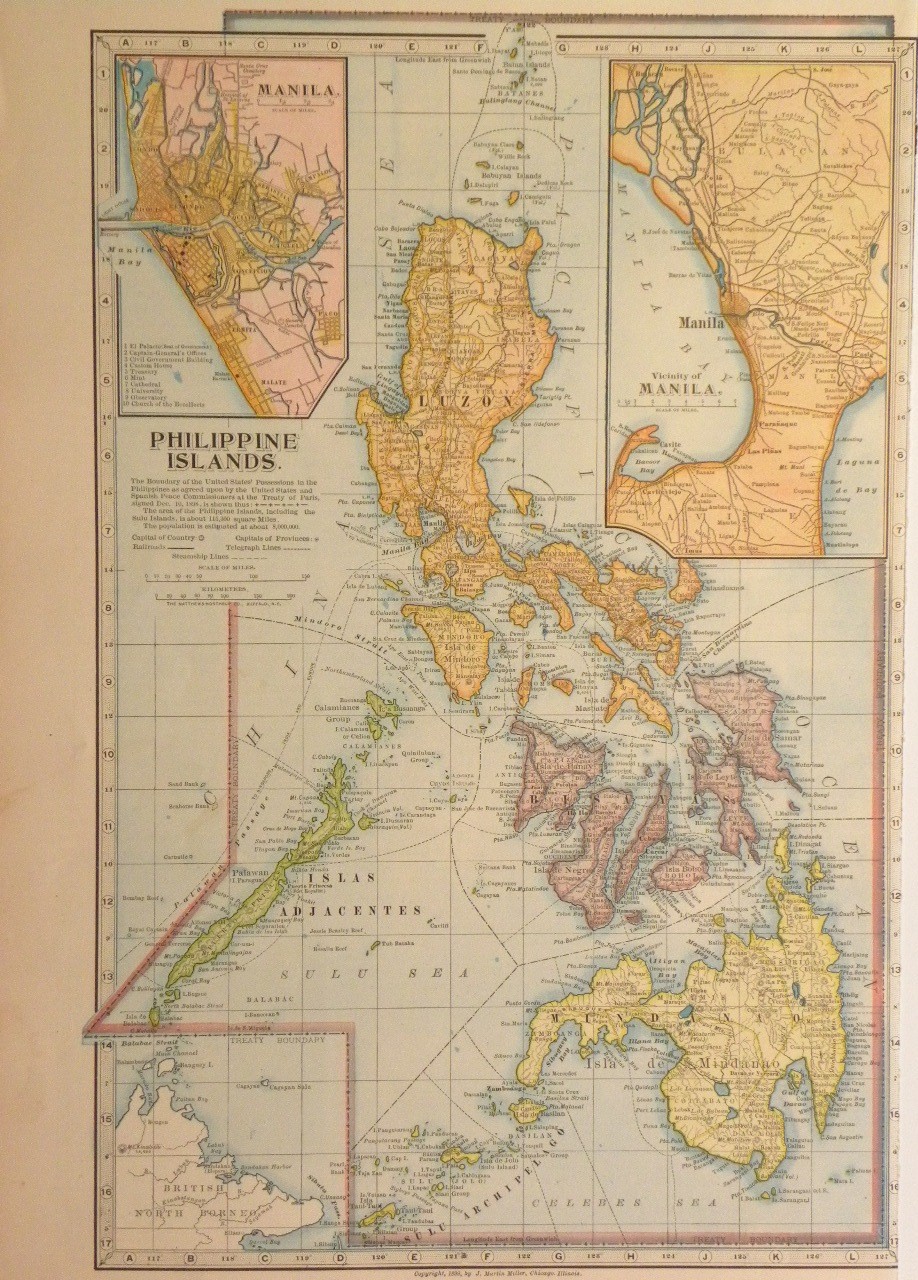
Script error: No such module "Check for unknown parameters".
Further reading
- Script error: No such module "citation/CS1".
- Script error: No such module "citation/CS1".
- Script error: No such module "citation/CS1".
- Script error: No such module "citation/CS1".
Template:Territorial evolution of the world Script error: No such module "navbox". Template:US history Script error: No such module "Navbox". Script error: No such module "Navbox". Template:Territories of the United States Template:Former sovereign or unrecognized states within the United States Template:Top icon