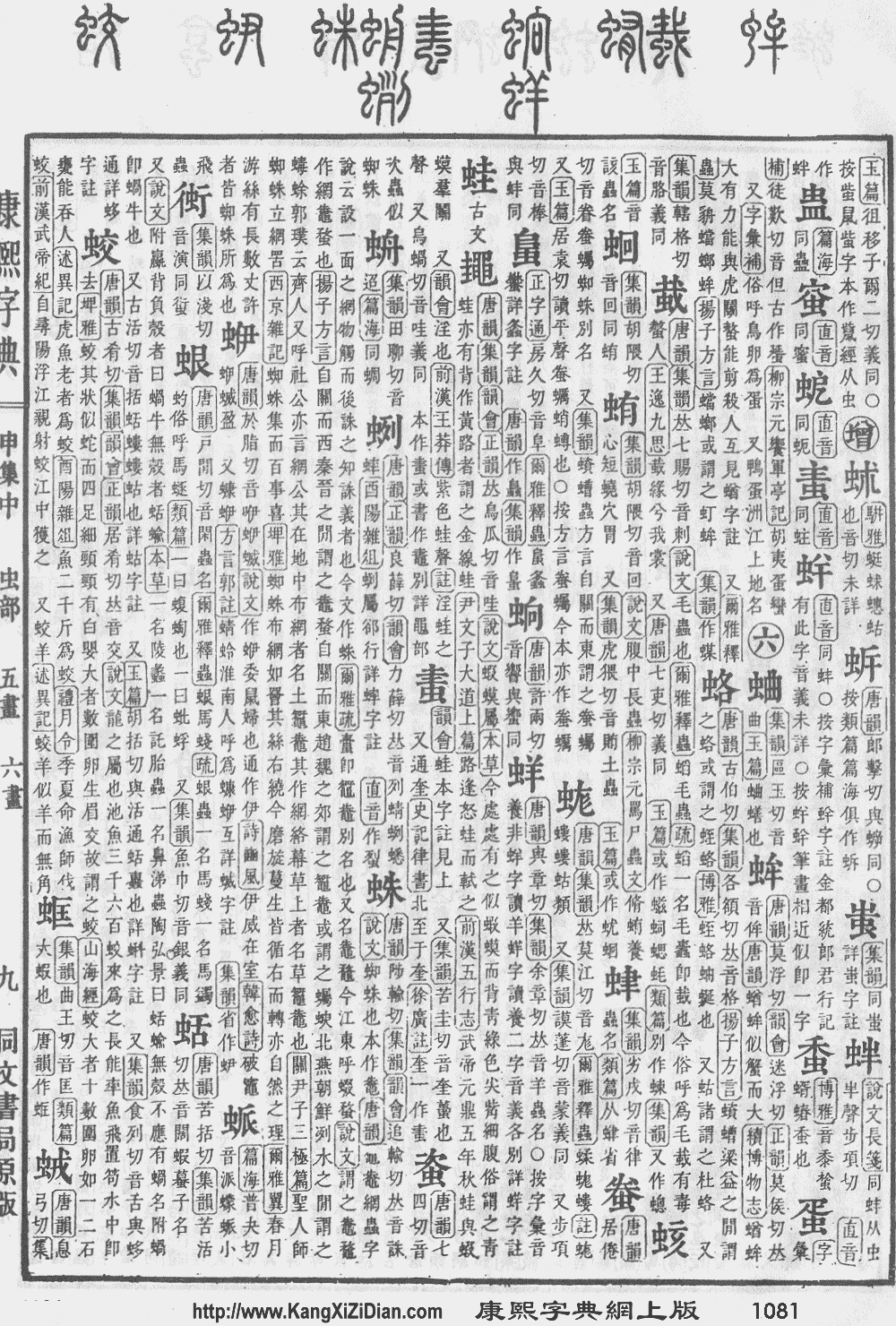
Jiaolong
Template:Short description Script error: No such module "other uses".

Jiaolong (Template:Zh) or jiao (chiao, kiao) is a dragon in Chinese mythology, often defined as a "scaled dragon"; it is hornless according to certain scholars and said to be aquatic or river-dwelling. It may have referred to a species of crocodile.
A number of scholars point to non-Sinitic southern origins for the legendary creature and ancient texts chronicle that the Yue people once tattooed their bodies to ward against these monsters.
In English translations, jiao has been variously rendered as "jiao-dragon", "crocodile", "flood dragon", "scaly dragon", or even "kraken".
Name
The jiao 蛟 character combines the "insect radical" 虫, to provide general sense of insects, reptiles or dragons,Template:Efn etc., and the right radical jiao 交 "cross; mix", etc. which supplies the phonetic element "jiao". The original Script error: No such module "Lang". pictograph represented a person with crossed legs.
The Japanese equivalent term is Script error: No such module "Nihongo"..Template:Efn The Vietnamese equivalent is giao long, considered synonymous to Vietnamese Script error: No such module "Lang"..
Synonyms
The Piya dictionary (11th century) claims that its common name was maban (Template:Zh).[1][2]
The jiao is also claimed to be equivalent to Sanskrit Script error: No such module "Lang". (modern Chinese pronunciation gongpiluo) in the 7th-century Buddhist dictionary Yiqiejing yinyi.Template:Efn[3] The same Sanskrit equivalent is repeated in the widely used Bencao Gangmu or Compendium of Materia Medica.[4] In Buddhist texts this word occurs as names of divine beings,Template:EfnTemplate:Efn and the Sanskrit term in question is actually kumbhīra[5] (Script error: No such module "Lang".). As a common noun kumbhīra means "crocodile".[6]
Phonology
Schuessler reconstructs Later Han Chinese kau and Old Chinese *krâu for modern jiao Script error: No such module "Lang"..Script error: No such module "Footnotes".Script error: No such module "Check for unknown parameters". Pulleyblank provides Early Middle Chinese kaɨw/kɛːw and Late Middle Chinese kjaːw.Script error: No such module "Footnotes".Script error: No such module "Check for unknown parameters".
The form kău is used as the Tang period pronunciation by American sinologist Edward H. Schafer.Script error: No such module "Footnotes".Script error: No such module "Check for unknown parameters". The transliteration kiao lung was given by Dutch orientalist Template:Interlanguage link's book on dragons.Script error: No such module "Footnotes".Script error: No such module "Check for unknown parameters".
Etymology

Jiao's (Script error: No such module "Lang".) etymology is obscure. Michael Carr, using Bernhard Karlgren's reconstruction of Old Chinese *kǒg Script error: No such module "Lang"., explains.
Most etymologies for jiao < *kǒg Script error: No such module "Lang". are unsupported speculations upon meanings of its phonetic *kǒg Script error: No such module "Lang". 'cross; mix with; contact', e.g., the *kǒg Script error: No such module "Lang". dragon can *kǒg Script error: No such module "Lang". 'join' its head and tail in order to capture prey, or moves in a *kǒg Script error: No such module "Lang". 'twisting' manner, or has *kǒg Script error: No such module "Lang". 'continuous' eyebrows. The only corroborated hypothesis takes *kǒg Script error: No such module "Lang". 'breed with' to mean *kǒg Script error: No such module "Lang". indicates a dragon 'crossbreed; mixture'. (1990:126-7)
The word has "mermaid" as one possible gloss,Script error: No such module "Footnotes".Script error: No such module "Check for unknown parameters". and Schuessler suggests possible etymological connections with Burmese khruB or khyuB "scaly, furry beast" and Tibetan klu "nāga; water spirits", albeit the Tibeto-Burman are phonologically distant from OC.Script error: No such module "Footnotes".Script error: No such module "Check for unknown parameters".
- Crossed eyebrows
The explanation that its name comes from eyebrows that "cross over" (Script error: No such module "Lang". jiao) is given in the ancient text Template:Interlanguage link "Records of Strange Things" (6th century).Script error: No such module "Footnotes".Script error: No such module "Check for unknown parameters".Template:EfnTemplate:Efn
- Early sense as mating dragons
It has been suggested that jiaolong might have referred to a pair of dragons mating, with their long bodies coiled around each other (Wen Yiduo 2001a:95–96Template:Refn)
Thus in the legend around the jiaolong Script error: No such module "Lang". hovering above the mother giving birth to a future emperor i.e., Liu Bang, the founding emperor of Han, r. 202-195 BCE Template:Efn (Sima Qian, Records of the Grand Historian),[7] the alternative conjectural interpretation is that it was a pair of mating dragons.[8]
The same legend occurs in nearly verbatim copy in the Book of Han, except that the dragons are given as Script error: No such module "Lang". "crossed dragons".[7] Wen noted that in early use jiaolong Script error: No such module "Lang". "crossed dragons" was emblematic of the mythological creators Fuxi and Nüwa, who are represented as having a human's upper body and a dragon's tail.[9]
Semantics
In textual usage, it may be ambiguous whether jiaolong Script error: No such module "Lang". should be parsed as two kinds of dragons or one, as Prof. Zhang Jing (known in Japan as Template:Interlanguage link) comments: "It is difficult to determine whether jiaolong is the name of a type of dragon, or [two dragons] "jiao" and "long" juxtaposed Script error: No such module "Lang".Script error: No such module "Footnotes".Script error: No such module "Check for unknown parameters".
Zhang cites as one example of jiaolong used in the poem Li Sao (in Chu Ci), in which the poet is instructed by supernatural beings to beckon the jialong and bid them build a bridge.Script error: No such module "Footnotes".Script error: No such module "Check for unknown parameters". Visser translated this as one type of dragon, the jiaolong or kiao-lung.Script error: No such module "Footnotes".Script error: No such module "Check for unknown parameters". However, it was the verdict of Wang Yi, an early commentator of this poem that these were two kinds, the smaller jiao and the larger long.[10][11]
Translations
Since the Chinese word for the generic dragon is long (Script error: No such module "Lang".), translating jiao as "dragon" is problematic as it would make it impossible to distinguish which of the two is being referred to.[12] The term jiao has thus been translated as "flood dragon"[13][14] or "scaly dragon",[15][16] with some qualifier to indicate it as a subtype. But on this matter, Schafer has suggested using a name for various dragon-like beings such as "kraken" to stand for jiao:
The word "dragon" has already been appropriated to render the broader term lung. "Kraken" is good since it suggests a powerful oceanic monster. ... We might name the kău a "basilisk" or a "wyvern" or a "cockatrice." Or perhaps we should call it by the name of its close kin, the double-headed crocodile-jawed Indian makara, which, in ninth-century Java at least, took on some of the attributes of the rain-bringing lung of China. (1967:218)
Some translators have in fact adopted "kraken" as the translated term,[7]Script error: No such module "Footnotes".Script error: No such module "Check for unknown parameters". as Schafer has suggested.
In some contexts, jiao has also been translated as "crocodile"Script error: No such module "Footnotes".Script error: No such module "Check for unknown parameters".[17]Template:Efn (See §Identification as real fauna).
Attestations
Classification and life cycle
The Shuowen Jiezi dictionary (121 CE) glosses the jiao as "a type of dragon (long),Script error: No such module "Footnotes".Script error: No such module "Check for unknown parameters".[18] as does the Piya dictionary (11th c.), which adds that the jiao are oviparous (hatch from eggs).[2]Script error: No such module "Footnotes".Script error: No such module "Check for unknown parameters". The Bencao Gangmu states this also,[19] but also notes this is generally true of most scaled creatures.[20]
Jiao eggs are about the size of a jar of 1 or 2 Template:Interlanguage link capacity in Chinese volume measurement, according to Guo Pu's commentary;[21]Script error: No such module "Footnotes".Script error: No such module "Check for unknown parameters". a variant text states that the hatchlings are of this size.Script error: No such module "Footnotes".Script error: No such module "Check for unknown parameters".Script error: No such module "Footnotes".Script error: No such module "Check for unknown parameters". It was considered that while the adult jiao lies in pools of water, their eggs hatched on dry land, more specifically on mounds of earth (Huainanzi).Script error: No such module "Footnotes".Script error: No such module "Check for unknown parameters".[22]
The jiao did eventually metamorphose into a form built to fly, according to Template:Interlanguage link's Template:Interlanguage link ("Records of Strange Things"), which said that "a water snake (hui 虺) after 500 years transforms into a jiao (Script error: No such module "Lang".); a jiao after a millennium into a dragon (long), a long after 500 years a horned dragon (角龍), a horned dragon after a millennium into a yinglong (a winged dragon)".Script error: No such module "Footnotes".Script error: No such module "Check for unknown parameters".Script error: No such module "Footnotes".Script error: No such module "Check for unknown parameters".Template:Efn
General descriptions
The hujiao Script error: No such module "Lang". or "tiger jiao"Template:Efn are described as creatures with a body like a fish and a tail like a snake, which made noise like mandarin ducks. Although this might be considered a subtype of the jiao dragon, a later commentator thought this referred to a type of fish (see #Sharks and rays section).Script error: No such module "Footnotes".Script error: No such module "Check for unknown parameters".
The foregoing account occurs in the early Chinese bestiary Shanhaijing "Classic of Mountains and Seas" (completed c. 206–9 BCE), in its first book "Classic of the Southern Mountains".[23]Template:EfnTemplate:Efn
The bestiary's fifth book, "Classic of the Central Mountains"Template:Efn[24] records the presence of jiao in the Kuang River (貺水, "River Grant") and Lun River (淪水, "River Ripple").Script error: No such module "Footnotes".Script error: No such module "Check for unknown parameters".Template:Efn Guo Pu (d. 324)'s commentary to Part XI glosses jiao as "a type of [long Script error: No such module "Lang".] dragon that resembles a four-legged snake".Script error: No such module "Footnotes".Script error: No such module "Check for unknown parameters". Guo adds that the jiao possesses a "small head and a narrow neck with a white goiter" and that it is oviparous, and "large ones were more than ten arm spans in widthTemplate:Efn and could swallow a person whole".[21][25]
A description similar to this is found in the Piya dictionary, but instead of a white "goiter (ying)" being found on its neck, a homophone noun of a different meaning is described, rendered "white necklace" around its neck by Visser.Script error: No such module "Footnotes".Script error: No such module "Check for unknown parameters". Other sources concurs with the latter word meaning white "necklace" (or variously translated as white "tassels"), namely, the Bencao Gangmu quoting at length from Guangzhou Ji (Template:Zh) by Pei Yuan (Template:Zh, 317–420):Template:Efn
A later text described jiao "looks like a snake with a tiger head, is several fathoms long, lives in brooks and rivers, and bellows like a bull; when it sees a human being it traps him with its stinking saliva, then pulls him into the water and sucks his blood from his armpits". This description, in the Moke huixi Script error: No such module "Lang". (11th century CE), was considered the "best definition" of a jiao by Wolfram Eberhard.Script error: No such module "Footnotes".Script error: No such module "Check for unknown parameters".
Scales
The description as "scaly" or "scaled dragon" is found in some medieval texts, and quoted in several near-modern references and dictionaries.
The Guangya (3rd century CE) defines jiaolong as "scaly dragon; scaled dragon", using the word lin 鱗 "scales".[26] The paragraph, which goes on to list other types of dragons, was quoted in the Kangxi Dictionary compiled during the Manchurian Qing dynasty.[26] A similar paragraph occurs in the Template:Interlanguage link (6th century) and quoted in the Bencao Gangmu aka Compendium of Materia Medica:[19] Template:Verse translation
Aquatic nature
Several texts allude to the jiao being the lord of aquatic beings. The jiaolong is called the "god of the water animals".Template:RefnTemplate:Efn The Shuowen jieji dictionary (beginning of 2nd c.) states that if the number of fish in a pond reaches 3600, a jiao will come as their leader, and enable them to follow him and fly away".Script error: No such module "Footnotes".Script error: No such module "Check for unknown parameters". However, "if you place a fish trap in the water, the jiao will leave".[18] A similar statement occurs in the farming almanac Qimin Yaoshu (6th c.) that quotes the Yangyu-jing "Classic on Raising Fish", a manual on pisciculture ascribed to Lord Tao Zhu (Fan Li).[27] According to this Yangyu-jing version, when the fish count reaches 360, the jiao will lead them away, but this could be prevented by keeping bie 鱉 (variant character 鼈, "soft-shelled turtle").Template:Efn[28][29]
Jiao and jiaolong were names for a legendary river dragon. Jiao Script error: No such module "Lang". is sometimes translated as "flood dragon". The (c. 1105 CE) Yuhu qinghua Script error: No such module "Lang". Carr says people in the southern state of Wu called it fahong Script error: No such module "Lang". "swell into a flood" because they believed flooding resulted when jiao hatched.Script error: No such module "Footnotes".Script error: No such module "Check for unknown parameters". The poem Qijian ("Seven Remonstrances") in the Chu Ci uses the term shuijiao Script error: No such module "Lang". or water jiao.Script error: No such module "Footnotes".Script error: No such module "Check for unknown parameters".Template:EFN
Hornlessness
The Shuowen Jiezi does not commit to whether the jiāo Script error: No such module "Lang". has or lacks a horn.Template:Efn[18] However the definition was emended to "hornless dragon" by Duan Yucai in his 19th-century edited version.(Script error: No such module "Footnotes".Script error: No such module "Check for unknown parameters". A somewhat later commentary by Template:Interlanguage link stated the contrary; in his Shuowen tongxun dingsheng (Script error: No such module "Lang".) Zhu Junsheng explained that only male dragons (long) were horned, and "among dragon offspring, the one-horned are called jiāo Script error: No such module "Lang"., the bicorned are called qiú Script error: No such module "Lang"., and the hornless are called chì Script error: No such module "Lang"..Script error: No such module "Footnotes".Script error: No such module "Check for unknown parameters".
Note the pronunciation similarity between jiāo Script error: No such module "Lang". and jiǎo 角 "horn", thus jiǎolóng Script error: No such module "Lang". is "horned dragon".Template:Efn
Female gender
Lexicographers have noticed that according to some sources, the jiao was a dragoness, that is, a dragon of exclusively female gender.Script error: No such module "Footnotes".Script error: No such module "Check for unknown parameters".Template:Efn
Jiao as female dragon occurs in the glossing of jiao Script error: No such module "Lang". as "dragon mother" (perhaps "dragoness" or "she-dragon") in the (c. 649 CE) Buddhist dictionary Yiqiejing yinyi,Template:Efn and the gloss is purported to be a direct quote from Ge Hong (d. 343)'s Baopuzi Script error: No such module "Lang"..[3] However, extant editions of the Baopuzi does not include this statement.Script error: No such module "Unsubst". The (11th century CE) Piya dictionary repeats this "female dragon" definition.Script error: No such module "Unsubst".
Records of hunt

As aforementioned, jiao is fully capable of devouring humans, according to Guo Pu's commentary.Script error: No such module "Footnotes".Script error: No such module "Check for unknown parameters".[25]
It is also written that a green jiao which was a man-eater dwelt in the stream beneath the bridge in Template:Interlanguage link (present-day city of Yixing, Jiangsu) according to a story in Template:Interlanguage link (Script error: No such module "Lang".; fl. c. 376–410)'s anthology, Zhiguai.Script error: No such module "Footnotes".Script error: No such module "Check for unknown parameters". The war-general Zhou Chu (Script error: No such module "Lang".; 236–297) in his youth, who was native to this area, anecdotally slew this dragon: when Zhou spotted the man-eating beast he leaped down from the bridge and stabbed it several times; the stream was filled with blood and the beast finally washed up somewhere in Lake Tai where it finally died.Script error: No such module "Footnotes".Script error: No such module "Check for unknown parameters". This anecdote is also recounted in the Shishuo Xinyu (c. 430; "A New Account of Tales of the World")[16] and selected in the Tang period primer Template:Interlanguage link.Script error: No such module "Footnotes".Script error: No such module "Check for unknown parameters".
Other early texts also mention the hunt or capture of the jiao. Emperor Wu of Han in Yuanfeng 5 or 106 BCE reportedly shot a jiao in the river.[30]Script error: No such module "Footnotes".Script error: No such module "Check for unknown parameters".Script error: No such module "Footnotes".Script error: No such module "Check for unknown parameters". The Shiyiji Script error: No such module "Lang". (4th century CE) has a jiao story about Emperor Zhao of Han (r. 87-74 BCE). While fishing in the Wei River, he
...caught a white kiao, three chang [ten meters] long, which resembled a big snake, but had no scaly armour The Emperor said: 'This is not a lucky omen', and ordered the Ta kwanTemplate:Efn to make a condiment of it. Its flesh was purple, its bones were blue, and its taste was very savoury and pleasant.Script error: No such module "Footnotes".Script error: No such module "Check for unknown parameters".
Three classical texts (Liji 6,Script error: No such module "Footnotes".Script error: No such module "Check for unknown parameters". Huainanzi 5, and Lüshi Chunqiu 6) repeat a sentence about capturing water creatures at the end of summer; Script error: No such module "Lang". "attack the jiao Script error: No such module "Lang"., take the to Script error: No such module "Lang". "alligator", present the gui Script error: No such module "Lang". "tortoise", and take the yuan Script error: No such module "Lang". "soft-shell turtle"."
Dragon boat festival
Script error: No such module "labelled list hatnote". There is a legend surrounding the Dragon Boat Festival which purports to be the origin behind the offering of zongzi (leaf-wrapped rice cakes) to the drowned nobleman Qu Yuan during its observation. It is said that at the beginning of the Eastern Han dynasty (25 A. D.), a man from Changsha named Ou Hui had a vision in a dream of Qu Yuan instructing him that the naked rice cakes being offered for him in the river are all being eaten by the dragons (jiaolong), and the cakes need to be wrapped in chinaberry (Melia; Template:Zh) leaves and tied with color strings, which are two things the dragons abhor.[31][32]Template:Efn
Southern origins
It has been suggested that the jiao is not a creature of Sinitic origin, but something introduced from the Far South or Yue culture,[33] which encompasses the people of the ancient Yue Script error: No such module "Lang". state), as well as the Hundred Yue people.[34]
Eberhard concludes (1968:378-9) that the jiao, which "occur in the whole of Central and South China", "is a special form of the snake as river god. The snake as river god or god of the ocean is typical for the coastal culture, particularly the sub-group of the Tan peoples (the Tanka people)". Schafer also suggests, "The Chinese lore about these southern krakens seems to have been borrowed from the indigenes of the monsoon coast".Script error: No such module "Footnotes".Script error: No such module "Check for unknown parameters".
The onomastics surrounding the Long Biên District (now in Hanoi, Vietnam) is that it was so-named from a jialong "flood dragon" seen coiled in the river (Shui jing zhu or the Commentary on the Water Classic 37).[14][35]Script error: No such module "Footnotes".Script error: No such module "Check for unknown parameters".
It is recorded that in southern China, there had been the custom of wearing tattoos to ward against the jiaolong. The people in Kuaiji (old capital of Yue; present-day Shaoxing City) adopted such a custom during the Xia dynasty according to the Book of Wei (3rd c.).Template:EfnTemplate:Efn[36][37][38] The Yue created this "apotropaic device"[39] by incising their flesh and tattooing it with red and green pigments.[40]Template:Refn[41]
Identification as real fauna
The jiao seems to refer to "crocodiles", at least in later literature of the Tang and Song dynasties, and may have referred to "crocodiles" in early literature as well.[33]
Aside from this zoological identification, paleontological identifications have also been attempted.
Crocodile or alligator
The term jiao e or "jiao crocodile" (Script error: No such module "Lang".; Tang period pronunciation: kău ngak)Script error: No such module "Footnotes".Script error: No such module "Check for unknown parameters".Template:Efn occurs in the description of Han Yu's encounter with crocodiles according to Template:Interlanguage link's Template:Interlanguage link or "Records of the House of Proclamation" written in the late Tang period.[42][43]Template:Efn
As noted the Compendium of Materia Medica identifies jiao with Sanskrit 宮毗羅,[4]Template:Refn i.e., kumbhīra[5] which denotes a long-snouted crocodylid.[6] The 19th-century herpetologist Albert-Auguste Fauvel concurred, stating that jiaolong referred to a crocodile or gavial clade of animals.Script error: No such module "Footnotes".Script error: No such module "Check for unknown parameters".
The Compendium also differentiates between jiaolong Script error: No such module "Lang".[4] and tuolong 鼉龍,[44] Fauvel adding that tuolong (Template:Zh) should be distinguished as "alligator".Script error: No such module "Footnotes".Script error: No such module "Check for unknown parameters".Template:Refn
Fossil creatures
Fauvel noted that the jiao resembled the dinosaur genus Iguanodon,Template:Efn adding that fossil teeth were being peddled by Chinese medicine shops at the time(1879:8).Template:Refn
Sharks and rays
In the foregoing example of the huijiao in the "Classic of the Southern Mountains" III,[23] the 19th-century sinologist treated this a type of dragon, the "tiger kiao",Script error: No such module "Footnotes".Script error: No such module "Check for unknown parameters". while a modern translator as "tiger-crocodile".Script error: No such module "Footnotes".Script error: No such module "Check for unknown parameters". However, there is also an 18–19th-century opinion that this might have been a shark. A Qing dynasty period commentator, Template:Interlanguage link suggested that huijiao should be identified as jiaocuo Script error: No such module "Lang".Template:Efn described in the Bowuzhi Script error: No such module "Lang".,Script error: No such module "Footnotes".Script error: No such module "Check for unknown parameters".[45] and this jiaocuo in turn is considered to be a type of shark.Script error: No such module "Footnotes".Script error: No such module "Check for unknown parameters".Template:Refn
As in the above example jiao Script error: No such module "Lang". may be substituted for jiao Script error: No such module "Lang". "shark" in some contexts.[46]
The jiao Script error: No such module "Lang". denotes larger sharks and rays,Script error: No such module "Footnotes".Script error: No such module "Check for unknown parameters". the character for sharks (and rays) in general being sha Script error: No such module "Lang"., so-named ostensibly due to their skin being gritty and sand-likeTemplate:EfnTemplate:Efn Compare the supposed quote from the Baopuzi, where it is stated that the jialong is said to have "pearls in the skin" Script error: No such module "Lang"..[3][46]
Schafer quotes a Song dynasty description, "The kău (jiao) fish has the aspect of a round fan. Its mouth is square and is in its belly. There is a sting in its tail which is very poisonous and hurtful to men. Its skin can be made into sword grips", which may refer to a sting ray.Script error: No such module "Footnotes".Script error: No such module "Check for unknown parameters".
Derivative names
Usage
Jiaolong occurs in Chinese toponyms. For example, the highest waterfall in Taiwan is Jiaolong Dapu (Script error: No such module "Lang".), "Flood Dragon Great Waterfall" in the Alishan National Scenic Area.
The deep-sea submersible built and tested in 2010 by the China Ship Scientific Research Center is named Jiaolong (Broad 2010:A1).
The 7th Marine Brigade of the People's Liberation Army Navy Marine Corps is often known as the "Jiaolong Commandos".
The 2025 film Operation Hadal takes its Chinese name (Template:Zh) from this creature.
See also
- Jiaolong (album), an album by DJ Daphni (musician)
- Mizuchi, Japanese dragon whose name is sometimes represented using the same Chinese character
Explanatory notes
References
Citations
<templatestyles src="Reflist/styles.css" />
- ↑ Script error: No such module "Footnotes". "Year of the Snake"; Script error: No such module "Footnotes". "When Piya states its poplular name is maban, it probably means a horse (ma) cannot be left tethered (ban) Script error: No such module "Lang"."
- ↑ a b Script error: No such module "If empty".Script error: No such module "template wrapper".
- ↑ a b c Script error: No such module "citation/CS1".
- ↑ a b c "jiaolong Script error: No such module "Lang".", Script error: No such module "Footnotes". "(Animals with) Scales I"; Script error: No such module "Footnotes". "Vol. 43 (Animals with) Scales", Bencao Gangmu; Script error: No such module "Footnotes".; Script error: No such module "Footnotes".
- ↑ a b Script error: No such module "citation/CS1". via Kotobank accessed 2019-07-30
- ↑ a b Script error: No such module "citation/CS1".
- ↑ a b c Script error: No such module "citation/CS1"., p. xvii (compare texts), p. 1 and note 4 (jiaolong translated as "kraken").
- ↑ Script error: No such module "Citation/CS1".
- ↑ Script error: No such module "Footnotes". apud Script error: No such module "Footnotes"..
- ↑ Script error: No such module "If empty".Script error: No such module "template wrapper".
- ↑ Cf. Script error: No such module "Footnotes".: "Then, beckoning the water-dragons to make a bridge for me".
- ↑ Script error: No such module "Footnotes".: "Spiritually akin to the crocodile, and perhaps originally the same reptile, was a mysterious creature capable of many forms called the chiao (kău). Most often it was regarded as a kind of lung – a "dragon" as we say. But sometimes it was manlike, and sometimes it was merely a fish. All of its realizations were interchangeable".
- ↑ Script error: No such module "citation/CS1".
- ↑ a b Script error: No such module "Citation/CS1". JSTOR 43105705
- ↑ Script error: No such module "citation/CS1".
- ↑ a b Script error: No such module "citation/CS1".
- ↑ Script error: No such module "Footnotes"., tabulated glossary
- ↑ a b c Script error: No such module "If empty".Script error: No such module "template wrapper".
- ↑ a b Script error: No such module "Footnotes". "(Category of Animals with) Scales" I; Script error: No such module "Footnotes"., Volume 43; Script error: No such module "Footnotes".
- ↑ Script error: No such module "Footnotes".. With some exceptions, like the viper.
- ↑ a b Script error: No such module "If empty".Script error: No such module "template wrapper".
- ↑ Huainanzi Script error: No such module "Lang". Script error: No such module "Lang".".
- ↑ a b Script error: No such module "If empty".Script error: No such module "template wrapper".
- ↑ Script error: No such module "If empty".Script error: No such module "template wrapper".
- ↑ a b Script error: No such module "citation/CS1".
- ↑ a b Script error: No such module "citation/CS1".: "See the quotation from the Script error: No such module "Lang". Kuang-ya in the K'ang-hsi: 'Those (dragons) that have scales are called Script error: No such module "Lang". chiao-lung (i.e. jiaolong); those that have wings, Script error: No such module "Lang". ying-lung; those that have horns, Script error: No such module "Lang". ch'iu-lung; those that have no horns, Script error: No such module "Lang". ch'ih-lung; those that have not yet risen to Heaven, Script error: No such module "Lang". p'an-lung'".
- ↑ Script error: No such module "If empty".Script error: No such module "template wrapper".
- ↑ Script error: No such module "citation/CS1".
- ↑ An incomplete quote is given by Script error: No such module "Footnotes"..
- ↑ Hanshu; 6.
- ↑ Script error: No such module "citation/CS1".
- ↑ Script error: No such module "citation/CS1".: "chiao-lung"
- ↑ a b Script error: No such module "Footnotes". and Script error: No such module "Footnotes"..
- ↑ Script error: No such module "citation/CS1".
- ↑ Script error: No such module "If empty".Script error: No such module "template wrapper".
- ↑ Script error: No such module "If empty".Script error: No such module "template wrapper".
- ↑ Script error: No such module "citation/CS1".
- ↑ Script error: No such module "citation/CS1".
- ↑ Script error: No such module "Citation/CS1".
• Script error: No such module "Citation/CS1". - ↑ Treatise on Geography in the Book of Han, 111CE, quoted by Kong Yingda.
- ↑ Script error: No such module "If empty".Script error: No such module "template wrapper".
- ↑ Script error: No such module "Footnotes"..
- ↑ Script error: No such module "If empty".Script error: No such module "template wrapper".
- ↑ "tuolong Script error: No such module "Lang".", Script error: No such module "Footnotes". "(Animals with) Scales I"; Script error: No such module "Footnotes". "Vol. 43 (Animals with) Scales", Bencao Gangmu; Script error: No such module "Footnotes". identifies as Alligator sinensis Fauvel, with synonym tuoyu (Script error: No such module "Lang".) and tulong (Script error: No such module "Lang".); Script error: No such module "Footnotes".
- ↑ Script error: No such module "citation/CS1".
- ↑ a b Script error: No such module "citation/CS1".
Cite error: Script error: No such module "Namespace detect".Script error: No such module "Namespace detect".
Cite error: Script error: No such module "Namespace detect".Script error: No such module "Namespace detect".
Cite error: Script error: No such module "Namespace detect".Script error: No such module "Namespace detect".
Cite error: Script error: No such module "Namespace detect".Script error: No such module "Namespace detect".
Cite error: Script error: No such module "Namespace detect".Script error: No such module "Namespace detect".
Cite error: Script error: No such module "Namespace detect".Script error: No such module "Namespace detect".
Cite error: Script error: No such module "Namespace detect".Script error: No such module "Namespace detect".
Cite error: Script error: No such module "Namespace detect".Script error: No such module "Namespace detect".
Script error: No such module "Check for unknown parameters".
Bibliography
<templatestyles src="Refbegin/styles.css" />
- Script error: No such module "citation/CS1".
- Script error: No such module "citation/CS1".
- Script error: No such module "citation/CS1".; 2011 edition previewable via Google.
- Broad, William J., "China Explores a Frontier 2 Miles Deep", The New York Times, September 11, 2010. Retrieved 2010-09-12.
- Script error: No such module "Citation/CS1".; selection (pp. 87–90)
- Script error: No such module "citation/CS1".
- Script error: No such module "citation/CS1".
- Script error: No such module "citation/CS1".
- Script error: No such module "citation/CS1".
- Script error: No such module "citation/CS1".
- Script error: No such module "citation/CS1".
- Script error: No such module "citation/CS1".
- Script error: No such module "citation/CS1".
- Script error: No such module "citation/CS1".
- Script error: No such module "If empty".Script error: No such module "template wrapper".
- Script error: No such module "If empty".Script error: No such module "template wrapper".
- (Eng. tr.) Script error: No such module "citation/CS1".
- (Eng. tr.) Script error: No such module "Citation/CS1".
- Script error: No such module "citation/CS1".. Aozora Bunko No.2536
- Script error: No such module "citation/CS1".
- Script error: No such module "citation/CS1".
- Script error: No such module "Citation/CS1".
- Script error: No such module "citation/CS1".
- Script error: No such module "citation/CS1".
- Script error: No such module "citation/CS1".
- Script error: No such module "citation/CS1".
- Script error: No such module "Citation/CS1".
- Script error: No such module "citation/CS1".,
- Script error: No such module "citation/CS1".
- Script error: No such module "citation/CS1".
- Script error: No such module "citation/CS1".
- Script error: No such module "citation/CS1".
External links
- Script error: No such module "Lang". entry, Chinese Etymology
- Script error: No such module "Lang". entry page, 1716 CE Kangxi Dictionary
- Flood Dragon Waterfall Script error: No such module "webarchive"., Alishan National Scenic Area