Cirsium edule
Template:Short description Template:Speciesbox

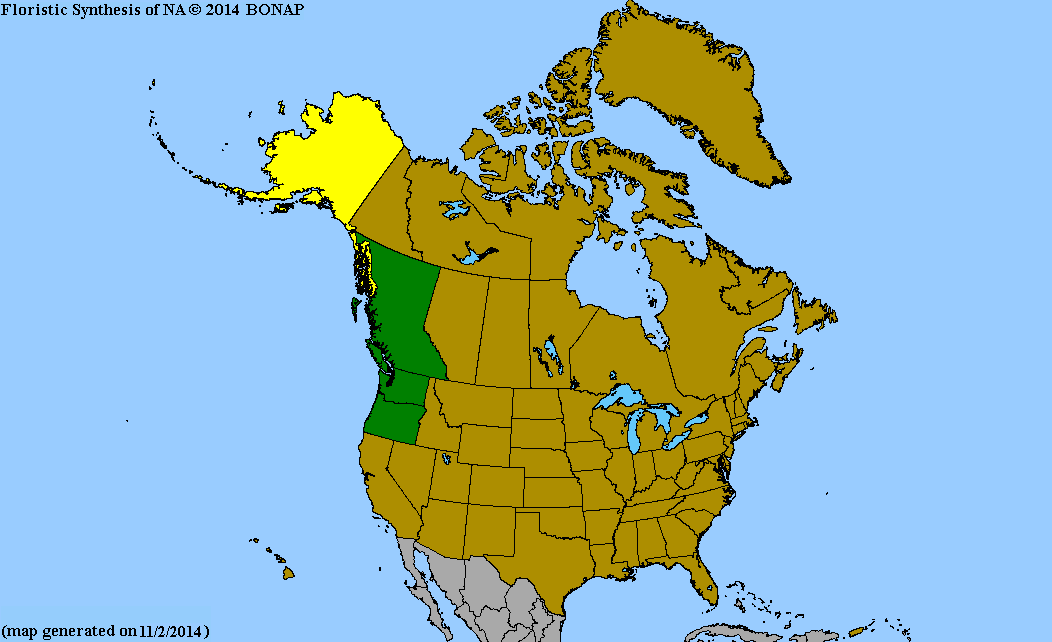
Cirsium edule, the edible thistle[1] or Indian thistle,[2] is a species of thistle in the genus Cirsium, native to western North America from southeastern Alaska south through British Columbia to Washington and Oregon, and locally inland to Idaho.[3] It is a larval host to the mylitta crescent and the painted lady.[4]
Cirsium edule is a tall herbaceous perennial plant, reaching Script error: No such module "convert". in height. The leaves are very spiny, lobed, 10–30 cm long and 2–5 cm broad (smaller on the upper part of the flower stem). The inflorescence is 3–4 cm diameter, purple, with numerous disc florets but no ray florets. The achenes are 4–5 mm long, with a downy pappus which assists in wind dispersal. It is monocarpic, growing as a low rosette of leaves for a number of years, then sending up the tall flowering stem in spring, with the plant dying after seed maturation.[5]
Edible thistle is used by Native Americans for its edible roots and young shoots. The roots are sweet, but contain inulin, which gives some people digestive problems.[6]
- Cirsium edule var. edule - Oregon, Washington
- Cirsium edule var. macounii (Greene) D.J.Keil - Oregon, Washington, British Columbia, Alaska
- Cirsium edule var. edule wenatchense D.J.Keil - Washington[8]
References
<templatestyles src="Reflist/styles.css" />
- ↑ Script error: No such module "template wrapper".
- ↑ Template:BSBI 2007
- ↑ Biota of North America Program 2014 state-level distribution map
- ↑ The Xerces Society (2016), Gardening for Butterflies: How You Can Attract and Protect Beautiful, Beneficial Insects, Timber Press.
- ↑ a b Flora of North America, Edible thistle, cardon, Cirsium edule Nuttall, Trans. Amer. Philos. Soc., n. s. 7: 420. 1841.
- ↑ Plants for a Future: Cirsium edule
- ↑ Cite error: Script error: No such module "Namespace detect".Script error: No such module "Namespace detect".
- ↑ Keil, David John 2004. Sida 21(1): 213
Script error: No such module "Check for unknown parameters".