Sabah: Difference between revisions
imported>SimLibrarian image caption style (MOS:CAPFRAG), rm unnecessary italics, non-breaking space use (MOS:NBSP), MOS:MAJORWORK, reduce wordiness |
imported>FilayFilarya m hdi update |
||
| Line 6: | Line 6: | ||
{{use British English|date=January 2025}} | {{use British English|date=January 2025}} | ||
{{Use dmy dates|date=January 2025}} | {{Use dmy dates|date=January 2025}} | ||
{{Infobox | {{Infobox settlement | ||
| name = Sabah | | name = Sabah | ||
| official_name = {{ubl | | official_name = {{ubl | ||
| Line 23: | Line 23: | ||
| shield_size = 50px | | shield_size = 50px | ||
| shield_alt = Coat of arms of Sabah | | shield_alt = Coat of arms of Sabah | ||
| nickname = ''Negeri Di Bawah Bayu''<ref>{{cite web |url=http://www.sabah.gov.my/main/ms/Home/About |title=Mengenai Sabah |trans-title=About Sabah |language=ms |publisher=[[Government of Sabah|Sabah State Government]] |access-date=19 May 2016 |archive-url=https://web.archive.org/web/20160519124851/http://www.sabah.gov.my/main/ms/Home/About |archive-date=19 May 2016 }}</ref><br />{{small|Land Below the Wind}}<ref name="sbh">{{cite web |url=http://www.sabah.gov.my/main/en/Home/About |title=About Sabah |publisher=Sabah State Government |access-date=20 May 2016 |archive-url=https://web.archive.org/web/20160520105020/http://www.sabah.gov.my/main/en/Home/About |archive-date=20 May 2016 }}</ref> | | nickname = ''Negeri Di Bawah Bayu''<ref>{{cite web |url=http://www.sabah.gov.my/main/ms/Home/About |title=Mengenai Sabah |trans-title=About Sabah |language=ms |publisher=[[Government of Sabah|Sabah State Government]] |access-date=19 May 2016 |archive-url=https://web.archive.org/web/20160519124851/http://www.sabah.gov.my/main/ms/Home/About |archive-date=19 May 2016 }}</ref><br />{{small|Land Below the Wind}}<ref name="sbh">{{cite web |url=http://www.sabah.gov.my/main/en/Home/About |title=About Sabah |publisher=Sabah State Government |access-date=20 May 2016 |archive-url=https://web.archive.org/web/20160520105020/http://www.sabah.gov.my/main/en/Home/About |archive-date=20 May 2016 }}</ref>{{force singular}} | ||
| motto | | motto = {{force singular}} ''Sabah Maju Jaya''<ref name="crest">{{cite web |url=http://www.sabah.gov.my/pd.nbw/dcm/english/engdoc/crest.html |title=The Meaning of the Sabah State Crest |publisher=Sabah State Government |access-date=10 June 2014 |archive-url=https://web.archive.org/web/20140610031143/http://www.sabah.gov.my/pd.nbw/dcm/english/engdoc/crest.html |archive-date=10 June 2014 }}</ref><br />{{small|Let Sabah Prosper}}<ref name="crest"/> | ||
| anthem = ''[[Sabah Tanah Airku]]''<ref>{{cite web |url=http://www.sabah.gov.my/main/ms/Home/PatrioticSong |title=Lagu-Lagu Patriotik |trans-title=Patriotic Songs |language=ms |publisher=Sabah State Government |access-date=20 May 2016 |archive-url=https://web.archive.org/web/20160520150035/http://www.sabah.gov.my/main/ms/Home/PatrioticSong |archive-date=20 May 2016 }}</ref><br />{{small|Sabah, My Homeland}}{{center|[[File:Lagu Rasmi Sabah - Sabah Tanah Airku.ogg]]}} | | anthem = ''[[Sabah Tanah Airku]]''<ref>{{cite web |url=http://www.sabah.gov.my/main/ms/Home/PatrioticSong |title=Lagu-Lagu Patriotik |trans-title=Patriotic Songs |language=ms |publisher=Sabah State Government |access-date=20 May 2016 |archive-url=https://web.archive.org/web/20160520150035/http://www.sabah.gov.my/main/ms/Home/PatrioticSong |archive-date=20 May 2016 }}</ref><br />{{small|Sabah, My Homeland}}{{center|[[File:Lagu Rasmi Sabah - Sabah Tanah Airku.ogg]]}} | ||
| image_map = Sabah in Malaysia.svg | | image_map = Sabah in Malaysia.svg | ||
| Line 57: | Line 57: | ||
| p4 = [[Tawau Division|Tawau]] | | p4 = [[Tawau Division|Tawau]] | ||
| p5 = [[West Coast Division|West Coast]] | | p5 = [[West Coast Division|West Coast]] | ||
| | | government_type = [[Parliamentary system|Parliamentary]] | ||
| | | leader_title1 = [[Yang di-Pertua Negeri of Sabah|Yang di-Pertua Negeri]] | ||
| | | leader_name1 = [[Musa Aman]] | ||
| leader_title2 = [[Chief Minister of Sabah|Chief Minister]] | |||
| leader_name2 = [[Hajiji Noor]] | |||
{{infobox|child=yes | |||
| label1 = Legislature | |||
| data1 = [[Sabah State Legislative Assembly|Legislative Assembly]] | |||
}} | |||
| total_type = Total | |||
| area_footnotes = <ref name="Malaysia census 2020"/> | |||
| area_total_km2 = 73,904 | |||
| area_note = ([[States and federal territories of Malaysia#States|11th]]) | |||
| elevation_max_m = 4095 | |||
| elevation_max_point = [[Mount Kinabalu]] | |||
| population_demonym = Sabahan | |||
| population_total = {{increase}} 3,418,785 ([[Demographics of Malaysia#Population distribution by states and territories|3rd]]) | |||
| population_as_of = 2020 | |||
| population_density_km2 = 46 | |||
| population_footnotes = <ref name="Malaysia census 2020"/> | |||
| population_density_rank = 3rd | |||
| population_density_rank_link = | |||
| demographics_type1 = Languages | |||
| demographics1_title1 = Official | |||
| demographics1_info1 = [[English language|English]], [[Malay language|Malay]] | |||
| demographics1_title2 = Other spoken | |||
| demographics1_info2 = {{Plainlist| | |||
* [[Sabahan languages|Sabahan]] | |||
* [[Dusunic languages|Dusunic]] | |||
* [[Chinese language|Chinese]] | |||
* [[Coastal Kadazan language|Coastal Kadazan]] | |||
* [[Momogun language|Momogun/Rungus]] | |||
* [[#Languages|ethnic minority languages]]}} | |||
| demographics_type2 = Demographics {{nobold|(2020)}} | |||
| demographics2_title1 = [[Ethnic group]]{{my10|2020kf}} | |||
| demographics2_info1 = {{Plainlist| | |||
{{tree list}} | {{tree list}} | ||
* 67.6% [[Bumiputera (Malaysia)|Bumiputera]] | * 67.6% [[Bumiputera (Malaysia)|Bumiputera]] | ||
| Line 72: | Line 105: | ||
* 23.7% Non-citizens}} | * 23.7% Non-citizens}} | ||
{{tree list/end}} | {{tree list/end}} | ||
| | | demographics2_title2 = [[Religion]]{{my10|2020kf}} | ||
| demographics2_info2 = {{Plainlist| | |||
| | |||
* 69.6% [[Sunni Islam]] | * 69.6% [[Sunni Islam]] | ||
* 24.7% [[Christianity in Malaysia|Christianity]] | * 24.7% [[Christianity in Malaysia|Christianity]] | ||
| Line 82: | Line 114: | ||
* 0.4% [[Irreligion|No religion]]/Unknown | * 0.4% [[Irreligion|No religion]]/Unknown | ||
}} | }} | ||
| timezone1 = [[Malaysian Standard Time|MST]]<ref>{{cite web |url=http://www.math.nus.edu.sg/aslaksen/teaching/timezone-old.html |title= Time Zones in Malaysia |author= Helmer Aslaksen |publisher= Department of Mathematics, Faculty of Science, [[National University of Singapore]] |date=28 June 2012 |access-date=21 May 2016 |archive-url=https://web.archive.org/web/20160521034731/http://www.math.nus.edu.sg/aslaksen/teaching/timezone-old.html |archive-date=21 May 2016 }}</ref> | | timezone1 = [[Malaysian Standard Time|MST]]<ref>{{cite web |url=http://www.math.nus.edu.sg/aslaksen/teaching/timezone-old.html |title= Time Zones in Malaysia |author= Helmer Aslaksen |publisher= Department of Mathematics, Faculty of Science, [[National University of Singapore]] |date=28 June 2012 |access-date=21 May 2016 |archive-url=https://web.archive.org/web/20160521034731/http://www.math.nus.edu.sg/aslaksen/teaching/timezone-old.html |archive-date=21 May 2016 }}</ref> | ||
| utc_offset1 = +8 | | utc_offset1 = +8 | ||
| Line 124: | Line 122: | ||
| iso_code = [[ISO 3166-2:MY|MY-12]] | | iso_code = [[ISO 3166-2:MY|MY-12]] | ||
| registration_plate = [[Malaysian vehicle license plates|SA, SAA, SAB, SAC, SY]] <small>(West Coast)</small> <br />SB <small>([[Beaufort District|Beaufort]])</small> <br />SD <small>(Lahad Datu)</small> <br />SK <small>(Kudat)</small> <br />SS, SSA, SM <small>(Sandakan)</small> <br />ST, STA, SW <small>(Tawau)</small> <br />SU <small>([[Keningau District|Keningau]])</small><ref>{{cite web |url=http://malaysiandigest.com/features/546797-some-little-known-facts-on-malaysian-vehicle-registration-plates.html |title=Some Little Known Facts On Malaysian Vehicle Registration Plates |author=Teh Wei Soon |publisher=Malaysian Digest |date=23 March 2015 |access-date=12 July 2016 |archive-url=https://web.archive.org/web/20150708091603/http://malaysiandigest.com/features/546797-some-little-known-facts-on-malaysian-vehicle-registration-plates.html |archive-date=8 July 2015 |url-status=usurped}}</ref> | | registration_plate = [[Malaysian vehicle license plates|SA, SAA, SAB, SAC, SY]] <small>(West Coast)</small> <br />SB <small>([[Beaufort District|Beaufort]])</small> <br />SD <small>(Lahad Datu)</small> <br />SK <small>(Kudat)</small> <br />SS, SSA, SM <small>(Sandakan)</small> <br />ST, STA, SW <small>(Tawau)</small> <br />SU <small>([[Keningau District|Keningau]])</small><ref>{{cite web |url=http://malaysiandigest.com/features/546797-some-little-known-facts-on-malaysian-vehicle-registration-plates.html |title=Some Little Known Facts On Malaysian Vehicle Registration Plates |author=Teh Wei Soon |publisher=Malaysian Digest |date=23 March 2015 |access-date=12 July 2016 |archive-url=https://web.archive.org/web/20150708091603/http://malaysiandigest.com/features/546797-some-little-known-facts-on-malaysian-vehicle-registration-plates.html |archive-date=8 July 2015 |url-status=usurped}}</ref> | ||
<!-- blank fields (section 1) -->| blank_name_sec1 = [[Human Development Index|HDI]] {{nobold|( | <!-- blank fields (section 1) -->| blank_name_sec1 = [[Human Development Index|HDI]] {{nobold|(2024)}} | ||
| blank_info_sec1 = {{increase}} 0. | | blank_info_sec1 = {{increase}} 0.767<ref>{{Cite web|url=http://statistics.gov.my/portal-main/release-content/malaysia-human-development-index-2024/|title=Malaysia Human Development Index (MHDI), 2024 |website=dosm.gov.my|language=en|access-date=12 November 2025}}</ref><br /><span style="color:#0c0;">high</span> · [[List of Malaysian states by Human Development Index|15th]] | ||
| blank1_name_sec1 = [[Gross domestic product|GDP]] {{nobold|(nominal)}} | | blank1_name_sec1 = [[Gross domestic product|GDP]] {{nobold|(nominal)}} | ||
| blank1_info_sec1 = 2022 | | blank1_info_sec1 = 2022 | ||
| Line 149: | Line 147: | ||
'''Sabah''' ({{IPA|ms|ˈsabah}}) is a [[States and federal territories of Malaysia|state]] of [[Malaysia]] located in northern [[Borneo]], in the region of [[East Malaysia]]. Sabah has land borders with the Malaysian state of [[Sarawak]] to the southwest and [[Indonesia]]'s [[North Kalimantan]] province to the south. The [[Federal Territory (Malaysia)|Federal Territory]] of [[Labuan]] is an island just off Sabah's west coast. Sabah shares maritime borders with [[Vietnam]] to the west and the [[Philippines]] to the north and east. [[Kota Kinabalu]] is the state capital and the economic centre of the state, and the seat of the [[Government of Sabah|Sabah State government]]. Other major towns in Sabah include [[Sandakan]] and [[Tawau]]. The 2020 census recorded a population of 3,418,785 in the state.<ref name="Malaysia census 2020">{{cite web|url=https://cloud.stats.gov.my/index.php/s/BG11nZfaBh09RaX#pdfviewer|archive-url=https://web.archive.org/web/20220418044258/https://cloud.stats.gov.my/index.php/s/BG11nZfaBh09RaX#pdfviewer|archive-date=18 April 2022|title=Key Findings Population and Housing Census of Malaysia 2020|publisher=Department of Statistics, Malaysia|access-date=20 August 2022}}</ref> It has an [[equatorial climate]] with tropical [[rainforest]]s, abundant with animal and plant species. The state has long [[mountain range]]s on the west side which forms part of the [[Crocker Range National Park]]. [[Kinabatangan River]], the second longest river in Malaysia runs through Sabah. The highest point of Sabah, [[Mount Kinabalu]] is also the highest point of Malaysia. | '''Sabah''' ({{IPA|ms|ˈsabah}}) is a [[States and federal territories of Malaysia|state]] of [[Malaysia]] located in northern [[Borneo]], in the region of [[East Malaysia]]. Sabah has land borders with the Malaysian state of [[Sarawak]] to the southwest and [[Indonesia]]'s [[North Kalimantan]] province to the south. The [[Federal Territory (Malaysia)|Federal Territory]] of [[Labuan]] is an island just off Sabah's west coast. Sabah shares maritime borders with [[Vietnam]] to the west and the [[Philippines]] to the north and east. [[Kota Kinabalu]] is the state capital and the economic centre of the state, and the seat of the [[Government of Sabah|Sabah State government]]. Other major towns in Sabah include [[Sandakan]] and [[Tawau]]. The 2020 census recorded a population of 3,418,785 in the state.<ref name="Malaysia census 2020">{{cite web|url=https://cloud.stats.gov.my/index.php/s/BG11nZfaBh09RaX#pdfviewer|archive-url=https://web.archive.org/web/20220418044258/https://cloud.stats.gov.my/index.php/s/BG11nZfaBh09RaX#pdfviewer|archive-date=18 April 2022|title=Key Findings Population and Housing Census of Malaysia 2020|publisher=Department of Statistics, Malaysia|access-date=20 August 2022}}</ref> It has an [[equatorial climate]] with tropical [[rainforest]]s, abundant with animal and plant species. The state has long [[mountain range]]s on the west side which forms part of the [[Crocker Range National Park]]. [[Kinabatangan River]], the second longest river in Malaysia runs through Sabah. The highest point of Sabah, [[Mount Kinabalu]] is also the highest point of Malaysia. | ||
The earliest human settlement in Sabah can be traced back to 20,000–30,000 years ago along the [[Darvel Bay]] area at the Madai-Baturong caves. The state has had a trading relationship with China starting from the 14th century AD. Sabah came under the influence of the [[Bruneian Empire]] in the 14th and 15th centuries. The state was subsequently acquired by the British [[North Borneo Chartered Company]] in the 19th century. During [[World War II]], | The earliest human settlement in Sabah can be traced back to 20,000–30,000 years ago along the [[Darvel Bay]] area at the Madai-Baturong caves. The state has had a trading relationship with China starting from the 14th century AD. Sabah came under the influence of the [[Bruneian Empire]] in the 14th and 15th centuries. The state was subsequently acquired by the British [[North Borneo Chartered Company]] in the 19th century. During [[World War II]], North Borneo was [[Japanese occupation of British Borneo|occupied by the Japanese]] for three years. It became a [[Crown Colony of North Borneo|British Crown Colony]] in 1946. On 31 August 1963, the newly-renamed Sabah was granted self-governance by the British. Following this, Sabah became one of the founding members of the Federation of Malaysia (established on 16 September 1963) alongside the [[Crown Colony of Sarawak]], the [[Colony of Singapore]] (expelled in 1965), and the [[Federation of Malaya]] ([[Peninsular Malaysia]] or West Malaysia). The federation was opposed by neighbouring Indonesia, which led to the [[Indonesia–Malaysia confrontation]] over three years along with the threats of annexation by the Philippines along with the [[Sultanate of Sulu]], threats which continue to the present day.<ref>{{*}} {{cite news |url= https://news.google.com/newspapers?nid=2512&dat=19680924&id=iRNIAAAAIBAJ&pg=2922,2921522&hl=en |title=Filipino Students Protest in Manila Over Sabah Issue |newspaper=[[The Morning Journal]] |date=24 September 1968 |access-date=23 September 2016}}<br />{{*}} {{cite book |author= Hans H. Indorf |title= Impediments to Regionalism in Southeast Asia: Bilateral Constraints Among ASEAN Member States |url= https://books.google.com/books?id=_EPye5cCJZwC&pg=PA25 |year=1984 |publisher=Institute of Southeast Asian Studies |isbn=978-9971-902-81-0 |page=25}}<br />{{*}}{{cite web |url=https://www.newmandala.org/sabah-the-question-that-wont-go-away/ |title=Sabah – the question that won't go away |author=Acram Latiph |publisher= New Mandala |date=13 March 2013 |access-date=23 July 2020}}</ref> | ||
Sabah exhibits notable diversity in ethnicity, culture and language. The head of state is the governor, also known as the [[Yang di-Pertua Negeri Sabah|Yang di-Pertua Negeri]], while the head of government is the [[Chief Minister of Sabah|chief minister]] and [[Cabinet of Sabah|his Cabinet]]. The government system is closely modelled on the [[Westminster system|Westminster parliamentary system]] and has one of the earliest state legislature systems in Malaysia. Sabah is divided into five administrative divisions and 27 districts. [[Malaysian language|Malay]] is the official language of the state;<ref name= "official language">{{cite news |url= http://www.theborneopost.com/2015/11/22/bm-is-sabahs-official-language-keruak/|title=BM is Sabah's official language – Keruak |newspaper=The Borneo Post |date=22 November 2015 |access-date=25 June 2016|archive-url=https://web.archive.org/web/20160625094103/http://www.theborneopost.com/2015/11/22/bm-is-sabahs-official-language-keruak/|archive-date=25 June 2016}}</ref><ref name="English restriction">{{cite web |url=http://www.lawnet.sabah.gov.my/lawnet/SabahLaws/StateLaws/NationalLanguage(Application)Enactment1973.pdf |title=National Language (Application) Enactment 1973 |publisher=Sabah State Government (State Attorney-General's Chambers)|date=27 September 1973|access-date=25 June 2016|archive-url=https://web.archive.org/web/20160625094558/http://www.lawnet.sabah.gov.my/lawnet/SabahLaws/StateLaws/NationalLanguage(Application)Enactment1973.pdf |archive-date=25 June 2016 }}</ref> and [[Islam]] is the state religion, but other religions may be practised.<ref name="state religion">{{cite web |url=http://www.lawnet.sabah.gov.my/lawnet/SabahConstitution/PartI.htm |title=Constitution of the State of Sabah |publisher=Sabah State Government (State Attorney-General's Chambers) |access-date=15 June 2016 |archive-url=https://web.archive.org/web/20160615120202/http://www.lawnet.sabah.gov.my/lawnet/SabahConstitution/PartI.htm |archive-date=15 June 2016 }}</ref> Sabah is known for its traditional musical instrument, the [[sompoton]]. Sabah has abundant natural resources, and its economy is strongly [[export-oriented economy|export-oriented]]. Its primary exports include oil, gas, timber and [[palm oil]]. The other major industries are agriculture and [[ecotourism]]. | Sabah exhibits notable diversity in ethnicity, culture and language. The head of state is the governor, also known as the [[Yang di-Pertua Negeri Sabah|Yang di-Pertua Negeri]], while the head of government is the [[Chief Minister of Sabah|chief minister]] and [[Cabinet of Sabah|his Cabinet]]. The government system is closely modelled on the [[Westminster system|Westminster parliamentary system]] and has one of the earliest state legislature systems in Malaysia. Sabah is divided into five administrative divisions and 27 districts. [[Malaysian language|Malay]] is the official language of the state;<ref name= "official language">{{cite news |url= http://www.theborneopost.com/2015/11/22/bm-is-sabahs-official-language-keruak/|title=BM is Sabah's official language – Keruak |newspaper=The Borneo Post |date=22 November 2015 |access-date=25 June 2016|archive-url=https://web.archive.org/web/20160625094103/http://www.theborneopost.com/2015/11/22/bm-is-sabahs-official-language-keruak/|archive-date=25 June 2016}}</ref><ref name="English restriction">{{cite web |url=http://www.lawnet.sabah.gov.my/lawnet/SabahLaws/StateLaws/NationalLanguage(Application)Enactment1973.pdf |title=National Language (Application) Enactment 1973 |publisher=Sabah State Government (State Attorney-General's Chambers)|date=27 September 1973|access-date=25 June 2016|archive-url=https://web.archive.org/web/20160625094558/http://www.lawnet.sabah.gov.my/lawnet/SabahLaws/StateLaws/NationalLanguage(Application)Enactment1973.pdf |archive-date=25 June 2016 }}</ref> and [[Islam]] is the state religion, but other religions may be practised.<ref name="state religion">{{cite web |url=http://www.lawnet.sabah.gov.my/lawnet/SabahConstitution/PartI.htm |title=Constitution of the State of Sabah |publisher=Sabah State Government (State Attorney-General's Chambers) |access-date=15 June 2016 |archive-url=https://web.archive.org/web/20160615120202/http://www.lawnet.sabah.gov.my/lawnet/SabahConstitution/PartI.htm |archive-date=15 June 2016 }}</ref> Sabah is known for its traditional musical instrument, the [[sompoton]]. Sabah has abundant natural resources, and its economy is strongly [[export-oriented economy|export-oriented]]. Its primary exports include oil, gas, timber and [[palm oil]]. The other major industries are agriculture and [[ecotourism]]. | ||
| Line 177: | Line 175: | ||
During the reign of Sultan [[Bolkiah]] of Brunei between 1485 and 1524, the sultanate extended over northern Borneo and the [[Sulu Archipelago]], as far as ''[[Maynila (historical entity)|Kota Seludong]]'' (present-day [[Manila]]) with its [[sphere of influence|influence]] extending as far of [[Banjarmasin]],<ref>{{cite book |author=Graham Saunders |title=A history of Brunei |url=https://books.google.com/books?id=SQ4t_OJgSjAC&pg=PA40 |access-date=26 May 2013 |year=2002 |publisher=Routledge |isbn=978-0-7007-1698-2 |page=40| via= Google Books}}</ref> taking advantage of maritime trade after the [[Capture of Malacca (1511)|fall of Malacca to the Portuguese]].<ref name= "HoltLambton1977">{{cite book |author1=P. M. Holt |author2=Ann K. S. Lambton |author3=Bernard Lewis |title=The Cambridge History of Islam: Volume 2A, The Indian Sub-Continent, South-East Asia, Africa and the Muslim West |url= https://books.google.com/books?id=y99jTbxNbSAC&pg=PA129 |date= 1977 |publisher=[[Cambridge University Press]] |isbn=978-0-521-29137-8 |page=129| via= Google Books}}</ref><ref>{{cite book |author1=Barbara Watson Andaya |author2=Leonard Y. Andaya |title=A History of Early Modern Southeast Asia, 1400–1830 |url= https://books.google.com/books?id=0Rh2BgAAQBAJ&pg=PA159 |date= 2015 |publisher= Cambridge University Press |isbn=978-0-521-88992-6 |page=159| via= Google Books}}</ref> Many [[Bruneian Malay people|Brunei Malays]] migrated to Sabah during this period, beginning after the Bruneian conquest of the territory in the 15th century.<ref name= "Brunei migration">{{cite news |url= http://www.bt.com.bn/golden-legacy/2011/10/24/search-brunei-malays-outside-brunei |title=In search of Brunei Malays outside Brunei |author= Rozan Yunos |newspaper=The Brunei Times |date=24 October 2011 |access-date=28 December 2012 |archive-url=https://web.archive.org/web/20160514083428/http://www.bt.com.bn/golden-legacy/2011/10/24/search-brunei-malays-outside-brunei |archive-date=14 May 2016 }}</ref> But plagued by internal strife, civil war, piracy and the [[Western imperialism in Asia|arrival of western powers]], the Bruneian Empire began to shrink. The first Europeans to visit Brunei were the Portuguese, who described the capital of Brunei at the time as surrounded by a [[stone wall]].<ref name="HoltLambton1977"/> The Spanish followed, arriving soon after [[Ferdinand Magellan]]'s death in 1521, when the remaining members of his expedition sailed to the islands of Balambangan and Banggi in the northern tip Borneo; later, in the [[Castilian War]] of 1578, the Spanish who had sailed from [[New Spain]] and had taken Manila from Brunei, unsuccessfully declared war on Brunei by briefly occupying the capital before abandoning it.<ref name="Group"/><ref name="Ooi2015"/><ref name= "Sidhu2009">{{cite book |author= Jatswan S. Sidhu |title=Historical Dictionary of Brunei Darussalam |url=https://books.google.com/books?id=Bry0sOwstIMC&pg=PR53 |date= 2009 |publisher=Scarecrow Press |isbn=978-0-8108-7078-9 |page=53| via= Google Books}}</ref> The Sulu region gained its independence in 1578, forming the [[Sultanate of Sulu]].<ref>{{cite book |first1=Trudy |last1=Ring |first2=Robert M. |last2= Salkin |first3=Sharon |last3=La Boda |title=International Dictionary of Historic Places: Asia and Oceania |url= https://books.google.com/books?id=vWLRxJEU49EC&pg=PA160 |date= 1996 |publisher=Taylor & Francis |isbn=978-1-884964-04-6 |page=160| via= Google Books}}</ref> | During the reign of Sultan [[Bolkiah]] of Brunei between 1485 and 1524, the sultanate extended over northern Borneo and the [[Sulu Archipelago]], as far as ''[[Maynila (historical entity)|Kota Seludong]]'' (present-day [[Manila]]) with its [[sphere of influence|influence]] extending as far of [[Banjarmasin]],<ref>{{cite book |author=Graham Saunders |title=A history of Brunei |url=https://books.google.com/books?id=SQ4t_OJgSjAC&pg=PA40 |access-date=26 May 2013 |year=2002 |publisher=Routledge |isbn=978-0-7007-1698-2 |page=40| via= Google Books}}</ref> taking advantage of maritime trade after the [[Capture of Malacca (1511)|fall of Malacca to the Portuguese]].<ref name= "HoltLambton1977">{{cite book |author1=P. M. Holt |author2=Ann K. S. Lambton |author3=Bernard Lewis |title=The Cambridge History of Islam: Volume 2A, The Indian Sub-Continent, South-East Asia, Africa and the Muslim West |url= https://books.google.com/books?id=y99jTbxNbSAC&pg=PA129 |date= 1977 |publisher=[[Cambridge University Press]] |isbn=978-0-521-29137-8 |page=129| via= Google Books}}</ref><ref>{{cite book |author1=Barbara Watson Andaya |author2=Leonard Y. Andaya |title=A History of Early Modern Southeast Asia, 1400–1830 |url= https://books.google.com/books?id=0Rh2BgAAQBAJ&pg=PA159 |date= 2015 |publisher= Cambridge University Press |isbn=978-0-521-88992-6 |page=159| via= Google Books}}</ref> Many [[Bruneian Malay people|Brunei Malays]] migrated to Sabah during this period, beginning after the Bruneian conquest of the territory in the 15th century.<ref name= "Brunei migration">{{cite news |url= http://www.bt.com.bn/golden-legacy/2011/10/24/search-brunei-malays-outside-brunei |title=In search of Brunei Malays outside Brunei |author= Rozan Yunos |newspaper=The Brunei Times |date=24 October 2011 |access-date=28 December 2012 |archive-url=https://web.archive.org/web/20160514083428/http://www.bt.com.bn/golden-legacy/2011/10/24/search-brunei-malays-outside-brunei |archive-date=14 May 2016 }}</ref> But plagued by internal strife, civil war, piracy and the [[Western imperialism in Asia|arrival of western powers]], the Bruneian Empire began to shrink. The first Europeans to visit Brunei were the Portuguese, who described the capital of Brunei at the time as surrounded by a [[stone wall]].<ref name="HoltLambton1977"/> The Spanish followed, arriving soon after [[Ferdinand Magellan]]'s death in 1521, when the remaining members of his expedition sailed to the islands of Balambangan and Banggi in the northern tip Borneo; later, in the [[Castilian War]] of 1578, the Spanish who had sailed from [[New Spain]] and had taken Manila from Brunei, unsuccessfully declared war on Brunei by briefly occupying the capital before abandoning it.<ref name="Group"/><ref name="Ooi2015"/><ref name= "Sidhu2009">{{cite book |author= Jatswan S. Sidhu |title=Historical Dictionary of Brunei Darussalam |url=https://books.google.com/books?id=Bry0sOwstIMC&pg=PR53 |date= 2009 |publisher=Scarecrow Press |isbn=978-0-8108-7078-9 |page=53| via= Google Books}}</ref> The Sulu region gained its independence in 1578, forming the [[Sultanate of Sulu]].<ref>{{cite book |first1=Trudy |last1=Ring |first2=Robert M. |last2= Salkin |first3=Sharon |last3=La Boda |title=International Dictionary of Historic Places: Asia and Oceania |url= https://books.google.com/books?id=vWLRxJEU49EC&pg=PA160 |date= 1996 |publisher=Taylor & Francis |isbn=978-1-884964-04-6 |page=160| via= Google Books}}</ref> | ||
When the [[ | When the [[Bruneian Civil War of 1660|civil war broke out in Brunei]] between sultans [[Abdul Hakkul Mubin]] and [[Muhyiddin of Brunei|Muhyiddin]], the Sultan of Sulu asserted their claim to Brunei's territories in northern Borneo.<ref name="Sidhu2009"/><ref name="myph">{{cite web |url= http://www.ums.edu.my/fksw/images/files/IsuPemilikanWilayahPantaiTimurSabahSatuPenelusurandaripadaSudutSumberSejarah.pdf |title=Isu Pemilikan Wilayah Pantai Timur Sabah: Satu Penulusuran daripada Sumber Sejarah |trans-title=Issues of Ownership of Sabah's East Coast Region: A Study from Historical Sources |author=Eko Prayitno Joko |language=ms, en |publisher=[[Universiti Malaysia Sabah]] |access-date=19 May 2016 |archive-url=https://web.archive.org/web/20160519044519/http://www.ums.edu.my/fksw/images/files/IsuPemilikanWilayahPantaiTimurSabahSatuPenelusurandaripadaSudutSumberSejarah.pdf |archive-date=19 May 2016 }}</ref> The Sulus claimed that Sultan Muhyiddin had promised to cede the northern and eastern portion of Borneo to them in compensation for their help in settling the civil war.<ref name= "Sidhu2009"/><ref name="Brunei history">{{cite book |author=Bachamiya Abdul Hussainmiya |title=Brunei: revival of 1906: a popular history |url= https://books.google.com/books?id=Q7UuAQAAIAAJ |year=2006 |publisher=Brunei Press |isbn=978-99917-32-15-2| via= Google Books}}</ref> The territory seems have not been ceded formally, but the Sulus continued to claim the territory, with Brunei weakened and unable to resist.<ref name="ssc">{{cite news |url= http://www.bt.com.bn/2013/03/07/sabah-and-sulu-claims |title=Sabah and the Sulu claims |author=Rozan Yunos |newspaper=The Brunei Times |date=7 March 2013 |access-date=20 September 2013 |archive-url=https://web.archive.org/web/20140617035533/http://www.bt.com.bn/2013/03/07/sabah-and-sulu-claims |archive-date=17 June 2014 }}</ref> After the war with the Spanish, the area in northern Borneo began to fall under the influence of the Sulu Sultanate.<ref name="Sidhu2009"/><ref name="Brunei history"/> The [[Seafarers|seafaring]] [[Bajau people|Bajau]]-[[Tausūg people|Suluk]] and [[Illanun people]] then arrived from the Sulu Archipelago and started settling on the coasts of north and eastern Borneo,<ref>{{cite book |author=James Francis Warren |title= Iranun and Balangingi: globalization, maritime raiding and the birth of ethnicity |url= https://books.google.com/books?id=w1_3-ff6u-gC&pg=PA409 |date= 2002 |publisher=NUS Press |isbn=978-9971-69-242-1 |page=409| via= Google Books}}</ref> many of them fleeing from the oppression of [[Spanish East Indies|Spanish colonialism]].<ref name="Indonesian demographic">{{cite book |title=Mencari Indonesia: demografi-politik pasca-Soeharto |trans-title=Finding Indonesia: post-Soeharto demographic politics |url=https://books.google.com/books?id=oLVTKSefAtIC&pg=PA123 |year=2007 |language=id | via= Google Books |publisher=Yayasan Obor Indonesia |isbn=978-979-799-083-1 |page=123}}</ref> While the thalassocratic Brunei and Sulu sultanates controlled the western and eastern coasts of Sabah respectively, the interior region remained largely independent from either kingdoms.<ref>{{cite book |author=Ranjit Singh |title=The Making of Sabah, 1865–1941: The Dynamics of Indigenous Society |url=https://books.google.com/books?id=j9xuAAAAMAAJ |year=2000 |publisher=University of Malaya Press |isbn=978-983-100-095-3| via= Google Books}}</ref> The [[Sultanate of Bulungan]]'s influence was limited to the Tawau area,<ref>{{cite book |author=R. Haller-Trost |title=The Contested Maritime and Territorial Boundaries of Malaysia: An International Law Perspective |url=https://books.google.com/books?id=65VuAAAAMAAJ |date= 1998 |publisher=Kluwer Law International |isbn=978-90-411-9652-1| via= Google Books}}</ref> which came under the influence of the Sulu Sultanate before gaining its own rule after the 1878 treaty between the British and Spanish governments.<ref>{{cite book |author=Burhan Djabier Magenda |title=East Kalimantan: The Decline of a Commercial Aristocracy |url=https://books.google.com/books?id=f9T74ges6DIC&pg=PT42 |year=2010 |publisher=Equinox Publishing |isbn=978-602-8397-21-6 |page=42| via= Google Books}}</ref> | ||
=== British North Borneo === | === British North Borneo === | ||
| Line 220: | Line 218: | ||
From before the formation of Malaysia until 1966, [[Indonesia]] adopted a hostile policy towards British-backed Malaya, leading to the [[Indonesia–Malaysia confrontation]] after Malaysia was established.<ref>{{cite book |author=Bryan Perrett |title=British Military History For Dummies |url=https://books.google.com/books?id=6J6-ZD9l6bIC&pg=PA402 |date= 2007 |publisher=John Wiley & Sons |isbn=978-0-470-06191-6 |page=402| via= Google Books}}</ref> The war stemmed from what Indonesian president [[Sukarno]] perceived as an expansion of British influence in the region and his intention to wrest control over all of Borneo under the [[Greater Indonesia]]n concept.<ref>{{cite book |author=Center for Strategic Intelligence Research (U.S.) |title=A Muslim archipelago: Islam and Politics in Southeast Asia |url=https://books.google.com/books?id=tm8tSwyTa7AC&pg=PA19 |publisher=Government Printing Office |isbn=978-0-16-086920-4 |page= 19|year=2007 }}</ref> Meanwhile, the [[Philippines]], beginning with president [[Diosdado Macapagal]] on 22 June 1962, [[North Borneo dispute|claimed Sabah]] through the heirs of the Sultanate of Sulu.<ref name="PH claim">{{cite web |url=https://www.officialgazette.gov.ph/1963/01/28/philippine-claim-to-north-borneo-vol-i-i-north-borneo-claim/ |title=I. North Borneo Claim |work=Excerpt from President Diosdado Macapagal's State-of-the-Nation Message to the Congress of the Philippines |publisher=[[Government of the Philippines]] |date=28 January 1963 |access-date=17 May 2016 |archive-date=8 March 2021 |archive-url=https://web.archive.org/web/20210308124634/https://www.officialgazette.gov.ph/1963/01/28/philippine-claim-to-north-borneo-vol-i-i-north-borneo-claim/ }}</ref><ref name="PH claim research">{{cite web |url=http://www.dlsu.edu.ph/research/journals/apssr/pdf/200712/4Fernandez.pdf |title=Philippine-Malaysia Dispute over Sabah: A Bibliographic Survey |author=Erwin S. Fernandez |work= Department of Filipino and Philippine Literature, [[University of the Philippines]] |publisher=[[De La Salle University]] |date=December 2007 |access-date=17 May 2016 |archive-url=https://web.archive.org/web/20160516174241/http://www.dlsu.edu.ph/research/journals/apssr/pdf/200712/4Fernandez.pdf |archive-date=16 May 2016 }}</ref> Macapagal, considering Sabah to be property of the Sultanate of Sulu, saw the attempt to integrate Sabah, Sarawak and Brunei into the Federation of Malaysia as "trying to impose authority of Malaya into these states".<ref name="PH claim"/> | From before the formation of Malaysia until 1966, [[Indonesia]] adopted a hostile policy towards British-backed Malaya, leading to the [[Indonesia–Malaysia confrontation]] after Malaysia was established.<ref>{{cite book |author=Bryan Perrett |title=British Military History For Dummies |url=https://books.google.com/books?id=6J6-ZD9l6bIC&pg=PA402 |date= 2007 |publisher=John Wiley & Sons |isbn=978-0-470-06191-6 |page=402| via= Google Books}}</ref> The war stemmed from what Indonesian president [[Sukarno]] perceived as an expansion of British influence in the region and his intention to wrest control over all of Borneo under the [[Greater Indonesia]]n concept.<ref>{{cite book |author=Center for Strategic Intelligence Research (U.S.) |title=A Muslim archipelago: Islam and Politics in Southeast Asia |url=https://books.google.com/books?id=tm8tSwyTa7AC&pg=PA19 |publisher=Government Printing Office |isbn=978-0-16-086920-4 |page= 19|year=2007 }}</ref> Meanwhile, the [[Philippines]], beginning with president [[Diosdado Macapagal]] on 22 June 1962, [[North Borneo dispute|claimed Sabah]] through the heirs of the Sultanate of Sulu.<ref name="PH claim">{{cite web |url=https://www.officialgazette.gov.ph/1963/01/28/philippine-claim-to-north-borneo-vol-i-i-north-borneo-claim/ |title=I. North Borneo Claim |work=Excerpt from President Diosdado Macapagal's State-of-the-Nation Message to the Congress of the Philippines |publisher=[[Government of the Philippines]] |date=28 January 1963 |access-date=17 May 2016 |archive-date=8 March 2021 |archive-url=https://web.archive.org/web/20210308124634/https://www.officialgazette.gov.ph/1963/01/28/philippine-claim-to-north-borneo-vol-i-i-north-borneo-claim/ }}</ref><ref name="PH claim research">{{cite web |url=http://www.dlsu.edu.ph/research/journals/apssr/pdf/200712/4Fernandez.pdf |title=Philippine-Malaysia Dispute over Sabah: A Bibliographic Survey |author=Erwin S. Fernandez |work= Department of Filipino and Philippine Literature, [[University of the Philippines]] |publisher=[[De La Salle University]] |date=December 2007 |access-date=17 May 2016 |archive-url=https://web.archive.org/web/20160516174241/http://www.dlsu.edu.ph/research/journals/apssr/pdf/200712/4Fernandez.pdf |archive-date=16 May 2016 }}</ref> Macapagal, considering Sabah to be property of the Sultanate of Sulu, saw the attempt to integrate Sabah, Sarawak and Brunei into the Federation of Malaysia as "trying to impose authority of Malaya into these states".<ref name="PH claim"/> | ||
Following the successful formation of Malaysia, Donald Stephens became the first chief minister of Sabah. The first [[Yang di-Pertua Negara]] ( | Following the successful formation of Malaysia, Donald Stephens became the first chief minister of Sabah. The first [[Yang di-Pertuan Negara#Sabah|Yang di-Pertua Negara]] (later restyled [[Yang di-Pertua Negeri of Sabah|Yang di-Pertua Negeri]] in 1976) was Mustapha Harun.<ref>{{cite book |author1=Great Britain. Colonial Office |author2= Malaysia |author3=Great Britain. Office of Commonwealth Relations |title=Malaysia: agreement concluded between the United Kingdom of Great Britain and Northern Ireland, the Federation of Malaya, North Borneo, Sarawak, and Singapore |url=https://books.google.com/books?id=6gs-AQAAIAAJ |year=1963 |publisher=H. M. Stationery Off.}}</ref> The leaders of Sabah demanded that their [[freedom of religion]] be respected, that all lands in the territory be under the power of state government, and that native customs and traditions be respected and upheld by the federal government; declaring that in return Sabahans would pledge their loyalty to the Malaysian federal government. An [[Keningau Oath Stone|oath stone]] was officiated by Donald Stephens on 31 August 1964 in [[Keningau]] as a remembrance to the agreement and promise for reference in the future.<ref name="oath stone story">{{cite web |url=http://www.theborneopost.com/2010/11/30/the-story-behind-keningau%E2%80%99s-oath-stone/ |title=The story behind Keningau's oath stone |work=Bernama |publisher=The Borneo Post |date=30 November 2010 |access-date=26 August 2016 |archive-url=https://web.archive.org/web/20160825154255/http://www.theborneopost.com/2010/11/30/the-story-behind-keningau%E2%80%99s-oath-stone/ |archive-date=25 August 2016 }}</ref> Sabah held its first state election in 1967.<ref>{{cite journal |jstor=2642463 |title=Patterns and Peculiarities of Voting in Sabah, 1967 |author1=R. S. Milne |author2=K. J. Ratnam |journal= Asian Survey| date=May 1969 |volume=9 |issue=5 |pages=373–381 |doi= 10.2307/2642463}}</ref> In the same year, the name of the state capital was changed from "Jesselton" to "[[Kota Kinabalu]]".<ref>{{cite web |url=http://corporate.tourism.gov.my/mediacentre.asp?page=feature_malaysia&subpage=archive&news_id=57 |title=Sabah – Lest We Forget |publisher=Tourism Malaysia |access-date=17 June 2013 |archive-url=https://archive.today/20130801182717/http://corporate.tourism.gov.my/mediacentre.asp?page=feature_malaysia&pagemode=search&news_id=57&subpage= |archive-date=1 August 2013 }}</ref> | ||
An [[1976 Sabah Air GAF Nomad crash|airplane crash]] on 6 June 1976 killed Stephens along with four other state cabinet ministers.<ref>{{cite news |url=http://www.therakyatpost.com/news/2015/04/05/past-air-crashes-that-involved-vips/ |title=Past air crashes that involved VIPs |author=Arfa Yunus |newspaper=[[The Rakyat Post]] |date=5 April 2015 |access-date=24 July 2015 |archive-url=https://web.archive.org/web/20150724213500/http://www.therakyatpost.com/news/2015/04/05/past-air-crashes-that-involved-vips/ |archive-date=24 July 2015 }}</ref> On 14 June 1976, the state [[government of Sabah]] led by the new chief minister [[Harris Salleh]] signed an agreement with [[Petronas]], the federal government-owned oil and gas company, granting it the right to extract and earn revenue from petroleum found in the territorial waters of Sabah in exchange for 5% in annual revenue as [[royalties]] based on the 1974 Petroleum Development Act.<ref name="KincaidShah2007">{{cite book |author1=John Kincaid |author2=Anwar Shah |title=The Practice of Fiscal Federalism: Comparative Perspectives |url=https://books.google.com/books?id=-olN8pE4tAMC&pg=PA186 |date= 2007 |publisher=McGill-Queen's Press |isbn=978-0-7735-6044-4 |page=186| via= Google Books}}</ref> The state government of Sabah ceded [[Labuan]] to the Malaysian federal government, and Labuan became a [[Federal Territory (Malaysia)|federal territory]] on 16 April 1984.<ref>{{cite web |url= http://www.dvs.gov.my/c/document_library/get_file?uuid=01e32808-0a2b-4369-9747-2021f14012c9&groupId=16746 |title= Laws of Malaysia A585 Constitution (Amendment) (No. 2) Act 1984 |work= dvs.gov.my | publisher= Department of Veterinary Services, Government of Malaysia |access-date=28 April 2014 |archive-url=https://web.archive.org/web/20140429050631/http://www.dvs.gov.my/c/document_library/get_file?uuid=01e32808-0a2b-4369-9747-2021f14012c9&groupId=16746 |archive-date=29 April 2014 }}</ref> In 2000, the state capital Kota Kinabalu was granted [[city status]], making it the [[List of cities in Malaysia|6th city in Malaysia]] and the first city in the state.<ref>{{cite news |url=http://www.dailyexpress.com.my/news.cfm?NewsID=106515 |title= Remembering Jesselton's birth |newspaper= Daily Express |date=31 January 2016 |access-date=14 May 2016 |archive-url=https://web.archive.org/web/20160514081304/http://www.dailyexpress.com.my/news.cfm?NewsID=106515 |archive-date=14 May 2016 }}</ref> Prior to a [[Ligitan and Sipadan dispute|territorial dispute]] between Indonesia and Malaysia since 1969 over two islands of [[Ligitan]] and [[Sipadan]] in the [[Celebes Sea]], the [[International Court of Justice]] (ICJ) made a final decision to award both islands to Malaysia in 2002 based on their "effective occupation".<ref name="Justice2003">{{cite book |title=Summaries of Judgments, Advisory Opinions and Orders of the International Court of Justice: 1997–2002 |url=https://books.google.com/books?id=DNoxAAAAIAAJ&q=Summaries%20of%20Judgments,%20Advisory%20Opinions%20and%20Orders%20of%20the%20International%20Court%20of%20Justice:%201997%E2%80%932002. |access-date=26 May 2013 |year=2003 |publisher=United Nations Publications |isbn=978-92-1-133541-5 |page=263 |via=Google Books }}</ref><ref name="court result">{{cite web |url= http://www.icj-cij.org/presscom/index.php?pr=343&pt=1&p1=6&p2=1 |title=The Court finds that sovereignty over the islands of Ligitan and Sipadan belongs to Malaysia |publisher=International Court of Justice |date=17 December 2002 |access-date=7 February 2016 |archive-url=https://web.archive.org/web/20140409130015/http://www.icj-cij.org/presscom/index.php?pr=343&pt=1&p1=6&p2=1 |archive-date=9 April 2014 }}</ref> | An [[1976 Sabah Air GAF Nomad crash|airplane crash]] on 6 June 1976 killed Stephens along with four other state cabinet ministers.<ref>{{cite news |url=http://www.therakyatpost.com/news/2015/04/05/past-air-crashes-that-involved-vips/ |title=Past air crashes that involved VIPs |author=Arfa Yunus |newspaper=[[The Rakyat Post]] |date=5 April 2015 |access-date=24 July 2015 |archive-url=https://web.archive.org/web/20150724213500/http://www.therakyatpost.com/news/2015/04/05/past-air-crashes-that-involved-vips/ |archive-date=24 July 2015 }}</ref> On 14 June 1976, the state [[government of Sabah]] led by the new chief minister [[Harris Salleh]] signed an agreement with [[Petronas]], the federal government-owned oil and gas company, granting it the right to extract and earn revenue from petroleum found in the territorial waters of Sabah in exchange for 5% in annual revenue as [[royalties]] based on the 1974 Petroleum Development Act.<ref name="KincaidShah2007">{{cite book |author1=John Kincaid |author2=Anwar Shah |title=The Practice of Fiscal Federalism: Comparative Perspectives |url=https://books.google.com/books?id=-olN8pE4tAMC&pg=PA186 |date= 2007 |publisher=McGill-Queen's Press |isbn=978-0-7735-6044-4 |page=186| via= Google Books}}</ref> The state government of Sabah ceded [[Labuan]] to the Malaysian federal government, and Labuan became a [[Federal Territory (Malaysia)|federal territory]] on 16 April 1984.<ref>{{cite web |url= http://www.dvs.gov.my/c/document_library/get_file?uuid=01e32808-0a2b-4369-9747-2021f14012c9&groupId=16746 |title= Laws of Malaysia A585 Constitution (Amendment) (No. 2) Act 1984 |work= dvs.gov.my | publisher= Department of Veterinary Services, Government of Malaysia |access-date=28 April 2014 |archive-url=https://web.archive.org/web/20140429050631/http://www.dvs.gov.my/c/document_library/get_file?uuid=01e32808-0a2b-4369-9747-2021f14012c9&groupId=16746 |archive-date=29 April 2014 }}</ref> In 2000, the state capital Kota Kinabalu was granted [[city status]], making it the [[List of cities in Malaysia|6th city in Malaysia]] and the first city in the state.<ref>{{cite news |url=http://www.dailyexpress.com.my/news.cfm?NewsID=106515 |title= Remembering Jesselton's birth |newspaper= Daily Express |date=31 January 2016 |access-date=14 May 2016 |archive-url=https://web.archive.org/web/20160514081304/http://www.dailyexpress.com.my/news.cfm?NewsID=106515 |archive-date=14 May 2016 }}</ref> Prior to a [[Ligitan and Sipadan dispute|territorial dispute]] between Indonesia and Malaysia since 1969 over two islands of [[Ligitan]] and [[Sipadan]] in the [[Celebes Sea]], the [[International Court of Justice]] (ICJ) made a final decision to award both islands to Malaysia in 2002 based on their "effective occupation".<ref name="Justice2003">{{cite book |title=Summaries of Judgments, Advisory Opinions and Orders of the International Court of Justice: 1997–2002 |url=https://books.google.com/books?id=DNoxAAAAIAAJ&q=Summaries%20of%20Judgments,%20Advisory%20Opinions%20and%20Orders%20of%20the%20International%20Court%20of%20Justice:%201997%E2%80%932002. |access-date=26 May 2013 |year=2003 |publisher=United Nations Publications |isbn=978-92-1-133541-5 |page=263 |via=Google Books }}</ref><ref name="court result">{{cite web |url= http://www.icj-cij.org/presscom/index.php?pr=343&pt=1&p1=6&p2=1 |title=The Court finds that sovereignty over the islands of Ligitan and Sipadan belongs to Malaysia |publisher=International Court of Justice |date=17 December 2002 |access-date=7 February 2016 |archive-url=https://web.archive.org/web/20140409130015/http://www.icj-cij.org/presscom/index.php?pr=343&pt=1&p1=6&p2=1 |archive-date=9 April 2014 }}</ref> | ||
| Line 260: | Line 258: | ||
=== Administrative division === | === Administrative division === | ||
{{main|Divisions of Malaysia|Districts of Malaysia|List of local governments in Malaysia|Local government in Sabah}} | {{main|Divisions of Malaysia|Districts of Malaysia|List of local governments in Malaysia|Local government in Sabah}} | ||
Sabah consists of five administrative divisions, which are in turn divided into | Sabah consists of five administrative divisions, which are in turn divided into 30 districts. For each district, the state government appoints a village headman (known as ''ketua kampung'') for each village. The administrative divisions were inherited from the provinces of the British administration.<ref>{{cite book|author=Great Britain. Foreign Office|title=British and Foreign State Papers|url=https://books.google.com/books?id=_9kMAQAAIAAJ&pg=PA237|year=1888|publisher=H.M. Stationery Office|page=237}}</ref> During the British rule, a [[Resident (title)|Resident]] was appointed to govern each division and provided with a palace (''Istana'').<ref>{{cite book |author=K. G. Tregonning |title=A History of Modern Sabah (North Borneo, 1881–1963) |url=https://archive.org/details/historyofmoderns0000treg |url-access=registration |year=1965 |publisher=University of Singapore}}</ref> The post of the Resident was abolished and replaced with district officers for each of the district when North Borneo became part of Malaysia. As in the rest of Malaysia, local government comes under the purview of state government.<ref name="Group"/> However, ever since the suspension of local government elections in the midst of the [[Malayan Emergency]], which was much less intense in Sabah than it was in the rest of the country, there have been no local elections. Local authorities have their officials appointed by the executive council of the state government.<ref>{{cite web |url=https://treaties.un.org/doc/Publication/UNTS/Volume%20552/volume-552-I-8058-English.pdf |title=United Kingdom of Great Britain and Northern Ireland and Malaysia – Agreement concerning certain overseas officers serving in Sabah and Sarawak. Signed at Kuala Lumpur on 7 May 1965 |publisher=United Nations |date=28 January 1966 |access-date=19 May 2016 |archive-url=https://web.archive.org/web/20160519032013/https://treaties.un.org/doc/Publication/UNTS/Volume%20552/volume-552-I-8058-English.pdf |archive-date=19 May 2016 }}</ref><ref>{{cite web |url=https://treaties.un.org/doc/Publication/UNTS/Volume%20886/volume-886-I-12699-English.pdf |title=United Kingdom of Great Britain and Northern Ireland and Malaysia – Exchange of notes constituting an agreement relating to pensions and compensation for officers designated by the Government of the United Kingdom in the service of the State Government of Sabah and Sarawak. |location=Kuala Lumpur |publisher=United Nations |date=14 December 1972 |access-date=19 May 2016 |archive-url=https://web.archive.org/web/20160519032522/https://treaties.un.org/doc/Publication/UNTS/Volume%20886/volume-886-I-12699-English.pdf |archive-date=19 May 2016 }}</ref> | ||
{{Sabah Labelled Map}} | {{Sabah Labelled Map}} | ||
| Line 287: | Line 285: | ||
| colspan="2" style="text-align:center;" |[[Ranau District|Ranau]] | | colspan="2" style="text-align:center;" |[[Ranau District|Ranau]] | ||
|- | |- | ||
! rowspan=" | ! rowspan="9" | 2 | ||
| rowspan=" | | rowspan="9" style="text-align:center;" | [[Interior Division]] || colspan="2" style="text-align:center;" | [[Beaufort District|Beaufort]]|| rowspan="9" style="text-align:right;" | 18,298 || rowspan="9" style="text-align:right;" | 424,534 | ||
|- | |- | ||
| style="text-align:center;" |[[Kuala Penyu District|Kuala Penyu]] | | style="text-align:center;" |[[Kuala Penyu District|Kuala Penyu]] | ||
| Line 298: | Line 296: | ||
| colspan="2" style="text-align:center;" |[[Tambunan District|Tambunan]] | | colspan="2" style="text-align:center;" |[[Tambunan District|Tambunan]] | ||
|- | |- | ||
| style="text-align:center;" |[[Keningau District|Keningau]] | | colspan="2" style="text-align:center;" |[[Keningau District|Keningau]] | ||
|- | |- | ||
| style="text-align:center;" |[[Tenom District|Tenom]] | | style="text-align:center;" |[[Tenom District|Tenom]] | ||
| Line 308: | Line 305: | ||
|- | |- | ||
| colspan="2" style="text-align:center;"|[[Membakut District|Membakut]] | | colspan="2" style="text-align:center;"|[[Membakut District|Membakut]] | ||
|- | |||
| colspan="2" style="text-align:center;" |[[Sook District|Sook]] | |||
|- | |- | ||
! rowspan="4" | 3 | ! rowspan="4" | 3 | ||
| Line 319: | Line 318: | ||
| colspan="2" style="text-align:center;" |[[Kota Marudu District|Kota Marudu]] | | colspan="2" style="text-align:center;" |[[Kota Marudu District|Kota Marudu]] | ||
|- | |- | ||
! rowspan=" | ! rowspan="6" | 4 | ||
| rowspan=" | | rowspan="6" style="text-align:center;" | [[Sandakan Division]] || colspan="2" style="text-align:center;" | [[Sandakan District|Sandakan]] || rowspan="6" style="text-align:right;" | 28,205 || rowspan="6" style="text-align:right;" | 702,207 | ||
|- | |- | ||
| style="text-align:center;" |[[Beluran District|Beluran]] | | colspan="2" style="text-align:center;" |[[Beluran District|Beluran]] | ||
|- | |- | ||
| colspan="2" style="text-align:center;" |[[Telupid District|Telupid]] | | colspan="2" style="text-align:center;" |[[Telupid District|Telupid]] | ||
| Line 330: | Line 328: | ||
|- | |- | ||
| colspan="2" style="text-align:center;" |[[Kinabatangan District|Kinabatangan]] | | colspan="2" style="text-align:center;" |[[Kinabatangan District|Kinabatangan]] | ||
|- | |||
| colspan="2" style="text-align:center;" |[[Paitan District|Paitan]] | |||
|- | |- | ||
! rowspan="5" | 5 | ! rowspan="5" | 5 | ||
| Line 347: | Line 347: | ||
{{main|Cross border attacks in Sabah|Eastern Sabah Security Command|Eastern Sabah Security Zone}} | {{main|Cross border attacks in Sabah|Eastern Sabah Security Command|Eastern Sabah Security Zone}} | ||
[[File:Semporna Sabah ESSCOM-soldiers-04 (extracted).jpg|thumb|upright|A [[Malaysian Army]] soldier armed with [[M4 carbine|Colt M4]] standing guard in Sabah east coast as part of the [[Eastern Sabah Security Command]] (ESSCOM)]] | [[File:Semporna Sabah ESSCOM-soldiers-04 (extracted).jpg|thumb|upright|A [[Malaysian Army]] soldier armed with [[M4 carbine|Colt M4]] standing guard in Sabah east coast as part of the [[Eastern Sabah Security Command]] (ESSCOM)]] | ||
The Ninth Schedule of the Constitution of Malaysia states that the [[Government of Malaysia|Malaysian federal government]] is solely responsible for foreign policy and military forces in the country.<ref>{{cite web |url=http://www.commonlii.org/my/legis/const/1957/24.html |title=Ninth schedule – Legislative lists |publisher=Commonwealth Legal Information Institute |access-date=22 December 2015 |archive-url=https://web.archive.org/web/20140915024439/http://www.commonlii.org/my/legis/const/1957/24.html |archive-date=15 September 2014 }}</ref> Before the formation of Malaysia, North Borneo security was the responsibility of Great Britain, Australia and [[New Zealand]].<ref>{{cite book |author1=John Grenville |author2=Bernard Wasserstein |title=The Major International Treaties of the Twentieth Century: A History and Guide with Texts |url=https://books.google.com/books?id=FFdKAgAAQBAJ&pg=PA608 |date= 2013 |publisher=Taylor & Francis |isbn=978-1-135-19255-6 |page=608}}</ref> In the wake of threats of "annexation" from the Philippines after President [[Ferdinand Marcos]] signed a bill by including Sabah as part the Republic of the Philippines on its maritime baselines in the [[Congress of the Philippines|Act of Congress]] on 18 September 1968,<ref name="Wah1974">{{cite book |author=Chin Kin Wah |title=The Five Power Defence Arrangements and AMDA |url=https://books.google.com/books?id=0b9FBAAAQBAJ&pg=PA5 |date= 1974 |publisher=Institute of Southeast Asian Studies |isbn=978-981-4380-08-9 |page=5}}</ref> the British responds in the next day by sending their [[Hawker Hunter]] [[fighter-bomber]] jets to Kota Kinabalu with the jets stopped over at the [[Clark Air Base]] not far from the Philippines capital of Manila.<ref name="Chin1983">{{cite book |author=Chin Kin Wah |title=The Defence of Malaysia and Singapore: The Transformation of a Security System 1957–1971 |url=https://books.google.com/books?id=Ci7jyMVwP7gC&pg=PA157 |year=1983 |publisher=Cambridge University Press |isbn=978-0-521-24325-4 |page=157}}</ref> [[British Army]] senior officer [[Michael Carver, Baron Carver|Michael Carver]] then reminded the Philippines that Britain would honour its obligations under the [[Anglo-Malayan Defence Agreement]] (AMDA) if fighting broke out.<ref name="Chin1983"/> In addition, a large flotilla of British warships would sail to Philippines waters near Sabah en route from Singapore along with the participation of [[ANZUS]] forces.<ref name="Chin1983"/> The AMDA treaty have since been replaced by the [[Five Power Defence Arrangements]] (FPDA) although the present treaty does not include East Malaysian states as its main priority, British security protection intervention can still be included over the two states.<ref name="Wah1974"/><ref name="fpda">{{cite news |url= | The Ninth Schedule of the Constitution of Malaysia states that the [[Government of Malaysia|Malaysian federal government]] is solely responsible for foreign policy and military forces in the country.<ref>{{cite web |url=http://www.commonlii.org/my/legis/const/1957/24.html |title=Ninth schedule – Legislative lists |publisher=Commonwealth Legal Information Institute |access-date=22 December 2015 |archive-url=https://web.archive.org/web/20140915024439/http://www.commonlii.org/my/legis/const/1957/24.html |archive-date=15 September 2014 }}</ref> Before the formation of Malaysia, North Borneo security was the responsibility of Great Britain, Australia and [[New Zealand]].<ref>{{cite book |author1=John Grenville |author2=Bernard Wasserstein |title=The Major International Treaties of the Twentieth Century: A History and Guide with Texts |url=https://books.google.com/books?id=FFdKAgAAQBAJ&pg=PA608 |date= 2013 |publisher=Taylor & Francis |isbn=978-1-135-19255-6 |page=608}}</ref> In the wake of threats of "annexation" from the Philippines after President [[Ferdinand Marcos]] signed a bill by including Sabah as part the Republic of the Philippines on its maritime baselines in the [[Congress of the Philippines|Act of Congress]] on 18 September 1968,<ref name="Wah1974">{{cite book |author=Chin Kin Wah |title=The Five Power Defence Arrangements and AMDA |url=https://books.google.com/books?id=0b9FBAAAQBAJ&pg=PA5 |date= 1974 |publisher=Institute of Southeast Asian Studies |isbn=978-981-4380-08-9 |page=5}}</ref> the British responds in the next day by sending their [[Hawker Hunter]] [[fighter-bomber]] jets to Kota Kinabalu with the jets stopped over at the [[Clark Air Base]] not far from the Philippines capital of Manila.<ref name="Chin1983">{{cite book |author=Chin Kin Wah |title=The Defence of Malaysia and Singapore: The Transformation of a Security System 1957–1971 |url=https://books.google.com/books?id=Ci7jyMVwP7gC&pg=PA157 |year=1983 |publisher=Cambridge University Press |isbn=978-0-521-24325-4 |page=157}}</ref> [[British Army]] senior officer [[Michael Carver, Baron Carver|Michael Carver]] then reminded the Philippines that Britain would honour its obligations under the [[Anglo-Malayan Defence Agreement]] (AMDA) if fighting broke out.<ref name="Chin1983"/> In addition, a large flotilla of British warships would sail to Philippines waters near Sabah en route from Singapore along with the participation of [[ANZUS]] forces.<ref name="Chin1983"/> The AMDA treaty have since been replaced by the [[Five Power Defence Arrangements]] (FPDA) although the present treaty does not include East Malaysian states as its main priority, British security protection intervention can still be included over the two states.<ref name="Wah1974"/><ref name="fpda">{{cite news |url=https://www.economist.com/asia/2011/11/05/echoes-of-dreamland |title=Echoes of dreamland |newspaper=The Economist |date=5 November 2011 |access-date=19 May 2016 |url-status=live |archive-url=https://web.archive.org/web/20160519151329/http://www.economist.com/node/21536609 |archive-date=19 May 2016 }}</ref> Citing in 1971 when British Prime Minister [[Edward Heath]] been asked in [[Palace of Westminster|Parliament of London]] on what threats the British intended to counter under the FPDA, the Prime Minister replied: to "forces outside [Malaysia] in southern [[Thailand]] and north of the Malaysian border".{{#tag:ref|Heath presumably means the [[Communist insurgency in Malaysia (1968–89)|communist insurgency]] along the border of Malaysia–Thailand, further Indonesia infiltration and the Philippines who had not dropped their claim to Sabah until this day. As well with the [[Vietnam War]] that was raging at the time, raising fears of [[Domino theory|South-East Asian dominoes]] toppling to [[Soviet Union|Soviet]]-aligned [[communism]].<ref name="fpda"/>|group="note"}} | ||
The area in eastern Sabah facing the southern Philippines and northern Indonesia have since been put under the [[Eastern Sabah Security Command]] (ESSCOM) and [[Eastern Sabah Security Zone]] (ESSZONE) following the infiltration of militants, [[illegal immigrants]] and [[smuggling]] of goods and subsidies items into and from the southern Philippines and Indonesia.<ref>{{cite web |url=http://www.newsabahtimes.com.my/nstweb/fullstory/72588 |title=ESSCOM will continue to hold programmes on security within ESSZONE |publisher=New Sabah Times |date=22 October 2013 |access-date=14 July 2016 |archive-url=https://web.archive.org/web/20140629152805/http://www.newsabahtimes.com.my/nstweb/fullstory/72588 |archive-date=29 June 2014 }}</ref><ref>{{cite web |url=http://www.themalaymailonline.com/malaysia/article/macc-esscom-to-launch-operation-to-combat-integrity-breaches-among-sabah-ci |title=MACC, Esscom to launch operation to combat integrity breaches among Sabah civil servants |work=Bernama |publisher=The Malay Mail |date=30 June 2015 |access-date=14 July 2016 |archive-url=https://web.archive.org/web/20160714114240/http://www.themalaymailonline.com/malaysia/article/macc-esscom-to-launch-operation-to-combat-integrity-breaches-among-sabah-ci |archive-date=14 July 2016 }}</ref> | The area in eastern Sabah facing the southern Philippines and northern Indonesia have since been put under the [[Eastern Sabah Security Command]] (ESSCOM) and [[Eastern Sabah Security Zone]] (ESSZONE) following the infiltration of militants, [[illegal immigrants]] and [[smuggling]] of goods and subsidies items into and from the southern Philippines and Indonesia.<ref>{{cite web |url=http://www.newsabahtimes.com.my/nstweb/fullstory/72588 |title=ESSCOM will continue to hold programmes on security within ESSZONE |publisher=New Sabah Times |date=22 October 2013 |access-date=14 July 2016 |archive-url=https://web.archive.org/web/20140629152805/http://www.newsabahtimes.com.my/nstweb/fullstory/72588 |archive-date=29 June 2014 }}</ref><ref>{{cite web |url=http://www.themalaymailonline.com/malaysia/article/macc-esscom-to-launch-operation-to-combat-integrity-breaches-among-sabah-ci |title=MACC, Esscom to launch operation to combat integrity breaches among Sabah civil servants |work=Bernama |publisher=The Malay Mail |date=30 June 2015 |access-date=14 July 2016 |archive-url=https://web.archive.org/web/20160714114240/http://www.themalaymailonline.com/malaysia/article/macc-esscom-to-launch-operation-to-combat-integrity-breaches-among-sabah-ci |archive-date=14 July 2016 }}</ref> | ||
| Line 356: | Line 356: | ||
Sabah has had several territorial disputes with neighbouring Indonesia and the Philippines. In 2002, both Malaysia and Indonesia submitted to arbitration by the ICJ on a territorial dispute over the Ligitan and Sipadan islands which were later won by Malaysia.<ref name="Justice2003"/><ref name="court result"/> There are also several other disputes yet to be settled with Indonesia over the overlapping claims on the [[Ambalat]] continental shelf in the Celebes Sea and land border dispute between Sabah and [[North Kalimantan]].<ref>{{cite news |url=http://www.dailyexpress.com.my/news.cfm?NewsID=103802 |title=Border disputes differ for Indonesia, M'sia |newspaper=Daily Express |date=16 October 2015 |access-date=9 September 2016 |archive-url=https://web.archive.org/web/20160216030658/http://www.dailyexpress.com.my/news.cfm?NewsID=103802 |archive-date=16 February 2016 }}</ref> Malaysia's claim over a portion of the [[Spratly Islands]] is also based on sharing a continental shelf with Sabah.<ref>{{cite book |author=Chandran Jeshurun |title=China, India, Japan, and the Security of Southeast Asia |url=https://books.google.com/books?id=o5e1xpmGbT0C&pg=PA196 |year=1993 |publisher=Institute of Southeast Asian Studies |isbn=978-981-3016-61-3 |page=196}}</ref> | Sabah has had several territorial disputes with neighbouring Indonesia and the Philippines. In 2002, both Malaysia and Indonesia submitted to arbitration by the ICJ on a territorial dispute over the Ligitan and Sipadan islands which were later won by Malaysia.<ref name="Justice2003"/><ref name="court result"/> There are also several other disputes yet to be settled with Indonesia over the overlapping claims on the [[Ambalat]] continental shelf in the Celebes Sea and land border dispute between Sabah and [[North Kalimantan]].<ref>{{cite news |url=http://www.dailyexpress.com.my/news.cfm?NewsID=103802 |title=Border disputes differ for Indonesia, M'sia |newspaper=Daily Express |date=16 October 2015 |access-date=9 September 2016 |archive-url=https://web.archive.org/web/20160216030658/http://www.dailyexpress.com.my/news.cfm?NewsID=103802 |archive-date=16 February 2016 }}</ref> Malaysia's claim over a portion of the [[Spratly Islands]] is also based on sharing a continental shelf with Sabah.<ref>{{cite book |author=Chandran Jeshurun |title=China, India, Japan, and the Security of Southeast Asia |url=https://books.google.com/books?id=o5e1xpmGbT0C&pg=PA196 |year=1993 |publisher=Institute of Southeast Asian Studies |isbn=978-981-3016-61-3 |page=196}}</ref> | ||
The Philippines claims much of eastern Sabah.<ref name="Chinese records"/><ref name="myph"/><ref>{{cite web |url=https://web.stanford.edu/group/tomzgroup/pmwiki/uploads/1072-1968-12-xx-ks-a-ajg.pdf |title=The Sabah Dispute |publisher=Keesing's Record of World Events |date=December 1968 |access-date=9 June 2017 |volume=14 }}</ref> It claims that the territory is connected with the Sultanate of Sulu and was only leased to the North Borneo Chartered Company in 1878 with the Sultanate's sovereignty never being relinquished.<ref name="PH claim research"/> Malaysia however, considers this dispute as a "non-issue", as it interprets the 1878 agreement as that of [[cession]] and that it deems that the residents of Sabah had exercised their right to [[self-determination]] when they joined to form the Malaysian federation in 1963.<ref>{{cite news |url=http://www.dailyexpress.com.my/news.cfm?NewsID=104611 |title='Sabah claim' handicap |newspaper=Daily Express |date=20 November 2015 |access-date=17 May 2016 |archive-url=https://web.archive.org/web/20160516182010/http://www.dailyexpress.com.my/news.cfm?NewsID=104611 |archive-date=16 May 2016 }}</ref> A group | The Philippines claims much of eastern Sabah.<ref name="Chinese records"/><ref name="myph"/><ref>{{cite web |url=https://web.stanford.edu/group/tomzgroup/pmwiki/uploads/1072-1968-12-xx-ks-a-ajg.pdf |title=The Sabah Dispute |publisher=Keesing's Record of World Events |date=December 1968 |access-date=9 June 2017 |volume=14 }}</ref> It claims that the territory is connected with the Sultanate of Sulu and was only leased to the North Borneo Chartered Company in 1878 with the Sultanate's sovereignty never being relinquished.<ref name="PH claim research"/> Malaysia however, considers this dispute as a "non-issue", as it interprets the 1878 agreement as that of [[cession]] and that it deems that the residents of Sabah had exercised their right to [[self-determination]] when they joined to form the Malaysian federation in 1963.<ref>{{cite news |url=http://www.dailyexpress.com.my/news.cfm?NewsID=104611 |title='Sabah claim' handicap |newspaper=Daily Express |date=20 November 2015 |access-date=17 May 2016 |archive-url=https://web.archive.org/web/20160516182010/http://www.dailyexpress.com.my/news.cfm?NewsID=104611 |archive-date=16 May 2016 }}</ref> A group of 200 armed Filipinos identifying themselves as the Royal Security Forces of the Sultanate of Sulu and North Borneo landed in the district of [[Lahad Datu District|Lahad Datu]] and took control of the Tanduo village in 2013, with the objective of reinforcing the Philippine claim over the eastern region of Sabah. This Lahad Datu incident resulted in the deaths of 56 members of the Sulu group, nine Malaysian security force members including six civilians.<ref name="LD 2013"/><ref name="PLD 2013"/> | ||
Before this incident, Malaysia continued to pay an annual cession payment amounting to roughly $1,000 to the indirect heirs of the Sultan honouring an 1878 agreement, where [[North Borneo]] – today's Sabah – was conceded by the Sultan of Sulu to a British company.<ref name="sultanate forum shopping">{{cite news|url=https://thediplomat.com/2022/11/sovereignty-forum-shopping-and-the-case-of-the-sulu-sultanates-heirs/|title=Sovereignty, Forum Shopping, and the Case of the Sulu Sultanate's Heirs|last1=Abd Rahman|first1=Karisma Putera|last2=A. Rahman|first2=Fikry|work=The Diplomat|date=30 November 2022|access-date=9 February 2024}}</ref> However, the Malaysian government halted the payments after this incident. As a result, the self-proclaimed Sulu heirs pursued this case for legal arbitration vis-a-vis the original commercial deal. Since then, the Sulu claimants have been accused of "[[forum shopping]]".<ref name="sultanate forum shopping"/> In 2017, the heirs showed their intention to start arbitration in Spain and asked for $32.2 billion in compensation. In 2019, Malaysia responded for the first time. The attorney general at the time offered to start making yearly payments again and to pay 48,000 Malaysian ringgit (about $10,400) for past dues and interest, but only if the heirs gave up their claim.<ref>{{cite news|url=https://asia.nikkei.com/Opinion/Sulu-claim-shows-Southeast-Asia-cannot-yet-escape-colonial-legacy|title=Sulu claim shows Southeast Asia cannot yet escape colonial legacy|last=Chin|first=James|work=Nikkei Asia|date=22 July 2022|access-date=9 February 2024}}</ref><ref>{{cite web|url=https://www.aljazeera.com/news/2023/6/7/malaysia-wins-decisive-victory-in-row-with-sulu-sultans-heirs|title=Malaysia hails 'victory' in row with Sulu sultan's Filipino heirs|work=Al Jazeera|date=7 June 2023|access-date=9 February 2024}}</ref> The heirs did not accept this offer and the case, led by Spanish arbiter [[Gonzalo Stampa]], continued without Malaysia being involved. In February 2022, Gonzalo Stampa awarded US$14.9 billion to the Sultan of Sulu's heirs, who then attempted to enforce the award against Malaysian state-owned assets around the world.<ref>{{cite news|url=https://www.scmp.com/news/asia/southeast-asia/article/3247720/spanish-court-convicts-arbitrator-who-awarded-us15-billion-sultan-sulus-heirs-malaysia-land-feud|title=Spain convicts mediator who awarded sultan's heirs billions in Malaysia land feud|agency=Reuters|via=South China Morning Post|date=9 January 2024|access-date=9 February 2024}}</ref> It is noteworthy that on 27 June 2023, the Hague Court of Appeal dismissed the Sulus' bid and ruled in favour of the Malaysian government, which hailed the decision as a "landmark victory".<ref>{{cite news|url=https://english.elpais.com/international/2023-06-24/sultan-of-jolo-case-someone-has-to-pay-for-all-this-we-will-claim-for-damages.html|title=Sultan of Jolo case: 'Someone has to pay for all this – we will claim for damages'|last=Miguel|first=Rafa de|work=El País|date=24 June 2023|access-date=9 February 2024}}</ref> In 2024 Stampa was convicted of contempt of court for "knowingly disobeying rulings and orders from the Madrid High Court of Justice", and sentenced to six months in prison.<ref>{{cite news|url=https://news.bloomberglaw.com/business-and-practice/arbitrators-guilty-verdict-puts-uk-funders-investment-at-risk|title=Arbitrator's Guilty Verdict Puts UK Funder's Investment at Risk|last=R. Siegel|first=Emily|work=Bloomberg Law|date=9 January 2024|access-date=9 February 2024}}</ref> On 3 October 2024, Malaysia's Federal Court upheld the death sentences of seven Filipino men involved in the 2013 Lahad Datu invasion, which had resulted in the deaths of nine Malaysian security personnel.<ref>{{cite news|url=https://www.malaymail.com/news/malaysia/2024/10/02/final-verdict-federal-court-upholds-death-sentences-for-seven-filipinos-in-lahad-datu-incursion-case/152330|title=Final verdict: Federal Court upholds death sentences for seven Filipinos in Lahad Datu incursion case|work=Malay Mail|date=2 October 2024|access-date=5 October 2024}}</ref> The ruling was seen as a step toward ensuring justice and strengthening national security in Malaysia.<ref>{{cite news|url=https://www.malaymail.com/news/malaysia/2024/10/03/azalina-justifies-death-sentence-for-seven-sulu-terrorists-says-penalty-for-local-lahad-datu-traitors-to-be-known-after-french-court-ruling-in-nov/152411|title=Azalina justifies death sentence for seven Sulu 'terrorists'; says penalty for local Lahad Datu 'traitors' to be known after French court ruling in Nov|agency=Bernama|via=Malay Mail|date=3 October 2024|access-date=5 October 2024}}</ref> | Before this incident, Malaysia continued to pay an annual cession payment amounting to roughly $1,000 to the indirect heirs of the Sultan honouring an 1878 agreement, where [[North Borneo]] – today's Sabah – was conceded by the Sultan of Sulu to a British company.<ref name="sultanate forum shopping">{{cite news|url=https://thediplomat.com/2022/11/sovereignty-forum-shopping-and-the-case-of-the-sulu-sultanates-heirs/|title=Sovereignty, Forum Shopping, and the Case of the Sulu Sultanate's Heirs|last1=Abd Rahman|first1=Karisma Putera|last2=A. Rahman|first2=Fikry|work=The Diplomat|date=30 November 2022|access-date=9 February 2024}}</ref> However, the Malaysian government halted the payments after this incident. As a result, the self-proclaimed Sulu heirs pursued this case for legal arbitration vis-a-vis the original commercial deal. Since then, the Sulu claimants have been accused of "[[forum shopping]]".<ref name="sultanate forum shopping"/> In 2017, the heirs showed their intention to start arbitration in Spain and asked for $32.2 billion in compensation. In 2019, Malaysia responded for the first time. The attorney general at the time offered to start making yearly payments again and to pay 48,000 Malaysian ringgit (about $10,400) for past dues and interest, but only if the heirs gave up their claim.<ref>{{cite news|url=https://asia.nikkei.com/Opinion/Sulu-claim-shows-Southeast-Asia-cannot-yet-escape-colonial-legacy|title=Sulu claim shows Southeast Asia cannot yet escape colonial legacy|last=Chin|first=James|work=Nikkei Asia|date=22 July 2022|access-date=9 February 2024}}</ref><ref>{{cite web|url=https://www.aljazeera.com/news/2023/6/7/malaysia-wins-decisive-victory-in-row-with-sulu-sultans-heirs|title=Malaysia hails 'victory' in row with Sulu sultan's Filipino heirs|work=Al Jazeera|date=7 June 2023|access-date=9 February 2024}}</ref> The heirs did not accept this offer and the case, led by Spanish arbiter [[Gonzalo Stampa]], continued without Malaysia being involved. In February 2022, Gonzalo Stampa awarded US$14.9 billion to the Sultan of Sulu's heirs, who then attempted to enforce the award against Malaysian state-owned assets around the world.<ref>{{cite news|url=https://www.scmp.com/news/asia/southeast-asia/article/3247720/spanish-court-convicts-arbitrator-who-awarded-us15-billion-sultan-sulus-heirs-malaysia-land-feud|title=Spain convicts mediator who awarded sultan's heirs billions in Malaysia land feud|agency=Reuters|via=South China Morning Post|date=9 January 2024|access-date=9 February 2024}}</ref> It is noteworthy that on 27 June 2023, the Hague Court of Appeal dismissed the Sulus' bid and ruled in favour of the Malaysian government, which hailed the decision as a "landmark victory".<ref>{{cite news|url=https://english.elpais.com/international/2023-06-24/sultan-of-jolo-case-someone-has-to-pay-for-all-this-we-will-claim-for-damages.html|title=Sultan of Jolo case: 'Someone has to pay for all this – we will claim for damages'|last=Miguel|first=Rafa de|work=El País|date=24 June 2023|access-date=9 February 2024}}</ref> In 2024 Stampa was convicted of contempt of court for "knowingly disobeying rulings and orders from the Madrid High Court of Justice", and sentenced to six months in prison.<ref>{{cite news|url=https://news.bloomberglaw.com/business-and-practice/arbitrators-guilty-verdict-puts-uk-funders-investment-at-risk|title=Arbitrator's Guilty Verdict Puts UK Funder's Investment at Risk|last=R. Siegel|first=Emily|work=Bloomberg Law|date=9 January 2024|access-date=9 February 2024}}</ref> On 3 October 2024, Malaysia's Federal Court upheld the death sentences of seven Filipino men involved in the 2013 Lahad Datu invasion, which had resulted in the deaths of nine Malaysian security personnel.<ref>{{cite news|url=https://www.malaymail.com/news/malaysia/2024/10/02/final-verdict-federal-court-upholds-death-sentences-for-seven-filipinos-in-lahad-datu-incursion-case/152330|title=Final verdict: Federal Court upholds death sentences for seven Filipinos in Lahad Datu incursion case|work=Malay Mail|date=2 October 2024|access-date=5 October 2024}}</ref> The ruling was seen as a step toward ensuring justice and strengthening national security in Malaysia.<ref>{{cite news|url=https://www.malaymail.com/news/malaysia/2024/10/03/azalina-justifies-death-sentence-for-seven-sulu-terrorists-says-penalty-for-local-lahad-datu-traitors-to-be-known-after-french-court-ruling-in-nov/152411|title=Azalina justifies death sentence for seven Sulu 'terrorists'; says penalty for local Lahad Datu 'traitors' to be known after French court ruling in Nov|agency=Bernama|via=Malay Mail|date=3 October 2024|access-date=5 October 2024}}</ref> | ||
On 7 November 2024, the French Court of Cassation—the highest court in the French judicial system—annulled a $15 billion arbitration ruling against Malaysia.<ref name="trib">{{cite web|url=https://www.latribune.fr/supplement/la-tribune-now/un-jugement-historique-inaugure-une-nouvelle-ere-de-progres-pour-les-tribunaux-europeens-1011299.html|title=Un Jugement historique inaugure une nouvelle ère de progrès pour les tribunaux européens|trans-title=Landmark judgment ushers in new era of progress for European courts|language=fr|work=La Tribune|date=13 November 2024|access-date=19 December 2024}}</ref> This decision marked a significant legal victory for Malaysia and reinforced its sovereignty in a dispute with the self-proclaimed Sulu heirs.<ref name="trib"/> The ruling highlighted irregularities in the arbitration process led by [[Gonzalo Stampa]] and raised concerns about practices such as forum shopping and unregulated litigation funding in European courts.<ref>{{cite web|url=https://natlawreview.com/article/french-supreme-court-track-annul-us15-billion-award-against-malaysia|title=French Supreme Court on Track to Annul a US$15 Billion Award against Malaysia|last=Trouyet|first=Ilona|work=The National Law Reviews|date=9 December 2024|access-date=19 December 2024}}</ref><ref name="$15B arbitration case">{{cite web|url=https://www.law360.com/articles/2257972/malaysia-wins-15b-arbitration-case-against-sulu-heirs|title=Malaysia Wins $15B Arbitration Case Against Sulu Heirs|last=Crowley|first=Lucia Osborne|work=Law360®|date=7 November 2024|access-date=19 December 2024}}</ref> The French court's decision was deemed a significant "win" for Malaysia that effectively marked the end of the Sulu case by several publications, including Law.com and [[Law360]].<ref name="$15B arbitration case"/><ref>{{cite web|url=https://www.law.com/international-edition/2024/11/11/french-high-court-rejects-sultanate-heirs-15-billion-claim-against-malaysia/?slreturn=20241219121833|title=French High Court Rejects Sultanate 'Heirs' $15 Billion Claim Against Malaysia|last=Mitchell|first=Rick|website=Law.com International|date=11 November 2024|access-date=19 December 2024}}</ref> | On 7 November 2024, the French Court of Cassation—the highest court in the French judicial system—annulled a $15 billion arbitration ruling against Malaysia.<ref name="trib">{{cite web|url=https://www.latribune.fr/supplement/la-tribune-now/un-jugement-historique-inaugure-une-nouvelle-ere-de-progres-pour-les-tribunaux-europeens-1011299.html|title=Un Jugement historique inaugure une nouvelle ère de progrès pour les tribunaux européens|trans-title=Landmark judgment ushers in new era of progress for European courts|language=fr|work=La Tribune|date=13 November 2024|access-date=19 December 2024}}</ref> This decision marked a significant legal victory for Malaysia and reinforced its sovereignty in a dispute with the self-proclaimed Sulu heirs.<ref name="trib"/> The ruling highlighted irregularities in the arbitration process led by [[Gonzalo Stampa]] and raised concerns about practices such as forum shopping and unregulated litigation funding in European courts.<ref>{{cite web|url=https://natlawreview.com/article/french-supreme-court-track-annul-us15-billion-award-against-malaysia|title=French Supreme Court on Track to Annul a US$15 Billion Award against Malaysia|last=Trouyet|first=Ilona|work=The National Law Reviews|date=9 December 2024|access-date=19 December 2024}}</ref><ref name="$15B arbitration case">{{cite web|url=https://www.law360.com/articles/2257972/malaysia-wins-15b-arbitration-case-against-sulu-heirs|title=Malaysia Wins $15B Arbitration Case Against Sulu Heirs|last=Crowley|first=Lucia Osborne|work=Law360®|date=7 November 2024|access-date=19 December 2024}}</ref> The French court's decision was deemed a significant "win" for Malaysia that effectively marked the end of the Sulu case by several publications, including Law.com and [[Law360]].<ref name="$15B arbitration case"/><ref>{{cite web|url=https://www.law.com/international-edition/2024/11/11/french-high-court-rejects-sultanate-heirs-15-billion-claim-against-malaysia/?slreturn=20241219121833|title=French High Court Rejects Sultanate 'Heirs' $15 Billion Claim Against Malaysia|last=Mitchell|first=Rick|website=Law.com International|date=11 November 2024|access-date=19 December 2024}}</ref> [[Keith Ellison]], former vice-chairman of the Democratic National Committee and [[Attorney General of Minnesota|Minnesota attorney general]], pointed out that the case highlighted the enormous scope for "corruption", irresponsible profiteering, and foreign influence operations to subvert arbitration proceedings".<ref>{{cite web|url=https://42mag.fr/2024/10/limpasse-politique-de-la-france-sera-le-plus-grand-cadeau-pour-poutine-a-ce-jour/|title=L'impasse politique de la France sera le plus grand cadeau pour Poutine à ce jour|trans-title=France's political impasse will be Putin's biggest gift yet|last=Bensoussan|first=David|language=fr|work=42mag.fr|date=1 October 2024|access-date=19 December 2024}}</ref> | ||
The French court had declared the arbitration clause in the case invalid. It mainatined that the agreement appointed the British Consul General in Brunei as arbitrator, and since the position no longer existed, the arbitration could not take place.<ref name=":2">{{Cite web |last=VL |date=2025-04-14 |title=Pourquoi réformer le droit français sur l'arbitrage ? |url=https://vl-media.fr/pourquoi-reformer-le-droit-francais-sur-larbitrage/ |access-date=2025-05-21 |website=VL Média |language=fr-FR}}</ref> The verdict underscored the need for international arbitration agreements to be interpreted in accordance with the principles of good faith and utility, "without reference to the law of any State".<ref>{{Cite web |last=Dumont |first=Davide |date=2025-03-13 |title=Décision marquante annonçant la volonté audacieuse de Paris de renforcer l'avenir de l'arbitrage mondial |url=https://www.ibtimes.fr/decision-marquante-annoncant-la-volonte-audacieuse-de-paris-de-renforcer-lavenir-de-larbitrage-105238 |access-date=2025-05-21 |website=International Business Times |language=fr}}</ref> | The French court had declared the arbitration clause in the case invalid. It mainatined that the agreement appointed the British Consul General in Brunei as arbitrator, and since the position no longer existed, the arbitration could not take place.<ref name=":2">{{Cite web |last=VL |date=2025-04-14 |title=Pourquoi réformer le droit français sur l'arbitrage ? |url=https://vl-media.fr/pourquoi-reformer-le-droit-francais-sur-larbitrage/ |access-date=2025-05-21 |website=VL Média |language=fr-FR}}</ref> The verdict underscored the need for international arbitration agreements to be interpreted in accordance with the principles of good faith and utility, "without reference to the law of any State".<ref>{{Cite web |last=Dumont |first=Davide |date=2025-03-13 |title=Décision marquante annonçant la volonté audacieuse de Paris de renforcer l'avenir de l'arbitrage mondial |url=https://www.ibtimes.fr/decision-marquante-annoncant-la-volonte-audacieuse-de-paris-de-renforcer-lavenir-de-larbitrage-105238 |access-date=2025-05-21 |website=International Business Times |language=fr}}</ref> | ||
| Line 368: | Line 368: | ||
Following Malaysia's legal victory in the French Court, [[Paul Cohen (lawyer)|Paul Cohen]] argued that the ruling allows the Sulu heirs to lease Sabah to other nations, such as China and the Philippines. He also filed a fresh $18 billion claim against Spain, alleging that his clients had been denied justice. Cohen also suggested that accepting the French court's decision implies recognition of the Sulu Sultanate descendants' sovereignty over Sabah, which Malaysia disputes.<ref>{{cite web|url=https://www.nst.com.my/news/nation/2024/11/1133203/heirs-now-free-lease-sabah-china-philippines-says-lawyer|title='Heirs' now free to lease Sabah to China, Philippines, says lawyer|last=Andres|first=Leslie|work=New Straits Times|date=12 November 2024|access-date=19 December 2024}}</ref> In response, Malaysia's [[Minister in the Prime Minister's Department|Minister of Law and Institutional Reform]] in the Prime Minister Department, [[Azalina Othman Said|Azalina Othman]] dismissed Cohen's statements as baseless and reaffirmed Sabah's status as part of Malaysia, citing historical and legal foundations such as the Cobbold Commission and the 1963 referendum.<ref>{{cite news|url=https://www.nst.com.my/news/nation/2024/11/1133821/azalina-sulu-heirs-go-ahead-and-try-leasing-sabah-other-countries-watch|title=Azalina to Sulu 'heirs': Go ahead and try 'leasing' Sabah to other countries [WATCH]|last1=Hakim|first1=Luqman|last2=Syahira|first2=Amisha|work=New Straits Times|date=13 November 2024|access-date=19 December 2024}}</ref> The Philippine claim can be originated based on three historical events; such as the Brunei Civil War from 1660 until 1673, treaty between [[Dutch East Indies]] and the [[Bulungan Sultanate]] in 1850 and treaty between Sultan [[Jamal ul-Azam]] with Overbeck in 1878.<ref name="myph" /><ref name="SullivanLeong1981">{{cite book |author1=Anwar Sullivan |author2=Cecilia Leong |title=Commemorative History of Sabah, 1881–1981 |url=https://books.google.com/books?id=RNgLAAAAIAAJ |year=1981 |publisher=Sabah State Government, Centenary Publications Committee}}</ref> | Following Malaysia's legal victory in the French Court, [[Paul Cohen (lawyer)|Paul Cohen]] argued that the ruling allows the Sulu heirs to lease Sabah to other nations, such as China and the Philippines. He also filed a fresh $18 billion claim against Spain, alleging that his clients had been denied justice. Cohen also suggested that accepting the French court's decision implies recognition of the Sulu Sultanate descendants' sovereignty over Sabah, which Malaysia disputes.<ref>{{cite web|url=https://www.nst.com.my/news/nation/2024/11/1133203/heirs-now-free-lease-sabah-china-philippines-says-lawyer|title='Heirs' now free to lease Sabah to China, Philippines, says lawyer|last=Andres|first=Leslie|work=New Straits Times|date=12 November 2024|access-date=19 December 2024}}</ref> In response, Malaysia's [[Minister in the Prime Minister's Department|Minister of Law and Institutional Reform]] in the Prime Minister Department, [[Azalina Othman Said|Azalina Othman]] dismissed Cohen's statements as baseless and reaffirmed Sabah's status as part of Malaysia, citing historical and legal foundations such as the Cobbold Commission and the 1963 referendum.<ref>{{cite news|url=https://www.nst.com.my/news/nation/2024/11/1133821/azalina-sulu-heirs-go-ahead-and-try-leasing-sabah-other-countries-watch|title=Azalina to Sulu 'heirs': Go ahead and try 'leasing' Sabah to other countries [WATCH]|last1=Hakim|first1=Luqman|last2=Syahira|first2=Amisha|work=New Straits Times|date=13 November 2024|access-date=19 December 2024}}</ref> The Philippine claim can be originated based on three historical events; such as the Brunei Civil War from 1660 until 1673, treaty between [[Dutch East Indies]] and the [[Bulungan Sultanate]] in 1850 and treaty between Sultan [[Jamal ul-Azam]] with Overbeck in 1878.<ref name="myph" /><ref name="SullivanLeong1981">{{cite book |author1=Anwar Sullivan |author2=Cecilia Leong |title=Commemorative History of Sabah, 1881–1981 |url=https://books.google.com/books?id=RNgLAAAAIAAJ |year=1981 |publisher=Sabah State Government, Centenary Publications Committee}}</ref> | ||
Further attempts by several Filipino politicians such as Ferdinand Marcos to "destabilise" Sabah proved to be futile and led to the [[Jabidah massacre]] in [[Corregidor Island]], Philippines.<ref name="Chin1983"/><ref>{{cite news |url=https://news.google.com/newspapers?nid=2479&dat=20000402&id=P1M1AAAAIBAJ&pg=2032,892348&hl=en |title=Marcos order: Destabilize, take Sabah |newspaper=[[Philippine Daily Inquirer]] |date=2 April 2000 |access-date=19 June 2015}}</ref> As a consequence, this led the Malaysian government to once supporting the [[Moro conflict in the Philippines|insurgency in southern Philippines]].<ref name="hts">{{cite news |url=https://www.bbc.com/news/world-asia-21545162 |title=How do you solve a problem like Sabah? |author=Kate McGeown |work=[[BBC News]] |date=24 February 2013 |access-date=13 July 2016 |archive-url=https://web.archive.org/web/20160713020401/http://www.bbc.com/news/world-asia-21545162 |archive-date=13 July 2016 }}</ref><ref>{{cite news |url= | Further attempts by several Filipino politicians such as Ferdinand Marcos to "destabilise" Sabah proved to be futile and led to the [[Jabidah massacre]] in [[Corregidor Island]], Philippines.<ref name="Chin1983"/><ref>{{cite news |url=https://news.google.com/newspapers?nid=2479&dat=20000402&id=P1M1AAAAIBAJ&pg=2032,892348&hl=en |title=Marcos order: Destabilize, take Sabah |newspaper=[[Philippine Daily Inquirer]] |date=2 April 2000 |access-date=19 June 2015}}</ref> As a consequence, this led the Malaysian government to once supporting the [[Moro conflict in the Philippines|insurgency in southern Philippines]].<ref name="hts">{{cite news |url=https://www.bbc.com/news/world-asia-21545162 |title=How do you solve a problem like Sabah? |author=Kate McGeown |work=[[BBC News]] |date=24 February 2013 |access-date=13 July 2016 |archive-url=https://web.archive.org/web/20160713020401/http://www.bbc.com/news/world-asia-21545162 |archive-date=13 July 2016 }}</ref><ref>{{cite news |url=https://news.bbc.co.uk/2/hi/asia-pacific/1673857.stm |title=Philippines rebel leader arrested |work=BBC News |date=25 November 2001 |access-date=26 September 2015 |quote=Malaysia's Inspector-General of Police Norian Mai said Mr Misuari and six of his followers were arrested at 3.30 am on Saturday (1930 GMT Friday) on Jampiras island off Sabah state. Manila had ordered his arrest on charges of instigating a rebellion after the government suspended his governorship of an autonomous Muslim region in Mindanao, the ARMM. Although the Philippines has no extradition treaty with Malaysia, the authorities have already made clear that they intend to hand Mr Misuari over to the authorities in Manila as soon as possible. Malaysian Prime Minister Mahathir Mohamad had said before the arrest that, although his country had provided support to the rebel group in the past in its bid for autonomy, Mr Misuari had not used his powers correctly. "Therefore, we no longer feel responsible to provide him with any assistance," he said. |url-status=live |archive-url=https://web.archive.org/web/20150926005935/http://news.bbc.co.uk/2/hi/asia-pacific/1673857.stm |archive-date=26 September 2015 }}</ref> Although the Philippine claim to Sabah has not been actively pursued for some years, some Filipino politicians have promised to bring it up again,<ref>{{cite news |url=http://www.philstar.com/headlines/2016/02/27/1557213/binay-pursue-territorial-claim-sabah-if-elected |title=Binay to pursue territorial claim to Sabah if elected |author1=Helen Flores |author2=Alexis Romero |newspaper=[[The Philippine Star]] |date=27 February 2016 |access-date=25 March 2016 |archive-url=https://web.archive.org/web/20160325101019/http://www.philstar.com/headlines/2016/02/27/1557213/binay-pursue-territorial-claim-sabah-if-elected |archive-date=25 March 2016 }}<br />{{*}} {{cite news |url=http://www.mb.com.ph/ph-to-assert-claims-over-spratlys-sabah-duterte/ |title=PH to assert claims over Spratlys, Sabah – Duterte |author=Ricky Nazareno |newspaper=[[Manila Bulletin]] |date=27 May 2016 |access-date=27 May 2016 |archive-url=https://web.archive.org/web/20160527043655/http://www.mb.com.ph/ph-to-assert-claims-over-spratlys-sabah-duterte/ |archive-date=27 May 2016 }}<br />{{*}} {{cite news |url=http://www.themalaymailonline.com/malaysia/article/citing-militant-threats-on-sabah-bn-mp-tells-putrajaya-to-cut-diplomatic-ti |title=Citing militant threats on Sabah, BN MP tells Putrajaya to cut diplomatic ties to Manila |author=Yiswaree Palansamy |newspaper=[[The Malay Mail]] |date=15 March 2016 |access-date=25 March 2016 |archive-url=https://web.archive.org/web/20160325100426/http://www.themalaymailonline.com/malaysia/article/citing-militant-threats-on-sabah-bn-mp-tells-putrajaya-to-cut-diplomatic-ti |archive-date=25 March 2016 }}</ref> while the Malaysian government have asked the Philippines not to [[Malaysia–Philippines relations|threaten ties]] over such issue.<ref>{{cite web |url=http://www.channelnewsasia.com/news/asiapacific/malaysia-asks-philippines/2565596.html |title=Malaysia asks Philippines not to threaten ties over Sabah claim |author=Sumisha Naidu |publisher=[[Channel NewsAsia]] |date=2 March 2016 |access-date=25 March 2016 |archive-url=https://web.archive.org/web/20160325095839/http://www.channelnewsasia.com/news/asiapacific/malaysia-asks-philippines/2565596.html |archive-date=25 March 2016 }}</ref> To further discourage pursuit of the claim the Malaysian government passed a [[barter]] trade ban, at the behest of the [[Royal Malaysia Police]] and the [[Deputy Prime Minister of Malaysia|Malaysian Deputy Prime Minister]], between Malaysia and the Philippines as it was seen to only benefit one side while threatening the security of the state.<ref>{{cite web |url=http://lpps.sabah.gov.my/?q=content/police-propose-banning-barter-trade-sabah |title=Police to propose banning barter trade in Sabah |work=Bernama |publisher=Sabah Ports Authority |access-date=16 May 2016 |archive-url=https://web.archive.org/web/20160516051623/http://lpps.sabah.gov.my/?q=content%2Fpolice-propose-banning-barter-trade-sabah |archive-date=16 May 2016 }}</ref><ref>{{cite web |url=http://www.thesundaily.my/node/358704 |title=Review barter system between Sabah and southern Philippines: Ahmad Zahid |work=Bernama |publisher=The Sun |date=3 April 2016 |access-date=16 May 2016 |archive-url=https://web.archive.org/web/20160516052232/http://www.thesundaily.my/node/358704 |archive-date=16 May 2016 }}</ref> The ban was positively received by many Sabahans, although there was opposition from [[Opposition (Malaysia)|other political parties]] as well as from the residents of neighbouring Philippine islands due to a sharp rise in living costs after the ban took effect.<ref>{{*}} {{cite web |url=https://dfa.gov.ph/index.php/newsroom/phl-embassies-and-consulates-news/6333-basilan-officials-urge-closer-mindanao-sabah-relations-expresses-concern-on-proposed-barter-trade-ban |title=Basilan officials urge closer Mindanao-Sabah relations, expresses concern on proposed barter trade ban |publisher=Department of Foreign Affairs, Philippines |date=1 June 2015 |access-date=16 May 2016 |archive-url=https://web.archive.org/web/20160516043847/https://dfa.gov.ph/index.php/newsroom/phl-embassies-and-consulates-news/6333-basilan-officials-urge-closer-mindanao-sabah-relations-expresses-concern-on-proposed-barter-trade-ban |archive-date=16 May 2016 }}<br />{{*}} {{cite news |url=http://www.straitstimes.com/asia/se-asia/sabah-closes-eastern-borders-to-stop-kidnapping-menace |title=Sabah closes eastern borders to stop kidnapping menace |newspaper=[[The Straits Times]] |date=7 April 2016 |access-date=16 May 2016 |archive-url=https://web.archive.org/web/20160516044223/http://www.straitstimes.com/asia/se-asia/sabah-closes-eastern-borders-to-stop-kidnapping-menace |archive-date=16 May 2016 }}<br />{{*}} {{cite web |url=http://borneobulletin.com.bn/tawau-residents-support-directive-to-stop-barter-trade-in-sabah/ |title=Tawau residents support directive to stop barter trade in Sabah |work=Bernama |publisher=[[Borneo Bulletin]] |date=13 April 2016 |access-date=19 May 2016 |archive-url=https://web.archive.org/web/20160519053824/http://borneobulletin.com.bn/tawau-residents-support-directive-to-stop-barter-trade-in-sabah/ |archive-date=19 May 2016 }}<br />{{*}} {{cite news |url=http://www.theborneopost.com/2016/04/20/barter-trade-ban-hotly-debated/ |title=Barter trade ban hotly debated |author1=Nancy Lai |author2=Murib Morpi |author3=Jenne Lajiun |newspaper=The Borneo Post |date=20 April 2016 |access-date=16 May 2016 |archive-url=https://web.archive.org/web/20160516044011/http://www.theborneopost.com/2016/04/20/barter-trade-ban-hotly-debated/ |archive-date=16 May 2016 }}</ref> Barter trade activity was resumed on 1 February 2017 upon the agreement by both Malaysian and the Philippine authorities to fortify their respective borders with increased surveillance and security enforcement.<ref name="economy resumed">{{cite web |url=http://www.thestar.com.my/news/nation/2017/01/17/sabah-barter-agreement/ |title=Sabah to lift barter trade ban in east coast from Feb 1 |author=Ruben Sario |work=The Star |date=17 January 2017 |access-date=1 February 2017}}</ref><ref>{{cite web |url=http://www.mindanews.com/top-stories/2017/01/cross-border-trade-between-malaysia-and-armms-island-provinces-to-reopen-on-feb-1/ |title=Cross border trade between Malaysia and ARMM's island provinces to reopen on Feb. 1 |author=Antonio L. Colina IV |publisher=Minda News |date=25 January 2017 |access-date=1 February 2017 |archive-url=https://web.archive.org/web/20170201050252/http://www.mindanews.com/top-stories/2017/01/cross-border-trade-between-malaysia-and-armms-island-provinces-to-reopen-on-feb-1/ |archive-date=1 February 2017 }}</ref> Despite the return of barter trade activity, the state of Sabah maintained that they will remain vigilant in trading with the Philippines.<ref>{{cite web |url=http://m.themalaymailonline.com/malaysia/article/sabah-trades-cautiously-with-the-philippines-due-to-security-situation |title=Sabah trades cautiously with the Philippines due to security situation |work=Bernama |publisher=The Malay Mail |date=4 June 2017 |access-date=6 June 2017 |archive-date=20 September 2017 |archive-url=https://web.archive.org/web/20170920000425/http://m.themalaymailonline.com/malaysia/article/sabah-trades-cautiously-with-the-philippines-due-to-security-situation }}</ref> In 2016, Philippine President [[Rodrigo Duterte]] and Malaysian Prime Minister [[Najib Razak]] have agreed to set aside the two countries' dispute over Sabah for the meantime.<ref>{{cite web |url=https://www.abs-cbn.com/news/11/10/16/ph-malaysia-put-sabah-dispute-on-back-burner |title=PH, Malaysia put Sabah dispute on 'back burner' |author=Doris Bigornia |publisher=ABS-CBN News |date=10 November 2016 |access-date=9 June 2017}}</ref> | ||
== Geography == | == Geography == | ||
[[File:Haiyan 2013-11-07 1345Z (alternate, borderless).png|thumb|Sabah is located south of the [[typhoon]] belt, making it insusceptible to the devastating effects of the typhoons which frequently batter the neighbouring [[Philippines]],<ref name="land below the wind">{{cite news |url=https://www.telegraph.co.uk/expat/4204225/Settled-by-the-sea-in-the-Land-Below-the-Wind.html |archive-url=https://ghostarchive.org/archive/20220111/https://www.telegraph.co.uk/expat/4204225/Settled-by-the-sea-in-the-Land-Below-the-Wind.html |archive-date=11 January 2022 |url-access=subscription |url-status=live |title=Settled by the sea in the Land Below the Wind |author=Jonny Beardsall |newspaper=The Telegraph |date=15 May 2007 |access-date=1 June 2017}}{{cbignore}}</ref> such as the [[Typhoon Haiyan]] in 2013.<ref>{{cite web |url=http://www.thestar.com.my/news/nation/2013/11/10/sabah-fishermen-spared-super-typhoon-haiyans-wrath/ |title=Sabah fishermen spared Super Typhoon Haiyan's wrath |work=The Star |date=10 November 2013 |access-date=1 June 2017}}</ref>]] | [[File:Haiyan 2013-11-07 1345Z (alternate, borderless).png|thumb|Sabah is located south of the [[typhoon]] belt, making it insusceptible to the devastating effects of the typhoons which frequently batter the neighbouring [[Philippines]],<ref name="land below the wind">{{cite news |url=https://www.telegraph.co.uk/expat/4204225/Settled-by-the-sea-in-the-Land-Below-the-Wind.html |archive-url=https://ghostarchive.org/archive/20220111/https://www.telegraph.co.uk/expat/4204225/Settled-by-the-sea-in-the-Land-Below-the-Wind.html |archive-date=11 January 2022 |url-access=subscription |url-status=live |title=Settled by the sea in the Land Below the Wind |author=Jonny Beardsall |newspaper=The Telegraph |date=15 May 2007 |access-date=1 June 2017}}{{cbignore}}</ref> such as the [[Typhoon Haiyan]] in 2013.<ref>{{cite web |url=http://www.thestar.com.my/news/nation/2013/11/10/sabah-fishermen-spared-super-typhoon-haiyans-wrath/ |title=Sabah fishermen spared Super Typhoon Haiyan's wrath |work=The Star |date=10 November 2013 |access-date=1 June 2017}}</ref>]] | ||
The total land area of Sabah is nearly {{convert|73904|km2|sqmi}}<ref name="statistics">{{cite web|url=https://www.dosm.gov.my/v1/index.php?r=column/cone&menu_id=dTZ0K2o4YXgrSDRtaEJyVmZ1R2h5dz09|title=Sabah @ a Glance|publisher=Department of Statistics, Malaysia|access-date=29 December 2017}}</ref> surrounded by the South China Sea in the west, Sulu Sea in the northeast and Celebes Sea in the southeast.<ref name="sbh"/> Sabah has a total of {{convert|1743|km|mi}} coastline, of which {{convert|295.5|km|mi}} have been [[Coastal erosion|eroding]].<ref>{{cite web |url=http://www.did.sabah.gov.my/mobile/index.php?id=khyzaa7o&bhs=English |title=Coastal Engineering |publisher=Department of Irrigation and Drainage, Sabah |access-date=22 May 2016}}</ref> Because of Sabah coastline facing three seas, the state receive an extensive marine resources.<ref name="fishdept">{{cite web |url=http://www.fishdept.sabah.gov.my/?q=en/content/fisheries-profile |title=The Fisheries Industry in Sabah – A Short Profile |publisher=Department of Fisheries, Sabah |date=25 April 2016 |access-date=23 May 2016 |archive-url=https://web.archive.org/web/20160523111958/http://www.fishdept.sabah.gov.my/?q=en%2Fcontent%2Ffisheries-profile |archive-date=23 May 2016 }}</ref> In 1961, Sabah including neighbouring [[Sarawak]], which had been included in the [[International Maritime Organization]] (IMO) through the participation of the United Kingdom, became joint associate members of the IMO.<ref>{{cite web|url=https://treaties.un.org/doc/Publication/CN/1961/CN.144.1961-Eng.pdf|title=Convention on the Inter-governmental Maritime Consultative Organization Done at Geneva on 6 March 1948 [Communication From the United Kingdom of Great Britain and Northern Ireland]|publisher=United Nations|date=13 November 1961|access-date=15 December 2019|archive-url=https://web.archive.org/web/20191215055512/https://treaties.un.org/doc/Publication/CN/1961/CN.144.1961-Eng.pdf|archive-date=15 December 2019}}</ref> Its [[exclusive economic zone]] (EEZ) is much larger towards the South China Sea and Celebes Sea than to the Sulu Sea.<ref name="geo">{{cite web |url=http://foreversabah.org/wp-content/uploads/2015/08/Environmental-Law-and-Policy-in-Sabah-Vol.-4-Coasts-Islands-and-Seas.pdf |title=Environmental Law and Policy in Sabah: From Ridge to Reef – Volume 4: Coasts, Islands and Seas |publisher=Forever Sabah |year=2015 |access-date=23 May 2016 |page=27/113 |archive-url=https://web.archive.org/web/20160523113239/http://foreversabah.org/wp-content/uploads/2015/08/Environmental-Law-and-Policy-in-Sabah-Vol.-4-Coasts-Islands-and-Seas.pdf |archive-date=23 May 2016 }}</ref> The state coastline is covered with [[mangrove]] and [[Nypa fruticans|nipah]] forests. The mangroves cover about 331,325 hectares of the state land and constitute 57% of the total mangroves in the country.<ref name="geo"/> Both coastal areas in the west coast and east coast are entirely dominating by sand beaches, while in sheltered areas the sand was mixed with mud.<ref>{{cite book |author=Nobuo Mimura |title=Asia-Pacific Coasts and Their Management: States of Environment |url=https://books.google.com/books?id=dgXnSZ300NAC&pg=PA224 |date= 2008 |publisher=Springer Science & Business Media |isbn=978-1-4020-3625-5 |page=224}}</ref> The northern area of [[Tanjung Simpang Mengayau]] has a type of [[pocket beach]].<ref>{{cite web |url=http://www.gsm.org.my/products/702001-100338-PDF.pdf |title=The geological heritage values and potential geotourism development of the beaches in Northern Sabah, Malaysia |author=Joanese Muda |work=Department of Minerals and Geosciences, Sarawak |publisher=Bulletin of the Geological Society of Malaysia |date=November 2013 |access-date=22 May 2016 |page=1 |archive-url=https://web.archive.org/web/20160522095649/http://www.gsm.org.my/products/702001-100338-PDF.pdf |archive-date=22 May 2016 }}</ref> The areas in the west coast has a large freshwater [[wetland]]s, with the Klias Peninsula hosts a large area of tidal wetlands<ref name="Mojiol2006">{{cite book |author=Andy Russel Immit Mojiol |title=Ecological Landuse Planning and Sustainable Management of Urban and Sub-urban Green Areas in Kota Kinabalu, Malaysia |url=https://books.google.com/books?id=PVi6okfiv_EC&pg=PA13 |year=2006 |publisher=Cuvillier Verlag |isbn=978-3-86727-081-6 |page=13}}</ref> and a wetland centre known as the [[Kota Kinabalu Wetland Centre]] was designated as a [[Ramsar site]] in 2016.<ref>{{cite web|url=https://rsis.ramsar.org/ris/2290|title=Kota Kinabalu Wetland|publisher=[[Ramsar Convention]]|access-date=1 August 2018}}</ref> The western part of Sabah is generally mountainous, containing three highest peak. The main [[mountain range]]s is the [[Crocker Range]] with several mountains varying height from about 1,000 metres to 4,000 metres. Adjacent to the Crocker Range is the [[Trus Madi Range]] with [[Mount Trus Madi]], with a height of 2,642 metres.<ref>{{cite book |author1=George Argent |author2=Anthony Lamb |author3=Anthea Phillipps |title=The Rhododendrons of Sabah, Malaysian Borneo |url=https://books.google.com/books?id=5DklAQAAMAAJ |year=2007 |publisher=Natural History Publications (Borneo) |isbn=978-983-812-111-8}}</ref> The highest peak is the [[Mount Kinabalu]], with a height around 4,095 metres.<ref>{{cite book |author1=Kyoji Sassa |author2=Paolo Canuti |author3=Yueping Yin |title=Landslide Science for a Safer Geoenvironment: Vol.1: The International Programme on Landslides (IPL) |url=https://books.google.com/books?id=WKUpBAAAQBAJ&pg=PA149 |date=2014 |publisher=Springer |isbn=978-3-319-04999-1 |page=149}}</ref> It is [[List of Southeast Asian mountains|one of the highest peak]] between the [[Himalayas]] and [[New Guinea]].<ref>{{cite book |author1=K. M. Wong |author2=Chew Lun Chan |title=Mount Kinabalu: Borneo's Magic Mountain: An Introduction to the Natural History of One of the World's Great Natural Monuments |url=https://books.google.com/books?id=igfbAAAAMAAJ |year=1997 |publisher=Natural History Publications |isbn=978-983-812-014-2}}</ref> While located not far from Mount Kinabalu is [[Mount Tambuyukon]], with a height of 2,579 metres.<ref>{{cite book |author1=Lawrence S. Hamilton |author2=James O. Juvik |author3=F.N. Scatena |title=Tropical Montane Cloud Forests |url=https://books.google.com/books?id=pO_SBwAAQBAJ&pg=PA194 |date= 2012 |publisher=Springer Science & Business Media |isbn=978-1-4612-2500-3 |page=194}}</ref> | The total land area of Sabah is nearly {{convert|73904|km2|sqmi}}<ref name="statistics">{{cite web|url=https://www.dosm.gov.my/v1/index.php?r=column/cone&menu_id=dTZ0K2o4YXgrSDRtaEJyVmZ1R2h5dz09|title=Sabah @ a Glance|publisher=Department of Statistics, Malaysia|access-date=29 December 2017|archive-date=20 March 2020|archive-url=https://web.archive.org/web/20200320014734/https://www.dosm.gov.my/v1/index.php?r=column/cone&menu_id=dTZ0K2o4YXgrSDRtaEJyVmZ1R2h5dz09|url-status=dead}}</ref> surrounded by the South China Sea in the west, Sulu Sea in the northeast and Celebes Sea in the southeast.<ref name="sbh"/> Sabah has a total of {{convert|1743|km|mi}} coastline, of which {{convert|295.5|km|mi}} have been [[Coastal erosion|eroding]].<ref>{{cite web |url=http://www.did.sabah.gov.my/mobile/index.php?id=khyzaa7o&bhs=English |title=Coastal Engineering |publisher=Department of Irrigation and Drainage, Sabah |access-date=22 May 2016}}</ref> Because of Sabah coastline facing three seas, the state receive an extensive marine resources.<ref name="fishdept">{{cite web |url=http://www.fishdept.sabah.gov.my/?q=en/content/fisheries-profile |title=The Fisheries Industry in Sabah – A Short Profile |publisher=Department of Fisheries, Sabah |date=25 April 2016 |access-date=23 May 2016 |archive-url=https://web.archive.org/web/20160523111958/http://www.fishdept.sabah.gov.my/?q=en%2Fcontent%2Ffisheries-profile |archive-date=23 May 2016 }}</ref> In 1961, Sabah including neighbouring [[Sarawak]], which had been included in the [[International Maritime Organization]] (IMO) through the participation of the United Kingdom, became joint associate members of the IMO.<ref>{{cite web|url=https://treaties.un.org/doc/Publication/CN/1961/CN.144.1961-Eng.pdf|title=Convention on the Inter-governmental Maritime Consultative Organization Done at Geneva on 6 March 1948 [Communication From the United Kingdom of Great Britain and Northern Ireland]|publisher=United Nations|date=13 November 1961|access-date=15 December 2019|archive-url=https://web.archive.org/web/20191215055512/https://treaties.un.org/doc/Publication/CN/1961/CN.144.1961-Eng.pdf|archive-date=15 December 2019}}</ref> Its [[exclusive economic zone]] (EEZ) is much larger towards the South China Sea and Celebes Sea than to the Sulu Sea.<ref name="geo">{{cite web |url=http://foreversabah.org/wp-content/uploads/2015/08/Environmental-Law-and-Policy-in-Sabah-Vol.-4-Coasts-Islands-and-Seas.pdf |title=Environmental Law and Policy in Sabah: From Ridge to Reef – Volume 4: Coasts, Islands and Seas |publisher=Forever Sabah |year=2015 |access-date=23 May 2016 |page=27/113 |archive-url=https://web.archive.org/web/20160523113239/http://foreversabah.org/wp-content/uploads/2015/08/Environmental-Law-and-Policy-in-Sabah-Vol.-4-Coasts-Islands-and-Seas.pdf |archive-date=23 May 2016 }}</ref> The state coastline is covered with [[mangrove]] and [[Nypa fruticans|nipah]] forests. The mangroves cover about 331,325 hectares of the state land and constitute 57% of the total mangroves in the country.<ref name="geo"/> Both coastal areas in the west coast and east coast are entirely dominating by sand beaches, while in sheltered areas the sand was mixed with mud.<ref>{{cite book |author=Nobuo Mimura |title=Asia-Pacific Coasts and Their Management: States of Environment |url=https://books.google.com/books?id=dgXnSZ300NAC&pg=PA224 |date= 2008 |publisher=Springer Science & Business Media |isbn=978-1-4020-3625-5 |page=224}}</ref> The northern area of [[Tanjung Simpang Mengayau]] has a type of [[pocket beach]].<ref>{{cite web |url=http://www.gsm.org.my/products/702001-100338-PDF.pdf |title=The geological heritage values and potential geotourism development of the beaches in Northern Sabah, Malaysia |author=Joanese Muda |work=Department of Minerals and Geosciences, Sarawak |publisher=Bulletin of the Geological Society of Malaysia |date=November 2013 |access-date=22 May 2016 |page=1 |archive-url=https://web.archive.org/web/20160522095649/http://www.gsm.org.my/products/702001-100338-PDF.pdf |archive-date=22 May 2016 }}</ref> The areas in the west coast has a large freshwater [[wetland]]s, with the Klias Peninsula hosts a large area of tidal wetlands<ref name="Mojiol2006">{{cite book |author=Andy Russel Immit Mojiol |title=Ecological Landuse Planning and Sustainable Management of Urban and Sub-urban Green Areas in Kota Kinabalu, Malaysia |url=https://books.google.com/books?id=PVi6okfiv_EC&pg=PA13 |year=2006 |publisher=Cuvillier Verlag |isbn=978-3-86727-081-6 |page=13}}</ref> and a wetland centre known as the [[Kota Kinabalu Wetland Centre]] was designated as a [[Ramsar site]] in 2016.<ref>{{cite web|url=https://rsis.ramsar.org/ris/2290|title=Kota Kinabalu Wetland|publisher=[[Ramsar Convention]]|access-date=1 August 2018}}</ref> The western part of Sabah is generally mountainous, containing three highest peak. The main [[mountain range]]s is the [[Crocker Range]] with several mountains varying height from about 1,000 metres to 4,000 metres. Adjacent to the Crocker Range is the [[Trus Madi Range]] with [[Mount Trus Madi]], with a height of 2,642 metres.<ref>{{cite book |author1=George Argent |author2=Anthony Lamb |author3=Anthea Phillipps |title=The Rhododendrons of Sabah, Malaysian Borneo |url=https://books.google.com/books?id=5DklAQAAMAAJ |year=2007 |publisher=Natural History Publications (Borneo) |isbn=978-983-812-111-8}}</ref> The highest peak is the [[Mount Kinabalu]], with a height around 4,095 metres.<ref>{{cite book |author1=Kyoji Sassa |author2=Paolo Canuti |author3=Yueping Yin |title=Landslide Science for a Safer Geoenvironment: Vol.1: The International Programme on Landslides (IPL) |url=https://books.google.com/books?id=WKUpBAAAQBAJ&pg=PA149 |date=2014 |publisher=Springer |isbn=978-3-319-04999-1 |page=149}}</ref> It is [[List of Southeast Asian mountains|one of the highest peak]] between the [[Himalayas]] and [[New Guinea]].<ref>{{cite book |author1=K. M. Wong |author2=Chew Lun Chan |title=Mount Kinabalu: Borneo's Magic Mountain: An Introduction to the Natural History of One of the World's Great Natural Monuments |url=https://books.google.com/books?id=igfbAAAAMAAJ |year=1997 |publisher=Natural History Publications |isbn=978-983-812-014-2}}</ref> While located not far from Mount Kinabalu is [[Mount Tambuyukon]], with a height of 2,579 metres.<ref>{{cite book |author1=Lawrence S. Hamilton |author2=James O. Juvik |author3=F.N. Scatena |title=Tropical Montane Cloud Forests |url=https://books.google.com/books?id=pO_SBwAAQBAJ&pg=PA194 |date= 2012 |publisher=Springer Science & Business Media |isbn=978-1-4612-2500-3 |page=194}}</ref> | ||
These mountains and hills are traversed by an extensive network of river valleys and are in most cases covered with dense rainforest. There are lower ranges of hills extending towards the western coasts, southern plains, and the interior or central part of Sabah. The central and eastern portions of Sabah are generally lower mountain ranges and plains with occasional hills. In the east coast located the Kinabatangan River, which is the second-longest river in Malaysia after [[Rajang River]] in Sarawak with a length of 560 kilometres.<ref>{{cite book |author=George Thomas Kurian |title=The Encyclopedia of the Third World: Guinea-Bissau to Peru |url=https://books.google.com/books?id=deayAAAAIAAJ |year=1987 |publisher=Facts on File |isbn=978-0-8160-1120-9}}</ref> The river begins from the western ranges and snakes its way through the central region towards the east coast out into the Sulu Sea. Other major rivers including the Kalabakan River, [[Kolopis River]], Liwagu River, Padas River, Paitan River, Segama River and Sugut River, in addition to Babagon River, Bengkoka River, Kadamaian River, Kalumpang River, Kiulu River, Mawao River, Membakut River, Mesapol River, Nabawan River, Papar River, Pensiangan River, Tamparuli River and Wario River.<ref name="Tietze2007">{{cite book |author=Uwe Tietze |title=Credit and Microfinance Needs in Inland Capture Fisheries Development and Conservation in Asia |url=https://books.google.com/books?id=ihTrWUKDvLUC&pg=PA130 |year=2007 |publisher=Food & Agriculture Org. |isbn=978-92-5-105756-8 |pages=130–131}}</ref> | These mountains and hills are traversed by an extensive network of river valleys and are in most cases covered with dense rainforest. There are lower ranges of hills extending towards the western coasts, southern plains, and the interior or central part of Sabah. The central and eastern portions of Sabah are generally lower mountain ranges and plains with occasional hills. In the east coast located the Kinabatangan River, which is the second-longest river in Malaysia after [[Rajang River]] in Sarawak with a length of 560 kilometres.<ref>{{cite book |author=George Thomas Kurian |title=The Encyclopedia of the Third World: Guinea-Bissau to Peru |url=https://books.google.com/books?id=deayAAAAIAAJ |year=1987 |publisher=Facts on File |isbn=978-0-8160-1120-9}}</ref> The river begins from the western ranges and snakes its way through the central region towards the east coast out into the Sulu Sea. Other major rivers including the Kalabakan River, [[Kolopis River]], Liwagu River, Padas River, Paitan River, Segama River and Sugut River, in addition to Babagon River, Bengkoka River, Kadamaian River, Kalumpang River, Kiulu River, Mawao River, Membakut River, Mesapol River, Nabawan River, Papar River, Pensiangan River, Tamparuli River and Wario River.<ref name="Tietze2007">{{cite book |author=Uwe Tietze |title=Credit and Microfinance Needs in Inland Capture Fisheries Development and Conservation in Asia |url=https://books.google.com/books?id=ihTrWUKDvLUC&pg=PA130 |year=2007 |publisher=Food & Agriculture Org. |isbn=978-92-5-105756-8 |pages=130–131}}</ref> | ||
| Line 408: | Line 408: | ||
== Economy == | == Economy == | ||
[[File:Desa Dairy Farm | [[File:Kundasang - Desa Cattle Dairy Farm, Sabah, Malaysia.jpg|thumb|left|Sabah's [[Desa Dairy Farm]], dubbed as the little [[New Zealand]] due to the similar scenery view with the latter country<ref>{{cite news|url=http://www.dailyexpress.com.my/read.cfm?NewsID=2004|title=Sabah's own little New Zealand|last=Chin|first=Mary|work=Daily Express|date=23 April 2016|access-date=30 January 2025|archive-url=https://web.archive.org/web/20170502163144/http://www.dailyexpress.com.my/read.cfm?NewsID=2004|archive-date=2 May 2017|url-status=dead}}</ref><ref>{{cite news|url=https://www.nst.com.my/news/nation/2020/12/652427/little-new-zealand-hit|title='Little New Zealand' a hit|last=Miwil|first=Olivia|work=New Straits Times|date=27 December 2020|access-date=30 January 2025}}</ref>]] | ||
{{Pie chart | {{Pie chart | ||
| caption=Sabah GDP Share by Sector (2016)<ref>{{cite web|url=https://www.dosm.gov.my/v1/index.php?r=column/cthemeByCat&cat=102&bul_id=VS9Gkp1UUpKQUFWS1JHUnJZS2xzdz09&menu_id=TE5CRUZCblh4ZTZMODZIbmk2aWRRQT09|title=GDP By State (2010–2016)|publisher=Department of Statistics, Malaysia|date=6 September 2017|access-date=19 July 2018|archive-url=https://web.archive.org/web/20180804081413/https://www.dosm.gov.my/v1/index.php?r=column%2FcthemeByCat&cat=102&bul_id=VS9Gckp1UUpKQUFWS1JHUnJZS2xzdz09&menu_id=TE5CRUZCblh4ZTZMODZIbmk2aWRRQT09|archive-date=4 August 2018}}</ref> | | caption=Sabah GDP Share by Sector (2016)<ref>{{cite web|url=https://www.dosm.gov.my/v1/index.php?r=column/cthemeByCat&cat=102&bul_id=VS9Gkp1UUpKQUFWS1JHUnJZS2xzdz09&menu_id=TE5CRUZCblh4ZTZMODZIbmk2aWRRQT09|title=GDP By State (2010–2016)|publisher=Department of Statistics, Malaysia|date=6 September 2017|access-date=19 July 2018|archive-url=https://web.archive.org/web/20180804081413/https://www.dosm.gov.my/v1/index.php?r=column%2FcthemeByCat&cat=102&bul_id=VS9Gckp1UUpKQUFWS1JHUnJZS2xzdz09&menu_id=TE5CRUZCblh4ZTZMODZIbmk2aWRRQT09|archive-date=4 August 2018}}</ref> | ||
| Line 443: | Line 443: | ||
Electricity distribution in the state as well in the [[Federal Territory (Malaysia)|Federal Territory]] of [[Labuan]] are operated and managed by the [[Sabah Electricity]] [[Private company limited by shares|Sdn. Bhd.]] (SESB). Sabah electrics are mostly generated from [[Diesel generator|diesel power plant]], [[hydropower]] and [[combined cycle]] power plants. The only main [[hydroelectric plant]] is the [[Tenom Pangi Dam]].<ref name="infrastructure"/> The combined cycle power plant called Kimanis Power Plant was completed in 2014, supplying 300 [[Megawatt|MW]], with 285 MW nominal capacity.<ref name="kpp">{{cite web |url=http://etp.pemandu.gov.my/16_November_2012-@-Kimanis_Power_Plant.aspx |title=Kimanis Power Plant |publisher=Economic Transformation Programme |date=16 November 2012 |access-date=19 July 2016 |archive-url=https://web.archive.org/web/20160719044106/http://etp.pemandu.gov.my/16_November_2012-@-Kimanis_Power_Plant.aspx |archive-date=19 July 2016 }}</ref> The plant is a joint venture between Petronas and NRG Consortium that also includes facilities such as [[pipeline transport|gas pipeline]] of [[Sabah–Sarawak Gas Pipeline]] and a terminal of [[Sabah Oil and Gas Terminal]].<ref name="kpp"/> There is another two combined cycle power plants with a capacity of 380 MW operated by [[Ranhill Holdings Berhad]].<ref>{{cite web |url=http://www.thestar.com.my/business/business-news/2016/09/05/ranhill-tipped-for-another-ipp/ |title=Ranhill tipped for another IPP, a 300 MW power plant in Sabah |author=M. Shanmugam |work=The Star |date=5 September 2016 |access-date=5 September 2016}}</ref> In 2009, the electricity coverage covers 67% of the state population and by 2011 increase to 80%.<ref name="infrastructure"/> The coverage reach 100% in 2012 after an allocation of RM962.5 million from the federal government were given to expand the coverage under the 2012 [[Malaysian federal budget|National Budget]].<ref>{{cite news |url=http://www.theborneopost.com/2011/10/14/100-power-supply-coverage-in-sabah-by-2012-%E2%80%93-sesb-latest/ |title=100% power supply coverage in Sabah by 2012 – SESB |author=Nancy Lai |newspaper=The Borneo Post |date=14 October 2011 |access-date=29 June 2016 |archive-url=https://web.archive.org/web/20160629054729/http://www.theborneopost.com/2011/10/14/100-power-supply-coverage-in-sabah-by-2012-%E2%80%93-sesb-latest/ |archive-date=29 June 2016 }}</ref> The [[electrical grid]] is divided into two of West Coast and East Coast which has been integrated since 2007.<ref name="infrastructure"/> The West Coast Grid supplies electricity to Kota Kinabalu, Papar, Beaufort, Keningau, Kota Belud, Kota Marudu, Kudat and Labuan with a capacity of 488.4 MW and maximum demand of 396.5 MW.<ref name="infrastructure"/> While the East Coast Grid supplies electricity to the major towns of Sandakan, Kinabatangan, Lahad Datu, Kunak, Semporna and Tawau with a capacity of 333.02 MW and maximum demand of 203.3 MW.<ref name="infrastructure"/> | Electricity distribution in the state as well in the [[Federal Territory (Malaysia)|Federal Territory]] of [[Labuan]] are operated and managed by the [[Sabah Electricity]] [[Private company limited by shares|Sdn. Bhd.]] (SESB). Sabah electrics are mostly generated from [[Diesel generator|diesel power plant]], [[hydropower]] and [[combined cycle]] power plants. The only main [[hydroelectric plant]] is the [[Tenom Pangi Dam]].<ref name="infrastructure"/> The combined cycle power plant called Kimanis Power Plant was completed in 2014, supplying 300 [[Megawatt|MW]], with 285 MW nominal capacity.<ref name="kpp">{{cite web |url=http://etp.pemandu.gov.my/16_November_2012-@-Kimanis_Power_Plant.aspx |title=Kimanis Power Plant |publisher=Economic Transformation Programme |date=16 November 2012 |access-date=19 July 2016 |archive-url=https://web.archive.org/web/20160719044106/http://etp.pemandu.gov.my/16_November_2012-@-Kimanis_Power_Plant.aspx |archive-date=19 July 2016 }}</ref> The plant is a joint venture between Petronas and NRG Consortium that also includes facilities such as [[pipeline transport|gas pipeline]] of [[Sabah–Sarawak Gas Pipeline]] and a terminal of [[Sabah Oil and Gas Terminal]].<ref name="kpp"/> There is another two combined cycle power plants with a capacity of 380 MW operated by [[Ranhill Holdings Berhad]].<ref>{{cite web |url=http://www.thestar.com.my/business/business-news/2016/09/05/ranhill-tipped-for-another-ipp/ |title=Ranhill tipped for another IPP, a 300 MW power plant in Sabah |author=M. Shanmugam |work=The Star |date=5 September 2016 |access-date=5 September 2016}}</ref> In 2009, the electricity coverage covers 67% of the state population and by 2011 increase to 80%.<ref name="infrastructure"/> The coverage reach 100% in 2012 after an allocation of RM962.5 million from the federal government were given to expand the coverage under the 2012 [[Malaysian federal budget|National Budget]].<ref>{{cite news |url=http://www.theborneopost.com/2011/10/14/100-power-supply-coverage-in-sabah-by-2012-%E2%80%93-sesb-latest/ |title=100% power supply coverage in Sabah by 2012 – SESB |author=Nancy Lai |newspaper=The Borneo Post |date=14 October 2011 |access-date=29 June 2016 |archive-url=https://web.archive.org/web/20160629054729/http://www.theborneopost.com/2011/10/14/100-power-supply-coverage-in-sabah-by-2012-%E2%80%93-sesb-latest/ |archive-date=29 June 2016 }}</ref> The [[electrical grid]] is divided into two of West Coast and East Coast which has been integrated since 2007.<ref name="infrastructure"/> The West Coast Grid supplies electricity to Kota Kinabalu, Papar, Beaufort, Keningau, Kota Belud, Kota Marudu, Kudat and Labuan with a capacity of 488.4 MW and maximum demand of 396.5 MW.<ref name="infrastructure"/> While the East Coast Grid supplies electricity to the major towns of Sandakan, Kinabatangan, Lahad Datu, Kunak, Semporna and Tawau with a capacity of 333.02 MW and maximum demand of 203.3 MW.<ref name="infrastructure"/> | ||
In 2018, the federal government | In 2018, the federal government upgraded the electrical grid of Sabah to reduce power interruption.<ref>{{cite web|url=http://www.malaysiandigest.com/news/749045-gov-t-to-upgrade-electricity-grid-in-sabah.html|title=Gov't To Upgrade Electricity Grid In Sabah|work=Bernama|publisher=Malaysian Digest|date=23 July 2018|access-date=25 July 2018|archive-url=https://web.archive.org/web/20180724163505/http://www.malaysiandigest.com/news/749045-gov-t-to-upgrade-electricity-grid-in-sabah.html|archive-date=24 July 2018|url-status=dead}}</ref> Neighbouring Sarawak also provide additional electricity power to Sabah in 2025.<ref>{{cite news|url=https://dayakdaily.com/sarawak-to-export-electricity-to-sabah-beginning-q2-2025/|title=Sarawak to export electricity to Sabah beginning Q2 2025|newspaper=Dayak Daily|date=18 November 2024|access-date=28 October 2025|archive-url=https://web.archive.org/web/20250123103101/https://dayakdaily.com/sarawak-to-export-electricity-to-sabah-beginning-q2-2025/|archive-date=23 January 2025|url-status=live}}</ref> [[Electricity interconnection]] between Sabah, the Indonesian province of [[North Kalimantan]] and the Philippine province of [[Palawan]] as well for the whole [[Mindanao]] islands are also in the process as part of the [[BIMP-EAGA]] and Borneo-Mindanao power interconnection under the [[Association of Southeast Asian Nations]] (ASEAN) Power Grid;<ref>{{cite web |url=https://m.detik.com/finance/energi/2308195/pln-akan-ekspor-listrik-dari-kalimantan-utara-ke-sabah-malaysia |title=PLN Akan Ekspor Listrik dari Kalimantan Utara Ke Sabah Malaysia |trans-title=PLN Will Export Electricity from North Kalimantan to Sabah Malaysia |language=id |publisher=[[DetikCom|Detik Finance]] |date=19 July 2013 |access-date=28 February 2017 |archive-url=https://web.archive.org/web/20170227201124/https://m.detik.com/finance/energi/2308195/pln-akan-ekspor-listrik-dari-kalimantan-utara-ke-sabah-malaysia |archive-date=27 February 2017}}</ref><ref>{{cite web |url=http://www.esdm.go.id/index.php/post/view/pln-jalin-kerjasama-kelistrikan-dengan-sabah-electricity-sdn-bhd |title=PLN Jalin Kerjasama Kelistrikan dengan Sabah Electricity, Sdn. Bhd. |trans-title=PLN Develops Electricity Cooperation with Sabah Electricity, Sdn. Bhd. |language=id |publisher=Kementerian ESDM |date=13 January 2014 |access-date=28 February 2017 |archive-url=https://web.archive.org/web/20170227201021/http://www.esdm.go.id/index.php/post/view/pln-jalin-kerjasama-kelistrikan-dengan-sabah-electricity-sdn-bhd |archive-date=27 February 2017}}</ref><ref>{{cite news|url=https://news.mb.com.ph/2018/07/12/borneo-mindanao-power-interconnection-pushed/|title=Borneo-Mindanao power interconnection pushed|author=Antonio Colina IV|newspaper=Manila Bulletin|date=12 July 2018|access-date=18 July 2018|archive-url=https://web.archive.org/web/20180718110607/https://news.mb.com.ph/2018/07/12/borneo-mindanao-power-interconnection-pushed/|archive-date=18 July 2018}}</ref> with the interconnection with Palawan is expected to be commenced in the nearest future.<ref>{{cite news |url=http://www.theborneopost.com/2016/11/05/palawan-moving-closer-to-getting-power-from-sabah/ |title=Palawan moving closer to getting power from Sabah |newspaper=The Borneo Post |date=5 November 2016 |access-date=28 February 2017 |archive-url=https://web.archive.org/web/20170227195034/http://www.theborneopost.com/2016/11/05/palawan-moving-closer-to-getting-power-from-sabah/ |archive-date=27 February 2017}}</ref><ref>{{cite news |url=http://www.sunstar.com.ph/manila/local-news/2017/02/26/power-link-between-palawan-sabah-eyed-527966 |title=Power link between Palawan, Sabah eyed |work=Sunstar |publisher=[[Sun.Star Manila]] |date=26 February 2017 |access-date=28 February 2017 |archive-url=https://web.archive.org/web/20170227195308/http://www.sunstar.com.ph/manila/local-news/2017/02/26/power-link-between-palawan-sabah-eyed-527966 |archive-date=27 February 2017}}</ref><ref>{{cite web |url=https://palawan-news.com/power-linkage-pushed-between-palawan-sabah/ |title=Power linkage pushed between Palawan, Sabah |publisher=Rachel Ganancial |date=19 August 2019 |access-date=21 October 2019}}</ref> Since 2007, there is an attempt to establish a [[Fossil-fuel power station|coal power plant]] in Lahad Datu which receiving opposition from local residents and non-governmental organisations for the pollution that would be caused by the plant.<ref>{{cite news |url=https://www.reuters.com/article/malaysia-power-sabah-idUSL3E7DH01Y20110217 |title=Malaysia scraps Sabah coal power plant project |author=Julie Goh |newspaper=[[Reuters]] |date=16 February 2011 |access-date=29 June 2016 |archive-url=https://web.archive.org/web/20160629072457/https://www.reuters.com/article/malaysia-power-sabah-idUSL3E7DH01Y20110217 |archive-date=29 June 2016 }}</ref><ref>{{cite web |url=http://www.thestar.com.my/news/nation/2013/10/17/sabah-coal-project/ |title=NGOs alarmed over reviving Sabah coal power plant |author=Ruben Sario |work=The Star |date=17 October 2013 |access-date=29 June 2016 |archive-url=https://web.archive.org/web/20160629070454/http://www.thestar.com.my/news/nation/2013/10/17/sabah-coal-project/ |archive-date=29 June 2016 }}</ref> Thus Sabah has start to exploring alternative ways to generate electricity with the usage of [[renewable energy]] such as [[solar energy|solar]], [[small hydro|mini hydro]], [[biomass]], [[geothermal energy|geothermal]] and micro-algae and [[tidal power|tidal]] technologies.<ref>{{cite news |url=http://www.therakyatpost.com/news/2014/09/21/renewable-energy-powerful-coal-fired-power-plant/ |title=Renewable energy more powerful than a coal-fired power plant |author=Sandra Sokial |newspaper=The Rakyat Post |date=21 September 2014 |access-date=29 June 2016 |archive-url=https://web.archive.org/web/20160629065342/http://www.therakyatpost.com/news/2014/09/21/renewable-energy-powerful-coal-fired-power-plant/ |archive-date=29 June 2016 }}</ref><ref>{{cite web |url=http://www.newsabahtimes.com.my/nstweb/fullstory/430 |title=Radin: Govt supports renewable energy in Sabah |author=Mohd Izham B. Hashim |publisher=New Sabah Times |date=28 October 2015 |access-date=29 June 2016 |archive-url=https://web.archive.org/web/20160629073515/http://www.newsabahtimes.com.my/nstweb/fullstory/430 |archive-date=29 June 2016 }}</ref> The [[Government of Japan|Japanese government]] has extended aid totalling RM172,190.93 for the solar electrification project in the island of [[Larapan Island|Larapan]] in Sabah's east coast in 2010.<ref>{{cite web |url=http://www.kotakinabalu.my.emb-japan.go.jp/en/100310.html |title=Grassroots Grant Assistance Project for Electrification of Community Centre by Solar Energy in Pulau Larapan, Sabah |publisher=Consular Office of Japan in Kota Kinabalu |date=10 March 2010 |access-date=11 August 2016 |archive-url=https://web.archive.org/web/20160811101231/http://www.kotakinabalu.my.emb-japan.go.jp/en/100310.html |archive-date=11 August 2016 }}</ref> In 2016, a research by United States GeothermEx Inc. and Jacobs New Zealand indicated the existence of an active geothermal system centred around the flanks of Mount Maria on Apas Kiri where it is suitable for Malaysia's first geothermal plant.<ref>{{cite web |url=http://www.thestar.com.my/metro/community/2016/08/08/steaming-up-some-extra-energy-malaysias-first-geothermal-power-plant-to-open-in-tawau/ |title=Malaysia's first geothermal power plant to open in Tawau |work=The Star |date=8 August 2016 |access-date=11 August 2016}}</ref> The construction for the first geothermal plant that expected to be completed in 2017 however was abandoned by the previous government in the mid-2016 with no sign of further progress.<ref>{{cite news |url=https://www.malaymail.com/news/malaysia/2018/12/06/sabah-geothermal-power-plant-project-found-abandoned-dewan-rakyat-told/1700621 |title=Sabah geothermal power plant project found abandoned, Dewan Rakyat told |work=Bernama |publisher=The Malay Mail |date=6 December 2018 |access-date=21 October 2019 |archive-url=https://web.archive.org/web/20191021071110/https://www.malaymail.com/news/malaysia/2018/12/06/sabah-geothermal-power-plant-project-found-abandoned-dewan-rakyat-told/1700621 |archive-date=21 October 2019 }}</ref> A South Korean company [[GS Caltex]] also sets to build Malaysia's first [[bio-butanol]] plant in the state.<ref>{{cite news |url=http://www.dailyexpress.com.my/news.cfm?NewsID=113261 |title=Koreans eye Sabah to site world's first bio-butanol plant |newspaper=Daily Express |date=7 October 2016 |access-date=14 October 2016 |archive-url=https://web.archive.org/web/20161014054503/http://www.dailyexpress.com.my/news.cfm?NewsID=113261 |archive-date=14 October 2016 }}</ref> | ||
[[File:Babagon Sabah Babagon-Dam-02.jpg|thumb|left|Babagon Dam, the biggest water catchment in the state]] | [[File:Babagon Sabah Babagon-Dam-02.jpg|thumb|left|Babagon Dam, the biggest water catchment in the state]] | ||
Piped [[water supply]] in the state is managed by the Sabah State Water Department, an agency under the control of Sabah Ministry of Infrastructure Development. Operating with 73 water treatments plants, an average of 1.19 billion litres of water are distributed daily to meet Sabahan residents demands.<ref name="water supply">{{cite web |url=http://www.sabah.gov.my/air/?q=content/background-history |title=Background / History |publisher=Sabah State Water Department |access-date=1 July 2016 |archive-url=https://web.archive.org/web/20160701083423/http://www.sabah.gov.my/air/?q=content%2Fbackground-history |archive-date=1 July 2016 }}</ref> The coverage of water supply in major towns has reach 100% while in rural areas, the coverage still around 75% with total public pipes length up to 15,031 kilometres.<ref name="water supply"/> Some communities use [[gravity | Piped [[water supply]] in the state is managed by the Sabah State Water Department, an agency under the control of Sabah Ministry of Infrastructure Development. Operating with 73 water treatments plants, an average of 1.19 billion litres of water are distributed daily to meet Sabahan residents demands.<ref name="water supply">{{cite web |url=http://www.sabah.gov.my/air/?q=content/background-history |title=Background / History |publisher=Sabah State Water Department |access-date=1 July 2016 |archive-url=https://web.archive.org/web/20160701083423/http://www.sabah.gov.my/air/?q=content%2Fbackground-history |archive-date=1 July 2016 }}</ref> The coverage of water supply in major towns has reach 100% while in rural areas, the coverage still around 75% with total public pipes length up to 15,031 kilometres.<ref name="water supply"/> Some communities use [[gravity of earth|gravity]] water systems.<ref>{{cite news|url=https://www.dailyexpress.com.my/news/139492/kota-belud-village-gets-new-gravity-water-system-/|title=Kota Belud village gets new gravity water system|work=Daily Express|date=17 August 2019|access-date=6 January 2022|archive-url=https://web.archive.org/web/20250730035918/https://www.dailyexpress.com.my/news/139492/kota-belud-village-gets-new-gravity-water-system-/|archive-date=30 July 2025|url-status=live}}</ref> The only water supply dam in the state is the Babagon Dam which holds 21,000 million litres of water.<ref>{{cite web |url=http://www.thestar.com.my/metro/community/2015/03/27/second-dam-needed-for-sabah/ |title=Second dam needed for Sabah |work=The Star |date=27 March 2015 |access-date=19 July 2016}}</ref> To meet the increase demands, another dam named as Kaiduan Dam was being proposed to be built although being met with protest from local villagers who living on the proposed site.<ref>{{cite news |url=http://www.dailyexpress.com.my/news.cfm?NewsID=104692 |title=Kaiduan Dam project on: Pairin |newspaper=Daily Express |date=24 November 2015 |access-date=19 July 2016 |archive-url=https://web.archive.org/web/20160719073146/http://www.dailyexpress.com.my/news.cfm?NewsID=104692 |archive-date=19 July 2016 }}</ref> Sabah has a natural gas demand of {{convert|350|e6ft3|e6m3|abbr=off|lk=on|order=flip}} per day at [[Standard temperature and pressure|standard conditions]] in 2013, which increase to {{convert|523|e6ft3|e6m3|abbr=unit|order=flip}} per day in 2015.<ref>{{cite web |url=http://rmk11.epu.gov.my/pdf/strategy-paper/Strategy%20Paper%2017.pdf |title=Sustainable Usage of Energy to Support Growth (Strategy Paper 17) |publisher=11th Malaysia Plan, Economic Planning Unit, Prime Minister's Department |access-date=29 June 2016 |page=8/30 (17–6) |archive-url=https://web.archive.org/web/20160629080617/http://rmk11.epu.gov.my/pdf/strategy-paper/Strategy%20Paper%2017.pdf |archive-date=29 June 2016 }}</ref> As Malaysia's [[liquefied petroleum gas]] (LPG) are much cheaper through the [[subsidy]] that was given by the federal government, it was found out in 2015 that around 20,000 LPG cylinders in Sabah east coast were [[smuggling|smuggled]] by immigrants from neighbouring Indonesia and the southern Philippines in a monthly basis to their countries that leading to many Sabahans hard to retrieve enough supplies of LPG.<ref>{{cite news |url=http://www.dailyexpress.com.my/news.cfm?NewsID=104944 |title=Losing 20,000 LPG cylinders to Sebatik |newspaper=Daily Express |date=2 December 2015 |access-date=30 June 2016 |archive-url=https://web.archive.org/web/20160630062451/http://www.dailyexpress.com.my/news.cfm?NewsID=104944 |archive-date=30 June 2016 }}</ref> As a counter-measure, the [[Ministry of Domestic Trade, Co-operatives and Consumerism (Malaysia)|Malaysian Ministry of Domestic Trade, Co-operatives and Consumerism]] (MDTCAC) has temporarily cancelled all permits to sell gas cylinders into neighbouring countries with a new policy will be implemented to control such illegal activities.<ref>{{cite web |url=http://www.newsabahtimes.com.my/nstweb/print/1663 |title=All permits for LPG sale in Sebatik cancelled |author=Michael Teh |publisher=New Sabah Times |access-date=30 June 2016 |archive-url=https://web.archive.org/web/20160630064321/http://www.newsabahtimes.com.my/nstweb/print/1663 |archive-date=30 June 2016 }}</ref><ref>{{cite news |url=http://www.dailyexpress.com.my/news.cfm?NewsID=109815 |title=New policy soon on LPG cylinders |newspaper=Daily Express |date=17 May 2016 |access-date=30 June 2016 |archive-url=https://web.archive.org/web/20160630063955/http://www.dailyexpress.com.my/news.cfm?NewsID=109815 |archive-date=30 June 2016 }}</ref> | ||
=== Telecommunication and broadcasting === | === Telecommunication and broadcasting === | ||
[[File:Lahad-Datu Sabah Panoramic-view-from-Tower-of-Heaven-01a.jpg|thumb|upright|Telecommunication towers atop Mount Silam facing [[Darvel Bay]] of Lahad Datu]] | [[File:Lahad-Datu Sabah Panoramic-view-from-Tower-of-Heaven-01a.jpg|thumb|upright|Telecommunication towers atop Mount Silam facing [[Darvel Bay]] of Lahad Datu]] | ||
Telecommunication in Sabah and Sarawak were originally administered by Posts and Telecommunication Department until 1967,<ref name="telecom">{{cite web |url=http://studentsrepo.um.edu.my/983/3/CHAPT2.pdf |title=Chapter 2: An Overview of the Telecommunications Industry in Malaysia |publisher=University of Malaya |access-date=2 July 2016 |page=2/21 (7) |archive-url=https://web.archive.org/web/20160702120800/http://studentsrepo.um.edu.my/983/3/CHAPT2.pdf |archive-date=2 July 2016 }}</ref> and maintained by the British [[Cable & Wireless Communications]] before all telecommunications management in the state been takeover by Peninsular-based company.<ref name="changing role">{{cite news |url=https://news.google.com/newspapers?nid=1309&dat=19970517&id=6PxOAAAAIBAJ&pg=5076,2413004 |title=Changing role of the Telecoms Department |newspaper=New Straits Times |date=17 May 1997 |access-date=2 September 2016}}</ref> The British telecommunication company have establish a [[submarine communications cable|submarine cable]] that linking Kota Kinabalu with Singapore and [[British Hong Kong|Hong Kong]].<ref name="changing role"/> Following the expansion of the Peninsular-based company on 1 January 1968, Sabah Posts and Telecommunication Department was merged with the Peninsular telecommunication department to form Telecommunications Department Malaysia. All operations under Telecommunications Department Malaysia was then transferred to Syarikat [[Telekom Malaysia]] Berhad (STM) which become a public listed company in 1991 with the federal government retained a majority shareholding.<ref name="telecom"/> There are also other telecommunication companies operating in the state although only providing cellular phone facilities. In 2006, the state has the lowest Direct Exchange Line (DEL) penetration rate, with cellular and internet dial-up penetrations rate only 6.5 per 100 inhabitants.<ref name="infrastructure"/> Most residents from the low income groups would rather use mobile phones internet or use internet at their offices instead of setting up internet access at home due to the expensive cost and slow services.<ref name="infrastructure"/> Until the end of 2014, there were only 934 telecommunication hotspots in Sabah.<ref>{{cite web |url=http://www.thestar.com.my/business/business-news/2015/07/31/salleh-has-work-cut-out-for-him/ |title=Sabah and Sarawak likely to get more for telecommunications and broadcasting |author=B.K. Sidhu |work=The Star |date=31 July 2015 |access-date=3 July 2016 |archive-url=https://web.archive.org/web/20160702210709/http://www.thestar.com.my/business/business-news/2015/07/31/salleh-has-work-cut-out-for-him/ |archive-date=2 July 2016 }}</ref> Due to this, the government are working to increase the penetration and capability of internet connection as well to bridge the gap between Sabah and the Peninsular.<ref>{{cite news |url=http://www.dailyexpress.com.my/news.cfm?NewsID=93807 |title=Positive steps to increase Internet penetration: Pang |newspaper=Daily Express |date=22 November 2014 |access-date=3 July 2016 |archive-url=https://web.archive.org/web/20160702205823/http://www.dailyexpress.com.my/news.cfm?NewsID=93807 |archive-date=2 July 2016 }}</ref> From 2016, [[Unifi (internet service provider)|Unifi]] [[optical fibre|fibre optic]] coverage began to expand to other towns aside from the main city and major towns,<ref>{{cite web|url=http://www.pressreader.com/malaysia/the-borneo-post-sabah/20160329/282565902274773|title=TM to expand UniFi coverage in Sabah|author=Chok Sim Yee|work=The Borneo Post|via=[[PressReader]]|date=29 March 2016|access-date=20 February 2018}}</ref> alongside [[Celcom]] and [[Maxis Communications|Maxis]] by the following year with a speed up to 100 [[Mbit/s]].<ref>{{cite web|url=https://www.thestar.com.my/metro/metro-news/2017/09/09/fast-and-stable-internet-connection-maxis-unveils-fibre-coverage-with-unlimited-data-and-calls-for-s/|title=Fast and stable Internet connection|author=Stephanie Lee|work=The Star|date=9 September 2017|access-date=20 February 2018|archive-url=https://web.archive.org/web/20180220113911/https://www.thestar.com.my/metro/metro-news/2017/09/09/fast-and-stable-internet-connection-maxis-unveils-fibre-coverage-with-unlimited-data-and-calls-for-s/|archive-date=20 February 2018}}</ref><ref>{{cite web|url=https://www.malaysianwireless.com/2017/09/celcom-fibre-sabah/|title=Celcom Fibre service now available in Sabah, up to 100Mbps|work=MalaysianWireless |publisher=Malaysian Wireless|date=22 September 2017|access-date=20 February 2018|archive-url=https://web.archive.org/web/20180220113213/https://www.malaysianwireless.com/2017/09/celcom-fibre-sabah/|archive-date=20 February 2018 |author1=Kugan }}</ref> In 2019, [[Digi Telecommunications|Digi]] launches its home fibre broadband in Sabah with speed up to 1 [[Gbit/s]].<ref>{{cite web|url=https://www.soyacincau.com/2019/09/06/digi-home-fibre-broadband-sabah-launch/|title=Digi launches Home Fibre Broadband in Sabah, up to 1Gbps|author=Alexander Wong|publisher=SoyaCincau|date=6 September 2019|access-date=30 October 2019|archive-url=https://web.archive.org/web/20191030054744/https://www.soyacincau.com/2019/09/06/digi-home-fibre-broadband-sabah-launch/|archive-date=30 October 2019}}</ref> The mobile telecommunications in Sabah are mostly use [[ | Telecommunication in Sabah and Sarawak were originally administered by Posts and Telecommunication Department until 1967,<ref name="telecom">{{cite web |url=http://studentsrepo.um.edu.my/983/3/CHAPT2.pdf |title=Chapter 2: An Overview of the Telecommunications Industry in Malaysia |publisher=University of Malaya |access-date=2 July 2016 |page=2/21 (7) |archive-url=https://web.archive.org/web/20160702120800/http://studentsrepo.um.edu.my/983/3/CHAPT2.pdf |archive-date=2 July 2016 }}</ref> and maintained by the British [[Cable & Wireless Communications]] before all telecommunications management in the state been takeover by Peninsular-based company.<ref name="changing role">{{cite news |url=https://news.google.com/newspapers?nid=1309&dat=19970517&id=6PxOAAAAIBAJ&pg=5076,2413004 |title=Changing role of the Telecoms Department |newspaper=New Straits Times |date=17 May 1997 |access-date=2 September 2016}}</ref> The British telecommunication company have establish a [[submarine communications cable|submarine cable]] that linking Kota Kinabalu with Singapore and [[British Hong Kong|Hong Kong]].<ref name="changing role"/> Following the expansion of the Peninsular-based company on 1 January 1968, Sabah Posts and Telecommunication Department was merged with the Peninsular telecommunication department to form Telecommunications Department Malaysia. All operations under Telecommunications Department Malaysia was then transferred to Syarikat [[Telekom Malaysia]] Berhad (STM) which become a public listed company in 1991 with the federal government retained a majority shareholding.<ref name="telecom"/> There are also other telecommunication companies operating in the state although only providing cellular phone facilities. In 2006, the state has the lowest Direct Exchange Line (DEL) penetration rate, with cellular and internet dial-up penetrations rate only 6.5 per 100 inhabitants.<ref name="infrastructure"/> Most residents from the low income groups would rather use mobile phones internet or use internet at their offices instead of setting up internet access at home due to the expensive cost and slow services.<ref name="infrastructure"/> Until the end of 2014, there were only 934 telecommunication hotspots in Sabah.<ref>{{cite web |url=http://www.thestar.com.my/business/business-news/2015/07/31/salleh-has-work-cut-out-for-him/ |title=Sabah and Sarawak likely to get more for telecommunications and broadcasting |author=B.K. Sidhu |work=The Star |date=31 July 2015 |access-date=3 July 2016 |archive-url=https://web.archive.org/web/20160702210709/http://www.thestar.com.my/business/business-news/2015/07/31/salleh-has-work-cut-out-for-him/ |archive-date=2 July 2016 }}</ref> Due to this, the government are working to increase the penetration and capability of internet connection as well to bridge the gap between Sabah and the Peninsular.<ref>{{cite news |url=http://www.dailyexpress.com.my/news.cfm?NewsID=93807 |title=Positive steps to increase Internet penetration: Pang |newspaper=Daily Express |date=22 November 2014 |access-date=3 July 2016 |archive-url=https://web.archive.org/web/20160702205823/http://www.dailyexpress.com.my/news.cfm?NewsID=93807 |archive-date=2 July 2016 }}</ref> From 2016, [[Unifi (internet service provider)|Unifi]] [[optical fibre|fibre optic]] coverage began to expand to other towns aside from the main city and major towns,<ref>{{cite web|url=http://www.pressreader.com/malaysia/the-borneo-post-sabah/20160329/282565902274773|title=TM to expand UniFi coverage in Sabah|author=Chok Sim Yee|work=The Borneo Post|via=[[PressReader]]|date=29 March 2016|access-date=20 February 2018}}</ref> alongside [[Celcom]] and [[Maxis Communications|Maxis]] by the following year with a speed up to 100 [[Mbit/s]].<ref>{{cite web|url=https://www.thestar.com.my/metro/metro-news/2017/09/09/fast-and-stable-internet-connection-maxis-unveils-fibre-coverage-with-unlimited-data-and-calls-for-s/|title=Fast and stable Internet connection|author=Stephanie Lee|work=The Star|date=9 September 2017|access-date=20 February 2018|archive-url=https://web.archive.org/web/20180220113911/https://www.thestar.com.my/metro/metro-news/2017/09/09/fast-and-stable-internet-connection-maxis-unveils-fibre-coverage-with-unlimited-data-and-calls-for-s/|archive-date=20 February 2018}}</ref><ref>{{cite web|url=https://www.malaysianwireless.com/2017/09/celcom-fibre-sabah/|title=Celcom Fibre service now available in Sabah, up to 100Mbps|work=MalaysianWireless |publisher=Malaysian Wireless|date=22 September 2017|access-date=20 February 2018|archive-url=https://web.archive.org/web/20180220113213/https://www.malaysianwireless.com/2017/09/celcom-fibre-sabah/|archive-date=20 February 2018 |author1=Kugan }}</ref> In 2019, [[Digi Telecommunications|Digi]] launches its home fibre broadband in Sabah with speed up to 1 [[Gbit/s]].<ref>{{cite web|url=https://www.soyacincau.com/2019/09/06/digi-home-fibre-broadband-sabah-launch/|title=Digi launches Home Fibre Broadband in Sabah, up to 1Gbps|author=Alexander Wong|publisher=SoyaCincau|date=6 September 2019|access-date=30 October 2019|archive-url=https://web.archive.org/web/20191030054744/https://www.soyacincau.com/2019/09/06/digi-home-fibre-broadband-sabah-launch/|archive-date=30 October 2019}}</ref> The mobile telecommunications in Sabah are mostly use [[5G]] and [[4G]] with the state internet being upgraded by the Malaysia's federal government through the ''Pelan Jalinan Digital Negara'' (JENDELA) initiative.<ref>{{cite web|url=https://ksti.sabah.gov.my/en/news-cutting/1331|title=DUN Sabah : Pelaksanaan rangkaian 5G di Sabah dijalankan secara berfasa|trans-title=Sabah DUN: Implementation of 5G network in Sabah to be carried out in phases|language=ms|work=Sabah Media|via=Ministry of Science, Technology and Innovation of Sabah|date=29 November 2022|access-date=28 October 2025|archive-url=https://web.archive.org/web/20251027231224/https://ksti.sabah.gov.my/en/news-cutting/1331|archive-date=27 October 2025|url-status=live}}</ref><ref>{{cite web|url=https://www.komunikasi.gov.my/en/public/news/21641-sabah-expected-to-enjoy-5g-next-year-state-assembly-told|title=Sabah Expected To Enjoy 5G Next Year, State Assembly Told|work=Malay Mail|via=Ministry Of Communications, Malaysia|date=23 March 2025|access-date=28 October 2025|archive-url=https://web.archive.org/web/20251027231823/https://www.komunikasi.gov.my/en/public/news/21641-sabah-expected-to-enjoy-5g-next-year-state-assembly-told|archive-date=27 October 2025|url-status=live}}</ref> In 2025, [[U Mobile]] expanded their 5G network in [[Kota Kinabalu]] through the ULTRA5G in conjunction with the celebration of both Sabah Day and Malaysia's National Day.<ref>{{cite web|url=https://www.u.com.my/en/about-us/newsroom/press-releases/u-mobile-powers-national-day-and-sabah-day-celebrations-with-its|title=U Mobile Powers National Day and Sabah Day Celebrations With Its ULTRA5G Experience|work=U Mobile|date=29 August 2025|access-date=28 October 2025|archive-url=https://web.archive.org/web/20251027233924/https://www.u.com.my/en/about-us/newsroom/press-releases/u-mobile-powers-national-day-and-sabah-day-celebrations-with-its|archive-date=27 October 2025|url-status=live}}</ref> | ||
The previous state internet traffic are routed through a hub in Malaysia's capital of Kuala Lumpur, passing through a submarine cable connecting the Peninsular with Kota Kinabalu. The systems are considered as costly and inefficient especially due to the price of leasing [[bandwidth (computing)|bandwidth]] with the large distance.<ref name="Group"/> In 2000, there is a plan to establish Sabah own internet hub but the plan was unreachable due to the high cost and low usage rates in the state. Other alternative plan including using the Brunei internet [[gateway (telecommunications)|gateway]] in a short term before establishing Sabah own gateway.<ref name="Group"/> By 2016, the federal government has start to establish the first internet gateway for East Malaysia with the laying of 60 [[terabyte]] submarine cable which are developed by a private company named Xiddig Cellular Communications Sdn. Bhd. at a cost of about RM850 million through the [[Private finance initiative|Private Funding Initiative]] (PFI).<ref>{{cite web |url=http://www.themalaymailonline.com/malaysia/article/dpm-launches-east-malaysia-international-internet-gateway-project |title=DPM launches East Malaysia International Internet Gateway project |work=Bernama |publisher=The Malay Mail |date=23 July 2016 |access-date=17 August 2016 |archive-url=https://web.archive.org/web/20160816193841/http://m.themalaymailonline.com/malaysia/article/dpm-launches-east-malaysia-international-internet-gateway-project |archive-date=16 August 2016 }}</ref> Under the 2015 Malaysian Budget project of 1Malaysia Cable System Project (SKR1M), a new submarine cable for high speed internet has been built from Kota Kinabalu to [[Pahang]] in the Peninsular which completed in 2017.<ref>{{cite news |url=http://www.dailyexpress.com.my/news.cfm?NewsID=104819 |title=Undersea stations to turn Sabah into telecom hub |newspaper=Daily Express |date=27 November 2015 |access-date=9 July 2016 |archive-url=https://web.archive.org/web/20160709041323/http://www.dailyexpress.com.my/news.cfm?NewsID=104819 |archive-date=9 July 2016 }}</ref><ref>{{cite web|url=http://www.theborneopost.com/2017/06/23/tm-sabah-to-install-additional-30000-home-passes-for-unifi-service-2/|title=TM Sabah to install additional 30,000 'home passes' for Unifi service|work=Bernama|publisher=The Borneo Post|date=23 June 2017|access-date=22 October 2017|archive-url=https://web.archive.org/web/20171022162504/http://www.theborneopost.com/2017/06/23/tm-sabah-to-install-additional-30000-home-passes-for-unifi-service-2/|archive-date=22 October 2017}}</ref> The 1Malaysia submarine cable system linking the state capital with [[Miri, Malaysia|Miri]], [[Bintulu]] and [[Kuching]] in Sarawak together with [[Mersing]] in Johor with an increase of bandwidth capacity up to 12 [[terabyte per second]].<ref>{{cite web |url=http://www.thestar.com.my/news/nation/2016/08/15/faster-cheaper-internet-access-soon/ |title=Faster, cheaper Internet access in the pipeline |author=Ruben Sario |work=The Star |date=15 August 2016 |access-date=17 August 2016}}</ref> Another submarine cable, the BIMP-EAGA Submarine and Terrestrial (BEST) Cable Project is currently being built from Kota Kinabalu to Tawau to connecting Sabah with Brunei, Kalimantan and Mindanao which will be completed in 2018.<ref>{{cite news |url=http://www.bworldonline.com/content.php?section=Economy&title=bimp-eaga-cable-project-to-improve-internet-in-armm&id=113280 |title=BIMP-EAGA cable project to improve Internet in ARMM |author=Carmencita A. Carillo |newspaper=[[BusinessWorld]] |date=12 August 2015 |access-date=9 July 2016 |archive-date=20 September 2017 |archive-url=https://web.archive.org/web/20170920043923/http://www.bworldonline.com/content.php?section=Economy&title=bimp-eaga-cable-project-to-improve-internet-in-armm&id=113280 }}</ref> In early 2016, a [[Memorandum of Understanding]] (MoU) was signed between the state government and China's largest networking company, [[Huawei]] to set Sabah to become [[information and communications technology]] (ICT) hub by leveraging on Huawei's ICT expertise.<ref>{{cite web |url=http://www.thestar.com.my/metro/community/2016/03/07/sabah-set-to-be-regional-ict-hub-with-telco-deal/ |title=Sabah set to be regional ICT hub with telco deal |work=The Star |date=7 March 2016 |access-date=3 July 2016 |archive-url=https://web.archive.org/web/20160702222153/http://www.thestar.com.my/metro/community/2016/03/07/sabah-set-to-be-regional-ict-hub-with-telco-deal/ |archive-date=2 July 2016 }}</ref> More free high speed Wi-Fi hotspots are being planned in Sabah, especially to the state capital.<ref>{{cite web |url=http://www.nst.com.my/news/2016/05/145630/mcmc-proposes-free-wifi-kota-kinabalu |title=MCMC proposes free WiFi for Kota Kinabalu |work=Bernama |publisher=New Straits Times |date=14 May 2016 |access-date=3 July 2016 |archive-url=https://web.archive.org/web/20160702224440/http://www.nst.com.my/news/2016/05/145630/mcmc-proposes-free-wifi-kota-kinabalu |archive-date=2 July 2016 }}</ref> | The previous state internet traffic are routed through a hub in Malaysia's capital of Kuala Lumpur, passing through a submarine cable connecting the Peninsular with Kota Kinabalu. The systems are considered as costly and inefficient especially due to the price of leasing [[bandwidth (computing)|bandwidth]] with the large distance.<ref name="Group"/> In 2000, there is a plan to establish Sabah own internet hub but the plan was unreachable due to the high cost and low usage rates in the state. Other alternative plan including using the Brunei internet [[gateway (telecommunications)|gateway]] in a short term before establishing Sabah own gateway.<ref name="Group"/> By 2016, the federal government has start to establish the first internet gateway for East Malaysia with the laying of 60 [[terabyte]] submarine cable which are developed by a private company named Xiddig Cellular Communications Sdn. Bhd. at a cost of about RM850 million through the [[Private finance initiative|Private Funding Initiative]] (PFI).<ref>{{cite web |url=http://www.themalaymailonline.com/malaysia/article/dpm-launches-east-malaysia-international-internet-gateway-project |title=DPM launches East Malaysia International Internet Gateway project |work=Bernama |publisher=The Malay Mail |date=23 July 2016 |access-date=17 August 2016 |archive-url=https://web.archive.org/web/20160816193841/http://m.themalaymailonline.com/malaysia/article/dpm-launches-east-malaysia-international-internet-gateway-project |archive-date=16 August 2016 }}</ref> Under the 2015 Malaysian Budget project of 1Malaysia Cable System Project (SKR1M), a new submarine cable for high speed internet has been built from Kota Kinabalu to [[Pahang]] in the Peninsular which completed in 2017.<ref>{{cite news |url=http://www.dailyexpress.com.my/news.cfm?NewsID=104819 |title=Undersea stations to turn Sabah into telecom hub |newspaper=Daily Express |date=27 November 2015 |access-date=9 July 2016 |archive-url=https://web.archive.org/web/20160709041323/http://www.dailyexpress.com.my/news.cfm?NewsID=104819 |archive-date=9 July 2016 }}</ref><ref>{{cite web|url=http://www.theborneopost.com/2017/06/23/tm-sabah-to-install-additional-30000-home-passes-for-unifi-service-2/|title=TM Sabah to install additional 30,000 'home passes' for Unifi service|work=Bernama|publisher=The Borneo Post|date=23 June 2017|access-date=22 October 2017|archive-url=https://web.archive.org/web/20171022162504/http://www.theborneopost.com/2017/06/23/tm-sabah-to-install-additional-30000-home-passes-for-unifi-service-2/|archive-date=22 October 2017}}</ref> The 1Malaysia submarine cable system linking the state capital with [[Miri, Malaysia|Miri]], [[Bintulu]] and [[Kuching]] in Sarawak together with [[Mersing]] in Johor with an increase of bandwidth capacity up to 12 [[terabyte per second]].<ref>{{cite web |url=http://www.thestar.com.my/news/nation/2016/08/15/faster-cheaper-internet-access-soon/ |title=Faster, cheaper Internet access in the pipeline |author=Ruben Sario |work=The Star |date=15 August 2016 |access-date=17 August 2016}}</ref> Another submarine cable, the BIMP-EAGA Submarine and Terrestrial (BEST) Cable Project is currently being built from Kota Kinabalu to Tawau to connecting Sabah with Brunei, Kalimantan and Mindanao which will be completed in 2018.<ref>{{cite news |url=http://www.bworldonline.com/content.php?section=Economy&title=bimp-eaga-cable-project-to-improve-internet-in-armm&id=113280 |title=BIMP-EAGA cable project to improve Internet in ARMM |author=Carmencita A. Carillo |newspaper=[[BusinessWorld]] |date=12 August 2015 |access-date=9 July 2016 |archive-date=20 September 2017 |archive-url=https://web.archive.org/web/20170920043923/http://www.bworldonline.com/content.php?section=Economy&title=bimp-eaga-cable-project-to-improve-internet-in-armm&id=113280 }}</ref> In early 2016, a [[Memorandum of Understanding]] (MoU) was signed between the state government and China's largest networking company, [[Huawei]] to set Sabah to become [[information and communications technology]] (ICT) hub by leveraging on Huawei's ICT expertise.<ref>{{cite web |url=http://www.thestar.com.my/metro/community/2016/03/07/sabah-set-to-be-regional-ict-hub-with-telco-deal/ |title=Sabah set to be regional ICT hub with telco deal |work=The Star |date=7 March 2016 |access-date=3 July 2016 |archive-url=https://web.archive.org/web/20160702222153/http://www.thestar.com.my/metro/community/2016/03/07/sabah-set-to-be-regional-ict-hub-with-telco-deal/ |archive-date=2 July 2016 }}</ref> More free high speed Wi-Fi hotspots are being planned in Sabah, especially to the state capital.<ref>{{cite web |url=http://www.nst.com.my/news/2016/05/145630/mcmc-proposes-free-wifi-kota-kinabalu |title=MCMC proposes free WiFi for Kota Kinabalu |work=Bernama |publisher=New Straits Times |date=14 May 2016 |access-date=3 July 2016 |archive-url=https://web.archive.org/web/20160702224440/http://www.nst.com.my/news/2016/05/145630/mcmc-proposes-free-wifi-kota-kinabalu |archive-date=2 July 2016 }}</ref> | ||
[[File:KotaKinabalu Sabah Broadcasting-Complex-02.jpg|thumb|right|The building of Ministry of Communications and Multimedia Integrated Complex in [[Donggongon]] - the main office of Sabah RTM]] | [[File:KotaKinabalu Sabah Broadcasting-Complex-02.jpg|thumb|right|The building of Ministry of Communications and Multimedia Integrated Complex in [[Donggongon]] - the main office of Sabah RTM]] | ||
Sabah launched its radio service on 9 November 1955, which became a part of Radio Malaysia when it joined Malaysia in 1963 and later part of the bigger [[Radio Televisyen Malaysia]] (RTM) in 1969, when the nation's radio and television operations merged.<ref>{{cite web|url=http://rtmsabah.gov.my/sejarah.htm|archive-url=https://web.archive.org/web/20090119072720/http://rtmsabah.gov.my/sejarah.htm|title=rtmkk|website=rtmsabah.gov.my|archive-date=19 January 2009}}</ref> On 28 December 1971, RTM launched a third TV station solely for Sabah. But following the construction of earth satellite station near [[Kuantan]], [[Pahang]] and [[Kinarut]] for communications and television broadcast via the [[Intelsat|Indian Ocean Intelsat III satellite]] and the introduction of TV1 on 30 August 1975 and TV2 on 31 August 1983 in the state, it ceased to air by mid-1985. RTM has four branches in the state - a main office in capital city Kota Kinabalu and three other offices in Keningau, Sandakan and Tawau. The main office produces news and shows for RTM's television channels and operates two state radio channels, namely Sabah FM and Sabah V FM, whereas three other offices operate district radio channels such as Keningau FM, Sandakan FM and Tawau FM. | Sabah launched its radio service on 9 November 1955, which became a part of Radio Malaysia when it joined Malaysia in 1963 and later part of the bigger [[Radio Televisyen Malaysia]] (RTM) in 1969, when the nation's radio and television operations merged.<ref>{{cite web|url=http://rtmsabah.gov.my/sejarah.htm|archive-url=https://web.archive.org/web/20090119072720/http://rtmsabah.gov.my/sejarah.htm|title=rtmkk|website=rtmsabah.gov.my|archive-date=19 January 2009}}</ref> On 28 December 1971, RTM launched a third TV station solely for Sabah, known as [[Rangkaian Ketiga]] or Network Three. But following the construction of earth satellite station near [[Kuantan]], [[Pahang]] and [[Kinarut]] for communications and television broadcast via the [[Intelsat|Indian Ocean Intelsat III satellite]] and the introduction of TV1 on 30 August 1975 and TV2 on 31 August 1983 in the state, it ceased to air by mid-1985. RTM has four branches in the state - a main office in capital city Kota Kinabalu and three other offices in Keningau, Sandakan and Tawau. The main office produces news and shows for RTM's television channels and operates two state radio channels, namely Sabah FM and Sabah V FM, whereas three other offices operate district radio channels such as Keningau FM, Sandakan FM and Tawau FM. | ||
Other radio channels in the state include KK FM which is operated by [[Universiti Malaysia Sabah]],<ref>{{cite web |url=http://www.ums.edu.my/kkfm/index.php/pengenalan |title=KKFM 91.1 MHz (Pengenalan) |trans-title=KKFM 91.1 MHz (Introduction) |language=ms |publisher=Universiti Malaysia Sabah |access-date=3 July 2016 |archive-url=https://web.archive.org/web/20160702231050/http://www.ums.edu.my/kkfm/index.php/pengenalan |archive-date=2 July 2016 }}</ref> and Bayu FM which is only available through [[Astro (Malaysian satellite television)|Astro]], the Malaysian main satellite television.<ref>{{cite web |url=http://www.astro.com.my/whats-on/channel/bayu-fm/32 |title=Bayu FM |publisher=Astro |access-date=3 July 2016 |archive-date=11 July 2016 |archive-url=https://web.archive.org/web/20160711175023/http://www.astro.com.my/whats-on/channel/bayu-fm/32 }}</ref> Several newly independent radio station have recently been launched in the state, namely [[Kupi-Kupi FM]] in 2016,<ref>{{cite web|url=http://kupikupifm.my/official-launch-of-kupikupi-fm-96-3/|title=Official Launch of Kupikupi FM 96.3|publisher=[[Kupi-Kupi FM]]|access-date=3 July 2016|archive-url=https://web.archive.org/web/20160702232604/http://kupikupifm.my/official-launch-of-kupikupi-fm-96-3/|archive-date=2 July 2016|date=28 January 2016}}</ref> [[KK12FM]] and [[VOKFM]] in 2017.<ref>{{cite web|url=https://kk12fm.com/|title=KK12FM|publisher=[[KK12FM]]|access-date=22 October 2017}}</ref><ref>{{cite web|url=http://www.vokfmsabah.com/|title=VOKFM|publisher=[[VOKFM]]|access-date=22 October 2017|archive-date=19 October 2017|archive-url=https://web.archive.org/web/20171019111611/http://www.vokfmsabah.com/}}</ref> Other Peninsular-based radio stations also had set up their offices in the state to tap the emerging market. Sabahan DJs are mostly hired and local state songs will be played to meet Sabahan listeners taste and slang. Television broadcasting in the state is divided into [[terrestrial television|terrestrial]] and satellite television. As Malaysia aims for [[digital television transition]], all [[analog television|analogue signal]] will be shut down soon.<ref>{{cite web |url=http://www.theborneopost.com/2016/01/08/digital-television-broadcasting-now-a-trend-necessity-expert/ |title=Digital television broadcasting now a trend, necessity – Expert |work=Bernama |publisher=The Borneo Post |date=8 January 2016 |access-date=5 July 2016 |archive-url=https://web.archive.org/web/20160704160201/http://www.theborneopost.com/2016/01/08/digital-television-broadcasting-now-a-trend-necessity-expert/ |archive-date=4 July 2016 }}</ref> There are two types of [[free-to-air]] television provider such as [[MYTV Broadcasting]] (digital terrestrial) and [[Astro NJOI]] (satellite). On the other hand, [[IPTV]] is available via the [[Unifi TV]] through Unifi fibre optic internet subscription.<ref>{{cite web |url=http://www.theborneopost.com/2017/06/22/tm-sabah-to-install-additional-30000-home-passes-for-unifi-service/ |title=TM Sabah to install additional 30,000 'home passes' for UniFi service |work=Bernama |publisher=The Borneo Post |date=22 June 2017 |access-date=12 September 2018 |archive-url=https://web.archive.org/web/20180912033902/http://www.theborneopost.com/2017/06/22/tm-sabah-to-install-additional-30000-home-passes-for-unifi-service/ |archive-date=12 September 2018 }}</ref> The state first established newspaper is the Sabah Times (rebranded as the [[New Sabah Times]]), founded by Fuad Stephens, who became the first Chief Minister of Sabah.<ref>{{cite web |url=http://www.newsabahtimes.com.my/nstweb/profile |title=History of "Sabah Times" |publisher=New Sabah Times |access-date=3 July 2016 |archive-date=29 May 2016 |archive-url=https://web.archive.org/web/20160529064451/http://www.newsabahtimes.com.my/nstweb/profile }}</ref> Other main newspapers include the independent [[Daily Express (Malaysia)|Daily Express]],<ref>{{cite news |url=http://dailyexpress.com.my/about.cfm |title=About Us |newspaper=Daily Express |access-date=3 July 2016}}</ref> [[Overseas Chinese Daily News]],<ref>{{cite web |url=http://www.ocdn.com.my/ |script-title=zh:「华侨日报」 | language = zh-hans |publisher=Overseas Chinese Daily News |access-date=3 July 2016}}</ref> the Sarawak-based [[The Borneo Post]],<ref>{{cite news |url=http://www.theborneopost.com/news/sabah/ |title=Sabah News Section |newspaper=The Borneo Post |access-date=3 July 2016}}</ref> the Peninsular-based [[Sin Chew Daily]]<ref>{{cite web |url=http://www.sinchew.com.my/ |title=Home |language=zh |publisher=Sin Chew Daily |access-date=3 July 2016}}</ref> and the Brunei-based [[Borneo Bulletin]].<ref>{{cite web |url=http://borneobulletin.com.bn/ |title=The Independent Newspaper in Brunei Darussalam, Sabah and Sarawak |publisher=Borneo Bulletin |access-date=3 July 2016}}</ref> | Other radio channels in the state include KK FM which is operated by [[Universiti Malaysia Sabah]],<ref>{{cite web |url=http://www.ums.edu.my/kkfm/index.php/pengenalan |title=KKFM 91.1 MHz (Pengenalan) |trans-title=KKFM 91.1 MHz (Introduction) |language=ms |publisher=Universiti Malaysia Sabah |access-date=3 July 2016 |archive-url=https://web.archive.org/web/20160702231050/http://www.ums.edu.my/kkfm/index.php/pengenalan |archive-date=2 July 2016 }}</ref> and Bayu FM which is only available through [[Astro (Malaysian satellite television)|Astro]], the Malaysian main satellite television.<ref>{{cite web |url=http://www.astro.com.my/whats-on/channel/bayu-fm/32 |title=Bayu FM |publisher=Astro |access-date=3 July 2016 |archive-date=11 July 2016 |archive-url=https://web.archive.org/web/20160711175023/http://www.astro.com.my/whats-on/channel/bayu-fm/32 }}</ref> Several newly independent radio station have recently been launched in the state, namely [[Kupi-Kupi FM]] in 2016,<ref>{{cite web|url=http://kupikupifm.my/official-launch-of-kupikupi-fm-96-3/|title=Official Launch of Kupikupi FM 96.3|publisher=[[Kupi-Kupi FM]]|access-date=3 July 2016|archive-url=https://web.archive.org/web/20160702232604/http://kupikupifm.my/official-launch-of-kupikupi-fm-96-3/|archive-date=2 July 2016|date=28 January 2016}}</ref> [[KK12FM]] and [[VOKFM]] in 2017.<ref>{{cite web|url=https://kk12fm.com/|title=KK12FM|publisher=[[KK12FM]]|access-date=22 October 2017}}</ref><ref>{{cite web|url=http://www.vokfmsabah.com/|title=VOKFM|publisher=[[VOKFM]]|access-date=22 October 2017|archive-date=19 October 2017|archive-url=https://web.archive.org/web/20171019111611/http://www.vokfmsabah.com/}}</ref> Other Peninsular-based radio stations also had set up their offices in the state to tap the emerging market. Sabahan DJs are mostly hired and local state songs will be played to meet Sabahan listeners taste and slang. Television broadcasting in the state is divided into [[terrestrial television|terrestrial]] and satellite television. As Malaysia aims for [[digital television transition]], all [[analog television|analogue signal]] will be shut down soon.<ref>{{cite web |url=http://www.theborneopost.com/2016/01/08/digital-television-broadcasting-now-a-trend-necessity-expert/ |title=Digital television broadcasting now a trend, necessity – Expert |work=Bernama |publisher=The Borneo Post |date=8 January 2016 |access-date=5 July 2016 |archive-url=https://web.archive.org/web/20160704160201/http://www.theborneopost.com/2016/01/08/digital-television-broadcasting-now-a-trend-necessity-expert/ |archive-date=4 July 2016 }}</ref> There are two types of [[free-to-air]] television provider such as [[MYTV Broadcasting]] (digital terrestrial) and [[Astro NJOI]] (satellite). On the other hand, [[IPTV]] is available via the [[Unifi TV]] through Unifi fibre optic internet subscription.<ref>{{cite web |url=http://www.theborneopost.com/2017/06/22/tm-sabah-to-install-additional-30000-home-passes-for-unifi-service/ |title=TM Sabah to install additional 30,000 'home passes' for UniFi service |work=Bernama |publisher=The Borneo Post |date=22 June 2017 |access-date=12 September 2018 |archive-url=https://web.archive.org/web/20180912033902/http://www.theborneopost.com/2017/06/22/tm-sabah-to-install-additional-30000-home-passes-for-unifi-service/ |archive-date=12 September 2018 }}</ref> The state first established newspaper is the Sabah Times (rebranded as the [[New Sabah Times]]), founded by Fuad Stephens, who became the first Chief Minister of Sabah.<ref>{{cite web |url=http://www.newsabahtimes.com.my/nstweb/profile |title=History of "Sabah Times" |publisher=New Sabah Times |access-date=3 July 2016 |archive-date=29 May 2016 |archive-url=https://web.archive.org/web/20160529064451/http://www.newsabahtimes.com.my/nstweb/profile }}</ref> Other main newspapers include the independent [[Daily Express (Malaysia)|Daily Express]],<ref>{{cite news |url=http://dailyexpress.com.my/about.cfm |title=About Us |newspaper=Daily Express |access-date=3 July 2016}}</ref> [[Overseas Chinese Daily News]],<ref>{{cite web |url=http://www.ocdn.com.my/ |script-title=zh:「华侨日报」 | language = zh-hans |publisher=Overseas Chinese Daily News |access-date=3 July 2016}}</ref> the Sarawak-based [[The Borneo Post]],<ref>{{cite news |url=http://www.theborneopost.com/news/sabah/ |title=Sabah News Section |newspaper=The Borneo Post |access-date=3 July 2016}}</ref> the Peninsular-based [[Sin Chew Daily]]<ref>{{cite web |url=http://www.sinchew.com.my/ |title=Home |language=zh |publisher=Sin Chew Daily |access-date=3 July 2016}}</ref> and the Brunei-based [[Borneo Bulletin]].<ref>{{cite web |url=http://borneobulletin.com.bn/ |title=The Independent Newspaper in Brunei Darussalam, Sabah and Sarawak |publisher=Borneo Bulletin |access-date=3 July 2016}}</ref> | ||
| Line 467: | Line 466: | ||
[[File:Pengalat-Besar Sabah Pengalat-Railway-Tunnel-05.jpg|thumb|right|[[Sabah State Railway]] train passing through a tunnel of the [[Western Sabah Railway Line|Western Line]] in Pengalat Besar, [[Papar District]]]] | [[File:Pengalat-Besar Sabah Pengalat-Railway-Tunnel-05.jpg|thumb|right|[[Sabah State Railway]] train passing through a tunnel of the [[Western Sabah Railway Line|Western Line]] in Pengalat Besar, [[Papar District]]]] | ||
[[File:Boats and ferries in Kota Kinabalu, Sabah.jpg|thumb|right|Boats and ferries at the Kota Kinabalu marina]] | [[File:Boats and ferries in Kota Kinabalu, Sabah.jpg|thumb|right|Boats and ferries at the Kota Kinabalu marina]] | ||
Sabah uses a [[dual carriageway]] with the [[left- and right-hand traffic|left-hand traffic rule]].<ref name="pan borneo"/><ref name="Thiessen2012">{{cite book |author=Tamara Thiessen |title=Borneo: Sabah, Brunei, Sarawak |url=https://books.google.com/books?id=DCDkRTYwN5AC&pg=PA18 |year=2012 |publisher=Bradt Travel Guides |isbn=978-1-84162-390-0 |pages=18–219}}</ref> All major towns in Sabah provide public transportation services such as buses, taxis and vans along with [[Grab (company)|Grab]] services. The [[KK Sentral]] operating express [[bus]] services from the city to [[Beaufort, Malaysia|Beaufort]], [[Sipitang]], [[Menumbok]], [[Lawas]] and [[Brunei]].<ref>{{cite web|url=https://www.theborneopost.com/2019/07/28/launch-of-a-new-landmark-for-kota-kinabalu/|title=Launch of a new landmark for Kota Kinabalu|work=Bernama|publisher=The Borneo Post|date=28 July 2019|access-date=29 July 2019|archive-url=https://web.archive.org/web/20190729084727/https://www.theborneopost.com/2019/07/28/launch-of-a-new-landmark-for-kota-kinabalu/|archive-date=29 July 2019}}</ref><ref>{{cite web|url=https://www.sabahnewstoday.com/kk-sentral-kini-mula-beroperasi/|title=KK Sentral kini mula beroperasi|trans-title=KK Sentral is now operational|author=Mohd Adam Arinin|language=ms|publisher=Sabah News Today|date=22 July 2019|access-date=29 July 2019|archive-url=https://web.archive.org/web/20190729082701/https://www.sabahnewstoday.com/kk-sentral-kini-mula-beroperasi/|archive-date=29 July 2019}}</ref> The [[BRT Kota Kinabalu]] is currently under construction to provide [[bus rapid transit]] (BRT) system in | Sabah uses a [[dual carriageway]] with the [[left- and right-hand traffic|left-hand traffic rule]].<ref name="pan borneo"/><ref name="Thiessen2012">{{cite book |author=Tamara Thiessen |title=Borneo: Sabah, Brunei, Sarawak |url=https://books.google.com/books?id=DCDkRTYwN5AC&pg=PA18 |year=2012 |publisher=Bradt Travel Guides |isbn=978-1-84162-390-0 |pages=18–219}}</ref> All major towns in Sabah provide public transportation services such as buses, taxis and vans along with [[Grab (company)|Grab]] services. The [[KK Sentral]] operating express [[bus]] services from the city to [[Beaufort, Malaysia|Beaufort]], [[Sipitang]], [[Menumbok]], [[Lawas]] and [[Brunei]].<ref>{{cite web|url=https://www.theborneopost.com/2019/07/28/launch-of-a-new-landmark-for-kota-kinabalu/|title=Launch of a new landmark for Kota Kinabalu|work=Bernama|publisher=The Borneo Post|date=28 July 2019|access-date=29 July 2019|archive-url=https://web.archive.org/web/20190729084727/https://www.theborneopost.com/2019/07/28/launch-of-a-new-landmark-for-kota-kinabalu/|archive-date=29 July 2019}}</ref><ref>{{cite web|url=https://www.sabahnewstoday.com/kk-sentral-kini-mula-beroperasi/|title=KK Sentral kini mula beroperasi|trans-title=KK Sentral is now operational|author=Mohd Adam Arinin|language=ms|publisher=Sabah News Today|date=22 July 2019|access-date=29 July 2019|archive-url=https://web.archive.org/web/20190729082701/https://www.sabahnewstoday.com/kk-sentral-kini-mula-beroperasi/|archive-date=29 July 2019}}</ref> The [[BRT Kota Kinabalu]] is currently under construction to provide [[bus rapid transit]] (BRT) system in [[Kota Kinabalu]].<ref>{{cite news |url=http://www.dailyexpress.com.my/news.cfm?NewsID=104693 |title=RM1b Bus Rapid Transport system ready 2020: CM |newspaper=Daily Express |date=24 November 2015 |access-date=28 July 2016 |archive-url=https://web.archive.org/web/20160728051626/http://www.dailyexpress.com.my/news.cfm?NewsID=104693 |archive-date=28 July 2016 }}</ref><ref>{{cite news |url=http://dailyexpress.com.my/news.cfm?NewsID=109053 |title=BRT KK to have 25km of dedicated bus lanes |newspaper=Daily Express |date=23 April 2016 |access-date=28 July 2016 |archive-url=https://web.archive.org/web/20160728051935/http://dailyexpress.com.my/news.cfm?NewsID=109053 |archive-date=28 July 2016 }}</ref> A rail transport through the [[Western Sabah Railway Line|Western Line]] operated by the [[Sabah State Railway]] provides daily services for commuters, travellers, as well as for cargo transportation. A separate company owned by Sutera Harbour known as the North Borneo Railway operates leisure tour for tourists.<ref>{{cite web |url=http://www.suteraharbour.com/north-borneo-railway |title=North Borneo Railway |publisher=Sutera Harbour |access-date=18 July 2016 |archive-url=https://web.archive.org/web/20160718104110/http://www.suteraharbour.com/north-borneo-railway |archive-date=18 July 2016 }}</ref> The train station and terminal is located in [[Tanjung Aru railway station|Tanjung Aru]], not far from the city airport.<ref>{{cite web |url=http://www.internationalsteam.co.uk/trains/borneo.htm |title=The North Borneo Railway Project |author=Rob Dickinson |publisher=The International Steam Pages |access-date=17 July 2016 |archive-url=https://web.archive.org/web/20130328052920/http://www.internationalsteam.co.uk/trains/borneo.htm |archive-date=28 March 2013 }}</ref> Other main stations including in [[Papar railway station (Malaysia)|Papar]], [[Beaufort railway station, Sabah|Beaufort]] and [[Tenom railway station|Tenom]]. The current [[Aeropod]] projects on the main station in Tanjung Aru will modernise the station and provide a provision for future [[light rail|light rail transit]] (LRT).<ref>{{cite news |url=http://www.dailyexpress.com.my/news.cfm?NewsID=102904 |title=Provision for LRT in Aeropod project |newspaper=Daily Express |date=4 September 2015 |access-date=18 July 2016 |archive-url=https://web.archive.org/web/20160718101620/http://www.dailyexpress.com.my/news.cfm?NewsID=102904 |archive-date=18 July 2016 }}</ref> In early 2016, the state government has purchased a new [[diesel multiple unit]] (DMU) for about RM8 million to replace the old train used between Beaufort and Tenom while the rail line from Halogilat and Tenom will be upgrading by the federal government at the cost of RM99.5 million along with the arrival of another three DMUs that will be received in early 2018.<ref>{{cite news |url=http://www.dailyexpress.com.my/news.cfm?NewsID=111226 |title=New DMU train by January |newspaper=Daily Express |date=10 July 2016 |access-date=18 July 2016 |archive-url=https://web.archive.org/web/20160718105210/http://www.dailyexpress.com.my/news.cfm?NewsID=111226 |archive-date=18 July 2016 }}</ref> [[Kota Kinabalu International Airport]] is the main gateway to Sabah.<ref name="KKIA">{{cite web|url=http://www.mot.gov.my/en/aviation/airports/list-of-airports/KKIA|title=Kota Kinabalu International Airport|publisher=[[Ministry of Transport (Malaysia)|Ministry of Transport, Malaysia]]|access-date=22 May 2019|archive-url=https://web.archive.org/web/20190522063304/http://www.mot.gov.my/en/aviation/airports/list-of-airports/KKIA|archive-date=22 May 2019}}</ref> In 2005, the Malaysian federal government approved major renovation and refurbishment works to the main terminal (Terminal 1) as well as a runway expansion with construction began in 2006.<ref>{{cite news|url=http://www.dailyexpress.com.my/read.cfm?NewsID=1039|title=KKIA the perfect gateway to M'sia from east|author1=James Sarda|author2=Maria Chin|newspaper=Daily Express|date=10 November 2012|access-date=22 May 2019|archive-url=https://web.archive.org/web/20190522064031/http://www.dailyexpress.com.my/read.cfm?NewsID=1039|archive-date=22 May 2019}}</ref> As a result of the expansion, the airport is able to accommodate large passenger aircraft such as the [[Boeing 747]].<ref name="KKIA"/> It has also become the second busiest airport in [[Malaysia]], after [[Kuala Lumpur International Airport]] (KLIA) in West Malaysia.<ref name="KKIA"/> In 2018, the [[Malaysia Airlines]] conducts test flight for its new long-range capability passenger aircraft of [[Airbus A350]] to the airport from Kuala Lumpur as a replacement to the largest aircraft of [[Airbus A380]] since it is too large for Malaysian aviation markets.<ref>{{cite news|url=https://www.theborneopost.com/2018/01/10/mas-airbus-a350-conducts-test-flight-to-kkia/|title= MAS Airbus A350 conducts test flight to KKIA|newspaper=The Borneo Post|date=10 January 2018|access-date=22 May 2019|archive-url=https://web.archive.org/web/20190522065231/https://www.theborneopost.com/2018/01/10/mas-airbus-a350-conducts-test-flight-to-kkia/|archive-date=22 May 2019}}</ref> Other smaller airports in Sabah including [[Kudat Airport]], [[Lahad Datu Airport]], [[Sandakan Airport]] and [[Tawau Airport]]. [[Layang-Layang Airport]] in [[Swallow Reef]] served as a military and civilian airport.<ref>{{cite web|url=http://www.mot.gov.my/en/aviation/airports/list-of-airports|title=Location of airports in Malaysia [Sabah]|publisher=Ministry of Transport, Malaysia|access-date=22 May 2019|archive-date=5 June 2019|archive-url=https://web.archive.org/web/20190605135252/http://www.mot.gov.my/en/aviation/airports/list-of-airports}}</ref><ref>{{cite web|url=https://amti.csis.org/chinas-airfield-construction-at-fiery-cross-reef-in-context-catch-up-or-coercion/|title=China's Airfield Construction at Fiery Coast Reef in Context: Catch-up or Coercion?|author1=Michael S. Chase|author2=Ben Purser|publisher=Asia Maritime Transparency Initiative|date=29 July 2015|access-date=22 May 2019|archive-url=https://web.archive.org/web/20190522050323/https://amti.csis.org/chinas-airfield-construction-at-fiery-cross-reef-in-context-catch-up-or-coercion/|archive-date=22 May 2019}}</ref> Three airlines fly from Peninsular Malaysia to Sabah: Malaysia Airlines, [[AirAsia]], and [[Malindo Air]].<ref>{{cite web |url=https://www.skyscanner.com.my/flights-to/bki/airlines-that-fly-to-kota-kinabalu-airport.html |title=Airlines flying from Malaysia to Kota Kinabalu |publisher=Sky Scanner |access-date=10 April 2019 |archive-url=https://web.archive.org/web/20160717024507/https://www.skyscanner.com.my/flights-to/bki/airlines-that-fly-to-kota-kinabalu-airport.html |archive-date=17 July 2016 |url-status=live}}</ref> [[Sabah Air]] is a helicopter [[air charter|chartered flight]] company owned by the Sabah state government, serving flights for aerial sightseeing to interested customers as well for the transportation of state government servants.<ref>{{cite web |url=http://www.sabahair.com.my/about.html |title=About Us |publisher=Sabah Air |access-date=17 July 2016 |archive-url=https://web.archive.org/web/20160717030547/http://www.sabahair.com.my/about.html |archive-date=17 July 2016 }}</ref> | ||
[[File:KotaKinabalu Sabah KKIA-01.jpg|thumb|left|[[Kota Kinabalu International Airport]] (Terminal 1)]] | [[File:KotaKinabalu Sabah KKIA-01.jpg|thumb|left|[[Kota Kinabalu International Airport]] (Terminal 1)]] | ||
| Line 475: | Line 474: | ||
{{see also|List of hospitals in Malaysia}} | {{see also|List of hospitals in Malaysia}} | ||
[[File:KotaKinabalu Sabah Gleneagles-Hospital-01.jpg|thumb|left|Gleneagles Kota Kinabalu, one of the main [[private hospital]]s in Sabah]] | [[File:KotaKinabalu Sabah Gleneagles-Hospital-01.jpg|thumb|left|Gleneagles Kota Kinabalu, one of the main [[private hospital]]s in Sabah]] | ||
Sabah has four major government hospitals: [[Queen Elizabeth Hospital, Kota Kinabalu|Queen Elizabeth Hospital]], [[Queen Elizabeth Hospital II]], [[Duchess of Kent Hospital]] and Tawau Hospital followed by 13 other government districts hospitals,<ref group="note">See [[List of hospitals in Malaysia]].</ref> women and children hospital, mental hospital, public health clinics, | Sabah has four major government hospitals: [[Queen Elizabeth Hospital, Kota Kinabalu|Queen Elizabeth Hospital]], [[Queen Elizabeth Hospital II]], [[Duchess of Kent Hospital]] and Tawau Hospital followed by 13 other government districts hospitals,<ref group="note">See [[List of hospitals in Malaysia]].</ref> women and children hospital, mental hospital, public health clinics, and rural clinics. Besides government-owned hospitals and clinics, there are also a number of private hospitals such as: Gleneagles Kota Kinabalu, [[KPJ Sabah Specialist Hospital|KPJ Specialist Hospital]], Damai Specialist Centre (DSC), Rafflesia Specialist Centre (RSC) and Jesselton Medical Centre (JMC).<ref name="docs exodus">{{cite news |url=http://www.dailyexpress.com.my/news.cfm?NewsID=99109 |title=Exodus of govt docs |newspaper=Daily Express |date=21 April 2015 |access-date=22 August 2016 |archive-url=https://web.archive.org/web/20160822055910/http://www.dailyexpress.com.my/news.cfm?NewsID=99109 |archive-date=22 August 2016 }}</ref> There is also an addiction treatment facility known as [[Solace Sabah]] in the state capital to treat problems related to alcoholism and [[addiction|drug addiction]]. | ||
In 2011, the state's doctor-patient ratio was 1:2,480 – lower than the [[World Health Organization]] (WHO) recommendation of 1 doctor to 600 patients.<ref>{{cite news |url=http://www.theborneopost.com/2011/07/23/data-on-shortage-of-doctors-a-wake-up-call-mp/ |title=Data on shortage of doctors a wake-up call – MP |newspaper=The Borneo Post |date=23 July 2011 |access-date=22 August 2016 |archive-url=https://web.archive.org/web/20160822123933/http://www.theborneopost.com/2011/07/23/data-on-shortage-of-doctors-a-wake-up-call-mp/ |archive-date=22 August 2016 }}</ref> Because of the heavy workload and lack of interest from younger graduates, Sabah is facing the shortage of doctors.<ref>{{cite web |url=http://www.bt.com.bn/news-asia/2010/07/08/sabah-sarawak-facing-doctor-shortage |title=Sabah, Sarawak facing doctor shortage |work=Bernama |publisher=The Brunei Times |date=8 July 2010 |access-date=22 August 2016 |archive-url=https://web.archive.org/web/20160822141901/http://www.bt.com.bn/news-asia/2010/07/08/sabah-sarawak-facing-doctor-shortage |archive-date=22 August 2016 }}</ref> Many doctors who once served under the government hospitals have decided to move to private hospitals instead because of the heavy workload with low salaries in government hospitals although private hospitals won't easily recruiting them with some applications have been turned down.<ref name="docs exodus"/> Thus to prevent the continuous shortage of doctors, the federal government has initiated various measure to produce more physicians with massive funds has been allocated to healthcare sector in every year country budget.<ref>{{cite web |url=http://www.newsarawaktribune.com/news/4175/Government-provides-more-physicians-for-better-healthcare-of-Malaysians/ |title=Government provides more physicians for better healthcare of Malaysians |work=Bernama |publisher=[[New Sarawak Tribune]] |date=30 April 2013 |access-date=22 August 2016 |archive-url=https://web.archive.org/web/20160822144054/http://www.newsarawaktribune.com/news/4175/Government-provides-more-physicians-for-better-healthcare-of-Malaysians/ |archive-date=22 August 2016 }}</ref> | In 2011, the state's doctor-patient ratio was 1:2,480 – lower than the [[World Health Organization]] (WHO) recommendation of 1 doctor to 600 patients.<ref>{{cite news |url=http://www.theborneopost.com/2011/07/23/data-on-shortage-of-doctors-a-wake-up-call-mp/ |title=Data on shortage of doctors a wake-up call – MP |newspaper=The Borneo Post |date=23 July 2011 |access-date=22 August 2016 |archive-url=https://web.archive.org/web/20160822123933/http://www.theborneopost.com/2011/07/23/data-on-shortage-of-doctors-a-wake-up-call-mp/ |archive-date=22 August 2016 }}</ref> Because of the heavy workload and lack of interest from younger graduates, Sabah is facing the shortage of doctors.<ref>{{cite web |url=http://www.bt.com.bn/news-asia/2010/07/08/sabah-sarawak-facing-doctor-shortage |title=Sabah, Sarawak facing doctor shortage |work=Bernama |publisher=The Brunei Times |date=8 July 2010 |access-date=22 August 2016 |archive-url=https://web.archive.org/web/20160822141901/http://www.bt.com.bn/news-asia/2010/07/08/sabah-sarawak-facing-doctor-shortage |archive-date=22 August 2016 }}</ref> Many doctors who once served under the government hospitals have decided to move to private hospitals instead because of the heavy workload with low salaries in government hospitals although private hospitals won't easily recruiting them with some applications have been turned down.<ref name="docs exodus"/> Thus to prevent the continuous shortage of doctors, the federal government has initiated various measure to produce more physicians with massive funds has been allocated to healthcare sector in every year country budget.<ref>{{cite web |url=http://www.newsarawaktribune.com/news/4175/Government-provides-more-physicians-for-better-healthcare-of-Malaysians/ |title=Government provides more physicians for better healthcare of Malaysians |work=Bernama |publisher=[[New Sarawak Tribune]] |date=30 April 2013 |access-date=22 August 2016 |archive-url=https://web.archive.org/web/20160822144054/http://www.newsarawaktribune.com/news/4175/Government-provides-more-physicians-for-better-healthcare-of-Malaysians/ |archive-date=22 August 2016 }}</ref> | ||
| Line 484: | Line 483: | ||
All primary and secondary schools are under the jurisdiction and observation of the Sabah State Education Department, under the guidance of the national [[Ministry of Education (Malaysia)|Ministry of Education]].<ref>{{cite web |url=http://jpnsabah.moe.gov.my/ |title=Jabatan Pendidikan Negeri Sabah (Sabah State Education Department) |publisher=Sabah State Education Department |access-date=16 August 2016 |archive-date=3 February 2020 |archive-url=https://web.archive.org/web/20200203172942/http://jpnsabah.moe.gov.my/ }}</ref> The oldest schools in Sabah are: [[St. Michael's Secondary School|St. Michael's School Sandakan]] (1886), [[SM St. Michael, Penampang|St. Michael's School Penampang]] (1888), All Saints' School, Likas (1903) and St. Patrick's School Tawau (1917).<ref>{{cite web |url=http://www.theantdaily.com/Main/Can-you-blame-Sarawak-and-Sabah-for-feeling-left-out |title=Can you blame Sarawak and Sabah for feeling left out? |author=Edgar Ong |publisher=The Ant Daily |date=10 April 2015 |access-date=13 August 2016 |archive-url=https://web.archive.org/web/20150615085243/http://www.theantdaily.com/Main/Can-you-blame-Sarawak-and-Sabah-for-feeling-left-out |archive-date=15 June 2015 }}</ref> Based on 2013 statistics, Sabah has a total of 207 government secondary schools,<ref>{{cite web |url=http://emisportal.moe.gov.my/emis/emis2/emisportal2/doc/fckeditor/File/senarai_sek_09/menengah/SabahM.pdf |title=Senarai Sekolah Menengah di Negeri Sabah (List of Secondary Schools in Sabah) |publisher=Educational Management Information System |access-date=16 August 2016 |archive-url=https://web.archive.org/web/20150110144612/http://emisportal.moe.gov.my/emis/emis2/emisportal2/doc/fckeditor/File/senarai_sek_09/menengah/SabahM.pdf |archive-date=10 January 2015 }}</ref> five [[international school]]s (comprising Charis International School,<ref>{{cite journal |url=http://www.charis.edu.my/ |title=Main Page |journal=Scholarpedia |volume=1 |issue=2 |page=1 |publisher=Charis International School Borneo Tawau |access-date=17 August 2016|bibcode=2006SchpJ...1....1I |last1=Izhikevich |first1=Eugene |year=2006 |doi=10.4249/scholarpedia.1 |doi-access=free }}</ref> Kinabalu International School,<ref>{{cite web |url=http://www.kis.edu.my/ |title=Welcome to KIS |publisher=Kinabalu International School |access-date=17 August 2016}}</ref> Sayfol International School,<ref>{{cite journal |title=Main Page |journal=Scholarpedia |volume=1 |issue=2 |page=1 |publisher=Sayfol International School Sabah |bibcode=2006SchpJ...1....1I |last1=Izhikevich |first1=Eugene |year=2006 |doi=10.4249/scholarpedia.1 |doi-access=free }}</ref> as well the Indonesian School of Kota Kinabalu<ref>{{cite web |url=http://www.sabah.edu.my/kjs/index.html |title=Kota Kinabalu Indonesian School |access-date=17 August 2016 |archive-url=https://web.archive.org/web/20150823043829/http://www.sikk.edu.my/ |archive-date=23 August 2015 }}</ref> and Japanese School of Kota Kinabalu).<ref>{{cite web |url=http://www.sabah.edu.my/kjs/index.html |title=Kinabalu Japanese School |access-date=17 August 2016}}</ref> and nine [[Chinese independent high school|Chinese independent schools]]. Sabah has a considerable number of indigenous students enrolled in Chinese schools.<ref name="bcs">{{cite web |url=http://www.thesundaily.my/node/135077 |title=55,975 bumiputera pupils in Chinese schools |work=Bernama |publisher=The Sun |date=17 December 2010 |access-date=17 August 2016 |archive-url=https://web.archive.org/web/20160626080230/http://www.thesundaily.my/node/135077 |archive-date=26 June 2016 }}</ref> | All primary and secondary schools are under the jurisdiction and observation of the Sabah State Education Department, under the guidance of the national [[Ministry of Education (Malaysia)|Ministry of Education]].<ref>{{cite web |url=http://jpnsabah.moe.gov.my/ |title=Jabatan Pendidikan Negeri Sabah (Sabah State Education Department) |publisher=Sabah State Education Department |access-date=16 August 2016 |archive-date=3 February 2020 |archive-url=https://web.archive.org/web/20200203172942/http://jpnsabah.moe.gov.my/ }}</ref> The oldest schools in Sabah are: [[St. Michael's Secondary School|St. Michael's School Sandakan]] (1886), [[SM St. Michael, Penampang|St. Michael's School Penampang]] (1888), All Saints' School, Likas (1903) and St. Patrick's School Tawau (1917).<ref>{{cite web |url=http://www.theantdaily.com/Main/Can-you-blame-Sarawak-and-Sabah-for-feeling-left-out |title=Can you blame Sarawak and Sabah for feeling left out? |author=Edgar Ong |publisher=The Ant Daily |date=10 April 2015 |access-date=13 August 2016 |archive-url=https://web.archive.org/web/20150615085243/http://www.theantdaily.com/Main/Can-you-blame-Sarawak-and-Sabah-for-feeling-left-out |archive-date=15 June 2015 }}</ref> Based on 2013 statistics, Sabah has a total of 207 government secondary schools,<ref>{{cite web |url=http://emisportal.moe.gov.my/emis/emis2/emisportal2/doc/fckeditor/File/senarai_sek_09/menengah/SabahM.pdf |title=Senarai Sekolah Menengah di Negeri Sabah (List of Secondary Schools in Sabah) |publisher=Educational Management Information System |access-date=16 August 2016 |archive-url=https://web.archive.org/web/20150110144612/http://emisportal.moe.gov.my/emis/emis2/emisportal2/doc/fckeditor/File/senarai_sek_09/menengah/SabahM.pdf |archive-date=10 January 2015 }}</ref> five [[international school]]s (comprising Charis International School,<ref>{{cite journal |url=http://www.charis.edu.my/ |title=Main Page |journal=Scholarpedia |volume=1 |issue=2 |page=1 |publisher=Charis International School Borneo Tawau |access-date=17 August 2016|bibcode=2006SchpJ...1....1I |last1=Izhikevich |first1=Eugene |year=2006 |doi=10.4249/scholarpedia.1 |doi-access=free }}</ref> Kinabalu International School,<ref>{{cite web |url=http://www.kis.edu.my/ |title=Welcome to KIS |publisher=Kinabalu International School |access-date=17 August 2016}}</ref> Sayfol International School,<ref>{{cite journal |title=Main Page |journal=Scholarpedia |volume=1 |issue=2 |page=1 |publisher=Sayfol International School Sabah |bibcode=2006SchpJ...1....1I |last1=Izhikevich |first1=Eugene |year=2006 |doi=10.4249/scholarpedia.1 |doi-access=free }}</ref> as well the Indonesian School of Kota Kinabalu<ref>{{cite web |url=http://www.sabah.edu.my/kjs/index.html |title=Kota Kinabalu Indonesian School |access-date=17 August 2016 |archive-url=https://web.archive.org/web/20150823043829/http://www.sikk.edu.my/ |archive-date=23 August 2015 }}</ref> and Japanese School of Kota Kinabalu).<ref>{{cite web |url=http://www.sabah.edu.my/kjs/index.html |title=Kinabalu Japanese School |access-date=17 August 2016}}</ref> and nine [[Chinese independent high school|Chinese independent schools]]. Sabah has a considerable number of indigenous students enrolled in Chinese schools.<ref name="bcs">{{cite web |url=http://www.thesundaily.my/node/135077 |title=55,975 bumiputera pupils in Chinese schools |work=Bernama |publisher=The Sun |date=17 December 2010 |access-date=17 August 2016 |archive-url=https://web.archive.org/web/20160626080230/http://www.thesundaily.my/node/135077 |archive-date=26 June 2016 }}</ref> | ||
Sabah state government also emphasises pre-school education in the state. This was followed with the aid from [[Sabah Foundation]] (Yayasan Sabah) and [[Nestlé]] who helped to establish pre-schools in the state.<ref>{{cite web |url=http://www.yayasansabahgroup.org.my/education.cfm |title=Education |publisher=[[Sabah Foundation|Yayasan Sabah]] |access-date=17 August 2016 |archive-url=https://web.archive.org/web/20160817102842/http://www.yayasansabahgroup.org.my/education.cfm |archive-date=17 August 2016 }}</ref><ref>{{cite web |url=http://www.nestle.com.my/csv/CreatingSharedValueCaseStudies/AllCaseStudies/sabah_education |title=Nestlé Community Kindergarten (Malaysia) |publisher=[[Nestlé]] |date=17 August 2016 |access-date=17 August 2016 |archive-url=https://web.archive.org/web/20160817103244/http://www.nestle.com.my/csv/CreatingSharedValueCaseStudies/AllCaseStudies/sabah_education |archive-date=17 August 2016 }}</ref> Sabah has two public universities: [[Universiti Malaysia Sabah]] (UMS) and [[Universiti Teknologi MARA]] (UiTM). [[Universiti Tun Abdul Razak]] (UNIRAZAK) has set up their regional centre in Kota Kinabalu.<ref>{{cite web |url=http://www.etawau.com/edu/UniversitiesPrivate/UNIRAZAK.htm |title=Universiti Tun Abdul Razak (UNIRAZAK) Sabah Regional Centre |publisher=e-tawau |date=10 March 2016 |access-date=17 August 2016 |archive-url=https://web.archive.org/web/20160817105902/http://www.etawau.com/edu/UniversitiesPrivate/UNIRAZAK.htm |archive-date=17 August 2016 }}</ref> As of 2016, there is around 15 private colleges, two private university colleges together with other newly established colleges.<ref>{{cite web |url=http://www.etawau.com/edu/IndexCollegeSabah.htm |title=Colleges and Universities in Sabah |publisher=e-tawau |date=20 June 2016 |access-date=17 August 2016 |archive-url=https://web.archive.org/web/20160817111131/http://www.etawau.com/edu/IndexCollegeSabah.htm |archive-date=17 August 2016 }}</ref> In 1960, the overall literacy rate in North Borneo was only 24%.<ref>{{cite book |author=Thomas Henry Silcock |title=The Political Economy of Independent Malaya: A Case-study in Development |url=https://archive.org/details/politicaleconomy0000silc |url-access=registration |year=1963 |publisher=University of California Press |page=[https://archive.org/details/politicaleconomy0000silc/page/46 46] |id=GGKEY:LTF1ABP2J6P}}</ref> The recent findings in 2011 found the literacy rate have increase to 79%.<ref>{{cite web |url=http://asiafoundation.org/2012/09/05/in-remote-sabah-books-can-help-reduce-isolation/ |title=In Remote Sabah, Books Can Help Reduce Isolation |author1=Amir Shariff |author2=Wendy Rockett |work=The Asia Foundation |publisher=[[The Asia Foundation]] |date=5 September 2012 |access-date=13 August 2016 |archive-url=https://web.archive.org/web/20160813082522/http://asiafoundation.org/2012/09/05/in-remote-sabah-books-can-help-reduce-isolation/ |archive-date=13 August 2016 }}</ref> Most of secondary schools leavers also did not continue their studies after completing their [[Sijil Pelajaran Malaysia]] (SPM) mainly due to financial | Sabah state government also emphasises pre-school education in the state. This was followed with the aid from [[Sabah Foundation]] (Yayasan Sabah) and [[Nestlé]] who helped to establish pre-schools in the state.<ref>{{cite web |url=http://www.yayasansabahgroup.org.my/education.cfm |title=Education |publisher=[[Sabah Foundation|Yayasan Sabah]] |access-date=17 August 2016 |archive-url=https://web.archive.org/web/20160817102842/http://www.yayasansabahgroup.org.my/education.cfm |archive-date=17 August 2016 }}</ref><ref>{{cite web |url=http://www.nestle.com.my/csv/CreatingSharedValueCaseStudies/AllCaseStudies/sabah_education |title=Nestlé Community Kindergarten (Malaysia) |publisher=[[Nestlé]] |date=17 August 2016 |access-date=17 August 2016 |archive-url=https://web.archive.org/web/20160817103244/http://www.nestle.com.my/csv/CreatingSharedValueCaseStudies/AllCaseStudies/sabah_education |archive-date=17 August 2016 }}</ref> Sabah has two public universities: [[Universiti Malaysia Sabah]] (UMS) and [[Universiti Teknologi MARA]] (UiTM). [[Universiti Tun Abdul Razak]] (UNIRAZAK) has set up their regional centre in Kota Kinabalu.<ref>{{cite web |url=http://www.etawau.com/edu/UniversitiesPrivate/UNIRAZAK.htm |title=Universiti Tun Abdul Razak (UNIRAZAK) Sabah Regional Centre |publisher=e-tawau |date=10 March 2016 |access-date=17 August 2016 |archive-url=https://web.archive.org/web/20160817105902/http://www.etawau.com/edu/UniversitiesPrivate/UNIRAZAK.htm |archive-date=17 August 2016 }}</ref> As of 2016, there is around 15 private colleges, two private university colleges together with other newly established colleges.<ref>{{cite web |url=http://www.etawau.com/edu/IndexCollegeSabah.htm |title=Colleges and Universities in Sabah |publisher=e-tawau |date=20 June 2016 |access-date=17 August 2016 |archive-url=https://web.archive.org/web/20160817111131/http://www.etawau.com/edu/IndexCollegeSabah.htm |archive-date=17 August 2016 }}</ref> In 1960, the overall literacy rate in North Borneo was only 24%.<ref>{{cite book |author=Thomas Henry Silcock |title=The Political Economy of Independent Malaya: A Case-study in Development |url=https://archive.org/details/politicaleconomy0000silc |url-access=registration |year=1963 |publisher=University of California Press |page=[https://archive.org/details/politicaleconomy0000silc/page/46 46] |id=GGKEY:LTF1ABP2J6P}}</ref> The recent findings in 2011 found the literacy rate have increase to 79%.<ref>{{cite web |url=http://asiafoundation.org/2012/09/05/in-remote-sabah-books-can-help-reduce-isolation/ |title=In Remote Sabah, Books Can Help Reduce Isolation |author1=Amir Shariff |author2=Wendy Rockett |work=The Asia Foundation |publisher=[[The Asia Foundation]] |date=5 September 2012 |access-date=13 August 2016 |archive-url=https://web.archive.org/web/20160813082522/http://asiafoundation.org/2012/09/05/in-remote-sabah-books-can-help-reduce-isolation/ |archive-date=13 August 2016 }}</ref> Most of secondary schools leavers also did not continue their studies after completing their [[Sijil Pelajaran Malaysia]] (SPM) mainly due to financial burdens as well as a lack of interest and confidence to continue their studies in local higher learning institutes. A 2015 survey found that only 16,000 out of more than 20,000 secondary schools leavers continued their studies.<ref>{{cite news |url=http://www.theborneopost.com/2015/08/28/most-sabah-spm-leavers-not-continuing-studies/ |title=Most Sabah SPM leavers not continuing studies |newspaper=The Borneo Post |date=28 August 2015 |access-date=16 August 2016 |archive-url=https://web.archive.org/web/20160816084140/http://www.theborneopost.com/2015/08/28/most-sabah-spm-leavers-not-continuing-studies/ |archive-date=16 August 2016 }}</ref> | ||
[[File:Sandakan Sabah School-boys-in-their-school-uniform-01.jpg|thumb|left|Sabahan secondary school students in their [[School uniforms by country#Malaysia|uniform]]]] | [[File:Sandakan Sabah School-boys-in-their-school-uniform-01.jpg|thumb|left|Sabahan secondary school students in their [[School uniforms by country#Malaysia|uniform]]]] | ||
In early 2016, Sabah had a total number of 42,047 teachers teaching in various pre-schools, primary and secondary schools.<ref>{{cite news |url=http://www.dailyexpress.com.my/news.cfm?NewsID=112062 |title=Teachers warned on verbal abuse |newspaper=Daily Express |date=16 August 2016 |access-date=22 August 2016 |archive-url=https://web.archive.org/web/20160822051255/http://www.dailyexpress.com.my/news.cfm?NewsID=112062 |archive-date=22 August 2016 }}</ref> Following the decentralisation of power from the federal government to state government as well to improve the education in the state, there has been a target to | In early 2016, Sabah had a total number of 42,047 teachers teaching in various pre-schools, primary and secondary schools.<ref>{{cite news |url=http://www.dailyexpress.com.my/news.cfm?NewsID=112062 |title=Teachers warned on verbal abuse |newspaper=Daily Express |date=16 August 2016 |access-date=22 August 2016 |archive-url=https://web.archive.org/web/20160822051255/http://www.dailyexpress.com.my/news.cfm?NewsID=112062 |archive-date=22 August 2016 }}</ref> Following the decentralisation of power from the federal government to state government as well to improve the education in the state, there has been a target to recruit 90% of teachers from Sabah itself.<ref>{{cite news |url=http://www.theborneopost.com/2015/09/17/sabah-sarawak-granted-more-autonomy-in-administration/ |title=Sabah, Sarawak granted more autonomy in administration |author=Nancy Lai |newspaper=The Borneo Post |date=17 September 2015 |access-date=22 August 2016 |archive-url=https://web.archive.org/web/20160822052610/http://www.theborneopost.com/2015/09/17/sabah-sarawak-granted-more-autonomy-in-administration/ |archive-date=22 August 2016 }}</ref> The [[Sabah State Library]] is the main public library in the state.<ref>{{cite web |url=http://www.ssl.sabah.gov.my/ |title=Home Page |publisher=Sabah State Library |access-date=22 August 2016 |archive-date=9 December 2016 |archive-url=https://web.archive.org/web/20161209124353/http://ssl.sabah.gov.my/ }}</ref> There are 11 Indonesian schools (beside the main Indonesian school in the state capital) spreading across Sabah mainly for Indonesian migrants children residing in the state.<ref>{{cite web |url=http://www.kemlu.go.id/kotakinabalu/id/arsip/lembar-informasi/Pages/DAFTAR-SEKOLAH-INDONESIA-DI-SABAH.aspx |title=Daftar Sekolah Indonesia di Sabah |trans-title=List of Indonesian Schools in Sabah |language=id |publisher=Konsulat Jenderal Republik Indonesia di Kota Kinabalu, Sabah, Malaysia |date=27 April 2010 |access-date=17 August 2016 |archive-date=23 October 2017 |archive-url=https://web.archive.org/web/20171023063604/https://www.kemlu.go.id/kotakinabalu/id/arsip/lembar-informasi/Pages/DAFTAR-SEKOLAH-INDONESIA-DI-SABAH.aspx }}</ref> Since 2014, Filipino migrants children also have been enrolled in Alternative Learning Centres (ALC) that were set-up by [[Filipinos in Malaysia|Filipino volunteers in Sabah]] in collaboration with various local non-governmental organisations (NGO).<ref>{{cite web |url=http://www.deped.gov.ph/press-releases/deped-expands-educ-access-filipino-children-sabah |title=DepEd expands educ access for Filipino children in Sabah |publisher=[[Department of Education (Philippines)|Department of Education, Philippines]] |date=10 September 2014 |access-date=17 August 2016 |archive-url=https://web.archive.org/web/20160817090540/http://www.deped.gov.ph/press-releases/deped-expands-educ-access-filipino-children-sabah |archive-date=17 August 2016 }}</ref> | ||
== Demographics == | == Demographics == | ||
| Line 512: | Line 511: | ||
}} | }} | ||
According to the 2020 Malaysian census, the population of Sabah stands at 3,418,785, making Sabah the third most populous state in Malaysia with the highest non-citizen population at 810,443.<ref name="OwnCloud::DOSM"/> However, as Malaysia is one of the [[population density|least densely populated countries]] in Asia, Sabah is particularly sparsely populated with most of the population concentrated in the coastal areas since towns and urban centres have massively expanded. People from Sabah are generally called Sabahans and identify themselves as such.<ref>{{cite web |url=http://www.thestar.com.my/news/nation/2015/05/10/sabahan-first-then-a-malaysian-you-can-take-me-out-of-sabah-but-you-cant-take-sabah-out-of-me/ |title=Sabahan first, then a Malaysian |author=Philip Golingai |work=The Star |date=10 May 2015 |access-date=2 June 2016 |archive-url=https://web.archive.org/web/20160602052406/http://www.thestar.com.my/news/nation/2015/05/10/sabahan-first-then-a-malaysian-you-can-take-me-out-of-sabah-but-you-cant-take-sabah-out-of-me/ |archive-date=2 June 2016 }}</ref> There are an estimated 42 ethnic groups with over 200 [[sub-ethnic groups]] with separate own languages, cultures and belief systems.<ref>{{cite news |url=http://www.themalaymailonline.com/malaysia/article/sabah-lists-42-ethnic-groups-to-replace-lain-lain-race-column |title=Sabah lists 42 ethnic groups to replace 'lain-lain' race column |author=Julia Chan |newspaper=The Malay Mail |date=13 February 2015 |access-date=1 June 2016 |archive-url=https://web.archive.org/web/20160601095050/http://www.themalaymailonline.com/malaysia/article/sabah-lists-42-ethnic-groups-to-replace-lain-lain-race-column |archive-date=1 June 2016 }}</ref> The three largest indigenous groups in Sabah are the [[Kadazan-Dusun]], [[Bajau people|Bajau]] and the [[Murut people|Murut]]. There are large [[Rungus|Rungus People]], [[Orang Sungai]], [[Bruneian Malays]], [[Lun Bawang|Lundayeh]], [[Suluk people|Suluk]] and other [[Bumiputera (Malaysia)|Bumiputera]] ethnic minorities,<ref name="indigenous culture">{{cite web |url=http://www.accu.or.jp/litdbase/pub/dlperson/97rw/97RW_04.pdf |title=Introduction to Integration of Indigenous Culture into Non-Formal Education Programmes in Sabah |author1=Patricia Regis |author2=Anne Lasimbang |author3=Rita Lasimbang |author4=J. W. King |work=Ministry of Tourism and Environmental Development, Partners of Community Organisations (PACOS), Kadazandusun Language Foundation and Summer Institute of Linguistics, Malaysia Branch, Sabah |publisher=Asia-Pacific Cultural Centre for UNESCO (Japan) |access-date=28 August 2016 |archive-url=https://web.archive.org/web/20160828100840/http://www.accu.or.jp/litdbase/pub/dlperson/97rw/97RW_04.pdf |archive-date=28 August 2016 }}</ref> while the [[Malaysian Chinese|Chinese]] makes up the main non-indigenous population.<ref name="sbh"/> High migration to the state was noticeable in the 1970s, when hundreds of thousands of [[Refugees of the Philippines|Filipino refugees]], mostly the [[Moro people|Moros]], began arriving due to the [[Moro conflict in the Philippines|Moro conflict in the county]]. There are also [[Indonesians in Malaysia|Indonesian]] labourers from Kalimantan, [[Sulawesi]] and [[Lesser Sunda Islands]].<ref>{{cite web|url=http://www.giga-hamburg.de/sites/default/files/openaccess/suedostasienaktuell/2006_5/giga_soa_2006_5_frank.pdf|title=Project Mahathir: 'Extraordinary' Population Growth in Sabah (The History of Illegal Immigration to Sabah)|author=Sina Frank|work=Im Fokus|publisher=[[German Institute of Global and Area Studies]]|date=May 2006|access-date=6 November 2014|pages=72 and 73/2 and 3|archive-url=https://web.archive.org/web/20141106073701/http://www.giga-hamburg.de/sites/default/files/openaccess/suedostasienaktuell/2006_5/giga_soa_2006_5_frank.pdf |archive-date=6 November 2014}}</ref><ref>{{cite book|author1=Alexander Horstmann|author2=Reed L. Wadley†|title=Centering the Margin: Agency and Narrative in Southeast Asian Borderlands|url=https://books.google.com/books?id=Ny_9nvERZtUC&pg=PA149|year=2006|publisher=Berghahn Books|isbn=978-0-85745-439-3|page=149}}</ref> The arrival of uncontrollable illegal immigration have cause major impact on political, economic and socio-cultural problem particularly on local indigenous peoples. The arrival of these illegal immigrants and the slow economic growth have forced Sabahans to immigrate to Peninsular Malaysia or overseas to find better paying jobs and income opportunities.<ref name = "GDP"/><ref>{{cite web|url=https://www.rsis.edu.sg/wp-content/uploads/2021/05/WP334.pdf |title=Sabah's Unrelenting Exclusionary and Inclusionary Politics |publisher=S. Rajaratham School of International Studies Singapore |access-date=6 November 2021}}</ref><ref>{{cite | According to the 2020 Malaysian census, the population of Sabah stands at 3,418,785, making Sabah the third most populous state in Malaysia with the highest non-citizen population at 810,443.<ref name="OwnCloud::DOSM"/> However, as Malaysia is one of the [[population density|least densely populated countries]] in Asia, Sabah is particularly sparsely populated with most of the population concentrated in the coastal areas since towns and urban centres have massively expanded. People from Sabah are generally called Sabahans and identify themselves as such.<ref>{{cite web |url=http://www.thestar.com.my/news/nation/2015/05/10/sabahan-first-then-a-malaysian-you-can-take-me-out-of-sabah-but-you-cant-take-sabah-out-of-me/ |title=Sabahan first, then a Malaysian |author=Philip Golingai |work=The Star |date=10 May 2015 |access-date=2 June 2016 |archive-url=https://web.archive.org/web/20160602052406/http://www.thestar.com.my/news/nation/2015/05/10/sabahan-first-then-a-malaysian-you-can-take-me-out-of-sabah-but-you-cant-take-sabah-out-of-me/ |archive-date=2 June 2016 }}</ref> There are an estimated 42 ethnic groups with over 200 [[sub-ethnic groups]] with separate own languages, cultures and belief systems.<ref>{{cite news |url=http://www.themalaymailonline.com/malaysia/article/sabah-lists-42-ethnic-groups-to-replace-lain-lain-race-column |title=Sabah lists 42 ethnic groups to replace 'lain-lain' race column |author=Julia Chan |newspaper=The Malay Mail |date=13 February 2015 |access-date=1 June 2016 |archive-url=https://web.archive.org/web/20160601095050/http://www.themalaymailonline.com/malaysia/article/sabah-lists-42-ethnic-groups-to-replace-lain-lain-race-column |archive-date=1 June 2016 }}</ref> The three largest indigenous groups in Sabah are the [[Kadazan-Dusun]], [[Bajau people|Bajau]] and the [[Murut people|Murut]]. There are large [[Rungus|Rungus People]], [[Orang Sungai]], [[Bruneian Malays]], [[Lun Bawang|Lundayeh]], [[Suluk people|Suluk]] and other [[Bumiputera (Malaysia)|Bumiputera]] ethnic minorities,<ref name="indigenous culture">{{cite web |url=http://www.accu.or.jp/litdbase/pub/dlperson/97rw/97RW_04.pdf |title=Introduction to Integration of Indigenous Culture into Non-Formal Education Programmes in Sabah |author1=Patricia Regis |author2=Anne Lasimbang |author3=Rita Lasimbang |author4=J. W. King |work=Ministry of Tourism and Environmental Development, Partners of Community Organisations (PACOS), Kadazandusun Language Foundation and Summer Institute of Linguistics, Malaysia Branch, Sabah |publisher=Asia-Pacific Cultural Centre for UNESCO (Japan) |access-date=28 August 2016 |archive-url=https://web.archive.org/web/20160828100840/http://www.accu.or.jp/litdbase/pub/dlperson/97rw/97RW_04.pdf |archive-date=28 August 2016 }}</ref> while the [[Malaysian Chinese|Chinese]] makes up the main non-indigenous population.<ref name="sbh"/> High migration to the state was noticeable in the 1970s, when hundreds of thousands of [[Refugees of the Philippines|Filipino refugees]], mostly the [[Moro people|Moros]], began arriving due to the [[Moro conflict in the Philippines|Moro conflict in the county]]. There are also [[Indonesians in Malaysia|Indonesian]] labourers from Kalimantan, [[Sulawesi]] and [[Lesser Sunda Islands]].<ref>{{cite web|url=http://www.giga-hamburg.de/sites/default/files/openaccess/suedostasienaktuell/2006_5/giga_soa_2006_5_frank.pdf|title=Project Mahathir: 'Extraordinary' Population Growth in Sabah (The History of Illegal Immigration to Sabah)|author=Sina Frank|work=Im Fokus|publisher=[[German Institute of Global and Area Studies]]|date=May 2006|access-date=6 November 2014|pages=72 and 73/2 and 3|archive-url=https://web.archive.org/web/20141106073701/http://www.giga-hamburg.de/sites/default/files/openaccess/suedostasienaktuell/2006_5/giga_soa_2006_5_frank.pdf |archive-date=6 November 2014}}</ref><ref>{{cite book|author1=Alexander Horstmann|author2=Reed L. Wadley†|title=Centering the Margin: Agency and Narrative in Southeast Asian Borderlands|url=https://books.google.com/books?id=Ny_9nvERZtUC&pg=PA149|year=2006|publisher=Berghahn Books|isbn=978-0-85745-439-3|page=149}}</ref> The arrival of uncontrollable illegal immigration have cause major impact on political, economic and socio-cultural problem particularly on local indigenous peoples. The arrival of these illegal immigrants and the slow economic growth have forced Sabahans to immigrate to Peninsular Malaysia or overseas to find better paying jobs and income opportunities.<ref name = "GDP"/><ref>{{cite web|url=https://www.rsis.edu.sg/wp-content/uploads/2021/05/WP334.pdf |title=Sabah's Unrelenting Exclusionary and Inclusionary Politics |publisher=S. Rajaratham School of International Studies Singapore |access-date=6 November 2021}}</ref><ref>{{cite news|url=https://www.dailyexpress.com.my/news/137636/sabah-s-brain-drain-serious-/|title=Sabah's brain drain 'serious'|last=Thien|first=David|work=Daily Express|date=11 July 2019|access-date=30 July 2025|archive-url=https://web.archive.org/web/20250730040354/https://www.dailyexpress.com.my/news/137636/sabah-s-brain-drain-serious-/|archive-date=30 July 2025|url-status=live}}</ref> | ||
=== Religion === | === Religion === | ||
| Line 539: | Line 538: | ||
=== Languages === | === Languages === | ||
[[Malay language|Malay]] is the main language spoken in the state, although with a different [[Sabah Malay|creole]] from [[Sarawak Malay]] and Peninsular Malay.<ref>{{cite book|author=Asmah Haji Omar|title=Languages in the Malaysian Education System: Monolingual Strands in Multilingual Settings|url=https://books.google.com/books?id=iaQ0CwAAQBAJ&pg=PT53|year=2015|publisher=Routledge|isbn=978-1-317-36421-4|page=53}}</ref> The state has its own slang for Malay which originated either from indigenous words, [[Brunei Malay]], [[Sama–Bajaw languages|Bajau]], [[Suluk language|Suluk]] and [[Dusun language|Dusun]] languages.<ref>{{cite web|url=http://studentsrepo.um.edu.my/5575/2/2.Chapter_1.pdf|title=The Sabah Malay Dialect: A Phonological Study of The Urban Dialect of Kota Kinabalu City|author=JKL Wong|publisher=University of Malaya|year=2012|access-date=25 June 2016|page=7/11}}</ref> The indigenous languages of Sabah can be divided into four language families of [[Dusunic languages|Dusunic]], [[Murutic languages|Murutic]], [[Paitanic languages|Paitanic]] and [[Sama–Bajaw languages|Sama–Bajau]].<ref>{{cite web|url=http://www.flyingdusun.com/004_Features/018_Languages.htm|title=Languages of Sabah|author=Herman Scholz|publisher=Flying Dusun|year=2003|access-date=25 June 2016|archive-url=https://web.archive.org/web/20160625045918/http://www.flyingdusun.com/004_Features/018_Languages.htm |archive-date=25 June 2016}}</ref> The indigenous languages however facing extinction due to widespread use of Malay language particularly in home as parents often see the indigenous language as inconvenient especially in job related. However, as awareness for the indigenous language becoming more obvious, more modern parents insist on passing down their mother tongue language.<ref>{{cite news|url=http://dailyexpress.com.my/read.cfm?NewsID=2671|title=The KadazanDusun language dilemma|newspaper=Daily Express|date=1 October 2017|access-date=14 March 2022|archive-url=https://web.archive.org/web/20220314070418/http://dailyexpress.com.my/read.cfm?NewsID=2671|archive-date=14 March 2022}}</ref><ref>{{cite news|url=https://www.borneotoday.net/native-tongues-in-decline-but-all-is-not-lost/|title=Native Tongues in Decline But All is Not Lost|newspaper=Borneo Today|date=20 June 2020|access-date=14 March 2022|url-status=usurped|archive-url=https://web.archive.org/web/20220314070737/https://www.borneotoday.net/native-tongues-in-decline-but-all-is-not-lost/|archive-date=14 March 2022}}</ref><ref>{{cite news|url=https://www.thesundaily.my/local/danger-of-minority-languages-going-extinct-EN8935710|title=Danger of minority languages going extinct|last=Supramani|first=Shivani|newspaper=The Sun (Malaysia)|date=20 June 2020|access-date=14 March 2022|archive-url=https://web.archive.org/web/20220314071259/https://www.thesundaily.my/local/danger-of-minority-languages-going-extinct-EN8935710|archive-date=14 March 2022}}</ref> As the [[Hakka]] forms the majority of Chinese in Sabah, the [[Hakka dialect]] is the most commonly spoken [[Chinese dialect]] in the state apart from [[Cantonese]] and [[Hokkien]] dialects.<ref>{{cite book|author=Delai Zhang|title=The Hakkas of Sabah: A Survey of Their Impact on the Modernization of the Bornean Malaysian State|url=https://books.google.com/books?id=W3JwAAAAMAAJ|year=2002|publisher=Sabah Theological Seminary|isbn=978-983-40840-0-4}}</ref> | [[Malay language|Malay]] is the main language spoken in the state, although with a different [[Sabah Malay|creole]] from [[Sarawak Malay]] and Peninsular Malay.<ref>{{cite book|author=Asmah Haji Omar|title=Languages in the Malaysian Education System: Monolingual Strands in Multilingual Settings|url=https://books.google.com/books?id=iaQ0CwAAQBAJ&pg=PT53|year=2015|publisher=Routledge|isbn=978-1-317-36421-4|page=53}}</ref> The state has its own slang for Malay which originated either from indigenous words, [[Brunei Malay]], [[Sama–Bajaw languages|Bajau]], [[Suluk language|Suluk]] and [[Dusun language|Dusun]] languages.<ref>{{cite web|url=http://studentsrepo.um.edu.my/5575/2/2.Chapter_1.pdf|title=The Sabah Malay Dialect: A Phonological Study of The Urban Dialect of Kota Kinabalu City|author=JKL Wong|publisher=University of Malaya|year=2012|access-date=25 June 2016|page=7/11}}</ref> The indigenous languages of Sabah can be divided into four language families of [[Dusunic languages|Dusunic]], [[Murutic languages|Murutic]], [[Paitanic languages|Paitanic]] and [[Sama–Bajaw languages|Sama–Bajau]].<ref>{{cite web|url=http://www.flyingdusun.com/004_Features/018_Languages.htm|title=Languages of Sabah|author=Herman Scholz|publisher=Flying Dusun|year=2003|access-date=25 June 2016|archive-url=https://web.archive.org/web/20160625045918/http://www.flyingdusun.com/004_Features/018_Languages.htm |archive-date=25 June 2016}}</ref> The indigenous languages however facing extinction due to widespread use of Malay language particularly in home as parents often see the indigenous language as inconvenient especially in job related. However, as awareness for the indigenous language becoming more obvious, more modern parents insist on passing down their mother tongue language.<ref>{{cite news|url=http://dailyexpress.com.my/read.cfm?NewsID=2671|title=The KadazanDusun language dilemma|newspaper=Daily Express|date=1 October 2017|access-date=14 March 2022|archive-url=https://web.archive.org/web/20220314070418/http://dailyexpress.com.my/read.cfm?NewsID=2671|archive-date=14 March 2022}}</ref><ref>{{cite news|url=https://www.borneotoday.net/native-tongues-in-decline-but-all-is-not-lost/|title=Native Tongues in Decline But All is Not Lost|newspaper=Borneo Today|date=20 June 2020|access-date=14 March 2022|url-status=usurped|archive-url=https://web.archive.org/web/20220314070737/https://www.borneotoday.net/native-tongues-in-decline-but-all-is-not-lost/|archive-date=14 March 2022}}</ref><ref>{{cite news|url=https://www.thesundaily.my/local/danger-of-minority-languages-going-extinct-EN8935710|title=Danger of minority languages going extinct|last=Supramani|first=Shivani|newspaper=The Sun (Malaysia)|date=20 June 2020|access-date=14 March 2022|archive-url=https://web.archive.org/web/20220314071259/https://www.thesundaily.my/local/danger-of-minority-languages-going-extinct-EN8935710|archive-date=14 March 2022}}</ref> As the [[Hakka]] forms the majority of Chinese in Sabah, the [[Hakka dialect]] is the most commonly spoken [[Chinese dialect]] in the state apart from [[Cantonese]] and [[Hokkien]] dialects.<ref>{{cite book|author=Delai Zhang|title=The Hakkas of Sabah: A Survey of Their Impact on the Modernization of the Bornean Malaysian State|url=https://books.google.com/books?id=W3JwAAAAMAAJ|year=2002|publisher=Sabah Theological Seminary|isbn=978-983-40840-0-4}}</ref> [[Semporna]] is home to the only [[Chavacano]]-speaking community in Malaysia. Semporna's Chavacano speakers are refugees (or descendants of refugees) who fled the [[Moro conflict]] of the [[Philippines]]. A large number of these refugees live in Malaysia illegally. Chavacano is a co-official language there.<ref>{{Cite web |date=12 December 2011 |title=Zamboangueño Chavacanos: Preserving a Language and Identity |url=http://www.ethnicgroupsphilippines.com/zamboangueno-chavacanos-preserving-a-language-and-identity/ |website=Ethnic Groups of the Philippines}}</ref> | ||
Following the change of the government after the 2018 general election, the new Sabah government has stated that there is no restriction on the usage of [[English language|English]] in the state, adding that even if the Education Ministry stated that it is unlawful for English be used in Sabah, the restrictions will not be allowed to be imposed in the state, and that the state government will undo the previous improper law since the restrictions will only cause more damage to their younger generations especially when they need to work in private firms or organisations that require English proficiency. The new state government also stated that they will look into the matters if there is a need for a change in the state law.<ref>{{cite news|url=http://www.dailyexpress.com.my/news.cfm?NewsID=127026|title=Cannot stop Sabah using English: CM|newspaper=Daily Express|date=11 September 2018|access-date=21 September 2018|archive-url=https://web.archive.org/web/20180921023831/http://www.dailyexpress.com.my/news.cfm?NewsID=127026|archive-date=21 September 2018}}</ref> | Following the change of the government after the 2018 general election, the new Sabah government has stated that there is no restriction on the usage of [[English language|English]] in the state, adding that even if the Education Ministry stated that it is unlawful for English be used in Sabah, the restrictions will not be allowed to be imposed in the state, and that the state government will undo the previous improper law since the restrictions will only cause more damage to their younger generations especially when they need to work in private firms or organisations that require English proficiency. The new state government also stated that they will look into the matters if there is a need for a change in the state law.<ref>{{cite news|url=http://www.dailyexpress.com.my/news.cfm?NewsID=127026|title=Cannot stop Sabah using English: CM|newspaper=Daily Express|date=11 September 2018|access-date=21 September 2018|archive-url=https://web.archive.org/web/20180921023831/http://www.dailyexpress.com.my/news.cfm?NewsID=127026|archive-date=21 September 2018}}</ref> | ||
| Line 548: | Line 547: | ||
Sabah culture is diverse due to a wide range of different ethnicity.<ref name="indigenous culture"/> In the coastal areas, Sabahan culture has been influenced by the Bruneian Malays and West Coast Bajaus on the west coast side while in the east coast it is influenced by either East Coast Bajau, Bugis, and Suluk cultures with Islam being the important part of their lives.<ref name="culture relationship">{{cite journal |title=The relationship between culture and leadership style preference among Malay-Brunei, Bajau and Kadazan-Dusun community in Sabah, Malaysia |author1=Dg Kamisah Ag Budin |author2=Syed Azizi Wafa |journal=Universiti Teknologi MARA, Universiti Malaysia Sabah |volume=34 |issue = 10|pages=1202–1210 |year=2015 |doi=10.1108/JMD-02-2015-0019 |issn=0262-1711}}</ref><ref>{{cite book |author=Stephen Chia |title=Wood Coffin Burial of Kinabatangan, Sabah (Penerbit USM) |url=https://books.google.com/books?id=URsIBAAAQBAJ&pg=PA93 |date= 2014 |publisher=Penerbit USM |isbn=978-983-861-726-0 |page=93}}</ref> Christianity plays an important part to the indigenous cultures in the interior side in the daily lives of the Kadazan-Dusun, Lundayeh, Murut and Rungus beside their old practice of the traditional Animism and Paganism.<ref name="culture relationship"/> The indigenous culture however are in danger and facing extinction due to widespread cultural assimilation from Peninsular to the state. Controversial [[Malayisation]] take place in the state since Malaya-based political parties took over the Sabah Government.<ref>{{cite journal |title="Are They Making Fun of Us?" The Politics of Development in Sabah, Malaysia |author=Amity A. Doolittle |journal= Social Science Research on Southeast Asia|date=2001 |pages=75–95 |volume=4 |issue=4 |doi=10.4000/moussons.3454|doi-access=free }}</ref><ref>{{cite journal|url=https://www.rsis.edu.sg/wp-content/uploads/2021/05/WP334.pdf |title=Sabah's Unrelenting Exclusionary And Inclusionary Politics |author1=Vilashini Somiah |author2=Jose Ricardo Sto. Domingo |journal= S. Rajaratnam School of International Studies, Singapore |date=5 May 2021 |page=16 |archive-url=https://web.archive.org/web/20220314072759/https://www.rsis.edu.sg/wp-content/uploads/2021/05/WP334.pdf |archive-date=14 March 2022 }}</ref> | Sabah culture is diverse due to a wide range of different ethnicity.<ref name="indigenous culture"/> In the coastal areas, Sabahan culture has been influenced by the Bruneian Malays and West Coast Bajaus on the west coast side while in the east coast it is influenced by either East Coast Bajau, Bugis, and Suluk cultures with Islam being the important part of their lives.<ref name="culture relationship">{{cite journal |title=The relationship between culture and leadership style preference among Malay-Brunei, Bajau and Kadazan-Dusun community in Sabah, Malaysia |author1=Dg Kamisah Ag Budin |author2=Syed Azizi Wafa |journal=Universiti Teknologi MARA, Universiti Malaysia Sabah |volume=34 |issue = 10|pages=1202–1210 |year=2015 |doi=10.1108/JMD-02-2015-0019 |issn=0262-1711}}</ref><ref>{{cite book |author=Stephen Chia |title=Wood Coffin Burial of Kinabatangan, Sabah (Penerbit USM) |url=https://books.google.com/books?id=URsIBAAAQBAJ&pg=PA93 |date= 2014 |publisher=Penerbit USM |isbn=978-983-861-726-0 |page=93}}</ref> Christianity plays an important part to the indigenous cultures in the interior side in the daily lives of the Kadazan-Dusun, Lundayeh, Murut and Rungus beside their old practice of the traditional Animism and Paganism.<ref name="culture relationship"/> The indigenous culture however are in danger and facing extinction due to widespread cultural assimilation from Peninsular to the state. Controversial [[Malayisation]] take place in the state since Malaya-based political parties took over the Sabah Government.<ref>{{cite journal |title="Are They Making Fun of Us?" The Politics of Development in Sabah, Malaysia |author=Amity A. Doolittle |journal= Social Science Research on Southeast Asia|date=2001 |pages=75–95 |volume=4 |issue=4 |doi=10.4000/moussons.3454|doi-access=free }}</ref><ref>{{cite journal|url=https://www.rsis.edu.sg/wp-content/uploads/2021/05/WP334.pdf |title=Sabah's Unrelenting Exclusionary And Inclusionary Politics |author1=Vilashini Somiah |author2=Jose Ricardo Sto. Domingo |journal= S. Rajaratnam School of International Studies, Singapore |date=5 May 2021 |page=16 |archive-url=https://web.archive.org/web/20220314072759/https://www.rsis.edu.sg/wp-content/uploads/2021/05/WP334.pdf |archive-date=14 March 2022 }}</ref> | ||
There is a number of cultural villages exhibiting Sabah indigenous cultures such as the Borneo Cultural Village,<ref>{{cite web |url=http://www.borneolegend.com/Borneo%20Cultural%20Village.cfm |title=Home Page (Borneo Cultural Village) |publisher=Borneo Legend |access-date=28 August 2016 |archive-url=https://web.archive.org/web/20160828093809/http://www.borneolegend.com/Borneo%20Cultural%20Village.cfm |archive-date=28 August 2016 }}</ref> Mari Mari Cultural Village<ref>{{cite web |url= | There is a number of cultural villages exhibiting Sabah indigenous cultures such as the Borneo Cultural Village,<ref>{{cite web |url=http://www.borneolegend.com/Borneo%20Cultural%20Village.cfm |title=Home Page (Borneo Cultural Village) |publisher=Borneo Legend |access-date=28 August 2016 |archive-url=https://web.archive.org/web/20160828093809/http://www.borneolegend.com/Borneo%20Cultural%20Village.cfm |archive-date=28 August 2016 }}</ref> [[Mari Mari Cultural Village]],<ref>{{cite web|url=https://sabahtourism.com/destination/discover-mari-mari-cultural-village-a-journey-into-sabah-heritage/|title=Discover Mari Mari Cultural Village: A Journey into Sabah Heritage|work=Sabah Tourism|date=20 June 2025|access-date=27 October 2025|archive-url=https://web.archive.org/web/20251027064747/https://sabahtourism.com/destination/discover-mari-mari-cultural-village-a-journey-into-sabah-heritage/|archive-date=27 October 2025|url-status=live}}</ref> and [[Monsopiad Heritage Village]],<ref>{{cite web|url=https://sabahtourism.com/destination/monsopiad-heritage-village/|title=Monsopiad Heritage Village, Penampang|work=Sabah Tourism|access-date=20 June 2025|archive-url=https://web.archive.org/web/20250620122524/https://sabahtourism.com/destination/monsopiad-heritage-village/|archive-date=20 June 2025|url-status=live}}</ref> where cultural performances are also performed. [[Sabah Museum]] houses a number of collection of various [[artifact (archaeology)|artefacts]], [[brass]]ware and [[ceramics]] covering the diverse culture of Sabah, [[natural history]], [[Timeline of international trade|trade history]] and [[Muslim world|Islamic civilisation]] together with an ethnobotanical garden and science and technology centre.<ref>{{cite web |url=http://www.museum.sabah.gov.my/?q=content/sabah-museum-kota-kinabalu |title=Sabah Museum Kota Kinabalu |publisher=[[Sabah Museum]] |access-date=28 August 2016 |archive-url=https://web.archive.org/web/20160828131352/http://www.museum.sabah.gov.my/?q=content%2Fsabah-museum-kota-kinabalu |archive-date=28 August 2016 }}</ref> Other museums include the [[Agop Batu Tulug Caves|Agop Batu Tulug Museum]], [[Agnes Newton Keith|Agnes Keith]] House (''[[Agnes Keith House|Newlands]]''), [[Pogunon Community Museum]], [[Sandakan Heritage Museum]], Teck Guan Cocoa Museum and 3D Wonders Museum.<ref>{{cite web |url=http://www.thesundaily.my/news/1579852 |title=Sandakan and Kinabatangan museums highlight east Sabah heritage |work=Bernama |publisher=The Sun |date=13 October 2015 |access-date=28 August 2016 |archive-url=https://web.archive.org/web/20160828140307/http://www.thesundaily.my/news/1579852 |archive-date=28 August 2016 }}</ref><ref>{{cite web |url=http://www.etawau.com/PlacesInterest/CocoaMuseum.htm |title=Teck Guan Cocoa Museum |publisher=e-tawau |date=13 July 2016 |access-date=28 August 2016 |archive-url=https://web.archive.org/web/20160828142950/http://www.etawau.com/PlacesInterest/CocoaMuseum.htm |archive-date=28 August 2016 }}</ref><ref>{{cite web |url=http://www.upsidedownhouse.com.my/3d-wonders-museum/ |title=3D Wonders Museum |publisher=Upside Down House |access-date=28 August 2016 |archive-url=https://web.archive.org/web/20160828140907/http://www.upsidedownhouse.com.my/3d-wonders-museum/ |archive-date=28 August 2016 }}</ref> There is also a number of preserved British, German and Japanese [[colonial architecture]] such as the [[Atkinson Clock Tower]], [[Batu Tinagat Lighthouse]], [[Jesselton Hotel]], ruins of [[Kinarut Mansion]], the [[Sabah Tourism Board]] building, [[Tawau Bell Tower]] together with a number of memorials and monuments. Other unique tourist attractions include the ''Rumah Terbalik'' (Upside Down House) and Borneo Ant House.<ref>{{cite web |url=https://www.upsidedownhouse.com.my/ |title=The Upside-down House |publisher=Upside Down House |access-date=10 July 2017 |archive-date=3 May 2021 |archive-url=https://web.archive.org/web/20210503050259/https://upsidedownhouse.com.my/ }}</ref><ref>{{cite web |url=http://borneobulletin.com.bn/borneo-ant-house-new-tourist-attraction-sabah/ |title=Borneo Ant House, new tourist attraction in Sabah |publisher=Borneo Bulletin |date=30 June 2017 |access-date=10 July 2017 |archive-url=https://web.archive.org/web/20170710133038/http://borneobulletin.com.bn/borneo-ant-house-new-tourist-attraction-sabah/ |archive-date=10 July 2017 }}</ref> | ||
<gallery mode="packed" caption="Traditional houses in Sabah"> | <gallery mode="packed" caption="Traditional houses in Sabah"> | ||
| Line 561: | Line 560: | ||
=== Fine arts and crafts === | === Fine arts and crafts === | ||
[[File:KgKuaiKandazon Sabah Monsopiad-Cultural-Village-DansePerformance-10.jpg|thumb|left|upright|The ''[[Sumazau]]'' dance performance of Papar Kadazan at the [[Monsopiad]] | [[File:KgKuaiKandazon Sabah Monsopiad-Cultural-Village-DansePerformance-10.jpg|thumb|left|upright|The ''[[Sumazau]]'' dance performance of Papar Kadazan at the [[Monsopiad Heritage Village]]]] | ||
[[Handicraft]] and [[souvenir]] productions are part of the tourism products in Sabah. In addition, the Sabah Crafts Exotica programme has been held annually since 2011 in different small local museums.<ref>{{cite news |url=http://www.theborneopost.com/2011/04/05/museum-should-be-aggressive-in-attracting-visitors/ |title=Museum should be aggressive in attracting visitors |newspaper=The Borneo Post |date=5 April 2011 |access-date=10 September 2016 |archive-url=https://web.archive.org/web/20160910042339/http://www.theborneopost.com/2011/04/05/museum-should-be-aggressive-in-attracting-visitors/ |archive-date=10 September 2016 }}</ref><ref>{{cite news |url=http://www.dailyexpress.com.my/news.cfm?NewsID=111151 |title=Crafts Exotica woos culture lovers |newspaper=Daily Express |date=5 July 2016 |access-date=10 September 2016 |archive-url=https://web.archive.org/web/20160910042653/http://www.dailyexpress.com.my/news.cfm?NewsID=111151 |archive-date=10 September 2016 }}</ref> Following the various initiatives by state government to encourage local entrepreneurs for state handicrafts, there were a total of 526 entrepreneurs in 2012 which increased to 1,483 in 2013 and 1,702 in 2014 with total sales value up from RM31 million to RM56 million.<ref>{{cite news |url=http://dailyexpress.com.my/news.cfm?NewsID=92709 |title=Overseas promotion next year for local handicraft |newspaper=Daily Express |date=29 October 2014 |access-date=10 September 2016 |archive-url=https://web.archive.org/web/20160910045808/http://dailyexpress.com.my/news.cfm?NewsID=92709 |archive-date=10 September 2016 }}</ref> | [[Handicraft]] and [[souvenir]] productions are part of the tourism products in Sabah. In addition, the Sabah Crafts Exotica programme has been held annually since 2011 in different small local museums.<ref>{{cite news |url=http://www.theborneopost.com/2011/04/05/museum-should-be-aggressive-in-attracting-visitors/ |title=Museum should be aggressive in attracting visitors |newspaper=The Borneo Post |date=5 April 2011 |access-date=10 September 2016 |archive-url=https://web.archive.org/web/20160910042339/http://www.theborneopost.com/2011/04/05/museum-should-be-aggressive-in-attracting-visitors/ |archive-date=10 September 2016 }}</ref><ref>{{cite news |url=http://www.dailyexpress.com.my/news.cfm?NewsID=111151 |title=Crafts Exotica woos culture lovers |newspaper=Daily Express |date=5 July 2016 |access-date=10 September 2016 |archive-url=https://web.archive.org/web/20160910042653/http://www.dailyexpress.com.my/news.cfm?NewsID=111151 |archive-date=10 September 2016 }}</ref> Following the various initiatives by state government to encourage local entrepreneurs for state handicrafts, there were a total of 526 entrepreneurs in 2012 which increased to 1,483 in 2013 and 1,702 in 2014 with total sales value up from RM31 million to RM56 million.<ref>{{cite news |url=http://dailyexpress.com.my/news.cfm?NewsID=92709 |title=Overseas promotion next year for local handicraft |newspaper=Daily Express |date=29 October 2014 |access-date=10 September 2016 |archive-url=https://web.archive.org/web/20160910045808/http://dailyexpress.com.my/news.cfm?NewsID=92709 |archive-date=10 September 2016 }}</ref> | ||
| Line 573: | Line 572: | ||
=== Portrayal in media === | === Portrayal in media === | ||
[[File:BNB-OfficialGazette-1892-04-16.jpg|thumb|right|Extract from the title page of the British North Borneo Official Gazette (the [[British North Borneo Herald | [[File:BNB-OfficialGazette-1892-04-16.jpg|thumb|right|Extract from the title page of the British North Borneo Official Gazette (the ''[[British North Borneo Herald]]'') of 16 April 1902]] | ||
Much of the information of the territory was kept in the records of [[Journal of the Royal Asiatic Society | Much of the information of the territory was kept in the records of ''[[Journal of the Royal Asiatic Society]]'' (since 1820) and ''[[British North Borneo Herald]]'' (since 1883). [[Joseph Hatton]] published one of the earliest book titled ''North Borneo – Explorations and Adventures in the Equator'' (1886) based on the exploration notes leave by his son Frank Hatton, who served under the [[North Borneo Chartered Company]]; his son was accidentally killed during his journey in Segama River on North Borneo.<ref>{{cite book |url=https://archive.org/stream/northborneoexpl01hattgoog#page/n10/mode/2up |title=North Borneo – Explorations and Adventures in the Equator |author1=Frank Hatton |author2=Joseph Hatton |location=New York |publisher=Scribner and Welford |year=1886 |access-date=4 October 2016}}</ref> Ada Pryer wrote a book about her life in North Borneo titled ''A Decade in Borneo'' (1894, re-issued 2001) as her husband, [[William Burgess Pryer|William Pryer]], also served for the North Borneo Chartered Company.<ref>{{cite book |url=https://archive.org/details/decadeinborneo00prye |title=A Decade in Borneo |author=Ada Pryer |location=London |publisher=Hutchinson |year=1894 |access-date=18 September 2016}}</ref> The earliest known footage of North Borneo is from three American movies by [[Martin and Osa Johnson]] titled ''Jungle Adventures'' (1921), ''Jungle Depths of Borneo'' (1937) and ''Borneo'' (1937).<ref>{{cite web |url=http://safarimuseum.com/wab_borneo2004.htm |title=Johnson Family Reunion |publisher=The Martin and Osa Johnson Safari Museum |date=September 2004 |access-date=30 August 2016 |archive-url=https://web.archive.org/web/20051218143248/http://safarimuseum.com/wab_borneo2004.htm |archive-date=18 December 2005 }}</ref> Australian author [[Wendy Law Suart]] lived in North Borneo capital between 1949 and 1953 and wrote a book titled ''The Lingering Eye – Recollections of North Borneo'' based on her experiences there.<ref>{{cite web |url=http://www.dingomedia.co.uk/html/the_lingering_eye.html |title="THE LINGERING EYE" – Recollections of North Borneo |publisher=Dingo Media (United Kingdom) |access-date=1 September 2016}}</ref> | ||
[[File:3CameHomePoster.jpg|thumb|upright|left|[[Three Came Home | [[File:3CameHomePoster.jpg|thumb|upright|left|''[[Three Came Home]]'', a 1950 Hollywood film based on the memoir of [[Agnes Newton Keith]] life in Sandakan, North Borneo (present-day Sabah) during World War II<ref name="Three Came Home"/>]] | ||
English author K.G. Tregonning wrote a book about his travel to Jesselton from Singapore in a book titled ''North Borneo'' (1960).<ref>{{cite web |url=https://www.questia.com/library/7397052/north-borneo |title=North Borneo |publisher= |archive-date=3 October 2016 |archive-url=https://web.archive.org/web/20161003062051/https://www.questia.com/library/7397052/north-borneo }}</ref> Various other American films have been taken in the state, such as the [[Three Came Home | English author K.G. Tregonning wrote a book about his travel to Jesselton from Singapore in a book titled ''North Borneo'' (1960).<ref>{{cite web |url=https://www.questia.com/library/7397052/north-borneo |title=North Borneo |publisher= |archive-date=3 October 2016 |archive-url=https://web.archive.org/web/20161003062051/https://www.questia.com/library/7397052/north-borneo }}</ref> Various other American films have been taken in the state, such as the ''[[Three Came Home]]'' (1950), a [[Cinema of the United States|Hollywood]] film based on the memoir of [[Agnes Newton Keith]] in her book depicting the situation of World War II in Sandakan.<ref name="Three Came Home"/> Keith also wrote three other books about the state: ''Land Below the Wind'', ''White Man Returns'' and ''Beloved Exiles''. A Japanese film called ''[[Sandakan No. 8]]'' (1974) directed by [[Kei Kumai]] tells the story of prostitution by ''[[Karayuki-san]]'' in Sandakan Japanese brothel based on the 1972 book ''Sandakan Brothel No. 8: An Episode in the History of Lower-Class'' by Yamazaki Tomoko.<ref>{{cite book|author1=Tomoko Yamazaki|author2=Karen F. Colligan-Taylor|title=Sandakan Brothel No.8: Journey into the History of Lower-class Japanese Women: Journey into the History of Lower-class Japanese Women|url=https://books.google.com/books?id=vlXrBgAAQBAJ&pg=PR42|date=2015|publisher=Routledge|isbn=978-1-317-46025-1|page=42}}</ref> In the [[Earl Mac Rauch]] novelisation of the American [[The Adventures of Buckaroo Banzai Across the 8th Dimension|''Buckaroo Banzai'']] novel (Pocket Books, 1984; repr. 2001), as well in the DVD film, [[Buckaroo Banzai (character)|Buckaroo]]'s archenemy Hanoi Xan is said to have his secret base in Sabah, in a "relic city of caves".<ref>{{cite book |author=Earl Mac Rauch |title=The Adventures of Buckaroo Banzai |url=https://books.google.com/books?id=kddIYWJRpQcC&pg=PA22 |date= 2001 |publisher=Simon and Schuster |isbn=978-0-7434-4248-0 |page=22}}</ref> ''[[Bat*21]]'' (1988), another American film depicting the [[Vietnam War]], was shot at various locations in the suburbs north of Kota Kinabalu, including [[Menggatal]], [[Telipok]], Kayu Madang and Lapasan.<ref>{{cite news |url=https://www.chicagotribune.com/1988/10/28/danny-glover-flies-new-course-in-bat-21/ |title=Danny Glover Flies New Course In 'Bat 21' |author=Jim Emerson |newspaper=[[Chicago Tribune]] |date=28 October 1988 |access-date=30 August 2016 |archive-url=https://web.archive.org/web/20160830101655/http://articles.chicagotribune.com/1988-10-28/entertainment/8802110222_1_bat-viet-cong-danny-glover |archive-date=30 August 2016 |url-status=live}}</ref> Another English author, [[Redmond O'Hanlon]], also wrote a book titled ''Into the Heart of Borneo'' (1984) about Borneo island.<ref>{{cite book |author=Redmond O'Hanlon |title=Into the Heart of Borneo |url=https://books.google.com/books?id=pjj0LUQ6Ln4C |year= 2005 |publisher=Penguin Books Limited |isbn=978-0-14-193590-4}}</ref> While Sydney-based Australian author Lynette Ramsay Silver wrote two books about the history of Sabah: ''Sandakan – A Conspiracy of Silence'' (1998) and ''Blood Brothers – Sabah and Australia 1942–1945'' (2010). In early 2016, a "Roll of Honour" immortalising 2,479 British and Australian soldiers who died in Sabah during the World War II was presented by a British [[Royal Artillery]] veteran to Sabah State Tourism, Culture and Environment Department; the roll lists a record of the identity of every [[prisoner of war]] (POW) during the [[Sandakan Death March]].<ref>{{cite news |url=http://www.theborneopost.com/2016/03/10/british-veteran-presents-roll-of-honour-to-sabah/ |title=British veteran presents Roll of Honour to Sabah |author=Murib Morpi |newspaper=The Borneo Post |date=10 March 2016 |access-date=4 October 2016 |archive-url=https://web.archive.org/web/20161004053814/http://www.theborneopost.com/2016/03/10/british-veteran-presents-roll-of-honour-to-sabah/ |archive-date=4 October 2016 }}</ref> In 2017, an English woman named Mary Christina Lewin (Tina Rimmer), who had lived in North Borneo since 1949,<ref>{{cite web |url=http://www.theborneopost.com/2011/03/16/love-for-sabah-stops-british-woman-from-going-home/ |title=Love for Sabah stops British woman from going home |work=Bernama |publisher=The Borneo Post |date=16 March 2011 |access-date=11 June 2017 |archive-url=https://web.archive.org/web/20170611131827/http://www.theborneopost.com/2011/03/16/love-for-sabah-stops-british-woman-from-going-home/ |archive-date=11 June 2017 }}</ref> was given the 'Sabah Cultural Icon' as the first person to receive the award for her lifelong contribution to the people in the territory and her biggest role as educationist and artist who portrayed the life scene of North Borneo through her artworks.<ref>{{cite news |url=http://www.theborneopost.com/2017/06/11/rimmer-first-sabah-cultural-icon/ |title=Rimmer first Sabah Cultural Icon |newspaper=The Borneo Post |date=11 June 2017 |access-date=11 June 2017 |archive-url=https://web.archive.org/web/20170611130904/http://www.theborneopost.com/2017/06/11/rimmer-first-sabah-cultural-icon/ |archive-date=11 June 2017 }}</ref> | ||
Following the beginning of Malaysian films in 1970s along with the foundation of Sabah Film Production, several local films have been produced and filmed in the state by the state production, including ''Keluarga Si Comat'' (1975) and ''Hapuslah Air Matamu'' (1976) (produced with a collaboration with Indonesian Film Production).<ref>{{cite web |url=http://eresources.nlb.gov.sg/newspapers/Digitised/Article/beritaharian19741222.2.30.3.aspx |title='Keluarga Si Comat' dalam warna-warni mula difilem |trans-title=The 'Comat family' in various colours began to be filmed |author=Aduka |language=ms |work=[[Berita Harian (Singapore)|Berita Harian]] |publisher=[[National Library Board]], Singapore |date=22 December 1974 |access-date=30 August 2016 |page=18}}<br />{{*}} {{cite web |url=http://www.antarasulteng.com/berita/927/film-gerimis-mengundang-pererat-hubungan-ri-malaysia |title=Film "Gerimis Mengundang" Pererat Hubungan RI-Malaysia |trans-title=The "Gerimis Mengundang" Film Strengthens RI-Malaysia Relations |author=Rolex Malaha |language=id |publisher=[[Antara (news agency)|Antara]] |date=1 June 2012 |access-date=30 August 2016 |archive-url=https://web.archive.org/web/20160830104652/http://www.antarasulteng.com/berita/927/film-gerimis-mengundang-pererat-hubungan-ri-malaysia |archive-date=30 August 2016 }}<br />{{*}} {{cite news |url=http://www.freemalaysiatoday.com/category/nation/2013/08/11/sumbangan-sabah-filem-dalam-industri-filem-di-malaysia/ |title=Sumbangan Sabah Filem dalam industri filem di Malaysia |trans-title=Contributions of Sabah Film in the Malaysian film industry |author=Melati Pusaka |language=ms |work=Free Malaysia Today |date=11 August 2013 |access-date=30 August 2016 |archive-url=https://web.archive.org/web/20160830110411/http://www.freemalaysiatoday.com/category/nation/2013/08/11/sumbangan-sabah-filem-dalam-industri-filem-di-malaysia/ |archive-date=30 August 2016 }}</ref> Abu Bakar Ellah (popularly known as Ampal) then became the leading artist of Sabah comedy film with his film ''Orang Kita''.<ref>{{cite book |author1=David C. L. Lim |author2=Hiroyuki Yamamoto |title=Film in Contemporary Southeast Asia: Cultural Interpretation and Social Intervention |url=https://books.google.com/books?id=8-vGBQAAQBAJ&pg=PT156 |date= 2012 |publisher=Routledge |isbn=978-1-136-59246-1 |page=156}}</ref> In the present day, state-produced dramas and documentaries are usually aired either on [[TVi (Malaysia)|TVi]], [[TV1 (Malaysia)|TV1]] or [[TV2 (Malaysia)|TV2]] while state musics aired on radios through Bayu FM, [[Kupi-Kupi FM]], Sabah FM and Sabah vFM. Sabah was featured in the British popular reality show [[Survivor: Borneo | Following the beginning of Malaysian films in 1970s along with the foundation of Sabah Film Production, several local films have been produced and filmed in the state by the state production, including ''Keluarga Si Comat'' (1975) and ''Hapuslah Air Matamu'' (1976) (produced with a collaboration with Indonesian Film Production).<ref>{{cite web |url=http://eresources.nlb.gov.sg/newspapers/Digitised/Article/beritaharian19741222.2.30.3.aspx |title='Keluarga Si Comat' dalam warna-warni mula difilem |trans-title=The 'Comat family' in various colours began to be filmed |author=Aduka |language=ms |work=[[Berita Harian (Singapore)|Berita Harian]] |publisher=[[National Library Board]], Singapore |date=22 December 1974 |access-date=30 August 2016 |page=18}}<br />{{*}} {{cite web |url=http://www.antarasulteng.com/berita/927/film-gerimis-mengundang-pererat-hubungan-ri-malaysia |title=Film "Gerimis Mengundang" Pererat Hubungan RI-Malaysia |trans-title=The "Gerimis Mengundang" Film Strengthens RI-Malaysia Relations |author=Rolex Malaha |language=id |publisher=[[Antara (news agency)|Antara]] |date=1 June 2012 |access-date=30 August 2016 |archive-url=https://web.archive.org/web/20160830104652/http://www.antarasulteng.com/berita/927/film-gerimis-mengundang-pererat-hubungan-ri-malaysia |archive-date=30 August 2016 }}<br />{{*}} {{cite news |url=http://www.freemalaysiatoday.com/category/nation/2013/08/11/sumbangan-sabah-filem-dalam-industri-filem-di-malaysia/ |title=Sumbangan Sabah Filem dalam industri filem di Malaysia |trans-title=Contributions of Sabah Film in the Malaysian film industry |author=Melati Pusaka |language=ms |work=Free Malaysia Today |date=11 August 2013 |access-date=30 August 2016 |archive-url=https://web.archive.org/web/20160830110411/http://www.freemalaysiatoday.com/category/nation/2013/08/11/sumbangan-sabah-filem-dalam-industri-filem-di-malaysia/ |archive-date=30 August 2016 }}</ref> Abu Bakar Ellah (popularly known as Ampal) then became the leading artist of Sabah comedy film with his film ''Orang Kita''.<ref>{{cite book |author1=David C. L. Lim |author2=Hiroyuki Yamamoto |title=Film in Contemporary Southeast Asia: Cultural Interpretation and Social Intervention |url=https://books.google.com/books?id=8-vGBQAAQBAJ&pg=PT156 |date= 2012 |publisher=Routledge |isbn=978-1-136-59246-1 |page=156}}</ref> In the present day, state-produced dramas and documentaries are usually aired either on [[TVi (Malaysia)|TVi]], [[TV1 (Malaysia)|TV1]] or [[TV2 (Malaysia)|TV2]] while state musics aired on radios through Bayu FM, [[Kupi-Kupi FM]], Sabah FM and Sabah vFM. Sabah was featured in the British popular reality show ''[[Survivor: Borneo]]'' and the American show ''[[Eco-Challenge]] Borneo'' in 2000.<ref>{{cite news |url=https://www.theglobeandmail.com/arts/heat-leeches-and-team-spirit/article1042052/ |title=Heat, leeches and team spirit |author=Patricia Young |newspaper=[[The Globe and Mail]] |date=30 August 2000 |access-date=30 August 2016 |archive-url=https://web.archive.org/web/20160830113900/http://www.theglobeandmail.com/arts/heat-leeches-and-team-spirit/article1042052/ |archive-date=30 August 2016 }}</ref><ref>{{cite web |url=http://www.tv.com/shows/eco-challenge/ |title=Eco-Challenge |publisher=[[TV.com]] |access-date=30 August 2016 |archive-url=https://web.archive.org/web/20160830115955/http://www.tv.com/shows/eco-challenge/ |archive-date=30 August 2016 }}</ref> In 2001, the state was featured in a 2001 Filipino documentary titled ''Sabah: Ang Bagong Amerika?'' by [[Vicky Morales]] on the story of Filipino immigrants from the Sulu Archipelago escaping [[Poverty in the Philippines|poverty and starvation in the Philippines]] by entering Sabah illegally to earn livehood but facing risk being caught, tortured and deported as Malaysian laws are getting strict on illegal migration.<ref>{{cite web |url=http://www.gmanetwork.com/news/story/127676/publicaffairs/sine-totoo-presents-vicky-morales-sabah-ang-bagong-amerika |title=Sine Totoo presents Vicky Morales' "Sabah: Ang Bagong Amerika?" |publisher=[[GMA News]] |date=17 October 2008 |access-date=30 August 2016 |archive-url=https://web.archive.org/web/20160830130902/http://www.gmanetwork.com/news/story/127676/publicaffairs/sine-totoo-presents-vicky-morales-sabah-ang-bagong-amerika |archive-date=30 August 2016 }}</ref> In 2003, the state was featured on [[The Amazing Race 4|''The Amazing Race'']] for the first time as well on a 2009 Hong Kong drama of [[Born Rich (TV series)|''Born Rich'']].<ref>{{cite web |url=https://www.asiaone.com/News/Latest%2BNews/Showbiz/Story/A1Story20090327-131438.html |title=HK stars in Sabah for shoot |work=New Straits Times |publisher=[[AsiaOne]] |date=27 March 2009 |access-date=23 July 2020}}</ref> The state was also featured in a 2014 American documentary ''[[Sacred Planet]]'' and featured again in a new edition of [[The Amazing Race 24|''The Amazing Race'']] as well on a Korean reality show programme titled the [[Law of the Jungle (TV program)|''Law of the Jungle'']], both in 2014.<ref>{{cite web |url=http://www.malaysiandigest.com/hiburan/485470-onew-shinee-dongjun-ze-a-kini-di-sabah-jalani-penggambaran.html |title=ONEW (Shinee) & Dongjun (ZE:A) Kini di Sabah, Jalani Penggambaran |trans-title=ONEW (Shinee) & Dongjun (ZE: A) Now in Sabah, Do Some Shooting |language=ms |publisher=Malaysian Digest |date=28 January 2014 |access-date=30 August 2016 |archive-url=https://web.archive.org/web/20160830122716/http://www.malaysiandigest.com/hiburan/485470-onew-shinee-dongjun-ze-a-kini-di-sabah-jalani-penggambaran.html |archive-date=30 August 2016 |url-status=usurped}}</ref> In early 2017, [[Cinema of Hong Kong|Hong Kong film industry]] once again choose Sabah as one of the location for a new romance film titled ''She Will Be Loved''.<ref>{{cite web |url=http://www.newsabahtimes.com.my/nstweb/fullstory/13732 |title=Hong Kong movie production chooses Sabah as filming location |author=Paul Mu |publisher=New Sabah Times |date=24 February 2017 |access-date=30 March 2017 |archive-url=https://web.archive.org/web/20170330135314/http://www.newsabahtimes.com.my/nstweb/fullstory/13732 |archive-date=30 March 2017 }}</ref> | ||
=== Holidays and festivals === | === Holidays and festivals === | ||
{{main|Public holidays in Sabah|Public holidays in Malaysia}} | {{main|Public holidays in Sabah|Public holidays in Malaysia}} | ||
[[File:State Unduk Ngadau Kaamatan crowning.jpg|thumb|right|During the harvest festival of ''[[Kaamatan]]'', there is heritage beauty pageant of ''[[Unduk Ngadau]]'' being held annually in Sabah to honour of the legendary ''[[Huminodun]]'', a maiden who sacrificed herself to save her people.<ref>{{cite news|url=https://international.astroawani.com/malaysia-news/unduk-ngadau-more-just-beauty-pageant-363224|title=Unduk Ngadau more than just a beauty pageant|agency=Bernama|via=Astro Awani|date=26 May 2022|access-date=1 February 2025}}</ref>]] | [[File:State Unduk Ngadau Kaamatan crowning.jpg|thumb|right|During the harvest festival of ''[[Kaamatan]]'', there is heritage beauty pageant of ''[[Unduk Ngadau]]'' as well as the ''Mr. Kaamatan'' being held annually at the [[KDCA Compound]] in Sabah to honour of the legendary ''[[Huminodun]]'', a maiden who sacrificed herself to save her people.<ref>{{cite news|url=https://international.astroawani.com/malaysia-news/unduk-ngadau-more-just-beauty-pageant-363224|title=Unduk Ngadau more than just a beauty pageant|agency=Bernama|via=Astro Awani|date=26 May 2022|access-date=1 February 2025}}</ref><ref>{{cite web|url=https://culture.sabah.gov.my/sites/default/files/uploads/newsclip/2023-08/Daniel%20is%20Mr%20Kaamatan%20Johor.jpg|title=Mr Kaamatan ke Hongkod Koisaan|trans-title=Mr Kaamatan to Hongkod Koisaan|last=Unto|first=Ricardo|language=ms|via=Sabah Cultural Board|access-date=24 October 2025|archive-url=https://web.archive.org/web/20251024024231/https://culture.sabah.gov.my/sites/default/files/uploads/newsclip/2023-08/Daniel%20is%20Mr%20Kaamatan%20Johor.jpg|archive-date=24 October 2025|url-status=live}}</ref>]] | ||
[[File:KotaKinabalu Sabah Borneo-Bug-Fest-2016-01.jpg|thumb|right|The Borneo Bug Fest in 2016, featuring [[Volkswagen Beetle]]]] | [[File:KotaKinabalu Sabah Borneo-Bug-Fest-2016-01.jpg|thumb|right|The Borneo Bug Fest in 2016, featuring [[Volkswagen Beetle]]]] | ||
Sabahans observe a number of holidays and festivals throughout the year.<ref>{{cite web |url=https://www.sabah.gov.my/main/en-GB/Home/EventHoliday |title=List Of Public Holiday (Updated Regularly Every Year) |publisher=Sabah State Government |access-date=3 September 2016 |archive-date=11 September 2016 |archive-url=https://web.archive.org/web/20160911121308/https://www.sabah.gov.my/main/en-GB/Home/EventHoliday }}</ref> Apart from the national [[Independence Day (Malaysia)|Independence Day]], [[Malaysia Day]] celebrations and the State Governor's birthday, Sabah celebrates [[Sabah Day]] annually on 31 August.<ref>{{cite news |url=http://www.dailyexpress.com.my/news.cfm?NewsID=112493 |title=Sabah Day should be remembered |newspaper=Daily Express |date=1 September 2016 |access-date=1 September 2016 |archive-url=https://web.archive.org/web/20160903110928/http://www.dailyexpress.com.my/news.cfm?NewsID=112493 |archive-date=3 September 2016 }}</ref><ref>{{cite web |url=http://www.thestar.com.my/opinion/columnists/one-mans-meat/2016/09/03/the-other-sabah-celebration-an-alternative-commemoration-on-aug-31-could-be-the-sign-of-a-future-shi/ |title=The 'other' Sabah celebration |work=The Star |date=3 September 2016 |access-date=3 September 2016}}</ref> Every ethnic groups celebrate their own festivals and the culture of open house (''rumah terbuka'') with the visits of families and friends from other races and religion are a norm especially with the interracial marriage between different ethnic groups of different background.<ref name="Ipgrave2008">{{cite book |author=Michael Ipgrave |title=Building a Better Bridge: Muslims, Christians, and the Common Good: a Record of the Fourth Building Bridges Seminar Held in Sarajevo, Bosnia-Herzegovina, May 15–18, 2005 |url=https://books.google.com/books?id=O109P8UHP2wC&pg=PA109 |year=2008 |publisher=Georgetown University Press |isbn=978-1-58901-731-3 |page=109}}</ref> Sabah are the only state in Malaysia to declare the [[Kaamatan]] celebration a public holiday.<ref>{{cite book |author1=Erich Kolig |author2=Vivienne S. M. Angeles |author3=Sam Wong |title=Identity in Crossroad Civilisations: Ethnicity, Nationalism and Globalism in Asia |url=https://books.google.com/books?id=N_Jkjk2Tec4C&pg=PA48 |year=2009 |publisher=Amsterdam University Press |isbn=978-90-8964-127-4 |page=48}}</ref> Both Sabah and Sarawak are also the only two states in Malaysia that declare [[Good Friday]] a public holiday.<ref name="Ipgrave2008"/><ref>{{cite news |url=http://www.freemalaysiatoday.com/category/opinion/2013/03/21/declare-good-friday-a-public-holiday/ |title=Declare Good Friday a public holiday |author=V Thomas |work=Free Malaysia Today |date=21 March 2013 |access-date=8 January 2016 |archive-url=https://web.archive.org/web/20130323195416/http://www.freemalaysiatoday.com/category/opinion/2013/03/21/declare-good-friday-a-public-holiday/ |archive-date=23 March 2013 }}</ref> Many festivals are being held annually in Sabah such as the [[Bon festival#Bon Odori|Bon Odori]] Festival,<ref>{{cite web|url=http://www.newsabahtimes.com.my/nstweb/fullstory/20438|title=Bon Odori 2017 celebrates Malaysia-Japan continuous relations|author=Dk Ryni Qareena|publisher=New Sabah Times|date=11 December 2017|access-date=19 September 2018|archive-url=https://web.archive.org/web/20180919043503/http://www.newsabahtimes.com.my/nstweb/fullstory/20438|archive-date=19 September 2018}}</ref> Sabah Jazz,<ref>{{cite news|url=http://www.dailyexpress.com.my/news.cfm?NewsID=134578|title=Music lovers throng inaugural Sabah Jazz|author=Ricardo Unto|newspaper=Daily Express|date=29 April 2019|access-date=2 May 2019}}</ref> Borneo Bird Festival,<ref>{{cite web |url=http://www.borneobirdfestival.com/ |title=Home |publisher=Borneo Bird Festival |access-date=5 September 2016}}</ref> Borneo Bug Fest, Borneo Eco Film Festival,<ref>{{cite web |url=http://www.beff.org.my/ |title=Home |publisher=Borneo Eco Film Festival |access-date=5 September 2016}}</ref> Kota Kinabalu Food Fest,<ref>{{cite web |url=http://www.kkfoodfest.com/ |title=Home |publisher=Kota Kinabalu Food Fest |access-date=5 September 2016 |archive-date=8 May 2021 |archive-url=https://web.archive.org/web/20210508125315/http://kkfoodfest.com/ }}</ref> Kota Kinabalu Jazz Festival,<ref>{{cite web |url=http://kkjazzfest.com/ |title=Home |publisher=Kota Kinabalu Jazz Festival |access-date=5 September 2016}}</ref> Sabah Dragon Boat Festival, Sabah Fest,<ref>{{cite web |url=http://www.sabahfest.com/ |title=Home |publisher=Sabah Fest |access-date=5 September 2016}}</ref> Sabah International Folklore Festival and Sabah Sunset Music Festival.<ref>{{cite web |url=http://www.sunsetmusicfest.my/ |title=Home |publisher=Sunset Music Festival |access-date=5 September 2016 |archive-date=28 December 2017 |archive-url=https://web.archive.org/web/20171228053711/http://www.sunsetmusicfest.my/ }}</ref> | Sabahans observe a number of holidays and festivals throughout the year.<ref>{{cite web |url=https://www.sabah.gov.my/main/en-GB/Home/EventHoliday |title=List Of Public Holiday (Updated Regularly Every Year) |publisher=Sabah State Government |access-date=3 September 2016 |archive-date=11 September 2016 |archive-url=https://web.archive.org/web/20160911121308/https://www.sabah.gov.my/main/en-GB/Home/EventHoliday }}</ref> Apart from the national [[Independence Day (Malaysia)|Independence Day]], [[Malaysia Day]] celebrations and the State Governor's birthday, Sabah celebrates [[Sabah Day]] annually on 31 August.<ref>{{cite news |url=http://www.dailyexpress.com.my/news.cfm?NewsID=112493 |title=Sabah Day should be remembered |newspaper=Daily Express |date=1 September 2016 |access-date=1 September 2016 |archive-url=https://web.archive.org/web/20160903110928/http://www.dailyexpress.com.my/news.cfm?NewsID=112493 |archive-date=3 September 2016 }}</ref><ref>{{cite web |url=http://www.thestar.com.my/opinion/columnists/one-mans-meat/2016/09/03/the-other-sabah-celebration-an-alternative-commemoration-on-aug-31-could-be-the-sign-of-a-future-shi/ |title=The 'other' Sabah celebration |work=The Star |date=3 September 2016 |access-date=3 September 2016}}</ref> Every ethnic groups celebrate their own festivals and the culture of open house (''rumah terbuka'') with the visits of families and friends from other races and religion are a norm especially with the interracial marriage between different ethnic groups of different background.<ref name="Ipgrave2008">{{cite book |author=Michael Ipgrave |title=Building a Better Bridge: Muslims, Christians, and the Common Good: a Record of the Fourth Building Bridges Seminar Held in Sarajevo, Bosnia-Herzegovina, May 15–18, 2005 |url=https://books.google.com/books?id=O109P8UHP2wC&pg=PA109 |year=2008 |publisher=Georgetown University Press |isbn=978-1-58901-731-3 |page=109}}</ref> Sabah are the only state in Malaysia to declare the [[Kaamatan]] celebration a public holiday.<ref>{{cite book |author1=Erich Kolig |author2=Vivienne S. M. Angeles |author3=Sam Wong |title=Identity in Crossroad Civilisations: Ethnicity, Nationalism and Globalism in Asia |url=https://books.google.com/books?id=N_Jkjk2Tec4C&pg=PA48 |year=2009 |publisher=Amsterdam University Press |isbn=978-90-8964-127-4 |page=48}}</ref> Both Sabah and Sarawak are also the only two states in Malaysia that declare [[Good Friday]] a public holiday.<ref name="Ipgrave2008"/><ref>{{cite news |url=http://www.freemalaysiatoday.com/category/opinion/2013/03/21/declare-good-friday-a-public-holiday/ |title=Declare Good Friday a public holiday |author=V Thomas |work=Free Malaysia Today |date=21 March 2013 |access-date=8 January 2016 |archive-url=https://web.archive.org/web/20130323195416/http://www.freemalaysiatoday.com/category/opinion/2013/03/21/declare-good-friday-a-public-holiday/ |archive-date=23 March 2013 }}</ref> Many festivals are being held annually in Sabah such as the [[Bon festival#Bon Odori|Bon Odori]] Festival,<ref>{{cite web|url=http://www.newsabahtimes.com.my/nstweb/fullstory/20438|title=Bon Odori 2017 celebrates Malaysia-Japan continuous relations|author=Dk Ryni Qareena|publisher=New Sabah Times|date=11 December 2017|access-date=19 September 2018|archive-url=https://web.archive.org/web/20180919043503/http://www.newsabahtimes.com.my/nstweb/fullstory/20438|archive-date=19 September 2018}}</ref> Sabah Jazz,<ref>{{cite news|url=http://www.dailyexpress.com.my/news.cfm?NewsID=134578|title=Music lovers throng inaugural Sabah Jazz|author=Ricardo Unto|newspaper=Daily Express|date=29 April 2019|access-date=2 May 2019}}</ref> Borneo Bird Festival,<ref>{{cite web |url=http://www.borneobirdfestival.com/ |title=Home |publisher=Borneo Bird Festival |access-date=5 September 2016}}</ref> Borneo Bug Fest, Borneo Eco Film Festival,<ref>{{cite web |url=http://www.beff.org.my/ |title=Home |publisher=Borneo Eco Film Festival |access-date=5 September 2016}}</ref> Kota Kinabalu Food Fest,<ref>{{cite web |url=http://www.kkfoodfest.com/ |title=Home |publisher=Kota Kinabalu Food Fest |access-date=5 September 2016 |archive-date=8 May 2021 |archive-url=https://web.archive.org/web/20210508125315/http://kkfoodfest.com/ }}</ref> Kota Kinabalu Jazz Festival,<ref>{{cite web |url=http://kkjazzfest.com/ |title=Home |publisher=Kota Kinabalu Jazz Festival |access-date=5 September 2016}}</ref> Sabah Dragon Boat Festival, Sabah Fest,<ref>{{cite web |url=http://www.sabahfest.com/ |title=Home |publisher=Sabah Fest |access-date=5 September 2016}}</ref> Sabah International Folklore Festival and Sabah Sunset Music Festival.<ref>{{cite web |url=http://www.sunsetmusicfest.my/ |title=Home |publisher=Sunset Music Festival |access-date=5 September 2016 |archive-date=28 December 2017 |archive-url=https://web.archive.org/web/20171228053711/http://www.sunsetmusicfest.my/ }}</ref> | ||
| Line 589: | Line 588: | ||
=== Sports === | === Sports === | ||
[[File:Kota-Kinabalu Sabah Borneo-International-Marathon-2015-03.jpg|thumb|left|The [[Borneo International Marathon]] in 2015]] | [[File:Kota-Kinabalu Sabah Borneo-International-Marathon-2015-03.jpg|thumb|left|The [[Borneo International Marathon]] in 2015]] | ||
North Borneo sent its own teams to participate in the [[North Borneo at the 1956 Summer Olympics|1956]] [[Summer Olympic Games]],<ref>{{cite book |author1=Carole Fink |author2=Frank Hadler |author3=Tomasz Schramm |title=1956: European and Global Perspectives |url=https://books.google.com/books?id=k7Fll8r04qMC&pg=PA283 |year=2006 |publisher=Leipziger Universitätsverlag |isbn=978-3-937209-56-2 |page=283}}</ref> [[1958 British Empire and Commonwealth Games|1958]] and [[1962 British Empire and Commonwealth Games]],<ref>{{cite web |url=https://www.thecgf.net/countries/intro.asp?loc=SBH |title=Commonwealth Games Federation – Countries – North Borneo |publisher=Commonwealth Games Federation |access-date=1 September 2016 |archive-date=28 August 2016 |archive-url=https://web.archive.org/web/20160828204005/http://thecgf.net/countries/intro.asp?loc=SBH }}</ref> as well on the [[1962 Asian Games]] before its athletes started representing Malaysia after 1963.<ref>{{cite web |url=http://eresources.nlb.gov.sg/newspapers/Digitised/Article/straitstimes19620905-1.2.129.4.aspx |title=Japan top the list with 73 'golds' |work=The Straits Times |publisher=National Library Board |date=5 September 1962 |access-date=11 January 2016}}</ref><ref>{{cite web |url=http://www.ocasia.org/Game/GameParticular.aspx?SYCXGjC0df+J2ChZBk5tvA== |title=Jakarta 1962 |publisher=[[Olympic Council of Asia]] |access-date=11 January 2016 |archive-url=https://web.archive.org/web/20160101050016/http://www.ocasia.org/Game/GameParticular.aspx?SYCXGjC0df+J2ChZBk5tvA== |archive-date=1 January 2016 }}</ref> To produce more athletes and to improve and raise the standard of sports in the state after Sabah became part of Malaysia, the Sabah State Sports Council was established in 1972.<ref>{{cite web |url=http://www.msn.sabah.gov.my/sejarah |title=Sejarah |trans-title=History |language=ms |publisher=Sabah State Sports Council |access-date=1 September 2016 |archive-url=https://web.archive.org/web/20160901084659/http://www.msn.sabah.gov.my/sejarah |archive-date=1 September 2016 }}</ref> In addition, the Sabah Sports and Cultural Board Sports was created on 1 September 1976 before being frozen in December 1978 for more than two years until 1 January 1981 due to specific reasons.<ref name="sabah sports board">{{cite web |url=http://ww2.sabah.gov.my/ls/en/background-features.php |title=Background |publisher=Sabah Sports Board |access-date=1 September 2016 |archive-url=https://web.archive.org/web/20160901111236/http://ww2.sabah.gov.my/ls/en/background-features.php |archive-date=1 September 2016 }}</ref> On 31 December 1996, the board been split into Sport Authority of Sabah and Sabah Cultural Board with a new board been established as the Sabah Sports Board that was maintained until present.<ref name="sabah sports board"/> Sabah became the host of [[SUKMA Games]] in [[2002 Sukma Games|2002]] and was crowned overall champions of the 2022 Para SUKMA Games.<ref>{{cite news|last1=Tieng Hii|first1=Ting|title=Sarawak's reign as Para Sukma overall champions ends|url=https://www.theborneopost.com/2022/11/06/sarawaks-reign-as-para-sukma-overall-champions-ends/|access-date=13 November 2022|newspaper=The Borneo Post|date=6 November 2022}}</ref> The state also | North Borneo sent its own teams to participate in the [[North Borneo at the 1956 Summer Olympics|1956]] [[Summer Olympic Games]],<ref>{{cite book |author1=Carole Fink |author2=Frank Hadler |author3=Tomasz Schramm |title=1956: European and Global Perspectives |url=https://books.google.com/books?id=k7Fll8r04qMC&pg=PA283 |year=2006 |publisher=Leipziger Universitätsverlag |isbn=978-3-937209-56-2 |page=283}}</ref> [[1958 British Empire and Commonwealth Games|1958]] and [[1962 British Empire and Commonwealth Games]],<ref>{{cite web |url=https://www.thecgf.net/countries/intro.asp?loc=SBH |title=Commonwealth Games Federation – Countries – North Borneo |publisher=Commonwealth Games Federation |access-date=1 September 2016 |archive-date=28 August 2016 |archive-url=https://web.archive.org/web/20160828204005/http://thecgf.net/countries/intro.asp?loc=SBH }}</ref> as well on the [[1962 Asian Games]] before its athletes started representing Malaysia after 1963.<ref>{{cite web |url=http://eresources.nlb.gov.sg/newspapers/Digitised/Article/straitstimes19620905-1.2.129.4.aspx |title=Japan top the list with 73 'golds' |work=The Straits Times |publisher=National Library Board |date=5 September 1962 |access-date=11 January 2016}}</ref><ref>{{cite web |url=http://www.ocasia.org/Game/GameParticular.aspx?SYCXGjC0df+J2ChZBk5tvA== |title=Jakarta 1962 |publisher=[[Olympic Council of Asia]] |access-date=11 January 2016 |archive-url=https://web.archive.org/web/20160101050016/http://www.ocasia.org/Game/GameParticular.aspx?SYCXGjC0df+J2ChZBk5tvA== |archive-date=1 January 2016 }}</ref> To produce more athletes and to improve and raise the standard of sports in the state after Sabah became part of Malaysia, the Sabah State Sports Council was established in 1972.<ref>{{cite web |url=http://www.msn.sabah.gov.my/sejarah |title=Sejarah |trans-title=History |language=ms |publisher=Sabah State Sports Council |access-date=1 September 2016 |archive-url=https://web.archive.org/web/20160901084659/http://www.msn.sabah.gov.my/sejarah |archive-date=1 September 2016 }}</ref> In addition, the Sabah Sports and Cultural Board Sports was created on 1 September 1976 before being frozen in December 1978 for more than two years until 1 January 1981 due to specific reasons.<ref name="sabah sports board">{{cite web |url=http://ww2.sabah.gov.my/ls/en/background-features.php |title=Background |publisher=Sabah Sports Board |access-date=1 September 2016 |archive-url=https://web.archive.org/web/20160901111236/http://ww2.sabah.gov.my/ls/en/background-features.php |archive-date=1 September 2016 }}</ref> On 31 December 1996, the board been split into Sport Authority of Sabah and Sabah Cultural Board with a new board been established as the Sabah Sports Board that was maintained until present.<ref name="sabah sports board"/> Sabah became the host of [[SUKMA Games]] in [[2002 Sukma Games|2002]] and was crowned overall champions of the 2022 Para SUKMA Games.<ref>{{cite news|last1=Tieng Hii|first1=Ting|title=Sarawak's reign as Para Sukma overall champions ends|url=https://www.theborneopost.com/2022/11/06/sarawaks-reign-as-para-sukma-overall-champions-ends/|access-date=13 November 2022|newspaper=The Borneo Post|date=6 November 2022}}</ref> The state also sends athletes to participate in the Borneo Games,<ref>{{cite web|url=https://www.facebook.com/groups/951272558218338/posts/8592165584128959/|title=The History of Borneo Games}}</ref> with some of them representing Malaysia at several international sporting events such as the [[SEA Games]], [[Asian Games]], [[Commonwealth Games]] and the [[Olympic Games]]. Since 2003, the State Sports Council organises the Sabah Games (SAGA), a biennial state-level multi-sport event aimed at scouting young sports talent to represent the State at national sporting events. From an inter-zone event, the Games evolved into an inter-district event in 2009, with each of Sabah's districts rotate among themselves as host.<ref>{{cite web|url=https://www.sabahgames-msns.org/about-us/sejarah-objektif|title=History and Objectives|website=sabahgames-msns.org}}</ref> Sabah features various international sporting events, such as the annual [[Borneo International Marathon]] and [[Mount Kinabalu International Climbathon]]. Besides focusing on main sports, Sabah also features eleven traditional sports.<ref>{{cite web |url=http://ww2.sabah.gov.my/ls/sukan-tradisi-sabah.php |title=Sukan Tradisional Sabah |trans-title=Sabah Traditional Sports |language=ms |publisher=Sabah Sports Board |access-date=2 September 2016 |archive-url=https://web.archive.org/web/20160902032300/http://ww2.sabah.gov.my/ls/sukan-tradisi-sabah.php |archive-date=2 September 2016 }}</ref> | ||
[[File:KotaKinabalu Sabah LikasStadium-07.jpg|thumb|right|[[Likas Stadium]], which is the home stadium for [[Sabah F.C. (Malaysia)|Sabah F.C.]]]] | [[File:KotaKinabalu Sabah LikasStadium-07.jpg|thumb|right|[[Likas Stadium]], which is the home stadium for [[Sabah F.C. (Malaysia)|Sabah F.C.]]]] | ||
Latest revision as of 08:14, 12 November 2025
Template:Short description Script error: No such module "about". Template:Good article Template:Protection padlock Script error: No such module "Unsubst".Script error: No such module "Check for unknown parameters". Template:Use British English Template:Use dmy dates Template:Main otherScript error: No such module "Infobox".Template:Template otherScript error: No such module "Check for unknown parameters".Script error: No such module "Check for clobbered parameters".Template:Main other
Sabah (Script error: No such module "IPA".) is a state of Malaysia located in northern Borneo, in the region of East Malaysia. Sabah has land borders with the Malaysian state of Sarawak to the southwest and Indonesia's North Kalimantan province to the south. The Federal Territory of Labuan is an island just off Sabah's west coast. Sabah shares maritime borders with Vietnam to the west and the Philippines to the north and east. Kota Kinabalu is the state capital and the economic centre of the state, and the seat of the Sabah State government. Other major towns in Sabah include Sandakan and Tawau. The 2020 census recorded a population of 3,418,785 in the state.[1] It has an equatorial climate with tropical rainforests, abundant with animal and plant species. The state has long mountain ranges on the west side which forms part of the Crocker Range National Park. Kinabatangan River, the second longest river in Malaysia runs through Sabah. The highest point of Sabah, Mount Kinabalu is also the highest point of Malaysia.
The earliest human settlement in Sabah can be traced back to 20,000–30,000 years ago along the Darvel Bay area at the Madai-Baturong caves. The state has had a trading relationship with China starting from the 14th century AD. Sabah came under the influence of the Bruneian Empire in the 14th and 15th centuries. The state was subsequently acquired by the British North Borneo Chartered Company in the 19th century. During World War II, North Borneo was occupied by the Japanese for three years. It became a British Crown Colony in 1946. On 31 August 1963, the newly-renamed Sabah was granted self-governance by the British. Following this, Sabah became one of the founding members of the Federation of Malaysia (established on 16 September 1963) alongside the Crown Colony of Sarawak, the Colony of Singapore (expelled in 1965), and the Federation of Malaya (Peninsular Malaysia or West Malaysia). The federation was opposed by neighbouring Indonesia, which led to the Indonesia–Malaysia confrontation over three years along with the threats of annexation by the Philippines along with the Sultanate of Sulu, threats which continue to the present day.[2]
Sabah exhibits notable diversity in ethnicity, culture and language. The head of state is the governor, also known as the Yang di-Pertua Negeri, while the head of government is the chief minister and his Cabinet. The government system is closely modelled on the Westminster parliamentary system and has one of the earliest state legislature systems in Malaysia. Sabah is divided into five administrative divisions and 27 districts. Malay is the official language of the state;[3][4] and Islam is the state religion, but other religions may be practised.[5] Sabah is known for its traditional musical instrument, the sompoton. Sabah has abundant natural resources, and its economy is strongly export-oriented. Its primary exports include oil, gas, timber and palm oil. The other major industries are agriculture and ecotourism.
Etymology
The origin of the name Sabah is uncertain, and many theories have arisen.[6] One theory is that when it was part of the Bruneian Sultanate, it was referred to as Saba because of the presence a variety of banana called pisang saba (also known as pisang menurun),[7][8] which are grown widely on the coast of the region and popular in Brunei.[9] The Bajau community referred to it as pisang jaba.[9]
Additionally, during the Majapahit era, when Brunei was a vassal state of Majapahit, the Old Javanese eulogy of Nagarakretagama described the area in what is now Sabah as Seludang.[10][7]
Although the Chinese since the Han dynasty had been associated with the island of Borneo,[11][12] they did not have any specific names for the area. Instead during the Song dynasty, they referred to the whole island as Po Ni (also pronounced Bo Ni), which is the same name they used to refer to the Sultanate of Brunei at the time.[6] Due to the location of Sabah in relation to Brunei, it has been suggested that Sabah was a Brunei Malay word meaning upstream or "in a northerly direction".[8][13][14] Another theory suggests that it came from the Malay word sabak which means a place where palm sugar is extracted.[15]
It is nicknamed "Land Below the Wind" (Negeri Di Bawah Bayu in Malay language) as the state lies below the typhoon belt of East Asia and is not often hit by typhoons.[16][17][18]
History
Script error: No such module "Labelled list hatnote".
Prehistory
Script error: No such module "Labelled list hatnote".

The earliest known human settlement in the region existed 20,000–30,000 years ago, as evidenced by stone tools and food remains found by excavations along the Darvel Bay area at Madai-Baturong caves near the Tingkayu River.[19] The earliest inhabitants in the area were thought to be similar to Aboriginal Australians, but the reason for their disappearance is unknown.[20] In 2003, archaeologists discovered the Mansuli valley in the Lahad Datu District, which dates back 235,000 years.[21] The archaeological site at Skull Hill (Bukit Tengkorak) in Semporna District was the largest pottery making site in Neolithic Southeast Asia.[22][23]
Sultanates of Brunei and Sulu influences
During the 7th century AD, a settled community known as Vijayapura, a tributary to the Srivijaya empire, was thought to have existed in northwest Borneo.[24][25] The earliest independent kingdom in Borneo, supposed to have existed from the 9th century, was Po Ni, as recorded in the Chinese geographical treatise Taiping Huanyu Ji. It was believed that Po Ni existed at the mouth of Brunei River and was the predecessor to the Bruneian Empire.[25][26] When China was conquered by the Mongol Empire, all Chinese vassal states were subsequently controlled by the Mongol emperors of China. Early in 1292, Kublai Khan is said to have sent an expedition to northern Borneo,[27] before departing for the invasion of Java in 1293.[28][29] As a result of this campaign, it is believed that many of his followers in addition to other Chinese traders eventually settled and established their own enclave at Kinabatangan River.[27]
In the 14th century, Brunei and Sulu were part of the Majapahit Empire but in 1369, Sulu and the other Philippine kingdoms successfully rebelled and Sulu even attacked Brunei which was still a Majapahit tributary,[30] the Sulus specifically invaded Northeast Borneo at Sabah[31] the Sulus were then repelled but Brunei became weakened.[32] In 1370, Brunei transferred its allegiance to Ming dynasty China.[33][34] The Maharaja Karna of Borneo then paid a visit to Nanjing with his family until his death.[35] He was succeeded by his son Hsia-wang who agreed to send tribute to China once every three years.[33][34] After that, Chinese junks came to northern Borneo with cargoes of spices, bird nests, shark fins, camphor, rattan and pearls.[36] More Chinese traders eventually settled in Kinabatangan, as stated in both Brunei and Sulu records.[33][37] A younger sister of Ong Sum Ping (Huang Senping), the governor of the Chinese settlement then married Sultan Ahmad of Brunei.[33][38] Perhaps due to this relationship, a burial place with 2,000 wooden coffins, some estimated to be 1,000 years old, were discovered in Agop Batu Tulug Caves and around the Kinabatangan Valley area.[39][40] It is believed that this type of funeral culture was brought by traders from Mainland China and Indochina to northern Borneo as similar wooden coffins were also discovered in these countries.[39] This was in addition to the discovery of Chinese ceramics from a shipwreck in Tanjung Simpang Mengayau estimated to be from between 960 and 1127 AD from the Song dynasty and the Vietnamese Đông Sơn drum in Bukit Timbang Dayang on Banggi Island that was between 2,000 and 2,500 years old.[20][41][42]
During the reign of Sultan Bolkiah of Brunei between 1485 and 1524, the sultanate extended over northern Borneo and the Sulu Archipelago, as far as Kota Seludong (present-day Manila) with its influence extending as far of Banjarmasin,[43] taking advantage of maritime trade after the fall of Malacca to the Portuguese.[44][45] Many Brunei Malays migrated to Sabah during this period, beginning after the Bruneian conquest of the territory in the 15th century.[46] But plagued by internal strife, civil war, piracy and the arrival of western powers, the Bruneian Empire began to shrink. The first Europeans to visit Brunei were the Portuguese, who described the capital of Brunei at the time as surrounded by a stone wall.[44] The Spanish followed, arriving soon after Ferdinand Magellan's death in 1521, when the remaining members of his expedition sailed to the islands of Balambangan and Banggi in the northern tip Borneo; later, in the Castilian War of 1578, the Spanish who had sailed from New Spain and had taken Manila from Brunei, unsuccessfully declared war on Brunei by briefly occupying the capital before abandoning it.[10][42][47] The Sulu region gained its independence in 1578, forming the Sultanate of Sulu.[48]
When the civil war broke out in Brunei between sultans Abdul Hakkul Mubin and Muhyiddin, the Sultan of Sulu asserted their claim to Brunei's territories in northern Borneo.[47][49] The Sulus claimed that Sultan Muhyiddin had promised to cede the northern and eastern portion of Borneo to them in compensation for their help in settling the civil war.[47][50] The territory seems have not been ceded formally, but the Sulus continued to claim the territory, with Brunei weakened and unable to resist.[51] After the war with the Spanish, the area in northern Borneo began to fall under the influence of the Sulu Sultanate.[47][50] The seafaring Bajau-Suluk and Illanun people then arrived from the Sulu Archipelago and started settling on the coasts of north and eastern Borneo,[52] many of them fleeing from the oppression of Spanish colonialism.[53] While the thalassocratic Brunei and Sulu sultanates controlled the western and eastern coasts of Sabah respectively, the interior region remained largely independent from either kingdoms.[54] The Sultanate of Bulungan's influence was limited to the Tawau area,[55] which came under the influence of the Sulu Sultanate before gaining its own rule after the 1878 treaty between the British and Spanish governments.[56]
British North Borneo
Script error: No such module "Labelled list hatnote". Template:Multiple image In 1761, Alexander Dalrymple, an officer of the British East India Company, concluded an agreement with the Sultan of Sulu to allow him to set up a trading post in northern Borneo, although this was to prove a failure.[57] Following the British occupation of Manila in 1763, the British freed Sultan Alimuddin of Sulu from the Spanish and allowed him to return to his throne;[58] this was welcomed by the Sulu people and by 1765, Dalrymple managed to obtain Balambangan Island off the north coast of Borneo, having concluded a Treaty of Alliance and Commerce with the Sultan Alimuddin as a sign of gratitude for the British aid.[50][58] A small British factory was then established in 1773 on the island.[50] The British saw the island as a suitable location to control the trade route in the East, capable of diverting trade from the Spanish port of Manila and the Dutch port of Batavia especially with its strategic location between the South China Sea and Sulu Sea.[50] But the British abandoned the island two years later when Sulu pirates began attacking.[37] This forced the British to seek refuge in Brunei in 1774, and to temporarily abandon their attempts to find alternative sites for the factory.[50] Although an attempt was made in 1803 to turn Balambangan into a military station,[37] the British did not re-establish any further trading posts in the region until Stamford Raffles founded Singapore in 1819.[50]
In 1846, the Sultan of Brunei ceded the island of Labuan on the west coast of Sabah to Britain through the Treaty of Labuan, and in 1848 it became a British Crown Colony.[37] Seeing the presence of British in Labuan, the American consul in Brunei, Claude Lee Moses, obtained a ten-year lease in 1865 for a piece of land in northern Borneo. Moses then passed the land to the American Trading Company of Borneo, owned by Joseph William Torrey, Thomas Bradley Harris and Chinese investors.[37][59] The company choose Kimanis (which they renamed "Ellena") as a site for a settlement. Requests for financial backing from the US government proved futile and the settlement was later abandoned. Before he left, Torrey managed to sell all his rights to the Austrian Consul in Hong Kong, Gustav von Overbeck. Overbeck then went to Brunei, where he met the Temenggong to renew the concession.[59] Brunei agreed to cede all territory in northern Borneo under its control, with the Sultan receiving an annual payment of 12,000 Spanish dollars, while the Temenggong received a sum of 3,000.[50]
In 1872, the Sultanate of Sulu granted use of an area of land in the Sandakan Bay to William Frederick Schuck, a former agent of the German consular service who had lived on the Sulu island of Jolo since 1864. The arrival of German warship Template:SMS at the Sulu Sea in 1872 to investigate the Sulu-Spanish conflict made the sultanate believe Schuck was connected with the German government.[60] The sultanate authorised Schuck to establish a trading port to monopolise the rattan trade in the northeast coast, where Schuck could operate freely, without the Spanish blockade.[61] He continued this operation until this land also was ceded to Overbeck, with the Sultan receiving an annual payment of $5,000, by a treaty signed in 1878.[50]
After a series of transfers, Overbeck tried to sell the territory to Germany, Austria-Hungary and Italy but they rejected his offer.[59] Overbeck then co-operated with the British Dent brothers (Alfred Dent and Edward Dent) for financial backing to develop the land, with the Dent company persuading him that any investors would need guarantees of British military and diplomatic support.[59] Overbeck agreed to this co-operation, especially with regard to the counterclaims of the Sultan of Sulu, part of whose territory in the Sulu Archipelago had been occupied by Spain.[59] Overbeck, however, withdrew in 1879 and his treaty rights were transferred to Alfred Dent, who in 1881 formed the North Borneo Provisional Association Ltd to administer the territory.[62][63][64] In the following year, Kudat was made its capital but due to frequent pirate attacks, the capital was moved to Sandakan in 1884.[24] To prevent further disputes over intervention, the governments of the United Kingdom, Spain and Germany signed the Madrid Protocol of 1885, recognising the sovereignty of the King of Spain over the Sulu Archipelago in return for the relinquishment of all Spanish claims over northern Borneo.[65] The arrival of the company brought prosperity to the residents of northern Borneo, with the company allowing indigenous communities to continue their traditional lifestyles, but imposing laws against headhunting, ethnic feuds, slave trade, and piracy.[66][67] North Borneo then became a protectorate of the United Kingdom in 1888 despite facing local resistance from 1894 to 1900 by Mat Salleh and Antanum in 1915.[37][67]
Second World War
Script error: No such module "Labelled list hatnote".
.JPG)
The Japanese forces landed in Labuan on 3 January 1942,[68] during the Second World War, and later invaded the rest of northern Borneo.[37] From 1942 to 1945, Japanese forces occupied North Borneo, along with most of the rest of the island, as part of the Empire of Japan. The British saw Japanese advances in the area as motivated by political and territorial ambitions rather than economic factors.[69] The residing British and the locals were compelled to obey and gave in to the brutality of the Japanese.[70] The occupation drove many people from coastal towns to the interior, fleeing the Japanese and seeking food.[71] The Malays generally appeared to be favoured by the Japanese, although some of them faced repression, while other groups such as the Chinese and indigenous peoples were severely repressed.[72] The Chinese were already resisting the Japanese occupation, especially with the Sino-Japanese War in mainland China.[73] Local Chinese formed a resistance, known as the Kinabalu Guerillas, led by Albert Kwok, with broad support from various ethnic groups in northern Borneo such as Dusun, Murut, Suluk and Illanun peoples. The movement was also supported by Mustapha Harun.[74] Kwok along with many other sympathisers were, however, executed after the Japanese foiled their movement in the Jesselton Revolt.[71][75]
As part of the Borneo campaign to retake the territory, Allied forces bombed most of the major towns under Japanese control, including Sandakan, which was razed to the ground. The Japanese ran a brutal prisoner of war camp known as Sandakan camp.[76] The majority of the POWs were British and Australian soldiers captured after the fall of Malaya and Singapore.[77][78] The prisoners suffered inhuman conditions, and amidst continuous Allied bombardments, the Japanese forced them to march to Ranau, about Template:Convert away, in an event known as the Sandakan Death March.[79] The number of prisoners were reduced to 2,345, with many of them killed en route either by friendly fire or by the Japanese. Only six of the several hundred Australian prisoners lived to see the war's end.[80] In addition, of the total of 17,488 Javanese labourers brought in by the Japanese during the occupation, only 1,500 survived mainly due to starvation, harsh working conditions and maltreatment.[71] In March 1945, Australian forces launched Operation Agas to gather intelligence in the region and launch guerrilla warfare against the Japanese.[81] The Australian Imperial Forces initiated the Battle of North Borneo on 10 June 1945.[82][83] Japan's remaining forces surrendered on 2 September 1945, following the atomic bombings of Hiroshima and Nagasaki.[84]
British crown colony
Script error: No such module "Labelled list hatnote". After the Japanese surrender, North Borneo was administered by the British Military Administration and on 15 July 1946 became a British Crown colony.[37][85] The Crown Colony of Labuan was integrated into this new colony. During the ceremony, both the Union Jack and Flag of the Republic of China were raised from the bullet-ridden Jesselton Survey Hall building.[85] The Chinese were represented by Philip Lee who had been part of the resistance movement against the Japanese and who eventually supported the transfer of power to the Crown colony.[85] He said: "Let their blood be the pledge of what we wish to be—His Majesty's most devoted subjects."[85]
Due to massive destruction in Sandakan during the war, Jesselton was chosen to replace the capital while the Crown continued to rule North Borneo until 1963. The Crown colony government established many departments to oversee the welfare of its residents and to revive the economy of North Borneo after the war.[86] Upon Philippine independence in 1946, seven of the British-controlled Turtle Islands (including Cagayan de Tawi-Tawi and Mangsee Islands) off the north coast of Borneo were ceded to the Philippines as had been negotiated by the American and British colonial governments.[87][88]
Malaysia
Script error: No such module "Labelled list hatnote".
.jpg)
On 31 August 1963, North Borneo attained self-governance.[89][90][91][92] The Cobbold Commission had been set up in 1962, to determine whether the people of Sabah and Sarawak favoured the proposed union of a new federation called Malaysia, and found that the union was generally favoured by the people.[93] Most ethnic community leaders of Sabah, namely, Mustapha Harun representing the native Muslims, Donald Stephens representing the non-Muslim natives, and Khoo Siak Chew representing the Chinese, would eventually support the union.[74][94][95] After a discussion culminating in the Malaysia Agreement and 20-point agreement, on 16 September 1963 North Borneo (as Sabah) was united with Malaya, Sarawak and Singapore, to form the independent Malaysia.[96][97]
From before the formation of Malaysia until 1966, Indonesia adopted a hostile policy towards British-backed Malaya, leading to the Indonesia–Malaysia confrontation after Malaysia was established.[98] The war stemmed from what Indonesian president Sukarno perceived as an expansion of British influence in the region and his intention to wrest control over all of Borneo under the Greater Indonesian concept.[99] Meanwhile, the Philippines, beginning with president Diosdado Macapagal on 22 June 1962, claimed Sabah through the heirs of the Sultanate of Sulu.[100][101] Macapagal, considering Sabah to be property of the Sultanate of Sulu, saw the attempt to integrate Sabah, Sarawak and Brunei into the Federation of Malaysia as "trying to impose authority of Malaya into these states".[100]
Following the successful formation of Malaysia, Donald Stephens became the first chief minister of Sabah. The first Yang di-Pertua Negara (later restyled Yang di-Pertua Negeri in 1976) was Mustapha Harun.[102] The leaders of Sabah demanded that their freedom of religion be respected, that all lands in the territory be under the power of state government, and that native customs and traditions be respected and upheld by the federal government; declaring that in return Sabahans would pledge their loyalty to the Malaysian federal government. An oath stone was officiated by Donald Stephens on 31 August 1964 in Keningau as a remembrance to the agreement and promise for reference in the future.[103] Sabah held its first state election in 1967.[104] In the same year, the name of the state capital was changed from "Jesselton" to "Kota Kinabalu".[105]
An airplane crash on 6 June 1976 killed Stephens along with four other state cabinet ministers.[106] On 14 June 1976, the state government of Sabah led by the new chief minister Harris Salleh signed an agreement with Petronas, the federal government-owned oil and gas company, granting it the right to extract and earn revenue from petroleum found in the territorial waters of Sabah in exchange for 5% in annual revenue as royalties based on the 1974 Petroleum Development Act.[107] The state government of Sabah ceded Labuan to the Malaysian federal government, and Labuan became a federal territory on 16 April 1984.[108] In 2000, the state capital Kota Kinabalu was granted city status, making it the 6th city in Malaysia and the first city in the state.[109] Prior to a territorial dispute between Indonesia and Malaysia since 1969 over two islands of Ligitan and Sipadan in the Celebes Sea, the International Court of Justice (ICJ) made a final decision to award both islands to Malaysia in 2002 based on their "effective occupation".[110][111]
In February 2013, Sabah's Lahad Datu District was penetrated by followers of Jamalul Kiram III, the self-proclaimed Sultan of Sulu. In response, Malaysian military forces were deployed to the region, which resulted in 72 deaths (56 Sultanate militants, nine Malaysian security personnel, and six civilians). Following the elimination of insurgents, an Eastern Sabah Security Command was established.[112][113][114]
Politics
Government
Script error: No such module "Labelled list hatnote".

Sabah (together with its neighbour Sarawak) has a greater level of autonomy in administration, immigration, and judiciary which differentiates it from the Malaysian Peninsula states. The Yang di-Pertua Negeri is the head of state although its functions are largely ceremonial.[115] Next in the hierarchy are the state legislative assembly and the state cabinet.[10][115] The chief minister is the head of government as well the leader of the state cabinet.[115] The legislature is based on the Westminster system and therefore the chief minister is appointed based on his or her ability to command the majority of the state assembly.[10][116] While local authorities being fully appointed by the state government owing to the suspension of local elections by the federal government. Legislation regarding state elections is within the powers of the federal government and not the state.[10] The assembly meets at the state capital, Kota Kinabalu. Members of the state assembly are elected from 73 constituencies which are delineated by the Election Commission of Malaysia and do not necessarily have the same voter population sizes.[117] A general election for representatives in the state assembly must be held every five years, when the seats are subject of universal suffrage for all citizens above 21 years of age. Sabah is also represented in the federal parliament by 25 members elected from the same number of constituencies.
Prior to the formation of Malaysia in 1963, the then North Borneo interim government submitted a 20-point agreement to the Malayan government as conditions before North Borneo would join the federation. Subsequently, North Borneo legislative assembly agreed on the formation of Malaysia on the conditions that North Borneo's rights would be safeguarded. North Borneo then entered Malaysia as an autonomous state with autonomous laws in immigration control and Native Customary Rights (NCR), and the territory name was changed to "Sabah". However, under the administration of the United Sabah National Organisation (USNO) led by Mustapha Harun, this autonomy has been gradually eroded with federal government influence and hegemony with a popular belief among Sabahans that both USNO and UMNO have been working together in permitting illegal immigrants from the southern Philippines and Indonesia to stay in the state and become citizens to vote for Muslim parties.[118] This was continued under the Sabah People's United Front (BERJAYA) administration led by Harris Salleh with a total of 73,000 Filipino refugees from the southern Philippines were registered.[119] In addition, the cession of Labuan island to federal government by the Sabah state government under BERJAYA rule and unequal sharing and exploitation of Sabah's resources of petroleum have become grievances often raised by Sabahans, which has resulted in strong anti-federal sentiments and even occasional call for secession from the federation among the people of Sabah.[71] Those who spread secession agenda often landed in law enforcement hand due to the controversial ISA act, such as 1991 Sabah political arrests.[120]

Until the 2008 Malaysian general election, Sabah along with the states of Kelantan and Terengganu, were the only three states in Malaysia that had ever been ruled by opposition parties not part of the ruling BN coalition. Under Joseph Pairin Kitingan, PBS formed the state government after winning the 1985 state election and ruled Sabah until 1994. In the 1994 state election, despite PBS winning the elections, subsequent cross-overs of PBS assembly members to the BN component party resulted in BN having the majority of seats and hence took over the helm of the state government.[121] A unique feature of Sabah politics was a policy initiated by Prime Minister Mahathir Mohamad in 1994 whereby the chief minister's post is rotated among the coalition parties every two years regardless of the party in power at the time, thus theoretically giving an equal amount of time for each major ethnic group to rule the state. However, in practice, this system was problematic as it is too short for any leader to carry out long-term plans.[122] This practice was then since stopped.[123] Political intervention by the federal authorities, for example, an introduction and later abolition of the chief minister's post and earlier PBS-BERJAYA conflict in 1985, along with co-opting rival factions in East Malaysia, are examples of political tactics used by the then UMNO-led federal government to control and manage the autonomous power of the Borneo states.[124] The federal government however tend to view that these actions are justifiable as the display of parochialism among East Malaysians is not in harmony with nation building. This complicated Federal-State relationship has become a source of major contention in Sabah politics.[71]
In the 2018 general election, Shafie Apdal's Sabah Heritage Party (WARISAN) secured an electoral pact with the Democratic Action Party (DAP) and People's Justice Party (PKR) of the Pakatan Harapan (PH) coalition. On 9 May 2018, this coalition and the Barisan Nasional ended in a tie.[125] However, as six BN elected representatives crossed over to WARISAN,[126][127] and after a short-lived constitutional crisis,[128][129] a coalition of WARISAN, DAP and PKR formed a majority government on 12 May 2018 and became effective since that day.[130][131][132][133] In conjunction with the celebration of Malaysia Day in 2018 under the new government, Prime Minister Mahathir has promised to restore Sabah (together with Sarawak) status as an equal partner to Malaya who together forming the Malaysian federation in accordance to the Malaysia Agreement.[134][135] However, through the process of the proposed amendment to the Constitution of Malaysia in 2019, the first bill for the amendment failed to pass following the failure to reach two-thirds majority support (148 votes) in the Parliament with only 138 agreed with the move while 59 abstained from the voting.[136][137] Subsequently, a second bill for the amendment was tabled in 2021 and was passed unanimously by the Malaysian Parliament.[138]
Administrative division
Script error: No such module "Labelled list hatnote". Sabah consists of five administrative divisions, which are in turn divided into 30 districts. For each district, the state government appoints a village headman (known as ketua kampung) for each village. The administrative divisions were inherited from the provinces of the British administration.[139] During the British rule, a Resident was appointed to govern each division and provided with a palace (Istana).[140] The post of the Resident was abolished and replaced with district officers for each of the district when North Borneo became part of Malaysia. As in the rest of Malaysia, local government comes under the purview of state government.[10] However, ever since the suspension of local government elections in the midst of the Malayan Emergency, which was much less intense in Sabah than it was in the rest of the country, there have been no local elections. Local authorities have their officials appointed by the executive council of the state government.[141][142]
| Division | Districts | Subdistricts | Area (km2) | Population (2010)[143] | |
|---|---|---|---|---|---|
| 1 | West Coast Division | Kota Kinabalu | 7,588 | 1,067,589 | |
| Penampang | |||||
| Putatan | |||||
| Papar | |||||
| Tuaran | Tamparuli | ||||
| Kiulu | |||||
| Kota Belud | |||||
| Ranau | |||||
| 2 | Interior Division | Beaufort | 18,298 | 424,534 | |
| Kuala Penyu | Menumbok | ||||
| Sipitang | Long Pasia | ||||
| Tambunan | |||||
| Keningau | |||||
| Tenom | Kemabong | ||||
| Nabawan | Pagalungan | ||||
| Membakut | |||||
| Sook | |||||
| 3 | Kudat Division | Kudat | Banggi | 4,623 | 192,457 |
| Matunggong | |||||
| Pitas | |||||
| Kota Marudu | |||||
| 4 | Sandakan Division | Sandakan | 28,205 | 702,207 | |
| Beluran | |||||
| Telupid | |||||
| Tongod | |||||
| Kinabatangan | |||||
| Paitan | |||||
| 5 | Tawau Division | Tawau | 14,905 | 819,955 | |
| Kalabakan | |||||
| Semporna | |||||
| Kunak | |||||
| Lahad Datu | Tungku | ||||
Security
Script error: No such module "Labelled list hatnote".
.jpg)
The Ninth Schedule of the Constitution of Malaysia states that the Malaysian federal government is solely responsible for foreign policy and military forces in the country.[144] Before the formation of Malaysia, North Borneo security was the responsibility of Great Britain, Australia and New Zealand.[145] In the wake of threats of "annexation" from the Philippines after President Ferdinand Marcos signed a bill by including Sabah as part the Republic of the Philippines on its maritime baselines in the Act of Congress on 18 September 1968,[146] the British responds in the next day by sending their Hawker Hunter fighter-bomber jets to Kota Kinabalu with the jets stopped over at the Clark Air Base not far from the Philippines capital of Manila.[147] British Army senior officer Michael Carver then reminded the Philippines that Britain would honour its obligations under the Anglo-Malayan Defence Agreement (AMDA) if fighting broke out.[147] In addition, a large flotilla of British warships would sail to Philippines waters near Sabah en route from Singapore along with the participation of ANZUS forces.[147] The AMDA treaty have since been replaced by the Five Power Defence Arrangements (FPDA) although the present treaty does not include East Malaysian states as its main priority, British security protection intervention can still be included over the two states.[146][148] Citing in 1971 when British Prime Minister Edward Heath been asked in Parliament of London on what threats the British intended to counter under the FPDA, the Prime Minister replied: to "forces outside [Malaysia] in southern Thailand and north of the Malaysian border".[note 1]
The area in eastern Sabah facing the southern Philippines and northern Indonesia have since been put under the Eastern Sabah Security Command (ESSCOM) and Eastern Sabah Security Zone (ESSZONE) following the infiltration of militants, illegal immigrants and smuggling of goods and subsidies items into and from the southern Philippines and Indonesia.[149][150]
Territorial disputes
Script error: No such module "Labelled list hatnote".

Sabah has had several territorial disputes with neighbouring Indonesia and the Philippines. In 2002, both Malaysia and Indonesia submitted to arbitration by the ICJ on a territorial dispute over the Ligitan and Sipadan islands which were later won by Malaysia.[110][111] There are also several other disputes yet to be settled with Indonesia over the overlapping claims on the Ambalat continental shelf in the Celebes Sea and land border dispute between Sabah and North Kalimantan.[152] Malaysia's claim over a portion of the Spratly Islands is also based on sharing a continental shelf with Sabah.[153]
The Philippines claims much of eastern Sabah.[33][49][154] It claims that the territory is connected with the Sultanate of Sulu and was only leased to the North Borneo Chartered Company in 1878 with the Sultanate's sovereignty never being relinquished.[101] Malaysia however, considers this dispute as a "non-issue", as it interprets the 1878 agreement as that of cession and that it deems that the residents of Sabah had exercised their right to self-determination when they joined to form the Malaysian federation in 1963.[155] A group of 200 armed Filipinos identifying themselves as the Royal Security Forces of the Sultanate of Sulu and North Borneo landed in the district of Lahad Datu and took control of the Tanduo village in 2013, with the objective of reinforcing the Philippine claim over the eastern region of Sabah. This Lahad Datu incident resulted in the deaths of 56 members of the Sulu group, nine Malaysian security force members including six civilians.[113][114]
Before this incident, Malaysia continued to pay an annual cession payment amounting to roughly $1,000 to the indirect heirs of the Sultan honouring an 1878 agreement, where North Borneo – today's Sabah – was conceded by the Sultan of Sulu to a British company.[156] However, the Malaysian government halted the payments after this incident. As a result, the self-proclaimed Sulu heirs pursued this case for legal arbitration vis-a-vis the original commercial deal. Since then, the Sulu claimants have been accused of "forum shopping".[156] In 2017, the heirs showed their intention to start arbitration in Spain and asked for $32.2 billion in compensation. In 2019, Malaysia responded for the first time. The attorney general at the time offered to start making yearly payments again and to pay 48,000 Malaysian ringgit (about $10,400) for past dues and interest, but only if the heirs gave up their claim.[157][158] The heirs did not accept this offer and the case, led by Spanish arbiter Gonzalo Stampa, continued without Malaysia being involved. In February 2022, Gonzalo Stampa awarded US$14.9 billion to the Sultan of Sulu's heirs, who then attempted to enforce the award against Malaysian state-owned assets around the world.[159] It is noteworthy that on 27 June 2023, the Hague Court of Appeal dismissed the Sulus' bid and ruled in favour of the Malaysian government, which hailed the decision as a "landmark victory".[160] In 2024 Stampa was convicted of contempt of court for "knowingly disobeying rulings and orders from the Madrid High Court of Justice", and sentenced to six months in prison.[161] On 3 October 2024, Malaysia's Federal Court upheld the death sentences of seven Filipino men involved in the 2013 Lahad Datu invasion, which had resulted in the deaths of nine Malaysian security personnel.[162] The ruling was seen as a step toward ensuring justice and strengthening national security in Malaysia.[163]
On 7 November 2024, the French Court of Cassation—the highest court in the French judicial system—annulled a $15 billion arbitration ruling against Malaysia.[164] This decision marked a significant legal victory for Malaysia and reinforced its sovereignty in a dispute with the self-proclaimed Sulu heirs.[164] The ruling highlighted irregularities in the arbitration process led by Gonzalo Stampa and raised concerns about practices such as forum shopping and unregulated litigation funding in European courts.[165][166] The French court's decision was deemed a significant "win" for Malaysia that effectively marked the end of the Sulu case by several publications, including Law.com and Law360.[166][167] Keith Ellison, former vice-chairman of the Democratic National Committee and Minnesota attorney general, pointed out that the case highlighted the enormous scope for "corruption", irresponsible profiteering, and foreign influence operations to subvert arbitration proceedings".[168]
The French court had declared the arbitration clause in the case invalid. It mainatined that the agreement appointed the British Consul General in Brunei as arbitrator, and since the position no longer existed, the arbitration could not take place.[169] The verdict underscored the need for international arbitration agreements to be interpreted in accordance with the principles of good faith and utility, "without reference to the law of any State".[170]
Professor Caroline Kleiner of the University of Paris Cité called the ruling a major shift in arbitration law and hearing. In her review published in Kluwer Law International, she said the decision would help French courts participate in the development of international law on the enforcement of foreign arbitral awards per a universalist approach, rather than the trend of exceptionalism that is currently being pursued.[171]
Following Malaysia's legal victory in the French Court, Paul Cohen argued that the ruling allows the Sulu heirs to lease Sabah to other nations, such as China and the Philippines. He also filed a fresh $18 billion claim against Spain, alleging that his clients had been denied justice. Cohen also suggested that accepting the French court's decision implies recognition of the Sulu Sultanate descendants' sovereignty over Sabah, which Malaysia disputes.[172] In response, Malaysia's Minister of Law and Institutional Reform in the Prime Minister Department, Azalina Othman dismissed Cohen's statements as baseless and reaffirmed Sabah's status as part of Malaysia, citing historical and legal foundations such as the Cobbold Commission and the 1963 referendum.[173] The Philippine claim can be originated based on three historical events; such as the Brunei Civil War from 1660 until 1673, treaty between Dutch East Indies and the Bulungan Sultanate in 1850 and treaty between Sultan Jamal ul-Azam with Overbeck in 1878.[49][174]
Further attempts by several Filipino politicians such as Ferdinand Marcos to "destabilise" Sabah proved to be futile and led to the Jabidah massacre in Corregidor Island, Philippines.[147][175] As a consequence, this led the Malaysian government to once supporting the insurgency in southern Philippines.[176][177] Although the Philippine claim to Sabah has not been actively pursued for some years, some Filipino politicians have promised to bring it up again,[178] while the Malaysian government have asked the Philippines not to threaten ties over such issue.[179] To further discourage pursuit of the claim the Malaysian government passed a barter trade ban, at the behest of the Royal Malaysia Police and the Malaysian Deputy Prime Minister, between Malaysia and the Philippines as it was seen to only benefit one side while threatening the security of the state.[180][181] The ban was positively received by many Sabahans, although there was opposition from other political parties as well as from the residents of neighbouring Philippine islands due to a sharp rise in living costs after the ban took effect.[182] Barter trade activity was resumed on 1 February 2017 upon the agreement by both Malaysian and the Philippine authorities to fortify their respective borders with increased surveillance and security enforcement.[183][184] Despite the return of barter trade activity, the state of Sabah maintained that they will remain vigilant in trading with the Philippines.[185] In 2016, Philippine President Rodrigo Duterte and Malaysian Prime Minister Najib Razak have agreed to set aside the two countries' dispute over Sabah for the meantime.[186]
Geography
.png)
The total land area of Sabah is nearly Template:Convert[188] surrounded by the South China Sea in the west, Sulu Sea in the northeast and Celebes Sea in the southeast.[189] Sabah has a total of Template:Convert coastline, of which Template:Convert have been eroding.[190] Because of Sabah coastline facing three seas, the state receive an extensive marine resources.[191] In 1961, Sabah including neighbouring Sarawak, which had been included in the International Maritime Organization (IMO) through the participation of the United Kingdom, became joint associate members of the IMO.[192] Its exclusive economic zone (EEZ) is much larger towards the South China Sea and Celebes Sea than to the Sulu Sea.[193] The state coastline is covered with mangrove and nipah forests. The mangroves cover about 331,325 hectares of the state land and constitute 57% of the total mangroves in the country.[193] Both coastal areas in the west coast and east coast are entirely dominating by sand beaches, while in sheltered areas the sand was mixed with mud.[194] The northern area of Tanjung Simpang Mengayau has a type of pocket beach.[195] The areas in the west coast has a large freshwater wetlands, with the Klias Peninsula hosts a large area of tidal wetlands[196] and a wetland centre known as the Kota Kinabalu Wetland Centre was designated as a Ramsar site in 2016.[197] The western part of Sabah is generally mountainous, containing three highest peak. The main mountain ranges is the Crocker Range with several mountains varying height from about 1,000 metres to 4,000 metres. Adjacent to the Crocker Range is the Trus Madi Range with Mount Trus Madi, with a height of 2,642 metres.[198] The highest peak is the Mount Kinabalu, with a height around 4,095 metres.[199] It is one of the highest peak between the Himalayas and New Guinea.[200] While located not far from Mount Kinabalu is Mount Tambuyukon, with a height of 2,579 metres.[201]
These mountains and hills are traversed by an extensive network of river valleys and are in most cases covered with dense rainforest. There are lower ranges of hills extending towards the western coasts, southern plains, and the interior or central part of Sabah. The central and eastern portions of Sabah are generally lower mountain ranges and plains with occasional hills. In the east coast located the Kinabatangan River, which is the second-longest river in Malaysia after Rajang River in Sarawak with a length of 560 kilometres.[202] The river begins from the western ranges and snakes its way through the central region towards the east coast out into the Sulu Sea. Other major rivers including the Kalabakan River, Kolopis River, Liwagu River, Padas River, Paitan River, Segama River and Sugut River, in addition to Babagon River, Bengkoka River, Kadamaian River, Kalumpang River, Kiulu River, Mawao River, Membakut River, Mesapol River, Nabawan River, Papar River, Pensiangan River, Tamparuli River and Wario River.[203]
The land of Sabah is located in a tropical geography with equatorial climate. It experiences two monsoon seasons of northeast and southwest. The northeast monsoon occurs from November to March with heavy rains, while the southwest monsoon prevails from May to September with less rainfall.[203] It also received two inter-monsoon season from April to May and September to October. The average daily temperature varies from Template:Convert to Template:Convert, with a considerable amount of rain from 1,800 millimetres to 4,000 millimetres.[203] The coastal areas occasionally experience severe storms as the state is situated south of the typhoon belt.[203] Due to its location is very close to the typhoon belt, Sabah experience the worst Tropical Storm Greg on 25 December 1996.[204] The storm left more than 100 people dead, with another 200–300 missing, 3,000–4,000 people left homeless.[205][206] As Sabah also lies within the Sunda Plate with a compression from the Australian and Philippine Plate, it is prone to earthquake with the state itself have experienced three major earthquakes since 1923, with the 2015 earthquake being the latest major earthquake.[207] The Crocker Ranges together with Mount Kinabalu was formed since during the middle Miocene period after being uplifted by the Sabah Orogeny through compression.[208] There was some snow here in 1975 and 1993.[209]
- Landscapes of Sabah
-
Subsidiary peak of Mount Kinabalu
-
Lahad Datu District sea panoramic view
-
Padas River Valley
-
The northern tip of Borneo at Tanjung Simpang Mengayau facing both the South China Sea and Sulu Sea.The northern tip of Borneo at Tanjung Simpang Mengayau facing both the South China Sea and Sulu Sea.


Biodiversity
Script error: No such module "Labelled list hatnote".
.jpg)
The Semporna Peninsula on the north-eastern coast of Sabah is identified as a hotspot of high marine biodiversity importance in the Coral Triangle.[210]
The jungles of Sabah host a diverse array of plant and animal species. Most of Sabah's biodiversity is located in the forest reserve areas, which formed half of its total landmass of 7.34 million hectares.[211] Its forest reserve are part of the 20 million hectares equatorial rainforests demarcated under the "Heart of Borneo" initiative.[211] The forests surrounding the river valley of Kinabatangan River is the largest forest-covered floodplain in Malaysia.[212] The Crocker Range National Park is the largest national park in the state, covering an area of 139,919 hectares. Most of the park area are covered in dense forest and important as a water catchment area with its headwater connecting to five major rivers in the west coast area.[213] Kinabalu National Park was inscribed as a World Heritage Site by UNESCO in 2000 for its richness in plant diversity combined with its unique geological, topographical, and climatic conditions.[214] The park hosts more than 4,500 species of flora and fauna, including 326 bird and around 100 mammal species along with over 110 land snail species.[215][216]

Tiga Island is formed through the eruption of mud volcano in 1897. The island is now part of the Tiga Island National Park together with Kalampunian Besar and Kalampunian Damit islands as a tourist attractions,[217] with a mud bath tourism.[218] The Tunku Abdul Rahman National Park is a group of five islands of Gaya, Manukan, Mamutik, Sapi and Sulug. These islands are believed to once connected to the Crocker Range but separated when sea levels rose since the last ice age.[219] The Tun Mustapha Marine Park is the largest marine park located in the north of Sabah. It covers the three major islands of Banggi, Balambangan and Malawali.[220] Another marine park is the Tun Sakaran Marine Park located in the south-east of Sabah. The park comprising the islands of Bodgaya, Boheydulang, Sabangkat and Salakan along with sand cays of Maiga, Mantabuan and Sibuan. Bodgaya is gazetted as a forest reserve, while Boheydulang as a bird sanctuary.[221] These islands are formed by Quaternary pyroclastic material that was ejected during explosive volcanic activities.[222]
The Tawau Hills National Park established as a natural water catchment area. The park contains rugged volcanic landscapes including a hot spring and spectacular waterfalls. Bordering the Philippine Turtle Islands is the Turtle Islands National Park, it consists of three islands of Selingaan, Bakkungan Kechil and Gulisaan which is notable as the nesting place for green turtle and hawksbill sea turtle.[223] Other important wildlife regions in Sabah include the Maliau Basin, Danum Valley, Tabin, Imbak Canyon and Sepilok. These places are either designated as national parks, wildlife reserves, virgin jungle reserves, or protection forest reserve. Beyond the coasts of Sabah lie a number of islands rich with coral reefs such as Ligitan, Sipadan, Selingaan, Tiga and Layang-Layang (Swallow Reef). Other main islands including the Jambongan, Timbun Mata, Bum Bum and the divided Sebatik. The Sabah state government has enacted several laws to protect its forests and endangered wildlife species under the Animals Ordinance 1962,[224] Forest Enactment 1968[225] and the Wildlife Conservation Enactment 1997[226] among others.[227][228] Under the Wildlife Conservation Enactment, any persons hunting inside conservation lands are liable for imprisonment for five years and fined with RM50,000.[226] The state government also plans to implement seasonal huntings as part of its conservation efforts to prevent the continuous lose of its endangered wildlife species while maintaining the state indigenous hunting traditions.[229]
Conservation issues

Since the post-World War II timber boom driven by the need of raw materials from industrial countries, Sabah forests have been gradually eroded by uncontrolled timber exploitation and the conversion of Sabah forest lands into palm oil plantations.[231] Since 1970, forestry sector have contributed for over 50% of the state revenue, of which a study conducted in 1997 revealed the state had almost depleted all of its virgin forests outside the conservation areas.[230] The state government were determined to maintain the state biodiversity while to make sure the state economy continue to alive.[232] While in the same time facing hard task to control such activities although there is laws to prevent it.[228] The need for development and basic necessities also became an issue while to preserving the nature.[233][234] Mining activities had directly released pollutants of heavy metals into rivers, reservoirs, ponds and affecting groundwater through the leaching of mine tailings. An environmental report released in 1994 reported the presence of heavy metal at the Damit/Tuaran River that exceeded the water quality safe levels for consumption. The water in Liwagu River also reported the presence of heavy metal which was believed to be originated from the Mamut Mine.[235] Forest fire also have become the latest concern due to drought and fires set by irresponsible farmers or individuals such as what happened in the 2016 forest fires, where thousands of hectares of forest reserves in Binsuluk on the west coast of Sabah were lost.[236][237]

Rampant fish bombing has destroyed many coral reefs and affecting fisheries production in the state.[238][239] Moreover, the illegal activities of the extraction of river sand and gravel in the rivers of Padas, Papar and Tuaran had become the latest concern along with the wildlife and marine hunting and poaching.[235] Due to severe deforestation along with massive wildlife and marine poaching, the Sumatran rhino have been declared as extinct in early 2015.[240] Some other species that was threatened with extinction is banteng,[241] bearded pig,[242] clouded leopard, dugong,[243] elephant, false gharial, green turtle, hawksbill sea turtle, orangutan, pangolin,[244] proboscis monkey,[245] river shark,[246] roughnose stingray,[246] sambar deer, shark and sun bear.[242][247] Although the indigenous community are also involved in hunting, they hunt based on their spiritual believes and practice, and on a small scale, which differentiates them from poachers.[248] Well-known indigenous practices, such as "maganu totuo" or "montok kosukopan", "tuwa di powigian", "managal" or "tagal" and "meminting", have helped to maintain resources and prevent their depletion.[248]
Economy

Sabah's economy is mainly based on primary sector such as agriculture, forestry and petroleum.[189][251] Currently, the tertiary sector plays an important part to the state economy, especially in tourism and services. With its richness in biodiversity, the state is offering ecotourism. Although in recent years the tourism industry has been affected by attacks and kidnapping of tourists by militant groups based in the southern Philippines, it remained stable with the increase of security in eastern Sabah and the Sulu Sea.[252] The tourism sector contribute 10% share of the state Gross domestic product (GDP) and was predicted to increase more.[253] Majority of the tourists come from China (60.3%), followed by South Korea (33.9%), Australia (16.3%) and Taiwan (8.3%).[254] Tourism plays a crucial role in the state's economy as the third largest income generating sectors with the state itself recorded a total of 3,879,413 tourist arrivals in 2018, a growth of 5.3% compared to 3,684,734 in 2017.[255] Since the 1950s, rubber and copra are the main source of agricultural economy of North Borneo.[256] The timber industry started to emerged in the 1960s due to high demand of raw materials from industrial countries. This was however replaced by petroleum in the 1970s after the discovery of oil in the area of west coast Sabah.[257] In the same year, cocoa and palm oil was added to the list.[251][258] The Sabah state government managed to increase the state fund from RM6 million to RM12 billion and poverty was down by almost half to 33.1% in 1980.[71] The state rapid development on primary sector has attracted those job seekers in neighbouring Indonesia and the Philippines as the state labour force itself are not sufficient.[259] The state GDP at the time ranked behind Selangor and Kuala Lumpur, being the third richest although the manufacturing sector remained small.[235][260] However, by 2000, the state started to become the poorest as it still dependent on natural resources as its primary sources of income comparing to those secondary sector producer states.[261] Thus the Sabah Development Corridor (SDC) was established in 2008 by Prime Minister Abdullah Ahmad Badawi with a total investment of RM105 billion for 18 years to increase the state GDP to RM63.2 billion by 2025.[262] Around RM5.83 billion were allocated each year for infrastructures development along with the creation of 900,000 jobs.[262] The federal government targeted to eradicate hardcore poverty by the end Ninth Malaysia Plan (9MP) with overall poverty halved from 23% in 2004 to 12% in 2010 and 8.1% in 2012.[262] Since its establishment in 2008, the state GDP increase to 10.7% which was higher than the national economic growth of 4.8% and the world economic growth of 2.7%. Following the world financial crisis in 2009, Sabah GDP recorded 4.8% growth compared to −1.5% for national level and −0.4% for world level.[262]

From 2010 to 2011, the state experienced a slower growth due to weaker performance on the oil and gas sector. Based on 2014 survey, Sabah GDP recorded a 5.0% growth and remained as the largest contributor in agriculture sector with 18.1%, followed by Sarawak, Johor, Pahang and Perak. Its GDP per capita however are still lowest with RM19,672, the third lowest after Kelantan (RM11,815) and Kedah (RM17,321) from all 13 states.[263] In the same year, the state export value stood at RM45.3 billion with an import value of RM36.5 billion. Machinery and transportation equipment accounted for most of the imported products followed by fuel, mineral lubricants and others. While Sabah mostly exports raw petroleum and palm oil.[264] The state currently has a total of eight ports with two in Sepanggar while each one in Kota Kinabalu, Sandakan, Tawau, Kudat, Kunak and Lahad Datu that was operated and maintained by the Sabah Ports Authority owned by Suria Group.[265] As part of the Eleventh Malaysia Plan (11MP), the federal government has approved an allocation of RM800 million to expand the cargo handling of Sapangar Bay Container Port from 500,000 to 1.25 million TEUs per annum as well to accommodate larger ship like Panamax-size vessels.[266][267] An additional allocation of RM333.51 million was given in the same year, making it a total of RM1.13 billion with the project will start in 2017.[268][269] The fisheries industries remain the important part of Sabah primary sector economy with a contribution for about 200,000 metric tonnes of fish worth RM700 annually as well contributing 2.8% to the state annual GDP.[191] While the aquaculture and marine fish cage sector have produce 35,000 metric tons of brackish and fresh waters aquaculture and 360 metric ton of groupers, wrasses, snappers and lobsters worth around RM60 million and RM13 million respectively. Sabah is also one of the producer of seaweed, with most of the farms are located in the seas around Semporna.[191] Although recently the seaweed industry was heavily affected by spate of kidnappings perpetrated by the southern-Philippine-based Abu Sayyaf militant group.[270]

As of 2015, Sabah was producing 180,000 barrel of oil equivalent per day[271] and currently receives 5% oil royalty (percentage of oil production paid by the mining company to the lease owner) from Petronas over oil explorations in Sabah territorial waters based on the 1974 Petroleum Development Act.[71][272] Majority of the oil and gas deposits are located on Sabah Trough basin in the west coast side.[273] Sabah was also given a 10% stake in Petronas liquefied natural gas (LNG) in Bintulu, Sarawak.[274] Income inequality and the high cost living remain the major economic issues in Sabah.[275] The high cost living has been blamed on the Cabotage Policy, although the cause was due to the smaller trade volumes, cost of transport and efficiency of port to handle trade.[276] The government has set to review the Cabotage Policy even thought the cause was due to other reasons with the World Bank has stated that the result was due to weak distribution channels, high handling charges and inefficient inland transportation.[277] It was finally agreed to exempt the policy from 1 June 2017; with foreign ships will go directly to ports in the East without need to go to West Malaysia although Cabotage Policy on transshipment of goods within Sabah and Sarawak and the federal territory of Labuan remain.[278][279] Prime Minister Najib also promised to narrow development gap between Sabah and the Peninsular by improving and built more infrastructures in the state,[280] in which it was continued under the Pakatan Harapan (PH) administration where the new federal government also said the state should develop in par with Peninsular with the federal government will be consistent in commitment to helping develop the state as stated by Deputy Prime Minister Wan Azizah Wan Ismail.[281][282] Based on a latest record, the total unemployment in the state have been reduced from 5.1% (2014) to 4.7% (2015), although the number of unemployment was still high.[283] Slum is almost non-existent in Malaysia but due to the high number of refugees arriving from the troubling southern Philippines, Sabah has since seen a significant rise on its numbers. To eliminate water pollution and improve a better hygiene, the Sabah state government are working to relocate them into a better housing settlement.[284] As part of the BIMP-EAGA, Sabah also continued to position itself as a main gateway for regional investments. Foreign investment are mainly concentrated in the Kota Kinabalu Industrial Park (KKIP) areas.[272] Although country such as Japan have mainly focusing their various development and investment projects in the interior and islands since after the end of Second World War.[285] Following America's abandonment in the Trans-Pacific Partnership (TPPA) economic agreements in early 2017, Sabah began to turns its trade to China and India markets.[286] To further accelerate its economic growth, Sabah also targets several more countries as its main trade partners including Germany, South Korea, Thailand and the United Arab Emirates as the destinations of exports for food-based products, Brunei, Indonesia, Taiwan, the United States and New Zealand as the destinations for palm oil and logistics sector, Russia as the destination for the oil and gas industry and Japan and Vietnam as the destinations for the wood-based furniture industry.[287]
Infrastructure
Sabah's public infrastructure are still lagged behind mostly due to its geographical challenges as the second largest state in Malaysia.[10][288] The Sabah Ministry of Infrastructure Development (formerly known as Ministry of Communication and Works) is responsible for all public infrastructure planning and development in the state.[289] To narrow the development gap, the federal government are working to build more infrastructures and improve the already available one.[280] In 2013, Sabah state government allocates RM1.583 billion for infrastructure and public facilities development,[290] of which the state were allocated another RM4.07 billion by the federal government in 2015 Malaysian Budget.[291] Since the Eight Malaysia Plan (8MP) until 2014, a total of RM11.115 billion has been allocated for various infrastructure projects in the state.[292] Under the Tenth Malaysia Plan (10MP), infrastructure in the rural areas was given attention with the increase of rural water, electricity supply and road coverage.[293] Further large infrastructure allocation were delivered to both Sabah and Sarawak under the 2020 Malaysian Budget which include budget on improving connectivity and developing digital infrastructures for high speed internet in the rural areas.[294][295]
Energy and water resources

Electricity distribution in the state as well in the Federal Territory of Labuan are operated and managed by the Sabah Electricity Sdn. Bhd. (SESB). Sabah electrics are mostly generated from diesel power plant, hydropower and combined cycle power plants. The only main hydroelectric plant is the Tenom Pangi Dam.[288] The combined cycle power plant called Kimanis Power Plant was completed in 2014, supplying 300 MW, with 285 MW nominal capacity.[296] The plant is a joint venture between Petronas and NRG Consortium that also includes facilities such as gas pipeline of Sabah–Sarawak Gas Pipeline and a terminal of Sabah Oil and Gas Terminal.[296] There is another two combined cycle power plants with a capacity of 380 MW operated by Ranhill Holdings Berhad.[297] In 2009, the electricity coverage covers 67% of the state population and by 2011 increase to 80%.[288] The coverage reach 100% in 2012 after an allocation of RM962.5 million from the federal government were given to expand the coverage under the 2012 National Budget.[298] The electrical grid is divided into two of West Coast and East Coast which has been integrated since 2007.[288] The West Coast Grid supplies electricity to Kota Kinabalu, Papar, Beaufort, Keningau, Kota Belud, Kota Marudu, Kudat and Labuan with a capacity of 488.4 MW and maximum demand of 396.5 MW.[288] While the East Coast Grid supplies electricity to the major towns of Sandakan, Kinabatangan, Lahad Datu, Kunak, Semporna and Tawau with a capacity of 333.02 MW and maximum demand of 203.3 MW.[288]
In 2018, the federal government upgraded the electrical grid of Sabah to reduce power interruption.[299] Neighbouring Sarawak also provide additional electricity power to Sabah in 2025.[300] Electricity interconnection between Sabah, the Indonesian province of North Kalimantan and the Philippine province of Palawan as well for the whole Mindanao islands are also in the process as part of the BIMP-EAGA and Borneo-Mindanao power interconnection under the Association of Southeast Asian Nations (ASEAN) Power Grid;[301][302][303] with the interconnection with Palawan is expected to be commenced in the nearest future.[304][305][306] Since 2007, there is an attempt to establish a coal power plant in Lahad Datu which receiving opposition from local residents and non-governmental organisations for the pollution that would be caused by the plant.[307][308] Thus Sabah has start to exploring alternative ways to generate electricity with the usage of renewable energy such as solar, mini hydro, biomass, geothermal and micro-algae and tidal technologies.[309][310] The Japanese government has extended aid totalling RM172,190.93 for the solar electrification project in the island of Larapan in Sabah's east coast in 2010.[311] In 2016, a research by United States GeothermEx Inc. and Jacobs New Zealand indicated the existence of an active geothermal system centred around the flanks of Mount Maria on Apas Kiri where it is suitable for Malaysia's first geothermal plant.[312] The construction for the first geothermal plant that expected to be completed in 2017 however was abandoned by the previous government in the mid-2016 with no sign of further progress.[313] A South Korean company GS Caltex also sets to build Malaysia's first bio-butanol plant in the state.[314]

Piped water supply in the state is managed by the Sabah State Water Department, an agency under the control of Sabah Ministry of Infrastructure Development. Operating with 73 water treatments plants, an average of 1.19 billion litres of water are distributed daily to meet Sabahan residents demands.[315] The coverage of water supply in major towns has reach 100% while in rural areas, the coverage still around 75% with total public pipes length up to 15,031 kilometres.[315] Some communities use gravity water systems.[316] The only water supply dam in the state is the Babagon Dam which holds 21,000 million litres of water.[317] To meet the increase demands, another dam named as Kaiduan Dam was being proposed to be built although being met with protest from local villagers who living on the proposed site.[318] Sabah has a natural gas demand of Template:Convert per day at standard conditions in 2013, which increase to Template:Convert per day in 2015.[319] As Malaysia's liquefied petroleum gas (LPG) are much cheaper through the subsidy that was given by the federal government, it was found out in 2015 that around 20,000 LPG cylinders in Sabah east coast were smuggled by immigrants from neighbouring Indonesia and the southern Philippines in a monthly basis to their countries that leading to many Sabahans hard to retrieve enough supplies of LPG.[320] As a counter-measure, the Malaysian Ministry of Domestic Trade, Co-operatives and Consumerism (MDTCAC) has temporarily cancelled all permits to sell gas cylinders into neighbouring countries with a new policy will be implemented to control such illegal activities.[321][322]
Telecommunication and broadcasting

Telecommunication in Sabah and Sarawak were originally administered by Posts and Telecommunication Department until 1967,[323] and maintained by the British Cable & Wireless Communications before all telecommunications management in the state been takeover by Peninsular-based company.[324] The British telecommunication company have establish a submarine cable that linking Kota Kinabalu with Singapore and Hong Kong.[324] Following the expansion of the Peninsular-based company on 1 January 1968, Sabah Posts and Telecommunication Department was merged with the Peninsular telecommunication department to form Telecommunications Department Malaysia. All operations under Telecommunications Department Malaysia was then transferred to Syarikat Telekom Malaysia Berhad (STM) which become a public listed company in 1991 with the federal government retained a majority shareholding.[323] There are also other telecommunication companies operating in the state although only providing cellular phone facilities. In 2006, the state has the lowest Direct Exchange Line (DEL) penetration rate, with cellular and internet dial-up penetrations rate only 6.5 per 100 inhabitants.[288] Most residents from the low income groups would rather use mobile phones internet or use internet at their offices instead of setting up internet access at home due to the expensive cost and slow services.[288] Until the end of 2014, there were only 934 telecommunication hotspots in Sabah.[325] Due to this, the government are working to increase the penetration and capability of internet connection as well to bridge the gap between Sabah and the Peninsular.[326] From 2016, Unifi fibre optic coverage began to expand to other towns aside from the main city and major towns,[327] alongside Celcom and Maxis by the following year with a speed up to 100 Mbit/s.[328][329] In 2019, Digi launches its home fibre broadband in Sabah with speed up to 1 Gbit/s.[330] The mobile telecommunications in Sabah are mostly use 5G and 4G with the state internet being upgraded by the Malaysia's federal government through the Pelan Jalinan Digital Negara (JENDELA) initiative.[331][332] In 2025, U Mobile expanded their 5G network in Kota Kinabalu through the ULTRA5G in conjunction with the celebration of both Sabah Day and Malaysia's National Day.[333]
The previous state internet traffic are routed through a hub in Malaysia's capital of Kuala Lumpur, passing through a submarine cable connecting the Peninsular with Kota Kinabalu. The systems are considered as costly and inefficient especially due to the price of leasing bandwidth with the large distance.[10] In 2000, there is a plan to establish Sabah own internet hub but the plan was unreachable due to the high cost and low usage rates in the state. Other alternative plan including using the Brunei internet gateway in a short term before establishing Sabah own gateway.[10] By 2016, the federal government has start to establish the first internet gateway for East Malaysia with the laying of 60 terabyte submarine cable which are developed by a private company named Xiddig Cellular Communications Sdn. Bhd. at a cost of about RM850 million through the Private Funding Initiative (PFI).[334] Under the 2015 Malaysian Budget project of 1Malaysia Cable System Project (SKR1M), a new submarine cable for high speed internet has been built from Kota Kinabalu to Pahang in the Peninsular which completed in 2017.[335][336] The 1Malaysia submarine cable system linking the state capital with Miri, Bintulu and Kuching in Sarawak together with Mersing in Johor with an increase of bandwidth capacity up to 12 terabyte per second.[337] Another submarine cable, the BIMP-EAGA Submarine and Terrestrial (BEST) Cable Project is currently being built from Kota Kinabalu to Tawau to connecting Sabah with Brunei, Kalimantan and Mindanao which will be completed in 2018.[338] In early 2016, a Memorandum of Understanding (MoU) was signed between the state government and China's largest networking company, Huawei to set Sabah to become information and communications technology (ICT) hub by leveraging on Huawei's ICT expertise.[339] More free high speed Wi-Fi hotspots are being planned in Sabah, especially to the state capital.[340]

Sabah launched its radio service on 9 November 1955, which became a part of Radio Malaysia when it joined Malaysia in 1963 and later part of the bigger Radio Televisyen Malaysia (RTM) in 1969, when the nation's radio and television operations merged.[341] On 28 December 1971, RTM launched a third TV station solely for Sabah, known as Rangkaian Ketiga or Network Three. But following the construction of earth satellite station near Kuantan, Pahang and Kinarut for communications and television broadcast via the Indian Ocean Intelsat III satellite and the introduction of TV1 on 30 August 1975 and TV2 on 31 August 1983 in the state, it ceased to air by mid-1985. RTM has four branches in the state - a main office in capital city Kota Kinabalu and three other offices in Keningau, Sandakan and Tawau. The main office produces news and shows for RTM's television channels and operates two state radio channels, namely Sabah FM and Sabah V FM, whereas three other offices operate district radio channels such as Keningau FM, Sandakan FM and Tawau FM.
Other radio channels in the state include KK FM which is operated by Universiti Malaysia Sabah,[342] and Bayu FM which is only available through Astro, the Malaysian main satellite television.[343] Several newly independent radio station have recently been launched in the state, namely Kupi-Kupi FM in 2016,[344] KK12FM and VOKFM in 2017.[345][346] Other Peninsular-based radio stations also had set up their offices in the state to tap the emerging market. Sabahan DJs are mostly hired and local state songs will be played to meet Sabahan listeners taste and slang. Television broadcasting in the state is divided into terrestrial and satellite television. As Malaysia aims for digital television transition, all analogue signal will be shut down soon.[347] There are two types of free-to-air television provider such as MYTV Broadcasting (digital terrestrial) and Astro NJOI (satellite). On the other hand, IPTV is available via the Unifi TV through Unifi fibre optic internet subscription.[348] The state first established newspaper is the Sabah Times (rebranded as the New Sabah Times), founded by Fuad Stephens, who became the first Chief Minister of Sabah.[349] Other main newspapers include the independent Daily Express,[350] Overseas Chinese Daily News,[351] the Sarawak-based The Borneo Post,[352] the Peninsular-based Sin Chew Daily[353] and the Brunei-based Borneo Bulletin.[354]
Transportation

Sabah has a total of Template:Convert road network in 2016, of which Template:Convert are sealed road.[355] Before the formation of Malaysia, the state together with Sarawak only has rudimentary road systems.[356] Most trunk roads was then constructed from the 1970s until the 1980s under the World Bank loans. In 2005, 61% of road coverage in the state were still gravel and unpaved, comprising Template:Convert federal roads and Template:Convert state roads, of which Template:Convert are sealed while the remaining Template:Convert were gravel and unpaved roads.[288] This led to great disparity between roads in the state with those in the Peninsular, with only 38.9% are sealed while 89.4% have been sealed in the Peninsular. Due to this, SDC was implemented to expand the road coverage in Sabah along with the construction of Pan-Borneo Highway. Since the 9MP, various road projects has been undertaken under the SDC and around RM50 million has been spent to repairs Sabah main roads since the 8MP.[288] The high cost to repair roads frequently has led the Sabah state government to find other alternative ways to connecting every major districts by tunnelling roads through highlands which will also saving time and fuel as the distance being shortened as well to bypass landslides.[357][358] In early 2016, the expansion project of Pan-Borneo Highway has been launched to expand the road size from single carriageway to four-lane road, while city highway been expand from four-lane to eight-lane as well with the construction of new routes which will connect the state with Sarawak, Brunei and the Trans Kalimantan Highway in Indonesia.[359][360] The project is divided into two packages: the first package covering the West Coast area will complete in 2021, while the second covering the East Coast area will finish in 2022.[361][362][363] All state roads are maintained under the state's Public Works Department,[364] while federal roads maintained by the national Public Works Department.[365]


Sabah uses a dual carriageway with the left-hand traffic rule.[363][366] All major towns in Sabah provide public transportation services such as buses, taxis and vans along with Grab services. The KK Sentral operating express bus services from the city to Beaufort, Sipitang, Menumbok, Lawas and Brunei.[367][368] The BRT Kota Kinabalu is currently under construction to provide bus rapid transit (BRT) system in Kota Kinabalu.[369][370] A rail transport through the Western Line operated by the Sabah State Railway provides daily services for commuters, travellers, as well as for cargo transportation. A separate company owned by Sutera Harbour known as the North Borneo Railway operates leisure tour for tourists.[371] The train station and terminal is located in Tanjung Aru, not far from the city airport.[372] Other main stations including in Papar, Beaufort and Tenom. The current Aeropod projects on the main station in Tanjung Aru will modernise the station and provide a provision for future light rail transit (LRT).[373] In early 2016, the state government has purchased a new diesel multiple unit (DMU) for about RM8 million to replace the old train used between Beaufort and Tenom while the rail line from Halogilat and Tenom will be upgrading by the federal government at the cost of RM99.5 million along with the arrival of another three DMUs that will be received in early 2018.[374] Kota Kinabalu International Airport is the main gateway to Sabah.[375] In 2005, the Malaysian federal government approved major renovation and refurbishment works to the main terminal (Terminal 1) as well as a runway expansion with construction began in 2006.[376] As a result of the expansion, the airport is able to accommodate large passenger aircraft such as the Boeing 747.[375] It has also become the second busiest airport in Malaysia, after Kuala Lumpur International Airport (KLIA) in West Malaysia.[375] In 2018, the Malaysia Airlines conducts test flight for its new long-range capability passenger aircraft of Airbus A350 to the airport from Kuala Lumpur as a replacement to the largest aircraft of Airbus A380 since it is too large for Malaysian aviation markets.[377] Other smaller airports in Sabah including Kudat Airport, Lahad Datu Airport, Sandakan Airport and Tawau Airport. Layang-Layang Airport in Swallow Reef served as a military and civilian airport.[378][379] Three airlines fly from Peninsular Malaysia to Sabah: Malaysia Airlines, AirAsia, and Malindo Air.[380] Sabah Air is a helicopter chartered flight company owned by the Sabah state government, serving flights for aerial sightseeing to interested customers as well for the transportation of state government servants.[381]

Sabah has a total of eight ports operating in Sepanggar, Kota Kinabalu, Sandakan, Tawau, Kudat, Kunak and Lahad Datu.[265] The Sapangar Bay Container Port is the main transshipment hub for the BIMP-EAGA region. Another port, the Sapangar Bay Oil Terminal is the main terminal for refined petroleum products and liquid chemical in the West Coast. Kota Kinabalu Port remain as a general cargo port. While all ports in the northern and eastern Sabah served to handle palm oil related products such as fertiliser, palm kernel as well for general cargo.[265] Ferry service in the West Coast side provide trips to Labuan from the Jesselton Point Waterfront and Menumbok Ferry Terminal in Kuala Penyu.[382][383] In the East Coast, the service are provided from the Tawau Ferry Terminal to Nunukan and Tarakan in Kalimantan, Indonesia.[384] There is also ferry services from Sandakan to Zamboanga City and a new one that was planned from Kudat to Buliluyan, Bataraza of Palawan in the Philippines, but both services were terminated at the moment due to lack of security enforcement from the Philippine side prior to the persistent attack by pirates and kidnapping by militant groups based in the Sulu Archipelago of the southern Philippines.[385][386] The planned ferry service from Kudat to Palawan was restored on 1 February 2017 after the increasing of security enforcement from the Philippines side,[183] but were postponed again until present mainly due to both ferry operators from Malaysia and the Philippines facing difficulties in complying with the necessary requirements and permits imposed by both national and state authorities.[387]
Healthcare
Script error: No such module "Labelled list hatnote".

Sabah has four major government hospitals: Queen Elizabeth Hospital, Queen Elizabeth Hospital II, Duchess of Kent Hospital and Tawau Hospital followed by 13 other government districts hospitals,[note 2] women and children hospital, mental hospital, public health clinics, and rural clinics. Besides government-owned hospitals and clinics, there are also a number of private hospitals such as: Gleneagles Kota Kinabalu, KPJ Specialist Hospital, Damai Specialist Centre (DSC), Rafflesia Specialist Centre (RSC) and Jesselton Medical Centre (JMC).[388] There is also an addiction treatment facility known as Solace Sabah in the state capital to treat problems related to alcoholism and drug addiction.
In 2011, the state's doctor-patient ratio was 1:2,480 – lower than the World Health Organization (WHO) recommendation of 1 doctor to 600 patients.[389] Because of the heavy workload and lack of interest from younger graduates, Sabah is facing the shortage of doctors.[390] Many doctors who once served under the government hospitals have decided to move to private hospitals instead because of the heavy workload with low salaries in government hospitals although private hospitals won't easily recruiting them with some applications have been turned down.[388] Thus to prevent the continuous shortage of doctors, the federal government has initiated various measure to produce more physicians with massive funds has been allocated to healthcare sector in every year country budget.[391]
Education
Script error: No such module "Labelled list hatnote".

All primary and secondary schools are under the jurisdiction and observation of the Sabah State Education Department, under the guidance of the national Ministry of Education.[392] The oldest schools in Sabah are: St. Michael's School Sandakan (1886), St. Michael's School Penampang (1888), All Saints' School, Likas (1903) and St. Patrick's School Tawau (1917).[393] Based on 2013 statistics, Sabah has a total of 207 government secondary schools,[394] five international schools (comprising Charis International School,[395] Kinabalu International School,[396] Sayfol International School,[397] as well the Indonesian School of Kota Kinabalu[398] and Japanese School of Kota Kinabalu).[399] and nine Chinese independent schools. Sabah has a considerable number of indigenous students enrolled in Chinese schools.[400]
Sabah state government also emphasises pre-school education in the state. This was followed with the aid from Sabah Foundation (Yayasan Sabah) and Nestlé who helped to establish pre-schools in the state.[401][402] Sabah has two public universities: Universiti Malaysia Sabah (UMS) and Universiti Teknologi MARA (UiTM). Universiti Tun Abdul Razak (UNIRAZAK) has set up their regional centre in Kota Kinabalu.[403] As of 2016, there is around 15 private colleges, two private university colleges together with other newly established colleges.[404] In 1960, the overall literacy rate in North Borneo was only 24%.[405] The recent findings in 2011 found the literacy rate have increase to 79%.[406] Most of secondary schools leavers also did not continue their studies after completing their Sijil Pelajaran Malaysia (SPM) mainly due to financial burdens as well as a lack of interest and confidence to continue their studies in local higher learning institutes. A 2015 survey found that only 16,000 out of more than 20,000 secondary schools leavers continued their studies.[407]

In early 2016, Sabah had a total number of 42,047 teachers teaching in various pre-schools, primary and secondary schools.[408] Following the decentralisation of power from the federal government to state government as well to improve the education in the state, there has been a target to recruit 90% of teachers from Sabah itself.[409] The Sabah State Library is the main public library in the state.[410] There are 11 Indonesian schools (beside the main Indonesian school in the state capital) spreading across Sabah mainly for Indonesian migrants children residing in the state.[411] Since 2014, Filipino migrants children also have been enrolled in Alternative Learning Centres (ALC) that were set-up by Filipino volunteers in Sabah in collaboration with various local non-governmental organisations (NGO).[412]
Demographics
Script error: No such module "Labelled list hatnote".
Ethnicity and immigration
According to the 2020 Malaysian census, the population of Sabah stands at 3,418,785, making Sabah the third most populous state in Malaysia with the highest non-citizen population at 810,443."#cite_note-OwnCloud" contains a listed "#" character as part of the property label and has therefore been classified as invalid. However, as Malaysia is one of the least densely populated countries in Asia, Sabah is particularly sparsely populated with most of the population concentrated in the coastal areas since towns and urban centres have massively expanded. People from Sabah are generally called Sabahans and identify themselves as such.[414] There are an estimated 42 ethnic groups with over 200 sub-ethnic groups with separate own languages, cultures and belief systems.[415] The three largest indigenous groups in Sabah are the Kadazan-Dusun, Bajau and the Murut. There are large Rungus People, Orang Sungai, Bruneian Malays, Lundayeh, Suluk and other Bumiputera ethnic minorities,[416] while the Chinese makes up the main non-indigenous population.[189] High migration to the state was noticeable in the 1970s, when hundreds of thousands of Filipino refugees, mostly the Moros, began arriving due to the Moro conflict in the county. There are also Indonesian labourers from Kalimantan, Sulawesi and Lesser Sunda Islands.[417][418] The arrival of uncontrollable illegal immigration have cause major impact on political, economic and socio-cultural problem particularly on local indigenous peoples. The arrival of these illegal immigrants and the slow economic growth have forced Sabahans to immigrate to Peninsular Malaysia or overseas to find better paying jobs and income opportunities.[263][419][420]
Religion
Islam is the predominant religion in Sabah, although its society remained secular.[422][423] In the 2020 census, the percentage of Muslims was around 69.6%, while that of Christians was 24.7% and that of Buddhism 5.1%.[421] In 1960, the population percentage of Muslims was only 37.9%, while the percentage of Christians was 16.6% and almost half of the population professed other religions, that is at 45.5%.[424][425][426] The increase was mainly contributed through the uncontrolled high immigration rate and controversial mass conversions in recent decades.[427][428]
The Colony of North Borneo Annual Report, 1960, notes that major indigenous groups maintained pagan beliefs, while coastal areas were majority Muslim. Other religions mentioned were traditional Chinese beliefs and various Christian denominations.[429] Many indigenous groups saw conversions to Christianity,[430] in part due to cultural compatibility such as having no ban on pork.[431]
Several other religions, such as Chinese folk religion as well as the Indian religions of Hinduism and Sikhism, are also practised in the state.[432]
Languages
Malay is the main language spoken in the state, although with a different creole from Sarawak Malay and Peninsular Malay.[433] The state has its own slang for Malay which originated either from indigenous words, Brunei Malay, Bajau, Suluk and Dusun languages.[434] The indigenous languages of Sabah can be divided into four language families of Dusunic, Murutic, Paitanic and Sama–Bajau.[435] The indigenous languages however facing extinction due to widespread use of Malay language particularly in home as parents often see the indigenous language as inconvenient especially in job related. However, as awareness for the indigenous language becoming more obvious, more modern parents insist on passing down their mother tongue language.[436][437][438] As the Hakka forms the majority of Chinese in Sabah, the Hakka dialect is the most commonly spoken Chinese dialect in the state apart from Cantonese and Hokkien dialects.[439] Semporna is home to the only Chavacano-speaking community in Malaysia. Semporna's Chavacano speakers are refugees (or descendants of refugees) who fled the Moro conflict of the Philippines. A large number of these refugees live in Malaysia illegally. Chavacano is a co-official language there.[440]
Following the change of the government after the 2018 general election, the new Sabah government has stated that there is no restriction on the usage of English in the state, adding that even if the Education Ministry stated that it is unlawful for English be used in Sabah, the restrictions will not be allowed to be imposed in the state, and that the state government will undo the previous improper law since the restrictions will only cause more damage to their younger generations especially when they need to work in private firms or organisations that require English proficiency. The new state government also stated that they will look into the matters if there is a need for a change in the state law.[441]
Culture
Script error: No such module "Labelled list hatnote".

Sabah culture is diverse due to a wide range of different ethnicity.[416] In the coastal areas, Sabahan culture has been influenced by the Bruneian Malays and West Coast Bajaus on the west coast side while in the east coast it is influenced by either East Coast Bajau, Bugis, and Suluk cultures with Islam being the important part of their lives.[442][443] Christianity plays an important part to the indigenous cultures in the interior side in the daily lives of the Kadazan-Dusun, Lundayeh, Murut and Rungus beside their old practice of the traditional Animism and Paganism.[442] The indigenous culture however are in danger and facing extinction due to widespread cultural assimilation from Peninsular to the state. Controversial Malayisation take place in the state since Malaya-based political parties took over the Sabah Government.[444][445]
There is a number of cultural villages exhibiting Sabah indigenous cultures such as the Borneo Cultural Village,[446] Mari Mari Cultural Village,[447] and Monsopiad Heritage Village,[448] where cultural performances are also performed. Sabah Museum houses a number of collection of various artefacts, brassware and ceramics covering the diverse culture of Sabah, natural history, trade history and Islamic civilisation together with an ethnobotanical garden and science and technology centre.[449] Other museums include the Agop Batu Tulug Museum, Agnes Keith House (Newlands), Pogunon Community Museum, Sandakan Heritage Museum, Teck Guan Cocoa Museum and 3D Wonders Museum.[450][451][452] There is also a number of preserved British, German and Japanese colonial architecture such as the Atkinson Clock Tower, Batu Tinagat Lighthouse, Jesselton Hotel, ruins of Kinarut Mansion, the Sabah Tourism Board building, Tawau Bell Tower together with a number of memorials and monuments. Other unique tourist attractions include the Rumah Terbalik (Upside Down House) and Borneo Ant House.[453][454]
- Traditional houses in Sabah
-
A traditional house under construction
-
Bajau house
-
Bisaya house
-
Brunei Malay house
-
Dusun longhouse
-
Illanun house
-
Lotud house


Fine arts and crafts

Handicraft and souvenir productions are part of the tourism products in Sabah. In addition, the Sabah Crafts Exotica programme has been held annually since 2011 in different small local museums.[455][456] Following the various initiatives by state government to encourage local entrepreneurs for state handicrafts, there were a total of 526 entrepreneurs in 2012 which increased to 1,483 in 2013 and 1,702 in 2014 with total sales value up from RM31 million to RM56 million.[457]

Every ethnic groups in Sabah are known for their traditional music instruments,[458] the coastal people of Bajau, Brunei Malays, Bugis, Illanun, Kedayan and Suluks known for their gendang, kompang and kulintangan;[459] while the interior people such as the Dusun known with their bungkau, sompoton and turali, the Lun Bawang/Lun Dayeh with their bass, the Kadazan with their tongkungon, the Murut with their tagunggak, the Rungus with their sundatang, tontog and turuding;[460][461] suling is mostly played by all the interior ethnic groups of Kadazan-Dusun, Murut, Rungus and Lun Bawang/Lun Dayeh in the state.[462] Every ethnic groups also known for their traditional dances; both Kadazan-Dusun were known for their Sumazau dance, the Murut with their Magunatip,[463] the Rungus with their Mongigol Sumundai,[461] The Lun Bawang/Lun Dayeh with their Alai Busak Baku, the Brunei Malays with their Adai-Adai,[464] the West Coast Bajau with their Limbai and Kuda Pasu, the East Coast Bajau and Suluk with their Pangalay (also known as Daling-Daling or Mengalai), Bisaya with their Liliput and the Cocos Malays with their Dansa and Nona Mansaya along with many other dances from other sub-ethnic groups.[465][466] Beside that, the state of Sabah is also known for batik production though the industry are still small than the major batik producer states in the east coast of Peninsular Malaysia.[467] The state batik has since been commercialised to enter the international market.[468]
Cuisine
Script error: No such module "Labelled list hatnote".

Notable dishes in Sabah include the Beaufort mee,[469][470] bosou,[471] hinava,[472] ngiu chap, pinasakan,[473] Sipitang satay,[474][475] Tuaran mee,[470][476] tuhau,[477] the bambangan fruit (mangifera pajang) along with many others.[478] Apart from these, Sabah also features a number of snacks like amplang, cincin, lidah, roti kahwin, UFOs pinjaram and Sandakan tart[479] and dessert like lamban, nuba tingaa, punjung, sinamu and Tuaran coconut pudding.[480] Every ethnic group has its own cuisine with different styles of preparing, cooking, serving and eating the food. Examples of Sabah-based companies promoting dairy product and state drinks are like the Desa Cattle, Tenom coffee and Sabah Tea.[481] The indigenous people features a number of alcoholic drinks such as bahar, kinomol, lihing, montoku, sagantang, sikat and tuak;[482] with the state itself becoming the third-highest in alcohol consumption in the country after Kuala Lumpur and Sarawak.[483] The English Tea House and Restaurant in Sandakan is another attraction promoting the British tea culture. Other international shops and restaurants such as for Western food, Middle Eastern food, Bruneian food, Indonesian food, Filipino food, Japanese food, Korean food, Russian food, Taiwanese food, Thai food and Vietnamese food have their presence there. The increasing number of tourists on the purpose of culinary tourism has since raised the local awareness on the importance of local food to state tourism.[484]
Portrayal in media

Much of the information of the territory was kept in the records of Journal of the Royal Asiatic Society (since 1820) and British North Borneo Herald (since 1883). Joseph Hatton published one of the earliest book titled North Borneo – Explorations and Adventures in the Equator (1886) based on the exploration notes leave by his son Frank Hatton, who served under the North Borneo Chartered Company; his son was accidentally killed during his journey in Segama River on North Borneo.[485] Ada Pryer wrote a book about her life in North Borneo titled A Decade in Borneo (1894, re-issued 2001) as her husband, William Pryer, also served for the North Borneo Chartered Company.[486] The earliest known footage of North Borneo is from three American movies by Martin and Osa Johnson titled Jungle Adventures (1921), Jungle Depths of Borneo (1937) and Borneo (1937).[487] Australian author Wendy Law Suart lived in North Borneo capital between 1949 and 1953 and wrote a book titled The Lingering Eye – Recollections of North Borneo based on her experiences there.[488]

English author K.G. Tregonning wrote a book about his travel to Jesselton from Singapore in a book titled North Borneo (1960).[489] Various other American films have been taken in the state, such as the Three Came Home (1950), a Hollywood film based on the memoir of Agnes Newton Keith in her book depicting the situation of World War II in Sandakan.[70] Keith also wrote three other books about the state: Land Below the Wind, White Man Returns and Beloved Exiles. A Japanese film called Sandakan No. 8 (1974) directed by Kei Kumai tells the story of prostitution by Karayuki-san in Sandakan Japanese brothel based on the 1972 book Sandakan Brothel No. 8: An Episode in the History of Lower-Class by Yamazaki Tomoko.[490] In the Earl Mac Rauch novelisation of the American Buckaroo Banzai novel (Pocket Books, 1984; repr. 2001), as well in the DVD film, Buckaroo's archenemy Hanoi Xan is said to have his secret base in Sabah, in a "relic city of caves".[491] Bat*21 (1988), another American film depicting the Vietnam War, was shot at various locations in the suburbs north of Kota Kinabalu, including Menggatal, Telipok, Kayu Madang and Lapasan.[492] Another English author, Redmond O'Hanlon, also wrote a book titled Into the Heart of Borneo (1984) about Borneo island.[493] While Sydney-based Australian author Lynette Ramsay Silver wrote two books about the history of Sabah: Sandakan – A Conspiracy of Silence (1998) and Blood Brothers – Sabah and Australia 1942–1945 (2010). In early 2016, a "Roll of Honour" immortalising 2,479 British and Australian soldiers who died in Sabah during the World War II was presented by a British Royal Artillery veteran to Sabah State Tourism, Culture and Environment Department; the roll lists a record of the identity of every prisoner of war (POW) during the Sandakan Death March.[494] In 2017, an English woman named Mary Christina Lewin (Tina Rimmer), who had lived in North Borneo since 1949,[495] was given the 'Sabah Cultural Icon' as the first person to receive the award for her lifelong contribution to the people in the territory and her biggest role as educationist and artist who portrayed the life scene of North Borneo through her artworks.[496]
Following the beginning of Malaysian films in 1970s along with the foundation of Sabah Film Production, several local films have been produced and filmed in the state by the state production, including Keluarga Si Comat (1975) and Hapuslah Air Matamu (1976) (produced with a collaboration with Indonesian Film Production).[497] Abu Bakar Ellah (popularly known as Ampal) then became the leading artist of Sabah comedy film with his film Orang Kita.[498] In the present day, state-produced dramas and documentaries are usually aired either on TVi, TV1 or TV2 while state musics aired on radios through Bayu FM, Kupi-Kupi FM, Sabah FM and Sabah vFM. Sabah was featured in the British popular reality show Survivor: Borneo and the American show Eco-Challenge Borneo in 2000.[499][500] In 2001, the state was featured in a 2001 Filipino documentary titled Sabah: Ang Bagong Amerika? by Vicky Morales on the story of Filipino immigrants from the Sulu Archipelago escaping poverty and starvation in the Philippines by entering Sabah illegally to earn livehood but facing risk being caught, tortured and deported as Malaysian laws are getting strict on illegal migration.[501] In 2003, the state was featured on The Amazing Race for the first time as well on a 2009 Hong Kong drama of Born Rich.[502] The state was also featured in a 2014 American documentary Sacred Planet and featured again in a new edition of The Amazing Race as well on a Korean reality show programme titled the Law of the Jungle, both in 2014.[503] In early 2017, Hong Kong film industry once again choose Sabah as one of the location for a new romance film titled She Will Be Loved.[504]
Holidays and festivals
Script error: No such module "Labelled list hatnote".


Sabahans observe a number of holidays and festivals throughout the year.[507] Apart from the national Independence Day, Malaysia Day celebrations and the State Governor's birthday, Sabah celebrates Sabah Day annually on 31 August.[508][509] Every ethnic groups celebrate their own festivals and the culture of open house (rumah terbuka) with the visits of families and friends from other races and religion are a norm especially with the interracial marriage between different ethnic groups of different background.[510] Sabah are the only state in Malaysia to declare the Kaamatan celebration a public holiday.[511] Both Sabah and Sarawak are also the only two states in Malaysia that declare Good Friday a public holiday.[510][512] Many festivals are being held annually in Sabah such as the Bon Odori Festival,[513] Sabah Jazz,[514] Borneo Bird Festival,[515] Borneo Bug Fest, Borneo Eco Film Festival,[516] Kota Kinabalu Food Fest,[517] Kota Kinabalu Jazz Festival,[518] Sabah Dragon Boat Festival, Sabah Fest,[519] Sabah International Folklore Festival and Sabah Sunset Music Festival.[520]
Sports

North Borneo sent its own teams to participate in the 1956 Summer Olympic Games,[521] 1958 and 1962 British Empire and Commonwealth Games,[522] as well on the 1962 Asian Games before its athletes started representing Malaysia after 1963.[523][524] To produce more athletes and to improve and raise the standard of sports in the state after Sabah became part of Malaysia, the Sabah State Sports Council was established in 1972.[525] In addition, the Sabah Sports and Cultural Board Sports was created on 1 September 1976 before being frozen in December 1978 for more than two years until 1 January 1981 due to specific reasons.[526] On 31 December 1996, the board been split into Sport Authority of Sabah and Sabah Cultural Board with a new board been established as the Sabah Sports Board that was maintained until present.[526] Sabah became the host of SUKMA Games in 2002 and was crowned overall champions of the 2022 Para SUKMA Games.[527] The state also sends athletes to participate in the Borneo Games,[528] with some of them representing Malaysia at several international sporting events such as the SEA Games, Asian Games, Commonwealth Games and the Olympic Games. Since 2003, the State Sports Council organises the Sabah Games (SAGA), a biennial state-level multi-sport event aimed at scouting young sports talent to represent the State at national sporting events. From an inter-zone event, the Games evolved into an inter-district event in 2009, with each of Sabah's districts rotate among themselves as host.[529] Sabah features various international sporting events, such as the annual Borneo International Marathon and Mount Kinabalu International Climbathon. Besides focusing on main sports, Sabah also features eleven traditional sports.[530]

There are 12 sports complex within the state together with three main stadiums.[531] Likas Stadium is the main stadium for the state football association of Sabah F.C., followed by Penampang Stadium and Tawau Stadium. Sabah F.C. (formerly Sabah FA) was founded in 1963 with the association have won one title each on the Malaysia FA Cup in 1995, Malaysia Premier League in 1996 and 2019, President Cup Malaysia in 1999, 13 titles in the past Borneo Cup and 11 titles in the women's football Tun Sharifah Rodziah Cup.[532][533] The association was returned to private sector in early 1996, which had long under the purview of the state government.[534] But following the argument between the association and Sabah Sports Board, Sabah FA was suspended by the state sports council on 15 January 1998 and the management was put under the national sport ministry.[535] The move was seen as breaching FIFA rules that stated there should be no government interference on football organisations.[535] The persistent problems plaguing the Sabah FA since 1980s have significantly deteriorating the team performances and demoralising players in addition to the scandals that have embroiling the Malaysian football in 1994.[536] In 2019, both Sabah and Sarawak Sports Ministries work together to establish the East Malaysia Sports Commission to facilitate the organisation of more sports programmes in the two territories including other places in the Borneo islands.[537] With the increase of youth interests on e-sports, Sabah government also targeting to develop the sports as part of the tourism development in the state.[538][539][540][541]
International relations
Sabah is a sister state/province to Jiangxi Province in China,[542][543][544] Ratchaburi Province in Thailand[545] and East Kalimantan in Indonesia.
See also
Notes
References
External links
Script error: No such module "Sister project links".Template:Main other
- Template:Official website
- Sabah at Sabah Tourism Board
- Laws of Sabah Template:Webarchive
- Sabah at Lonely Planet
Script error: No such module "Navbox". Script error: No such module "Navbox". Template:Navboxes Template:Portal bar Template:Authority control
- ↑ Script error: No such module "citation/CS1".
- ↑
- REDIRECT Template:• Script error: No such module "citation/CS1".
- REDIRECT Template:• Script error: No such module "citation/CS1".
- REDIRECT Template:•Script error: No such module "citation/CS1".
- REDIRECT Template:• Script error: No such module "citation/CS1".
- ↑ Script error: No such module "citation/CS1".
- ↑ Script error: No such module "citation/CS1".
- ↑ Script error: No such module "citation/CS1".
- ↑ a b Script error: No such module "citation/CS1".
- ↑ a b Script error: No such module "citation/CS1".
- ↑ a b Script error: No such module "citation/CS1".
- ↑ a b Script error: No such module "citation/CS1".
- ↑ a b c d e f g h i Script error: No such module "citation/CS1".
- ↑ Script error: No such module "Citation/CS1".
- ↑ Script error: No such module "citation/CS1".
- ↑ Template:Cite periodical
- ↑ Script error: No such module "citation/CS1".
- ↑ Script error: No such module "citation/CS1".
- ↑ a b Script error: No such module "citation/CS1".Template:Cbignore
- ↑ Script error: No such module "citation/CS1".
- ↑ Script error: No such module "citation/CS1".
- ↑ Script error: No such module "citation/CS1".
- ↑ a b Script error: No such module "citation/CS1".
- ↑ Script error: No such module "citation/CS1".
- ↑ Script error: No such module "citation/CS1".
- ↑ Script error: No such module "citation/CS1".
- ↑ a b Script error: No such module "citation/CS1".
- ↑ a b Script error: No such module "citation/CS1".
- ↑ Script error: No such module "citation/CS1".
- ↑ a b Script error: No such module "citation/CS1".
- ↑ Script error: No such module "citation/CS1".
- ↑ Script error: No such module "citation/CS1".
- ↑ Script error: No such module "citation/CS1".
- ↑ Ming shi, 325, p. 8411, p. 8422.
- ↑ Script error: No such module "citation/CS1".
- ↑ a b c d e Script error: No such module "citation/CS1".
- ↑ a b Script error: No such module "citation/CS1".
- ↑ Script error: No such module "citation/CS1".
- ↑ Script error: No such module "citation/CS1".
- ↑ a b c d e f g h Script error: No such module "citation/CS1".
- ↑ Script error: No such module "citation/CS1".
- ↑ a b Script error: No such module "citation/CS1".
- ↑ Script error: No such module "citation/CS1".
- ↑ Script error: No such module "citation/CS1".
- ↑ a b Script error: No such module "citation/CS1".
- ↑ Script error: No such module "citation/CS1".
- ↑ a b Script error: No such module "citation/CS1".
- ↑ Script error: No such module "citation/CS1".
- ↑ Script error: No such module "citation/CS1".
- ↑ a b c d Script error: No such module "citation/CS1".
- ↑ Script error: No such module "citation/CS1".
- ↑ a b c Script error: No such module "citation/CS1".
- ↑ a b c d e f g h i Script error: No such module "citation/CS1".
- ↑ Script error: No such module "citation/CS1".
- ↑ Script error: No such module "citation/CS1".
- ↑ Script error: No such module "citation/CS1".
- ↑ Script error: No such module "citation/CS1".
- ↑ Script error: No such module "citation/CS1".
- ↑ Script error: No such module "citation/CS1".
- ↑ Script error: No such module "citation/CS1".
- ↑ a b Script error: No such module "citation/CS1".
- ↑ a b c d e Script error: No such module "citation/CS1".
- ↑ Script error: No such module "citation/CS1".
- ↑ Script error: No such module "citation/CS1".
- ↑ Script error: No such module "citation/CS1".
- ↑ Script error: No such module "citation/CS1".
- ↑ Script error: No such module "citation/CS1".
- ↑ Script error: No such module "citation/CS1".
- ↑ Script error: No such module "citation/CS1".
- ↑ a b Script error: No such module "citation/CS1".
- ↑ Script error: No such module "citation/CS1".
- ↑ Script error: No such module "citation/CS1".
- ↑ a b c Script error: No such module "Citation/CS1".Template:Cbignore
- ↑ a b c d e f g Script error: No such module "citation/CS1".
- ↑ Script error: No such module "Citation/CS1".
- ↑ Script error: No such module "Citation/CS1".
- ↑ a b Script error: No such module "citation/CS1".
- ↑ Script error: No such module "citation/CS1".
- ↑ Script error: No such module "citation/CS1".
- ↑ Script error: No such module "citation/CS1".
- ↑ Script error: No such module "citation/CS1".
- ↑ Script error: No such module "citation/CS1".
- ↑ Script error: No such module "citation/CS1".
- ↑ Script error: No such module "Citation/CS1".
- ↑ Script error: No such module "citation/CS1".
- ↑ Script error: No such module "citation/CS1".
- ↑ Script error: No such module "citation/CS1".
- ↑ a b c d Script error: No such module "citation/CS1".
- ↑ Script error: No such module "citation/CS1".
- ↑ Script error: No such module "citation/CS1".
- ↑ Script error: No such module "citation/CS1".
- ↑ Script error: No such module "citation/CS1".
- ↑ Script error: No such module "citation/CS1".
- ↑ Script error: No such module "citation/CS1".
- ↑ Script error: No such module "citation/CS1".
- ↑ Script error: No such module "citation/CS1".
- ↑ Script error: No such module "citation/CS1".
- ↑ Script error: No such module "citation/CS1".
- ↑ Script error: No such module "citation/CS1".
- ↑ Script error: No such module "citation/CS1".
- ↑ Script error: No such module "citation/CS1".
- ↑ Script error: No such module "citation/CS1".
- ↑ a b Script error: No such module "citation/CS1".
- ↑ a b Script error: No such module "citation/CS1".
- ↑ Script error: No such module "citation/CS1".
- ↑ Script error: No such module "citation/CS1".
- ↑ Script error: No such module "Citation/CS1".
- ↑ Script error: No such module "citation/CS1".
- ↑ Script error: No such module "citation/CS1".
- ↑ Script error: No such module "citation/CS1".
- ↑ Script error: No such module "citation/CS1".
- ↑ Script error: No such module "citation/CS1".
- ↑ a b Script error: No such module "citation/CS1".
- ↑ a b Script error: No such module "citation/CS1".
- ↑ Script error: No such module "citation/CS1".
- ↑ a b Script error: No such module "citation/CS1".
- ↑ a b Script error: No such module "citation/CS1".
- ↑ a b c Script error: No such module "citation/CS1".
- ↑ Script error: No such module "citation/CS1".
- ↑ Script error: No such module "citation/CS1".
- ↑ Script error: No such module "citation/CS1".
- ↑ Script error: No such module "citation/CS1".
- ↑ Script error: No such module "Citation/CS1".
- ↑ Script error: No such module "citation/CS1".
- ↑ Script error: No such module "citation/CS1".
- ↑ Script error: No such module "citation/CS1".
- ↑ Script error: No such module "citation/CS1".
- ↑ Script error: No such module "citation/CS1".
- ↑ Script error: No such module "citation/CS1".
- ↑ Script error: No such module "citation/CS1".
- ↑ Script error: No such module "citation/CS1".
- ↑ Script error: No such module "citation/CS1".
- ↑ Script error: No such module "citation/CS1".
- ↑ Script error: No such module "citation/CS1".
- ↑ Script error: No such module "citation/CS1".
- ↑ Script error: No such module "citation/CS1".
- ↑ Script error: No such module "citation/CS1".
- ↑ Script error: No such module "citation/CS1".
- ↑ Script error: No such module "citation/CS1".
- ↑ Script error: No such module "citation/CS1".
- ↑ Script error: No such module "citation/CS1".
- ↑ Script error: No such module "citation/CS1".
- ↑ Script error: No such module "citation/CS1".
- ↑ Script error: No such module "citation/CS1".
- ↑ Script error: No such module "citation/CS1".
- ↑ Script error: No such module "citation/CS1".
- ↑ Script error: No such module "citation/CS1".
- ↑ Script error: No such module "citation/CS1".
- ↑ a b Script error: No such module "citation/CS1".
- ↑ a b c d Script error: No such module "citation/CS1".
- ↑ a b Script error: No such module "citation/CS1".
- ↑ Script error: No such module "citation/CS1".
- ↑ Script error: No such module "citation/CS1".
- ↑ Script error: No such module "citation/CS1".
- ↑ Script error: No such module "citation/CS1".
- ↑ Script error: No such module "citation/CS1".
- ↑ Script error: No such module "citation/CS1".
- ↑ Script error: No such module "citation/CS1".
- ↑ a b Script error: No such module "citation/CS1".
- ↑ Script error: No such module "citation/CS1".
- ↑ Script error: No such module "citation/CS1".
- ↑ Script error: No such module "citation/CS1".
- ↑ Script error: No such module "citation/CS1".
- ↑ Script error: No such module "citation/CS1".
- ↑ Script error: No such module "citation/CS1".
- ↑ Script error: No such module "citation/CS1".
- ↑ a b Script error: No such module "citation/CS1".
- ↑ Script error: No such module "citation/CS1".
- ↑ a b Script error: No such module "citation/CS1".
- ↑ Script error: No such module "citation/CS1".
- ↑ Script error: No such module "citation/CS1".
- ↑ Script error: No such module "citation/CS1".
- ↑ Script error: No such module "citation/CS1".
- ↑ Script error: No such module "citation/CS1".
- ↑ Script error: No such module "citation/CS1".
- ↑ Script error: No such module "citation/CS1".
- ↑ Script error: No such module "citation/CS1".
- ↑ Script error: No such module "citation/CS1".
- ↑ Script error: No such module "citation/CS1".
- ↑ Script error: No such module "citation/CS1".
- ↑ Script error: No such module "citation/CS1".
- REDIRECT Template:• Script error: No such module "citation/CS1".
- REDIRECT Template:• Script error: No such module "citation/CS1".
- REDIRECT Template:• Script error: No such module "citation/CS1".
- ↑ Script error: No such module "citation/CS1".
- ↑ Script error: No such module "citation/CS1".
- ↑ Script error: No such module "citation/CS1".
- ↑
- REDIRECT Template:• Script error: No such module "citation/CS1".
- REDIRECT Template:• Script error: No such module "citation/CS1".
- REDIRECT Template:• Script error: No such module "citation/CS1".
- REDIRECT Template:• Script error: No such module "citation/CS1".
- REDIRECT Template:• Script error: No such module "citation/CS1".
- ↑ a b Script error: No such module "citation/CS1".
- ↑ Script error: No such module "citation/CS1".
- ↑ Script error: No such module "citation/CS1".
- ↑ Script error: No such module "citation/CS1".
- ↑ Script error: No such module "citation/CS1".
- ↑ Script error: No such module "citation/CS1".
- ↑ a b c Cite error: Invalid
<ref>tag; no text was provided for refs namedsbh - ↑ Script error: No such module "citation/CS1".
- ↑ a b c Script error: No such module "citation/CS1".
- ↑ Script error: No such module "citation/CS1".
- ↑ a b Script error: No such module "citation/CS1".
- ↑ Script error: No such module "citation/CS1".
- ↑ Script error: No such module "citation/CS1".
- ↑ Script error: No such module "citation/CS1".
- ↑ Script error: No such module "citation/CS1".
- ↑ Script error: No such module "citation/CS1".
- ↑ Script error: No such module "citation/CS1".
- ↑ Script error: No such module "citation/CS1".
- ↑ Script error: No such module "citation/CS1".
- ↑ Script error: No such module "citation/CS1".
- ↑ a b c d Script error: No such module "citation/CS1".
- ↑ Script error: No such module "Citation/CS1".
- ↑ Script error: No such module "citation/CS1".
- ↑ Script error: No such module "citation/CS1".
- ↑ Script error: No such module "citation/CS1".
- ↑ Script error: No such module "citation/CS1".
- ↑ Script error: No such module "citation/CS1".
- ↑ Script error: No such module "Citation/CS1".
- ↑ a b Script error: No such module "citation/CS1".
- ↑ Script error: No such module "citation/CS1".
- ↑ Script error: No such module "citation/CS1".
- ↑ Script error: No such module "citation/CS1".
- ↑ Script error: No such module "citation/CS1".
- ↑ Script error: No such module "Citation/CS1".
- ↑ Script error: No such module "citation/CS1".
- ↑ Script error: No such module "citation/CS1".
- ↑ Script error: No such module "citation/CS1".
- ↑ Script error: No such module "citation/CS1".
- ↑ Script error: No such module "Citation/CS1".
- ↑ Script error: No such module "citation/CS1".
- ↑ Script error: No such module "citation/CS1".
- ↑ Script error: No such module "citation/CS1".
- ↑ Script error: No such module "citation/CS1".
- ↑ a b Script error: No such module "citation/CS1".
- ↑ Script error: No such module "citation/CS1".
- ↑ a b Script error: No such module "citation/CS1".
- ↑ Script error: No such module "citation/CS1".
- ↑ a b Script error: No such module "citation/CS1".
- ↑ Script error: No such module "citation/CS1".
- ↑ Script error: No such module "citation/CS1".
- ↑ Script error: No such module "citation/CS1".
- ↑ Script error: No such module "citation/CS1".
- ↑ a b c Script error: No such module "citation/CS1".
- ↑ Script error: No such module "citation/CS1".
- ↑ Script error: No such module "citation/CS1".
- ↑ Script error: No such module "citation/CS1".
- ↑ Script error: No such module "citation/CS1".
- ↑ Script error: No such module "citation/CS1".
- ↑ Script error: No such module "citation/CS1".
- ↑ a b Script error: No such module "citation/CS1".
- ↑ Script error: No such module "Citation/CS1".
- ↑ Script error: No such module "citation/CS1".
- ↑ Script error: No such module "citation/CS1".
- ↑ a b Script error: No such module "citation/CS1".
- ↑
- REDIRECT Template:• Script error: No such module "citation/CS1".
- REDIRECT Template:• Script error: No such module "citation/CS1".
- REDIRECT Template:• Script error: No such module "citation/CS1".
- REDIRECT Template:• Script error: No such module "citation/CS1".
- ↑ a b Script error: No such module "citation/CS1".
- ↑ Script error: No such module "citation/CS1".
- ↑ Script error: No such module "citation/CS1".
- ↑ a b Script error: No such module "citation/CS1".
- ↑ Script error: No such module "citation/CS1".
- ↑ Script error: No such module "citation/CS1".
- ↑ Script error: No such module "citation/CS1".
- ↑ Script error: No such module "citation/CS1".
- ↑ Script error: No such module "citation/CS1".
- ↑ Script error: No such module "citation/CS1".
- ↑ Script error: No such module "citation/CS1".
- ↑ Script error: No such module "citation/CS1".
- ↑ Script error: No such module "citation/CS1".
- ↑ Script error: No such module "citation/CS1".
- ↑ a b c d Script error: No such module "citation/CS1".
- ↑ a b Script error: No such module "citation/CS1".
- ↑ Script error: No such module "citation/CS1".
- ↑ a b c Script error: No such module "citation/CS1".
- ↑ Script error: No such module "citation/CS1".
- ↑ Script error: No such module "citation/CS1".
- ↑ Script error: No such module "citation/CS1".
- ↑ Script error: No such module "citation/CS1".
- ↑ Script error: No such module "citation/CS1".
- ↑ Script error: No such module "citation/CS1".
- ↑ a b Script error: No such module "citation/CS1".
- ↑ Template:Cite magazine
- ↑ Script error: No such module "citation/CS1".
- ↑ Script error: No such module "citation/CS1".
- ↑ Script error: No such module "citation/CS1".
- ↑ Script error: No such module "citation/CS1".
- ↑ Script error: No such module "citation/CS1".
- ↑ Script error: No such module "citation/CS1".
- ↑ a b Script error: No such module "citation/CS1".
- ↑ Script error: No such module "citation/CS1".
- ↑ Script error: No such module "citation/CS1".
- ↑ Script error: No such module "citation/CS1".
- ↑ Script error: No such module "citation/CS1".
- ↑ Script error: No such module "citation/CS1".
- ↑ Script error: No such module "citation/CS1".
- ↑ Script error: No such module "citation/CS1".
- ↑ a b c d e f g h i j Script error: No such module "citation/CS1".
- ↑ Script error: No such module "citation/CS1".
- ↑ Script error: No such module "citation/CS1".
- ↑ Script error: No such module "citation/CS1".
- ↑ Script error: No such module "citation/CS1".
- ↑ Script error: No such module "citation/CS1".
- ↑ Script error: No such module "citation/CS1".
- ↑ Script error: No such module "citation/CS1".
- ↑ a b Script error: No such module "citation/CS1".
- ↑ Script error: No such module "citation/CS1".
- ↑ Script error: No such module "citation/CS1".
- ↑ Script error: No such module "citation/CS1".
- ↑ Script error: No such module "citation/CS1".
- ↑ Script error: No such module "citation/CS1".
- ↑ Script error: No such module "citation/CS1".
- ↑ Script error: No such module "citation/CS1".
- ↑ Script error: No such module "citation/CS1".
- ↑ Script error: No such module "citation/CS1".
- ↑ Script error: No such module "citation/CS1".
- ↑ Script error: No such module "citation/CS1".
- ↑ Script error: No such module "citation/CS1".
- ↑ Script error: No such module "citation/CS1".
- ↑ Script error: No such module "citation/CS1".
- ↑ Script error: No such module "citation/CS1".
- ↑ Script error: No such module "citation/CS1".
- ↑ Script error: No such module "citation/CS1".
- ↑ Script error: No such module "citation/CS1".
- ↑ a b Script error: No such module "citation/CS1".
- ↑ Script error: No such module "citation/CS1".
- ↑ Script error: No such module "citation/CS1".
- ↑ Script error: No such module "citation/CS1".
- ↑ Script error: No such module "citation/CS1".
- ↑ Script error: No such module "citation/CS1".
- ↑ Script error: No such module "citation/CS1".
- ↑ Script error: No such module "citation/CS1".
- ↑ a b Script error: No such module "citation/CS1".
- ↑ a b Script error: No such module "citation/CS1".
- ↑ Script error: No such module "citation/CS1".
- ↑ Script error: No such module "citation/CS1".
- ↑ Script error: No such module "citation/CS1".
- ↑ Script error: No such module "citation/CS1".
- ↑ Script error: No such module "citation/CS1".
- ↑ Script error: No such module "citation/CS1".
- ↑ Script error: No such module "citation/CS1".
- ↑ Script error: No such module "citation/CS1".
- ↑ Script error: No such module "citation/CS1".
- ↑ Script error: No such module "citation/CS1".
- ↑ Script error: No such module "citation/CS1".
- ↑ Script error: No such module "citation/CS1".
- ↑ Script error: No such module "citation/CS1".
- ↑ Script error: No such module "citation/CS1".
- ↑ Script error: No such module "citation/CS1".
- ↑ Script error: No such module "citation/CS1".
- ↑ Script error: No such module "citation/CS1".
- ↑ Script error: No such module "citation/CS1".
- ↑ Script error: No such module "citation/CS1".
- ↑ Script error: No such module "citation/CS1".
- ↑ Script error: No such module "citation/CS1".
- ↑ Script error: No such module "citation/CS1".
- ↑ Script error: No such module "citation/CS1".
- ↑ Script error: No such module "citation/CS1".
- ↑ Script error: No such module "citation/CS1".
- ↑ Script error: No such module "citation/CS1".
- ↑ Script error: No such module "citation/CS1".
- ↑ Script error: No such module "citation/CS1".
- ↑ Script error: No such module "citation/CS1".
- ↑ Script error: No such module "citation/CS1".
- ↑ Script error: No such module "citation/CS1".
- ↑ Script error: No such module "citation/CS1".
- ↑ Script error: No such module "citation/CS1".
- ↑ Script error: No such module "citation/CS1".
- ↑ Script error: No such module "citation/CS1".
- ↑ Script error: No such module "citation/CS1".
- ↑ Script error: No such module "citation/CS1".
- ↑ Script error: No such module "citation/CS1".
- ↑ a b Script error: No such module "citation/CS1".
- ↑ Script error: No such module "Citation/CS1".
- ↑ Script error: No such module "Citation/CS1".
- ↑ Script error: No such module "citation/CS1".
- ↑ Script error: No such module "citation/CS1".
- ↑ Script error: No such module "citation/CS1".
- ↑ Script error: No such module "citation/CS1".
- ↑ Script error: No such module "citation/CS1".
- ↑ Script error: No such module "citation/CS1".
- ↑ Script error: No such module "citation/CS1".
- ↑ Script error: No such module "citation/CS1".
- ↑ Script error: No such module "citation/CS1".
- ↑ a b c Script error: No such module "citation/CS1".
- ↑ Script error: No such module "citation/CS1".
- ↑ Script error: No such module "citation/CS1".
- ↑ Script error: No such module "citation/CS1".
- ↑ Script error: No such module "citation/CS1".
- ↑ Script error: No such module "citation/CS1".
- ↑ Script error: No such module "citation/CS1".
- ↑ Script error: No such module "citation/CS1".
- ↑ Script error: No such module "citation/CS1".
- ↑ Script error: No such module "citation/CS1".
- ↑ Script error: No such module "citation/CS1".
- ↑ Script error: No such module "citation/CS1".
- ↑ Script error: No such module "citation/CS1".
- ↑ a b Script error: No such module "citation/CS1".
- ↑ Script error: No such module "citation/CS1".
- ↑ Script error: No such module "citation/CS1".
- ↑ Script error: No such module "citation/CS1".
- ↑ Script error: No such module "citation/CS1".
- ↑ Script error: No such module "citation/CS1".
- ↑ Script error: No such module "citation/CS1".
- ↑ Script error: No such module "Citation/CS1".
- ↑ Script error: No such module "citation/CS1".
- ↑ Script error: No such module "Citation/CS1".
- ↑ Script error: No such module "citation/CS1".
- ↑ Script error: No such module "citation/CS1".
- ↑ Script error: No such module "citation/CS1".
- ↑ Script error: No such module "citation/CS1".
- ↑ Script error: No such module "citation/CS1".
- ↑ Script error: No such module "citation/CS1".
- ↑ Script error: No such module "citation/CS1".
- ↑ Script error: No such module "citation/CS1".
- ↑ Script error: No such module "citation/CS1".
- ↑ Script error: No such module "citation/CS1".
- ↑ Script error: No such module "citation/CS1".
- ↑ Script error: No such module "citation/CS1".
- ↑ Script error: No such module "citation/CS1".
- ↑ Script error: No such module "citation/CS1".
- ↑ Script error: No such module "citation/CS1".
- ↑ "#cite_ref-OwnCloud" contains a listed "#" character as part of the property label and has therefore been classified as invalid. "#cite_ref-OwnCloud" contains a listed "#" character as part of the property label and has therefore been classified as invalid. Script error: No such module "citation/CS1".
- ↑ Script error: No such module "citation/CS1".
- ↑ Script error: No such module "citation/CS1".
- ↑ a b Script error: No such module "citation/CS1".
- ↑ Script error: No such module "citation/CS1".
- ↑ Script error: No such module "citation/CS1".
- ↑ Script error: No such module "citation/CS1".
- ↑ Script error: No such module "citation/CS1".
- ↑ a b Script error: No such module "citation/CS1".
- ↑ Script error: No such module "citation/CS1".
- ↑ Script error: No such module "citation/CS1".
- ↑ Script error: No such module "citation/CS1".
- ↑ Script error: No such module "citation/CS1".
- ↑ Script error: No such module "citation/CS1".
- ↑ Script error: No such module "citation/CS1".
- ↑ Script error: No such module "citation/CS1".
- ↑ Script error: No such module "citation/CS1".
- ↑ Script error: No such module "Citation/CS1".
- ↑ Script error: No such module "citation/CS1".
- ↑ Script error: No such module "citation/CS1".
- ↑ Script error: No such module "citation/CS1".
- ↑ Script error: No such module "citation/CS1".
- ↑ Script error: No such module "citation/CS1".
- ↑ Script error: No such module "citation/CS1".
- ↑ Script error: No such module "citation/CS1".
- ↑ Script error: No such module "citation/CS1".
- ↑ Script error: No such module "citation/CS1".
- ↑ Script error: No such module "citation/CS1".
- ↑ Script error: No such module "citation/CS1".
- ↑ a b Script error: No such module "Citation/CS1".
- ↑ Script error: No such module "citation/CS1".
- ↑ Script error: No such module "Citation/CS1".
- ↑ Script error: No such module "Citation/CS1".
- ↑ Script error: No such module "citation/CS1".
- ↑ Script error: No such module "citation/CS1".
- ↑ Script error: No such module "citation/CS1".
- ↑ Script error: No such module "citation/CS1".
- ↑ Script error: No such module "citation/CS1".
- ↑ Script error: No such module "citation/CS1".
- ↑ Script error: No such module "citation/CS1".
- ↑ Script error: No such module "citation/CS1".
- ↑ Script error: No such module "citation/CS1".
- ↑ Script error: No such module "citation/CS1".
- ↑ Script error: No such module "citation/CS1".
- ↑ Script error: No such module "citation/CS1".
- ↑ Script error: No such module "Citation/CS1".
- ↑ Script error: No such module "citation/CS1".
- ↑ Script error: No such module "citation/CS1".
- ↑ a b Script error: No such module "citation/CS1".
- ↑ Script error: No such module "citation/CS1".
- ↑ Script error: No such module "citation/CS1".
- ↑ Script error: No such module "citation/CS1".
- ↑ Script error: No such module "citation/CS1".
- ↑ Script error: No such module "citation/CS1".
- ↑ Script error: No such module "citation/CS1".
- ↑ Script error: No such module "citation/CS1".
- ↑ Script error: No such module "citation/CS1".
- ↑ a b Script error: No such module "citation/CS1".
- ↑ Script error: No such module "citation/CS1".
- ↑ Script error: No such module "citation/CS1".
- ↑ Script error: No such module "citation/CS1".
- ↑ Script error: No such module "citation/CS1".
- ↑ Script error: No such module "citation/CS1".
- ↑ Script error: No such module "citation/CS1".
- ↑ Script error: No such module "citation/CS1".
- ↑ Script error: No such module "citation/CS1".
- ↑ Picture of Sandakan UFO tart.
- ↑ Script error: No such module "citation/CS1".
- ↑ Script error: No such module "citation/CS1".
- ↑ Script error: No such module "citation/CS1".
- ↑ Script error: No such module "citation/CS1".
- ↑ Script error: No such module "citation/CS1".
- ↑ Script error: No such module "citation/CS1".
- ↑ Script error: No such module "citation/CS1".
- ↑ Script error: No such module "citation/CS1".
- ↑ Script error: No such module "citation/CS1".
- ↑ Script error: No such module "citation/CS1".
- ↑ Script error: No such module "citation/CS1".
- ↑ Script error: No such module "citation/CS1".
- ↑ Script error: No such module "citation/CS1".
- ↑ Script error: No such module "citation/CS1".
- ↑ Script error: No such module "citation/CS1".
- ↑ Script error: No such module "citation/CS1".
- ↑ Script error: No such module "citation/CS1".
- ↑ Script error: No such module "citation/CS1".
- REDIRECT Template:• Script error: No such module "citation/CS1".
- REDIRECT Template:• Script error: No such module "citation/CS1".
- REDIRECT Template:• Script error: No such module "citation/CS1".
- ↑ Script error: No such module "citation/CS1".
- ↑ Script error: No such module "citation/CS1".
- ↑ Script error: No such module "citation/CS1".
- ↑ Script error: No such module "citation/CS1".
- ↑ Script error: No such module "citation/CS1".
- ↑ Script error: No such module "citation/CS1".
- ↑ Script error: No such module "citation/CS1".
- ↑ Script error: No such module "citation/CS1".
- ↑ Script error: No such module "citation/CS1".
- ↑ Script error: No such module "citation/CS1".
- ↑ Script error: No such module "citation/CS1".
- ↑ Script error: No such module "citation/CS1".
- ↑ a b Script error: No such module "citation/CS1".
- ↑ Script error: No such module "citation/CS1".
- ↑ Script error: No such module "citation/CS1".
- ↑ Script error: No such module "citation/CS1".
- ↑ Script error: No such module "citation/CS1".
- ↑ Script error: No such module "citation/CS1".
- ↑ Script error: No such module "citation/CS1".
- ↑ Script error: No such module "citation/CS1".
- ↑ Script error: No such module "citation/CS1".
- ↑ Script error: No such module "citation/CS1".
- ↑ Script error: No such module "citation/CS1".
- ↑ Script error: No such module "citation/CS1".
- ↑ Script error: No such module "citation/CS1".
- ↑ Script error: No such module "citation/CS1".
- ↑ Script error: No such module "citation/CS1".
- ↑ Script error: No such module "citation/CS1".
- ↑ a b Script error: No such module "citation/CS1".
- ↑ Script error: No such module "citation/CS1".
- ↑ Script error: No such module "citation/CS1".
- ↑ Script error: No such module "citation/CS1".
- ↑ Script error: No such module "citation/CS1".
- ↑ Script error: No such module "citation/CS1".
- ↑ Script error: No such module "citation/CS1".
- ↑ Script error: No such module "citation/CS1".
- ↑ Script error: No such module "citation/CS1".
- ↑ a b Script error: No such module "citation/CS1".
- ↑
- REDIRECT Template:• Script error: No such module "citation/CS1".
- REDIRECT Template:• Script error: No such module "citation/CS1".
- REDIRECT Template:• Script error: No such module "citation/CS1".
- REDIRECT Template:• Script error: No such module "citation/CS1".
- REDIRECT Template:• Script error: No such module "citation/CS1".
- REDIRECT Template:• Script error: No such module "citation/CS1".
- ↑ Script error: No such module "citation/CS1".
- ↑ Script error: No such module "citation/CS1".
- ↑ Script error: No such module "citation/CS1".
- ↑ Script error: No such module "citation/CS1".
- ↑ Script error: No such module "citation/CS1".
- ↑ Script error: No such module "citation/CS1".
- ↑ Script error: No such module "citation/CS1".
- ↑ Script error: No such module "citation/CS1".
- ↑ Script error: No such module "citation/CS1".
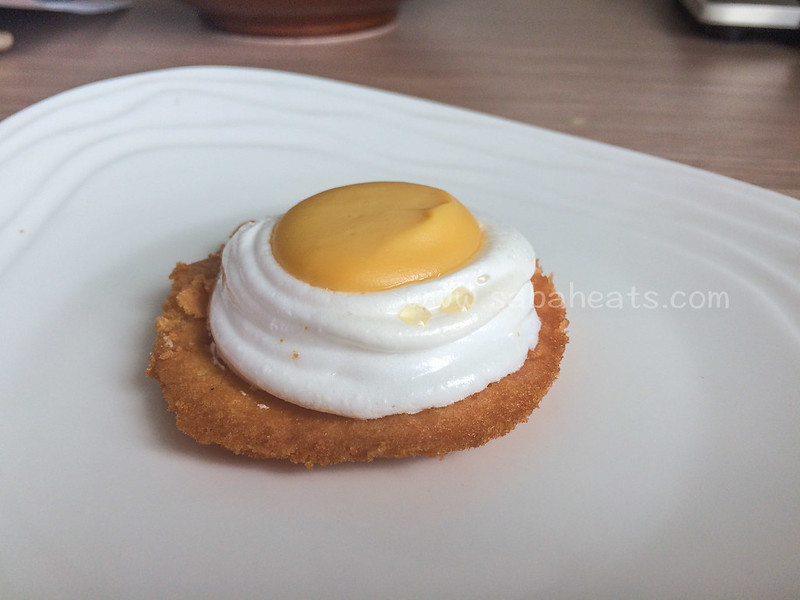
Cite error: <ref> tags exist for a group named "note", but no corresponding <references group="note"/> tag was found