Toxicoscordion fremontii
Template:Short description Script error: No such module "labelled list hatnote". Template:Speciesbox
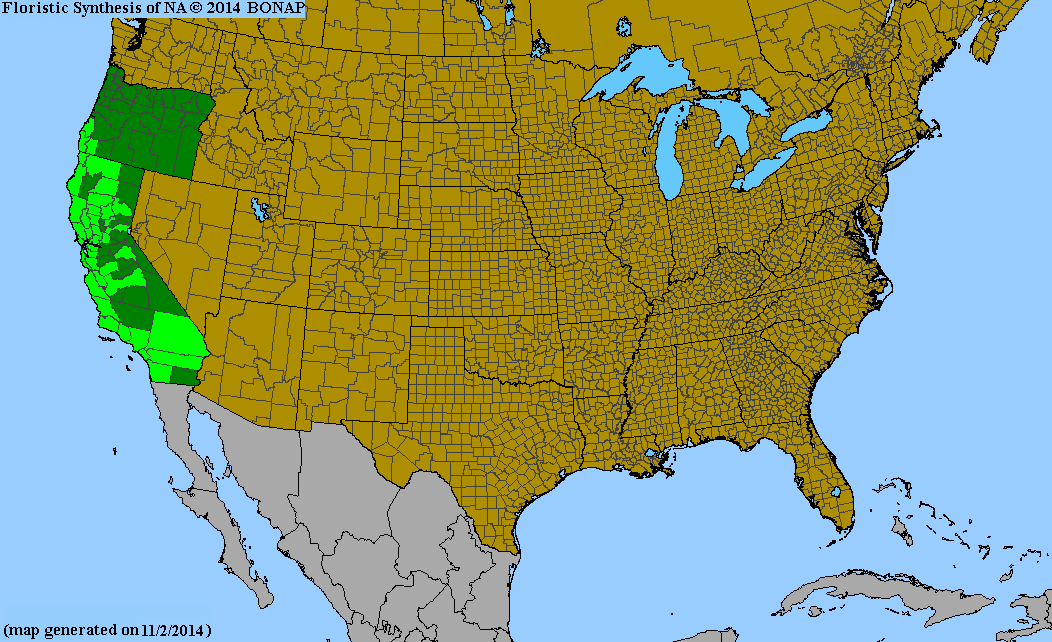
Toxicoscordion fremontii, known as the common star lily or Frémont's deathcamas (after John C. Frémont)[1] or star zigadene, is an attractive wildflower found on grassy or woody slopes, or rocky outcrops, in many lower-lying regions of California, southwestern Oregon, and northern Baja California.[2][3][4]
Like other deathcamases, T. fremontii grows from a more or less spherical bulb, which in this species has a diameter of 20–35 mm. Its leaves can reach up to half a meter in length, but are typically half that length. They grow from the base of the plant. Flowers, which can be seen from March to June, grow in clusters. They have six petals (strictly, three petals and three very similar sepals), arranged symmetrically, giving rise to the name star-lily. Each flower is 1–4 cm across.[5]
References
<templatestyles src="Reflist/styles.css" />
- ↑ Script error: No such module "citation/CS1".
- ↑ Cite error: Script error: No such module "Namespace detect".Script error: No such module "Namespace detect".
- ↑ Calflora taxon report, University of California @ Berkeley, Toxicoscordion fremontii (Torr.) Rydb. Fremont's star lily
- ↑ Biota of North America Program 2014 county distribution map
- ↑ Flora of North America, Vol. 26 Page 85, Zigadenus fremontii (Torrey) Torrey ex S. Watson, Botany (Fortieth Parallel). 343. 1871 (as Zygadenus).
Script error: No such module "Check for unknown parameters".
External links
- Jepson manual species treatment
- CalPhotos Photos gallery, University of California
- Santa Barbara Wildflowers, Toxicoscordion fremontii color photos and ecological information
- Pages with script errors
- Pages with reference errors
- Toxicoscordion
- Flora of California
- Flora of Baja California
- Flora of Oregon
- Flora of the Klamath Mountains
- Natural history of the California chaparral and woodlands
- Natural history of the California Coast Ranges
- Natural history of the Channel Islands of California
- Natural history of the Peninsular Ranges
- Natural history of the San Francisco Bay Area
- Natural history of the Santa Monica Mountains
- Natural history of the Transverse Ranges
- Plants described in 1857
- Taxa named by John Torrey
- Flora without expected TNC conservation status