Malus fusca
Template:Short description Template:Speciesbox Malus fusca, with the common names Oregon crabapple and Pacific crabapple, is a species of crabapple native to western North America.[1]
Description

Malus fusca is a deciduous tree growing up to Script error: No such module "convert". tall, with a trunk Script error: No such module "convert". thick.[2] The leaves are Script error: No such module "convert". long, dark green above, and both pale and fibrous beneath; they turn bright orange to red in autumn.[2]
The flowers are white or pale pink, blooming in spring. The fruits are small round apple-shaped pomes, about Script error: No such module "convert". long and from red to yellow-green in colour.[3][4] They may stay on the tree until winter.[5]
The trees can reach at least 100 years of age.[2]
Script error: No such module "Gallery".
Taxonomy
Archibald Menzies described the species in 1792 after finding it near today's Port Angeles, Washington.[2]
Distribution and habitat
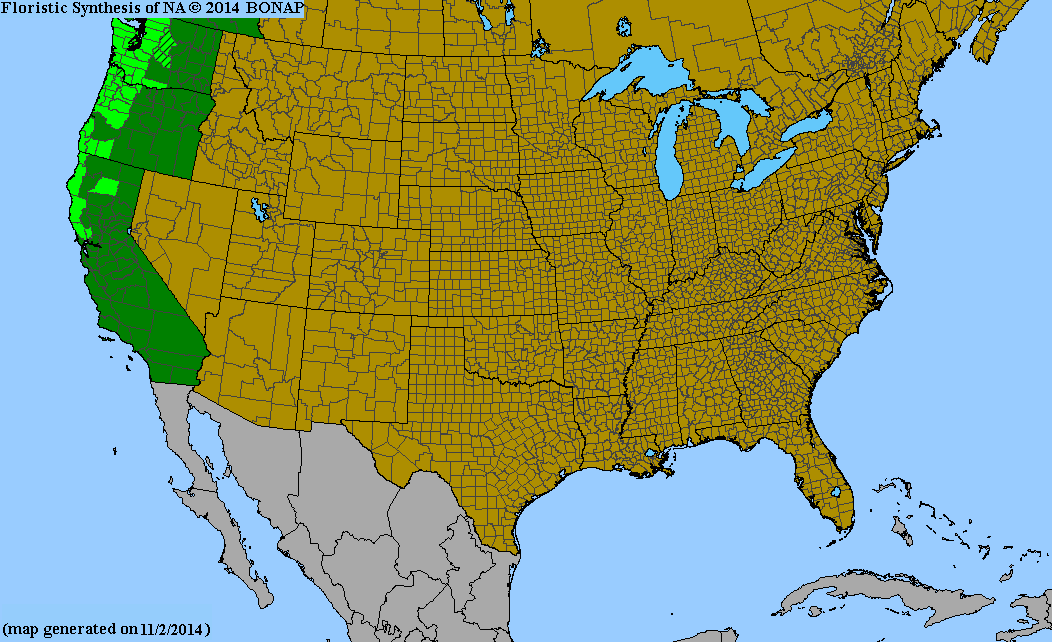
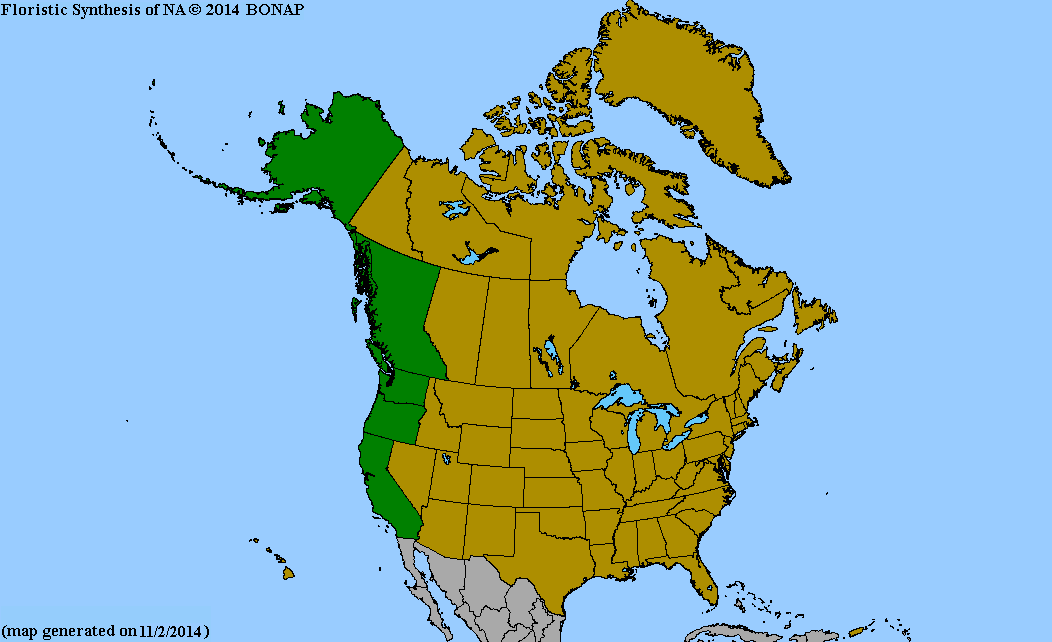
The species can be found from Alaska, through British Columbia, to northwestern California. It grows in temperate coniferous forest, primarily in the Cascade Range and the Pacific Coast Ranges.[6][7][8][9][10]
The tree can grow in a variety of maritime conditions, its rootstock tolerating wet soils (including saltwater estuaries), poorly drained areas and heavy clay soils. It can be found in high-rainfall regions.[11][12]
Ecology
It can be found growing along with red alder, bigleaf maple, willows, and cascara. Animals including grouse and bears eat the fruit.[2]
Uses
The oblong fruit can be eaten, but has a sour flavor.[13] The fruit can also be used for extraction of pectin, useful in helping make jams and jellies from other fruits, and is also made into jams and jellies itself.[14] The bark can be used as an herbal medicine. It is also grown in parks and gardens as an ornamental plant.Script error: No such module "Unsubst".
Pacific crabapple fruits were prized by indigenous peoples of the Pacific Northwest as a food source,[13] and were gathered all along the coast. As a traditional medicinal plant, infusions of the bark and/or fruit were used, including for stomach disorders, skin and eye infections, and as an analgesic.[15]
The tree was also valued for its tough, resilient wood, used for making implements, and for its bark, used for a wide range of medicinal purposes.[16][17]
References
<templatestyles src="Reflist/styles.css" />
- ↑ Plants for a Future−PFAF: Malus fusca
- ↑ a b c d e Script error: No such module "citation/CS1".
- ↑ Malus fusca'- Árboles ornamentales (in Spanish)
- ↑ Flora of North America, Malus fusca (Rafinesque) C. K. Schneider, 1906. Oregon or Western or Pacific crabapple
- ↑ Script error: No such module "citation/CS1".
- ↑ Biota of North America Program: 2014 county distribution map
- ↑ Biota of North America Program 2014 state-level distribution map
- ↑ Calflora taxon report, University of California, Malus fusca (Raf.) C. Schneider Oregon crab apple, Oregon crabapple
- ↑ University of Washington, Burke Museum
- ↑ Biodiversity of the Central Coast: Pacific Crab Apple
- ↑ Deur Keeping it Living. University of Washington Press, 2005, p. 13.
- ↑ Script error: No such module "citation/CS1".
- ↑ a b Script error: No such module "citation/CS1".
- ↑ Script error: No such module "citation/CS1".
- ↑ University of Michigan at Dearborn: Native American Ethnobotany of Malus fusca (Oregon Crabapple)
- ↑ Deur, Douglas and Turner, Nancy J. Keeping it Living. University of Washington Press, 2005, p. 13.
- ↑ Crabapples - University of Alaska Fairbanks description, photos, recipes
Script error: No such module "Check for unknown parameters".
External links
Script error: No such module "Side box".
- Pages with script errors
- Pages with broken file links
- Malus
- Crabapples
- Flora of Alaska
- Flora of British Columbia
- Flora of California
- Flora of Oregon
- Flora of Washington (state)
- Medicinal plants of North America
- Plants used in Native American cuisine
- Plants used in traditional Native American medicine
- Plants described in 1830