Lydia Litvyak
Template:Short description Script error: No such module "Unsubst". Template:Family name hatnote Script error: No such module "Infobox".Script error: No such module "Check for unknown parameters". Lydia Vladimirovna Litvyak (Template:Langx; 18 August 1921 – 1 August 1943), also known as Lilya, was a fighter pilot in the Soviet Air Force during World War II.Script error: No such module "Footnotes".Script error: No such module "Check for unknown parameters". Historians' estimates for her total victories range from thirteen to fourteen solo victories and four to five shared kills in her 66 combat sorties.Script error: No such module "Footnotes".Script error: No such module "Check for unknown parameters".Script error: No such module "Footnotes".Script error: No such module "Check for unknown parameters".Script error: No such module "Footnotes".Script error: No such module "Check for unknown parameters".Script error: No such module "Footnotes".Script error: No such module "Check for unknown parameters".Script error: No such module "Footnotes".Script error: No such module "Check for unknown parameters". In about two years of operations, she was the first female fighter pilot to shoot down an enemy aircraft, the first of two female fighter pilots who have earned the title of fighter ace and the holder of the record for the greatest number of kills by a female fighter pilot. She was shot down near Orel during the Battle of Kursk as she attacked a formation of German aircraft.
Early life
Lydia Litvyak was born in Moscow into a Russian family.[1] Her mother Anna Vasilievna Litvyak was a shop assistant; her father Vladimir Leontievich Litvyak (1892–1937) worked as a railwayman, train driver and clerk. During the Great Purge, her father was arrested as an "enemy of the people" and disappeared.[2][3] Lydia became interested in aviation at an early age. At 14, she enrolled in a flying club. She performed her first solo flight at 15, and later graduated from the Kherson military flying school. She became a flight instructor at Kalinin Airclub,Script error: No such module "Footnotes".Script error: No such module "Check for unknown parameters". and by the time the German–Soviet war broke out, had already trained 45 pilots.Script error: No such module "Footnotes".Script error: No such module "Check for unknown parameters".
World War II
Women's regiment
After the German attack on the Soviet Union in June 1941, Litvyak tried to join a military aviation unit, but was turned down because of lack of experience. After deliberately exaggerating her pre-war flight time by 100 hours, she joined the all-female 586th Fighter Aviation Regiment of the Air Defense Force,Script error: No such module "Footnotes".Script error: No such module "Check for unknown parameters". which was formed by Marina Raskova. She trained there on the Yakovlev Yak-1 aircraft.

Men's regiment
Litvyak flew her first combat flights in the summer of 1942 over Saratov. In September, she was assigned to the 437th Fighter Aviation Regiment, a men's regiment fighting over Stalingrad. On 10 September she moved along with Yekaterina Budanova, Mariya Kuznetsova and Raisa Belyaeva, the commander of the group, and accompanying female ground crew, to the regiment airfield, at Verkhnaia Akhtuba, on the east bank of the Volga river. But when they arrived, the base was empty and under attack, so they soon moved to Srednaia Akhtuba.Script error: No such module "Footnotes".Script error: No such module "Check for unknown parameters". Here, flying a Yak-1Script error: No such module "Footnotes".Script error: No such module "Check for unknown parameters". carrying the number "32" on the fuselage, she achieved considerable success.Script error: No such module "Footnotes".Script error: No such module "Check for unknown parameters". Boris Yeremin (later lieutenant general of aviation), a regimental commander in the division to which she and Budanova were assigned, saw her as "a very aggressive person" and "a born fighter pilot".Script error: No such module "Footnotes".Script error: No such module "Check for unknown parameters".

In the 437th Fighter Aviation Regiment, Litvyak scored her first two kills on 13 September, three days after her arrival and on her third mission to cover Stalingrad, becoming the first woman fighter pilot to shoot down an enemy aircraft.Script error: No such module "Footnotes".Script error: No such module "Check for unknown parameters". That day, four Yak-1s with Major S. Danilov in the lead attacked a formation of Junkers Ju 88s escorted by Messerschmitt Bf 109s.Script error: No such module "Footnotes".Script error: No such module "Check for unknown parameters". Her first kill was a Ju 88 which fell in flames from the sky after several bursts. Then she shot down a Bf 109 G-2 "Gustav" on the tail of her squadron commander, Belyaeva.Script error: No such module "Footnotes".Script error: No such module "Check for unknown parameters".[5] The Bf 109 was piloted by a decorated pilot from the 4th Air Fleet, the 11-victory aceScript error: No such module "Footnotes".Script error: No such module "Check for unknown parameters". Staff Sergeant Erwin Meier of the 2nd Staffel of Jagdgeschwader 53. Meier parachuted from his aircraft, was captured by Soviet troops, and asked to see the Russian ace who had shot him down. When he was taken to Litvyak, he thought he was being made the butt of a Soviet joke. It was not until Litvyak described each move of the fight to him in perfect detail that he knew he had been shot down by a woman pilot.Script error: No such module "Footnotes".Script error: No such module "Check for unknown parameters". But according to other authors, the first air victory by a female pilot was achieved by Lieutenant Valeriya Khomyakova of the 586th Regiment when she shot down the Ju 88 flown by Oblt. Gerhard Maak of 7./KG76 on the night of 24 September 1942.Script error: No such module "Footnotes".Script error: No such module "Check for unknown parameters".
On 14 September, according to some authors, Litvyak shot down another Bf 109.[6] Her ill-fated opponent was probably Knight's Cross holder and 71-kill experte Lt. Hans Fuss (Adj.II./JG-3), injured in aerial combat with a Yak-1 on 14 September 1942 in Stalingrad area, when his G-2 fuel tank was hit, his plane somersaulted during the landing when he ran out of fuel flying back to base. He was critically injured, lost one leg and died of his wounds 10 November 1942.[7] On 27 September, Litvyak scored an air victory against a Ju 88, the gunner having shot up the regiment commander, Major M.S. Khovostnikov,Script error: No such module "Footnotes".Script error: No such module "Check for unknown parameters". possibly Ju 88A-4 "5K + LH", piloted by Iron Cross holder Oblt. Johann Wiesniewski, 2./KG 3, MIA with all crew members.[8] Some historians credit it as her first kill.Script error: No such module "Footnotes".Script error: No such module "Check for unknown parameters".
Free hunter
Litvyak, Belyaeva, Budanova and Kuznetsova stayed in the 437th Regiment for a short time only, mainly because it was equipped with LaGG 3s rather than Yak-1s, that the women flew, and was lacking the facilities to service the latter. So the four women were moved to the 9th Guards Fighter Regiment. From October 1942 till January 1943, Litvyak and Budanova served, still in the Stalingrad area, with this famous unit, commanded by Lev Shestakov, Hero of Soviet Union.Script error: No such module "Footnotes".Script error: No such module "Check for unknown parameters".
In January 1943, the 9th was re-equipped with the Bell P-39 Airacobras and Litvyak and Budanova were moved to the 296th Fighter Regiment (later redesignated as the 73rd Guards Fighter Aviation Regiment) of Nikolai Baranov, of the 8th Air Army, so that they could still fly the Yaks.[9] On 23 February, she was awarded the Order of the Red Star, made a junior lieutenant and selected to take part in the elite air tactic called okhotniki, or "free hunter", where pairs of experienced pilots searched for targets on their own initiative.Script error: No such module "Footnotes".Script error: No such module "Check for unknown parameters". Twice, she was forced to land due to battle damage. On 22 March she was wounded for the first time.Script error: No such module "Footnotes".Script error: No such module "Check for unknown parameters". That day she was flying as part of a group of six Yak fighters when they attacked a dozen Ju 88s. Litvyak shot down one of the bombers but was in turn attacked and wounded by the escorting Bf 109s. She managed to shoot down a Messerschmitt and to return to her airfield and land her plane, but was in severe pain and losing blood.[10] While in 73rd Regiment, she often flew as wingman of Captain Aleksey Solomatin, a flying ace with a claimed total of 39 victories (22 shared). On 21 May,Script error: No such module "Footnotes".Script error: No such module "Check for unknown parameters". while training a new flyer, Solomatin was killed in front of the entire regiment in Pavlonka when he flew into the ground. Litvyak was devastated by the crash and wrote a letter to her mother describing how she realized only after Solomatin's death that she had loved him.Script error: No such module "Footnotes".Script error: No such module "Check for unknown parameters".
Senior Sergeant Inna Pasportnikova, Litvyak's mechanic during the time she flew with the men's regiment, reported in 1990 that after Solomatin's death, Litvyak wanted nothing but to fly combat missions, and she fought desperately.Script error: No such module "Footnotes".Script error: No such module "Check for unknown parameters".
Litvyak scored against a difficult target on 31 May 1943: an artillery observation balloon manned by a German officer. German artillery was aided in targeting by reports from the observation post on the balloon. The elimination of the balloon had been attempted by other Soviet airmen but all had been driven away by a dense protective belt of anti-aircraft fire defending the balloon. Litvyak volunteered to take out the balloon but was turned down. She insisted and described for her commander her plan: she would attack it from the rear after flying in a wide circle around the perimeter of the battleground and over German-held territory. The tactic worked—the hydrogen-filled balloon caught fire under her stream of tracer bullets and was destroyed.Script error: No such module "Footnotes".Script error: No such module "Check for unknown parameters".
On 13 June 1943, Litvyak was appointed flight commander of the 3rd Aviation Squadron within 73rd Guards Fighter Aviation Regiment.Script error: No such module "Footnotes".Script error: No such module "Check for unknown parameters".
Litvyak made an additional kill on 16 July 1943.Script error: No such module "Footnotes".Script error: No such module "Check for unknown parameters".Script error: No such module "Footnotes".Script error: No such module "Check for unknown parameters". That day, six Yaks encountered 30 German Ju 88 bombers with six escorts. The female ace downed a bomber and shared a victory with a comrade, but her fighter was hit and she had to make a belly landing.Script error: No such module "Footnotes".Script error: No such module "Check for unknown parameters". She was wounded again but refused to take medical leave. She shot down one Bf 109 on 19 July 1943, probably 6-kill ace Uffz. Helmuth Schirra, 4./JG-3 (MIA, Luhansk area).[11] Another Bf 109 kill followed two days later on 21 July 1943, possibly Bf 109G-6 of Iron Cross holder and 28-kill experte Lt. Hermann Schuster 4./JG-3(KIA, near Pervomaysk, Luhansk area).[12]Script error: No such module "Footnotes".Script error: No such module "Check for unknown parameters".
Last mission

On 1 August 1943, Litvyak did not come back to her base at Krasnyy Luch on the Mius-Front. It was her fourth sortie of the day, escorting a flight of Ilyushin Il-2 ground-attack aircraft. As the Soviets were returning to base, a pair of Bf 109 fightersScript error: No such module "Footnotes".Script error: No such module "Check for unknown parameters". dove on Litvyak while she was attacking a large group of German bombers. Soviet pilot Ivan Borisenko recalled: “Lilya just didn’t see the Messerschmitt 109s flying cover for the German bombers. A pair of them dove on her and when she did see them she turned to meet them. Then they all disappeared behind a cloud.” Borisenko, involved in the dogfight, saw her the last time, through a gap in the clouds, her Yak-1 pouring smoke and pursued by as many as eight Bf 109s.[13]
Borisenko descended to see if he could find her. No parachute was seen, and no explosion. She never returned from the mission. Litvyak was 21 years old. Soviet authorities suspected that she might have been captured, a possibility that prevented them from awarding her the title of Hero of the Soviet Union.Script error: No such module "Footnotes".Script error: No such module "Check for unknown parameters".
One of two German pilots is believed to have shot down Litvyak: Iron Cross holder and 30-kill experte Fw. Hans-Jörg Merkle of 1./JG.52, or Knight's Cross holder and future 99-kill experte Lt Hans Schleef of 7./JG 3. Merkle is the only pilot that claimed a Yak-1 near Dmitryevka on 1 August 1943, his 30th victory. (Dmitrijewka is where Litvyak was last seen and was reportedly buried.) This occurred before being rammed and killed by his own victim (the Luftwaffe combat report of the collision was 3 km east of Dmitrievka). Schleef claimed a LaGG-3 (often confused in combat with Yak-1s by German pilots) kill on the same day, in the southern Ukraine area where Litvyak's aircraft was finally found.[14][15]
Recognition
In an attempt to prove that Litvyak had not been taken captive, Pasportnikova embarked on a 36-year search for the Yakovlev Yak-1 crash site assisted by the public and the media. For three years, she was joined by relatives, who together combed the most likely areas with a metal detector.Script error: No such module "Footnotes".Script error: No such module "Check for unknown parameters". In 1979, after uncovering more than 90 other crash sites, 30 aircraftScript error: No such module "Footnotes".Script error: No such module "Check for unknown parameters". and many lost pilots killed in action, "the searchers discovered that an unidentified woman pilot had been buried in the village of Dmitrievka... in Shakhterski district." It was then assumed that it was Litvyak and that she had been killed in action after sustaining a mortal head wound.Script error: No such module "Footnotes".Script error: No such module "Check for unknown parameters". Pasportnikova said that a special commission was formed to inspect the exhumed body, and it concluded the remains were those of Litvyak.Script error: No such module "Footnotes".Script error: No such module "Check for unknown parameters".
On 6 May 1990, Soviet President Mikhail Gorbachev posthumously awarded her the title Hero of the Soviet Union.Script error: No such module "Footnotes".Script error: No such module "Check for unknown parameters". Her final rank was senior lieutenant, as was documented in all Moscow newspapers of that date.Script error: No such module "Unsubst".

Controversies
Manner of death
Arguments have been published that dispute the official version of Litvyak's death. Although Yekaterina Valentina Vaschenko, the curator of the Litvyak museum in Krasnyi Luch has stated that the body was disinterred and examined by forensic specialists, who determined that it was indeed Litvyak,[16] Kazimiera Janina Cottam claims, on the basis of evidence provided by Yekaterina Polunina, chief mechanic and archivist of the 586th Fighter Regiment in which Litvyak initially served, that the body was never exhumed and that verification was limited to comparison of a number of reports.Script error: No such module "Unsubst".
Cottam, an author and researcher focusing on Soviet women in the military, concludes that Litvyak made a belly-landing in her stricken aircraft, was captured and was taken to a prisoner of war camp.[17] In her book published in 2004, Polunina lists evidence that led her to conclude that Litvyak was pulled from the downed aircraft by German troops and held prisoner for some time.Script error: No such module "Footnotes".Script error: No such module "Check for unknown parameters".
Gian Piero Milanetti, the author of a recent book on Soviet aviatrixes,[18] wrote that an airwoman parachuted in the approximate location of the alleged crash landing of Litvyak's aircraft. No other Soviet airwomen operated in that area and so Milanetti believes the pilot was Litvyak, probably captured by the enemy. The Russian aviation historian Anatoly Plyac, a former KGB major, told Milanetti: "Litvyak survived and was taken prisoner..." Script error: No such module "Footnotes".Script error: No such module "Check for unknown parameters".
A television broadcast from Switzerland was seen in 2000 by Raspopova, a veteran of the women's night bomber regiment. It featured a former Soviet woman fighter pilot who Raspopova thought may have been Litvyak. This veteran was wounded twice. Married outside of the Soviet Union, she had three children. Raspopova promptly told Polunina what she inferred from the Swiss broadcast.Script error: No such module "Footnotes".Script error: No such module "Check for unknown parameters".
Number of kills
There is no consensus among historians about the number of aerial victories scored by Litvyak. Russian historians Andrey Simonov and Svetlana Chudinova were able to confirm five solo and three team shootdowns of enemy aircraft plus the destruction of the air ballon with archival documents.Script error: No such module "Footnotes".Script error: No such module "Check for unknown parameters". Various other tallies are attributed to her, including eleven solo and three shared plus the balloon,Script error: No such module "Footnotes".Script error: No such module "Check for unknown parameters". as well as eight individual and four team. Anne Noggle credits her with twelve individual and two team shootdowns.Script error: No such module "Footnotes".Script error: No such module "Check for unknown parameters". Pasportnikova stated in 1990 that the tally was eleven solo kills plus the balloon, and an additional three shared.Script error: No such module "Footnotes".Script error: No such module "Check for unknown parameters". Polunina has written that the kills of famous Soviet pilots, including those of Litvyak and Budanova, were often inflated; and that Litvyak should be credited with five solo aircraft kills and two group kills, including the observation balloon.Script error: No such module "Footnotes".Script error: No such module "Check for unknown parameters".
Character and private life
Litvyak displayed a rebellious and romantic character.Script error: No such module "Footnotes".Script error: No such module "Check for unknown parameters". Returning from a successful mission, she would "buzz" the aerodrome and then indulge in unauthorised aerobatics, knowing that it enraged her commander.
Litvyak could also be superstitious, as Pasportnikova testified:
She never believed that she was invincible. She believed that some pilots had luck on their side and others didn't. She firmly believed that, if you survived the first missions, the more you flew and the more experience you got your chances of making it would increase. But you had to have luck on your side.Script error: No such module "Footnotes".Script error: No such module "Check for unknown parameters".
Despite the predominantly male environment in which she found herself, she never renounced her femininity and she carried on bleaching her hair blonde, sending her friend Inna Pasportnikova to the hospital to fetch hydrogen peroxide for her.Script error: No such module "Footnotes".Script error: No such module "Check for unknown parameters". She would fashion scarves from parachute material, dyeing the small pieces in different colors and stitching them together. She would not hide her love of flowers, which she picked at every available occasion, favoring red roses, and would fashion these into bouquets and keep them in the cockpit. These were promptly discarded by the male pilots who shared her aircraft.Script error: No such module "Footnotes".Script error: No such module "Check for unknown parameters".
Her comrade Solomatin is believed to have been her fiancé, and after his death, she wrote to her mother:
You see, he was not my type, but his insistence and his love for me convinced me to love him... and now, it seems I will never meet someone like him ever again.Script error: No such module "Footnotes".Script error: No such module "Check for unknown parameters".
Litvyak was called the "White Lily of Stalingrad" in Soviet press releases; the white lily flower may be translated from Russian as Madonna lily. She has also been called the "White Rose of Stalingrad" in Europe and North America since reports of her exploits were first published in English.[19]
Awards
- Hero of the Soviet Union (5 May 1990)
- Order of Lenin (5 May 1990)
- Order of the Red Banner (22 July 1943)
- Order of the Red Star (17 February 1943)
- Order of the Patriotic War 1st class (10 September 1943)
Script error: No such module "Footnotes".Script error: No such module "Check for unknown parameters".
Aerial victories (credited)
- 13 September 1942
- two solo, a series Junkers Ju 88Script error: No such module "Footnotes".Script error: No such module "Check for unknown parameters". and a Messerschmitt Bf 109 (of E. Maier.) Another source suggests a Heinkel He 111 instead of a Ju 88.[20]
- 14 September 1942
- one solo, a Bf 109 Script error: No such module "Footnotes".Script error: No such module "Check for unknown parameters". (according to historian Hans D. Seidl,Script error: No such module "Footnotes".Script error: No such module "Check for unknown parameters". it was a kill shared with Yekaterina Budanova)[21][22]
- 27 September 1942
- 11 February 1943
- one solo, a Junkers Ju 87Script error: No such module "Footnotes".Script error: No such module "Check for unknown parameters".Script error: No such module "Footnotes".Script error: No such module "Check for unknown parameters".[25]
- one shared, with Alexei Solomatin, a Focke-Wulf Fw 190Script error: No such module "Footnotes".Script error: No such module "Check for unknown parameters".Script error: No such module "Footnotes".Script error: No such module "Check for unknown parameters".
- 22 March 1943
- two solo, a Messerschmitt Bf 109Script error: No such module "Footnotes".Script error: No such module "Check for unknown parameters".Script error: No such module "Footnotes".Script error: No such module "Check for unknown parameters". and a Junkers Ju 88 Script error: No such module "Footnotes".Script error: No such module "Check for unknown parameters".
- 5 May 1943
- one solo, a Messerschmitt Bf 109Script error: No such module "Footnotes".Script error: No such module "Check for unknown parameters".Script error: No such module "Footnotes".Script error: No such module "Check for unknown parameters".[25]
- 7 May 1943
- one solo, a Messerschmitt Bf 109 Script error: No such module "Footnotes".Script error: No such module "Check for unknown parameters".Script error: No such module "Footnotes".Script error: No such module "Check for unknown parameters".[25]
- 31 May 1943
- one solo, an artillery observation balloonScript error: No such module "Footnotes".Script error: No such module "Check for unknown parameters".Script error: No such module "Footnotes".Script error: No such module "Check for unknown parameters".[25]
- 16 July 1943
- one solo, Messerschmitt Bf 109. One source claims the victim aircraft had an "Ace of Spades" card painted on the fuselage.[20] Another source claims that this kill was a bomber.Script error: No such module "Footnotes".Script error: No such module "Check for unknown parameters".
- one sharedScript error: No such module "Footnotes".Script error: No such module "Check for unknown parameters". (According to another source, the shared kill was a Bf 109 while the solo was a Ju 88Script error: No such module "Footnotes".Script error: No such module "Check for unknown parameters".)
- 19 July 1943
- 21 July 1943
- one a Messerschmitt Bf 109Script error: No such module "Footnotes".Script error: No such module "Check for unknown parameters".
- 1 August 1943
- one solo, a Messerschmitt Bf 109,Script error: No such module "Footnotes".Script error: No such module "Check for unknown parameters".
- one shared, a Messerschmitt Bf 109Script error: No such module "Footnotes".Script error: No such module "Check for unknown parameters".Script error: No such module "Footnotes".Script error: No such module "Check for unknown parameters".
The following table summarizes Litvyak's credited victories and their fates:
| Date (dd.mm.yyyy) | Soviet Unit | Aircraft flown | Enemy Aircraft | Pilot & Fate | Axis Unit |
|---|---|---|---|---|---|
| 13 September 1942 | 437 IAP | Yak-1 "White 02" | Ju.88 | Luftwaffe (**) | |
| 13 September 1942 | 437 IAP | Yak-1 "White 02" | Bf 109G-2 W.Nr.13556 black 8 | Obfw. Erwin Meier - POW (11-kill ace) | 2./JG 53[28][29] |
| 14 September 1942 | 437 IAP | Yak-1 "White 02" | Bf 109 | Knight's Cross holder and 71-kill experte Lt. Hans Fuß (Adj.II./JG-3) | Luftwaffe (**) |
| 27 September 1942 | 437 IAP | Yak-1 "White 02" | Ju.88A-4 W.Nr.3517 | Unknown (80% dam, w/o) | 5./KG 76[23][24] |
| 27 September 1942 | 437 IAP | Yak-1 "White 02" | Bf 109G-2 W.Nr.14221 | Horst Loose - KIA (shared) | 4./JG 52[21][22]
Script error: No such module "Unsubst". |
| 11 February 1943 | 296 IAP | Yak-1 "Red 32" | Fw.190 | (shared) | Luftwaffe (**) |
| 11 February 1943 | 296 IAP | Yak-1 "Red 32" | Ju 87D-3 W.Nr.2948 | Gerhard Weber + gunner - MIAs | 5./StG 77[30] |
| 22 March 1943 | 296 IAP | Yak-1 "Yellow 44" | Bf 109G-4 "BH+XB" | Lt. Franz Müller | 9./JG 3[31] |
| 22 March 1943 | 296 IAP | Yak-1 "Yellow 44" | Ju.88 | Luftwaffe (**) | |
| 5 May 1943 | 73 GIAP | Yak-1 "Yellow 44" | Bf 109 | Luftwaffe (**) | |
| 7 May 1943 | 73 GIAP | Yak-1 "Yellow 44" | Bf 109 | Luftwaffe (**) | |
| 31 May 1943 | 73 GIAP | Yak-1 | Observation balloon | ||
| 16 July 1943 | 73 GIAP | Yak-1b "White 23" | Bf 109G-6 W.Nr.15204 | Unknown (20% dam) | 5./JG 3[26][27] |
| 16 July 1943 | 73 GIAP | Yak-1b "White 23" | Bf 109G-? W.Nr.? | ||
| 19 July 1943 | 73 GIAP | Yak-1b "White 23" | Bf 109G-6 W.Nr.20005 | Unknown (40% dam) | 5./JG 3[26][27] |
| 21 July 1943 | 73 GIAP | Yak-1b "White 23" | Bf 109 | Luftwaffe (**) | |
| 1 August 1943 | 73 GIAP | Yak-1b "White 23" | Bf 109G-6 W.Nr.15852 | Unknown (50% dam) | 2./JG 52[32][33] |
| 1 August 1943 | 73 GIAP | Yak-1b "White 23" | Bf 109G-6 W.Nr.20423 white 3 | Fw. Hans-Jörg Merkle - KIA (30-kill ace)(shared) | 1./JG 52[32][34] |
See also
Script error: No such module "Portal".
- List of female Heroes of the Soviet Union
- Yekaterina Budanova, the only other woman credited as a flying ace.
References
Notes
<templatestyles src="Reflist/styles.css" />
- ↑ Award list scan at the Podvig naroda database (in Russian)
- ↑ Gian Piero Milanetti (2013). Soviet Airwomen of the Great Patriotic war. – Rome: Istituto Bibliografico Napoleone, p. 211 Template:ISBN
- ↑ Litvyak Vladimir Leontievich at the Open List database (in Russian)
- ↑ Script error: No such module "citation/CS1".
- ↑ The Eastern Front. Russian Aces. Lilya Vladimirovna Litviak. Script error: No such module "webarchive". Retrieved 23 March 2009.
- ↑ Sakaida 2003, p. 14.
- ↑ Script error: No such module "citation/CS1".
- ↑ Script error: No such module "citation/CS1".
- ↑ Pennington 2001, pp. 135-163.
- ↑ Pennington 2001, pp. 137-138.
- ↑ Script error: No such module "citation/CS1".
- ↑ Script error: No such module "citation/CS1".
- ↑ Myles 1981, p. 232.
- ↑ Script error: No such module "citation/CS1".
- ↑ Script error: No such module "citation/CS1".
- ↑ Script error: No such module "citation/CS1".
- ↑ Redarmyonline.org. Kazimiera Janina "Jean" Cottam, 2006. (Lidya (Lily) Vladimirovna Litvyak (b. 1921). Script error: No such module "webarchive". Retrieved 23 March 2009.
- ↑ Script error: No such module "citation/CS1".
- ↑ Script error: No such module "citation/CS1".
- ↑ a b Myles, 1981
- ↑ a b c Fast, JG 52, IV p. 76
- ↑ a b c Die Geschichte der II./JG 52, p.308
- ↑ a b Bergstrom, Dikov & Antipov, p.168
- ↑ a b LW Loss Report (microfilm roll #7)
- ↑ a b c d Aranysas, March 2009. "Sztálingrád Fehér Lilioma". Retrieved 23 March 2009.
- ↑ a b c LW Loss Report (microfilm roll #11)-Vol. 19
- ↑ a b c Prien/Stemmer, II./JG 3, p.408
- ↑ Belyakov, Vladimir. Aviation History magazine, March 2002
- ↑ Prien, JG 53, II, p. 569
- ↑ LW Loss Report (microfilm roll #8)
- ↑ Script error: No such module "citation/CS1".
- ↑ a b LW Loss Report (microfilm roll #11)-Vol. 20
- ↑ Fast, JG 52, IV, p.102
- ↑ Fast, JG 52 Band IV p102
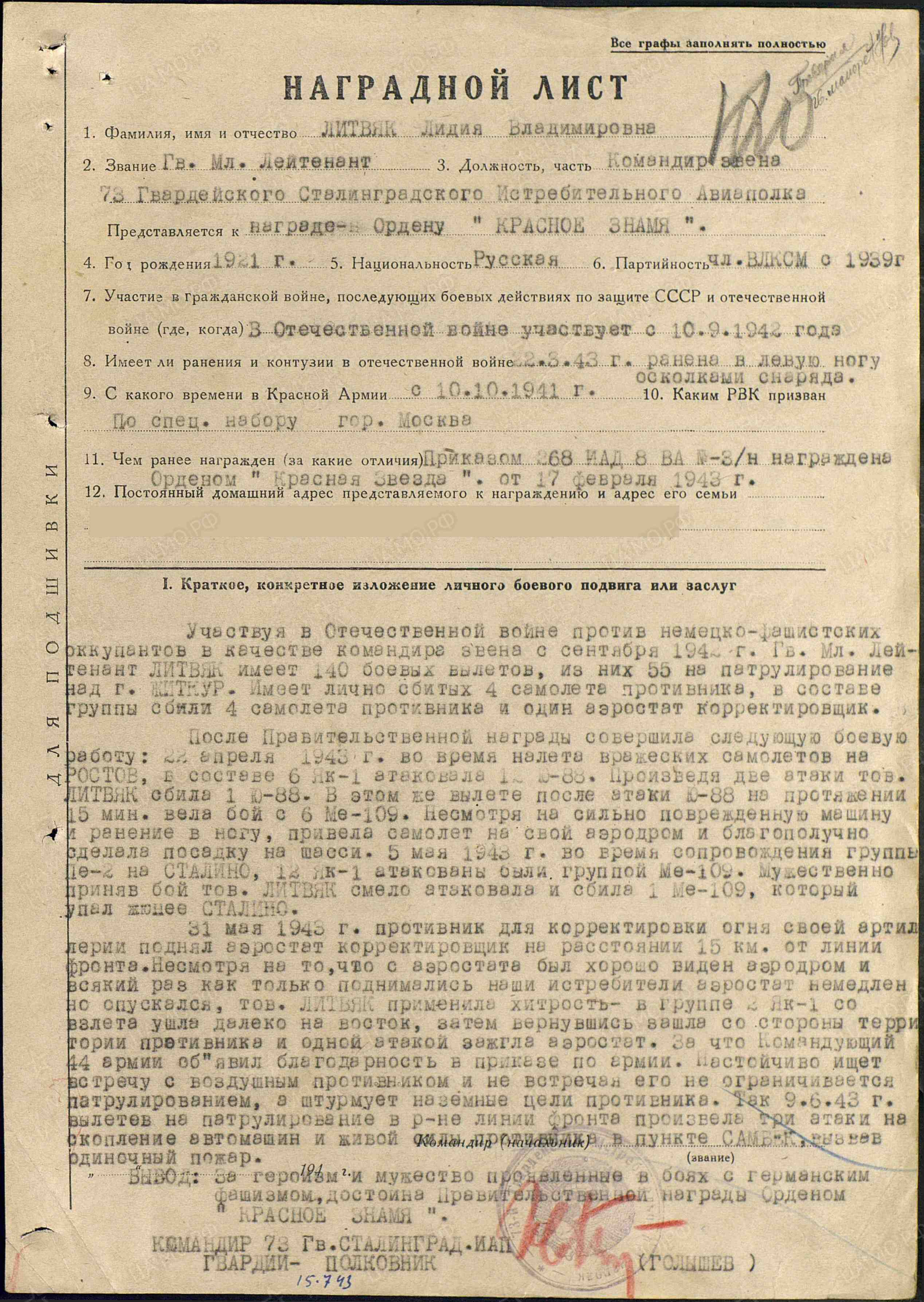
Script error: No such module "Check for unknown parameters".
Bibliography
- Script error: No such module "citation/CS1".
- Bergström, Christer. Stalingrad—The Air Battle: 1942 through January 1943. Hinckley England, Midland, 2007. Template:ISBN.
- Christer Bergström, Andrey Dikov & Vlad Antipov, Black Cross – Red Star. Air War over the Eastern Front. Volume 3. Everything for Stalingrad. Eagle Editions Ltd., 2006.
- Script error: No such module "citation/CS1".
- Script error: No such module "citation/CS1".
- Script error: No such module "citation/CS1".
- Script error: No such module "citation/CS1".
- Script error: No such module "citation/CS1".
- Script error: No such module "citation/CS1".
- Script error: No such module "citation/CS1".
- Script error: No such module "citation/CS1".
- Prien, Jochen - Stemmer, Gerhard - Rodeike, Peter - Bock, Winfried: Die Jagdfliegerverbände der Deutschen Luftwaffe 1934 bis 1945 - Teil 6 Tielband I Unternehmen "Barbarossa" Einsatz im Osten 22.6. bis 5 December 1941, Struve Druck, 2003.
- Prien, Jochen - Stemmer, Gerhard - Rodeike, Peter - Bock, Winfried: Die Jagdfliegerverbände der Deutschen Luftwaffe 1934 bis 1945 - Teil 9 Tielband II Wom Sommerfeldzug 1942 bis zur Niederlage von Stalingrad 1 May 1942 bis 3 February 1943, Struve Druck, 2006.
- Script error: No such module "citation/CS1".
- Script error: No such module "citation/CS1".
- Morgan, Hugh. Gli assi Sovietici della Seconda guerra mondiale (in Italian). Edizioni del Prado/Osprey Aviation, 1999. Template:ISBN.
- Script error: No such module "citation/CS1".
- Script error: No such module "citation/CS1".
- Script error: No such module "citation/CS1".
- Script error: No such module "citation/CS1".
- Script error: No such module "citation/CS1".
- Script error: No such module "citation/CS1".
- Script error: No such module "citation/CS1".
Script error: No such module "Authority control".
External links
Script error: No such module "Side box".
- Template:PAGENAMEBASE at IMDbTemplate:EditAtWikidataScript error: No such module "Check for unknown parameters".
- Lydia Litvyak, The White Lily of Stalingrad: a new documentary by Stalingrad Battle Data
- Pages with script errors
- Pages with broken file links
- 1921 births
- 1943 deaths
- Aviators killed by being shot down
- Heroes of the Soviet Union
- Military personnel from Moscow
- Recipients of the Order of Lenin
- Recipients of the Order of the Red Banner
- Recipients of the Order of the Red Star
- Russian people of World War II
- Russian women aviators
- Shot-down aviators
- Soviet Air Force officers
- Soviet military personnel killed in World War II
- Soviet women in World War II
- Soviet World War II flying aces
- Victims of aviation accidents or incidents in 1943
- Victims of aviation accidents or incidents in the Soviet Union
- Victims of aviation accidents or incidents in Ukraine
- Women air force personnel of the Soviet Union
- Women military aviators