Benjamin Banneker
Template:Short description Script error: No such module "Protection banner". Script error: No such module "Protection banner". Script error: No such module "Unsubst". Template:Use American English Script error: No such module "Unsubst". Script error: No such module "infobox".Script error: No such module "Check for unknown parameters".Script error: No such module "Check for clobbered parameters".Template:Wikidata image Benjamin Banneker (November 9, 1731Template:Spaced ndashOctober 19, 1806) was an American naturalist, mathematician, astronomer and almanac author. A landowner, he also worked as a surveyor and farmer.
Born in Baltimore County, Maryland, to a free African-American mother and a father who had formerly been enslaved, Banneker had little or no formal education and was largely self-taught. He became known for assisting Major Andrew Ellicott in a survey that established the original borders of the District of Columbia, the federal capital district of the United States.
Banneker's knowledge of astronomy helped him author a commercially successful series of almanacs. He corresponded with Thomas Jefferson on the topics of slavery and racial equality. Abolitionists and advocates of racial equality promoted and praised Banneker's works. Although a fire on the day of Banneker's funeral destroyed many of his papers and belongings, one of his journals and several of his remaining artifacts survived.
Banneker became a folk-hero after his death, leading to many accounts of his life being exaggerated or embellished.[1][2] The names of parks, schools and streets commemorate him and his works, as do other tributes.
Biography
Early life
Banneker was born on November 9, 1731, in Baltimore County, Maryland, to Mary Banneky, a free black woman, and Robert, a freed slave from Guinea who died in 1759.[3][4]
There are two conflicting accounts of Banneker's family history. Banneker himself and his earliest biographers described him as having only African ancestry.[5][6][7] None of Banneker's surviving papers describe a white ancestor or identify the name of his grandmother.[6] However, two lines of later research both suggest that Banneker's mother was the daughter of a white woman and an African slave,[4][6][8][9]Template:Rp although they differ as to whether the Banneker surname came from his mother or father and the origin of the name, which could be from Banaka, a small village in the present-day Klay District of Bomi County in northwestern Liberia that had once participated in the African slave trade[4][10] or "Banaka", the home of the Vai people, who have lived there since about 1500 when they left the Mali Empire.[11]
.jpg)
In 1737, when he was 6, Banneker was named on the deed of his family's Script error: No such module "convert". farm in the Patapsco Valley in rural Baltimore County.[12][13][14][15]
In 1791, a letter writer stated that Banneker's parents had sent him to an obscure school where he learned reading, writing and arithmetic as far as double position.Script error: No such module "Unsubst".[16] In contrast, unverified accounts, first appeared in books published more than 140 years after Banneker's death suggest that, as a young teenager, Banneker met and befriended Peter Heinrich, a Quaker who later established a school near the Banneker family farm.[17][18] These accounts state that Heinrich shared his personal library and provided Banneker with his only classroom instruction.[18][19] Banneker's formal education (if any) presumably ended when he was old enough to help on his family's farm.[20]
Notable works
Around 1753, at about the age of 21, Banneker reportedly completed a wooden clock that struck on the hour. He appears to have modelled his clock from a borrowed pocket watch by carving each piece to scale. The clock continued to work until his death.[20][21]
After his father died in 1759, Banneker lived with his mother and sisters.[3][9] Records indicate that in 1768 and 1773, he was living in Baltimore.[22][23]
In 1772, brothers Andrew Ellicott, John Ellicott and Joseph Ellicott moved from Bucks County, Pennsylvania, and bought land along the Patapsco Falls near Banneker's farm on which to construct gristmills, around which the village of Ellicott's Mills (now Ellicott City) subsequently developed.[24][25][26][27] The Ellicotts were Quakers who held the same views on racial equality as did many of their faith.[24][28] Banneker studied the mills and became acquainted with their proprietors.[29][9] In 1788, George Ellicott, a son of Andrew Ellicott, loaned Banneker books and equipment to begin a more formal study of astronomy.[30][31][32] During the following year, Banneker sent George his work calculating a solar eclipse.[30][31][29]
In 1790, Banneker prepared an ephemeris for 1791, which he hoped would be placed within a published almanac.[33] However, he was unable to find a printer that was willing to publish and distribute the work.[30][34]
Survey of the original boundaries of the District of Columbia


In early 1791, U.S. Secretary of State, Thomas Jefferson, asked surveyor Maj. Andrew Ellicott to survey an area for a new federal district. In February 1791, Ellicott left a survey in western New York to begin the district survey and hired Banneker to assist him, advancing him $60 for travel expenses to, and at, Georgetown.[35][36]
The territory that became the original District of Columbia was formed from land along the Potomac River ceded by the states of Maryland and Virginia to the federal government (see: Founding of Washington, D.C.).[35][36][37] a square to measure 10 miles (16 km) on each side, totaling 100 square miles (260 km2). Ellicott's team placed boundary marker stones at or near every mile point along the borders of the new capital territory.[35][36]
Banneker's role in the survey isn't entirely certain. Some biographers have stated that Banneker's duties consisted primarily of making astronomical observations and calculations to establish base points, including one at Jones Point in Alexandria, Virginia, where the survey started and where the south corner stone was to be located.[35][38] They have also stated that Banneker maintained a clock that he used to relate points on the ground to the positions of stars at specific times.[30][12]
However, there is little documentation to confirm Banneker's role[39][40] and a news report covering the April 15 dedication ceremony for the first boundary stone (the south corner stone) credits Andrew Ellicott with "ascertain[ing] the precise point from which the first line of the district was to proceed" [41] and did not mention Banneker.[42]
Banneker left the boundary survey in April 1791 due to other commitments, particularly the calculation of an ephemeris for the year of 1792.[43][44] The arrival of spring also required him to direct more attention to his farm than was needed during the winter.[44] Banneker, therefore, returned to his home near Ellicott's Mills.[30][44]
Andrew Ellicott's two younger brothers, who usually assisted him, had completed the New York survey about the same time and were able to join the survey of the federal district.[44] The surveying team laid the remaining Virginia marker stones in 1791, laying the Maryland stones and completed the boundary survey in 1792.[35][36][45]
Banneker's almanacs
After returning to Ellicott's Mills, Banneker made astronomical calculations that predicted eclipses and planetary conjunctions for inclusion in an almanac and ephemeris for the year of 1792.[3][34][28] To aid Banneker in his efforts to have his almanac published, Andrew Ellicott (who had been authoring almanacs and ephemerides of his own since 1780)[46] forwarded Banneker's ephemeris to James Pemberton, the president of the Pennsylvania Society for Promoting the Abolition of Slavery and for the Relief of Free Negroes Unlawfully Held in Bondage.[30][34][12]

Pemberton then asked William Waring, a Philadelphia mathematician and ephemeris calculator,[47] and David Rittenhouse, a prominent American astronomer, almanac author,[48] surveyor and scientific instrument maker who was at the time serving as the president of the American Philosophical Society,[49] to confirm the accuracy of Banneker's work.[34][12] Waring endorsed Banneker's work, stating, "I have examined Benjamin Banneker's Almanac for 1792, and am of the Opinion that it well deserves the Acceptance and Encouragement of the Public."[12]
Rittenhouse responded to Pemberton by stating that Banneker's ephemeris "was a very extraordinary performance, considering the Colour of the Author" and that he "had no doubt that the Calculations are sufficiently accurate for the purposes of a common Almanac. .... Every instance of Genius amongst the Negroes is worthy of attention, because their suppressors seem to lay great stress on their supposed inferior mental abilities."[12] A biographer wrote that Banneker replied to Rittenhouse's endorsement by stating: "I am annoyed to find that the subject of my race is so much stressed. The work is either correct or it is not. In this case, I believe it to be perfect."[50]

Pemberton then made arrangements for Joseph Crukshank (a Philadelphia Quaker who was a founder of the Pennsylvania Society for the Abolition of Slavery and who had since 1770 been publishing almanacs, including at least one that Waring had calculated) to print Banneker's almanac.[30][51] Having thus secured the support of Pemberton, Rittenhouse and Waring, Banneker delivered a manuscript containing his ephemeris to William Goddard, a Baltimore printer who had published The Pennsylvania, Delaware, Maryland and Virginia Almanack and Ephemeris for every year since 1782.[52] Goddard then agreed to print and distribute Banneker's work within an almanac and ephemeris for the year of 1792.[12]
Banneker's Pennsylvania, Delaware, Maryland and Virginia Almanack and Ephemeris, for the Year of our Lord, 1792 was the first in a six-year series of almanacs and ephemerides that printers agreed to publish and sell.[30][34] At least 28 editions of the almanacs, some of which appeared during the same year, were printed in seven cities in five states: Baltimore; Philadelphia; Wilmington, Delaware; Alexandria, Virginia; Petersburg, Virginia; Richmond, Virginia; and Trenton, New Jersey.[30][53][54]

The title pages of the Baltimore editions of Banneker's 1792, 1793 and 1794 almanacs and ephemerides stated that the publications contained:
the Motions of the Sun and Moon, the True Places and Aspects of the Planets, the Rising and Setting of the Sun, Place and Age of the Moon, &c. – The Lunations, Conjunctions, Eclipses, Judgment of the Weather, Festivals, and other remarkable Days; Days for holding the Supreme and Circuit Courts of the United States, as also the useful Courts in Pennsylvania, Delaware, Maryland, and Virginia. Also – several useful Tables, and valuable Receipts. – Various Selections from the Commonplace–Book of the Kentucky Philosopher, an American Sage; with interesting and entertaining Essays, in Prose and Verse –the whole comprising a greater, more pleasing, and useful Variety than any Work of the Kind and Price in North America.[55][56]

In addition to the information that its title page described, the 1792 almanac contained a tide table listing the methods for calculating the time of high water at four locations along the Chesapeake Bay (Cape Charles and Point Lookout, Virginia; Annapolis and Baltimore, Maryland).[58] Later almanacs contained tables for making such calculations for those locations as well as for Boston, New York, Philadelphia, Halifax, Quebec, Hatteras, Nantucket and other places.[59] Monthly tables in each edition listed astronomical data and weather predictions for each of the months' dates.[60]
A Philadelphia edition of Banneker's 1795 almanac contained a lengthy account of a yellow fever epidemic that had struck that city in 1793. Written by a committee whose president was the city's mayor, Matthew Clarkson, the account related the presumed origins and causes of the epidemic, as well as the extent and duration of the event.[61]
The title pages of two Baltimore editions of Banneker's 1795 almanac had woodcut portraits of him as he may have appeared.[57][62] However, a biographer later concluded that the portraits were more likely portrayals of an idealized African-American youth.[63]
A Baltimore edition of Banneker's 1796 almanac contained a table enumerating the population of each U.S. state and the Southwest Territory as recorded in the 1790 United States census. The table listed the number of free persons and slaves in each state and the territory according to race and gender, as well as to whether they were above or below the age of 16 years. The table also listed the number of members of the U.S. House of Representatives that each state had during the almanac's year.[64]

The almanacs' editors prefaced the publications with adulatory references to Banneker and his race.[34][65] Editions of Banneker's 1792 and 1793 almanacs contained full or abridged copies of a lengthy commendatory letter that James McHenry,[66] the Secretary of the 1787 United States Constitutional Convention and self-described friend of Banneker, had written to Goddard and his partner, James Angell, in August 1791 to support the almanac's publication.[67]
As first published in Banneker's 1792 almanac and later given an increased circulation when re-published in Philadelphia within The American Museum, or Universal Magazine, McHenry's full letter began:
Benjamin Banneker, a free Negro, has calculated an Almanack, for the ensuing year, 1792, which being desirous to dispose of, to the best advantage, he has requested me to aid his application to you for that purpose. Having fully satisfied myself, in respect to his title to this type of authorship, if you can agree to him for the price of his work, I may venture to assure you it will do you credit, as Editors, while it will afford you the opportunity to encourage talents that have thus far surmounted the most discouraging circumstances and prejudices."[68]
In their preface to Banneker's 1792 almanac, the editors of the work wrote that they:
feel themselves gratified in the Opportunity of presenting to the Public, through the Medium of their Press, what must be considered as an extraordinary Effort of Genius — a complete and accurate EPHEMERIS for the Year 1792, calculated by a sable Descendant of Africa, .... — They flatter themselves that a philanthropic Public, in this enlightened Era, will be induced to give their Patronage and Support to this Work, not only on Account of its intrinsic Merit, (it having met the Approbation of several of the most distinguished Astronomers in America, particularly the celebrated Mr. Rittenhouse) but from similar Motives to those which induced the Editors to give this Calculation the Preference, the ardent desire of drawing modest Merit from Obscurity, and controverting the long-established illiberal Prejudice against the Blacks.[69]
After Goddard and Angell had published their 1792 Baltimore edition of the almanac, Angell wrote in the 1793 edition (which he alone edited) that abolitionists William Pitt, Charles James Fox and William Wilberforce had introduced the 1792 edition into the British House of Commons to aid their effort to end the British slave trade in Africa.[70][71] However, the British Parliament's report of the debate that accompanied this effort did not mention either Banneker or his almanac.[72]
Supported by Andrew, George and Elias Ellicott and heavily promoted by the Maryland and Pennsylvania abolition societies, the early editions of the almanacs achieved commercial success.[73] Printers then distributed at least nine editions of Banneker's 1795 almanac.[74] A Wilmington, Delaware, printer issued five editions for distribution by different vendors. Printers in Baltimore issued three versions of the almanac, while three Philadelphia printers also sold editions. A Trenton, New Jersey, printer additionally sold a version of the work.[75][76]
Banneker's journals


Banneker kept a series of journals that contained his notebooks for astronomical observations, his diary and accounts of his dreams.[30][77] The journals additionally contained a number of mathematical calculations and puzzles.[30][77][78]
On the day of his funeral, a fire destroyed all but one of Banneker's journals.
The surviving journal described in April 1800 Banneker's recollections of the 1749, 1766 and 1783 emergences of Brood X of the seventeen-year periodical cicada (Magicicada septendecim and related species)[79][80] and described an effect that the pathogenic fungus, Massospora cicadina, has on its host.[79][80][81] The journal also recorded Banneker's observations on the hives and behavior of honey bees.[79][82]
Political views
Banneker's 1792 almanac contained an extract from an anonymous essay entitled "On Negro Slavery, and the Slave Trade" that the Columbian Magazine had published in 1790.[83] After quoting a statement that David Rittenhouse had made (that Negroes "have been doomed to endless slavery by us — merely because their bodies have been disposed to reflect or absorb the rays of light in a way different from ours"), the extract concluded:
The time, it is hoped is not very remote, when those ill-fated people, dwelling in this land of freedom, shall commence a participation with the white inhabitants, in the blessings of liberty; and experience the kindly protection of government, for the essential rights of human nature.[84]
A Philadelphia edition of Banneker's 1793 almanac that Joseph Crukshank published contained copies of pleas for peace that the English anti-slavery poet William Cowper and others had authored,[85] as well as anti-slavery speeches and writings from England and America. The latter included extracts from speeches that William Pitt, Matthew Montagu and Charles James Fox had given to the British House of Commons in 1792 during the debate on a motion for the abolition of the British slave trade,[86] an extract from a 1789 poem by an English Quaker, Thomas Wilkinson,[87] and an extract from a query in Thomas Jefferson's 1787 Notes on the State of Virginia.[88][28]

Crukshank's edition of Banneker's 1793 almanac also contained a copy of "A Plan of a Peace-Office, for the United States".[89] Although the almanac did not identify the Plan's author, writers later attributed the work to Dr. Benjamin Rush, a signer of the 1776 Declaration of Independence.[90]
The Plan proposed the appointment of a "Secretary of Peace", described the Secretary's powers and advocated federal support and promotion of the Christian religion.[91]
Correspondence with Thomas Jefferson

On August 19, 1791, after departing the federal capital area, Banneker wrote a letter to Thomas Jefferson, who in 1776 had drafted the United States Declaration of Independence and in 1791 was serving as United States Secretary of State.[92][93] Quoting language in the Declaration, the letter expressed a plea for justice for African Americans.
To support his plea, Banneker included within his letter a handwritten manuscript of an almanac for 1792 containing his ephemeris with his astronomical calculations. He retained handwritten copies of the letter and Jefferson's August 30, 1791, reply in a volume of manuscripts that became part of a journal.[94]
In late 1792, James Angell published a Baltimore edition of Banneker's 1793 almanac that contained copies of Banneker's letter and Jefferson's reply.[95] Soon afterwards, a Philadelphia printer distributed two sequential editions of a widely circulated pamphlet that also contained the letter and reply.[96]
The Universal Asylum, and Columbian Magazine also published Banneker's letter and Jefferson's reply in Philadelphia in late 1792.[97] The Magazine's editors (A Society of Gentlemen) titled the letter as being "from the famous self-taught astronomer, Benjamin Banneker, a black man".[97]
In his letter, Banneker accused Jefferson of criminally using fraud and violence to oppress his slaves.[92][98][99]
Jefferson's reply did not directly respond to Banneker's accusations, but instead expressed his support for the advancement of his "black brethren". His reply, which writers have characterized as "courteous", but "ambiguous" and "noncommittal",[100][101][102][103][104] stated:
Philadelphia Aug. 30. 1791.
Sir,
I thank you sincerely for your letter of the 19th. instant and for the Almanac it contained. no body wishes more than I do to see such proofs as you exhibit, that nature has given to our black brethren, talents equal to those of the other colours of men, & that the appearance of a want of them is owing merely to the degraded condition of their existence both in Africa & America. I can add with truth that no body wishes more ardently to see a good system commenced for raising the condition both of their body & mind to what it ought to be, as fast as the imbecillity of their present existence, and other circumstance which cannot be neglected, will admit. I have taken the liberty of sending your almanac to Monsieur de Condorcet, Secretary of the Academy of sciences at Paris, and member of the Philanthropic society because I considered it as a document to which your whole colour had a right for their justification against the doubts which have been entertained of them. I am with great esteem, Sir,
Your most obedt. humble servt.
Th: Jefferson[105]
Marie-Jean-Antoine-Nicolas de Caritat, Marquis de Condorcet, to whom Jefferson sent Banneker's almanac, was a noted French mathematician and abolitionist who was a member of the French Société des Amis des Noirs (Society of the Friends of the Blacks).[30][106] It appears that the Academy of Sciences itself did not receive the almanac.[28]
When writing his letter, Banneker informed Jefferson that his 1791 work with Andrew Ellicott on the District boundary survey had affected his work on his 1792 ephemeris and almanac.[92][107]
On the same day that he replied to Banneker (August 30, 1791), Jefferson sent a letter to the Marquis de Condorcet that contained the following paragraph relating to Banneker's race, abilities, almanac and work with Andrew Ellicott:
I am happy to be able to inform you that we have now in the United States a negro, the son of a black man born in Africa, and of a black woman born in the United States, who is a very respectable mathematician. I procured him to be employed under one of our chief directors in laying out the new federal city on the Patowmac, & in the intervals of his leisure, while on that work, he made an Almanac for the next year, which he sent me in his own hand writing, & which I inclose to you. I have seen very elegant solutions of Geometrical problems by him. Add to this that he is a very worthy & respectable member of society. He is a free man. I shall be delighted to see these instances of moral eminence so multiplied as to prove that the want of talents observed in them is merely the effect of their degraded condition, and not proceeding from any difference in the structure of the parts on which intellect depends.[108][109]
In 1809, three years after Banneker's death, Jefferson expressed a different opinion of Banneker in a letter to Joel Barlow that criticized a "diatribe" that a French abolitionist, Henri Grégoire, had written in 1808,[110] stating:
"...we know ourselves of Banneker. We know he had spherical trigonometry enough to make almanacs, but not without the suspicion of aid from Ellicot, who was his neighbor & friend, & never missed an opportunity of puffing him. I have a long letter from Banneker which shews [sic] him to have had a mind of very common stature indeed".[111][112]
Death
.jpg)
For reasons that are unclear, the four editions of his 1797 almanac were the last ones that printers published.[113][114] After selling much of his homesite to the Ellicotts and others,[13][115] he probably died in his log cabin nine years later on October 19, 1806, aged 74.[116][117] (Some sources state that Banneker died on Sunday, October 9, 1806, which was actually a Thursday.)[3][118][119][117] His chronic alcoholism, which worsened as he aged, may have contributed to his death.[120]
Banneker never married.[121] An obituary concluded "Mr. Banneker is a prominent instance to prove that a descendant of Africa is susceptible of as great mental improvement and deep knowledge into the mysteries of nature as that of any other nation".[122]
A commemorative obelisk that the Maryland Bicentennial Commission and the State Commission on Afro American History and Culture erected in 1977 near his unmarked grave stands in the yard of the Mount Gilboa African Methodist Episcopal Church in Oella, Maryland (see Mount Gilboa Chapel).[123]
Artifacts
On the day of his funeral in 1806, a fire burned Banneker's log cabin to the ground, destroying many of his belongings and papers.[3][124][125]
- In 1813, William Goodard, who had published the Baltimore edition of Banneker's 1792 almanac (Banneker's first published almanac), donated the manuscript for the almanac to the American Antiquarian Society in Worcester, Massachusetts.[126]
- The Massachusetts Historical Society in Boston holds in its collections the August 17, 1791, handwritten letter that Banneker sent to Thomas Jefferson.[127] Jefferson endorsed the letter as received on August 21, 1791.[128]
- The Library of Congress holds a copy of Jefferson's August 30, 1791, handwritten reply to Banneker.[129] Jefferson produced this document on a letter copying press made by James Watt & Co. that he used before he sent his reply to Banneker.[130] He retained the copy in his files.[131]
- The Library of Congress also holds a copy of Jefferson's August 30, 1791, handwritten letter to the Marquis de Condorcet that described Banneker's race, abilities, almanac and work with Andrew Ellicott.[108] Jefferson produced this document on his copying press before sending the handwritten letter to the Marquis.[132]
- The Library of Congress holds a handwritten duplicate of Jefferson's letter to the Marquis de Condorcet. The pagination in the duplicate differs from that in the copy that Jefferson produced on his copying press. The Library attributes the duplicate to Jefferson.[133]
- The Princeton University Library holds within its Straus Autograph Collection the recipient's copy of the handwritten letter that Jefferson sent to Joel Barlow in 1809. Jefferson's letter cited the letter that Banneker had sent to him in 1791. Barlow endorsed Jefferson's letter after he received it.[134]
- The Library of Congress holds a copy of Jefferson's 1809 letter to Joel Barlow that Jefferson had retained in his files after sending his handwritten letter to Barlow.[111] Jefferson used a polygraph device that enabled him to make the copy at the same time that he was writing the original. An Englishman, John Isaac Hawkins, and an American, Charles Willson Peale, had earlier developed this device with the help of Jefferson's suggestions.[134][135]
.jpg)
- In 1987, a member of the Ellicott family, which had retained Banneker's only remaining journal, donated that document and other Banneker manuscripts to the Maryland Historical Society in Baltimore.[136] The family also retained several items that Banneker had used after borrowing them from George Ellicott, as well as some that Banneker himself had owned.[124][137]
- In 1996, a descendant of George Ellicott decided to sell at auction some of those items, including a drop-leaf table, candlesticks, candle molds, maps, letters and diaries.[138] Although supporters of the planned Benjamin Banneker Historical Park and Museum in Oella, Maryland, had hoped to obtain these and several other items related to Banneker and the Ellicotts, a Virginia investment banker won most of the items with a series of bids that totaled $85,000. The purchaser stated that he expected to keep some of the items and to donate the rest to the planned African American Civil War Memorial museum in Washington, D.C.[139][140][141]
- In 1997, it was announced that the artifacts would initially be exhibited in the Corcoran Gallery of Art in Washington, D.C., and then loaned to the Banneker-Douglass Museum in Annapolis, Maryland. After completion of the Benjamin Banneker Historical Park and Museum in Oella, the artifacts would be loaned to that facility for a period of twenty years.[142] The Oella museum displayed the table, candle molds and candlesticks after it opened in 1998.[143]
Mythology and commemorations
Script error: No such module "labelled list hatnote".

A substantial mythology exaggerating Banneker's accomplishments has developed during the two centuries that have elapsed since his death, becoming a part of African-American culture.[144][145] Several such urban legends describe Banneker's alleged activities in the Washington, D.C., area around the time that he assisted Andrew Ellicott in the federal district boundary survey.[40][146][147] Others involve his clock, his astronomical works, his almanacs and his journals.[146][148]
A United States postage stamp and the names of a number of recreational and cultural facilities, schools, streets, and other facilities and institutions throughout the United States have commemorated Banneker's documented and mythical accomplishments throughout the years since he lived. In 1983, Rita Dove, a future Poet Laureate of the United States,[149] wrote a biographical poem about Banneker while on the faculty of Arizona State University.[150][151]
Electronic copies of Banneker's publications
- Script error: No such module "citation/CS1".
- Script error: No such module "citation/CS1".
- (1) In Script error: No such module "citation/CS1".
- (2) In Script error: No such module "citation/CS1".
- Script error: No such module "citation/CS1".
- (1) Pages 3–10: Script error: No such module "citation/CS1".
- (2) Pages 11–12: Script error: No such module "citation/CS1".
- Script error: No such module "Citation/CS1".
- Script error: No such module "citation/CS1". In Script error: No such module "citation/CS1".
- Script error: No such module "citation/CS1".
See also
Notes
<templatestyles src="Reflist/styles.css" />
- ↑ Script error: No such module "citation/CS1".
- ↑ Script error: No such module "citation/CS1".
- ↑ a b c d e Script error: No such module "citation/CS1".
- ↑ a b c Script error: No such module "citation/CS1".
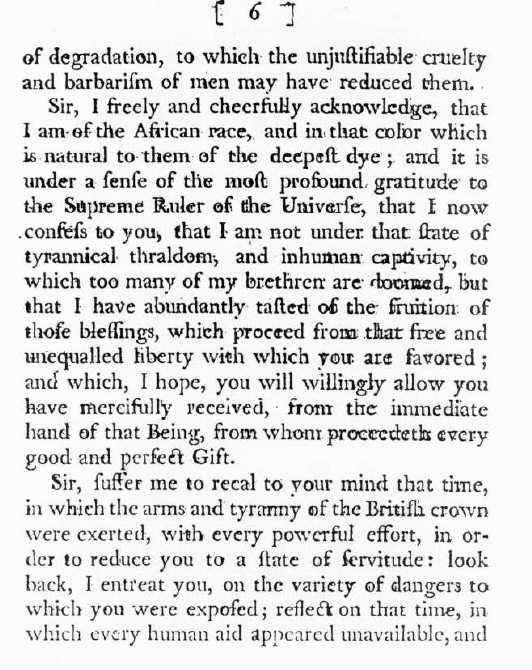
- ↑ (1) Banneker, 1792b, p. 6. "Sir, I freely and cheerfully acknowledge, that I am of the African race, and in that color which is natural to them of the deepest dye"
(2) McHenry, pp. 185-186. "BENJAMIN BANNEKER, a free Negro, has calculated an Almanack for the ensuing Year, 1792, ..... . "This Man is about fifty-nine years in age; he was born in Baltimore county; his father was an African, and his mother, the offspring of African parents."
(3) Latrobe, p. 6. "His father was a native African, and his mother the child of natives of Africa; so that to no admixture of the blood of the white man was he indebted for his peculiar and extraordinary abilities." - ↑ a b c Perot, full text, pp. 5, 19–21, 33–36, 67.
- ↑ (1) Script error: No such module "Citation/CS1".
- ↑ Script error: No such module "citation/CS1".
- ↑ a b c Script error: No such module "citation/CS1".
- ↑ (1) Script error: No such module "citation/CS1".
(2) Script error: No such module "citation/CS1".
(3) Script error: No such module "citation/CS1".
(4) Coordinates of Banaka: Script error: No such module "Coordinates". - ↑ Script error: No such module "citation/CS1".
- ↑ a b c d e f g Script error: No such module "citation/CS1".
- ↑ a b Script error: No such module "citation/CS1".
- ↑ Script error: No such module "citation/CS1".
- ↑ Facsimile of handwritten deed conveying property from Richard Gist to Robert Bannaky and Benjamin Bannaky. In Script error: No such module "citation/CS1".
- ↑ (1) McHenry, pp. 185-186. "This man is about fifty-nine years of age; he was born in Baltimore county; his father was an African, and his mother the offspring of African parents. His father and mother having obtained their freedom, were enabled to send him to an obscure school, where he learned, as a boy, reading, writing, and arithmetic, as far as double position.
(2) Script error: No such module "citation/CS1".
(3) Script error: No such module "citation/CS1". - ↑ (1) Graham, 1949, p. 45. Not until all the tobacco was in and "the Christmas" over was the school opened. Among the boys who sat on the smooth log facing Peter Heinrich was the dark boy. .... The dark boy's name seemed rather long. For Peter Heinrich wrote "Benjamin Banneker". .... And thus the spelling was changed from that in the earliest records.
(2) Bedini, 1972, p. 300. "Martha Tyson's posthumous book was the last work about Banneker to be based on original materials. During the next several decades, numerous articles in periodicals and newspapers mentioned Banneker's life and works, but each was based on earlier publications without contributing new materials. .... Finally, in 1949 another biography of Banneker appeared. This work by Shirley Graham was highly fictionalized and written for young people. It became popular, but the lack of distinction between fact and fiction in its presentation, while a compliment to the writing skill of Shirley Graham, has resulted in yet more confusion concerning Banneker's achievements and their importance." - ↑ a b (1) Cerami, 2002, pp. 24–28.
(2) Corrigan, 2003, p. 2 "Cerami constructs a credible narrative of Banneker's life, but fails to document his research." - ↑ Graham, 1949, p. 52. "The school was now housed in a building all its own and was supported by the Society of Friends. Though Ben was no longer a regular attendant he still considered himself a pupil. Very often when his days work was done he rode over to Master Heinrich's house for talk or to exchange a book"
- ↑ a b Script error: No such module "citation/CS1".
- ↑ (1) Tyson, pp. 5, 9–10, 18.
(2) Script error: No such module "Citation/CS1".
(3) Bedini, 1964, p. 22.
(4) Bedini, 1999, p. 44. "Completed in 1753, Bannekers' clock continued to operate until his death, more than 50 years later."
(5) Bedini, 2008 "At about the age of twenty-one he (Banneker) constructed a striking wall clock, without ever having seen one. .... The clock continued to function successfully for more than fifty years, until his death."
(6) Script error: No such module "citation/CS1". - ↑ (1) Script error: No such module "citation/CS1".
(2) Script error: No such module "Citation/CS1". - ↑ Bedini, 1999, pp. 47, 368–369.
- ↑ a b Script error: No such module "citation/CS1".
- ↑ Script error: No such module "citation/CS1".
- ↑ Script error: No such module "citation/CS1".
- ↑ Script error: No such module "citation/CS1".
- ↑ a b c d Script error: No such module "citation/CS1".
- ↑ a b Script error: No such module "citation/CS1".
- ↑ a b c d e f g h i j k l Script error: No such module "citation/CS1".
- ↑ a b Script error: No such module "citation/CS1".
- ↑ (1) Bedini, 1969, p. 8.
(2) Bedini, 1999, pp. 81–87; p. 371, references 3, 4, 5; p. 382, reference 12.
(3) Script error: No such module "citation/CS1".
(4) McHenry, p. 186. "It is about three years since mr. George Ellicott lent him Mayer's tables, Ferguson's astronomy, Leadbeater's lunar tables and some astronomical instruments, but without accompanying them with either hint or instruction, that might further his studies, or lead him to apply them to any useful result. These books and instruments, the first of the kind that he had ever seen, opened a new world to Benjamin, and from thence forward he employed his leisure in astronomical researches."
(5) Script error: No such module "citation/CS1".
(6) Script error: No such module "citation/CS1".
(7) Script error: No such module "citation/CS1". - ↑ McHenry, p. 186. "He (Banneker) now took up the idea for calculations for an almanac, and actually completed and entire set for the last year, upon his original stock of arithmetic. Encouraged by this first attempt, he entered upon his calculation for 1792, which as well as the former, he began and finished without the least information, or assistance, from any person or other books, than those that I have mentioned; so that, whatever merit is attached to his present performance, is exclusively and peculiarly his own."
- ↑ a b c d e f Script error: No such module "citation/CS1".
- ↑ a b c d e Script error: No such module "citation/CS1".
- ↑ a b c d (1) Bedini, 1999, pp. 110–114, 133–134.
(2) Script error: No such module "citation/CS1"..
(3) Crew, pp. 87–103.
(4) Script error: No such module "citation/CS1". - ↑ Script error: No such module "citation/CS1".
- ↑ Bedini, 1972, p. 137. "He (Banneker) served in the true sense of an assistant to Ellicott himself, making notes for him, making calculations as required, and using the astronomical equipment for establishing base points."
- ↑ Bedini, 1972, p. 103. "the record of Banneker's participation rests on extremely meager documentation, consisting of a statement written in a letter by Thomas Jefferson and two statements made by Banneker himself."
- ↑ a b Script error: No such module "citation/CS1".
- ↑ (1) Script error: No such module "citation/CS1".
(2) Bedini, 1972, pp. 124, 314 - ↑ (1) Bedini, 1969, p. 25.
(2) Script error: No such module "citation/CS1". - ↑ Banneker, 1792b, pp. 9–10. "And altho I had almost declined to make my calculation for the ensuing year, in consequence of that time which I had allotted therefor being taking up at the Federal Territory by the request of Mr. Andrew Ellicott, yet finding myself under several engagments to Printers of this state, to whom I had communicated my design, upon my return to my place of residence, I industriously applied myself thereto, ....".
- ↑ a b c d Bedini, 1999, pp. 132, 136.
- ↑ Bedini, 1999, pp. 129, 132–136.
- ↑ (1) Script error: No such module "citation/CS1".
(2) Drake, p. 214. "The MARYLAND, Delaware, Pennsylvania, Virginia, and North-Carolina Almanack and Ephemeris for 1781. By Andrew Ellicott. Baltimore: M. K. Goddard: Philadelphia: Benjamin January."
(3) Drake, p. 511. "UNITED States Almanack for 1782. By Andrew Ellicott. Chatham: Shepard Kollock."
(4) Drake, p. 215. "ELLICOTT'S Pennsylvania, Delaware, Maryland and Virginia Almanack and Ephemeris for 1786. Baltimore: Goddard and Langworthy."
(5) Drake, p. 216. "ELLICOTT'S Maryland and Virginia Almanack, and Ephemeris for 1787. Baltimore: John Hayes."
(6) Drake, p. 216. "The MARYLAND and Virginia Almanack, and Ephemeris for 1788. By Andrew Ellicott. Baltimore: John Hayes."
(7) Drake, p. 216. "POOR Robin's Almanac for 1788. By Andrew Ellicott. Frederick-Town: Matthias Bartgis. .... 2112"
(8) Drake, p. 217. "ELLICOTT'S Maryland and Virginia Almanack, and Ephemeris for 1789. Baltimore: John Hayes."
(9) Drake, p. 217. "ELLICOTT'S Maryland and Virginia Almanack, and Ephemeris for 1790. Baltimore: John Hayes."
(10) Drake, p. 217. "ELLICOTT'S Maryland and Virginia Almanack and Ephemeris for 1791. Baltimore: John Hayes."
(11) Bedini, 1999, pp. 97, 109, 210. - ↑ (1) Morrison, p. 70. "The New-Jersey almanack for 1788. The astronomical calculations by Wm. Waring. Trenton: Isaac Collins."
(2) Morrison, p. 138. "Poulson's town and country almanac for 1789. The astronomical calculations by Wm. Waring, teacher of mathematics in the Friends' academy. Philadelphia: Zachariah Poulson, junior".
(3) Morrison, p. 70. "The New-Jersey almanack for 1789. By Wm. Waring. Trenton: Isaac Collins."
(4) Morrison, p. 70. "The New-Jersey almanack for 1790. By Wm. Waring. Trenton: Isaac Collins."
(5) Morrison, p. 139. "Poor Will's almanac for 1790. The astronom. calculations by Wm. Waring. Philadelphia: Joseph Crukshank."
(6) Morrison, p. 139. "Poulson's town and country almanac for 1790. By Wm. Waring. Philadelphia: Zachariah Poulson, jr."
(7) Morrison, p. 139. "Poulson's town and country almanac for 1791. By Wm. Waring. Philadelphia: Zachariah Poulson, jr." - ↑ (1) Morrison, p. 156. "The Virginia Almanac for 1774. By the celebrated Mr. Rittenhouse, Philomath. Williamsburg: William Rind."
(2) Morrison, p. 157. "The Virginia Almanac for 1780. By David Rittenhouse, Philo. Williamsburg: J. Dixon & T. Nicolson."
(3) Drake, p. 214. "The MARYLAND, Virginia and Pennsylvania Almanack and Ephemeris for 1780. By David Rittenhouse. Baltimore: M. K. Goddard."
(5) Morrison, p. 132. "The Continental almanac for 1781. By Anthony Sharpe, Philom. Philadelphia: Francis Bailey."
(6) Morrison, p. 132. "The Continental pocket almanac for 1781. By Anthony Sharpe (i.e., David Rittenhouse). Philadelphia: Francis Bailey. 1780." - ↑ Script error: No such module "citation/CS1".
- ↑ Cerami, p. 150. "I am annoyed to find that the subject of my race is so much stressed," he (Banneker) remarked. "The work is either correct or it is not. In this case, I believe it to be perfect."
- ↑ (1) Bedini, 1972, p. 157.
(2) Morrison, p. 123-140.
(3) Morrison, p. 139. "Poor Will's almanac for 1790. The astronom. calculations by Wm. Waring. Philadelphia: Joseph Crukshank." - ↑ (1) Drake, pp. 214–218.
(2) Bedini, 1972, pp. 164–173.
(3) Script error: No such module "citation/CS1". - ↑ (1) List of Banneker's almanacs: Bedini, 1999, pp. 393–396. "Banneker's Letters and Almanacs"
(2) List of Banneker's almanacs, with links: Script error: No such module "citation/CS1". - ↑ (1) Script error: No such module "citation/CS1". Cited in Bedini, 1999, p. 393, Reference 2. (2) Script error: No such module "citation/CS1". Cited in Bedini, 1999, p. 393, Reference 3. (3) Script error: No such module "citation/CS1". Cited in Bedini, 1999, p. 393, Reference 4. (4) Script error: No such module "citation/CS1". (a) Script error: No such module "citation/CS1". (b) Script error: No such module "citation/CS1". Cited in Bedini, 1999, p. 394, Reference 5. (5) (a) Script error: No such module "citation/CS1". (b) Script error: No such module "citation/CS1". (c) Script error: No such module "citation/CS1".. Cited in Bedini, 1999, p. 394, Reference 6. (6) Script error: No such module "citation/CS1". Cited in Bedini, 1999, p. 394, Reference 7. (7) Script error: No such module "citation/CS1". Cited in Bedini, 1999, p. 394, Reference 8. (8) Script error: No such module "citation/CS1". Cited in Bedini, 1999, p. 394, Reference 9. (9) Script error: No such module "citation/CS1". Cited in Bedini, 1999, p. 394, Reference 10. (10) Script error: No such module "citation/CS1". In Script error: No such module "citation/CS1". Cited in Bedini, 1999, p. 394, Reference 11. (11) Script error: No such module "citation/CS1". Cited in Bedini, 1999, p. 395, Reference 12.. (12) Script error: No such module "citation/CS1". In Whiteman, 1969. (13) Script error: No such module "citation/CS1". Cited in Bedini, 1999, p. 395, Reference 14. (14) Script error: No such module "citation/CS1". Cited in Bedini, 1999, p. 395, Reference 15. (15) Script error: No such module "citation/CS1". Cited in Bedini, 1999, p. 395, Reference 16. (16) Script error: No such module "citation/CS1". Cited in Bedini, 1999, p. 395, Reference 17. (17) Script error: No such module "citation/CS1". Cited in Bedini, 1999, p. 395, Reference 18. (18) (a) Script error: No such module "citation/CS1". (b) Script error: No such module "citation/CS1". Cited in Bedini, 1999, p. 395, Reference 19. (19) Script error: No such module "citation/CS1". Cited in Bedini, 1999, p. 395, Reference 20. (20) Script error: No such module "citation/CS1". Cited in Bedini, 1999, p. 395, Reference 21. (21) Script error: No such module "citation/CS1". Cited in Bedini, 1999, p. 396, Reference 22. (22) Script error: No such module "citation/CS1". Cited in Bedini, 1999, p. 395, Reference 23. (23) (a) Script error: No such module "citation/CS1". (b) Script error: No such module "citation/CS1". In Template:Cite document (c) Script error: No such module "citation/CS1". Cited in Bedini, 1999, p. 396, Reference 24. (24) (a) Script error: No such module "citation/CS1". (b) Script error: No such module "citation/CS1".(b) Cited in Bedini, 1999, p. 396, Reference 25. (25) Script error: No such module "citation/CS1". Cited in Bedini, 1999, p. 396, Reference 26. (26) Script error: No such module "citation/CS1". Cited in Bedini, 1999, p. 396, Reference 27. (27) Script error: No such module "citation/CS1". Cited in Bedini, 1999, p. 396, Reference 28. (28) Script error: No such module "citation/CS1". In Bedini, 1999, p. 224. Cited in Bedini, 1999, p. 396, Reference 29.
- ↑ (1) Script error: No such module "citation/CS1".
(2) Latrobe, pp. 10–11. - ↑ (1) Script error: No such module "citation/CS1".
(2) Script error: No such module "citation/CS1". - ↑ a b Woodcut portrait of Benjamin Bannaker (Banneker) in (a) Script error: No such module "citation/CS1". In Template:Cite document
(b) Script error: No such module "citation/CS1".
(c) Script error: No such module "citation/CS1".
Cited in Bedini, 1999, p. 396, Reference 24. - ↑ (1) Bedini, 1999, p. 231.
(2) Banneker, 1791, p. 5. "A Tide-Table for the Chesapeake Bay." - ↑ (1) Bedini, 1999, p. 232.
(2) Banneker, 1792a, p. 34. "RULE: To find the Time of High-Water at the following Places."
(3) Banneker, 1794, p. 4. "RULE to find the Time of High-water at the following Places:"
(4) Banneker, 1795, p. 32. "TABLE, ..." - ↑ (1) Bedini, 1999, pp. 225–226.
(2) Banneker, 1791, pp. 7–18.
(3) Banneker, 1792a, pp. 4–26.
(4) Script error: No such module "citation/CS1". On display in the Benjamin Banneker Museum, Oella, Maryland. Photographed by F. Delventhal, February 18, 2017.
(5) Banneker, 1794, pp. 5–16.
(6) Banneker, 1795, pp. 4–15. - ↑ Script error: No such module "citation/CS1". In Banneker, 1794, pp. 16–39.
- ↑ (1) Bedini, 1972, p. 193.
(2) Script error: No such module "citation/CS1". - ↑ (1) Bedini, 1972, p. 276. "The woodcut represents a representation of Banneker with a tendency to idealize his appearance. It represents a Negro male in his late youth or early middle age, of medium frame. At this time, Banneker was sixty-three years of age and his physical appearance undoubtedly reflected to some degree his past illnesses and discomfort. He was described as being relatively fleshy, which leaves no doubt that the portrait was in fact no more than an artist's conjecture of his appearance."
(2) Bedini, 1999, p. 290. "The woodcut appears to have been drawn by an artist who had neither seen Banneker nor heard a description of him but who obviously intended to render an idealized portrait of a black man. It represents a Negro male of medium frame in his late youth. At this time, Banneker was in fact sixty-three years of age, suffering from arthritis or rheumatism, and his physical appearance may have reflected to some degree his past illnesses and disabilities. He was described as being relatively fleshy, with a stocky build, which leaves no doubt that the portrait was in fact no more than an artist's conception of a young male Negro youth." - ↑ "Population". In Banneker, 1795, p. 18.]
- ↑ (1) Banneker, 1791, pp. 2, 3, 4
(2) Banneker 1792a, p. 2.
(3) Latrobe, p. 9: "In their editorial notice, Messrs. Goddard and Angell say, "they feel gratified in the opportunity of presenting to the public, through their press, what must be considered as an extraordinary effort of genius – a complete and accurate Ephemeris for the year 1792, calculated by a sable descendant of Africa," &c. And they further say, that "they flatter themselves that a philanthropic public, in this enlightened era, will be induced to give their patronage and support to this work, not only on account of its intrinsic merits, (it having met the Approbation of several of the most distinguished astronomers of America, particularly the celebrated Mr. Rittenhouse,) but from similar motives to those which induced the editors to give this calculation the preference, the ardent desire of drawing modest merit from obscurity and controverting the long established illiberal prejudice against the blacks." - ↑ (1) United States Army Center of Military History, 1985, pp. 1– 2, 6.
(2) Script error: No such module "citation/CS1". - ↑ (1) Bedini, 1999, p. 151. ".. in 1789 he (Goddard) took as his partner ... James Angell. The partnership continued until August 1792, during the period that Banneker's almanac was being considered for publication."
(2) Script error: No such module "citation/CS1". In Phillips, pp. 115–116. "The following notice of Banneker is found, first published in his almanac for 1792, and republished with some abridgement in the one of 1793, from which we are making extracts. It was written by Banneker's esteemed admirer, James McHenry, who was afterward senator of Maryland, and evidently a man who appreciated intellect whether in the soul of the black or white. ..."
(3) Banneker, 1791, pp. 2, 3, 4.
(4) Banneker 1792a, p. 2. "Baltimore, August 20, 1791. BENJAMIN BANNEKER, a free black, is about fifty-nine years of age... It is about three years since Mr. George Ellicott lent him Mayer's Tables, Ferguson's Astronomy, Leadbeater's Lunar Tables, and some astronomic instruments, but without accompanying them with either hint or instruction, that might further his studies, or lead him to apply them to any useful result. These books and instruments, the first of the kind he had ever seen, opened a new world to Benjamin, and from thenceforward he employed his leisure in astronomical researches. He now took up the idea of the calculations for an Almanack, and actually completed an entire set for the last year, upon his original stock of arithmetic. Encouraged by this first attempt, he entered upon his calculation for 1792, which, as well as the former, he began and finished without the least information of assistance from any person, or other books than those I have mentioned; so that whatever merit is attached to his present performance, is exclusively and peculiarly his own. I have been the more careful to investigate those particulars, and to ascertain their reality, as they form an interesting fact in the History of Man; and as you may want them to gratify curiosity, I have no objection to your selecting them for your account of Benjamin." - ↑ (1) Banneker, 1791, p. 2.
(2) McHenry, p. 185. - ↑ Script error: No such module "citation/CS1".
- ↑ (1) Bedini 1999, p. 190.
- ↑ (2) Script error: No such module "citation/CS1". Cited in Bedini 1999, p. 190, reference 2.
- ↑ Script error: No such module "citation/CS1".
- ↑ Bedini, 1999, pp. 184-187, 191, 195-197
- ↑ Bedini, 1999, pp. 195–197. "The almanacs for 1795 enjoyed a substantially increased circulation. .... The total of at least nine known editions of Banneker's almanac for the same year was remarkable, ....".
- ↑ Tise, 1998, p. 215. "The 1795 edition saw three separate versions (of Banneker's almanac) published in Baltimore alone; a Wilmington publisher produced five editions for various distributors; and three Philadelphia printers offered editions, as did another in Trenton, New Jersey."
- ↑ (1) Script error: No such module "citation/CS1". In Script error: No such module "citation/CS1". Cited in Bedini, 1999, p. 394, Reference 11.
(2) Script error: No such module "citation/CS1". Cited in Bedini, 1999, p. 395, Reference 12..
(3) Script error: No such module "citation/CS1". In Whiteman, 1969.
(4) Script error: No such module "citation/CS1". Cited in Bedini, 1999, p. 395, Reference 14.
(5) Script error: No such module "citation/CS1". Cited in Bedini, 1999, p. 395, Reference 15.
(6) Script error: No such module "citation/CS1". Cited in Bedini, 1999, p. 395, Reference 16.
(7) Script error: No such module "citation/CS1". Cited in Bedini, 1999, p. 395, Reference 17.
(8) Script error: No such module "citation/CS1". Cited in Bedini, 1999, p. 395, Reference 18.
(9) (a) Script error: No such module "citation/CS1".
(b) Script error: No such module "citation/CS1".
Cited in Bedini, 1999, p. 395, Reference 19.
(10) Script error: No such module "citation/CS1". Cited in Bedini, 1999, p. 395, Reference 20.
(11) Script error: No such module "citation/CS1". Cited in Bedini, 1999, p. 395, Reference 21.
(12) Script error: No such module "citation/CS1". Cited in Bedini, 1999, p. 396, Reference 22.
(13) Script error: No such module "citation/CS1". Cited in Bedini, 1999, p. 395, Reference 23.
(14) (a) Script error: No such module "citation/CS1".
(b) Script error: No such module "citation/CS1". In Template:Cite document
(c) Script error: No such module "citation/CS1".
Cited in Bedini, 1999, p. 396, Reference 24. - ↑ a b Script error: No such module "citation/CS1".
- ↑ (1) Bedini, 1999, pp. 340–343.
(2) Tyson, pp. 17–18.
(3) Williams, p. 398.
(4) Script error: No such module "Citation/CS1".
(5) Script error: No such module "Citation/CS1".
(6) Script error: No such module "Citation/CS1".
(7) Script error: No such module "Citation/CS1".
(8) Script error: No such module "citation/CS1".. - ↑ a b c Latrobe, pp. 11–12.
- ↑ a b Script error: No such module "Citation/CS1". Page 115, Fig. 3: Image of page in Benjamin Banneker's Astronomical Journal, 1791–1806. Manuscript written by Benjamin Banneker (MS 2700). Special Collection. Maryland Historical Society, Baltimore, Maryland.
- ↑ Script error: No such module "Citation/CS1".
- ↑ Bedini, 1972, pp. 262–263
- ↑ (1) Script error: No such module "Citation/CS1".
(2) Bedini, 1972, p. 175. - ↑ Script error: No such module "citation/CS1".
- ↑ Banneker, 1792a(2), pp. 15, 19, 21.
- ↑ (1) Banneker, 1792a(2), pp. 11, 13.
(2) Script error: No such module "citation/CS1". - ↑ (1) Banneker 1792a(2), pp. 23, 25.
(2) Script error: No such module "citation/CS1".
(3) Discussion of Thomas Wilkinson's background, poems and influence in Script error: No such module "citation/CS1". - ↑ (1) Banneker, 1792a(2), pp. 15, 17, 19.
(2) Script error: No such module "citation/CS1". - ↑ (1) Bedini, 1999, pp. 190–191.
(2) A Plan of a Peace-Office, for the United States. In Banneker, 1792a(2), pp. 5, 7, 9.
(3) Phillips, pp. 116–119. - ↑ (1) Whiteman, Maxwell (1969). BENJAMIN BANNEKER: Surveyor and Astronomer: 1731–1806: A biographical note In Whiteman, Maxwell (ed.) "The plan for a "Peace Office" in the Government of the United States, which also appeared in this issue (Banneker's 1793 Philadelphia almanac) has been attributed to Banneker. According to Edwin Wolf 2nd, Librarian of the Library Company of Philadelphia from whose institution these copies have been made, the "Peace Office" is the work of Dr. Benjamin Rush."
(2) Bedini, 1972, p. 186. "Another important item included in the 1793 almanac was "A Plan of a Peace Office for the United States", which aroused considerable comment at the time. Many believed it to have been Banneker's own work. Even recently its authorship has been debated, but in 1947 it was identified beyond question as the work of Dr. Benjamin Rush in a volume of his own writings that appeared in that year." (Reference (Bedini, 1972, p. 361)): Script error: No such module "citation/CS1".) (E-book (partial text of book): Script error: No such module "citation/CS1". (Full text of book: Script error: No such module "citation/CS1".
(3) Bedini, 1972, p. 187. "For some unexplained reason, it was published without identifying the author. Rush included the "Plan" in a collection of essays published five years later, with substantial additions to the text." (Reference (Bedini, 1972, p. 361)): Script error: No such module "citation/CS1".) (E-book: Script error: No such module "citation/CS1".)
(4) Script error: No such module "citation/CS1".
(5) Script error: No such module "citation/CS1". - ↑ Banneker, 1792a(2), pp. 5, 7.
- ↑ a b c (1) Kaplan, pp. 140–141.
(2) Script error: No such module "citation/CS1". (Original source: Script error: No such module "citation/CS1".
(3) Allaben, pp. 65-69. - ↑ (1) Bedini, 1999, pp. 155–163.
(2) Banneker, 1792b(1).
(3) Script error: No such module "citation/CS1".
(4) Script error: No such module "citation/CS1". - ↑ Script error: No such module "citation/CS1".
- ↑ (1) Bedini, 1999, pp. 189–190.
(2) Script error: No such module "citation/CS1". Cited in Bedini, 1999, p. 394, Reference 6. - ↑ (1) Bedini, 1999, p. 191.
(2) Banneker, 1792b.
(3) Banneker, 1792b(1).
(4) Banneker, 1792b(2). - ↑ a b (1) A Society of Gentlemen
(2) Bedini, 1972, p. 158. - ↑ (1) Allaben, p. 67.
(2) Banneker, 1792b(1), p. 8.
(3) Bedini, 1999, pp. 160, 162
(4) Banneker, 1792b(1), p. 8. - ↑ (1) Bedini, 1999, pp. 160, 163.
(2) Banneker, 1792b(1), p. 10. - ↑ Script error: No such module "citation/CS1".
- ↑ Johnson."Banneker sent a manuscript copy of his work to Secretary of State Thomas Jefferson along with a plea against the continuance of black slavery and received a courteous, if evasive, reply."
- ↑ Script error: No such module "Citation/CS1".
- ↑ Script error: No such module "citation/CS1".
- ↑ Script error: No such module "citation/CS1". In Script error: No such module "citation/CS1".
- ↑ (1) Script error: No such module "citation/CS1".
(2) Script error: No such module "citation/CS1". (Original source: Script error: No such module "citation/CS1".)
(3) Banneker, 1792b(2).
(4) Allaben pp. 68–69.
(5) Bedini, 1999, pp. 164–165. - ↑ (1) Bedini, 1972, pp. 167.
(2) Script error: No such module "citation/CS1".
(3) Script error: No such module "citation/CS1". - ↑ (1) Allaben, pp. 67–68.
"..., but that having taken up my pen in order to direct to you as a present a copy of my Almanac which I have calculated for the Succeeding year, ..... and altho I had almost declined to make my calculation for the ensuing year, in consequence of that time which I had allotted therefor being taking up at the Federal Territory by the request of Mr. Andrew Ellicott, yet finding my Self underal several engagements to printers of this State to whom I have communicated my design, on my return to my place of residence, I industrially applied my Self thereto, ...."
(2) Banneker, 1792b, pp. 9–10. "And altho I had almost declined to make my calculation for the ensuing year, in consequence of that time which I had allotted therefor being taking up at the Federal Territory by the request of Mr. Andrew Ellicott, ....". - ↑ a b Script error: No such module "citation/CS1". Two digitized images of letter in Script error: No such module "citation/CS1".
- ↑ (1) Script error: No such module "citation/CS1". (Original source: Script error: No such module "citation/CS1".
(2) Script error: No such module "citation/CS1".
(3) Bedini, 1999, p. 166. - ↑ (1) Script error: No such module "citation/CS1".
(2) Partial English translation: Script error: No such module "citation/CS1".
(3) Complete English translation: Script error: No such module "citation/CS1".
(4) Bedini, 1999, pp. 296–297. - ↑ a b Script error: No such module "citation/CS1".
- ↑ (1) Script error: No such module "citation/CS1".
(2) Script error: No such module "citation/CS1". (Original source: Script error: No such module "citation/CS1".)
(3) Bedini, 1999, p. 297. - ↑ Bedini, 1999, pp. 206–207 "Banneker's almanac for the year 1797 was the last of his almanacs to be published. ...."
- ↑ (1) Script error: No such module "citation/CS1". Cited in Bedini, 1999, p. 396, Reference 26.
(2) Script error: No such module "citation/CS1". Bedini, 1999, p. 396, Reference 27.
(3) Script error: No such module "citation/CS1". Bedini, 1999, p. 396, Reference 28.
(4) Script error: No such module "citation/CS1". Bedini, 1999, p. 396, Reference 29. - ↑ (1) Bedini, 1999, pp. 241–251.
(2) Script error: No such module "citation/CS1". - ↑ Script error: No such module "citation/CS1".
- ↑ a b Script error: No such module "citation/CS1".
- ↑ Bedini, 1999, pp. 270, 272–273.
- ↑ Script error: No such module "citation/CS1". In Script error: No such module "citation/CS1".
- ↑ (1) Tyson, pp. 10, 12.
(2) Bedini, 1999, pp. 253–254. - ↑ Script error: No such module "Citation/CS1".
- ↑ (1) Bedini, 1999, pp. 272–273.
(2) Script error: No such module "citation/CS1". In Script error: No such module "citation/CS1". - ↑ (1) "Benjamin Banneker" marker Script error: No such module "webarchive".. In HMdb: The Historical Marker Database
(2) Coordinates of Benjamim Banneker obelisk: Script error: No such module "Coordinates". - ↑ a b Script error: No such module "citation/CS1"..
- ↑ (1) Tyson p. 18.
(2) Bedini, 1972, pp. 270–271. - ↑ (1) Script error: No such module "citation/CS1". Note: This web page contains links to three digitized images of pages in the manuscript for the almanac and to 12 digitized images of printed pages of the published almanac.
(2) Script error: No such module "citation/CS1". Note: This manuscript, attributed to Banneker by Baltimore printer William Goddard (1740–1817), was printed as Banneker's Pennsylvania, Delaware, Maryland, and Virginia Almanack and Ephemeris for the Year of Our Lord 1792, Baltimore: Printed and Sold, Wholesale and Retail, by William Goddard and James Angell, at their Printing-Office, in Market Street. The web page contains 19 links to digitized images of handwritten editorial notes describing the provenance of the manuscript, sequential digitized images of each page in the manuscript, and additional digitized images of pages in the manuscript.
(3) Bedini, 1999, p. 181 "First page of manuscript original, with calculations for the month of January 1792 for his first almanac. From the manuscript of his ephemeris for 1792 that he had submitted to Goddard & Angell in 1791. Found among the papers of William Goddard. American Antiquarian Society." - ↑ (1) Script error: No such module "citation/CS1".
(2) Script error: No such module "citation/CS1".
(3) Bedini, 1999, p. 378. "17. Banneker to Thomas Jefferson, August 19, 1791, 7S. I. 38–43, Jefferson-Coolidge Papers, Massachusetts Historical Society." - ↑ Script error: No such module "citation/CS1". (Original source: Script error: No such module "citation/CS1".)
- ↑ (1) Script error: No such module "citation/CS1".
(2) Script error: No such module "citation/CS1". - ↑ (1) Script error: No such module "citation/CS1". (Original source: Script error: No such module "citation/CS1".)
(2) Note: Jefferson produced this document on a copying press that he used between 1785 and 1804, when he acquired his first polygraph device. See:
(a) Script error: No such module "citation/CS1". (Reference: Bedini, Silvio A., Thomas Jefferson and His Copying Machines, University Press of Virginia, Charlottesville, 1984.)
(b) Script error: No such module "citation/CS1".
(c) Script error: No such module "citation/CS1". - ↑ Bedini, 1999, p. 378. "18. Thomas Jefferson to Benjamin Banneker, August 30, 1791, .... Jefferson's file copy is in the Thomas Jefferson Papers f. 11481, Library of Congress."
- ↑ Script error: No such module "citation/CS1". (Original source: Script error: No such module "citation/CS1".
- ↑ Script error: No such module "citation/CS1".
- ↑ a b (1) Script error: No such module "citation/CS1". (Original source: Script error: No such module "citation/CS1".)
(2) Script error: No such module "citation/CS1". - ↑ (1) Script error: No such module "citation/CS1". (Reference: Bedini, Silvio A., Thomas Jefferson and His Copying Machines, University Press of Virginia, Charlottesville, 1984.)
(2) Script error: No such module "citation/CS1".
(3) Script error: No such module "citation/CS1".
(4) Script error: No such module "citation/CS1".
(5) Script error: No such module "citation/CS1". - ↑ (1) Script error: No such module "citation/CS1".
(2) Script error: No such module "citation/CS1".
(3) Tyson, pp. 2, 18. - ↑ (1) Tyson, pp. 17–18.
(2) Bedini, 1972, pp. 301–302.
(3) Bedini, 1999, p. 319. - ↑ (1) Script error: No such module "citation/CS1"..
(2) Script error: No such module "citation/CS1".
(3) Script error: No such module "citation/CS1".
(4) Script error: No such module "citation/CS1".
(5) Script error: No such module "citation/CS1".
(6) Script error: No such module "citation/CS1".
(7) Script error: No such module "citation/CS1". - ↑ Script error: No such module "citation/CS1".
- ↑ Script error: No such module "citation/CS1".
- ↑ Script error: No such module "citation/CS1".
- ↑ (1) Script error: No such module "citation/CS1".
(2) Script error: No such module "citation/CS1".
(3) Script error: No such module "citation/CS1".
(4) Script error: No such module "citation/CS1". - ↑ (1) Script error: No such module "citation/CS1".
(2a) Script error: No such module "citation/CS1".
(2b) Script error: No such module "citation/CS1".
In Script error: No such module "citation/CS1"., in Script error: No such module "citation/CS1".
(3) Script error: No such module "citation/CS1". In Script error: No such module "citation/CS1".
(4) Script error: No such module "citation/CS1". - ↑ Script error: No such module "citation/CS1".
- ↑ Script error: No such module "citation/CS1".
- ↑ a b Script error: No such module "citation/CS1".
- ↑ (1) Bedini, 1969, p. 7. "The name of Benjamin Banneker, the Afro-American self-taught mathematician and almanac-maker, occurs again and again in the several published accounts of the survey of Washington City [D.C.] begun in 1791, but with conflicting reports of the role which he played. Writers have implied a wide range of involvement, from the keeper of horses or supervisor of the woodcutters, to the full responsibility of not only the survey of the ten-mile square but the design of the city as well. None of these accounts has described the contribution which Banneker actually made."
(2) Bedini, 1972, p. 126. "Benjamin Banneker's name does not appear on any of the contemporary documents or records relating to the selection, planning, and survey of the City of Washington. An exhaustive search of the files under Public Buildings and Grounds in the U.S. National Archives and of the several collections in the Library of Congress have proved fruitless. A careful perusal of all known surviving correspondence and papers of Andrew Ellicott and of Pierre Charles L'Enfant has likewise failed to reveal mention of Banneker. This conclusively [sic] dispels the legend that after L'Enfant's dismissal and his refusal to make available his plan of the city, Ellicott was able to reconstruct it in detail from Banneker's recollection.”
(3) Bedini, 1972, p. 403, Item 85 "William Loren Katz. Eyewitness, the Negro in American History. New York. Putnam Publishing Corp., 1967 pp. 19–31, 61–62.
Among the misstatements are the claims.... that George Ellicott worked with Banneker in the survey of Washington, that Banneker was appointed to the Commission at a suggestion made by Jefferson to Washington, and that Banneker selected the sites of the principal buildings. The fiction that Banneker re-created L'Enfant's plan from memory is again presented, and his almanacs are said to have been published for a period of ten years."
(4) Toscano, 2000. Script error: No such module "webarchive". "Some writers, in an effort to build up their hero, claim that Banneker was the designer of Washington. Other writers have asserted that Banneker's role in the survey is a myth without documentation. Neither group is correct. Bedini does a professional job of sorting out the truth from the falsehoods."
(5) Script error: No such module "citation/CS1".
(6) Bedini, 1999, p. 132-136. "An exhaustive search of government repositories, including the Public Buildings and Grounds files in the National Archives, and various collections in the Library of Congress, failed to turn up Banneker's name on any of the contemporary documents or records related to the selection, planning and survey of the City of Washington. Nor was he mentioned in any of the surviving correspondence and papers of Andrew Ellicott and of Pierre Charles L'Enfant.... Although the exact date of Banneker's departure from the survey is not specified in Ellicott's report of expenditures, it occurred sometime late in the month of April 1791, following the arrival of one of Ellicott's brothers. It was not until some ten months after Banneker's departure from the scene that L'Enfant was dismissed, by means of a letter from Jefferson dated February 27, 1792. This conclusively [sic] dispels any basis for the legend that after L'Enfant's dismissal and his refusal to make available his plan of the city, Banneker recollected the plan in detail from which Ellicott was able to reconstruct it."
(7) Cerami, 2002, pp. 142–143.
(8) Script error: No such module "citation/CS1".
(9) Script error: No such module "citation/CS1"..
(10) Script error: No such module "citation/CS1".
(11) Script error: No such module "citation/CS1". - ↑ (1) Whiteman, Maxwell (1969). BENJAMIN BANNEKER: Surveyor and Astronomer: 1731–1806: A biographical note In Whiteman, Maxwell (ed.) "The plan for a "Peace Office" in the Government of the United States, which also appeared in this issue (Banneker's 1793 Philadelphia almanac) has been attributed to Banneker. According to Edwin Wolf 2nd, Librarian of the Library Company of Philadelphia from whose institution these copies have been made, the "Peace Office" is the work of Dr. Benjamin Rush."
(2) Bedini, 1972, p. 186. "Another important item in the 1793 almanac was "A Plan Of a Peace-Office for the United States," which aroused a good deal of comment at the time. It was believed by many to have been Banneker's own work. Even within recent decades its authorship has been debated. In 1947 it was identified without question as the work of Dr. Benjamin Rush, in a volume of his writings that appeared in that year."
(3) Bedini, 1972, p. 403, Item 85 "William Loren Katz. Eyewitness, the Negro in American History. New York. Putnam Publishing Corp., 1967 pp. 19–31, 61–62.
Brief account of Banneker's career and contributions, which are stated to have been in "the fields of science, mathematics, and political affairs, .... ." Among the misstatements are the claims that Banneker produced the first clock made entirely with American parts, .... ."
(4) Script error: No such module "citation/CS1".
(5) Bedini, 1999, p. 43. "Banneker's clock was by no means the first timepiece in tidewater Maryland, as occasionally has erroneously been claimed. Timepieces were well known and available from the very earliest English settlements, ...."
(6) Script error: No such module "citation/CS1". - ↑ Script error: No such module "citation/CS1".
- ↑ (1) Script error: No such module "citation/CS1".
(2) Script error: No such module "citation/CS1". - ↑ Script error: No such module "citation/CS1".

Script error: No such module "Check for unknown parameters".
References
- Script error: No such module "citation/CS1".
- Script error: No such module "citation/CS1".
- Script error: No such module "Citation/CS1".
- Script error: No such module "Citation/CS1".
- Script error: No such module "citation/CS1".
- Script error: No such module "Citation/CS1".
- Script error: No such module "citation/CS1".
- Script error: No such module "citation/CS1".
- Script error: No such module "citation/CS1".
- Script error: No such module "Citation/CS1".
- Script error: No such module "citation/CS1".
- Script error: No such module "citation/CS1".
- Script error: No such module "citation/CS1".
- Script error: No such module "citation/CS1".
- Script error: No such module "citation/CS1".
- Script error: No such module "citation/CS1".
- Script error: No such module "citation/CS1".
- Script error: No such module "Citation/CS1".
- Script error: No such module "citation/CS1".
- Script error: No such module "citation/CS1".
- Script error: No such module "citation/CS1".
- Script error: No such module "citation/CS1".
- Script error: No such module "citation/CS1".
- Script error: No such module "Citation/CS1".
- Script error: No such module "citation/CS1".
- Script error: No such module "citation/CS1".
- Script error: No such module "citation/CS1".
- Script error: No such module "citation/CS1".
- Script error: No such module "Citation/CS1".
- Script error: No such module "Citation/CS1".
- Script error: No such module "citation/CS1".
- Script error: No such module "citation/CS1".
- Script error: No such module "citation/CS1".
- Script error: No such module "citation/CS1".
- Script error: No such module "citation/CS1".
Further reading
- Script error: No such module "citation/CS1".
- Script error: No such module "citation/CS1".
- Script error: No such module "citation/CS1".. Title page from Bedini, 1999, p. 314.
- Script error: No such module "citation/CS1".
External links
Script error: No such module "Side box". Script error: No such module "Side box". Template:Appletons' Poster
- Template:Internet Archive author.
- Template:Librivox author.
- Resource guide linking to digital files and further resources about Banneker, from the Library of Congress
- Script error: No such module "citation/CS1".
- Script error: No such module "citation/CS1".
- Script error: No such module "citation/CS1". Archived on July 28, 2015.
Template:Portal bar Script error: No such module "Authority control".
- Pages with script errors
- Pages with broken file links
- Benjamin Banneker
- 1731 births
- 1806 deaths
- 18th-century African-American people
- 18th-century American landowners
- 19th-century African-American scientists
- 18th-century American farmers
- 19th-century American farmers
- 19th-century American landowners
- 18th-century American male writers
- 18th-century American astronomers
- 19th-century American astronomers
- African-American people with free status before 1865
- Black Patriots in the American Revolution
- African-American male writers
- People from Baltimore County, Maryland
- American people of Guinean descent
- African-American mathematicians
- American naturalists
- African-American farmers
- American surveyors
- People from colonial Maryland