Acinus
Template:Short description Script error: No such module "For".
Script error: No such module "Infobox".Script error: No such module "Check for unknown parameters".
An acinus (Script error: No such module "IPAc-en".; Template:Plural form: acini; adjective, acinar Script error: No such module "IPAc-en". or acinous) refers to any cluster of cells that resembles a many-lobed "berry", such as a raspberry (acinus is Latin for "berry"). The berry-shaped termination of an exocrine gland, where the secretion is produced, is acinar in form, as is the alveolar sac containing multiple alveoli in the lungs.
Exocrine glands
Acinar exocrine glands are found in many organs, including:
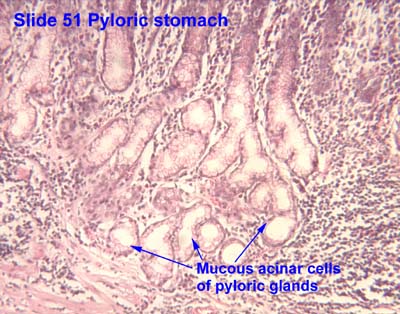
- the stomach[1]
- the sebaceous gland of the scalp
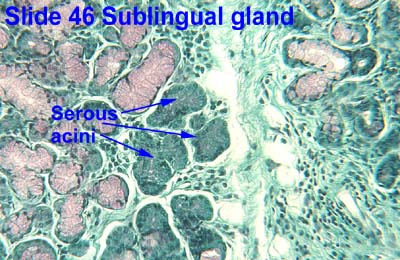
- the salivary glands of the tongue[2]
- the liver
- the lacrimal glands
- the mammary glands
- the pancreas[3]
- the bulbourethral (Cowper's) glands
The thyroid follicles can also be considered of acinar formation but in this case the follicles, being part of an endocrine gland, act as a hormonal deposit rather than to facilitate secretion.
Mucous acini usually stain pale, while serous acini usually stain dark.
Lungs
The end of the terminal bronchioles in the lungs mark the beginning of a pulmonary acinus that includes the respiratory bronchioles, alveolar ducts, alveolar sacs, and alveoli.[4]
See also
Script error: No such module "Side box".
References
- ↑ Histology image: 51_07 at the University of Oklahoma Health Sciences Center - pyloric stomach
- ↑ Histology image: 46_03 at the University of Oklahoma Health Sciences Center - sublingual gland
- ↑ Histology image:10405loa from Script error: No such module "citation/CS1".
- ↑ Script error: No such module "citation/CS1".
External links
Script error: No such module "Authority control".