Tibet Autonomous Region: Difference between revisions
imported>Day Creature m Reverted 1 edit by 156.57.178.149 (talk) to last revision by JArthur1984 |
imported>AridPlateau Fixed disambiguation links. |
||
| Line 1: | Line 1: | ||
{{Short description|Autonomous region | {{Short description|Autonomous region in China}} | ||
{{Use dmy dates|date=December 2019}} | {{Use dmy dates|date=December 2019}} | ||
{{Contains special characters|Tibetan}} | |||
{{Infobox settlement | {{Infobox settlement | ||
| name | | name = Tibet Autonomous Region | ||
| native_name | | native_name = | ||
| settlement_type | | settlement_type = [[Autonomous regions of China|Autonomous region]] | ||
| translit_lang1 | | translit_lang1 = Chinese | ||
| translit_lang1_type | | translit_lang1_type = {{nobold|[[Simplified Chinese characters|Simplified Chinese]]}} | ||
| translit_lang1_info | | translit_lang1_info = {{lang|zh-Hans-CN|西藏自治区}} | ||
| translit_lang1_type1 | | translit_lang1_type1 = {{nobold|[[Hanyu pinyin]]}} | ||
| translit_lang1_info1 | | translit_lang1_info1 = {{transliteration|zh|Xīzàng Zìzhìqū}} | ||
| translit_lang1_type2 | | translit_lang1_type2 = {{nobold|Abbreviation}} | ||
| translit_lang1_info2 | | translit_lang1_info2 = XZ / {{lang|zh-Hans-CN|藏}} ({{transliteration|zh|Zàng}}) | ||
| translit_lang2 | | translit_lang2 = Tibetan | ||
| translit_lang2_type | | translit_lang2_type = {{nobold|[[Tibetan script]]}} | ||
| translit_lang2_info | | translit_lang2_info = {{bo-textonly|བོད་རང་སྐྱོང་ལྗོངས}} | ||
| translit_lang2_type1 | | translit_lang2_type1 = {{nobold|[[Tibetan pinyin]]}} | ||
| translit_lang2_info1 | | translit_lang2_info1 = {{transliteration|bo|Poi Ranggyong Jong}} | ||
| translit_lang2_type2 | | translit_lang2_type2 = {{nobold|[[Wylie transliteration|Wylie translit.]]}} | ||
| translit_lang2_info2 | | translit_lang2_info2 = {{transliteration|bo|bod rang skyong ljongs}} | ||
| image_skyline | | image_skyline = 布达拉宫.jpg | ||
| image_alt | | image_alt = | ||
| image_caption | | image_caption = The [[Potala Palace]] in [[Lhasa]] | ||
| image_map | | image_map = Tibet in China (claimed hatched) (+all claims hatched).svg | ||
| mapsize | | mapsize = 275px | ||
| map_caption | | map_caption = Location of the Tibet Autonomous Region in China (territory claimed by China but controlled by India is striped) | ||
| named_for | | named_for = | ||
| seat_type | | seat_type = Capital<br />{{nobold|and largest city}} | ||
| seat | | seat = [[Lhasa (prefecture-level city)|Lhasa]] | ||
| seat1_type | | seat1_type = | ||
| seat1 | | seat1 = | ||
| parts_type | | parts_type = Divisions<br /> - [[Prefecture-level divisions of China|Prefecture-level]]<br /> - [[County-level division|County-level]]<br /> - [[Administrative divisions of the People's Republic of China#Township level|Township-<br />level]] | ||
| parts | | parts = <br />[[List of administrative divisions of the Tibet Autonomous Region|7 prefectures]]<br />74 counties<br />699 towns and subdistricts | ||
| government_type | | government_type = [[Autonomous regions of China|Autonomous region]] | ||
| governing_body | | governing_body = [[Tibet Autonomous Region People's Congress]] | ||
| leader_title | | leader_title = [[Party Secretary of Tibet|Party Secretary]] | ||
| leader_name | | leader_name = [[Wang Junzheng]] | ||
| leader_title1 | | leader_title1 = Congress Chairman | ||
| leader_name1 | | leader_name1 = [[Yan Jinhai]] | ||
| leader_title2 | | leader_title2 = [[Chairman of Tibet|Government Chairman]] | ||
| leader_name2 | | leader_name2 = [[Garma Cedain]] | ||
| leader_title3 | | leader_title3 = [[Tibet Autonomous Regional Committee of the Chinese People's Political Consultative Conference|Regional CPPCC]] Chairman | ||
| leader_name3 | | leader_name3 = [[Pagbalha Geleg Namgyai]] | ||
| leader_title4 | | leader_title4 = [[National People's Congress]] Representation | ||
| leader_name4 | | leader_name4 = 24 deputies | ||
| area_footnotes | | area_footnotes = <ref>{{cite web |url = http://www.xizang.gov.cn/zrdl/51648.jhtml |date = 11 September 2008 |script-title = zh:西藏概况(2007年) |language = zh-Hans-CN|trans-title = Overview of Tibet (2007) |publisher = People's Government of Tibet Autonomous Region |access-date = 18 December 2015 |url-status = dead |archive-url = https://web.archive.org/web/20151222133742/http://www.xizang.gov.cn/zrdl/51648.jhtml |archive-date = 22 December 2015 }}</ref> | ||
| area_total_km2 | | area_total_km2 = 1228400 | ||
| area_rank | | area_rank = [[List of Chinese administrative divisions by area|2nd]] | ||
| elevation_max_m | | elevation_max_m = 8,848 | ||
| elevation_max_point | | elevation_max_point = [[Mount Everest]] | ||
| population_total | | population_total = 3,648,100 | ||
| population_as_of | | population_as_of = 2020<ref>{{Cite web|date=11 May 2021|title=Communiqué of the Seventh National Population Census (No. 3)|url=http://www.stats.gov.cn/english/PressRelease/202105/t20210510_1817188.html|access-date=11 May 2021|publisher=[[National Bureau of Statistics of China]]}}</ref> | ||
| population_density_km2 | | population_density_km2 = auto | ||
| population_rank | | population_rank = [[List of Chinese administrative divisions by population|32nd]] | ||
| population_density_rank = [[List of Chinese administrative divisions by population density|33rd]] | | population_density_rank = [[List of Chinese administrative divisions by population density|33rd]] | ||
| demographics_type1 | | demographics_type1 = Demographics | ||
| demographics1_footnotes = <!-- for references: use <ref> tags --> | | demographics1_footnotes = <!-- for references: use <ref> tags --> | ||
| demographics1_title1 | | demographics1_title1 = Ethnic composition | ||
| demographics1_info1 | | demographics1_info1 = 86.0% [[Tibetan people|Tibetan]]<br/>12.2% [[Han Chinese|Han]]<br />0.8% others | ||
| demographics1_title2 | | demographics1_title2 = Languages and dialects | ||
| demographics1_info2 | | demographics1_info2 = [[Standard Tibetan|Tibetan]], [[Mandarin Chinese]] | ||
| demographics_type2 = [[Gross domestic product|GDP]] {{normal|(2023)}}<ref name="GDPdata">{{cite web|url=https://data.stats.gov.cn/english/easyquery.htm?cn=E0103|title=National Data|publisher=[[National Bureau of Statistics of China|China NBS]]|date=March 2024|access-date=June 22, 2024}} see also {{cite web|url=https://www.xizang.gov.cn/zwgk/zfsj/ndtjgb/202405/t20240509_415635.html|title=zh: 2023年西藏自治区国民经济和社会发展统计公报|publisher=xizang.gov.cn|date=9 May 2024|access-date=12 June 2024}} The average exchange rate of 2023 was CNY 7.0467 to US$1 {{cite press release | url=https://www.stats.gov.cn/english/PressRelease/202402/t20240228_1947918.html| title=Statistical communiqué of the People's Republic of China on the 2023 national economic and social development| publisher=China NBS|date=February 29, 2024|access-date=June 22, 2024}}</ref> | |||
| demographics_type2 | | demographics2_title1 = Total | ||
| demographics2_title1 | | demographics2_info1 = [[CN¥]] 250.5 billion ([[List of Chinese provincial-level divisions by GDP|31st]]) | ||
| demographics2_info1 | <br />[[US$]] 34.569 billion | ||
<br />[[US$]] | | demographics2_title2 = Per capita | ||
| demographics2_title2 | | demographics2_info2 = CN¥ 75,237 ([[List of Chinese provincial-level divisions by GDP per capita|22nd]]) | ||
| demographics2_info2 | <br />US$ 10,640 | ||
<br />US$ | | iso_code = CN-XZ | ||
| iso_code | | blank4_name_sec2 = [[Human Development Index|HDI]] (2022) | ||
| blank4_name_sec2 | | blank4_info_sec2 = 0.648<ref name="SHDI">{{cite web |title=Human Development Indices (8.0)- China |url=https://globaldatalab.org/shdi/table/shdi/CHN/?levels=1+4&years=2022&interpolation=0&extrapolation=0 |access-date=23 September 2024 |website=Global Data Lab}}</ref> ([[List of Chinese administrative divisions by HDI|31st]]) – {{color|#FFA500|medium}} | ||
| blank4_info_sec2 | | website = {{Official URL}} {{in lang|zh}} | ||
| website | | footnotes = | ||
| footnotes | | official_name = Xīzàng Zìzhìqū | ||
| official_name | | subdivision_name = [[China]] | ||
| subdivision_name | | subdivision_type = [[List of sovereign states|Country]] | ||
| subdivision_type | |||
}} | }} | ||
{{Infobox Chinese | {{Infobox Chinese | ||
| title | | title = Tibet | ||
| pic | | pic = Tibet_(Chinese_and_Tibetan).svg | ||
| piccap | | piccap = "Tibet" in Chinese (top) and Tibetan (bottom) | ||
| picupright = 0.5 | | picupright = 0.5 | ||
| c | | c = {{linktext|lang=zh|西藏}} | ||
| l | | l = "Western [[Ü-Tsang|Tsang]]" | ||
<!--Mandarin--> | <!--Mandarin-->| p = Xīzàng | ||
| p | | w = {{tone superscript|Hsi1-tsang4}} | ||
| w | | mi = {{IPAc-cmn|x|i|1|.|z|ang|4}} | ||
| mi | | gr = Shitzanq | ||
| gr | | bpmf = ㄒㄧ ㄗㄤˋ | ||
| bpmf | | myr = Syīdzàng | ||
| myr | | xej = ثِزَانْ | ||
| xej | <!--Yue/Cantonese-->| j = sai1 zong6 | ||
<!--Yue/Cantonese--> | | y = Sāi-johng | ||
| j | | ci = {{IPAc-yue|s|ai|1|-|z|ong|6}} | ||
| y | <!--Others zh-->| wuu = Si<sup>平</sup>zaon<sup>去</sup> | ||
| ci | | poj = Se-chōng | ||
<!--Others zh--> | | buc = Să̤-câung | ||
| wuu | | teo = Sai-tsăng | ||
| poj | | h = Sî-tshông | ||
| buc | <!--Tibetan-->| tib = {{bo-textonly|བོད་}} | ||
| teo | | wylie = bod | ||
| h | | zwpy = Poi | ||
<!--Tibetan--> | | lhasa = {{IPA|bo|pʰø̀ʔ|}} | ||
| tib | | order = st | ||
| wylie | | altname = Tibet Autonomous Region | ||
| zwpy | | s2 = {{linktext|西藏自治区}} | ||
| lhasa | | t2 = {{linktext|西藏自治區}} | ||
| order | <!--Mandarin-->| p2 = Xīzàng Zìzhìqū | ||
| altname | | w2 = {{tone superscript|Hsi1-tsang4 Tzu4-chih4-chʻü1}} | ||
| s2 | | gr2 = Shitzanq Tzyhjyhchiu | ||
| t2 | | mi2 = {{IPAc-cmn|x|i|1|.|z|ang|4|-|zi|4|.|zhi|4|.|qu|1}} | ||
<!--Mandarin--> | | bpmf2 = {{unbulleted list|ㄒㄧ ㄗㄤˋ|ㄗˋ ㄓˋ ㄑㄩ}} | ||
| p2 | | myr2 = Syīdzàng Dz̀jr̀chyū | ||
| w2 | | xej2 = ثِزَانْ زِجِکِیُوِ | ||
| gr2 | <!--Others zh-->| j2 = sai1 zong6 zi6 zi6 keoi1 | ||
| mi2 | | wuu2 = Si<sup>平</sup>zaon<sup>去</sup> Zy<sup>去</sup>zy<sup>去</sup>chiu<sup>平</sup> | ||
| bpmf2 | | poj2 = Se-chōng Chū-tī-khu | ||
| myr2 | | buc2 = Să̤-câung Cê̤ṳ-dê-kṳ̆ | ||
| xej2 | | teo2 = Sai-tsăng Tsĕu-tī-khu | ||
<!--Others zh--> | | h2 = Sî-tshông Tshṳ-tshṳ-khî | ||
| j2 | <!--Tibetan-->| tib2 = {{bo-textonly|བོད་རང་སྐྱོང་ལྗོངས།}} | ||
| wuu2 | | wylie2 = bod-rang-skyong-ljongs | ||
| poj2 | | zwpy2 = Poi Ranggyong Jong | ||
| buc2 | | showflag = p | ||
| teo2 | | mnc = ᠸᠠᡵᡤᡳ<br />ᡩᡯᠠᠩ | ||
| h2 | | mnc_rom = wargi Dzang | ||
<!--Tibetan--> | | t = | ||
| tib2 | | s = | ||
| wylie2 | | lang1 = Mongolian | ||
| zwpy2 | |||
| showflag | |||
| mnc | |||
| mnc_rom | |||
| t | |||
| s | |||
| lang1 | |||
| lang1_content = {{MongolUnicode|ᠲᠢᠪᠧᠲ|style=max-height:5em; word-wrap:normal}}<br />Tibyet | | lang1_content = {{MongolUnicode|ᠲᠢᠪᠧᠲ|style=max-height:5em; word-wrap:normal}}<br />Tibyet | ||
| tp | | tp = Sizàng | ||
| tp2 | | tp2 = Sizàng Zìhjhìhcyu | ||
| ci2 | | ci2 = {{IPAc-yue|s|ai|1|-|z|ong|6|-|z|i|6|-|z|i|6|-|k|eoi|1}} | ||
}} | }} | ||
[[File:Tibet in 1908.png|thumb|Boundary of Tibet in 1908 CE from [[the Historical Atlas of China]]<ref>http://www.laozhaopian5.com/uploads/allimg/190518/22134M151-0.jpg</ref>]] | |||
The '''Tibet Autonomous Region''' ('''TAR'''),<ref>{{Cite news |date=2025-01-07 |title=Tibet profile |url=https://www.bbc.com/news/world-asia-pacific-16689779 |access-date=2025-04-16 |work=BBC News |language=en-GB}}</ref> often shortened to '''Tibet''' in | The '''Tibet Autonomous Region''' ('''TAR'''),<ref>{{Cite news |date=2025-01-07 |title=Tibet profile |url=https://www.bbc.com/news/world-asia-pacific-16689779 |access-date=2025-04-16 |work=BBC News |language=en-GB}}</ref> often shortened to '''Tibet''', or referred to in Chinese as '''Xizang''',<ref>{{cite news |title=Top French museum apologises, agrees to restore name 'Tibet' in place of 'Xizang' |url=https://www.tibetanreview.net/top-french-museum-apologises-agrees-to-restore-name-tibet-in-place-of-xizang/ |access-date=21 February 2025 |work=[[Tibetan Review]] |date=26 September 2024}}</ref>{{NoteTag|{{zh|c=西藏|p=Xīzàng|l=Western [[Ü-Tsang|Tsang]]}}; {{bo|t=བོད་|z=Poi|w=bod}}, {{IPA|bo|pʰø̀ʔ}}{{pb}} "Xizang" has been the Chinese transliteration of [[Ü-Tsang]] since the [[Qing dynasty]]. Since December 2023, PRC government documents have increasingly used "Xizang" instead of "Tibet" as the English name for the autonomous region, which the [[United Front Work Department]] states distinguishes the TAR from the cultural "Greater [[Tibet]]".<ref>{{cite web|last=Wong|first=Chun Han|url=https://www.wsj.com/articles/china-doesnt-want-you-to-say-tibet-anymore-dd41cbb9|title=China Doesn't Want You to Say 'Tibet' Anymore|newspaper=[[The Wall Street Journal]]|place=New York City|date=2024-01-05|access-date=2024-01-06}}</ref><ref>{{cite web|last=Dang|first=Yuanyue|url=https://www.scmp.com/news/china/politics/article/3244176/chinese-state-media-drops-tibet-xizang-after-release-beijing-white-paper|title=Chinese state media drops 'Tibet' for 'Xizang' after release of Beijing white paper|newspaper=[[South China Morning Post]]|place=Hong Kong|date=2023-12-10}}</ref>}} is an [[Autonomous regions of China|autonomous region]] of the [[China|People's Republic of China]]. It was established in 1965 to replace the [[Tibet Area (administrative division)|Tibet Area]], a former administrative division of the [[Republic of China (1912–1949)|Republic of China]]. | ||
The current borders of the Tibet Autonomous Region were generally established in the 18th century<ref>"What is Tibet? – Fact and Fancy", Excerpt from {{cite book |last = Goldstein |first = Melvyn, C. |title = Change, Conflict and Continuity among a Community of Nomadic Pastoralist: A Case Study from Western Tibet, 1950–1990 |year = 1994 |pages = 76–87}}</ref> and include about half of [[ | The current borders of the Tibet Autonomous Region were generally established in the 18th century<ref>"What is Tibet? – Fact and Fancy", Excerpt from {{cite book |last = Goldstein |first = Melvyn, C. |title = Change, Conflict and Continuity among a Community of Nomadic Pastoralist: A Case Study from Western Tibet, 1950–1990 |year = 1994 |pages = 76–87}}</ref> and include about half of cultural [[Tibet]], which was at times independent and at times either under the Mongol-led [[Tibet under Yuan rule|Yuan]] dynasty or Manchu-led [[Tibet under Qing rule|Qing dynasty rule]]. The TAR spans more than {{convert|1200000|km2|sqmi|abbr=on}} and is the second-largest [[Administrative divisions of China|province-level division of China]] by area. Due to its harsh and rugged terrain, it has a total population of only 3.6 million people or approximately {{convert|3|PD/km2|PD/sqmi}}. | ||
==Names | ==Names== | ||
{{Main|Etymology of Tibet}} | {{Main|Etymology of Tibet}} | ||
Tibet Autonomous Region is often shortened to Tibet in English or Xizang in Hanyu Pinyin | Tibet Autonomous Region is often shortened to Tibet in English or as ''Xizang'' in [[Pinyin|Hanyu Pinyin]] which has been the Chinese transliteration of Ü-Tsang since the Manchu-Qing dynasty. The English word ''Thibet'' dates back to 1827<ref>{{Cite web |title=The Surgeon's Daughter., by Sir Walter Scott |url=https://www.gutenberg.org/files/6428/6428-h/6428-h.htm |access-date=2025-10-16 |website=www.gutenberg.org}}</ref><ref>{{Cite web |title=Tibet, n. meanings, etymology and more {{!}} Oxford English Dictionary |url=https://www.oed.com/dictionary/tibet_n |archive-url=http://web.archive.org/web/20240911080816/https://www.oed.com/dictionary/tibet_n |archive-date=2024-09-11 |access-date=2025-10-16 |website=www.oed.com |language=en}}</ref> and may have been derived from older terms in other languages.<ref name="Stein30f">Stein, R. A. ''Tibetan Civilization'' (1922). English edition with minor revisions in 1972 Stanford University Press, pp. 30-31. {{ISBN|0-8047-0806-1}} (cloth); {{ISBN|0-8047-0901-7}}.</ref> The official use of ''Xizang'' in Chinese records dates back to 1724 when the [[Kangxi Emperor]] of [[Qing dynasty]] wrote an edict for the [[Imperial Stele Inscriptions of the Pacification of Tibet]] in languages such as [[Traditional Chinese characters|Han]], [[Manchu alphabet|Manchu]], [[Mongolian script|Mongolian]], and [[Classical Tibetan|Tibetan]].<ref>{{cite book|author=徐学林编著|title=中国历代行政区划|location=合肥|publisher=安徽教育出版社|year=1991|isbn=7-5336-0945-X|page=275|url=https://books.google.com/books?id=HbpEAAAAYAA|archive-date=2023-12-23|archive-url=https://web.archive.org/web/20231223052959/https://books.google.com.hk/books?id=HbpEAAAAYAAJ&q=%E5%B9%B3%E5%AE%9A%E8%A5%BF%E8%97%8F%E7%A2%91&redir_esc=y | ||
}}</ref><ref name="yangang">{{cite web |last1=Yangang |first1=S. H. I. |date=January 2015 |title=《御制平定西藏碑》The Imperial Stele Inscriptions of the Pacification of Tibet in Four Languages |url=https://www.academia.edu/125527070 |work=西北民族论丛Northwest Ethnology Series}}</ref> At that point, Xizang officially appeared, replacing other terms like ''Kokham'' (朵甘) and ''Ali Sankor'' (阿里三廓, "Nari Sugulusun" in the Mongol-Yuan and Manchu-Ming dynasties). The Manchu term is '''Wargi Dzang''', and the Mongol term is '''Töbed'''.<ref>{{cite book|author=徐学林编著|title=中国历代行政区划|location=合肥|publisher=安徽教育出版社|year=1991|isbn=7-5336-0945-X|page=275|url=https://books.google.com/books?id=HbpEAAAAYAA|archive-date=2023-12-23|archive-url=https://web.archive.org/web/20231223052959/https://books.google.com.hk/books?id=HbpEAAAAYAAJ&q=%E5%B9%B3%E5%AE%9A%E8%A5%BF%E8%97%8F%E7%A2%91&redir_esc=y | |||
}}</ref><ref name="yangang" /> ''Xizang'' was subsequently used in all documents such as [[13-Article Ordinance for the More Effective Governing of Tibet]] in 1751, also [[29-Article Ordinance for the More Effective Governing of Tibet]] of 1793. Xizang or Tibet has become synonymous in China with the Tibet Autonomous Region. | |||
== History == | == History == | ||
{{History of Tibet}} | {{History of Tibet}} | ||
{{Main|History of Tibet}} | {{Main|History of Tibet}} | ||
In the 6th century, the 39'th Tibetan king, [[Namri Songtsen]], began to annex neighboring tribes by force, he was later assassinated by a coup, and his son [[Songtsen Gampo]] succeeded him and quelled rebellions in various regions. Songtsen Gampo inherited his father's will and successively conquered and annexed other kingdoms such as "Songbo" in the [[Yushu City, Qinghai|Yushu]] area of [[Qinghai]], [[Sumpa]] in the west, "[[Eastern Queendom|Kangguo]]" (called "Dongnwu Kingdom" in the [[Old Book of Tang]]) in Qianduo (now [[Chamdo]]), "Fuguo (Chinese:附国)" in [[Garzê County|Ganzi]], "Fanlu (Chinese:蕃绿)" in [[Litang County|Litang]], and [[Tuyuhun]] in Qinghai. Songtsen Gampo also led a large army to attack [[Zhangzhung]] in 642. It took him three years to conquer Zhangzhung and sent [[Khyungpo Pungse Sutse]] as the governor of Zhangzhung. Zhangzhung then became a vassal state of the Tibetan Empire. | |||
[[Yarlung dynasty|Yarlung]] kings founded the [[Tibetan Empire]] in 618. By the end of the 8th century, the empire reached its greatest extent. After a civil war, the empire broke up in 842. The royal lineage [[Era of Fragmentation|fragmented]] and ruled over small kingdoms such as [[Guge]] and [[Maryul]]. The Mongols [[Mongol conquest of Tibet|conquered Tibet]] in 1244 and later ruled it under the [[Yuan dynasty|Yuan Dynasty]] but granted the region a degree of political autonomy. The [[Sakya (Tibetan Buddhist school)|Sakya]] lama [[Drogön Chögyal Phagpa]] became a religious teacher to [[Kublai Khan]] in the 1250s and was made the head of the Tibetan region administration {{circa | 1264}}.{{Citation needed|date=February 2025}} | [[Yarlung dynasty|Yarlung]] kings founded the [[Tibetan Empire]] in 618. By the end of the 8th century, the empire reached its greatest extent. After a civil war, the empire broke up in 842. The royal lineage [[Era of Fragmentation|fragmented]] and ruled over small kingdoms such as [[Guge]] and [[Maryul]]. The Mongols [[Mongol conquest of Tibet|conquered Tibet]] in 1244 and later ruled it under the [[Yuan dynasty|Yuan Dynasty]] but granted the region a degree of political autonomy. The [[Sakya (Tibetan Buddhist school)|Sakya]] lama [[Drogön Chögyal Phagpa]] became a religious teacher to [[Kublai Khan]] in the 1250s and was made the head of the Tibetan region administration {{circa | 1264}}.{{Citation needed|date=February 2025}} | ||
| Line 171: | Line 169: | ||
</ref> | </ref> | ||
From the fall of the Qing dynasty in 1912 until 1950, the [[Tibet (1912–1951)|State of Tibet]] was ''de facto'' independent, as were other regions claimed by the successor [[Republic of China (1912–1949)|Republic of China]]. The Republican regime, preoccupied with [[Warlord Era|warlordism]] (1916–1928), [[Chinese Civil War|civil war]] (1927–1949) and [[Second Sino-Japanese War|Japanese invasion]] (1937–1945), did not exert authority in Tibet. Other regions of ethno-cultural Tibet in eastern [[Kham]] and [[Amdo]] had been under ''de jure'' administration of the Chinese dynastic government since the mid-18th century;<ref>Grunfeld, A. Tom, The Making of Modern Tibet, M.E. Sharpe, p. 245.</ref> they form parts of the provinces of [[Qinghai]], [[Gansu]], [[Sichuan]] and [[Yunnan]].{{Citation needed|date=February 2025}} | From the fall of the Manchu-led Qing dynasty in 1912 until 1950, the [[Tibet (1912–1951)|State of Tibet]] was ''de facto'' independent, as were other regions previously claimed by the successor [[Republic of China (1912–1949)|Republic of China]]. The Republican regime, preoccupied with [[Warlord Era|warlordism]] (1916–1928), [[Chinese Civil War|civil war]] (1927–1949) and [[Second Sino-Japanese War|Japanese invasion]] (1937–1945), did not exert authority in Tibet. Other regions of ethno-cultural Tibet in eastern [[Kham]] and [[Amdo]] had been under ''de jure'' administration of the Chinese dynastic government since the mid-18th century;<ref>Grunfeld, A. Tom, The Making of Modern Tibet, M.E. Sharpe, p. 245.</ref> they form parts of the provinces of [[Qinghai]], [[Gansu]], [[Sichuan]] and [[Yunnan]].{{Citation needed|date=February 2025}} | ||
In 1950, following the [[proclamation of the People's Republic of China]] the year before, the [[People's Liberation Army]] | In 1950, following the [[proclamation of the People's Republic of China]] the year before, the [[People's Liberation Army]] invaded Tibet and defeated the Tibetan army in [[Battle of Chamdo|a battle]] fought near the city of [[Chamdo]]. In 1951, Tibetan representatives through coercion signed the [[Seventeen Point Agreement for the Peaceful Liberation of Tibet]] with the [[Central People's Government of the People's Republic of China (1949–54)|Central People's Government]] affirming China's [[sovereignty]] over Tibet and the [[annexation of Tibet by the People's Republic of China]]. The [[14th Dalai Lama]] ratified the agreement in October 1951.<ref>Gyatso, Tenzin, Dalai Lama XIV, interview, 25 July 1981.</ref><ref>Goldstein, Melvyn C., ''A History of Modern Tibet, 1913–1951'', University of California Press, 1989, p. 812–813.</ref><ref>A. Tom Grunfeld (30 July 1996). ''The Making of Modern Tibet''. M.E. Sharpe. pp. 107–. ISBN 978-0-7656-3455-9.</ref> Despite the agreement, relations between the Tibetan and Chinese governments deteriorated, and on March 10, 1959, Tibetans in Lhasa launched an [[1959 Tibetan uprising|uprising]], which ultimately failed, but the date continues to be marked as Tibetan Uprising Day each year by Tibetan Exiles .<ref>{{Cite web |date=2025-03-10 |title=Tibet Today {{!}} Human Rights Watch |url=https://www.hrw.org/the-day-in-human-rights/2025/03/10 |access-date=2025-08-19 |website=www.hrw.org |language=en}}</ref> The 14th Dalai Lama fled to India and renounced the Seventeen Point Agreement. During the 1950s and 1960s, Western-trained Tibetan rebels who were exiles, had been parachuted into Tibet to attain its sovereignty, almost all of whom were captured and killed.<ref name=":05" />{{Rp|page=238}} The establishment of the Tibet Autonomous Region in 1965 made Tibet a provincial-level division of China.<ref>{{Cite book |last=Goldstein |first=Melvyn C. |title=The snow lion and the dragon: China, Tibet, and the Dalai Lama |date=2005 |publisher=Univ. of California Press |isbn=978-0-520-21951-9 |edition=5. pr |location=Berkeley}}</ref> | ||
== Geography == | == Geography == | ||
| Line 179: | Line 177: | ||
The Tibet Autonomous Region is located on the [[Tibetan Plateau]], the highest region on Earth. In northern Tibet elevations reach an average of over {{convert|4572|m|ft}}. [[Mount Everest]] is located on Tibet's border with [[Nepal]]. | The Tibet Autonomous Region is located on the [[Tibetan Plateau]], the highest region on Earth. In northern Tibet elevations reach an average of over {{convert|4572|m|ft}}. [[Mount Everest]] is located on Tibet's border with [[Nepal]]. | ||
China's provincial-level areas of [[Xinjiang]], [[Qinghai]] and [[Sichuan]] lie to the north, northeast and east, respectively, of the Tibet AR. There is also a short border with [[Yunnan|Yunnan Province]] to the southeast. | China's provincial-level areas of [[Xinjiang]], [[Qinghai]] and [[Sichuan]] lie to the north, northeast and east, respectively, of the Tibet AR. There is also a short border with [[Yunnan|Yunnan Province]] to the southeast. The countries to the south and southwest are [[Myanmar]], [[India]], [[Bhutan]], and [[Nepal]]. China claims [[Arunachal Pradesh]] administered by India as part of the Tibet Autonomous Region. It also claims some areas adjoining the Chumbi Valley that are recognised as Bhutan's territory, and some areas of eastern [[Ladakh]] claimed by India. India and China agreed to respect the [[Line of Actual Control]] in a bilateral agreement signed on [[Border Peace and Tranquility Agreement, 1993|September 7, 1993]].<ref>{{Cite web |title=Agreement on the Maintenance of Peace and Tranquility along the Line of Actual Control in the India-China Border Areas {{!}} UN Peacemaker |url=https://peacemaker.un.org/chinaindia-borderagreement93 |access-date=2022-12-01 |publisher=United Nations |language=en}}</ref>{{Primary source inline|date=December 2022}} | ||
[[File:Everest North Face toward Base Camp Tibet Luca Galuzzi 2006 edit 1.jpg|thumb|250px|[[Mount Everest]]]] | [[File:Everest North Face toward Base Camp Tibet Luca Galuzzi 2006 edit 1.jpg|thumb|250px|[[Mount Everest]]]] | ||
Physically, the Tibet AR may be divided into two parts: the lakes region in the west and | Physically, the Tibet AR may be divided into two parts: the lakes region in the west and northwest and the river region, which spreads out on three sides of the former on the east, south and west. Both regions receive limited amounts of rainfall as they lie in the [[rain shadow]] of the [[Himalayas]]; however, the region names are useful in contrasting their [[hydrology|hydrological]] structures, and also in contrasting their different cultural uses: [[nomad]]ic in the lake region and [[agriculture|agricultural]] in the river region.<ref>{{cite web |url = http://www.tew.org/geography/t2000.agricultural.html |title = Tibet: Agricultural Regions |access-date = 6 August 2007 |url-status = dead |archive-url = https://web.archive.org/web/20070824153940/http://www.tew.org/geography/t2000.agricultural.html |archive-date = 24 August 2007 }}</ref> On the south the Tibet AR is bounded by the Himalayas, and on the north by a broad mountain system. The system at no point narrows to a single range; generally there are three or four across its breadth. As a whole the system forms the watershed between rivers flowing to the Indian Ocean — the [[Indus River|Indus]], [[Brahmaputra River|Brahmaputra]] and [[Salween River|Salween]] and its tributaries — and the streams flowing into the undrained salt lakes to the north.{{Citation needed|date=February 2025}} | ||
The lake region extends from the [[Pangong Tso|Pangong Tso Lake]] in [[Ladakh]], [[Lake Rakshastal]], [[Yamdrok Lake]] and [[Lake Manasarovar]] near the source of the [[Indus River]], to the sources of the [[Salween]], the [[Mekong]] and the [[Yangtze River|Yangtze]]. Other lakes include [[Dagze Co]], [[Namtso]], and [[Pagsum Co]]. The lake region is a wind-swept Alpine grassland. This region is called the [[Chang Tang]] (Byang sang) or 'Northern Plateau' by the people of Tibet. It is {{convert|1100|km|-1|abbr=on}} broad and covers an area about equal to that of France. Due to its great distance from the ocean it is extremely arid and possesses no river outlet. The mountain ranges are spread out, rounded, disconnected, and separated by relatively flat valleys.{{Citation needed|date=February 2025}} | The lake region extends from the [[Pangong Tso|Pangong Tso Lake]] in [[Ladakh]], [[Lake Rakshastal]], [[Yamdrok Lake]] and [[Lake Manasarovar]] near the source of the [[Indus River]], to the sources of the [[Salween]], the [[Mekong]] and the [[Yangtze River|Yangtze]]. Other lakes include [[Dagze Co]], [[Namtso]], and [[Pagsum Co]]. The lake region is a wind-swept Alpine grassland. This region is called the [[Chang Tang]] (Byang sang) or 'Northern Plateau' by the people of Tibet. It is {{convert|1100|km|-1|abbr=on}} broad and covers an area about equal to that of France. Due to its great distance from the ocean it is extremely arid and possesses no river outlet. The mountain ranges are spread out, rounded, disconnected, and separated by relatively flat valleys.{{Citation needed|date=February 2025}} | ||
The Tibet AR is dotted over with large and small lakes, generally salt or [[alkaline]], and intersected by streams. Due to the presence of [[discontinuous permafrost]] over the Chang Tang, the soil is boggy and covered with tussocks of grass, thus resembling the Siberian [[tundra]]. Salt and fresh-water lakes are intermingled. The lakes are generally without outlet, or have only a small [[effluent]]. The deposits consist of [[Sodium carbonate|soda]], [[potash]], [[borax]] and common [[salt]]. The lake region is noted for a vast number of [[hot spring]]s, which are widely distributed between the | The Tibet AR is dotted over with large and small lakes, generally salt or [[alkaline]], and intersected by streams. Due to the presence of [[discontinuous permafrost]] over the Chang Tang, the soil is boggy and covered with tussocks of grass, thus resembling the Siberian [[tundra]]. Salt and fresh-water lakes are intermingled. The lakes are generally without outlet, or have only a small [[effluent]]. The deposits consist of [[Sodium carbonate|soda]], [[potash]], [[borax]] and common [[salt]]. The lake region is noted for a vast number of [[hot spring]]s, which are widely distributed between the Himalayas and 34° N, but are most numerous to the west of Tengri Nor (northwest of Lhasa). So intense is the cold in this part of Tibet that these springs are sometimes represented by columns of ice, the nearly boiling water having frozen in the act of ejection.{{Citation needed|date=February 2025}} | ||
The river region is characterized by fertile mountain valleys and includes the [[Yarlung Tsangpo River (Tibet)|Yarlung Tsangpo River]] (the upper courses of the [[Brahmaputra]]) and its major tributary, the [[Nyang River]], the [[Salween]], the [[Yangtze]], the [[Mekong]], and the [[Yellow River]]. The [[Yarlung Tsangpo Canyon]], formed by a horseshoe bend in the river where it flows around [[Namcha Barwa]], is the deepest and possibly longest canyon in the world.<ref>{{cite web |url = http://www.china.org.cn/english/MATERIAL/185555.htm |title = The World's Biggest Canyon |publisher = china.org |access-date = 29 June 2007 |archive-url = https://web.archive.org/web/20071012120238/http://china.org.cn/english/MATERIAL/185555.htm |archive-date = 12 October 2007 |url-status = live }}</ref> Among the mountains there are many narrow valleys. The valleys of [[Lhasa (prefecture-level city)|Lhasa]], [[ | The river region is characterized by fertile mountain valleys and includes the [[Yarlung Tsangpo River (Tibet)|Yarlung Tsangpo River]] (the upper courses of the [[Brahmaputra]]) and its major tributary, the [[Nyang River]], the [[Salween]], the [[Yangtze]], the [[Mekong]], and the [[Yellow River]]. The [[Yarlung Tsangpo Canyon]], formed by a horseshoe bend in the river where it flows around [[Namcha Barwa]], is the deepest and possibly longest canyon in the world.<ref>{{cite web |url = http://www.china.org.cn/english/MATERIAL/185555.htm |title = The World's Biggest Canyon |publisher = china.org |access-date = 29 June 2007 |archive-url = https://web.archive.org/web/20071012120238/http://china.org.cn/english/MATERIAL/185555.htm |archive-date = 12 October 2007 |url-status = live }}</ref> Among the mountains there are many narrow valleys. The valleys of [[Lhasa (prefecture-level city)|Lhasa]], [[Shigatse]], [[Gyantse]] and the Brahmaputra are free from permafrost, covered with good soil and groves of trees, well irrigated, and richly cultivated.{{Citation needed|date=February 2025}} | ||
The [[South Tibet Valley]] is formed by the Yarlung Tsangpo River during its middle reaches, where it travels from west to east. The valley is approximately {{convert|1200|km|-1|abbr=on}} long and {{convert|300|km|-1|abbr=on}} wide. The valley descends from {{convert|4500|m|-1|abbr=on}} above sea level to {{convert|2800|m|-1|abbr=on}}. The mountains on either side of the valley are usually around {{convert|5000|m|-1|abbr=on}} high.<ref>{{cite book |title = Tibetan Geography |pages = 30–31 |publisher = China Intercontinental Press |isbn = 978-7-5085-0665-4 |url = https://books.google.com/books?id=4q_XoMACOxkC&q=%22South+Tibet+Valley%22&pg=PA30 |last1 = Yang |first1 = Qinye |last2 = Zheng |first2=Du |year=2004}}</ref><ref>Zheng Du, Zhang Qingsong, Wu Shaohong: ''Mountain Geoecology and Sustainable Development of the Tibetan Plateau'' (Kluwer 2000), {{ISBN|0-7923-6688-3}}, p. 312;</ref> Lakes here include [[Lake Paiku]] and [[Lake Puma Yumco]].{{Citation needed|date=February 2025}} | The [[South Tibet Valley]] is formed by the Yarlung Tsangpo River during its middle reaches, where it travels from west to east. The valley is approximately {{convert|1200|km|-1|abbr=on}} long and {{convert|300|km|-1|abbr=on}} wide. The valley descends from {{convert|4500|m|-1|abbr=on}} above sea level to {{convert|2800|m|-1|abbr=on}}. The mountains on either side of the valley are usually around {{convert|5000|m|-1|abbr=on}} high.<ref>{{cite book |title = Tibetan Geography |pages = 30–31 |publisher = China Intercontinental Press |isbn = 978-7-5085-0665-4 |url = https://books.google.com/books?id=4q_XoMACOxkC&q=%22South+Tibet+Valley%22&pg=PA30 |last1 = Yang |first1 = Qinye |last2 = Zheng |first2=Du |year=2004}}</ref><ref>Zheng Du, Zhang Qingsong, Wu Shaohong: ''Mountain Geoecology and Sustainable Development of the Tibetan Plateau'' (Kluwer 2000), {{ISBN|0-7923-6688-3}}, p. 312;</ref> Lakes here include [[Lake Paiku]] and [[Lake Puma Yumco]].{{Citation needed|date=February 2025}} | ||
| Line 196: | Line 194: | ||
{{See also|People's Government of Tibet Autonomous Region|List of modern political leaders of Tibet|List of current Chinese provincial leaders}} | {{See also|People's Government of Tibet Autonomous Region|List of modern political leaders of Tibet|List of current Chinese provincial leaders}} | ||
The Tibet Autonomous Region is a province-level entity of the People's Republic of China. Chinese law nominally guarantees some autonomy in the areas of education and language policy. Like other subdivisions of China, routine administration is carried out by a [[People's Government of Tibet Autonomous Region|People's Government]], headed by a [[Chairman of Tibet|chairman]], who has been an ethnic Tibetan except for an interregnum during the [[Cultural Revolution]]. As with other Chinese provinces, the chairman carries out work under the direction of the [[Party Secretary of Tibet|regional secretary]] of the [[Chinese Communist Party]]. The standing committee of the [[Tibet Autonomous Regional Committee of the Chinese Communist Party|regional Communist Party Committee]] serves as the top rung of political power in the region. The current chairman is [[Garma Cedain]] and the current party secretary is [[Wang Junzheng]].{{Citation needed|date=February 2025}} | The Tibet Autonomous Region is a province-level entity of the People's Republic of China. Chinese law nominally guarantees some autonomy in the areas of education and language policy. Like other subdivisions of China, routine administration is carried out by a [[People's Government of Tibet Autonomous Region|People's Government]], headed by a [[Chairman of Tibet|chairman]], who has been an ethnic Tibetan except for an interregnum during the [[Cultural Revolution]]. As with other Chinese provinces, the chairman carries out work under the direction of the [[Party Secretary of Tibet|regional secretary]] of the [[Chinese Communist Party]]. The standing committee of the [[Tibet Autonomous Regional Committee of the Chinese Communist Party|regional Communist Party Committee]] serves as the top rung of political power in the region. The current chairman is [[Garma Cedain]] and the current party secretary is [[Wang Junzheng]].{{Citation needed|date=February 2025}} The central leadership in [[Beijing]] formulates policies regarding Tibet through the [[Central Tibet Work Coordination Group]], which is usually led by the [[chairman of the Chinese People's Political Consultative Conference]].<ref name=":42">{{Cite web |title=Decoding Chinese Politics |url=https://asiasociety.org/policy-institute/decoding-chinese-politics |access-date=2 October 2023 |website=[[Asia Society]]}}</ref> | ||
=== Administrative divisions === | === Administrative divisions === | ||
| Line 209: | Line 207: | ||
|- | |- | ||
| colspan="9" style="font-size:larger;" | <div style="position: relative" class="center"> | | colspan="9" style="font-size:larger;" | <div style="position: relative" class="center"> | ||
{{Image label begin|image=Administrative Division Tibet (PRC claimed).svg|width= | {{Image label begin|image=Administrative Division Tibet (PRC claimed).svg|width=825|link=|font-size=85%}} | ||
{{Image label|x=900|y=555|scale= | {{Image label|x=900|y=555|scale=825/1500|text='''[[Lhasa (prefecture-level city)|Lhasa]]'''}} | ||
{{Image label|x=580|y=620|scale= | {{Image label|x=580|y=620|scale=825/1500|text='''[[Shigatse|Xigazê]]'''}} | ||
{{Image label|x=1280|y=500|scale= | {{Image label|x=1280|y=500|scale=825/1500|text='''[[Chamdo|Qamdo]]'''}} | ||
{{Image label|x=1185|y=600|scale= | {{Image label|x=1185|y=600|scale=825/1500|text='''[[Nyingchi]]'''}} | ||
{{Image label|x=890|y=680|scale= | {{Image label|x=890|y=680|scale=825/1500|text='''[[Shannan, Tibet|Shannan]]'''}} | ||
{{Image label|x=730|y=330|scale= | {{Image label|x=730|y=330|scale=825/1500|text='''[[Nagqu]]'''}} | ||
{{Image label|x=285|y=290|scale= | {{Image label|x=285|y=290|scale=825/1500|text='''[[Ngari Prefecture|Ngari<br>Prefecture]]'''}} | ||
{{Image label|x=900|y=100|scale= | {{Image label|x=900|y=100|scale=825/1500|text=<span style="color: red;">☐</span> <span style="color: grey;">'''Areas disputed with India or Bhutan (see [[Sino-Indian border dispute]] and [[Bhutanese enclaves]])'''</span>}} | ||
{{Image label end}} | {{Image label end}} | ||
</div> | </div> | ||
| Line 357: | Line 355: | ||
There are four mosques in the Tibet Autonomous Region with approximately 4,000 to 5,000 [[Islam|Muslim]] adherents,<ref name="IRFR2012" /> although a 2010 Chinese survey found a higher proportion of 0.4%.<ref name="2010-Islam" /> There is [[Our Lady of the Sacred Heart Church, Yerkalo|a Catholic church]] with 700 parishioners, which is located in the traditionally [[Catholic]] community of Yanjing in the east of the region.<ref name="IRFR2012" /> | There are four mosques in the Tibet Autonomous Region with approximately 4,000 to 5,000 [[Islam|Muslim]] adherents,<ref name="IRFR2012" /> although a 2010 Chinese survey found a higher proportion of 0.4%.<ref name="2010-Islam" /> There is [[Our Lady of the Sacred Heart Church, Yerkalo|a Catholic church]] with 700 parishioners, which is located in the traditionally [[Catholic]] community of Yanjing in the east of the region.<ref name="IRFR2012" /> | ||
The American advocacy group [[Freedom House]] ranked the Tibet Autonomous Region as "not free" in their 2025 annual world report, giving the region a rating of | The mainly state-funded American advocacy group [[Freedom House]] ranked the Tibet Autonomous Region as "not free" in their 2025 annual world report, giving the region a rating of −2 out of 40 for political rights and 2 out of 60 for civil liberties. This gives the region a total score of 0 out of 100, positioning it as one of the least free places on earth.<ref>{{Cite web |title=Tibet: Freedom in the World 2025 Country Report |url=https://freedomhouse.org/country/tibet/freedom-world/2025 |access-date=2025-05-15 |website=Freedom House |language=en}}</ref> | ||
==Human rights== | ==Human rights== | ||
{{Main|Human rights in Tibet}} | {{Main|Human rights in Tibet}} | ||
[[File:Chinese army moving from Golmud to Lhasa.jpg|thumb|200px|Chinese army division moving from Golmud to Lhasa]] | [[File:Chinese army moving from Golmud to Lhasa.jpg|thumb|200px|Chinese army division moving from Golmud to Lhasa]] | ||
From the 1951 [[Seventeen Point Agreement]] to 2003, life expectancy in Tibet increased from thirty-six years to sixty-seven years with infant mortality and absolute poverty declining steadily.<ref>{{Cite book |last=Lin |first=Chun | From the 1951 [[Seventeen Point Agreement]] to 2003, life expectancy in Tibet increased from thirty-six years to sixty-seven years with infant mortality and absolute poverty declining steadily.<ref>{{Cite book |last=Lin |first=Chun |title=The transformation of Chinese socialism |date=2006 |publisher=[[Duke University Press]] |isbn=978-0-8223-3785-0 |location=Durham [N.C.] |pages=103 |oclc=63178961}}</ref> | ||
Before the [[annexation of Tibet by the People's Republic of China]] in 1951, Tibet was ruled by a theocracy<ref>Samten G. Karmay, {{usurped|1=[https://web.archive.org/web/20160305233421/http://www.tibetwrites.org/?religion-and-politics-commentary Religion and Politics: commentary]}}, September 2008: "from 1642 the Ganden Potrang, the official seat of the government in Drepung Monastery, came to symbolize the supreme power in both the theory and practice of a theocratic government. This was indeed a political triumph that Buddhism had never known in its history in Tibet."</ref> and had a caste-like social hierarchy.<ref>{{cite book|last=Fjeld|first= Heidi|title=Commoners and Nobles:Hereditary Divisions in Tibet |publisher= Nordic Institute of Asian Studies|year=2003|page=5|url=https://books.google.com/books?id=g0V5lV_M-SYC|isbn= 9788791114175}}</ref> Human rights in Tibet prior to its [[Incorporation of Tibet into the People's Republic of China|incorporation]] into the People's Republic of China differed considerably from those in the modern era. Due to tight control of [[Media of the People's Republic of China|press in mainland China]], including the Tibet Autonomous Region,<ref name="news.bbc.co.uk">Regions and territories: Tibet bbc http://news.bbc.co.uk/2/hi/asia-pacific/country_profiles/4152353.stm | Before the [[annexation of Tibet by the People's Republic of China]] in 1951, Tibet was ruled by a theocracy<ref>Samten G. Karmay, {{usurped|1=[https://web.archive.org/web/20160305233421/http://www.tibetwrites.org/?religion-and-politics-commentary Religion and Politics: commentary]}}, September 2008: "from 1642 the Ganden Potrang, the official seat of the government in Drepung Monastery, came to symbolize the supreme power in both the theory and practice of a theocratic government. This was indeed a political triumph that Buddhism had never known in its history in Tibet."</ref> and had a caste-like social hierarchy.<ref>{{cite book|last=Fjeld|first= Heidi|title=Commoners and Nobles:Hereditary Divisions in Tibet |publisher= Nordic Institute of Asian Studies|year=2003|page=5|url=https://books.google.com/books?id=g0V5lV_M-SYC|isbn= 9788791114175}}</ref> Human rights in Tibet prior to its [[Incorporation of Tibet into the People's Republic of China|incorporation]] into the People's Republic of China differed considerably from those in the modern era. Due to tight control of [[Media of the People's Republic of China|press in mainland China]], including the Tibet Autonomous Region,<ref name="news.bbc.co.uk">Regions and territories: Tibet bbc http://news.bbc.co.uk/2/hi/asia-pacific/country_profiles/4152353.stm [https://www.bbc.co.uk/news/world-asia-pacific-16689779]</ref> it is difficult to accurately determine the scope of human rights abuses.<ref name="statedept09">US State Department, Bureau of Democracy, Human Rights, and Labor, ''[https://web.archive.org/web/20090226175344/http://www.state.gov/g/drl/rls/hrrpt/2008/eap/119037.htm#tibet 2008 Human Rights Report: China (includes Tibet, Hong Kong, and Macau)]'', February 25, 2009</ref> | ||
When General Secretary [[Hu Yaobang]] visited Tibet in 1980 and 1982, he disagreed with what he viewed as heavy-handedness.<ref name=":05">{{Cite book |last=Lampton |first=David M. |title=Living U.S.-China Relations: From Cold War to Cold War |date=2024 |publisher=[[Rowman & Littlefield]] |isbn=978-1-5381-8725-8 |location=Lanham, MD |pages= |author-link=David M. Lampton}}</ref>{{Rp|page=240}} Hu reduced the number of Han party cadre, and relaxed social controls.<ref name=":05" />{{Rp|page=240}} | When General Secretary [[Hu Yaobang]] visited Tibet in 1980 and 1982, he disagreed with what he viewed as heavy-handedness.<ref name=":05">{{Cite book |last=Lampton |first=David M. |title=Living U.S.-China Relations: From Cold War to Cold War |date=2024 |publisher=[[Rowman & Littlefield]] |isbn=978-1-5381-8725-8 |location=Lanham, MD |pages= |author-link=David M. Lampton}}</ref>{{Rp|page=240}} Hu reduced the number of Han party cadre, and relaxed social controls.<ref name=":05" />{{Rp|page=240}} | ||
Critics of the [[Chinese Communist Party]] (CCP) | Critics of the [[Chinese Communist Party]] (CCP) claim the CCP's official aim to eliminate "the three evils of separatism, [[terrorism]] and religious extremism" is used as a pretext for human rights abuses.<ref>Simon Denyer, [https://www.theguardian.com/world/2015/dec/08/china-party-dissent-xinjiang-tibet China cracks down on aggrieved party cadres in Xinjiang and Tibet] {{Webarchive|url=https://web.archive.org/web/20161229201516/https://www.theguardian.com/world/2015/dec/08/china-party-dissent-xinjiang-tibet |date=2016-12-29 }}, The Guardian, 8 December 2015.</ref> A 1992 [[Amnesty International]] report stated that judicial standards in the Tibet Autonomous Region were not up to "international standards". The report accused the CCP<ref name="aiamnesty">Amnesty International, [http://www.tibetjustice.org/materials/un/un8annex2.1.html Amnesty International: "China – Amnesty International's concerns in Tibet"] {{Webarchive|url=https://web.archive.org/web/20090912004834/http://www.tibetjustice.org/materials/un/un8annex2.1.html |date=2009-09-12 }}, Secretary-General's Report: Situation in Tibet, E/CN.4/1992/37</ref> government with keeping [[political prisoners]] and [[prisoners of conscience]]; ill-treatment of detainees, including [[torture]], and inaction in the face of ill-treatment; the use of the death penalty; [[Extrajudicial killing|extrajudicial executions]];<ref name="aiamnesty" /><ref>{{cite web |url=http://www.hrweb.org/ai/aidoc.html |title=Amnesty International Documents |publisher=Hrweb.org |access-date=2012-12-09 |archive-url=https://web.archive.org/web/20120315090003/http://www.hrweb.org/ai/aidoc.html |archive-date=15 March 2012 |url-status=dead }}</ref> and [[forced abortion]] and [[forced sterilization|sterilization]].<ref name="Goldstein 1991 285–303">{{Cite journal|title=China's Birth Control Policy in the Tibet Autonomous Region|journal=[[Asian Survey]]|author-link=Melvyn Goldstein|first1=Melvyn|last1=Goldstein|first2=Beall|last2=Cynthia|date=March 1991|volume=31|issue=3|pages=285–303|jstor=2645246|doi=10.2307/2645246}}</ref><ref>{{Cite web|url=https://www.hrw.org/news/2000/06/13/human-rights-violations-tibet|title=Human Rights Violations in Tibet|date=13 June 2000|publisher=Human Rights Watch}}</ref><ref>{{Cite web|url=http://www.crin.org/docs/resources/treaties/crc.12/China_CFT2_NGO_Report.pdf|title=Database of NGO Reports presented to the UN Committee on the Rights of the Child.|publisher=Archive|archive-url=https://web.archive.org/web/20120119081639/http://www.crin.org/docs/resources/treaties/crc.12/China_CFT2_NGO_Report.pdf|archive-date=19 January 2012}}</ref><ref>{{Cite web|url=https://news.un.org/en/story/2012/11/424662-china-must-urgently-address-rights-violations-tibet-un-senior-official|title=China must urgently address rights violations in Tibet – UN senior official|date=2 November 2012|publisher=UN News}}</ref><ref>{{Cite web|url=https://op.europa.eu/en/publication-detail/-/publication/f7f1f1e0-e8ae-4670-9d03-ba50b01d12fe/|title=European Parliament resolution of 10 April 2008 on Tibet|date=10 April 2008|publisher=Publications Office of the EU}}</ref> | ||
== Towns and villages in Tibet == | == Towns and villages in Tibet == | ||
| Line 411: | Line 409: | ||
|} | |} | ||
In general, [[Autonomous regions of China | In general, [[Autonomous regions of China]] have some of the highest per capita government spending on [[Public good (economics)|public goods]] and services.<ref name=":02" />{{Rp|page=366}} Providing public goods and services in these areas is part of a government effort to reduce regional inequalities, reduce the risk of separatism, and stimulate economic development.<ref name=":02" />{{Rp|page=366}} Tibet has the highest amount of funding from the central government to the local government as of at least 2019.<ref name=":02" />{{Rp|pages=370–371}} As of at least 2019, Tibet has the largest total per capita government expenditure of any region in China, including on [[Healthcare in China|health care]], the highest per capita government expenditure on education, and the second highest per capita government expenditure on [[Social security in China|social security]] and employment.<ref name=":02" />{{Rp|pages=367–369}} | ||
The Tibetans traditionally depended upon agriculture for survival. Since the 1980s, however, other jobs such as taxi-driving and hotel retail work have become available in the wake of [[Chinese economic reform]]. By 2023, its gross domestic product (GDP) stood at nearly 239.3 billion yuan (about 33.6 billion U.S. dollars), adding that the growth rates of the region's major economic indicators, including per capita disposable income, fixed asset investment, and total retail sales of consumer goods, all ranked first in China. The added value of the service sector accounted for 54.1 percent and contributed a 57.6 percent share to economic growth. Investment in fixed assets also grew rapidly last year, with investment in infrastructure up by 34.8 percent and investment in areas related to people's livelihoods up by 31.8 percent.<ref>{{Cite web |url=https://english.www.gov.cn/archive/statistics/202401/23/content_WS65afbd1ac6d0868f4e8e36bf |title=Xizang's GDP up 9.5 percent in 2023 |date=January 23, 2024 }}{{Dead link|date=June 2025 |bot=InternetArchiveBot |fix-attempted=yes }}</ref>{{Non-primary source needed|date=January 2025}} The region's GDP grew by an annual average of 9.5 percent from 2012 to 2023, about 3 percentage points higher than the China's national average.<ref>{{Cite web|title=Tibet's annual GDP growth reaches 9.5% over 10 years. |url=http://english.scio.gov.cn/pressroom/2022-10/08/content_78454461.htm |date=October 8, 2022}}</ref>{{Non-primary source needed|date=January 2025}} | The Tibetans traditionally depended upon agriculture for survival. Since the 1980s, however, other jobs such as taxi-driving and hotel retail work have become available in the wake of [[Chinese economic reform]]. By 2023, its gross domestic product (GDP) stood at nearly 239.3 billion yuan (about 33.6 billion U.S. dollars), adding that the growth rates of the region's major economic indicators, including per capita disposable income, fixed asset investment, and total retail sales of consumer goods, all ranked first in China. The added value of the service sector accounted for 54.1 percent and contributed a 57.6 percent share to economic growth. Investment in fixed assets also grew rapidly last year, with investment in infrastructure up by 34.8 percent and investment in areas related to people's livelihoods up by 31.8 percent.<ref>{{Cite web |url=https://english.www.gov.cn/archive/statistics/202401/23/content_WS65afbd1ac6d0868f4e8e36bf |title=Xizang's GDP up 9.5 percent in 2023 |date=January 23, 2024 }}{{Dead link|date=June 2025 |bot=InternetArchiveBot |fix-attempted=yes }}</ref>{{Non-primary source needed|date=January 2025}} The region's GDP grew by an annual average of 9.5 percent from 2012 to 2023, about 3 percentage points higher than the China's national average.<ref>{{Cite web|title=Tibet's annual GDP growth reaches 9.5% over 10 years. |url=http://english.scio.gov.cn/pressroom/2022-10/08/content_78454461.htm |date=October 8, 2022}}</ref>{{Non-primary source needed|date=January 2025}} | ||
| Line 426: | Line 424: | ||
== Education == | == Education == | ||
There are 4 universities and 3 | There are 4 universities and 3 colleges in Tibet,<ref>{{Cite web |title=全国高等学校名单 – 中华人民共和国教育部政府门户网站 |url=http://www.moe.gov.cn/jyb_xxgk/s5743/s5744/A03/202206/t20220617_638352.html |access-date=2022-06-18 |website=moe.gov.cn |archive-date=19 June 2022 |archive-url=https://web.archive.org/web/20220619182535/http://www.moe.gov.cn/jyb_xxgk/s5743/s5744/A03/202206/t20220617_638352.html |url-status=dead }}</ref> including [[Tibet University]], [[Tibet University for Nationalities]], [[ Tibet University of Traditional Tibetan Medicine ]], [[Tibet Agricultural and Animal Husbandry College]], [[Lhasa Teachers College]], [[Tibet Police Officers Institute]] and [[Tibet Vocational and Technical College]].{{cn|date=January 2025}} | ||
As of at least 2019, Tibet is the region of China with the | As of at least 2019, Tibet is the region of China with the most notable per capita government spending on [[Education in China|education]].<ref name=":02">{{Cite book |last=Lin |first=Shuanglin |title=China's Public Finance: Reforms, Challenges, and Options |publisher=[[Cambridge University Press]] |year=2022 |isbn=978-1-009-09902-8 |edition= |location=New York, NY |doi=10.1017/9781009099028}}</ref>{{Rp|pages=367-369}} | ||
== Tourism == | == Tourism == | ||
{{seealso|Visa policy of mainland China#Tibet Autonomous Region}} | {{seealso|Visa policy of mainland China#Tibet Autonomous Region}} | ||
Foreign tourists were first permitted to visit the Tibet Autonomous Region in the 1980s. While the main attraction is the [[Potala Palace]] in [[Lhasa (prefecture-level city)|Lhasa]], there are many other popular tourist destinations including the [[Jokhang|Jokhang Temple]], [[Namtso|Namtso Lake]], and [[Tashilhunpo|Tashilhunpo Monastery]].<ref>[[Birgit Zotz]], ''Destination Tibet''. Hamburg: Kovac 2010, {{ISBN|978-3-8300-4948-7}} {{URL|http://d-nb.info/999787640/04}} {{Cite web |url = http://d-nb.info/999787640/04 |title=Archived copy |access-date=27 October 2011 |archive-date=17 January 2012 |archive-url = https://web.archive.org/web/20120117194517/http://d-nb.info/999787640/04 |url-status=bot: unknown }}</ref> Nonetheless, tourism in TAR is still restricted for non-Chinese passport holders (including citizens of the Republic of China from Taiwan), and foreigners must apply for a Tibet Travel Permit (TTP) to enter the region, as well as Alien's Travel Permit (ATP) if travelling elsewhere in TAR outside [[Lhasa]] and [[Nagqu]]<ref name="tibet">{{ | Foreign tourists were first permitted to visit the Tibet Autonomous Region in the 1980s. While the main attraction is the [[Potala Palace]] in [[Lhasa (prefecture-level city)|Lhasa]], there are many other popular tourist destinations including the [[Jokhang|Jokhang Temple]], [[Namtso|Namtso Lake]], and [[Tashilhunpo|Tashilhunpo Monastery]].<ref>[[Birgit Zotz]], ''Destination Tibet''. Hamburg: Kovac 2010, {{ISBN|978-3-8300-4948-7}} {{URL|http://d-nb.info/999787640/04}} {{Cite web |url = http://d-nb.info/999787640/04 |title=Archived copy |access-date=27 October 2011 |archive-date=17 January 2012 |archive-url = https://web.archive.org/web/20120117194517/http://d-nb.info/999787640/04 |url-status=bot: unknown }}</ref> Nonetheless, tourism in TAR is still restricted for non-Chinese passport holders (including citizens of the Republic of China from Taiwan), and foreigners must apply for a Tibet Travel Permit (TTP) to enter the region, as well as Alien's Travel Permit (ATP) if travelling elsewhere in TAR outside [[Lhasa]] and [[Nagqu]]<ref name="tibet">{{Cite web|url=https://www.travelchinaguide.com/faq/tibet-travel-permit/|title=FAQs on Tibet Travel Permit, Document|website=www.travelchinaguide.com}}</ref> | ||
==Transportation== | ==Transportation== | ||
| Line 440: | Line 438: | ||
The civil airports in Tibet are [[Lhasa Gonggar Airport]],<ref>{{cite web|url = http://news.xinhuanet.com/english/2009-05/12/content_11357826.htm|title = Gongkhar Airport in Tibet enters digital communication age|agency = [[Xinhua News Agency]]|date = 12 May 2009|access-date = 12 December 2010|url-status = dead|archive-url = https://web.archive.org/web/20101215123315/http://news.xinhuanet.com/english/2009-05/12/content_11357826.htm|archive-date = 15 December 2010|df = dmy-all}}</ref> [[Qamdo Bangda Airport]], [[Nyingchi Airport]], and the [[Gunsa Airport]]. | The civil airports in Tibet are [[Lhasa Gonggar Airport]],<ref>{{cite web|url = http://news.xinhuanet.com/english/2009-05/12/content_11357826.htm|title = Gongkhar Airport in Tibet enters digital communication age|agency = [[Xinhua News Agency]]|date = 12 May 2009|access-date = 12 December 2010|url-status = dead|archive-url = https://web.archive.org/web/20101215123315/http://news.xinhuanet.com/english/2009-05/12/content_11357826.htm|archive-date = 15 December 2010|df = dmy-all}}</ref> [[Qamdo Bangda Airport]], [[Nyingchi Airport]], and the [[Gunsa Airport]]. | ||
[[Gunsa Airport]] in [[Ngari Prefecture]] began operations on 1 | [[Gunsa Airport]] in [[Ngari Prefecture]] began operations on July 1, 2010, to become the fourth civil airport in China's Tibet Autonomous Region.<ref>{{cite web |url = http://news.xinhuanet.com/english2010/china/2010-07/01/c_13378773.htm |title = Tibet's fourth civil airport opens |agency = [[Xinhua News Agency]] |date = 1 July 2010 |access-date = 11 December 2010 |url-status = dead |archive-url = https://web.archive.org/web/20101214214139/http://news.xinhuanet.com/english2010/china/2010-07/01/c_13378773.htm |archive-date = 14 December 2010 }}</ref> | ||
The [[Peace Airport]] for [[ | The [[Peace Airport]] for [[Shigatse]] was opened for civilian use on October 30, 2010.<ref>{{cite web |url = http://news.xinhuanet.com/english/2009-07/26/content_11773529.htm |title = Tibet to have fifth civil airport operational before year end 2010 |agency = [[Xinhua News Agency]] |date = 26 July 2010 |access-date = 12 December 2010 |url-status = dead |archive-url = https://web.archive.org/web/20101215143139/http://news.xinhuanet.com/english/2009-07/26/content_11773529.htm |archive-date = 15 December 2010 }}</ref> | ||
Announced in 2010, [[Nagqu Dagring Airport]] was expected to become the world's highest altitude airport, at 4,436 meters above sea level.<ref>{{cite web |url=http://news.xinhuanet.com/english/2010-01/12/content_12796690.htm |title=World's highest-altitude airport planned on Tibet |agency=[[Xinhua News Agency]] |date=12 January 2010 |access-date=12 December 2010 |url-status=dead |archive-url= https://web.archive.org/web/20101215143150/http://news.xinhuanet.com/english/2010-01/12/content_12796690.htm |archive-date=15 December 2010 }}</ref> However, in 2015 it was reported that construction of the airport has been delayed due to the necessity to develop higher technological standards.<ref>{{cite web |url=https://www.chinadaily.com.cn/china/2015-04/24/content_20533131.htm |title=China to stop building extremely high plateau airports |work=[[China Daily]] |date=24 April 2015 |access-date=17 September 2021 }}</ref> | Announced in 2010, [[Nagqu Dagring Airport]] was expected to become the world's highest altitude airport, at 4,436 meters above sea level.<ref>{{cite web |url=http://news.xinhuanet.com/english/2010-01/12/content_12796690.htm |title=World's highest-altitude airport planned on Tibet |agency=[[Xinhua News Agency]] |date=12 January 2010 |access-date=12 December 2010 |url-status=dead |archive-url= https://web.archive.org/web/20101215143150/http://news.xinhuanet.com/english/2010-01/12/content_12796690.htm |archive-date=15 December 2010 }}</ref> However, in 2015 it was reported that construction of the airport has been delayed due to the necessity to develop higher technological standards.<ref>{{cite web |url=https://www.chinadaily.com.cn/china/2015-04/24/content_20533131.htm |title=China to stop building extremely high plateau airports |work=[[China Daily]] |date=24 April 2015 |access-date=17 September 2021 }}</ref> | ||
=== Railway === | === Railway === | ||
The [[Qinghai–Tibet Railway]] from [[Golmud]] to Lhasa was completed on 12 | The [[Qinghai–Tibet Railway]] from [[Golmud]] to Lhasa was completed on October 12, 2005. It opened to regular trial service on July 1, 2006. Five pairs of passenger trains run between Golmud and Lhasa, with connections onward to Beijing, Chengdu, Chongqing, Guangzhou, Shanghai, Xining and Lanzhou. The line includes the [[Tanggula Pass]], which, at 5,072 m (16,640 ft) above sea level, is the world's highest railway.{{cn|date=January 2025}} | ||
The [[ | The [[Lhasa–Shigatse Railway]] branch from Lhasa to [[Shigatse]] was completed in 2014. It opened to regular service on August 15, 2014. The planned [[China–Nepal railway]] will connect Shigatse to [[Kathmandu]], capital of [[Nepal]], and is expected to be completed around 2027.<ref name="KP">{{cite news |last1=Giri |first1=A |last2=Giri |first2=S |title = Nepal, China agree on rail study |url = http://kathmandupost.ekantipur.com/news/2018-08-24/nepal-china-agree-on-rail-study.html |access-date=22 September 2018 |newspaper = The Kathmandu Post |date=24 August 2018 |archive-url = https://web.archive.org/web/20180922211439/http://kathmandupost.ekantipur.com/news/2018-08-24/nepal-china-agree-on-rail-study.html |archive-date=22 September 2018 |url-status=live }}</ref> | ||
The construction of the [[Sichuan–Tibet Railway]] began in 2015. The line is expected to be completed around | The construction of the [[Sichuan–Tibet Railway]] began in 2015. The line is expected to be completed around 2030. | ||
== See also == | == See also == | ||
Revision as of 00:30, 18 November 2025
Template:Short description Template:Use dmy dates Template:Contains special characters
Script error: No such module "Settlement short description".Script error: No such module "Infobox".Template:Template otherScript error: No such module "Check for unknown parameters".Script error: No such module "Check for conflicting parameters".Expression error: Unexpected < operator. Script error: No such module "infobox".

The Tibet Autonomous Region (TAR),[2] often shortened to Tibet, or referred to in Chinese as Xizang,[3]Template:NoteTag is an autonomous region of the People's Republic of China. It was established in 1965 to replace the Tibet Area, a former administrative division of the Republic of China.
The current borders of the Tibet Autonomous Region were generally established in the 18th century[4] and include about half of cultural Tibet, which was at times independent and at times either under the Mongol-led Yuan dynasty or Manchu-led Qing dynasty rule. The TAR spans more than Script error: No such module "convert". and is the second-largest province-level division of China by area. Due to its harsh and rugged terrain, it has a total population of only 3.6 million people or approximately Script error: No such module "convert"..
Names
Script error: No such module "Labelled list hatnote". Tibet Autonomous Region is often shortened to Tibet in English or as Xizang in Hanyu Pinyin which has been the Chinese transliteration of Ü-Tsang since the Manchu-Qing dynasty. The English word Thibet dates back to 1827[5][6] and may have been derived from older terms in other languages.[7] The official use of Xizang in Chinese records dates back to 1724 when the Kangxi Emperor of Qing dynasty wrote an edict for the Imperial Stele Inscriptions of the Pacification of Tibet in languages such as Han, Manchu, Mongolian, and Tibetan.[8][9] At that point, Xizang officially appeared, replacing other terms like Kokham (朵甘) and Ali Sankor (阿里三廓, "Nari Sugulusun" in the Mongol-Yuan and Manchu-Ming dynasties). The Manchu term is Wargi Dzang, and the Mongol term is Töbed.[10][9] Xizang was subsequently used in all documents such as 13-Article Ordinance for the More Effective Governing of Tibet in 1751, also 29-Article Ordinance for the More Effective Governing of Tibet of 1793. Xizang or Tibet has become synonymous in China with the Tibet Autonomous Region.
History
Template:History of Tibet Script error: No such module "Labelled list hatnote".
In the 6th century, the 39'th Tibetan king, Namri Songtsen, began to annex neighboring tribes by force, he was later assassinated by a coup, and his son Songtsen Gampo succeeded him and quelled rebellions in various regions. Songtsen Gampo inherited his father's will and successively conquered and annexed other kingdoms such as "Songbo" in the Yushu area of Qinghai, Sumpa in the west, "Kangguo" (called "Dongnwu Kingdom" in the Old Book of Tang) in Qianduo (now Chamdo), "Fuguo (Chinese:附国)" in Ganzi, "Fanlu (Chinese:蕃绿)" in Litang, and Tuyuhun in Qinghai. Songtsen Gampo also led a large army to attack Zhangzhung in 642. It took him three years to conquer Zhangzhung and sent Khyungpo Pungse Sutse as the governor of Zhangzhung. Zhangzhung then became a vassal state of the Tibetan Empire.
Yarlung kings founded the Tibetan Empire in 618. By the end of the 8th century, the empire reached its greatest extent. After a civil war, the empire broke up in 842. The royal lineage fragmented and ruled over small kingdoms such as Guge and Maryul. The Mongols conquered Tibet in 1244 and later ruled it under the Yuan Dynasty but granted the region a degree of political autonomy. The Sakya lama Drogön Chögyal Phagpa became a religious teacher to Kublai Khan in the 1250s and was made the head of the Tibetan region administration c. Template:TrimScript error: No such module "Check for unknown parameters"..Script error: No such module "Unsubst".
From 1354 to 1642, Central Tibet (Ü-Tsang) was ruled by a succession of dynasties from Nêdong, Shigatse and Lhasa. In 1642, the Ganden Phodrang court of the 5th Dalai Lama was established by Güshi Khan of the Khoshut Khanate, who was enthroned as King of Tibet. The Khoshuts ruled until 1717, when they were overthrown by the Dzungar Khanate. Despite politically charged historical debate concerning the nature of Sino-Tibetan relations,[11][12][13] some historiansScript error: No such module "Unsubst". posit that Tibet under the Ganden Phodrang (1642–1951) was an independent state, albeit under various foreign suzerainties for much of this period, including by the Ming dynasty (1368–1644). The Dzungar forces were in turn expelled by the 1720 expedition to Tibet during the Dzungar–Qing Wars. This began a period of direct Qing rule over Tibet.[14]
From the fall of the Manchu-led Qing dynasty in 1912 until 1950, the State of Tibet was de facto independent, as were other regions previously claimed by the successor Republic of China. The Republican regime, preoccupied with warlordism (1916–1928), civil war (1927–1949) and Japanese invasion (1937–1945), did not exert authority in Tibet. Other regions of ethno-cultural Tibet in eastern Kham and Amdo had been under de jure administration of the Chinese dynastic government since the mid-18th century;[15] they form parts of the provinces of Qinghai, Gansu, Sichuan and Yunnan.Script error: No such module "Unsubst".
In 1950, following the proclamation of the People's Republic of China the year before, the People's Liberation Army invaded Tibet and defeated the Tibetan army in a battle fought near the city of Chamdo. In 1951, Tibetan representatives through coercion signed the Seventeen Point Agreement for the Peaceful Liberation of Tibet with the Central People's Government affirming China's sovereignty over Tibet and the annexation of Tibet by the People's Republic of China. The 14th Dalai Lama ratified the agreement in October 1951.[16][17][18] Despite the agreement, relations between the Tibetan and Chinese governments deteriorated, and on March 10, 1959, Tibetans in Lhasa launched an uprising, which ultimately failed, but the date continues to be marked as Tibetan Uprising Day each year by Tibetan Exiles .[19] The 14th Dalai Lama fled to India and renounced the Seventeen Point Agreement. During the 1950s and 1960s, Western-trained Tibetan rebels who were exiles, had been parachuted into Tibet to attain its sovereignty, almost all of whom were captured and killed.[20]Template:Rp The establishment of the Tibet Autonomous Region in 1965 made Tibet a provincial-level division of China.[21]
Geography
Script error: No such module "Labelled list hatnote".Script error: No such module "Labelled list hatnote". The Tibet Autonomous Region is located on the Tibetan Plateau, the highest region on Earth. In northern Tibet elevations reach an average of over Script error: No such module "convert".. Mount Everest is located on Tibet's border with Nepal.
China's provincial-level areas of Xinjiang, Qinghai and Sichuan lie to the north, northeast and east, respectively, of the Tibet AR. There is also a short border with Yunnan Province to the southeast. The countries to the south and southwest are Myanmar, India, Bhutan, and Nepal. China claims Arunachal Pradesh administered by India as part of the Tibet Autonomous Region. It also claims some areas adjoining the Chumbi Valley that are recognised as Bhutan's territory, and some areas of eastern Ladakh claimed by India. India and China agreed to respect the Line of Actual Control in a bilateral agreement signed on September 7, 1993.[22]Template:Primary source inline

Physically, the Tibet AR may be divided into two parts: the lakes region in the west and northwest and the river region, which spreads out on three sides of the former on the east, south and west. Both regions receive limited amounts of rainfall as they lie in the rain shadow of the Himalayas; however, the region names are useful in contrasting their hydrological structures, and also in contrasting their different cultural uses: nomadic in the lake region and agricultural in the river region.[23] On the south the Tibet AR is bounded by the Himalayas, and on the north by a broad mountain system. The system at no point narrows to a single range; generally there are three or four across its breadth. As a whole the system forms the watershed between rivers flowing to the Indian Ocean — the Indus, Brahmaputra and Salween and its tributaries — and the streams flowing into the undrained salt lakes to the north.Script error: No such module "Unsubst".
The lake region extends from the Pangong Tso Lake in Ladakh, Lake Rakshastal, Yamdrok Lake and Lake Manasarovar near the source of the Indus River, to the sources of the Salween, the Mekong and the Yangtze. Other lakes include Dagze Co, Namtso, and Pagsum Co. The lake region is a wind-swept Alpine grassland. This region is called the Chang Tang (Byang sang) or 'Northern Plateau' by the people of Tibet. It is Script error: No such module "convert". broad and covers an area about equal to that of France. Due to its great distance from the ocean it is extremely arid and possesses no river outlet. The mountain ranges are spread out, rounded, disconnected, and separated by relatively flat valleys.Script error: No such module "Unsubst".
The Tibet AR is dotted over with large and small lakes, generally salt or alkaline, and intersected by streams. Due to the presence of discontinuous permafrost over the Chang Tang, the soil is boggy and covered with tussocks of grass, thus resembling the Siberian tundra. Salt and fresh-water lakes are intermingled. The lakes are generally without outlet, or have only a small effluent. The deposits consist of soda, potash, borax and common salt. The lake region is noted for a vast number of hot springs, which are widely distributed between the Himalayas and 34° N, but are most numerous to the west of Tengri Nor (northwest of Lhasa). So intense is the cold in this part of Tibet that these springs are sometimes represented by columns of ice, the nearly boiling water having frozen in the act of ejection.Script error: No such module "Unsubst".
The river region is characterized by fertile mountain valleys and includes the Yarlung Tsangpo River (the upper courses of the Brahmaputra) and its major tributary, the Nyang River, the Salween, the Yangtze, the Mekong, and the Yellow River. The Yarlung Tsangpo Canyon, formed by a horseshoe bend in the river where it flows around Namcha Barwa, is the deepest and possibly longest canyon in the world.[24] Among the mountains there are many narrow valleys. The valleys of Lhasa, Shigatse, Gyantse and the Brahmaputra are free from permafrost, covered with good soil and groves of trees, well irrigated, and richly cultivated.Script error: No such module "Unsubst".
The South Tibet Valley is formed by the Yarlung Tsangpo River during its middle reaches, where it travels from west to east. The valley is approximately Script error: No such module "convert". long and Script error: No such module "convert". wide. The valley descends from Script error: No such module "convert". above sea level to Script error: No such module "convert".. The mountains on either side of the valley are usually around Script error: No such module "convert". high.[25][26] Lakes here include Lake Paiku and Lake Puma Yumco.Script error: No such module "Unsubst".
Politics
Script error: No such module "Labelled list hatnote".
The Tibet Autonomous Region is a province-level entity of the People's Republic of China. Chinese law nominally guarantees some autonomy in the areas of education and language policy. Like other subdivisions of China, routine administration is carried out by a People's Government, headed by a chairman, who has been an ethnic Tibetan except for an interregnum during the Cultural Revolution. As with other Chinese provinces, the chairman carries out work under the direction of the regional secretary of the Chinese Communist Party. The standing committee of the regional Communist Party Committee serves as the top rung of political power in the region. The current chairman is Garma Cedain and the current party secretary is Wang Junzheng.Script error: No such module "Unsubst". The central leadership in Beijing formulates policies regarding Tibet through the Central Tibet Work Coordination Group, which is usually led by the chairman of the Chinese People's Political Consultative Conference.[27]
Administrative divisions
Script error: No such module "Main list".
The Autonomous Region is divided into seven prefecture-level divisions: six prefecture-level cities and one prefecture.
These in turn are subdivided into a total of 66 counties and 8 districts (Chengguan, Doilungdêqên, Dagzê, Samzhubzê, Karub, Bayi, Nêdong, and Seni).
| Administrative divisions of Tibet Autonomous Region | ||||||||
|---|---|---|---|---|---|---|---|---|
File:Administrative Division Tibet (PRC claimed).svg
☐ Areas disputed with India or Bhutan (see Sino-Indian border dispute and Bhutanese enclaves)
| ||||||||
| Division code[28] | Division | Area in km2[29] | Population 2020[30] | Seat | Divisions[31] | |||
| Districts | Counties | CL cities | ||||||
| 540000 | Tibet Autonomous Region | 1,228,400.00 | 3,648,100 | Lhasa city | 8 | 64 | 2 | |
| 540100 | Lhasa city | 29,538.90 | 867,891 | Chengguan District | 3 | 5 | ||
| 540200 | Shigatse / Xigazê city | 182,066.26 | 798,153 | Samzhubzê District | 1 | 17 | ||
| 540300 | Chamdo / Qamdo city | 108,872.30 | 760,966 | Karuo District | 1 | 10 | ||
| 540400 | Nyingchi city | 113,964.79 | 238,936 | Bayi District | 1 | 5 | 1 | |
| 540500 | Shannan / Lhoka city | 79,287.84 | 354,035 | Nêdong District | 1 | 10 | 1 | |
| 540600 | Nagqu city | 391,816.63 | 504,838 | Seni District | 1 | 10 | ||
| 542500 | Ngari Prefecture | 296,822.62 | 123,281 | Gar County | 7 | |||
.svg)


| Administrative divisions in Tibetan, Chinese, and varieties of romanizations | |||||
|---|---|---|---|---|---|
| English | Tibetan | Tibetan Pinyin | Wylie transliteration | Chinese | Pinyin |
| Tibet Autonomous Region | Template:Bo-textonly | Poi Ranggyongjong | bod rang skyong ljongs | Script error: No such module "Lang". | Xīzàng Zìzhìqū |
| Lhasa city | Template:Bo-textonly | Lhasa Chongkyir | lha sa grong khyer | Script error: No such module "Lang". | Lāsà Shì |
| Xigazê city | Template:Bo-textonly | Xigazê Chongkyir | ggzhis ka rtse grong khyer | Script error: No such module "Lang". | Rìkāzé Shì |
| Qamdo city | Template:Bo-textonly | Qamdo Chongkyir | chab mdo grong khyer | Script error: No such module "Lang". | Chāngdū Shì |
| Nyingchi city | Template:Bo-textonly | Nyingchi Chongkyir | nying khri grong khyer | Script error: No such module "Lang". | Línzhī Shì |
| Shannan city | Template:Bo-textonly | Lhoka Chongkyir | lho kha grong khyer | Script error: No such module "Lang". | Shānnán Shì |
| Nagqu city | Template:Bo-textonly | Nagqu Chongkyir | nag chu grong khyer | Script error: No such module "Lang". | Nàqū Shì |
| Ngari Prefecture | Template:Bo-textonly | Ngari Sakü | mnga' ris sa khul | Script error: No such module "Lang". | Ālǐ Dìqū |
Urban areas
| Population by urban areas of prefecture & county cities | ||||
|---|---|---|---|---|
| # | Cities | 2020 Urban area[32] | 2010 Urban area[33] | 2020 City proper |
| 1 | Lhasa | 551,802 | 199,159Template:Efn | 867,891 |
| 2 | Xigazê | 94,464 | 63,967Template:Efn | 798,153 |
| 3 | Nyingchi | 60,696 | Template:Efn | 238,936 |
| 4 | Shannan | 54,188 | Template:Efn | 354,035 |
| 5 | Qamdo | 50,127 | Template:Efn | 760,966 |
| 6 | Nagqu | 31,436 | Template:Efn | 504,838 |
| (7) | Mainling | 5,915Template:Efn | see NyingchiScript error: No such module "Check for unknown parameters". | |
| (8) | Cona | 2,871Template:Efn | see ShannanScript error: No such module "Check for unknown parameters". | |
Demographics
Script error: No such module "labelled list hatnote".<templatestyles src="Module:Historical populations/styles.css"/>Script error: No such module "Historical populations". With an average of about two people per square kilometer, Tibet has the lowest population density among any of the Chinese province-level administrative regions, mostly due to its harsh and rugged terrain.Script error: No such module "Unsubst". In 2023, only 38.9 percent of Tibet's population was urban, with 61.1 being rural, amongst the lowest in China, though this is significantly up from 22.6 percent in 2011.[34]
In 2020 the Tibetan population was three million.[35] The ethnic Tibetans, comprising 86.0% of the population,[35] mainly adhere to Tibetan Buddhism and Bön, although there is an ethnic Tibetan Muslim community.[36] Other Muslim ethnic groups such as the Hui and the Salar have inhabited the region. There is also a tiny Tibetan Christian community in eastern Tibet. Smaller tribal groups such as the Monpa and Lhoba, who follow a combination of Tibetan Buddhism and spirit worship, are found mainly in the southeastern parts of the region.Script error: No such module "Unsubst".
Historically, the population of Tibet consisted of primarily ethnic Tibetans. According to tradition the original ancestors of the Tibetan people, as represented by the six red bands in the Tibetan flag, are: the Se, Mu, Dong, Tong, Dru and Ra. Other traditional ethnic groups with significant population or with the majority of the ethnic group reside in Tibet include Bai people, Blang, Bonan, Dongxiang, Han, Hui people, Lhoba, Lisu people, Miao, Mongols, Monguor (Tu people), Menba (Monpa), Mosuo, Nakhi, Qiang, Nu people, Pumi, Salar, and Yi people.Script error: No such module "Unsubst".
According to the Encyclopædia Britannica Eleventh Edition published between 1910 and 1911, the total population of the Tibetan capital of Lhasa, including the lamas in the city and vicinity, was about 30,000, and the permanent population also included Chinese families (about 2,000).[37]
Most Han people in the Tibet Autonomous Region (12.2% of the total population)[35] are recent migrants, because all of the Han were expelled from "Outer Tibet" (Central Tibet) following the British invasion until the establishment of the PRC.[38] As of 2010, only 8% of Han people have household registration in TAR, others keep their household registration in place of origin.[39]Template:Non-primary source needed
Tibetan scholars and exiles claim that, with the 2006 completion of the Qingzang Railway connecting the Tibet Autonomous Region to Qinghai Province, there has been an "acceleration" of Han migration into the region.[40] The Tibetan government-in-exile based in northern India asserts that the PRC is promoting the migration of Han workers and soldiers to Tibet to marginalize and assimilate the locals.[41]
Religion
Script error: No such module "Labelled list hatnote".

The main religion in Tibet has been Buddhism since its introduction in the 8th century AD. Before the arrival of Buddhism, the main religion among Tibetans was an indigenous shamanic and animistic religion, Bon, which now comprises a sizeable minority and influenced the formation of Tibetan Buddhism.
According to estimates from the International Religious Freedom Report of 2012, most Tibetans (who comprise 91% of the population of the Tibet Autonomous Region) are adherents of Tibetan Buddhism, while a minority of 400,000 people are followers the native Bon or folk religions which share the image of Confucius (Tibetan: Kongtse Trulgyi Gyalpo) with Chinese folk religion, though in a different light.[44][45] According to some reports, the government of China has been promoting the Bon religion, linking it with Confucianism.[46]
Most of the Han Chinese who reside in Tibet practice their native Chinese folk religion (Template:Zh). There is a Guandi Temple of Lhasa (Script error: No such module "Lang".) where the Chinese god of war Guandi is identified with the cross-ethnic Chinese, Tibetan, Mongol and Manchu deity Gesar. The temple is built according to both Chinese and Tibetan architecture. It was first erected in 1792 under the Qing dynasty and renovated around 2013 after decades of disrepair.[47][48]
Built or rebuilt between 2014 and 2015 is the Guandi Temple of Qomolangma (Mount Everest), on Ganggar Mount, in Tingri County.[49][50]
There are four mosques in the Tibet Autonomous Region with approximately 4,000 to 5,000 Muslim adherents,[42] although a 2010 Chinese survey found a higher proportion of 0.4%.[43] There is a Catholic church with 700 parishioners, which is located in the traditionally Catholic community of Yanjing in the east of the region.[42]
The mainly state-funded American advocacy group Freedom House ranked the Tibet Autonomous Region as "not free" in their 2025 annual world report, giving the region a rating of −2 out of 40 for political rights and 2 out of 60 for civil liberties. This gives the region a total score of 0 out of 100, positioning it as one of the least free places on earth.[51]
Human rights
Script error: No such module "Labelled list hatnote".

From the 1951 Seventeen Point Agreement to 2003, life expectancy in Tibet increased from thirty-six years to sixty-seven years with infant mortality and absolute poverty declining steadily.[52]
Before the annexation of Tibet by the People's Republic of China in 1951, Tibet was ruled by a theocracy[53] and had a caste-like social hierarchy.[54] Human rights in Tibet prior to its incorporation into the People's Republic of China differed considerably from those in the modern era. Due to tight control of press in mainland China, including the Tibet Autonomous Region,[55] it is difficult to accurately determine the scope of human rights abuses.[56]
When General Secretary Hu Yaobang visited Tibet in 1980 and 1982, he disagreed with what he viewed as heavy-handedness.[20]Template:Rp Hu reduced the number of Han party cadre, and relaxed social controls.[20]Template:Rp
Critics of the Chinese Communist Party (CCP) claim the CCP's official aim to eliminate "the three evils of separatism, terrorism and religious extremism" is used as a pretext for human rights abuses.[57] A 1992 Amnesty International report stated that judicial standards in the Tibet Autonomous Region were not up to "international standards". The report accused the CCP[58] government with keeping political prisoners and prisoners of conscience; ill-treatment of detainees, including torture, and inaction in the face of ill-treatment; the use of the death penalty; extrajudicial executions;[58][59] and forced abortion and sterilization.[60][61][62][63][64]
Towns and villages in Tibet
Script error: No such module "labelled list hatnote".
Comfortable Housing Program
Beginning in 2006, 280,000 Tibetans who lived in traditional villages and as nomadic herdsmen have been forcefully relocated into villages and towns. In those areas, new housing was built and existing houses were remodelled to serve a total of 2 million people. Those living in substandard housing were required to dismantle their houses and remodel them to government standards. Much of the expense was borne by the residents themselves,[65] often through bank loans. The population transfer program, which was first implemented in Qinghai where 300,000 nomads were resettled, is called "Comfortable Housing", which is part of the "Build a New Socialist Countryside" program. Its effect on Tibetan culture has been criticized by exiles and human rights groups.[65] Finding employment is difficult for relocated persons who have only agrarian skills. Income shortfalls are offset by government support programs.[66] It was announced that in 2011 that 20,000 CCP cadres will be placed in the new towns.[65]
Economy
Script error: No such module "Labelled list hatnote".
| Year | GDP in billions of yuan |
| 1995 | 5.61 |
| 2000 | 11.78 |
| 2005 | 24.88 |
| 2010 | 50.75 |
| 2015 | 102.64 |
| 2021 | 208.18[68] |
| 2022 | 213[69] |
| 2023 | 239.3[70] |
In general, Autonomous regions of China have some of the highest per capita government spending on public goods and services.[71]Template:Rp Providing public goods and services in these areas is part of a government effort to reduce regional inequalities, reduce the risk of separatism, and stimulate economic development.[71]Template:Rp Tibet has the highest amount of funding from the central government to the local government as of at least 2019.[71]Template:Rp As of at least 2019, Tibet has the largest total per capita government expenditure of any region in China, including on health care, the highest per capita government expenditure on education, and the second highest per capita government expenditure on social security and employment.[71]Template:Rp
The Tibetans traditionally depended upon agriculture for survival. Since the 1980s, however, other jobs such as taxi-driving and hotel retail work have become available in the wake of Chinese economic reform. By 2023, its gross domestic product (GDP) stood at nearly 239.3 billion yuan (about 33.6 billion U.S. dollars), adding that the growth rates of the region's major economic indicators, including per capita disposable income, fixed asset investment, and total retail sales of consumer goods, all ranked first in China. The added value of the service sector accounted for 54.1 percent and contributed a 57.6 percent share to economic growth. Investment in fixed assets also grew rapidly last year, with investment in infrastructure up by 34.8 percent and investment in areas related to people's livelihoods up by 31.8 percent.[72]Template:Non-primary source needed The region's GDP grew by an annual average of 9.5 percent from 2012 to 2023, about 3 percentage points higher than the China's national average.[73]Template:Non-primary source needed
By 2022, the GDP of the region surpassed 213 billion yuan (US$31.7 billion in nominal), while GDP per capita reached Template:CNY (Template:US$ in nominal).[34] In 2022, Tibet's GDP per capita ranked 25th highest in China, as well as higher than any South Asian country except Maldives.[74] In 2008, Chinese news media reported that the per capita disposable incomes of urban and rural residents in Tibet averaged (Template:CNY (Template:US$) and Template:CNY (Template:US$) respectively.[75]
While traditional agriculture and animal husbandry continue to lead the area's economy, in 2005 the tertiary sector contributed more than half of its GDP growth, the first time it surpassed the area's primary industry.[76][77]Template:Better source needed
The collection of caterpillar fungus (Cordyceps sinensis, known in Tibetan as Yartsa Gunbu) in late spring / early summer is in many areas the most important source of cash for rural households. It contributes an average of 40% to rural cash income and 8.5% to the Tibet Autonomous Region's GDP.[78]
The re-opening of the Nathu La pass (on southern Tibet's border with India) should facilitate Sino-Indian border trade and boost Tibet's economy.[79]
The China Western Development policy was adopted in 2000 by the central government to boost economic development in western China, including the Tibet Autonomous Region.[71]Template:Rp Because the central government permits Tibet to have a preferentially low corporate income tax rate, many corporations have registered in Tibet.[71]Template:Rp
Education
There are 4 universities and 3 colleges in Tibet,[80] including Tibet University, Tibet University for Nationalities, Tibet University of Traditional Tibetan Medicine , Tibet Agricultural and Animal Husbandry College, Lhasa Teachers College, Tibet Police Officers Institute and Tibet Vocational and Technical College.Script error: No such module "Unsubst".
As of at least 2019, Tibet is the region of China with the most notable per capita government spending on education.[71]Template:Rp
Tourism
Script error: No such module "Labelled list hatnote". Foreign tourists were first permitted to visit the Tibet Autonomous Region in the 1980s. While the main attraction is the Potala Palace in Lhasa, there are many other popular tourist destinations including the Jokhang Temple, Namtso Lake, and Tashilhunpo Monastery.[81] Nonetheless, tourism in TAR is still restricted for non-Chinese passport holders (including citizens of the Republic of China from Taiwan), and foreigners must apply for a Tibet Travel Permit (TTP) to enter the region, as well as Alien's Travel Permit (ATP) if travelling elsewhere in TAR outside Lhasa and Nagqu[82]
Transportation
A 2019 white paper from The State Council Information Office of the People's Republic of China reported Tibet's road system has achieved a total of 118,800 km.[83]
Airports
The civil airports in Tibet are Lhasa Gonggar Airport,[84] Qamdo Bangda Airport, Nyingchi Airport, and the Gunsa Airport.
Gunsa Airport in Ngari Prefecture began operations on July 1, 2010, to become the fourth civil airport in China's Tibet Autonomous Region.[85]
The Peace Airport for Shigatse was opened for civilian use on October 30, 2010.[86]
Announced in 2010, Nagqu Dagring Airport was expected to become the world's highest altitude airport, at 4,436 meters above sea level.[87] However, in 2015 it was reported that construction of the airport has been delayed due to the necessity to develop higher technological standards.[88]
Railway
The Qinghai–Tibet Railway from Golmud to Lhasa was completed on October 12, 2005. It opened to regular trial service on July 1, 2006. Five pairs of passenger trains run between Golmud and Lhasa, with connections onward to Beijing, Chengdu, Chongqing, Guangzhou, Shanghai, Xining and Lanzhou. The line includes the Tanggula Pass, which, at 5,072 m (16,640 ft) above sea level, is the world's highest railway.Script error: No such module "Unsubst".
The Lhasa–Shigatse Railway branch from Lhasa to Shigatse was completed in 2014. It opened to regular service on August 15, 2014. The planned China–Nepal railway will connect Shigatse to Kathmandu, capital of Nepal, and is expected to be completed around 2027.[89]
The construction of the Sichuan–Tibet Railway began in 2015. The line is expected to be completed around 2030.
See also
Script error: No such module "Portal". Template:Col div
- China Tibetology Research Center
- Annexation of Tibet by the People's Republic of China
- History of Tibet (1950–present)
- Kazara
- List of prisons in the Tibet Autonomous Region
- List of universities and colleges in Tibet
- Tibet Area (administrative division)
- Tibetan independence movement
- Sinicization of Tibet
- Shigatse Photovoltaic Power Plant
Notes
References
Citations
<templatestyles src="Reflist/styles.css" />
- ↑ http://www.laozhaopian5.com/uploads/allimg/190518/22134M151-0.jpg
- ↑ Script error: No such module "citation/CS1".
- ↑ Script error: No such module "citation/CS1".
- ↑ "What is Tibet? – Fact and Fancy", Excerpt from Script error: No such module "citation/CS1".
- ↑ Script error: No such module "citation/CS1".
- ↑ Script error: No such module "citation/CS1".
- ↑ Stein, R. A. Tibetan Civilization (1922). English edition with minor revisions in 1972 Stanford University Press, pp. 30-31. Template:ISBN (cloth); Template:ISBN.
- ↑ Script error: No such module "citation/CS1".
- ↑ a b Script error: No such module "citation/CS1".
- ↑ Script error: No such module "citation/CS1".
- ↑ Script error: No such module "citation/CS1".
- ↑ Script error: No such module "citation/CS1".
- ↑ Template:Harvp
- ↑ Script error: No such module "citation/CS1".
- ↑ Grunfeld, A. Tom, The Making of Modern Tibet, M.E. Sharpe, p. 245.
- ↑ Gyatso, Tenzin, Dalai Lama XIV, interview, 25 July 1981.
- ↑ Goldstein, Melvyn C., A History of Modern Tibet, 1913–1951, University of California Press, 1989, p. 812–813.
- ↑ A. Tom Grunfeld (30 July 1996). The Making of Modern Tibet. M.E. Sharpe. pp. 107–. ISBN 978-0-7656-3455-9.
- ↑ Script error: No such module "citation/CS1".
- ↑ a b c Script error: No such module "citation/CS1".
- ↑ Script error: No such module "citation/CS1".
- ↑ Script error: No such module "citation/CS1".
- ↑ Script error: No such module "citation/CS1".
- ↑ Script error: No such module "citation/CS1".
- ↑ Script error: No such module "citation/CS1".
- ↑ Zheng Du, Zhang Qingsong, Wu Shaohong: Mountain Geoecology and Sustainable Development of the Tibetan Plateau (Kluwer 2000), Template:ISBN, p. 312;
- ↑ Script error: No such module "citation/CS1".
- ↑ Script error: No such module "citation/CS1".
- ↑ Template:ZhScript error: No such module "citation/CS1".
- ↑ Script error: No such module "citation/CS1".
- ↑ Script error: No such module "citation/CS1".
- ↑ Script error: No such module "citation/CS1".
- ↑ Script error: No such module "citation/CS1".
- ↑ a b Cite error: Script error: No such module "Namespace detect".Script error: No such module "Namespace detect".
- ↑ a b c Script error: No such module "citation/CS1".
- ↑ Hannue, Dialogues Tibetan Dialogues Han
- ↑ Template:Cite EB1911
- ↑ Script error: No such module "citation/CS1".
- ↑ Script error: No such module "citation/CS1".
- ↑ Script error: No such module "citation/CS1".
- ↑ Script error: No such module "citation/CS1".
- ↑ a b c Internazional Religious Freedom Report 2012 Template:Webarchive by the US government. p. 20: «Most ethnic Tibetans practice Tibetan Buddhism, although a sizeable minority practices Bon, an indigenous religion, and very small minorities practice Islam, Catholicism, or Protestantism. Some scholars estimate that there are as many as 400,000 Bon followers across the Tibetan Plateau. Scholars also estimate that there are up to 5,000 ethnic Tibetan Muslims and 700 ethnic Tibetan Catholics in the TAR.»
- ↑ a b Min Junqing. The Present Situation and Characteristics of Contemporary Islam in China. JISMOR, 8. 2010 Islam by province, page 29 Template:Webarchive. Data from: Yang Zongde, Study on Current Muslim Population in China, Jinan Muslim, 2, 2010.
- ↑ Script error: No such module "citation/CS1".
- ↑ Shenyu Lin. The Tibetan Image of Confucius Template:Webarchive. Revue d'Etudes Tibétaines.
- ↑ China-Tibet Online: Confucius ruled as a "divine king" in TibetScript error: No such module "Unsubst".. 4 November 2014
- ↑ World Guangong Culture: Lhasa, Tibet: Guandi temple was inaugurated Template:Webarchive.
- ↑ China-Tibet Online: Tibet's largest Guandi Temple gets repairedScript error: No such module "Unsubst".. 13 March 2013
- ↑ World Guangong Culture: Dingri, Tibet: Cornerstone Laying Ceremony being Grandly Held for the Reconstruction of Qomolangma Guandi Temple Template:Webarchive.
- ↑ World Guangong Culture: Wuhan, China: Yang Song Meets Cui Yujing to Discuss Qomolangma Guandi Temple Template:Webarchive.
- ↑ Script error: No such module "citation/CS1".
- ↑ Script error: No such module "citation/CS1".
- ↑ Samten G. Karmay, Religion and Politics: commentaryTemplate:Category handler[<span title="Script error: No such module "string".">usurped]Script error: No such module "Check for unknown parameters"., September 2008: "from 1642 the Ganden Potrang, the official seat of the government in Drepung Monastery, came to symbolize the supreme power in both the theory and practice of a theocratic government. This was indeed a political triumph that Buddhism had never known in its history in Tibet."
- ↑ Script error: No such module "citation/CS1".
- ↑ Regions and territories: Tibet bbc http://news.bbc.co.uk/2/hi/asia-pacific/country_profiles/4152353.stm [1]
- ↑ US State Department, Bureau of Democracy, Human Rights, and Labor, 2008 Human Rights Report: China (includes Tibet, Hong Kong, and Macau), February 25, 2009
- ↑ Simon Denyer, China cracks down on aggrieved party cadres in Xinjiang and Tibet Template:Webarchive, The Guardian, 8 December 2015.
- ↑ a b Amnesty International, Amnesty International: "China – Amnesty International's concerns in Tibet" Template:Webarchive, Secretary-General's Report: Situation in Tibet, E/CN.4/1992/37
- ↑ Script error: No such module "citation/CS1".
- ↑ Script error: No such module "Citation/CS1".
- ↑ Script error: No such module "citation/CS1".
- ↑ Script error: No such module "citation/CS1".
- ↑ Script error: No such module "citation/CS1".
- ↑ Script error: No such module "citation/CS1".
- ↑ a b c Script error: No such module "citation/CS1".
- ↑ Script error: No such module "citation/CS1".
- ↑ Historical GDP of Provinces Script error: No such module "citation/CS1".
- ↑ Script error: No such module "citation/CS1".
- ↑ "National Data". National Bureau of Statistics of China. 1 March 2022. Retrieved 23 March 2022.
- ↑ Tibet's GDP up 9.5 percent in 2023, https://www.macaubusiness.com/tibets-gdp-up-9-5-percent-in-2023/, January 24, 2024.
- ↑ a b c d e f g Script error: No such module "citation/CS1".
- ↑ Script error: No such module "citation/CS1".Script error: No such module "Unsubst".
- ↑ Script error: No such module "citation/CS1".
- ↑ Script error: No such module "citation/CS1".
- ↑ Script error: No such module "citation/CS1".
- ↑ Script error: No such module "citation/CS1".
- ↑ Script error: No such module "citation/CS1".
- ↑ Winkler D. 2008 Yartsa gunbu (Cordyceps sinenis) and the fungal commodification of rural Tibet. Economic Botany 62.3. See also Hannue, Dialogues Tibetan Dialogues Han
- ↑ Script error: No such module "citation/CS1".
- ↑ Script error: No such module "citation/CS1".
- ↑ Birgit Zotz, Destination Tibet. Hamburg: Kovac 2010, Template:ISBN Script error: No such module "URL".Script error: No such module "Check for unknown parameters". Script error: No such module "citation/CS1".
- ↑ Script error: No such module "citation/CS1".
- ↑ Script error: No such module "citation/CS1".
- ↑ Script error: No such module "citation/CS1".
- ↑ Script error: No such module "citation/CS1".
- ↑ Script error: No such module "citation/CS1".
- ↑ Script error: No such module "citation/CS1".
- ↑ Script error: No such module "citation/CS1".
- ↑ Script error: No such module "citation/CS1".
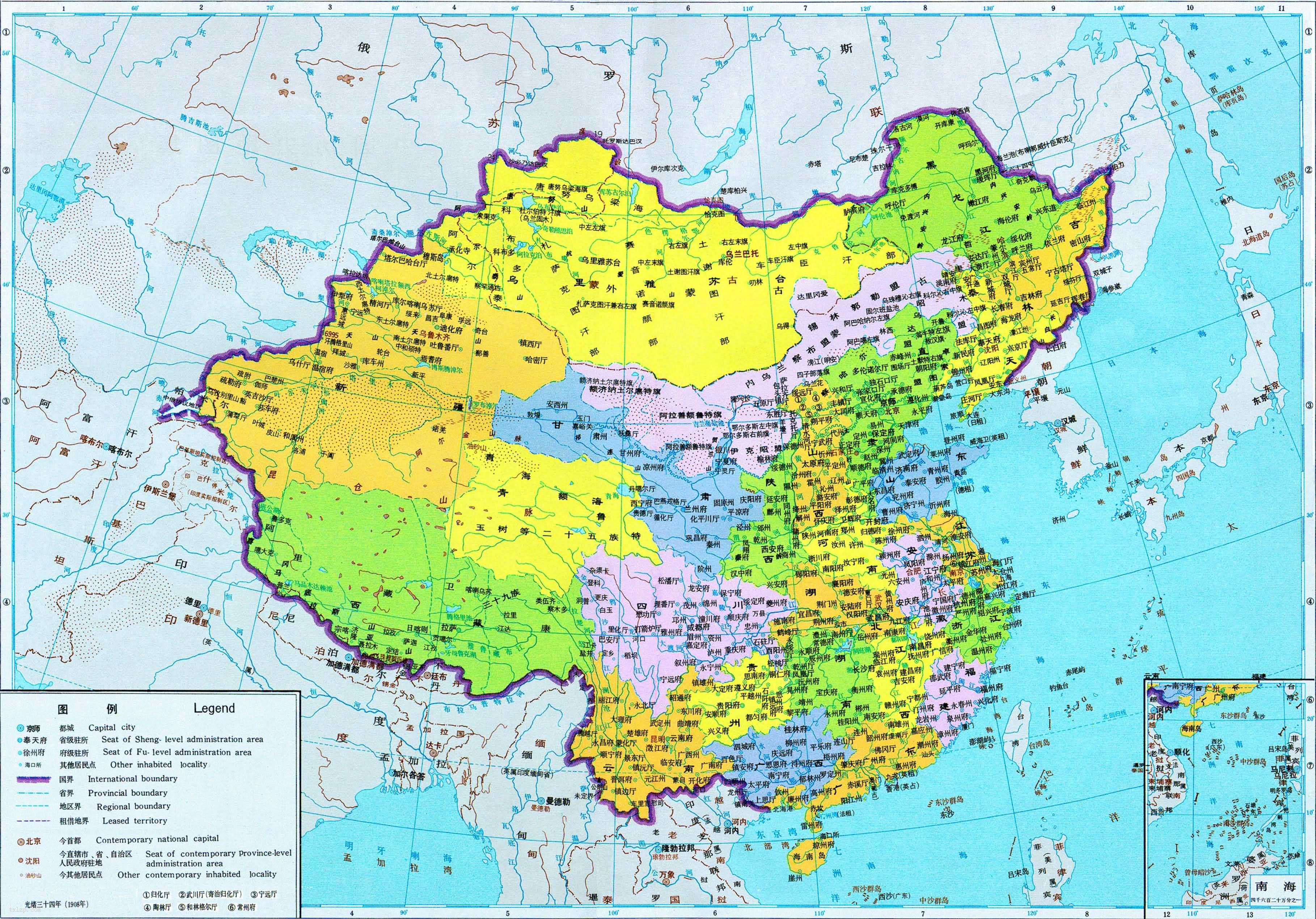
Script error: No such module "Check for unknown parameters".
Sources
<templatestyles src="Refbegin/styles.css" />
- Script error: No such module "citation/CS1".
Further reading
- Script error: No such module "citation/CS1"., travelogue from Tibet – by a woman who's been travelling around Tibet for over a decade,
- Script error: No such module "citation/CS1"., hardcover, 236 pages.
- Script error: No such module "Citation/CS1".
External links
Template:Sister project Template:Sister project Template:Wikivoyage
- Script error: No such module "Official website".Script error: No such module "Check for unknown parameters". Template:Webarchive.
- Population Structure and Changes in the Tibet Autonomous Region
Template:Province-level divisions of the People's Republic of China Script error: No such module "Navbox". Script error: No such module "Navbox". Template:Tibet related articles
- Pages with script errors
- Pages with reference errors
- Pages using infobox settlement with no coordinates
- Pages with broken file links
- Tibet Autonomous Region
- Autonomous regions of China
- Tibetan autonomous areas
- Tibet
- Western China
- 1965 establishments in China
- States and territories established in 1965
- Tibetan Plateau