Yarlung Tsangpo Grand Canyon


The Yarlung Tsangpo Grand Canyon, also known as the Yarlung Zangbo Grand Canyon, the Tsangpo Canyon, the Brahmaputra Canyon or the Tsangpo Gorge (Template:Lang-zh), is a canyon along the Yarlung Tsangpo River in Tibet Autonomous Region, China. It is the deepest canyon in the world,[1]Template:Efn and at Script error: No such module "convert". is slightly longer than the Grand Canyon in the United States, making it one of the world's largest.[1][2] The Yarlung Tsangpo (Tibetan name for the upper course of the Brahmaputra) originates near Mount Kailash and runs east for about Script error: No such module "convert"., draining a northern section of the Himalayas before it enters the gorge just downstream of Pei, Tibet, near the settlement of Zhibe. The canyon has a length of about Script error: No such module "convert". as the gorge bends around Mount Namcha Barwa (Script error: No such module "convert".) and cuts its way through the eastern Himalayas. Its waters drop from about Script error: No such module "convert". near Pei to about Script error: No such module "convert". at the end of the Upper Gorge where the Po Tsangpo River enters. The river continues through the Lower Gorge to the Indian border at an elevation of Script error: No such module "convert".. The river then enters Arunachal Pradesh and eventually becomes the Brahmaputra.[3][4]
Canyon depth
Template:Side box As the canyon passes between the peaks of the Namcha Barwa (Namjabarwa) and Gyala Peri mountains, it reaches an average depth of about 5,000 m (16,000 feet) around Namcha Barwa. The canyon's average depth overall is about 2,268 m (7,440 feet), the deepest depth reaches 6,009 m (19,714 feet). This is the greatest canyon depth on land.Script error: No such module "Unsubst". This part of the canyon is at Script error: No such module "Coordinates".. Namcha Barwa, 7,782 m (25,531 feet) high, is at Script error: No such module "Coordinates"., and Gyala Peri, at 7,234 m (23,733 feet), is at Script error: No such module "Coordinates"..[5]
Ecosystem
The gorge has a unique ecosystem with species of animals and plants barely explored and affected by human influence. Its climate ranges from subtropical to Arctic, and it has several different vegetation zones: Lowland tropical forests, including the tropical rainforest and seasonal tropical forests; tropical montane and subtropical broad-leaved forest; subalpine temperate coniferous forest; subalpine cool coniferous forest; alpine shrubland and tundra. The highest temperature in Tibet is Script error: No such module "convert". and is recorded near the border of India at about Script error: No such module "convert". above sea level. The rare takin is one of the animals hunted by the local tribes.
The canyon is home of a South Tibetan cypress (Cupressus austrotibetica) that is Script error: No such module "convert". tall and, upon its discovery in 2023, is believed to be the tallest tree in Asia.[6][7]
The Everest of Rivers

Template:Side box Western interest in the Tsangpo began in the 19th century when British explorers and geographers speculated where Tibet's east-flowing Tsangpo ended up, suspecting the Brahmaputra. Since British citizens were not allowed to enter Tibet they recruited Indian "pundits" to do the footwork. Kinthup from Sikkim entered the gorge near Gyala, but it proved to be impenetrable. In 1880 Kinthup was sent back to test the Brahmaputra theory by releasing 500 specially marked logs into the river at a prearranged time. His British boss Captain Henry Harman posted men on the Dihang-Brahmaputra to watch for their arrival. However, Kinthup was sold into slavery, escaped, and ended up employed at a monastery. On three leaves of absence he managed to craft the logs, send a letter from Lhasa with his new intended schedule, and send off the logs. Four years had passed. Unfortunately his note to alert the British got misdirected, his boss had left India, and nobody checked for the appearance of the logs.[8]
In 1913, Frederick Marshman Bailey and Henry Morshead launched an expedition into the gorge that finally confirmed that the Tsangpo was indeed the upper Brahmaputra. Frank Kingdon-Ward started an expedition in 1924 in hopes of finding a major waterfall explaining the difference in altitude between the Tsangpo and the Brahmaputra. It turned out that the gorge has a series of relatively steep sections. Among them was a waterfall he named "Rainbow Falls", not as big as he had hoped.
The area was closed after China invaded Tibet and disputed the location of the border in the Sino-Indian War. The Chinese government resumed issuing permits in the 1990s. Since then the gorge has also been visited by kayakers. It has been called the "Everest of Rivers" because of the extreme conditions.[9] The first attempt was made in 1993 by a Japanese group who lost one member on the river. In October 1998 an expedition sponsored by the National Geographic Society attempted to kayak the entire gorge. Troubled by unanticipated high water levels, it ended in tragedy when Doug Gordon was lost.[10] In January–February 2002 an international group with Scott Lindgren, Steve Fisher, Mike Abbott, Allan Ellard, Dustin Knapp, and Johnnie and Willie Kern completed the first full descent of the upper Tsangpo gorge section.[11][12]
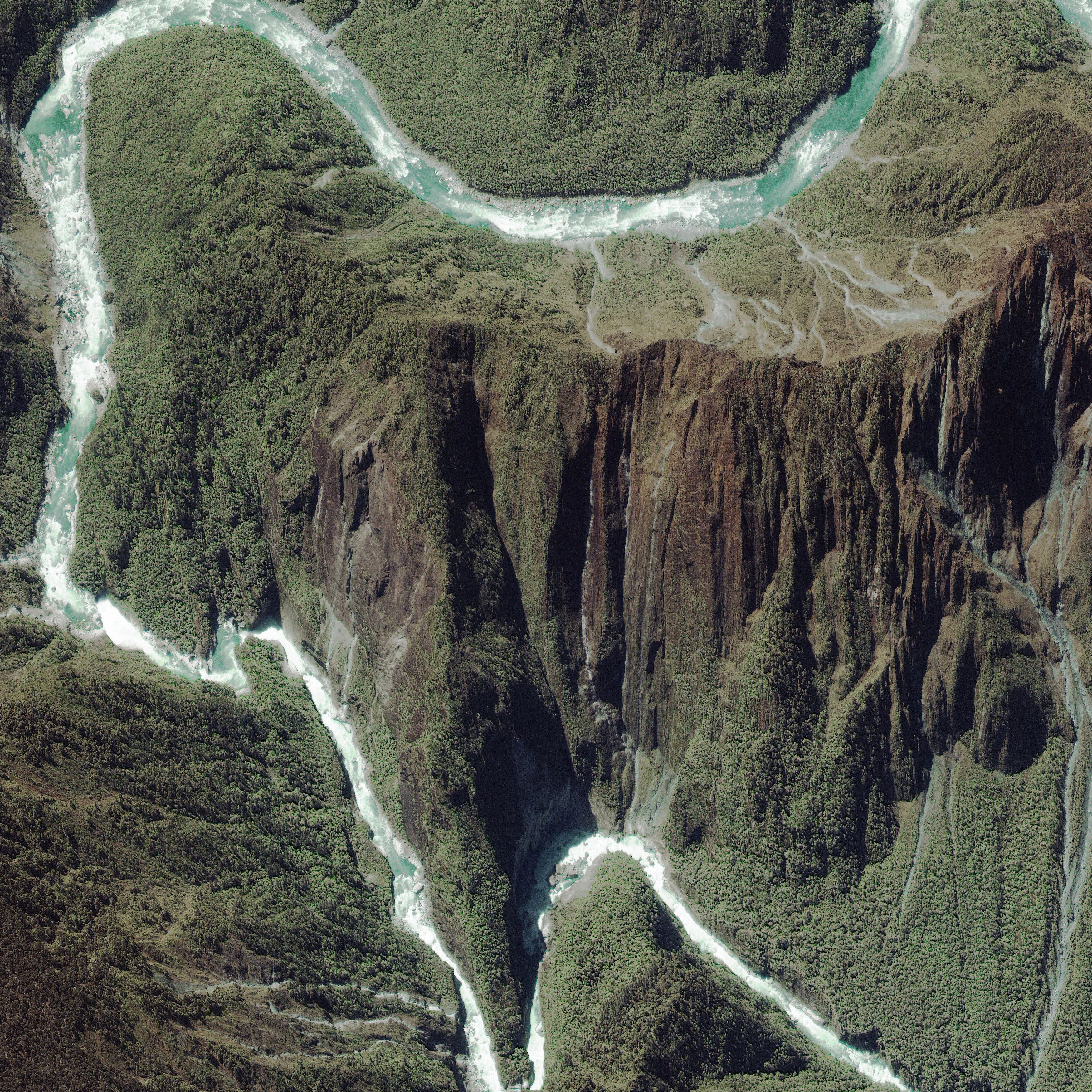
The largest waterfalls of the gorge (near Tsangpo Badong, Chinese: Script error: No such module "Lang".[13]) were visited in 1998, by a team consisting of Ken Storm, Hamid Sarder, Ian Baker and their Monpa guides.[14] They estimated the height of the falls to be about Script error: No such module "convert".. The falls and rest of the Pemako area are sacred to Tibetan Buddhists who had concealed them from outsiders including the Chinese authorities.[15] In 2005 Chinese National Geography named them China's most beautiful waterfalls.
There are two waterfalls in this section: Rainbow Falls (about Script error: No such module "convert". high) at Script error: No such module "Coordinates". and Hidden Falls just downstream at Script error: No such module "Coordinates". (about Script error: No such module "convert". high).[5][16]
Yarlung Tsangpo Hydroelectric and Water Diversion Project
While the government of the PRC has declared the establishment of a "Yarlung Tsangpo Grand Canyon National Reservation", there have also been governmental plans and feasibility studies for the Medog Project, a major dam to harness hydroelectric power and divert water to other areas in China.[17] The size of the dam in the Tsongpo gorge would exceed that of Three Gorges Dam as it is anticipated that such a plant would generate 50 gigawatts[18] of electricity, more than twice the output of Three Gorges. It is feared that there will be displacement of local populations, destruction of ecosystems, and an impact for downstream people in India and Bangladesh.[19] The project is criticized by India because of its potential negative impact upon the residents downstream.[20] Construction officially began in 2024, with the project promoted as a clean energy milestone. However, it has drawn criticism over its environmental impact, lack of transparency, and threats to Tibet’s fragile ecosystems and culturally significant landscapes. The project raises broader concerns about displacement, ecological degradation, and the long-term effects of rapid infrastructure development in a region already grappling with economic inequality, cultural preservation challenges, and environmental vulnerability.[21]
In 1999, R.B. Cathcart suggested that a fabric dam—inflatable with freshwater or air—could block the Yarlung Tsangpo Canyon upstream of Namcha Barwa. Water would then be conveyed via a hard rock tunnel to a point downstream from that mountain.[22]
Steel dams are more advantageous and economical in remote hilly terrain at high altitude for diverting the run off water of the river to power generating units.[23]
References in media
- The gorges may have helped inspire the idea of Shangri-La in James Hilton's book Lost Horizon in 1933.[24]
- In the 2007 fighting game Akatsuki Blitzkampf, the biggest base and research facility of the villainous organization Gessellschaft is hidden in the Yarlung Tsangpo Grand Canyon, referred to in-story as the "Tsangpo Ravine". The second part of the game takes place in said base, with the player fighting their way inside it until they reach the last enemy.
See also
- Nyingchi
- Zangmu Dam
- South–North Water Transfer Project
- Inga dams
- Bailey–Morshead exploration of Tsangpo Gorge
Notes
References
<templatestyles src="Reflist/styles.css" />
- ↑ a b Script error: No such module "citation/CS1".
- ↑ Script error: No such module "citation/CS1".
- ↑ Script error: No such module "citation/CS1".
- ↑ Zheng Du, Zhang Qingsong, Wu Shaohong: Mountain Geoecology and Sustainable Development of the Tibetan Plateau (Kluwer 2000), Template:ISBN, p. 312;
- ↑ a b Script error: No such module "citation/CS1".
- ↑ Script error: No such module "Citation/CS1".
- ↑ Script error: No such module "citation/CS1". Claim in article that it is second tallest tree in the world is consistent with sloppy reading of Wikipedia's List of tallest trees as of June 21, 2023, but is apparently false: an earlier LiveScience article in 2022 reports on heights of three taller coastal redwood trees in the United States: Hyperion, Helios, and Icarus (third tallest, at Script error: No such module "convert"., as measured in 2006).
- ↑ Script error: No such module "citation/CS1".
- ↑ Script error: No such module "citation/CS1".
- ↑ Script error: No such module "citation/CS1".
- ↑ Script error: No such module "Citation/CS1".
- ↑ Script error: No such module "citation/CS1".Template:Cbignore
- ↑ Script error: No such module "citation/CS1".
- ↑ Script error: No such module "citation/CS1".
- ↑ Script error: No such module "citation/CS1".
- ↑ The falls can be seen more clearly in an IKONOS imageTemplate:Webarchive from here Template:Webarchive taken May 9, 2000, which is oriented with south up.
- ↑ Script error: No such module "citation/CS1".
- ↑ Script error: No such module "citation/CS1".
- ↑ Script error: No such module "citation/CS1".
- ↑ Script error: No such module "citation/CS1".
- ↑ Script error: No such module "citation/CS1".
- ↑ Script error: No such module "Citation/CS1".
- ↑ Script error: No such module "Citation/CS1".
- ↑ Script error: No such module "citation/CS1".
Script error: No such module "Check for unknown parameters".
Further reading
- Wick Walker (2000). Courting the Diamond Sow : A Whitewater Expedition on Tibet's Forbidden River. National Geographic. Template:ISBN.
- Todd Balf (2001). The Last River : The Tragic Race for Shangri-la. Three Rivers Press. Template:ISBN.
- Michael Mcrae (2002). The Siege of Shangri-La : The Quest for Tibet's Sacred Hidden Paradise. Broadway. Template:ISBN. Template:ISBN.
- Peter Heller (2004). Hell or High Water : Surviving Tibet's Tsangpo River. Rodale Books. Template:ISBN.
- Ian Baker (2004). The Heart of the World : A journey to the last secret place. Souvenir Press. Template:ISBN.
- F.Kingdon Ward (Author), Kenneth Cox (Editor), Ken Storm Jr (Editor), Ian Baker (Editor) Riddle of the Tsangpo Gorges: Retracing the Epic Journey of 1924–25 in South-East Tibet (Hardcover) Antique Collectors' Club Ltd (1 Jan 1999) Template:ISBN
Videos
- Scott Lindgren (2002), "Into the Tsangpo Gorge". Slproductions. ASIN B0006FKL2Q.
- Into the Tsangpo Gorge Documentary
External links
Template:Side box Template:Sister-inline
- Into the Tsangpo Gorge (Outside Online)
- IKONOS Satellite Image of "Rainbow Falls" and "Hidden Falls"
- Douglas Gordon at University of Utah
- Touristic information Template:Webarchive
Template:Canyons and gorges of China Template:Authority control Script error: No such module "Coordinates".