Simsim, Gaza
Script error: No such module "Settlement short description".Script error: No such module "Infobox".Script error: No such module "Check for unknown parameters".Script error: No such module "Check for conflicting parameters".Expression error: Unexpected < operator
Simsim (Template:Langx), also spelled Semsem or Sumsum, was a Palestinian village, located Script error: No such module "convert". northeast of Gaza. It was depopulated and destroyed during the 1948 Palestine war as part of the 1948 Palestinian expulsion and the Nakba.[1][2]
History
Roman to Crusader periods
Simsim contained two archaeological sites known locally as ar-Ras and Sha'fat al-Mughur (the latter of which contained a Roman cemetery).[1] Byzantine ceramics have been found here.[3] The village was known as Semsem to the Crusaders.[4]
Ottoman period
Simsim was incorporated into the Ottoman Empire in 1517 with all of Palestine, and by 1596 it was part of the nahiya (subdistrict) of Gaza under the liwa' (district) of Sanjak of Gaza, and it had 20 Muslim households, an estimated population of 110. They paid a fixed tax rate of 33.3% on a number of crops, including wheat, barley and fruit trees, as well as on goats and beehives; a total of 6,800 Akçe. 14/24 of the revenue went to a Waqf.[5]
During the 17th and 18th centuries, the area of Simsim experienced a significant process of settlement decline due to nomadic pressures on local communities. The residents of abandoned villages moved to surviving settlements, but the land continued to be cultivated by neighboring villages.[6]
19th century
In 1838, Simsim was noted as was a Muslim village in the Gaza District.[7][8]
In A Handbook for Travellers in Syria and Palestine (1858), Josias Leslie Porter describes the village as standing "amidst a little grove of trees, about a 1/4 mile north of the road."[9] In June 1863 Victor Guérin found the village to contains five hundred inhabitants. Surrounded by trees, the village had tobacco and sesame plantations. A oualy, dedicated to Neby Danyal, was internally decorated with two ancient columns.[10] An Ottoman village list of about 1870 indicated 69 houses and a population of 119, though the population count included only men.[11][12]
In 1883, the PEF's Survey of Western Palestine described Simsim as being surrounded by gardens. It had a well, a pool, and an olive grove that was planted to the north.[13]
Karl Baedeker and his travelling companions writing in 1894 are more specific, noting that the village is located in an olive grove and that tobacco and sesame are the principal crops grown there.[14]
British Mandate
In the 1922 census of Palestine conducted by the British Mandate authorities, Semsem had a population of 760 inhabitants, all Muslims,[15] increasing in the 1931 census, when Sumsum had a population of 855 Muslims in 195 houses.[16]


In 1942, the kibbutz of Gvar'am was established on land traditionally belonging to the village.[4]
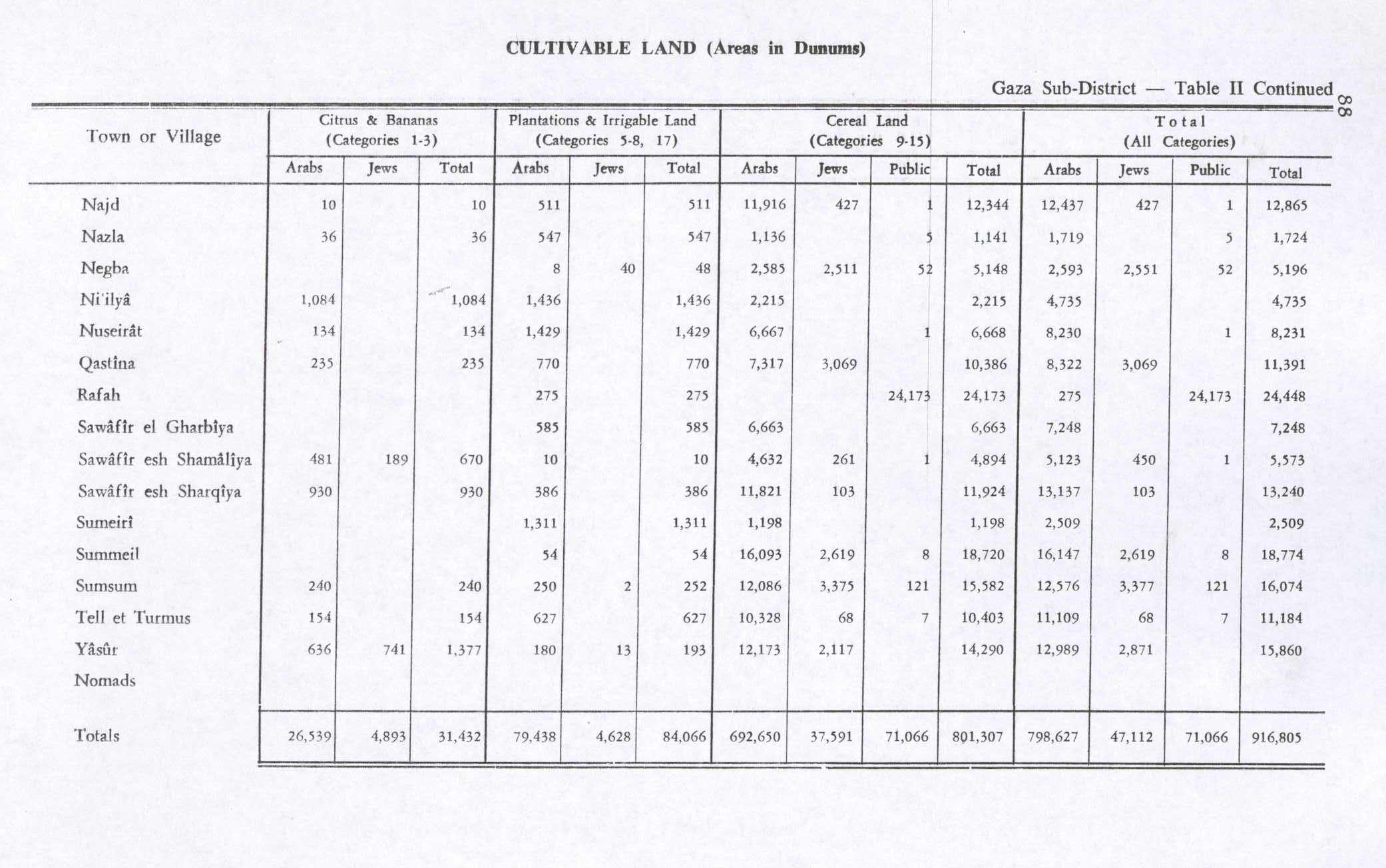
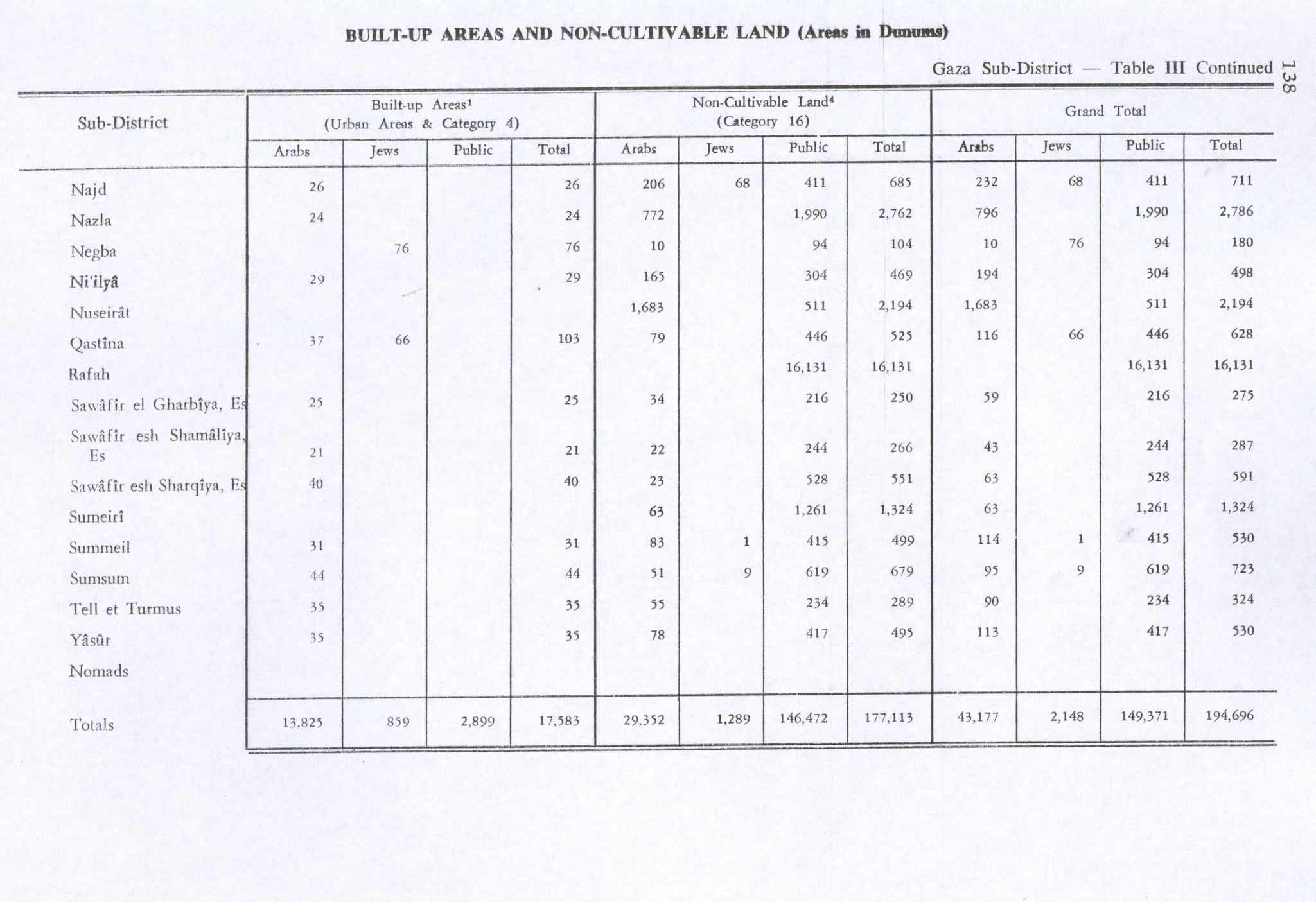
In the 1945 statistics, the population of Sumsum consisted of 1,290 Muslims and 70 Jews,[17] while the total land area was 16,797 dunams, according to an official land and population survey.[18] Of this, a total of 240 dunams were used citrus and bananas, 252 dunams were plantations and irrigable land, 15,582 for cereals,[19] while 44 dunams were built-up areas.[20]
1948 war and destruction
Script error: No such module "labelled list hatnote".
Script error: No such module "Sidebar".
During the 1948 Arab–Israeli War the villagers of Simsim, together with the surrounding villages, were driven out by soldiers from the Negev Brigade on 12–13 May 1948 as part of Operation Barak. In Simsim the occupying troops found only a handful of old people. They blew up five houses and warned that if the village's weapons were not handed over the following day, they would blow up the rest.[21] But the inhabitants repeatedly returned to the village, either to resettle or to cultivate crops. At the end of May, a Negev Brigade unit, with orders to expel "the Arabs from Sumsum and Burayr and burn their granaries and fields", swept through the villages, encountering resistance in Sumsum, and killed "5" (or, according to another report, "20") and blew up granaries and a well.[22] Historian Saleh Abdel Jawad writes that a massacre occurred in the village on 13 May.Template:Refn The Israeli troops returned to Simsim yet again, on 9 or 10 June 1948, again burning houses and skirmishing with Arabs.[23]
Or HaNer, established in 1957, lie less than one km south of the village site, on land formerly belonging to Najd, Gaza.[4]
In 1992, the village's remains were described by Walid Khalidi: "The village has been obliterated and can only be recognised from the cypress and sycamore trees that still remain. A pile of stones that may be the debris of a village building is visible. The site is fenced in and serves as a pasture. The land in the vicinity are cultivated by Israeli farmers."[4]
People from Simsim
References
<templatestyles src="Reflist/styles.css" />
- ↑ a b Script error: No such module "citation/CS1".
- ↑ Morris, 2004, p. 258
- ↑ Dauphin, 1998, p. 874
- ↑ a b c d Cite error: Script error: No such module "Namespace detect".Script error: No such module "Namespace detect".
- ↑ Hütteroth and Abdulfattah, 1977, p. 147. Quoted in Khalidi, 1992, p. 136
- ↑ Script error: No such module "Citation/CS1".
- ↑ Robinson and Smith, 1841, vol 3, Appendix 2, p. 118
- ↑ Robinson and Smith, 1841, vol 2, p. 371
- ↑ Porter, 1858, p. 262.
- ↑ Guérin, 1869, p. 293
- ↑ Socin, 1879, p. 161
- ↑ Hartmann, 1883, p. 133 noted 71 houses
- ↑ Conder and Kitchener, 1883, SWP III, p. 260. Quoted in Khalidi, 1992, p.136
- ↑ Baedeker et al., 1894, p. 154.
- ↑ Barron, 1923, Table V, Sub-district of Gaza, p. 8
- ↑ Mills, 1932, p. 6
- ↑ Cite error: Script error: No such module "Namespace detect".Script error: No such module "Namespace detect".
- ↑ Cite error: Script error: No such module "Namespace detect".Script error: No such module "Namespace detect".
- ↑ Government of Palestine, Department of Statistics. Village Statistics, April, 1945. Quoted in Hadawi, 1970, p. 88
- ↑ Government of Palestine, Department of Statistics. Village Statistics, April, 1945. Quoted in Hadawi, 1970, p. 138
- ↑ ´Ephraim´to Sarig, ´Summary for 14.5.48´, IDFA 922\75\\1220; and HGS\Operations Logbook, entry for 14 May 1948, IDFA 922\75\\1176. Cited in Morris, 2004, p. 258
- ↑ Morris, 2004, p. 258
- ↑ Unsigned, "Daily Summary −11.6.48", IDFA 922\75\\1220. Cited in Morris, 2004, p. 258
Script error: No such module "Check for unknown parameters".
Bibliography
<templatestyles src="Refbegin/styles.css" />
- Baedeker, K., A. Socin and Immanuel Benzinger (1894). Palestine and Syria: Handbook for Travellers. Harvard University.
- Script error: No such module "citation/CS1".
- Script error: No such module "citation/CS1".
- Script error: No such module "citation/CS1".
- Script error: No such module "citation/CS1".
- Script error: No such module "citation/CS1".
- Script error: No such module "citation/CS1".
- Script error: No such module "Citation/CS1".
- Script error: No such module "citation/CS1".
- Script error: No such module "citation/CS1".
- Script error: No such module "citation/CS1".
- Script error: No such module "citation/CS1".
- Script error: No such module "citation/CS1".
- Porter, J.L., (1858). A Handbook for Travellers in Syria and Palestine. Harvard University.
- Script error: No such module "citation/CS1".
- Script error: No such module "citation/CS1".
- Script error: No such module "Citation/CS1".
External links
- Welcome To Simsim
- Simsim, Zochrot
- Survey of Western Palestine, Map 20: IAA, Wikimedia commons
- Simsim from the Khalil Sakakini Cultural Center
- Tour to Simsim Yoav Bachar, 28.3.09, Zochrot

Template:Palestinian Arab villages depopulated during the 1948 Palestine War