800 (number)
(Redirected from Number 800)
Script error: No such module "redirect hatnote". Template:Infobox number 800 (eight hundred) is the natural number following 799 and preceding 801.
It is the sum of four consecutive primes (193 + 197 + 199 + 211). It is a Harshad number, an Achilles number and the area of a square with diagonal 40.[1]
Integers from 801 to 899
800s
Script error: No such module "Labelled list hatnote".
- 801 = 32 × 89, Harshad number, number of clubs patterns appearing in 50 × 50 coins[2]
- 802 = 2 × 401, sum of eight consecutive primes (83 + 89 + 97 + 101 + 103 + 107 + 109 + 113), nontotient, happy number, sum of 4 consecutive triangular numbers[3] (171 + 190 + 210 + 231)
- 803 = 11 × 73, sum of three consecutive primes (263 + 269 + 271), sum of nine consecutive primes (71 + 73 + 79 + 83 + 89 + 97 + 101 + 103 + 107), Harshad number, number of partitions of 34 into Fibonacci parts[4]
- 804 = 22 × 3 × 67, nontotient, Harshad number, refactorable number[5]
- "The 804" is a local nickname for the Greater Richmond Region of the U.S. state of Virginia, derived from its telephone area code (although the area code covers a larger area).[6][7]
- 805 = 5 × 7 × 23, sphenic number, number of partitions of 38 into nonprime parts[8]
- 806 = 2 × 13 × 31, sphenic number, nontotient, totient sum for first 51 integers, happy number, Phi(51)[9]
- 807 = 3 × 269, antisigma(42)[10]
- 808 = 23 × 101, refactorable number, strobogrammatic number[11]
- 809 = prime number, Sophie Germain prime,[12] Chen prime, Eisenstein prime with no imaginary part
810s
- 810 = 2 × 34 × 5, Harshad number, number of distinct reduced words of length 5 in the Coxeter group of "Apollonian reflections" in three dimensions,[13] number of non-equivalent ways of expressing 100,000 as the sum of two prime numbers[14]
- 811 = prime number, twin prime, sum of five consecutive primes (151 + 157 + 163 + 167 + 173), Chen prime, happy number, largest minimal prime in base 9, the Mertens function of 811 returns 0
- 812 = 22 × 7 × 29, admirable number, pronic number,[15] balanced number,[16] the Mertens function of 812 returns 0
- 813 = 3 × 271, Blum integer (sequence A016105 in the OEIS)
- 814 = 2 × 11 × 37, sphenic number, the Mertens function of 814 returns 0, nontotient, number of fixed hexahexes.
- 815 = 5 × 163, number of graphs with 8 vertices and a distinguished bipartite block[17]
- 816 = 24 × 3 × 17, tetrahedral number,[18] Padovan number,[19] Zuckerman number
- 817 = 19 × 43, sum of three consecutive primes (269 + 271 + 277), centered hexagonal number[20]
- 818 = 2 × 409, nontotient, strobogrammatic number[11]
- 819 = 32 × 7 × 13, square pyramidal number[21]
820s
- 820 = 22 × 5 × 41, 40th triangular number, smallest triangular number that starts with the digit 8,[22] Harshad number, happy number, repdigit (1111) in base 9
- 821 = prime number, twin prime, Chen prime, Eisenstein prime with no imaginary part, lazy caterer number (sequence A000124 in the OEIS), prime quadruplet with 823, 827, 829
- 822 = 2 × 3 × 137, sum of twelve consecutive primes (43 + 47 + 53 + 59 + 61 + 67 + 71 + 73 + 79 + 83 + 89 + 97), sphenic number, member of the Mian–Chowla sequence[23]
- 823 = prime number, twin prime, lucky prime, the Mertens function of 823 returns 0, prime quadruplet with 821, 827, 829
- 824 = 23 × 103, refactorable number, sum of ten consecutive primes (61 + 67 + 71 + 73 + 79 + 83 + 89 + 97 + 101 + 103), the Mertens function of 824 returns 0, nontotient
- 825 = 3 × 52 × 11, Smith number,[24] the Mertens function of 825 returns 0, Harshad number
- 826 = 2 × 7 × 59, sphenic number, number of partitions of 29 into parts each of which is used a different number of times[25]
- 827 = prime number, twin prime, part of prime quadruplet with {821, 823, 829}, sum of seven consecutive primes (103 + 107 + 109 + 113 + 127 + 131 + 137), Chen prime, Eisenstein prime with no imaginary part, strictly non-palindromic number[26]
- 828 = 22 × 32 × 23, Harshad number, triangular matchstick number[27]
- 829 = prime number, twin prime, part of prime quadruplet with {827, 823, 821}, sum of three consecutive primes (271 + 277 + 281), Chen prime, centered triangular number
830s
- 830 = 2 × 5 × 83, sphenic number, sum of four consecutive primes (197 + 199 + 211 + 223), nontotient, totient sum for first 52 integers
- 831 = 3 × 277, number of partitions of 32 into at most 5 parts[28]
- 832 = 26 × 13, Harshad number, member of the sequence Horadam(0, 1, 4, 2)[29]
- 833 = 72 × 17, octagonal number (sequence A000567 in the OEIS), a centered octahedral number[30]
- 834 = 2 × 3 × 139, cake number, sphenic number, sum of six consecutive primes (127 + 131 + 137 + 139 + 149 + 151), nontotient
- 835 = 5 × 167, Motzkin number[31]
Script error: No such module "Labelled list hatnote".
- 836 = 22 × 11 × 19, weird number
- 837 = 33 × 31, the 36th generalized heptagonal number[32]
- 838 = 2 × 419, palindromic number, number of distinct products ijk with 1 <= i<j<k <= 23[33]
- 839 = prime number, safe prime,[34] sum of five consecutive primes (157 + 163 + 167 + 173 + 179), Chen prime, Eisenstein prime with no imaginary part, highly cototient number[35]
840s
Script error: No such module "Labelled list hatnote".
- 840 = 23 × 3 × 5 × 7, highly composite number,[36] smallest number divisible by the numbers 1 to 8 (lowest common multiple of 1 to 8), sparsely totient number,[37] Harshad number in base 2 through base 10, idoneal number, balanced number,[38] sum of a twin prime (419 + 421). With 32 distinct divisors, it is the number below 1000 with the largest amount of divisors.
- 841 = 292 = 202 + 212, sum of three consecutive primes (277 + 281 + 283), sum of nine consecutive primes (73 + 79 + 83 + 89 + 97 + 101 + 103 + 107 + 109), centered square number,[39] centered heptagonal number,[40] centered octagonal number[41]
- 842 = 2 × 421, nontotient, 842!! - 1 is prime,[42] number of series-reduced trees with 18 nodes[43]
- 843 = 3 × 281, Lucas number[44]
- 844 = 22 × 211, nontotient, smallest 5 consecutive integers which are not squarefree are: 844 = 22 × 211, 845 = 5 × 132, 846 = 2 × 32 × 47, 847 = 7 × 112 and 848 = 24 × 53 [45]
- 845 = 5 × 132, concentric pentagonal number,[46] number of emergent parts in all partitions of 22 [47]
- 846 = 2 × 32 × 47, sum of eight consecutive primes (89 + 97 + 101 + 103 + 107 + 109 + 113 + 127), nontotient, Harshad number
- 847 = 7 × 112, happy number, number of partitions of 29 that do not contain 1 as a part[48]
- 848 = 24 × 53, untouchable number
- 849 = 3 × 283, the Mertens function of 849 returns 0, Blum integer
850s
- 850 = 2 × 52 × 17, the Mertens function of 850 returns 0, nontotient, the sum of the squares of the divisors of 26 is 850 (sequence A001157 in the OEIS). The maximum possible Fair Isaac credit score, country calling code for North Korea
- 851 = 23 × 37, number of compositions of 18 into distinct parts[49]
- 852 = 22 × 3 × 71, pentagonal number,[50] Smith number[24]
- country calling code for Hong Kong
- 853 = prime number, Perrin number,[51] the Mertens function of 853 returns 0, average of first 853 prime numbers is an integer (sequence A045345 in the OEIS), strictly non-palindromic number, number of connected graphs with 7 nodes
- country calling code for Macau
- 854 = 2 × 7 × 61, sphenic number, nontotient, number of unlabeled planar trees with 11 nodes[52]
- 855 = 32 × 5 × 19, decagonal number,[53] centered cube number[54]
- country calling code for Cambodia
- 856 = 23 × 107, nonagonal number,[55] centered pentagonal number,[56] happy number, refactorable number
- country calling code for Laos
- 857 = prime number, sum of three consecutive primes (281 + 283 + 293), Chen prime, Eisenstein prime with no imaginary part
- 858 = 2 × 3 × 11 × 13, Giuga number[57]
- 859 = prime number, number of planar partitions of 11,[58] prime index prime
860s
- 860 = 22 × 5 × 43, sum of four consecutive primes (199 + 211 + 223 + 227), Hoax number[59]
- 861 = 3 × 7 × 41, sphenic number, 41st triangular number,[22] hexagonal number,[60] Smith number[24]
- 862 = 2 × 431, lazy caterer number (sequence A000124 in the OEIS)
- 863 = prime number, safe prime,[34] sum of five consecutive primes (163 + 167 + 173 + 179 + 181), sum of seven consecutive primes (107 + 109 + 113 + 127 + 131 + 137 + 139), Chen prime, Eisenstein prime with no imaginary part, index of prime Lucas number[61]
- 864 = 25 × 33, Achilles number, sum of a twin prime (431 + 433), sum of six consecutive primes (131 + 137 + 139 + 149 + 151 + 157), Harshad number
- 865 = 5 × 173
- 866 = 2 × 433, nontotient, number of one-sided noniamonds,[62] number of cubes of edge length 1 required to make a hollow cube of edge length 13
- 867 = 3 × 172, number of 5-chromatic simple graphs on 8 nodes[63]
- 868 = 22 × 7 × 31 = J3(10),[64] nontotient
- 869 = 11 × 79, the Mertens function of 869 returns 0
870s
- 870 = 2 × 3 × 5 × 29, sum of ten consecutive primes (67 + 71 + 73 + 79 + 83 + 89 + 97 + 101 + 103 + 107), pronic number,[15] nontotient, sparsely totient number,[37] Harshad number
- This number is the magic constant of n×n normal magic square and n-queens problem for n = 12.
- 871 = 13 × 67, thirteenth tridecagonal number
- 872 = 23 × 109, refactorable number, nontotient, 872! + 1 is prime
- 873 = 32 × 97, sum of the first six factorials from 1
- 874 = 2 × 19 × 23, sphenic number, sum of the first twenty-three primes, sum of the first seven factorials from 0, nontotient, Harshad number, happy number
- 875 = 53 × 7, unique expression as difference of positive cubes:[65] 103 – 53
- 876 = 22 × 3 × 73, generalized pentagonal number[66]
- 877 = prime number, Bell number,[67] Chen prime, the Mertens function of 877 returns 0, strictly non-palindromic number,[26] prime index prime
- 878 = 2 × 439, nontotient, number of Pythagorean triples with hypotenuse < 1000.[68]
- 879 = 3 × 293, number of regular hypergraphs spanning 4 vertices,[69] candidate Lychrel seed number
880s
Script error: No such module "Labelled list hatnote".
- 880 = 24 × 5 × 11 = 11!!!,[70] Harshad number; 148-gonal number; the number of n×n magic squares for n = 4.
- country calling code for Bangladesh
Script error: No such module "Labelled list hatnote".
- 881 = prime number, twin prime, sum of nine consecutive primes (79 + 83 + 89 + 97 + 101 + 103 + 107 + 109 + 113), Chen prime, Eisenstein prime with no imaginary part, happy number
- 882 = 2 × 32 × 72 = a trinomial coefficient,[71] Harshad number, totient sum for first 53 integers, area of a square with diagonal 42[1]
- 883 = prime number, twin prime, lucky prime, sum of three consecutive primes (283 + 293 + 307), sum of eleven consecutive primes (59 + 61 + 67 + 71 + 73 + 79 + 83 + 89 + 97 + 101 + 103), the Mertens function of 883 returns 0
- 884 = 22 × 13 × 17, the Mertens function of 884 returns 0, number of points on surface of tetrahedron with sidelength 21[72]
- 885 = 3 × 5 × 59, sphenic number, number of series-reduced rooted trees whose leaves are integer partitions whose multiset union is an integer partition of 7.[73]
- 886 = 2 × 443, the Mertens function of 886 returns 0
- country calling code for Taiwan
- 887 = prime number followed by primal gap of 20, safe prime,[34] Chen prime, Eisenstein prime with no imaginary part
| File:Seven-segment 8.svgFile:Seven-segment 8.svgFile:Seven-segment 8.svg |

Script error: No such module "Labelled list hatnote".
- 888 = 23 × 3 × 37, sum of eight consecutive primes (97 + 101 + 103 + 107 + 109 + 113 + 127 + 131), Harshad number, strobogrammatic number,[11] happy number, 888!! - 1 is prime[74]
- 889 = 7 × 127, the Mertens function of 889 returns 0
890s
- 890 = 2 × 5 × 89 = 192 + 232 (sum of squares of two successive primes),[75] sphenic number, sum of four consecutive primes (211 + 223 + 227 + 229), nontotient
- 891 = 34 × 11, sum of five consecutive primes (167 + 173 + 179 + 181 + 191), octahedral number
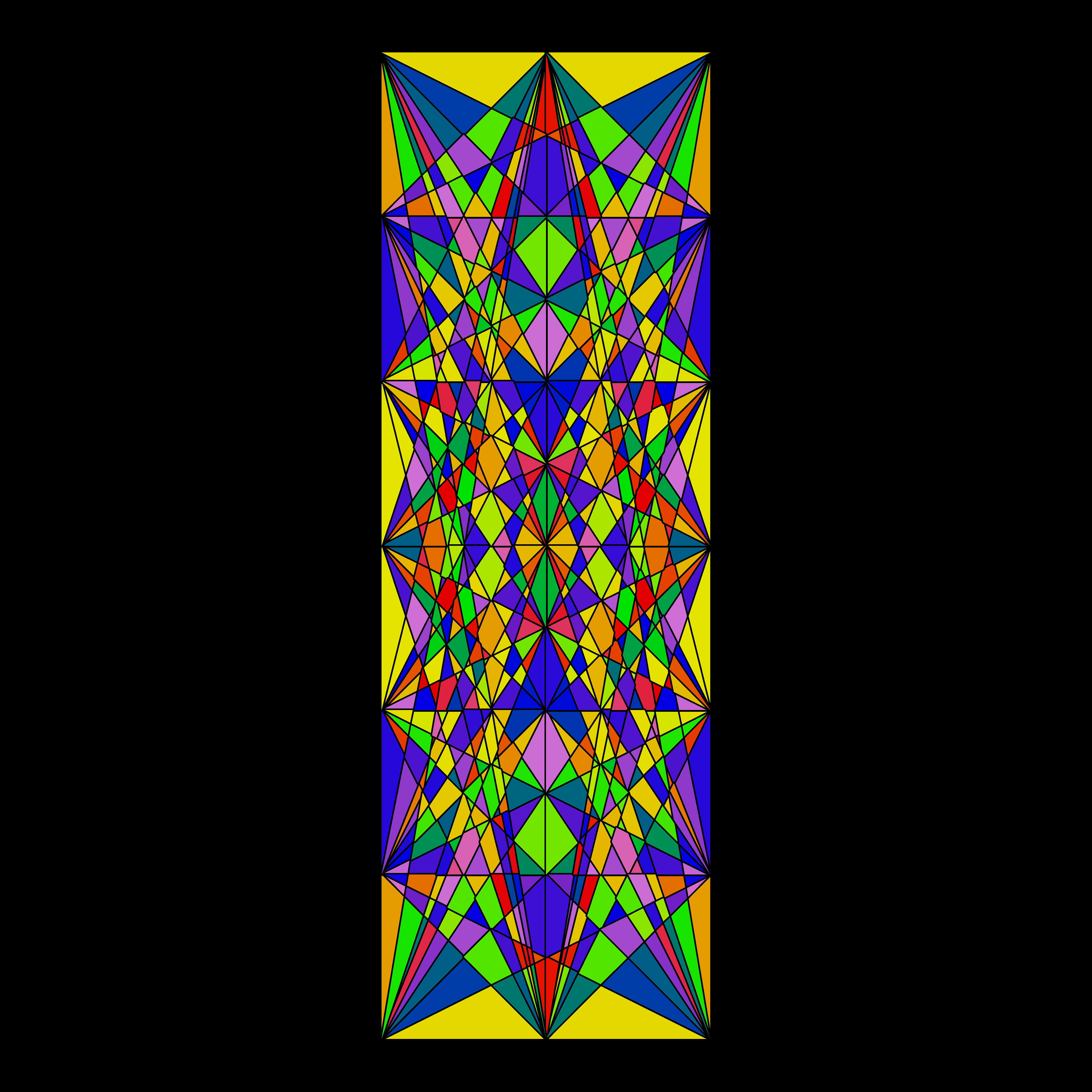
- 892 = 22 × 223, nontotient, number of regions formed by drawing the line segments connecting any two perimeter points of a 6 times 2 grid of squares like this (sequence A331452 in the OEIS).
- 893 = 19 × 47, the Mertens function of 893 returns 0
- 894 = 2 × 3 × 149, sphenic number, nontotient
- 895 = 5 × 179, Smith number,[24] Woodall number,[76] the Mertens function of 895 returns 0
- 896 = 27 × 7, refactorable number, sum of six consecutive primes (137 + 139 + 149 + 151 + 157 + 163), the Mertens function of 896 returns 0
- 897 = 3 × 13 × 23, sphenic number, Cullen number (sequence A002064 in the OEIS)
- 898 = 2 × 449, the Mertens function of 898 returns 0, nontotient
- 899 = 29 × 31 (a twin prime product),[77] happy number, smallest number with digit sum 26,[78] number of partitions of 51 into prime parts
References
Template:Reflist Template:Integers
- ↑ a b Template:Cite OEIS
- ↑ (sequence A229093 in the OEIS)
- ↑ (sequence A005893 in the OEIS)
- ↑ Template:Cite OEIS
- ↑ Template:Cite OEIS
- ↑ Template:Cite newspaper
- ↑ Template:Cite newspaper
- ↑ Template:Cite OEIS
- ↑ Template:Cite OEIS
- ↑ Template:Cite OEIS
- ↑ a b c Template:Cite OEIS
- ↑ Template:Cite OEIS
- ↑ Template:Cite OEIS
- ↑ Template:Cite OEIS
- ↑ a b Template:Cite OEIS
- ↑ Template:Cite OEIS
- ↑ Template:Cite OEIS
- ↑ Template:Cite OEIS
- ↑ Template:Cite OEIS
- ↑ Template:Cite OEIS
- ↑ Template:Cite OEIS
- ↑ a b Template:Cite OEIS
- ↑ Template:Cite OEIS
- ↑ a b c d Template:Cite OEIS
- ↑ Template:Cite OEIS
- ↑ a b Template:Cite OEIS
- ↑ (sequence A045943 in the OEIS)
- ↑ Template:Cite OEIS
- ↑ (sequence A085449 in the OEIS)
- ↑ Template:Cite OEIS
- ↑ Template:Cite OEIS
- ↑ Template:Cite OEIS
- ↑ Template:Cite OEIS
- ↑ a b c Template:Cite OEIS
- ↑ Template:Cite OEIS
- ↑ Template:Cite OEIS
- ↑ a b Template:Cite OEIS
- ↑ Template:Cite OEIS
- ↑ Template:Cite OEIS
- ↑ Template:Cite OEIS
- ↑ Template:Cite OEIS
- ↑ Template:Cite OEIS
- ↑ Template:Cite OEIS
- ↑ Template:Cite OEIS
- ↑ Template:Cite OEIS
- ↑ Template:Cite OEIS
- ↑ Template:Cite OEIS
- ↑ Template:Cite OEIS
- ↑ Template:Cite OEIS
- ↑ Template:Cite OEIS
- ↑ Template:Cite OEIS
- ↑ Template:Cite OEIS
- ↑ Template:Cite OEIS
- ↑ Template:Cite OEIS
- ↑ Template:Cite OEIS
- ↑ Template:Cite OEIS
- ↑ Template:Cite OEIS
- ↑ Template:Cite OEIS
- ↑ Template:Cite OEIS
- ↑ Template:Cite OEIS
- ↑ Template:Cite OEIS
- ↑ Template:Cite OEIS
- ↑ Template:Cite OEIS
- ↑ Template:Cite OEIS
- ↑ Template:Cite OEIS
- ↑ Template:Cite OEIS
- ↑ Template:Cite OEIS
- ↑ Template:Cite OEIS
- ↑ Template:Cite OEIS
- ↑ Template:Cite OEIS
- ↑ Template:Cite OEIS
- ↑ Template:Cite OEIS
- ↑ Template:Cite OEIS
- ↑ Template:Cite OEIS
- ↑ Template:Cite OEIS
- ↑ Template:Cite OEIS
- ↑ Template:Cite OEIS
- ↑ Template:Cite OEIS