Naghnaghiya
Script error: No such module "Settlement short description".Script error: No such module "Infobox".Script error: No such module "Check for unknown parameters".Script error: No such module "Check for conflicting parameters".Expression error: Unexpected < operator
Naghnaghiya (Template:Langx, Al-Naghnaghiyya) was a Palestinian Arab village, Script error: No such module "convert". southeast of Haifa.[1] It was depopulated before the outbreak of the 1948 Arab-Israeli war.[2]
Location
The village was on the north edge of a hill at the edge of a wadi bed, overlooking the Jezreel Valley and the Nazareth hills to the north and northeast. It was the smallest of a group of three villages (known collectively as al-Ghubayyat) located together; the others were Al-Ghubayya al-Fawqa and Al-Ghubayya al-Tahta. Next to al- Naghnaghiya was an artificial mound that bore the same name. Two kilometers to the southeast, on the highway to Jenin was Tall al-Mutasallim, identified with Megiddo.[1]

History
In 1888, during Ottoman rule, an elementary school was built that was shared by the three al-Ghubayyat villages.[1]
British Mandate era
In the British Mandate of Palestine period, in the 1922 census of Palestine Al Naghnaghiyeh had a population of 272; all Muslims,[3] increasing in the 1931 census to 416, still all Muslims, in a total of 78 houses.[4]
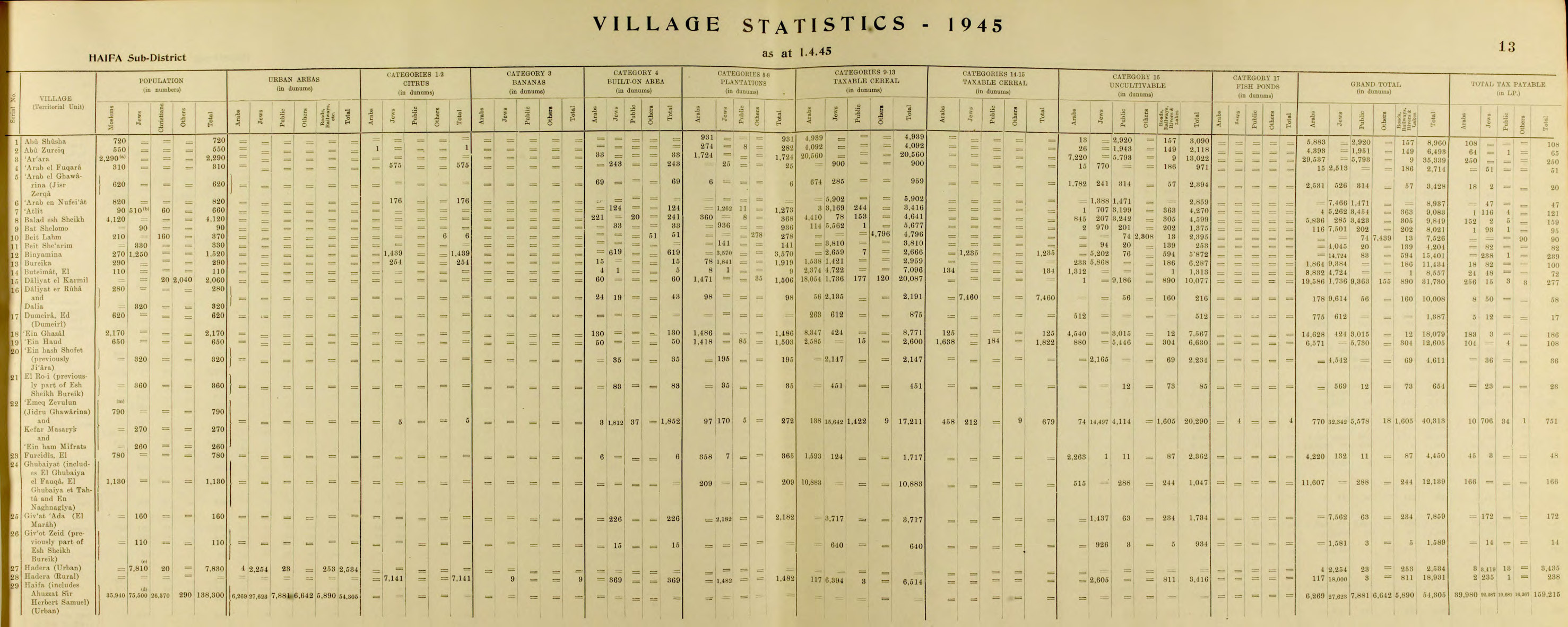
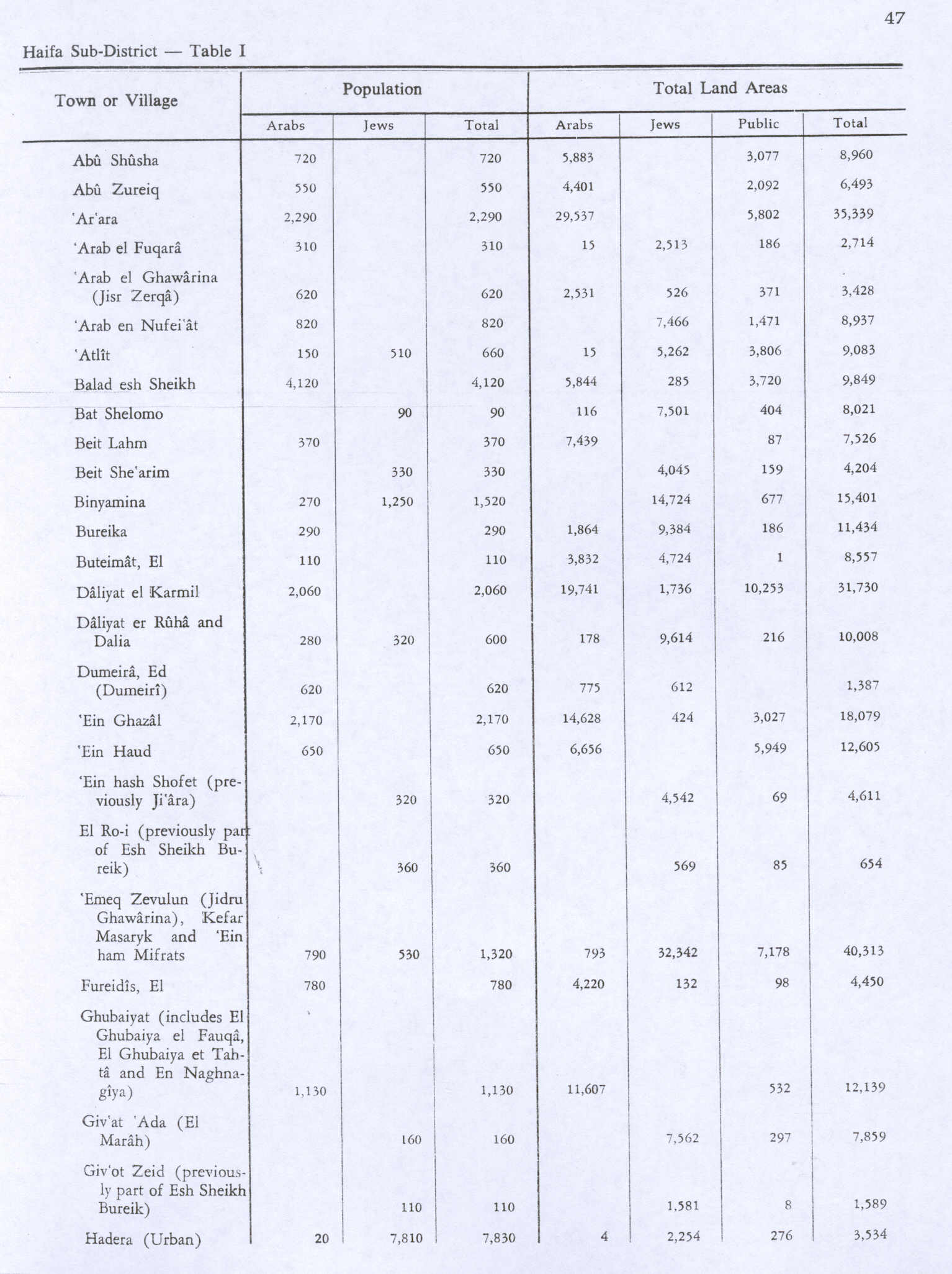
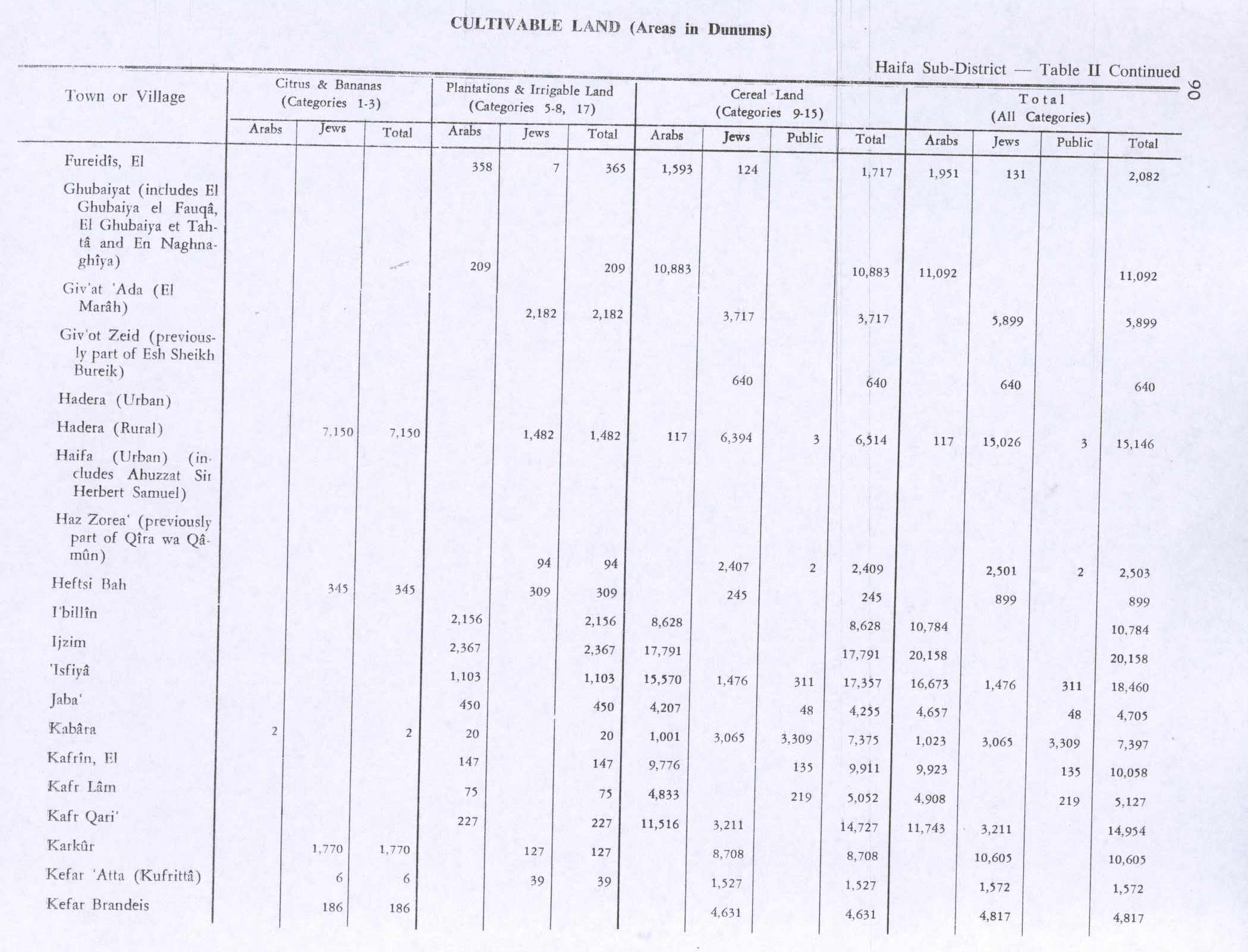
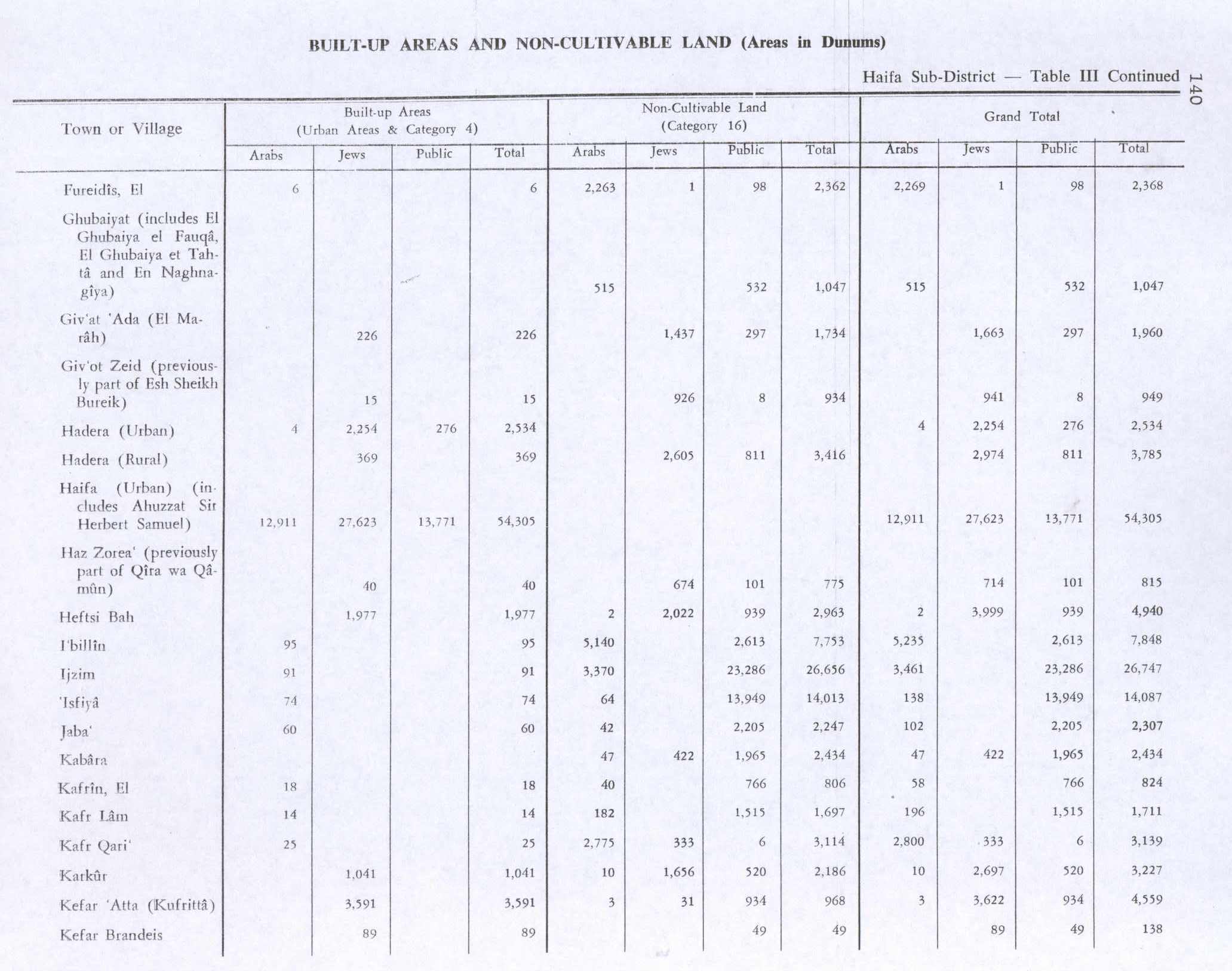
In the 1945 statistics the population of Al-Ghubayya al-Fawqa, Al-Ghubayya al-Tahta and Naghnaghiya was 1,130, all Muslims,[5] and it had 12,139 dunams of land according to an official land and population survey.[6] 209 dunams were for plantations and irrigable land, 10,883 for cereals,[7] while no data were given for built-up (urban) land.[8]
In addition to agriculture, residents practiced animal husbandry which formed was an important source of income for the town. In 1943, they owned 139 heads of cattle, 6 water buffalos, 1090 sheep over a year old, 369 goats over a year old, 20 camels, 31 horses, 81 donkeys, 908 fowls, and 29 pigeons.[9]
1948, and after
Before the outbreak of the 1948 Arab-Israeli war, on the night of the 12–13 April 1948, Naghnaghiya and the neighbouring village of al-Mansi were attacked by the Palmach, a Jewish militia.[2] By 15 April, both villages had been depopulated, and they were then blown up by the Jewish militia forces in order to block the return of the villagers.[10]
According to the Palestinian historian Walid Khalidi, describing the village in 1992: "The remains of houses are scattered on the slope of one hill. The site, traversed by the Haifa-Megiddo highway and partly occupied by an Israeli soccer field, is difficult to identify."[11]
See also
References
<templatestyles src="Reflist/styles.css" />
- ↑ a b c Khalidi, 1992, p. 179
- ↑ a b Morris, 2004, p. 242
- ↑ Barron, 1923, Table XI, Sub-district of Haifa, p. 35
- ↑ Mills, 1932, p. 95
- ↑ Government of Palestine, Department of Statistics, 1945, p. 13
- ↑ Government of Palestine, Department of Statistics. Village Statistics, April, 1945. Quoted in Hadawi, 1970, p. 47
- ↑ Government of Palestine, Department of Statistics. Village Statistics, April, 1945. Quoted in Hadawi, 1970, p. 90
- ↑ Government of Palestine, Department of Statistics. Village Statistics, April, 1945. Quoted in Hadawi, 1970, p. 140
- ↑ Script error: No such module "Citation/CS1".
- ↑ Morris, 2004, p. 346
- ↑ Khalidi, 1992, p. 180
Script error: No such module "Check for unknown parameters".
Bibliography
<templatestyles src="Refbegin/styles.css" />
- Script error: No such module "citation/CS1".
- Script error: No such module "citation/CS1".
- Script error: No such module "citation/CS1".
- Script error: No such module "citation/CS1".
- Script error: No such module "citation/CS1".
- Script error: No such module "citation/CS1".
External links
- Welcome to al-Naghnaghiyya
- al-Naghnaghiyya, Zochrot
- Survey of Western Palestine, Map 8: IAA, Wikimedia commons
- Al-Naghnaghiyya photosScript error: No such module "Category handler".[<span title="Script error: No such module "string".">usurped]Script error: No such module "Check for unknown parameters". from Dr. Moslih Kanaaneh
- al-Naghnaghiyya from the Khalil Sakakini Cultural Center

Template:Palestinian Arab villages depopulated during the 1948 Palestine War