Mount Washington: Difference between revisions
imported>GreenC bot Move 1 url. Wayback Medic 2.5 per WP:URLREQ#usda.gov |
imported>Ken Gallager no need for second comma either, then; replace with quotes |
||
| Line 2: | Line 2: | ||
{{About|the mountain in New Hampshire|other uses|Mount Washington (disambiguation)|and|List of peaks named Mount Washington|}} | {{About|the mountain in New Hampshire|other uses|Mount Washington (disambiguation)|and|List of peaks named Mount Washington|}} | ||
{{Good article}} | {{Good article}} | ||
{{Use mdy dates|date= | {{Use mdy dates|date=September 2025}} | ||
{{Infobox mountain | {{Infobox mountain | ||
| name = Mount Washington | | name = Mount Washington | ||
| Line 34: | Line 34: | ||
| first_ascent = 1642 (first recorded) | | first_ascent = 1642 (first recorded) | ||
| easiest_route = [[Hiking|Hike]], ride [[Mount Washington Cog Railway|cog railway]], or drive via [[Mount Washington Auto Road]]. | | easiest_route = [[Hiking|Hike]], ride [[Mount Washington Cog Railway|cog railway]], or drive via [[Mount Washington Auto Road]]. | ||
}}'''Mount Washington''' is an [[ultra-prominent peak|ultra-prominent]] mountain in the state of [[New Hampshire]]. It is the highest peak in the [[Northeastern United States]] at {{convert|6288.2|ft|m|1|abbr=on}} and the most [[Topographic prominence|topographically prominent]] mountain east of the [[Mississippi River]]. | }}'''Mount Washington''' ([[Abenaki]]: ''Agiocochook'')<ref>{{Cite web |last=West |first=Nancy |date=January 19, 2024 |title=Board Says No To Changing Mount Washington to Agiocochook, Says It Can Be Used Alongside |url=https://indepthnh.org/2024/01/19/board-says-no-to-changing-mount-washington-to-agiocochook-says-it-can-be-used-alongside/ |access-date=September 19, 2025 |website=InDepthNH.org |language=en-US}}</ref> is an [[ultra-prominent peak|ultra-prominent]] mountain in the state of [[New Hampshire]]. It is the highest peak in the [[Northeastern United States]] at {{convert|6288.2|ft|m|1|abbr=on}} and the most [[Topographic prominence|topographically prominent]] mountain east of the [[Mississippi River]]. | ||
The mountain is notorious for its erratic weather. On the afternoon of April 12, 1934, the [[Mount Washington Observatory]] recorded a windspeed of {{convert|231|mph|km/h}} at the summit, the world record from 1934 until 1996. Mount Washington still holds the record for highest measured wind speed not associated with a [[tornado]] or [[tropical cyclone]].<ref>{{cite web |title=World Record Wind |publisher=Mount Washington Observatory |url=https://www.mountwashington.org/about-us/history/world-record-wind.aspx |access-date=March 7, 2016 |archive-date=May 1, 2021 |archive-url=https://web.archive.org/web/20210501073258/https://www.mountwashington.org/about-us/history/world-record-wind.aspx |url-status=live }}</ref>{{efn|The current official record gust of {{convert|254|mph|km/h}} was measured at [[Barrow Island (Western Australia)|Barrow Island]], Australia, on October 4, 1996, although uncertified records as high as {{convert|318|mph}} exist.<ref>{{cite web |title=World: Maximum Surface Wind Gust (3-Second) |publisher=World Weather / Climate Extremes Archive, [[Arizona State University]] |url=http://wmo.asu.edu/world-maximum-surface-wind-gust |url-status=dead |archive-url=https://web.archive.org/web/20160303175240/http://wmo.asu.edu/world-maximum-surface-wind-gust |archive-date=2016 | The mountain is notorious for its erratic weather. On the afternoon of April 12, 1934, the [[Mount Washington Observatory]] recorded a windspeed of {{convert|231|mph|km/h|abbr=on}} at the summit, the world record from 1934 until 1996. Mount Washington still holds the record for the highest measured wind speed not associated with a [[tornado]] or [[tropical cyclone]].<ref>{{cite web |title=World Record Wind |publisher=Mount Washington Observatory |url=https://www.mountwashington.org/about-us/history/world-record-wind.aspx |access-date=March 7, 2016 |archive-date=May 1, 2021 |archive-url=https://web.archive.org/web/20210501073258/https://www.mountwashington.org/about-us/history/world-record-wind.aspx |url-status=live }}</ref>{{efn|The current official record gust of {{convert|254|mph|km/h}} was measured at [[Barrow Island (Western Australia)|Barrow Island]], Australia, on October 4, 1996, although uncertified records as high as {{convert|318|mph|abbr=on}} exist.<ref>{{cite web |title=World: Maximum Surface Wind Gust (3-Second) |publisher=World Weather / Climate Extremes Archive, [[Arizona State University]] |url=http://wmo.asu.edu/world-maximum-surface-wind-gust |url-status=dead |archive-url=https://web.archive.org/web/20160303175240/http://wmo.asu.edu/world-maximum-surface-wind-gust |archive-date=March 3, 2016 }}</ref>}} | ||
The mountain is located in the [[Presidential Range]] of the [[White Mountains (New Hampshire)|White Mountains]], in [[Coös County, New Hampshire]]. The mountain is in several unincorporated townships, with the summit in the township of [[Sargent's Purchase, New Hampshire|Sargent's Purchase]]. While nearly the whole mountain is in the [[White Mountain National Forest]], an area of {{convert|60.3|acre|ha}} surrounding and including the summit is designated as [[Mount Washington State Park]]. | The mountain is located in the [[Presidential Range]] of the [[White Mountains (New Hampshire)|White Mountains]], in [[Coös County, New Hampshire]]. The mountain is in several unincorporated townships, with the summit in the township of [[Sargent's Purchase, New Hampshire|Sargent's Purchase]]. While nearly the whole mountain is in the [[White Mountain National Forest]], an area of {{convert|60.3|acre|ha|abbr=on}} surrounding and including the summit is designated as [[Mount Washington State Park]]. | ||
The [[Mount Washington Cog Railway]] ascends the western slope of the mountain, and the [[Mount Washington Auto Road]] climbs to the summit from the east. The mountain is visited by hikers from various approaches,<ref>{{Cite book | | The [[Mount Washington Cog Railway]] ascends the western slope of the mountain, and the [[Mount Washington Auto Road]] climbs to the summit from the east. The mountain is visited by hikers from various approaches,<ref>{{Cite book |last1=Daniell |first1=Gene |title=White Mountain Guide |last2=Burroughs |first2=Jone |publisher=Appalachian Mountain Club |year=1998 |isbn=1-878239-65-1 |edition=26th |location=Boston |pages=21–23}}</ref> including the [[Appalachian Trail]], which traverses the summit.<ref>{{Cite book |last=Hooke |first=David |title=Appalachian Trail Guide to New Hampshire-Vermont |publisher=The Appalachian Trail Conference |year=2001 |isbn=1-889386-21-9 |edition=10th |location=Harpers Ferry |pages=51}}</ref> Other common activities include [[glider (aircraft)|glider]] flying, [[backcountry skiing]], and annual cycle and running races such as the [[Mount Washington Auto Road Bicycle Hillclimb|Auto Road Bicycle Hillclimb]] and [[Mount Washington Road Race|Road Race]]. | ||
==History== | ==History== | ||
{{stack|[[File:Summit of Mt. Washington and Glen House Stage, by Kilburn Brothers.png|thumb|200px|[[Stereoscopic]] photograph of the summit of Mount Washington and the [[Glen House]] [[stage coach]] by [[Kilburn Brothers]] (circa 1872). The cog railway line is visible in the background along with the Summit House atop the peak.]]}} | {{stack|[[File:Summit of Mt. Washington and Glen House Stage, by Kilburn Brothers.png|thumb|200px|[[Stereoscopic]] photograph of the summit of Mount Washington and the [[Glen House]] [[stage coach]] by [[Kilburn Brothers]] (circa 1872). The cog railway line is visible in the background along with the Summit House atop the peak.]]}} | ||
Before European settlers arrived in the region, the mountain was known by various indigenous peoples as ''Kodaak Wadjo'' ( | Before European settlers arrived in the region, the mountain was known by various indigenous peoples as ''Kodaak Wadjo'' ({{langx|abe|Kôttak-Wajo||so-hidden mountain}}, {{IPA|abe|kɔ̃t.tɑk wɑd͡zʊ|ipa}}) or ''Agiochook'' or ''Agiocochook'' ("the place of the [[Great Spirit]]" or "the place of the Concealed One").<ref name="Piotrowski">{{cite book |title=The Indian Heritage of New Hampshire and Northern New England |editor-first=Thaddeus |editor-last=Piotrowski |publisher=McFarland & Company |year=2002 |page=182}}</ref> The [[Algonquian peoples|Algonquians]] called the summit ''Waumbik'', "white rocks".<ref name="Piotrowski" /><ref>{{Cite book|last=Heald|first=Bruce D.|title=The mount washington cog railway|date=2011|publisher=The History Press|others=Hoopla digital|isbn=978-1-61423-839-3|location=[United States]|oclc=1099036399}}</ref> The [[Abenaki|Abenaki people]] inhabiting the region at the time of European contact believed that the tops of mountains were the dwelling place of the gods and did not climb them out of religious deference to their sanctity.<ref name=":0" /> | ||
In 1524, [[Giovanni da Verrazzano]] became the first European to mention the mountain. Viewing it from the [[Atlantic Ocean]], he described what he saw as "high interior mountains".<ref name=northward>{{cite book |last=Ford |first=Daniel |date=2010 |title=The Country Northward: A Hiker's Journal, on the Trail in the White Mountains of New Hampshire |isbn=978-1-4528-3092-6 |page=111}}</ref> | In 1524, [[Giovanni da Verrazzano]] became the first European to mention the mountain. Viewing it from the [[Atlantic Ocean]], he described what he saw as "high interior mountains".<ref name=northward>{{cite book |last=Ford |first=Daniel |date=2010 |title=The Country Northward: A Hiker's Journal, on the Trail in the White Mountains of New Hampshire |isbn=978-1-4528-3092-6 |page=111 |publisher=CreateSpace Independent Publishing Platform }}</ref> | ||
In 1642, [[Darby Field]] claimed to have made the first ascent of Mount Washington.<ref name=DarbyField>{{cite book |last=Johnson |first=Christopher |date=2006 |title=This Grand & Magnificent Place: The Wilderness Heritage of the White Mountains |publisher=[[University Press of New England|UPNE]] |isbn=978-1-58465-461-2 |page=22}}</ref> Field climbed the mountain in June of that year to demonstrate to the Abenaki chief [[Passaconaway]] that the Europeans bargaining for tribal land were not subject to the gods believed to inhabit the summit, a primarily political move that facilitated colonists' northern expansion.<ref name=":0">{{cite book |last=Howe |first=Nicholas |date=2009 |title=Not Without Peril: 150 Years of Misadventure on the Presidential Range of New Hampshire |publisher=Appalachian Mountain Club |location=Guilford, Connecticut |isbn=978-1-934028-32-2 |page=2}}</ref> Field again summited Agiocochook in October 1642 on an early surveying expedition that created maps of land as far as [[Maine]], which allowed people from the Massachusetts colony to identify arable coastal areas.<ref name=":0" /> | In 1642, [[Darby Field]] claimed to have made the first ascent of Mount Washington.<ref name=DarbyField>{{cite book |last=Johnson |first=Christopher |date=2006 |title=This Grand & Magnificent Place: The Wilderness Heritage of the White Mountains |publisher=[[University Press of New England|UPNE]] |isbn=978-1-58465-461-2 |page=22}}</ref> Field climbed the mountain in June of that year to demonstrate to the Abenaki chief [[Passaconaway]] that the Europeans bargaining for tribal land were not subject to the gods believed to inhabit the summit, a primarily political move that facilitated colonists' northern expansion.<ref name=":0">{{cite book |last=Howe |first=Nicholas |date=2009 |title=Not Without Peril: 150 Years of Misadventure on the Presidential Range of New Hampshire |publisher=Appalachian Mountain Club |location=Guilford, Connecticut |isbn=978-1-934028-32-2 |page=2}}</ref> Field again summited Agiocochook in October 1642 on an early surveying expedition that created maps of land as far as [[Maine]], which allowed people from the Massachusetts colony to identify arable coastal areas.<ref name=":0" /> | ||
The earliest known map to display the name | The earliest known map to display the name "Mount Washington" was published in 1796.<ref>{{cite journal |first=Lawrence |last=Martin |title=Who Named Mount Washington? |journal=Geographical Review |volume=28 |issue=2 |date=April 1938 |pages=303–305 |doi=10.2307/210477 |jstor=210477 |bibcode=1938GeoRv..28..303M }}</ref> A 1784 geology party, headed by [[Manasseh Cutler]], may have first named the mountain.<ref name="Atkinson">Condensed Facts About Mount Washington, Atkinson News Co., 1912.</ref> | ||
In 1819, the [[Crawford Path]] was established from [[Crawford Notch]] to the summit. It is the oldest continuously maintained [[trail|hiking path]] in the United States.<ref>{{Cite web|last=Staff|title=Crawford Path Trailhead (Rte 302)|url=http://www.fs.usda.gov/r09/whitemountain/recreation|access-date=2020 | In 1819, the [[Crawford Path]] was established from [[Crawford Notch]] to the summit. It is the oldest continuously maintained [[trail|hiking path]] in the United States.<ref>{{Cite web|last=Staff|title=Crawford Path Trailhead (Rte 302)|url=http://www.fs.usda.gov/r09/whitemountain/recreation|access-date=July 23, 2020|website=White Mountain National Forest|archive-date=July 24, 2020|archive-url=https://web.archive.org/web/20200724051123/https://www.fs.usda.gov/recarea/whitemountain/recarea/?recid=74607|url-status=live}}</ref> [[Crawford family of the White Mountains|Abel Crawford]] led a group that included several [[Harvard University|Harvard]] students on the first recorded ascent of the path on September 10, 1819. Among them were [[Samuel Joseph May]], [[George B. Emerson]], [[Samuel E. Sewall]], [[Caleb Cushing]], [[Joseph Coolidge]], [[William Ware]] and Joseph G. Moody.<ref name="Ramble On: How Hiking Became One of the Most Popular Outdoor Activities in the World">Doran, Jeffrey J. (2023), ''Ramble On: How Hiking Became One of the Most Popular Outdoor Activities in the World'', {{ISBN|979-8373963923}}</ref> | ||
On August 31, 1821, Eliza, Harriet, and Abigail Austin, three sisters from [[Jefferson, New Hampshire]], became the first White women to set foot atop Mount Washington. This was likely the first significant mountain to be climbed by any Euro-American females in the United States.<ref name="Ramble On: How Hiking Became One of the Most Popular Outdoor Activities in the World"/> | On August 31, 1821, Eliza, Harriet, and Abigail Austin, three sisters from [[Jefferson, New Hampshire]], became the first White women to set foot atop Mount Washington. This was likely the first significant mountain to be climbed by any Euro-American females in the United States.<ref name="Ramble On: How Hiking Became One of the Most Popular Outdoor Activities in the World"/> | ||
| Line 59: | Line 59: | ||
{{stack|[[Image:The Summit House, Mount Washington, NH.jpg|thumb|The second Summit House (1904)]]}} | {{stack|[[Image:The Summit House, Mount Washington, NH.jpg|thumb|The second Summit House (1904)]]}} | ||
Little occurred on the summit itself until the mid-19th century, when it was developed into one of the first [[Tourist attractions in the United States|tourist destination]]s in the nation, with construction of more bridle paths and two hotels. The Summit House opened in 1852, a {{convert|64|ft|m|adj=mid|-long}} stone hotel anchored by four heavy chains over its roof. In 1853, the [[Tip-Top House]] was erected to compete. Rebuilt of wood with 91 rooms in 1872–1873, the Summit House burned in 1908, then was replaced in [[granite]] in 1915.<ref name="Atkinson" /> The Tip-Top House alone survived the fire; today it is a state historic site, recently renovated for exhibits. Other [[Victorian era]] tourist attractions include a [[stagecoach|coach]] road (1861)—now the [[Mount Washington Auto Road]]—and the [[Mount Washington Cog Railway]] (1869), both of which are still in operation.<ref>{{Cite book |last=Burt |first=Frank H. |date=1906 |title=Mount Washington: A Handbook for Travellers |url=https://books.google.com/books?id=wxIuAAAAYAAJ&pg=PA24 |edition=3rd |publisher=G. H. Ellis Company |access-date=2010 | Little occurred on the summit itself until the mid-19th century, when it was developed into one of the first [[Tourist attractions in the United States|tourist destination]]s in the nation, with construction of more bridle paths and two hotels. The Summit House opened in 1852, a {{convert|64|ft|m|adj=mid|-long}} stone hotel anchored by four heavy chains over its roof. In 1853, the [[Tip-Top House]] was erected to compete. Rebuilt of wood with 91 rooms in 1872–1873, the Summit House burned in 1908, then was replaced in [[granite]] in 1915.<ref name="Atkinson" /> The Tip-Top House alone survived the fire; today it is a state historic site, recently renovated for exhibits. Other [[Victorian era]] tourist attractions include a [[stagecoach|coach]] road (1861)—now the [[Mount Washington Auto Road]]—and the [[Mount Washington Cog Railway]] (1869), both of which are still in operation.<ref>{{Cite book |last=Burt |first=Frank H. |date=1906 |title=Mount Washington: A Handbook for Travellers |url=https://books.google.com/books?id=wxIuAAAAYAAJ&pg=PA24 |edition=3rd |publisher=G. H. Ellis Company |access-date=November 13, 2010 |archive-date=June 7, 2022 |archive-url=https://web.archive.org/web/20220607083516/https://books.google.com/books?id=wxIuAAAAYAAJ&pg=PA24 |url-status=live }}</ref> | ||
For forty years, until 1917, an intermittent daily newspaper, called ''Among the Clouds'', was published by Henry M. Burt at the summit each summer.<ref name=chronicling>{{cite web |title=About Among the clouds. (Mount Washington, N.H.) 1885–1917 |website=Chronicling America |publisher=[[Library of Congress]] |url=http://chroniclingamerica.loc.gov/lccn/ca05000846/ |access-date=2015 | For forty years, until 1917, an intermittent daily newspaper, called ''Among the Clouds'', was published by Henry M. Burt at the summit each summer.<ref name=chronicling>{{cite web |title=About Among the clouds. (Mount Washington, N.H.) 1885–1917 |website=Chronicling America |publisher=[[Library of Congress]] |url=http://chroniclingamerica.loc.gov/lccn/ca05000846/ |access-date=February 12, 2015 |archive-date=February 12, 2015 |archive-url=https://web.archive.org/web/20150212142430/http://chroniclingamerica.loc.gov/lccn/ca05000846/ |url-status=live }}</ref><ref name="bruceheald3">{{cite book |last=Heald |first=Bruce D. |date=2011 |title=The Mount Washington Cog Railway: Climbing the White Mountains of New Hampshire |publisher=The History Press |isbn=978-1-60949-196-3 |page=74}}</ref> | ||
In 2011 and 2012, [[Orlando, Florida]]–based [[CNL Financial Group]], which at the time operated the [[Mount Washington Hotel]] at the foot of the mountain, [[trademark]]ed the "Mount Washington" name when used with a resort or hotel. CNL officials said they were directing their efforts only against hotels and not the numerous businesses in the area that use the name.<ref>{{cite web |date=2010 | In 2011 and 2012, [[Orlando, Florida]]–based [[CNL Financial Group]], which at the time operated the [[Mount Washington Hotel]] at the foot of the mountain, [[trademark]]ed the "Mount Washington" name when used with a resort or hotel. CNL officials said they were directing their efforts only against hotels and not the numerous businesses in the area that use the name.<ref>{{cite web |date=November 12, 2010 |title=Hotel Owners Say Concerns Over Mount Washington Name Overblown |publisher=[[WMUR-TV]], Manchester |url=http://www.wmur.com/r/25776429/detail.html |access-date=November 13, 2010 |url-status=dead |archive-url=https://web.archive.org/web/20120313190014/http://www.wmur.com/r/25776429/detail.html |archive-date=March 13, 2012 }}</ref> CNL's application at the [[United States Patent and Trademark Office|U.S. Patent and Trademark Office]] seeks registration of the trademark "Mount Washington" for any retail service, any restaurant service, and any entertainment service.<ref>U.S. Trademark Applications Serial Nos. 76690738, 76690735 and 76690740</ref> | ||
== Climate == | == Climate == | ||
| Line 86: | Line 86: | ||
| source = NOAA<ref name = "NWS Gray, ME" /> }} | | source = NOAA<ref name = "NWS Gray, ME" /> }} | ||
The summit station of Mount Washington has an [[alpine climate]] or [[Tundra#Climatic classification|tundra climate]] ([[Köppen climate classification|Köppen]] ''ET''), although it receives an extremely high amount of precipitation, atypical for most regions with such cold weather. However, elevations just beneath treeline have a [[subarctic climate]] (Köppen ''Dfc'') which eventually transitions to a [[humid continental climate]] (Köppen ''Dfb'') near the mountain's base and the surrounding lower elevations.<ref>{{cite web |title=Mount Washington Observatory: Distance Learning |publisher=[[Mount Washington Observatory]] |url=http://www.mountwashington.org/education/distancelearning/ |access-date=2010 | The summit station of Mount Washington has an [[alpine climate]] or [[Tundra#Climatic classification|tundra climate]] ([[Köppen climate classification|Köppen]] ''ET''), although it receives an extremely high amount of precipitation, atypical for most regions with such cold weather. However, elevations just beneath treeline have a [[subarctic climate]] (Köppen ''Dfc'') which eventually transitions to a [[humid continental climate]] (Köppen ''Dfb'') near the mountain's base and the surrounding lower elevations.<ref>{{cite web |title=Mount Washington Observatory: Distance Learning |publisher=[[Mount Washington Observatory]] |url=http://www.mountwashington.org/education/distancelearning/ |access-date=November 13, 2010 |archiveurl=https://web.archive.org/web/20110616021240/http://www.mountwashington.org/education/distancelearning/ |archivedate=June 16, 2011 |author=MWOBS |date=2009 }}</ref> | ||
The weather of Mount Washington is notoriously erratic. This is partly due to the convergence of several storm tracks, mainly from the Atlantic to the south, the [[Gulf Coast of the United States|Gulf region]] and the [[Pacific Northwest]]. The vertical rise of the Presidential Range, combined with its north–south orientation, makes it a significant barrier to westerly winds. [[Low-pressure area]]s are more favorable to develop along the coastline in the winter due to the relative temperature differences between the northeastern United States and the Atlantic Ocean. With these factors combined, hurricane-force wind gusts are observed from the summit of the mountain on average of 110 days per year. These extreme winds also contribute to the mountain's very short treeline, with elevations as low as {{convert|4400|ft}} being too hostile to support any plant life more than a few inches (centimeters) in height.<ref name=avalanchecenter>{{cite web |title=Weather |website=Mount Washington Avalanche Center |url=http://www.mountwashingtonavalanchecenter.org/avalanche-safety/weather/ |access-date=2015 | The weather of Mount Washington is notoriously erratic. This is partly due to the convergence of several storm tracks, mainly from the Atlantic to the south, the [[Gulf Coast of the United States|Gulf region]] and the [[Pacific Northwest]]. The vertical rise of the Presidential Range, combined with its north–south orientation, makes it a significant barrier to westerly winds. [[Low-pressure area]]s are more favorable to develop along the coastline in the winter due to the relative temperature differences between the northeastern United States and the Atlantic Ocean. With these factors combined, hurricane-force wind gusts are observed from the summit of the mountain on average of 110 days per year. These extreme winds also contribute to the mountain's very short treeline, with elevations as low as {{convert|4400|ft}} being too hostile to support any plant life more than a few inches (centimeters) in height.<ref name=avalanchecenter>{{cite web |title=Weather |website=Mount Washington Avalanche Center |url=http://www.mountwashingtonavalanchecenter.org/avalanche-safety/weather/ |access-date=February 12, 2015 |archiveurl=https://web.archive.org/web/20150220150020/http://www.mountwashingtonavalanchecenter.org/avalanche-safety/weather/ |archivedate=February 20, 2015 |date=2012 |author=Mount Washington Avalanche Center }}</ref><ref>{{cite web |url=https://www.nhstateparks.org/getmedia/d90d59e7-0a31-43e3-99a5-859f19f115c8/Mount-Washington-Ecology.pdf |title=Mount Washington Ecology |website=www.nhstateparks.org |access-date=February 4, 2023 |date=May 21, 2010 |author=Division of Parks and Recreation (New Hampshire State Parks) |archive-date=September 9, 2022 |archive-url=https://web.archive.org/web/20220909024946/https://www.nhstateparks.org/getmedia/d90d59e7-0a31-43e3-99a5-859f19f115c8/Mount-Washington-Ecology.pdf |url-status=live }}</ref> | ||
Mount Washington once held the world record, and still holds the [[Northern Hemisphere]] and [[Western Hemisphere]] record, for directly measured surface wind speed, at {{convert|231|mi/h|km/h|0|abbr=on}}, recorded on the afternoon of April 12, 1934. A new wind speed record was discovered in 2009: on April 10, 1996, Tropical [[Cyclone Olivia]] had created a wind gust of {{convert|408|km/h|abbr=on}} at [[Barrow Island (Western Australia)|Barrow Island]] off the western coast of Australia.<ref>{{cite web |date=January 22, 2010 |title=Info note No.58 — World Record Wind Gust: 408 km/h |publisher=World Meteorological Organization |url=https://public-old.wmo.int/en/media/news/new-world-record-wind-gust |archive-url=https://web.archive.org/web/20231218171508/https://public-old.wmo.int/en/media/news/new-world-record-wind-gust |url-status=dead |archive-date=December 18, 2023 |access-date=May 18, 2016 }}</ref> | Mount Washington once held the world record, and still holds the [[Northern Hemisphere]] and [[Western Hemisphere]] record, for directly measured surface wind speed, at {{convert|231|mi/h|km/h|0|abbr=on}}, recorded on the afternoon of April 12, 1934. A new wind speed record was discovered in 2009: on April 10, 1996, Tropical [[Cyclone Olivia]] had created a wind gust of {{convert|408|km/h|abbr=on}} at [[Barrow Island (Western Australia)|Barrow Island]] off the western coast of Australia.<ref>{{cite web |date=January 22, 2010 |title=Info note No.58 — World Record Wind Gust: 408 km/h |publisher=World Meteorological Organization |url=https://public-old.wmo.int/en/media/news/new-world-record-wind-gust |archive-url=https://web.archive.org/web/20231218171508/https://public-old.wmo.int/en/media/news/new-world-record-wind-gust |url-status=dead |archive-date=December 18, 2023 |access-date=May 18, 2016 }}</ref> | ||
| Line 96: | Line 96: | ||
On January 16, 2004, the summit weather observation registered a temperature of {{convert|-43.6|°F|°C|1|lk=on|abbr=on}} and sustained winds of {{convert|87.5|mph|km/h|1|abbr=on}}, resulting in a [[wind chill]] value of {{convert|-102.59|F|1}} at the mountain.<ref name="wudg">{{cite web |title=History for Mt. Washington, NH |publisher=Weather Underground |url=http://www.wunderground.com/history/airport/KMWN/2004/1/16/DailyHistory.html?req_city=NA&req_state=NA&req_statename=NA |access-date=March 8, 2008 |archive-date=June 18, 2022 |archive-url=https://web.archive.org/web/20220618012603/http://www.wunderground.com/history/airport/KMWN/2004/1/16/DailyHistory.html?req_city=NA |url-status=live }}</ref> During a 71-hour period from approximately 3 p.m. on January 13 to 2 p.m. on January 16, 2004, the wind chill on the summit never went above {{convert|-50|°F|1}}.<ref name="wudg" /> The official record high temperature at the summit is {{convert|72|°F|1}} on June 26, 2003, and August 2, 1975,<ref name="Mount Washington Normals, Means, and Extremes" /> while the official record high daily minimum is {{convert|60|°F|1}}, recorded on the latter date.<ref name="NWS Gray, ME" /> Readings of {{convert|60|°F|1}} or higher at the summit are seen an average of 13.5 days annually.<ref name=NCDCtxt /> | On January 16, 2004, the summit weather observation registered a temperature of {{convert|-43.6|°F|°C|1|lk=on|abbr=on}} and sustained winds of {{convert|87.5|mph|km/h|1|abbr=on}}, resulting in a [[wind chill]] value of {{convert|-102.59|F|1}} at the mountain.<ref name="wudg">{{cite web |title=History for Mt. Washington, NH |publisher=Weather Underground |url=http://www.wunderground.com/history/airport/KMWN/2004/1/16/DailyHistory.html?req_city=NA&req_state=NA&req_statename=NA |access-date=March 8, 2008 |archive-date=June 18, 2022 |archive-url=https://web.archive.org/web/20220618012603/http://www.wunderground.com/history/airport/KMWN/2004/1/16/DailyHistory.html?req_city=NA |url-status=live }}</ref> During a 71-hour period from approximately 3 p.m. on January 13 to 2 p.m. on January 16, 2004, the wind chill on the summit never went above {{convert|-50|°F|1}}.<ref name="wudg" /> The official record high temperature at the summit is {{convert|72|°F|1}} on June 26, 2003, and August 2, 1975,<ref name="Mount Washington Normals, Means, and Extremes" /> while the official record high daily minimum is {{convert|60|°F|1}}, recorded on the latter date.<ref name="NWS Gray, ME" /> Readings of {{convert|60|°F|1}} or higher at the summit are seen an average of 13.5 days annually.<ref name=NCDCtxt /> | ||
On [[February 2023 North American cold wave|February 3–4, 2023]], overnight wind gusts of over {{Convert|100|mph|km/h}} and a temperature of {{Convert|-47|F|C|1}} combined to produce a new US record low windchill temperature of {{convert|-108|F|C|1}},<ref>{{Cite web |last=Pulver |first=Dinah Voyles |date=2023 | On [[February 2023 North American cold wave|February 3–4, 2023]], overnight wind gusts of over {{Convert|100|mph|km/h}} and a temperature of {{Convert|-47|F|C|1}} combined to produce a new US record low windchill temperature of {{convert|-108|F|C|1}},<ref>{{Cite web |last=Pulver |first=Dinah Voyles |date=February 4, 2023 |title=Mount Washington wind chill: New Hampshire summit fell to minus 108 F, likely lowest recorded |url=https://www.usatoday.com/story/news/weather/2023/02/04/mount-washington-wind-chill-new-hampshire-summit-minus-108-f/11185558002/ |access-date=February 4, 2023 |website=USA TODAY |language=en-US |archive-date=February 4, 2023 |archive-url=https://web.archive.org/web/20230204125945/https://www.usatoday.com/story/news/weather/2023/02/04/mount-washington-wind-chill-new-hampshire-summit-minus-108-f/11185558002/ |url-status=live }}</ref> breaking the previous figure of {{Convert|-103|F|C|1}}.<ref>{{Cite web |date=February 4, 2023 |title=Meteorologist describes record-breaking cold atop Mount Washington |url=https://www.wmur.com/article/meteorologist-describes-record-breaking-cold-atop-mount-washington/42763378 |access-date=February 4, 2023 |website=WMUR |language=en |archive-date=February 4, 2023 |archive-url=https://web.archive.org/web/20230204125950/https://www.wmur.com/article/meteorologist-describes-record-breaking-cold-atop-mount-washington/42763378 |url-status=live }}</ref><ref>{{Cite news |last=Fadulu |first=Lola |date=February 4, 2023 |title=Mount Washington set a record for coldest wind chill ever recorded at minus 108 degrees. |language=en-US |work=The New York Times |url=https://www.nytimes.com/2023/02/04/nyregion/mount-washington-cold-new-hampshire.html |access-date=February 4, 2023 |issn=0362-4331 |archive-date=February 4, 2023 |archive-url=https://web.archive.org/web/20230204180255/https://www.nytimes.com/2023/02/04/nyregion/mount-washington-cold-new-hampshire.html |url-status=live }}</ref> Temperatures remained at or below -45 °F for 13 straight hours on February 3–4, 2023, and a -47 °F reading from the morning of February 4, 2023, was the coldest reading in 89 years, tying a previous record low observed in January 1934.<ref> | ||
{{cite web | {{cite web | ||
| url = https://www.mountwashington.org/experience-the-weather/observer-comments.aspx?id=59058 | | url = https://www.mountwashington.org/experience-the-weather/observer-comments.aspx?id=59058 | ||
| title = Brutal Cold on Mount Washington: A Weather Story | | title = Brutal Cold on Mount Washington: A Weather Story | ||
| publisher = Mount Washington Observatory | | publisher = Mount Washington Observatory | ||
| accessdate = 2023 | | accessdate = February 26, 2023}}</ref> | ||
The primary summit building was designed to withstand {{convert|300|mi/h|km/h|abbr=on}} winds; other structures are chained to the mountain.<ref name=backpacker>{{cite journal |date=April 2007 |title=Nature Phenomenon |journal=[[Backpacker (magazine)|Backpacker]] |page=46}}</ref> In addition to a number of broadcast towers, the mountain is the site of a non-profit scientific observatory reporting the weather as well as other aspects of the subarctic climate of the mountain. The extreme environment creates strong winds and ice at the top of Mount Washington making the use of unmanned equipment problematic. The observatory also conducts research, primarily the testing of new weather measurement devices. The Sherman Adams summit building, which houses the observatory, is closed to the public during the winter<ref name=nhstateparks>{{cite web |title=Mount Washington State Park |website=The New Hampshire Division of Parks and Recreation |url=http://www.nhstateparks.org/explore/state-parks/mount-washington-state-park.aspx |access-date=2015 | The primary summit building was designed to withstand {{convert|300|mi/h|km/h|abbr=on}} winds; other structures are chained to the mountain.<ref name=backpacker>{{cite journal |date=April 2007 |title=Nature Phenomenon |journal=[[Backpacker (magazine)|Backpacker]] |page=46}}</ref> In addition to a number of broadcast towers, the mountain is the site of a non-profit scientific observatory reporting the weather as well as other aspects of the subarctic climate of the mountain. The extreme environment creates strong winds and ice at the top of Mount Washington making the use of unmanned equipment problematic. The observatory also conducts research, primarily the testing of new weather measurement devices. The Sherman Adams summit building, which houses the observatory, is closed to the public during the winter<ref name=nhstateparks>{{cite web |title=Mount Washington State Park |website=The New Hampshire Division of Parks and Recreation |url=http://www.nhstateparks.org/explore/state-parks/mount-washington-state-park.aspx |access-date=February 12, 2015 |archive-url=https://web.archive.org/web/20150203131026/http://www.nhstateparks.org/explore/state-parks/mount-washington-state-park.aspx |archive-date=February 3, 2015 |url-status=dead}}</ref> and hikers are not allowed inside the building except for pre-arranged guided tours.<ref name="Alan Smith">{{cite journal | title=The Mount Washington Weather Observatory - 50 Years Old| last1=Smith| first1=Alan A.| journal=Bulletin of the American Meteorological Society| volume=63 |pages=986 |number=9 |date=September 1982| doi=10.1175/1520-0477(1982)063<0986:TMWOYO>2.0.CO;2| bibcode=1982BAMS...63..986S| doi-access=free}}</ref> | ||
In 1932, the [[Mount Washington Observatory]] was built on the summit through a group interested in and noting the worth of a research facility at that demanding location.<ref name=bruceheald1>{{cite book |last=Heald |first=Bruce D. |date=2011 |title=The Mount Washington Cog Railway: Climbing the White Mountains of New Hampshire |publisher=The History Press |isbn=978-1-60949-196-3 |page=72}}</ref> The observatory's weather data have accumulated a climate record since. Temperature and humidity readings have been collected using a [[Hygrometer|sling psychrometer]], a simple device containing two [[Mercury-in-glass thermometer|mercury thermometer]]s. Where most unstaffed weather stations have undergone technology upgrades, consistent use of the sling [[psychrometer]] has helped provide scientific precision to the Mount Washington climate record.<ref name="ukint">{{cite web |title=Product Testing and Research Capabilities with Mount Washington Observatory |publisher=[[Mount Washington Observatory]] |url=http://www.ukintpress-conferences.com/uploads/SPMTWX13/Mainstream_Conference_d3_s1_p2_Cyrena-Marie_Briede.pdf |access-date=March 18, 2016 |author=Briede, Cyrena-Marie |archive-date=March 27, 2016 |archive-url=https://web.archive.org/web/20160327122404/http://www.ukintpress-conferences.com/uploads/SPMTWX13/Mainstream_Conference_d3_s1_p2_Cyrena-Marie_Briede.pdf |url-status=live }}</ref> | In 1932, the [[Mount Washington Observatory]] was built on the summit through a group interested in and noting the worth of a research facility at that demanding location.<ref name=bruceheald1>{{cite book |last=Heald |first=Bruce D. |date=2011 |title=The Mount Washington Cog Railway: Climbing the White Mountains of New Hampshire |publisher=The History Press |isbn=978-1-60949-196-3 |page=72}}</ref> The observatory's weather data have accumulated a climate record since. Temperature and humidity readings have been collected using a [[Hygrometer|sling psychrometer]], a simple device containing two [[Mercury-in-glass thermometer|mercury thermometer]]s. Where most unstaffed weather stations have undergone technology upgrades, consistent use of the sling [[psychrometer]] has helped provide scientific precision to the Mount Washington climate record.<ref name="ukint">{{cite web |title=Product Testing and Research Capabilities with Mount Washington Observatory |publisher=[[Mount Washington Observatory]] |url=http://www.ukintpress-conferences.com/uploads/SPMTWX13/Mainstream_Conference_d3_s1_p2_Cyrena-Marie_Briede.pdf |access-date=March 18, 2016 |author=Briede, Cyrena-Marie |archive-date=March 27, 2016 |archive-url=https://web.archive.org/web/20160327122404/http://www.ukintpress-conferences.com/uploads/SPMTWX13/Mainstream_Conference_d3_s1_p2_Cyrena-Marie_Briede.pdf |url-status=live }}</ref> | ||
| Line 126: | Line 126: | ||
==Geographical features== | ==Geographical features== | ||
Mount Washington is underlain by [[Devonian]]-era banded [[schist]] and [[quartzite]].<ref>Eusden, J.D., Jr., 2005, ''Bedrock geology of the Presidential Range, New Hampshire'', New Hampshire Geological Survey</ref> | |||
Although the western slope that the Cog Railway ascends is straightforward from base to summit, the mountain's other sides are more complex. On the north side, [[Great Gulf]]—the mountain's largest glacial [[cirque]]—forms an [[amphitheater]] surrounded by the Northern Presidentials: Mounts [[Mount Clay|Clay]], [[Mount Jefferson (New Hampshire)|Jefferson]], [[Mount Adams (New Hampshire)|Adams]] and [[Mount Madison|Madison]].<ref name="bruceheald3" /> These connected peaks reach well into the treeless [[tundra#Alpine tundra|alpine zone]]. Massive Chandler Ridge extends northeast from the summit of Washington to form the amphitheater's southern wall and the incline is ascended by the [[Mount Washington Auto Road]].<ref name=bruceheald3 /> | Although the western slope that the Cog Railway ascends is straightforward from base to summit, the mountain's other sides are more complex. On the north side, [[Great Gulf]]—the mountain's largest glacial [[cirque]]—forms an [[amphitheater]] surrounded by the Northern Presidentials: Mounts [[Mount Clay|Clay]], [[Mount Jefferson (New Hampshire)|Jefferson]], [[Mount Adams (New Hampshire)|Adams]] and [[Mount Madison|Madison]].<ref name="bruceheald3" /> These connected peaks reach well into the treeless [[tundra#Alpine tundra|alpine zone]]. Massive Chandler Ridge extends northeast from the summit of Washington to form the amphitheater's southern wall and the incline is ascended by the [[Mount Washington Auto Road]].<ref name=bruceheald3 /> | ||
[[Image:First Aid cache on Mt Washington.jpg|thumb|right|[[First aid]] cache]] | [[Image:First Aid cache on Mt Washington.jpg|thumb|right|[[First aid]] cache]] | ||
| Line 132: | Line 134: | ||
South of the summit lies a second and larger alpine plateau, Bigelow Lawn,<ref name="pb2">{{cite peakbagger |rid=16124 |name=Presidential Range |access-date=February 12, 2015}}</ref> at {{convert|5000|ft}} to {{convert|5500|ft}} elevation. Satellite summit [[Boott Spur]] and then the Montalban Ridge including [[Mount Isolation]] and [[Mount Davis (New Hampshire)|Mount Davis]] extend south from it, while the higher Southern Presidentials—Mounts [[Mount Monroe|Monroe]], [[Mount Franklin (New Hampshire)|Franklin]], [[Mount Eisenhower|Eisenhower]], [[Mount Pierce (New Hampshire)|Pierce]], [[Mount Jackson (New Hampshire)|Jackson]] and [[Mount Webster|Webster]]—extend southwest to Crawford Notch. [[Dry River (New Hampshire)|Oakes Gulf]] separates the two high ridges. | South of the summit lies a second and larger alpine plateau, Bigelow Lawn,<ref name="pb2">{{cite peakbagger |rid=16124 |name=Presidential Range |access-date=February 12, 2015}}</ref> at {{convert|5000|ft}} to {{convert|5500|ft}} elevation. Satellite summit [[Boott Spur]] and then the Montalban Ridge including [[Mount Isolation]] and [[Mount Davis (New Hampshire)|Mount Davis]] extend south from it, while the higher Southern Presidentials—Mounts [[Mount Monroe|Monroe]], [[Mount Franklin (New Hampshire)|Franklin]], [[Mount Eisenhower|Eisenhower]], [[Mount Pierce (New Hampshire)|Pierce]], [[Mount Jackson (New Hampshire)|Jackson]] and [[Mount Webster|Webster]]—extend southwest to Crawford Notch. [[Dry River (New Hampshire)|Oakes Gulf]] separates the two high ridges. | ||
==Uses== | ==Uses== | ||
[[Image:Tuckerman Ravine Stevage.jpg|thumb|right|300px|Bowl of [[Tuckerman Ravine]], showing skiers above the lip]] | [[Image:Tuckerman Ravine Stevage.jpg|thumb|right|300px|Bowl of [[Tuckerman Ravine]], showing skiers above the lip]] | ||
| Line 143: | Line 144: | ||
[[Image:Mt Washington Auto Road at summit.JPG|thumb|right|Motorcycles cruise the auto road.]] | [[Image:Mt Washington Auto Road at summit.JPG|thumb|right|Motorcycles cruise the auto road.]] | ||
[[File:Mount Washington from the Lakes of the Clouds.JPG|thumb|Mount Washington from the [[Lakes of the Clouds]]]] | [[File:Mount Washington from the Lakes of the Clouds.JPG|thumb|Mount Washington from the [[Lakes of the Clouds]]]] | ||
The most common hiking trail approach to the summit is via the {{convert|4.1|mi|adj=on}} Tuckerman Ravine Trail. It starts at the [[Pinkham Notch]] camp area and gains {{convert|4280|ft}}, leading straight up the bowl of Tuckerman Ravine<ref name="kaibab">{{cite web| title=A Day Hike in New Hampshire's White Mountains| url=http://kaibab.org/kaibab.org/nh00a/nh00a.htm| website=White Mountain Explorer| access-date=March 28, 2016| archive-date=March 24, 2016| archive-url=https://web.archive.org/web/20160324081237/http://kaibab.org/kaibab.org/nh00a/nh00a.htm| url-status=live}}</ref> via a series of steep rock steps that afford views of the ravine and across the notch to [[Wildcat Mountain (New Hampshire)|Wildcat Mountain]]. Fatalities have occurred on the trail, both from ski accidents and [[hypothermia]]. Water bottles may be refilled at the base of the bowl {{convert|2.1|mi}} up the trail at a well pump near the Hermit Lake Shelters, which offers snacks, toilets and shelter.<ref>{{cite web|url=https://www.outdoors.org/lodging-camping/lodging-camping-campsites/hermit-lake|title=Hermit Lake Shelters|website=outdoors.org|access-date=February 4, 2018|archive-date=April 18, 2019|archive-url=https://web.archive.org/web/20190418141734/https://www.outdoors.org/lodging-camping/lodging-camping-campsites/hermit-lake|url-status=live}}</ref> At the summit is a center with a museum, gift shop, observation area, cafeteria, and the [[Mount Washington Observatory]]. Other routes up the eastern slopes of the mountain include the Lion Head, Boott Spur, Huntington Ravine and Nelson Crag trails, as well as the Great Gulf Trail ascending from the northeast. Routes from the western slopes include the Ammonoosuc Ravine and Jewell trails and the Crawford Path and Gulfside Trail (coincident with the Appalachian Trail from the southwest and from the north, respectively).<ref name="skurka">{{cite web|title=Skurka's Top Ten Favorite Hikes —Short (1 to 2 Days) |url=http://www.nationalgeographic.com/adventure/hiking/best-trails-andrew-skurka-short.html |publisher=National Geographic Adventure Magazine |url-status=dead |archive-url=https://web.archive.org/web/20160406174320/http://www.nationalgeographic.com/adventure/hiking/best-trails-andrew-skurka-short.html |archive-date=2016 | The most common hiking trail approach to the summit is via the {{convert|4.1|mi|adj=on}} Tuckerman Ravine Trail. It starts at the [[Pinkham Notch]] camp area and gains {{convert|4280|ft}}, leading straight up the bowl of Tuckerman Ravine<ref name="kaibab">{{cite web| title=A Day Hike in New Hampshire's White Mountains| url=http://kaibab.org/kaibab.org/nh00a/nh00a.htm| website=White Mountain Explorer| access-date=March 28, 2016| archive-date=March 24, 2016| archive-url=https://web.archive.org/web/20160324081237/http://kaibab.org/kaibab.org/nh00a/nh00a.htm| url-status=live}}</ref> via a series of steep rock steps that afford views of the ravine and across the notch to [[Wildcat Mountain (New Hampshire)|Wildcat Mountain]]. Fatalities have occurred on the trail, both from ski accidents and [[hypothermia]]. Water bottles may be refilled at the base of the bowl {{convert|2.1|mi}} up the trail at a well pump near the Hermit Lake Shelters, which offers snacks, toilets and shelter.<ref>{{cite web|url=https://www.outdoors.org/lodging-camping/lodging-camping-campsites/hermit-lake|title=Hermit Lake Shelters|website=outdoors.org|access-date=February 4, 2018|archive-date=April 18, 2019|archive-url=https://web.archive.org/web/20190418141734/https://www.outdoors.org/lodging-camping/lodging-camping-campsites/hermit-lake|url-status=live}}</ref> At the summit is a center with a museum, gift shop, observation area, cafeteria, and the [[Mount Washington Observatory]]. Other routes up the eastern slopes of the mountain include the Lion Head, Boott Spur, Huntington Ravine and Nelson Crag trails, as well as the Great Gulf Trail ascending from the northeast. Routes from the western slopes include the Ammonoosuc Ravine and Jewell trails and the Crawford Path and Gulfside Trail (coincident with the Appalachian Trail from the southwest and from the north, respectively).<ref name="skurka">{{cite web|title=Skurka's Top Ten Favorite Hikes —Short (1 to 2 Days) |url=http://www.nationalgeographic.com/adventure/hiking/best-trails-andrew-skurka-short.html |publisher=National Geographic Adventure Magazine |url-status=dead |archive-url=https://web.archive.org/web/20160406174320/http://www.nationalgeographic.com/adventure/hiking/best-trails-andrew-skurka-short.html |archive-date=April 6, 2016 }}</ref> | ||
There are many differences between climbing Mount Washington in summer and climbing it in winter. There are no public facilities on the summit in winter.<ref name="MWO: Getting Here">{{cite web |title=Getting and Staying Here |publisher=Mount Washington Observatory |url=http://www.mountwashington.org/about/visitor/winter.php |access-date=March 29, 2016 |archive-date=January 24, 2013 |archive-url=https://web.archive.org/web/20130124140410/http://www.mountwashington.org/about/visitor/winter.php |url-status=live }}</ref> In the winter months, the most common route is the Lion Head Winter Route, which begins on the Tuckerman Ravine Trail but then turns north to ascend up to Lion Head at elevation {{convert|5033|ft}}. The winter route variation is recommended to help climbers avoid avalanche danger.<ref name="Peak Seeker">{{cite web |title=Lion Head Winter Route, Mount Washington |work=The Peak Seeker |url=http://thepeakseeker.com/routes/lion-head-winter-route-mount-washington/ |access-date=March 29, 2016 |archive-date=April 2, 2016 |archive-url=https://web.archive.org/web/20160402162102/http://thepeakseeker.com/routes/lion-head-winter-route-mount-washington/ |url-status=live }}</ref> Exactly where the route turns from the Tuckerman Ravine Trail depends on the snow conditions. If the amount of snowfall has not been significant, the Lion Head Summer Route may be open. After hiking {{convert|2.3|mi}} from the visitor center in Pinkham Notch, the trail will take a right turn onto the Lion Head Summer Route. If there has been enough snow accumulation on the summer Lion Head Trail, the Forest Service will open the Lion Head Winter Route, which turns off after approximately {{convert|1.7|mi}}.<ref name="Peak Seeker" /> | There are many differences between climbing Mount Washington in summer and climbing it in winter. There are no public facilities on the summit in winter.<ref name="MWO: Getting Here">{{cite web |title=Getting and Staying Here |publisher=Mount Washington Observatory |url=http://www.mountwashington.org/about/visitor/winter.php |access-date=March 29, 2016 |archive-date=January 24, 2013 |archive-url=https://web.archive.org/web/20130124140410/http://www.mountwashington.org/about/visitor/winter.php |url-status=live }}</ref> In the winter months, the most common route is the Lion Head Winter Route, which begins on the Tuckerman Ravine Trail but then turns north to ascend up to Lion Head at elevation {{convert|5033|ft}}. The winter route variation is recommended to help climbers avoid avalanche danger.<ref name="Peak Seeker">{{cite web |title=Lion Head Winter Route, Mount Washington |work=The Peak Seeker |date=December 18, 2013 |url=http://thepeakseeker.com/routes/lion-head-winter-route-mount-washington/ |access-date=March 29, 2016 |archive-date=April 2, 2016 |archive-url=https://web.archive.org/web/20160402162102/http://thepeakseeker.com/routes/lion-head-winter-route-mount-washington/ |url-status=live }}</ref> Exactly where the route turns from the Tuckerman Ravine Trail depends on the snow conditions. If the amount of snowfall has not been significant, the Lion Head Summer Route may be open. After hiking {{convert|2.3|mi}} from the visitor center in Pinkham Notch, the trail will take a right turn onto the Lion Head Summer Route. If there has been enough snow accumulation on the summer Lion Head Trail, the Forest Service will open the Lion Head Winter Route, which turns off after approximately {{convert|1.7|mi}}.<ref name="Peak Seeker" /> | ||
===Cog railway=== | ===Cog railway=== | ||
| Line 160: | Line 161: | ||
On August 7, 1932, Raymond E. Welch became the first one-legged man to climb Mount Washington.<ref name="rootsweb">{{cite web| title=Raymond Edward Welch| url=http://www.rootsweb.ancestry.com/~nhcoos/images/Raymond%20Edward%20Welch.pdf| website=Coös County GenWeb| access-date=March 28, 2016| archive-date=April 10, 2016| archive-url=https://web.archive.org/web/20160410074251/http://www.rootsweb.ancestry.com/~nhcoos/images/Raymond%20Edward%20Welch.pdf| url-status=live}}</ref> An official race was held and open only to one-legged people. Mr. Welch climbed the "Jacob's Ladder" route and descended via the carriage road. At the time of his climb, he was the station agent for the [[Boston and Maine Corporation|Boston & Maine Railroad]] in [[Northumberland, New Hampshire]].<ref name="rootsweb" /> | On August 7, 1932, Raymond E. Welch became the first one-legged man to climb Mount Washington.<ref name="rootsweb">{{cite web| title=Raymond Edward Welch| url=http://www.rootsweb.ancestry.com/~nhcoos/images/Raymond%20Edward%20Welch.pdf| website=Coös County GenWeb| access-date=March 28, 2016| archive-date=April 10, 2016| archive-url=https://web.archive.org/web/20160410074251/http://www.rootsweb.ancestry.com/~nhcoos/images/Raymond%20Edward%20Welch.pdf| url-status=live}}</ref> An official race was held and open only to one-legged people. Mr. Welch climbed the "Jacob's Ladder" route and descended via the carriage road. At the time of his climb, he was the station agent for the [[Boston and Maine Corporation|Boston & Maine Railroad]] in [[Northumberland, New Hampshire]].<ref name="rootsweb" /> | ||
The mountain is also the host to one of the oldest car races in the country, the [[Mount Washington Hillclimb Auto Race]], which has been held on and off since 1904. [[Travis Pastrana]] set record ascents in 2010, 2014, 2017, and 2021, driving a [[Subaru Impreza#WRX STI|Subaru WRX STi]] to a record of five minutes and 28.67 seconds.<ref>{{Cite web |title=Results - Mount Washington Auto Road, Gorham NH |url=https://mt-washington.com/climb-to-the-clouds/results |access-date=2021 | The mountain is also the host to one of the oldest car races in the country, the [[Mount Washington Hillclimb Auto Race]], which has been held on and off since 1904. [[Travis Pastrana]] set record ascents in 2010, 2014, 2017, and 2021, driving a [[Subaru Impreza#WRX STI|Subaru WRX STi]] to a record of five minutes and 28.67 seconds.<ref>{{Cite web |title=Results - Mount Washington Auto Road, Gorham NH |url=https://mt-washington.com/climb-to-the-clouds/results |access-date=August 16, 2021 |website=mt-washington.com |archive-date=August 16, 2022 |archive-url=https://web.archive.org/web/20220816130115/https://mt-washington.com/climb-to-the-clouds/results |url-status=live }}</ref><ref name="roadandtrack">{{cite news |last1=Silvestro |first1=Brian |date=August 24, 2017 |title=Watch Travis Pastrana Shatter the Mt. Washington Hillclimb Record |work=Road & Track |url=https://www.roadandtrack.com/motorsports/a10290487/travis-pastrana-mt-washington-hillclimb-record/ |access-date=January 10, 2019 |archive-date=January 10, 2019 |archive-url=https://web.archive.org/web/20190110234911/https://www.roadandtrack.com/motorsports/a10290487/travis-pastrana-mt-washington-hillclimb-record/ |url-status=live }}</ref><ref name="autoblog">{{cite web |last1=Glucker |first1=Jeff |title=Travis Pastrana smashes 12-year-old Mt. Washington Auto Road record |url=http://www.autoblog.com/2010/09/10/travis-pastrana-smashes-22-year-old-mt-washington-auto-road-rec/ |website=AutoBlog |access-date=March 28, 2016 |date=September 10, 2010 |archive-date=April 8, 2016 |archive-url=https://web.archive.org/web/20160408182657/http://www.autoblog.com/2010/09/10/travis-pastrana-smashes-22-year-old-mt-washington-auto-road-rec/ |url-status=live }}</ref> In 2014 EVSR created by Entropy Racing was the first electric car to compete at Mt. Washington with an official time for driver [[Tim O'Neil]] of seven minutes and 28.92 seconds.<ref name="insideevs">{{cite news| last1=Dillard| first1=Ted| title=EVSR Returns to the Scene of the Climb (Mt. Washington - w/video)| url=https://insideevs.com/news/323639/evsr-returns-to-the-scene-of-the-climb-mt-washington-w-video/| access-date=September 20, 2014| work=InsideEVs| date=June 30, 2014| archive-date=May 13, 2021| archive-url=https://web.archive.org/web/20210513160237/https://insideevs.com/news/323639/evsr-returns-to-the-scene-of-the-climb-mt-washington-w-video/| url-status=live}}</ref> | ||
=== Backcountry skiing === | === Backcountry skiing === | ||
{{Main|Tuckerman Ravine}} | {{Main|Tuckerman Ravine}} | ||
Tuckerman Ravine, a [[Cirque|glacial cirque]] on the mountain's southeast side, is a popular [[backcountry skiing]] destination, attracting tens of thousands of skiers to the mountain each year.<ref>{{Cite web |last=Irwin |first=Brian | Tuckerman Ravine, a [[Cirque|glacial cirque]] on the mountain's southeast side, is a popular [[backcountry skiing]] destination, attracting tens of thousands of skiers to the mountain each year.<ref>{{Cite web |last=Irwin |first=Brian |date=March 27, 2019 |title=A primer to skiing Tuckerman Ravine |url=https://www.bostonglobe.com/lifestyle/travel/2019/03/27/primer-skiing-tuckerman-ravine/5zxeJ2iBgIRLZcQDt5YSbN/story.html |access-date=March 2, 2023 |website=BostonGlobe.com |language=en-US}}</ref> Skiers have skied down the headwall since 1931, first by two [[Dartmouth College|Dartmouth]] students, [[John Carleton (skier)|John Carleton]] and [[Charles Proctor]], who were quickly followed by a group from [[Harvard University|Harvard]] who skied the headwall from the summit of Mount Washington for the first time.<ref name="Recreational History">{{Cite web|url=https://www.ski.com/blog/tuckerman-ravine-a-recreational-history/|title=Tuckerman Ravine, a recreational history|date=April 22, 2015 |website=Ski Vacation Blog|language=en-US|access-date=August 5, 2019}}</ref> The ravine soon became an important site for [[extreme skiing]] in New England.<ref name="Iconic">{{Cite web |url=http://www.timetoclimb.com/mountaineering/history-tuckerman-ravine-white-mountains/ |title=The Iconic Ski History of Tuckerman Ravine in the White Mountains |last=Hern |first=Nicholas |date=January 2, 2018 |website=Time to Climb |language=en |access-date=July 9, 2019}}</ref> | ||
The mountain hosted the first [[giant slalom]] race in the United States in 1937, the Franklin Edson Memorial Race.<ref>{{Cite web |last=Leich |first=Jeff |date=May 5, 2020 |title=History on the Headwall: Mt. Washington's Tuckerman Ravine |url=https://backcountrymagazine.com/stories/history-on-the-headwall-mt-washingtons-tuckerman-ravine/ |access-date=March 2, 2023 |website=Backcountry Magazine |language=en-US}}</ref> | The mountain hosted the first [[giant slalom]] race in the United States in 1937, the Franklin Edson Memorial Race.<ref>{{Cite web |last=Leich |first=Jeff |date=May 5, 2020 |title=History on the Headwall: Mt. Washington's Tuckerman Ravine |url=https://backcountrymagazine.com/stories/history-on-the-headwall-mt-washingtons-tuckerman-ravine/ |access-date=March 2, 2023 |website=Backcountry Magazine |language=en-US}}</ref> | ||
| Line 177: | Line 178: | ||
Use of the mountain summit as a transmitter site dates to the 1930s. At this time investigations were begun into establishing radio stations broadcasting on "Very High Frequency" (VHF) assignments above 30 MHz. Reception of stations operating on these frequencies tended to be limited to line-of-sight distances, so operating from the top of Mount Washington was ideal for providing maximum coverage. As of 1938 it was reported that at least five experimental stations were located on the mountain.<ref>[https://worldradiohistory.com/Archive-All-Wave-Radio/All-Wave-1938-04.pdf#page=27 "Ultra-High"] {{Webarchive|url=https://web.archive.org/web/20210307234256/https://worldradiohistory.com/Archive-All-Wave-Radio/All-Wave-1938-04.pdf#page=27 |date=March 7, 2021 }} by Perry Ferrell, Jr., ''All-Wave Radio'', April 1938, page 195. The five reported experimental stations were W1XER, W1XR, W1XW, W1XOY and W1XMX.</ref> | Use of the mountain summit as a transmitter site dates to the 1930s. At this time investigations were begun into establishing radio stations broadcasting on "Very High Frequency" (VHF) assignments above 30 MHz. Reception of stations operating on these frequencies tended to be limited to line-of-sight distances, so operating from the top of Mount Washington was ideal for providing maximum coverage. As of 1938 it was reported that at least five experimental stations were located on the mountain.<ref>[https://worldradiohistory.com/Archive-All-Wave-Radio/All-Wave-1938-04.pdf#page=27 "Ultra-High"] {{Webarchive|url=https://web.archive.org/web/20210307234256/https://worldradiohistory.com/Archive-All-Wave-Radio/All-Wave-1938-04.pdf#page=27 |date=March 7, 2021 }} by Perry Ferrell, Jr., ''All-Wave Radio'', April 1938, page 195. The five reported experimental stations were W1XER, W1XR, W1XW, W1XOY and W1XMX.</ref> | ||
The most prominent of the early experimental stations was [[WMNE ( | The most prominent of the early experimental stations was [[WMNE (FM)|W1XER]], originally an [[Apex (radio band)|"Apex"]] radio station licensed to the [[Yankee Network]], that was moved from Boston to the mountain in 1937, and initially used to relay meteorological information from the weather observatory. With the aid of [[Edwin Howard Armstrong|Edwin H. Armstrong]], the station was converted from an AM transmitter into an FM broadcasting station, although the conversion process turned out to be an arduous undertaking,<ref>[https://text-message.blogs.archives.gov/2019/02/12/building-a-radio-tower-atop-mount-washington/ "Building a Radio Tower atop Mount Washington"] {{Webarchive|url=https://web.archive.org/web/20210116215941/https://text-message.blogs.archives.gov/2019/02/12/building-a-radio-tower-atop-mount-washington/ |date=January 16, 2021 }}, by Daniel Dancis, February 12, 2019.</ref> and W1XER did not start broadcast programming on a regular schedule until December 19, 1940.<ref>[https://archive.org/stream/broadcasting20unse#page/n28/mode/1up "Yankee Starts Operation of FM Atop Mountain"], ''Broadcasting'', January 1, 1941, page 18-C.</ref> This station's facilities included construction of the original broadcast tower, the Yankee Building housing the crew and transmitter equipment, and the first power house building. Commercial broadcasting commenced on April 5, 1941,<ref>[https://archive.org/stream/broadcasting20unse#page/n947/mode/1up "Boston Games on FM"], ''Broadcasting'', April 14, 1941, page 42.</ref> initially with the call sign W39B.{{efn|The initial policy for commercial FM station call signs included an initial "W" for stations located east of the Mississippi River, followed by the last two digits of a station's frequency assignment, "39" corresponding with 43.9 MHz in this case, and closing with a one or two character city identifier, which for stations serving the Boston, Massachusetts region was "B".}} Effective November 1, 1943, the station call sign was changed to WMTW,<ref>[https://archive.org/stream/broadcasting25unse#page/n882/mode/1up "New Calls Named For FM Stations"], ''Broadcasting'', October 4, 1943, page 49.</ref> and in late 1946 the call letters were changed again, to WMNE. WMNE ceased operations in late 1948, due to excessive maintenance costs, and concern that a mandatory frequency change to the new FM "high band" would cause an unacceptable decrease in transmission range.<ref>[https://worldradiohistory.com/Archive-BC/BC-1948/1948-10-04-BC.pdf#page=85 "WMNE, KSTL-FM Are Relinquished"] {{Webarchive|url=https://web.archive.org/web/20210208123138/https://worldradiohistory.com/Archive-BC/BC-1948/1948-10-04-BC.pdf#page=85 |date=February 8, 2021 }} ''Broadcasting'', October 4, 1948, page 85.</ref> | ||
In 1954 [[WMTW (TV)|WMTW]], channel 8, [[city of license|licensed]] to [[Poland, Maine|Poland Spring, Maine]], constructed a [[radio masts and towers|TV tower]] and [[transmitter]] and began operations from the mountain, including local forecasts by then WMTW transmitter engineer [[Marty Engstrom]].<ref>{{cite book |last=Engstrom |first=Marty |title=Marty on the Mountain: 38 Years on Mt. Washington}}</ref> In its first decades, WMTW served as the [[American Broadcasting Company|ABC]] [[Network affiliate]] for the [[Portland, Maine|Portland]], [[Burlington, Vermont|Burlington]], [[Montreal]] and [[Sherbrooke, Quebec|Sherbrooke]] [[media market|television market]]s, thanks to its wide coverage area. This station relocated its transmitter away from the mountain in 2002, due to concerns that a mandated switch from analog to digital transmissions would result in insufficient coverage if the transmitter remained at the mountaintop.<ref>[https://www.fybush.com/site-020206.html "Mount Washington, N.H.: The TV Years, 1954-2002"] {{Webarchive|url=https://web.archive.org/web/20210323225336/https://www.fybush.com/site-020206.html |date=March 23, 2021 }} by Scott Fybush, February 6–13, 2002 (fybush.com)</ref> | In 1954 [[WMTW (TV)|WMTW]], channel 8, [[city of license|licensed]] to [[Poland, Maine|Poland Spring, Maine]], constructed a [[radio masts and towers|TV tower]] and [[transmitter]] and began operations from the mountain, including local forecasts by then WMTW transmitter engineer [[Marty Engstrom]].<ref>{{cite book |last=Engstrom |first=Marty |title=Marty on the Mountain: 38 Years on Mt. Washington}}</ref> In its first decades, WMTW served as the [[American Broadcasting Company|ABC]] [[Network affiliate]] for the [[Portland, Maine|Portland]], [[Burlington, Vermont|Burlington]], [[Montreal]] and [[Sherbrooke, Quebec|Sherbrooke]] [[media market|television market]]s, thanks to its wide coverage area. This station relocated its transmitter away from the mountain in 2002, due to concerns that a mandated switch from analog to digital transmissions would result in insufficient coverage if the transmitter remained at the mountaintop.<ref>[https://www.fybush.com/site-020206.html "Mount Washington, N.H.: The TV Years, 1954-2002"] {{Webarchive|url=https://web.archive.org/web/20210323225336/https://www.fybush.com/site-020206.html |date=March 23, 2021 }} by Scott Fybush, February 6–13, 2002 (fybush.com)</ref> | ||
| Line 189: | Line 190: | ||
The National Weather Service (NWS) forecast office in [[Gray, Maine]], operates [[NOAA Weather Radio]] station KZZ41 on 162.5 MHz from the summit of Mount Washington. The NWS coverage map indicates that it can be heard throughout most of New Hampshire, western Maine, northeast Vermont, and portions of southern Canada. During very clear conditions, KZZ41 has the potential to reach the majority of northern Massachusetts (including some northern areas of [[Greater Boston]] and much of the [[North Shore (Massachusetts)|North Shore]]) as well as the majority of Vermont and Maine.<ref>{{cite web |title=KZZ41 |department=National Weather Service |publisher=U.S. Department of Commerce/National Weather Service Gray, ME |url=http://www.nws.noaa.gov/nwr/coverage/site2.php?State=NH&Site=KZZ41 |access-date=February 12, 2015 |archive-date=February 12, 2015 |archive-url=https://web.archive.org/web/20150212142903/http://www.nws.noaa.gov/nwr/coverage/site2.php?State=NH&Site=KZZ41 |url-status=live }}</ref> | The National Weather Service (NWS) forecast office in [[Gray, Maine]], operates [[NOAA Weather Radio]] station KZZ41 on 162.5 MHz from the summit of Mount Washington. The NWS coverage map indicates that it can be heard throughout most of New Hampshire, western Maine, northeast Vermont, and portions of southern Canada. During very clear conditions, KZZ41 has the potential to reach the majority of northern Massachusetts (including some northern areas of [[Greater Boston]] and much of the [[North Shore (Massachusetts)|North Shore]]) as well as the majority of Vermont and Maine.<ref>{{cite web |title=KZZ41 |department=National Weather Service |publisher=U.S. Department of Commerce/National Weather Service Gray, ME |url=http://www.nws.noaa.gov/nwr/coverage/site2.php?State=NH&Site=KZZ41 |access-date=February 12, 2015 |archive-date=February 12, 2015 |archive-url=https://web.archive.org/web/20150212142903/http://www.nws.noaa.gov/nwr/coverage/site2.php?State=NH&Site=KZZ41 |url-status=live }}</ref> | ||
In June 2008, the possibility of television returning to Mount Washington arose, with the filing by [[New Hampshire Public Television]] to move WLED-TV from its current location near [[Littleton, New Hampshire|Littleton]] to the old WMTW mast on top.<ref>{{cite web |title=Application for Construction Permit for Reserved Channel Noncommercial Educational Broadcast Station |date=June 20, 2008 |publisher=U.S. [[Federal Communications Commission]] (FCC) |url=http://fjallfoss.fcc.gov/cgi-bin/ws.exe/prod/cdbs/forms/prod/cdbsmenu.hts?context=25&appn=101249595&formid=340&fac_num=69328 |access-date=October 13, 2008 |archive-date=February 6, 2023 |archive-url=https://web.archive.org/web/20230206143510/https://licensing.fcc.gov/cgi-bin/ws.exe/prod/cdbs/forms/prod/cdbsmenu.hts?context=25&appn=101249595&formid=340&fac_num=69328 |url-status=live }}</ref><ref>{{cite web |date=2003 | In June 2008, the possibility of television returning to Mount Washington arose, with the filing by [[New Hampshire Public Television]] to move WLED-TV from its current location near [[Littleton, New Hampshire|Littleton]] to the old WMTW mast on top.<ref>{{cite web |title=Application for Construction Permit for Reserved Channel Noncommercial Educational Broadcast Station |date=June 20, 2008 |publisher=U.S. [[Federal Communications Commission]] (FCC) |url=http://fjallfoss.fcc.gov/cgi-bin/ws.exe/prod/cdbs/forms/prod/cdbsmenu.hts?context=25&appn=101249595&formid=340&fac_num=69328 |access-date=October 13, 2008 |archive-date=February 6, 2023 |archive-url=https://web.archive.org/web/20230206143510/https://licensing.fcc.gov/cgi-bin/ws.exe/prod/cdbs/forms/prod/cdbsmenu.hts?context=25&appn=101249595&formid=340&fac_num=69328 |url-status=live }}</ref><ref>{{cite web |date=February 20, 2003 |title=Mount Washington, N.H.: A Look Back |work=Tower Site of the Week |publisher=fybush.com |url=http://www.fybush.com/site-030220.html |access-date=March 29, 2016 |archive-date=August 12, 2012 |archive-url=https://web.archive.org/web/20120812192544/http://www.fybush.com/site-030220.html |url-status=live }}</ref> | ||
==Deaths== | ==Deaths== | ||
{{main|List of people who died on the Presidential Range}} | {{main|List of people who died on the Presidential Range}} | ||
As of 2019, more than 161 people had died in the Presidential range, since record-keeping began in 1849.<ref>{{Cite web|last=Staff|date=2019 | As of 2019, more than 161 people had died in the Presidential range, since record-keeping began in 1849.<ref>{{Cite web|last=Staff|date=May 9, 2019|title=Mt. Washington's fatalities|url=https://www.nhmagazine.com/mount-washingtons-fatalities/|url-status=live|access-date=June 27, 2021|website=New Hampshire Magazine|language=en-US|archive-date=June 27, 2021|archive-url=https://web.archive.org/web/20210627000956/https://www.nhmagazine.com/mount-washingtons-fatalities/}}</ref> Author Nicholas Howe has detailed many of the fatalities on this mountain in his book ''Not Without Peril'' published in 2000 and updated in 2009.<ref>[[Globe Pequot Press]], Guiford, Connecticut - {{ISBN|978-1-934028-32-2}}</ref> The foreword to the 2009 edition states that many of the deaths over the past 150 years can be attributed to poor planning and lack of understanding of "the difference in weather between Boston and the mountains. The latter are farther north, farther inland and much higher than the city." | ||
The actual terrain on most of Washington is not particularly challenging or technical in comparison to other mountains in the Appalachians other than sheer height. The greatest danger with climbing comes from the fact that most of the uppermost reaches of the mountain are in the treeless, fully-exposed alpine zone, where there is minimal cover from the (often severe) weather conditions that are amplified by elevation. Mount Washington itself contains around 65 acres of tundra on its peak, the most of any mountain east of [[Colorado]].{{cn|date=June 2025}} | The actual terrain on most of Washington is not particularly challenging or technical in comparison to other mountains in the Appalachians other than sheer height, and even a novice hiker with the correct preparation and conditions can reach the summit with perseverance. The greatest danger with climbing comes from the fact that most of the uppermost reaches of the mountain are in the treeless, fully-exposed alpine zone, where there is minimal cover from the (often severe) weather conditions that are amplified by elevation. Mount Washington itself contains around 65 acres of tundra on its peak, the most of any mountain east of [[Colorado]].{{cn|date=June 2025}} | ||
[[William Buckingham Curtis]], often posthumously called "the father of American amateur athletics", died from exhaustion on June 30, 1900, near [[Lakes of the Clouds Hut]] during a summer snowstorm.<ref name=obit>{{cite news |title=The Life of an Athlete: William B. Curtis, the Father of American Amateur Athletics. The Tragic End of an Existence Filled with Much That Was Good and Healthful |newspaper=[[The New York Times]] |date=July 8, 1900 |url=https://timesmachine.nytimes.com/timesmachine/1900/07/08/101061366.pdf |access-date=January 6, 2014 |quote=By the tragic death of William B. Curtis in a blinding storm on Mount Washington about a week ago, the world of amateur sport has lost one of its most commanding figures ... |archive-date=August 9, 2021 |archive-url=https://web.archive.org/web/20210809024210/https://timesmachine.nytimes.com/timesmachine/1900/07/08/101061366.pdf |url-status=live }}</ref> | [[William Buckingham Curtis]], often posthumously called "the father of American amateur athletics", died from exhaustion on June 30, 1900, near [[Lakes of the Clouds Hut]] during a summer snowstorm.<ref name=obit>{{cite news |title=The Life of an Athlete: William B. Curtis, the Father of American Amateur Athletics. The Tragic End of an Existence Filled with Much That Was Good and Healthful |newspaper=[[The New York Times]] |date=July 8, 1900 |url=https://timesmachine.nytimes.com/timesmachine/1900/07/08/101061366.pdf |access-date=January 6, 2014 |quote=By the tragic death of William B. Curtis in a blinding storm on Mount Washington about a week ago, the world of amateur sport has lost one of its most commanding figures ... |archive-date=August 9, 2021 |archive-url=https://web.archive.org/web/20210809024210/https://timesmachine.nytimes.com/timesmachine/1900/07/08/101061366.pdf |url-status=live }}</ref> | ||
| Line 232: | Line 233: | ||
* [https://web.archive.org/web/20051125054828/http://whitemountainart.com/SubjectGalleries/washington.htm 19th-century paintings of Mount Washington] | * [https://web.archive.org/web/20051125054828/http://whitemountainart.com/SubjectGalleries/washington.htm 19th-century paintings of Mount Washington] | ||
* [http://ngm.nationalgeographic.com/2009/02/mt-washington/shea-text National Geographic: Mount Washington – Backyard Arctic] ({{Webarchive|url=https://web.archive.org/web/20170602001622/http://ngm.nationalgeographic.com/2009/02/mt-washington/shea-text |date=June 2, 2017 }}) | * [http://ngm.nationalgeographic.com/2009/02/mt-washington/shea-text National Geographic: Mount Washington – Backyard Arctic] ({{Webarchive|url=https://web.archive.org/web/20170602001622/http://ngm.nationalgeographic.com/2009/02/mt-washington/shea-text |date=June 2, 2017 }}) | ||
* [ | * [https://hazecam.net/images/main/mtwash.jpg Hazecam view of Mount Washington] | ||
{{US prominent}} | {{US prominent}} | ||
Latest revision as of 13:05, 5 November 2025
Template:Short description Script error: No such module "about". Template:Good article Template:Use mdy dates Template:Infobox mountainMount Washington (Abenaki: Agiocochook)[1] is an ultra-prominent mountain in the state of New Hampshire. It is the highest peak in the Northeastern United States at Template:Convert and the most topographically prominent mountain east of the Mississippi River.
The mountain is notorious for its erratic weather. On the afternoon of April 12, 1934, the Mount Washington Observatory recorded a windspeed of Template:Convert at the summit, the world record from 1934 until 1996. Mount Washington still holds the record for the highest measured wind speed not associated with a tornado or tropical cyclone.[2]Template:Efn
The mountain is located in the Presidential Range of the White Mountains, in Coös County, New Hampshire. The mountain is in several unincorporated townships, with the summit in the township of Sargent's Purchase. While nearly the whole mountain is in the White Mountain National Forest, an area of Template:Convert surrounding and including the summit is designated as Mount Washington State Park.
The Mount Washington Cog Railway ascends the western slope of the mountain, and the Mount Washington Auto Road climbs to the summit from the east. The mountain is visited by hikers from various approaches,[3] including the Appalachian Trail, which traverses the summit.[4] Other common activities include glider flying, backcountry skiing, and annual cycle and running races such as the Auto Road Bicycle Hillclimb and Road Race.
History
Template:Stack Before European settlers arrived in the region, the mountain was known by various indigenous peoples as Kodaak Wadjo (Template:Langx, Script error: No such module "IPA".) or Agiochook or Agiocochook ("the place of the Great Spirit" or "the place of the Concealed One").[5] The Algonquians called the summit Waumbik, "white rocks".[5][6] The Abenaki people inhabiting the region at the time of European contact believed that the tops of mountains were the dwelling place of the gods and did not climb them out of religious deference to their sanctity.[7]
In 1524, Giovanni da Verrazzano became the first European to mention the mountain. Viewing it from the Atlantic Ocean, he described what he saw as "high interior mountains".[8]
In 1642, Darby Field claimed to have made the first ascent of Mount Washington.[9] Field climbed the mountain in June of that year to demonstrate to the Abenaki chief Passaconaway that the Europeans bargaining for tribal land were not subject to the gods believed to inhabit the summit, a primarily political move that facilitated colonists' northern expansion.[7] Field again summited Agiocochook in October 1642 on an early surveying expedition that created maps of land as far as Maine, which allowed people from the Massachusetts colony to identify arable coastal areas.[7]
The earliest known map to display the name "Mount Washington" was published in 1796.[10] A 1784 geology party, headed by Manasseh Cutler, may have first named the mountain.[11]
In 1819, the Crawford Path was established from Crawford Notch to the summit. It is the oldest continuously maintained hiking path in the United States.[12] Abel Crawford led a group that included several Harvard students on the first recorded ascent of the path on September 10, 1819. Among them were Samuel Joseph May, George B. Emerson, Samuel E. Sewall, Caleb Cushing, Joseph Coolidge, William Ware and Joseph G. Moody.[13]
On August 31, 1821, Eliza, Harriet, and Abigail Austin, three sisters from Jefferson, New Hampshire, became the first White women to set foot atop Mount Washington. This was likely the first significant mountain to be climbed by any Euro-American females in the United States.[13]
In 1821, Ethan Allen Crawford built a house on the summit. The house lasted until a storm in 1826.[11]
Template:Stack Little occurred on the summit itself until the mid-19th century, when it was developed into one of the first tourist destinations in the nation, with construction of more bridle paths and two hotels. The Summit House opened in 1852, a Template:Convert stone hotel anchored by four heavy chains over its roof. In 1853, the Tip-Top House was erected to compete. Rebuilt of wood with 91 rooms in 1872–1873, the Summit House burned in 1908, then was replaced in granite in 1915.[11] The Tip-Top House alone survived the fire; today it is a state historic site, recently renovated for exhibits. Other Victorian era tourist attractions include a coach road (1861)—now the Mount Washington Auto Road—and the Mount Washington Cog Railway (1869), both of which are still in operation.[14]
For forty years, until 1917, an intermittent daily newspaper, called Among the Clouds, was published by Henry M. Burt at the summit each summer.[15][16]
In 2011 and 2012, Orlando, Florida–based CNL Financial Group, which at the time operated the Mount Washington Hotel at the foot of the mountain, trademarked the "Mount Washington" name when used with a resort or hotel. CNL officials said they were directing their efforts only against hotels and not the numerous businesses in the area that use the name.[17] CNL's application at the U.S. Patent and Trademark Office seeks registration of the trademark "Mount Washington" for any retail service, any restaurant service, and any entertainment service.[18]
Climate
The summit station of Mount Washington has an alpine climate or tundra climate (Köppen ET), although it receives an extremely high amount of precipitation, atypical for most regions with such cold weather. However, elevations just beneath treeline have a subarctic climate (Köppen Dfc) which eventually transitions to a humid continental climate (Köppen Dfb) near the mountain's base and the surrounding lower elevations.[19]
The weather of Mount Washington is notoriously erratic. This is partly due to the convergence of several storm tracks, mainly from the Atlantic to the south, the Gulf region and the Pacific Northwest. The vertical rise of the Presidential Range, combined with its north–south orientation, makes it a significant barrier to westerly winds. Low-pressure areas are more favorable to develop along the coastline in the winter due to the relative temperature differences between the northeastern United States and the Atlantic Ocean. With these factors combined, hurricane-force wind gusts are observed from the summit of the mountain on average of 110 days per year. These extreme winds also contribute to the mountain's very short treeline, with elevations as low as Template:Convert being too hostile to support any plant life more than a few inches (centimeters) in height.[20][21]
Mount Washington once held the world record, and still holds the Northern Hemisphere and Western Hemisphere record, for directly measured surface wind speed, at Template:Convert, recorded on the afternoon of April 12, 1934. A new wind speed record was discovered in 2009: on April 10, 1996, Tropical Cyclone Olivia had created a wind gust of Template:Convert at Barrow Island off the western coast of Australia.[22]
The first regular meteorological observations on Mount Washington were conducted by the U.S. Signal Service, a precursor of the National Weather Service, from 1870 to 1892. The Mount Washington station was the first of its kind in the world, setting an example followed in many other countries. For many years, the record low temperature was thought to be Template:Convert occurring on January 29, 1934, but upon the first in-depth examination of the data from the 19th century at NOAA's National Climatic Data Center in Asheville, North Carolina, a new record low was discovered. Mount Washington's official record low of Template:Convert was recorded on January 22, 1885. The official record low daily maximum is Template:Convert on February 6, 1995.[23] Highs of Template:Convert or below occur on 13 days annually, while lows at or below Template:Convert can be expected from November 17 through April 1; from December to March, temperatures rise above freezing (Template:Convert) on only 15 days.[23]
On January 16, 2004, the summit weather observation registered a temperature of Template:Convert and sustained winds of Template:Convert, resulting in a wind chill value of Template:Convert at the mountain.[24] During a 71-hour period from approximately 3 p.m. on January 13 to 2 p.m. on January 16, 2004, the wind chill on the summit never went above Template:Convert.[24] The official record high temperature at the summit is Template:Convert on June 26, 2003, and August 2, 1975,[25] while the official record high daily minimum is Template:Convert, recorded on the latter date.[23] Readings of Template:Convert or higher at the summit are seen an average of 13.5 days annually.[26]
On February 3–4, 2023, overnight wind gusts of over Template:Convert and a temperature of Template:Convert combined to produce a new US record low windchill temperature of Template:Convert,[27] breaking the previous figure of Template:Convert.[28][29] Temperatures remained at or below -45 °F for 13 straight hours on February 3–4, 2023, and a -47 °F reading from the morning of February 4, 2023, was the coldest reading in 89 years, tying a previous record low observed in January 1934.[30]
The primary summit building was designed to withstand Template:Convert winds; other structures are chained to the mountain.[31] In addition to a number of broadcast towers, the mountain is the site of a non-profit scientific observatory reporting the weather as well as other aspects of the subarctic climate of the mountain. The extreme environment creates strong winds and ice at the top of Mount Washington making the use of unmanned equipment problematic. The observatory also conducts research, primarily the testing of new weather measurement devices. The Sherman Adams summit building, which houses the observatory, is closed to the public during the winter[32] and hikers are not allowed inside the building except for pre-arranged guided tours.[33]
In 1932, the Mount Washington Observatory was built on the summit through a group interested in and noting the worth of a research facility at that demanding location.[34] The observatory's weather data have accumulated a climate record since. Temperature and humidity readings have been collected using a sling psychrometer, a simple device containing two mercury thermometers. Where most unstaffed weather stations have undergone technology upgrades, consistent use of the sling psychrometer has helped provide scientific precision to the Mount Washington climate record.[35]
The observatory makes prominent use of the slogan "Home of the World's Worst Weather", a claim that originated with a 1940 article in Appalachia magazine by Charles Brooks, the man generally given the majority of credit for creating the Mount Washington Observatory. The article was titled "The Worst Weather in the World" even though it concluded that Mount Washington most likely did not have the world's worst weather.[33][36]
Image gallery
-
The summit of Mount Washington is frequently obscured by clouds.


Precipitation
_-_MOUNTWASHINGTON,_NH.svg)
Due in part to its high prominence, to its situation at the confluence of two major storm tracks, and to the north–south orientation of the Presidential Range ridgeline, which it crowns, Mount Washington receives high levels of precipitation, averaging an equivalent of Template:Convert of rain per year,Template:Efn with a record high for a calendar year of Template:Convert in 1969[37] and a low of Template:Convert in 1979. Monthly precipitation has ranged from Template:Convert in October 1947 to Template:Convert in October 2005.[25] Large amounts of precipitation often fall in a short period of time: in October 1996, a record Template:Convert of precipitation fell during a single 24-hour period. A substantial amount of this falls as snow, with a seasonalTemplate:Efn average of around Template:Convert of snow; seasonal accumulation has ranged from Template:Convert in 1947–48 to Template:Convert in 1968–69.[23] The record amount of snowfall in a 24-hour period, Template:Convert, occurred in February 1969, which is also the snowiest month on record with Template:Convert.[25] Template:Mount Washington, New Hampshire weatherbox Template:Graph:Weather monthly history
Geographical features
Mount Washington is underlain by Devonian-era banded schist and quartzite.[38]
Although the western slope that the Cog Railway ascends is straightforward from base to summit, the mountain's other sides are more complex. On the north side, Great Gulf—the mountain's largest glacial cirque—forms an amphitheater surrounded by the Northern Presidentials: Mounts Clay, Jefferson, Adams and Madison.[16] These connected peaks reach well into the treeless alpine zone. Massive Chandler Ridge extends northeast from the summit of Washington to form the amphitheater's southern wall and the incline is ascended by the Mount Washington Auto Road.[16]

East of the summit, a plateau known as the Alpine Gardens extends south from Chandler Ridge at about Template:Convert elevation. It is notable for plant species either endemic to alpine meadows in the White Mountains or outliers of larger populations in arctic regions far to the north.[39] Alpine Gardens drops off precipitously into two prominent glacial cirques. Craggy Huntington Ravine offers rock and ice climbing in an alpine setting. More rounded Tuckerman Ravine is New England's best-known site for spring back-country skiing as late as June and then a scenic hiking route.[40]
South of the summit lies a second and larger alpine plateau, Bigelow Lawn,[41] at Template:Convert to Template:Convert elevation. Satellite summit Boott Spur and then the Montalban Ridge including Mount Isolation and Mount Davis extend south from it, while the higher Southern Presidentials—Mounts Monroe, Franklin, Eisenhower, Pierce, Jackson and Webster—extend southwest to Crawford Notch. Oakes Gulf separates the two high ridges.
Uses

The mountain is part of a popular hiking area, with the Appalachian Trail traversing below the summit past one of the Appalachian Mountain Club's eight mountain huts, the Lakes of the Clouds Hut, located on one of the mountain's shoulders. Winter recreation includes Tuckerman Ravine, famous for its Memorial Day skiing and its 50-degree slopes. The ravine is notorious for its avalanches, of which about 100 are recorded every year, and which have killed six people since 1849. Scores of hikers have died on the mountain[42] in all seasons, due to harsh and rapidly changing conditions, inadequate equipment, and failure to plan for the wide variety of conditions that can occur above tree line.[43]
The weather at Mount Washington has made it a site for glider flying. In 2005, it was recognized as the 14th National Landmark of Soaring.[44]
Hiking


The most common hiking trail approach to the summit is via the Template:Convert Tuckerman Ravine Trail. It starts at the Pinkham Notch camp area and gains Template:Convert, leading straight up the bowl of Tuckerman Ravine[45] via a series of steep rock steps that afford views of the ravine and across the notch to Wildcat Mountain. Fatalities have occurred on the trail, both from ski accidents and hypothermia. Water bottles may be refilled at the base of the bowl Template:Convert up the trail at a well pump near the Hermit Lake Shelters, which offers snacks, toilets and shelter.[46] At the summit is a center with a museum, gift shop, observation area, cafeteria, and the Mount Washington Observatory. Other routes up the eastern slopes of the mountain include the Lion Head, Boott Spur, Huntington Ravine and Nelson Crag trails, as well as the Great Gulf Trail ascending from the northeast. Routes from the western slopes include the Ammonoosuc Ravine and Jewell trails and the Crawford Path and Gulfside Trail (coincident with the Appalachian Trail from the southwest and from the north, respectively).[47]
There are many differences between climbing Mount Washington in summer and climbing it in winter. There are no public facilities on the summit in winter.[48] In the winter months, the most common route is the Lion Head Winter Route, which begins on the Tuckerman Ravine Trail but then turns north to ascend up to Lion Head at elevation Template:Convert. The winter route variation is recommended to help climbers avoid avalanche danger.[49] Exactly where the route turns from the Tuckerman Ravine Trail depends on the snow conditions. If the amount of snowfall has not been significant, the Lion Head Summer Route may be open. After hiking Template:Convert from the visitor center in Pinkham Notch, the trail will take a right turn onto the Lion Head Summer Route. If there has been enough snow accumulation on the summer Lion Head Trail, the Forest Service will open the Lion Head Winter Route, which turns off after approximately Template:Convert.[49]
Cog railway
Script error: No such module "Labelled list hatnote". Since 1869, the Mount Washington Cog Railway has provided tourists with a train journey to the summit of Mount Washington.[50] It uses a Marsh rack system and was the first successful rack railway in the US.[51] The railway travels up the west side of the mountain.
Auto Road
Script error: No such module "Labelled list hatnote". The Mount Washington Auto Road—originally the Mount Washington Carriage Road—is a Template:Convert private toll road on the east side of the mountain, rising Template:Convert from an altitude of Template:Convert at the bottom to Template:Convert at the top, an average gradient of 11.6%. The road was completed and opened to the public in 1861, eight years before the Cog Railway. There are several annual races on the Auto Road.
Races
Every June, the mountain is the site of the Mount Washington Road Race, an event that attracts hundreds of runners. In August the Mount Washington Auto Road Bicycle Hillclimb, a bicycle race, takes place along the same route as the road race.[52] The hillclimb's notable contestants include former Tour de France contender Tyler Hamilton.[53]
On August 7, 1932, Raymond E. Welch became the first one-legged man to climb Mount Washington.[54] An official race was held and open only to one-legged people. Mr. Welch climbed the "Jacob's Ladder" route and descended via the carriage road. At the time of his climb, he was the station agent for the Boston & Maine Railroad in Northumberland, New Hampshire.[54]
The mountain is also the host to one of the oldest car races in the country, the Mount Washington Hillclimb Auto Race, which has been held on and off since 1904. Travis Pastrana set record ascents in 2010, 2014, 2017, and 2021, driving a Subaru WRX STi to a record of five minutes and 28.67 seconds.[55][56][57] In 2014 EVSR created by Entropy Racing was the first electric car to compete at Mt. Washington with an official time for driver Tim O'Neil of seven minutes and 28.92 seconds.[58]
Backcountry skiing
Script error: No such module "Labelled list hatnote". Tuckerman Ravine, a glacial cirque on the mountain's southeast side, is a popular backcountry skiing destination, attracting tens of thousands of skiers to the mountain each year.[59] Skiers have skied down the headwall since 1931, first by two Dartmouth students, John Carleton and Charles Proctor, who were quickly followed by a group from Harvard who skied the headwall from the summit of Mount Washington for the first time.[60] The ravine soon became an important site for extreme skiing in New England.[61]
The mountain hosted the first giant slalom race in the United States in 1937, the Franklin Edson Memorial Race.[62] Template:Wide image

Transmission facilities
.jpg)
Due to its status as the highest elevation in the northeast United States, the top of the mountain is a popular site for stations that require transmission ranges over a broad territory, but which operate on frequencies that are generally limited to line-of-sight coverage. In 2003, it was reported that the summit was the site used "for three commercial radio stations and dozens of state, federal and private agencies, including the state police".[64]
Use of the mountain summit as a transmitter site dates to the 1930s. At this time investigations were begun into establishing radio stations broadcasting on "Very High Frequency" (VHF) assignments above 30 MHz. Reception of stations operating on these frequencies tended to be limited to line-of-sight distances, so operating from the top of Mount Washington was ideal for providing maximum coverage. As of 1938 it was reported that at least five experimental stations were located on the mountain.[65]
The most prominent of the early experimental stations was W1XER, originally an "Apex" radio station licensed to the Yankee Network, that was moved from Boston to the mountain in 1937, and initially used to relay meteorological information from the weather observatory. With the aid of Edwin H. Armstrong, the station was converted from an AM transmitter into an FM broadcasting station, although the conversion process turned out to be an arduous undertaking,[66] and W1XER did not start broadcast programming on a regular schedule until December 19, 1940.[67] This station's facilities included construction of the original broadcast tower, the Yankee Building housing the crew and transmitter equipment, and the first power house building. Commercial broadcasting commenced on April 5, 1941,[68] initially with the call sign W39B.Template:Efn Effective November 1, 1943, the station call sign was changed to WMTW,[69] and in late 1946 the call letters were changed again, to WMNE. WMNE ceased operations in late 1948, due to excessive maintenance costs, and concern that a mandatory frequency change to the new FM "high band" would cause an unacceptable decrease in transmission range.[70]
In 1954 WMTW, channel 8, licensed to Poland Spring, Maine, constructed a TV tower and transmitter and began operations from the mountain, including local forecasts by then WMTW transmitter engineer Marty Engstrom.[71] In its first decades, WMTW served as the ABC Network affiliate for the Portland, Burlington, Montreal and Sherbrooke television markets, thanks to its wide coverage area. This station relocated its transmitter away from the mountain in 2002, due to concerns that a mandated switch from analog to digital transmissions would result in insufficient coverage if the transmitter remained at the mountaintop.[72]
There are currently two FM stations located at the mountain. 1958 saw the construction of WMTW-FM 94.9 MHz (now WHOM). A second station, WMOU (now WPKQ), moved to the summit in 1987, installing transmitters in the Yankee building and constructing a new broadcast tower behind the building, which is the tallest structure on the summit.
WHOM and WMTW-TV shared a transmitter building, which also housed the generators used to supply electrical power to the various facilities atop the mountain. However, on February 9, 2003, a major fire broke out in the generator room of the transmitter building, which had become the property of the state only a year earlier when WMTW left the summit. The fire destroyed the building, including WHOM's transmitters as well as the summit's main generators, and also spread to the adjacent Old Yankee Power House building, which housed the emergency generator, destroying that building also and disrupting all power to the summit. Temporary generators had to be transported up the mountain to restore power to the observatory and to the Yankee building, which houses important public safety communications equipment. A makeshift generator room was constructed underneath the canopy of the Sherman Adams building across from the public entrance to replace the destroyed buildings. The makeshift generator room was later made permanent when power cables were installed in 2009, delivering grid power to the summit for the first time.
The original Armstrong tower still stands today. The Yankee Building also remains and continues to serve as a communications facility, housing equipment for numerous tenants including cellular telephone providers and public safety agencies. The old sign from the destroyed Old Yankee Power House building was placed above the doorway to the new generator room. WHOM subsequently built a new transmitter building on the site of the old power building, and also installed a new standby antenna on the Armstrong tower. (For the first time since 1948, the Armstrong tower was used for broadcasts.)[73]
The National Weather Service (NWS) forecast office in Gray, Maine, operates NOAA Weather Radio station KZZ41 on 162.5 MHz from the summit of Mount Washington. The NWS coverage map indicates that it can be heard throughout most of New Hampshire, western Maine, northeast Vermont, and portions of southern Canada. During very clear conditions, KZZ41 has the potential to reach the majority of northern Massachusetts (including some northern areas of Greater Boston and much of the North Shore) as well as the majority of Vermont and Maine.[74]
In June 2008, the possibility of television returning to Mount Washington arose, with the filing by New Hampshire Public Television to move WLED-TV from its current location near Littleton to the old WMTW mast on top.[75][76]
Deaths
Script error: No such module "Labelled list hatnote". As of 2019, more than 161 people had died in the Presidential range, since record-keeping began in 1849.[77] Author Nicholas Howe has detailed many of the fatalities on this mountain in his book Not Without Peril published in 2000 and updated in 2009.[78] The foreword to the 2009 edition states that many of the deaths over the past 150 years can be attributed to poor planning and lack of understanding of "the difference in weather between Boston and the mountains. The latter are farther north, farther inland and much higher than the city."
The actual terrain on most of Washington is not particularly challenging or technical in comparison to other mountains in the Appalachians other than sheer height, and even a novice hiker with the correct preparation and conditions can reach the summit with perseverance. The greatest danger with climbing comes from the fact that most of the uppermost reaches of the mountain are in the treeless, fully-exposed alpine zone, where there is minimal cover from the (often severe) weather conditions that are amplified by elevation. Mount Washington itself contains around 65 acres of tundra on its peak, the most of any mountain east of Colorado.Script error: No such module "Unsubst".
William Buckingham Curtis, often posthumously called "the father of American amateur athletics", died from exhaustion on June 30, 1900, near Lakes of the Clouds Hut during a summer snowstorm.[79]
Artistic tributes
Mount Washington has been the subject of several famous paintings, part of a New England school of art known as White Mountain art.[80] Inspired by the Hudson River School of landscape painting, a number of artists during the Victorian era ventured into the White Mountains in search of natural subjects.[81] Train service in the area spurred increased tourism and the construction of the Glen House where Albert Bierstadt and his photographer brother (Bierstadt Brothers) stayed. John P. Soule,[82] John B. Heywood[83] and the Kilburn Brothers[84] also produced stereographic images of scenery in the area.
-
Ferdinand Richardt (1857)
-
John F. Kensett (1869)
-
Albert Bierstadt (1858)


.jpg)

See also
Script error: No such module "Portal".
Explanatory notes
References
External links
Script error: No such module "Sister project links".Template:Main other
- Mount Washington Observatory
- Mount Washington Cog Railway
- Tips for hiking Mount Washington (Template:Webarchive)
- Current trail conditions on and around Mount Washington
- 19th-century paintings of Mount Washington
- National Geographic: Mount Washington – Backyard Arctic (Template:Webarchive)
- Hazecam view of Mount Washington
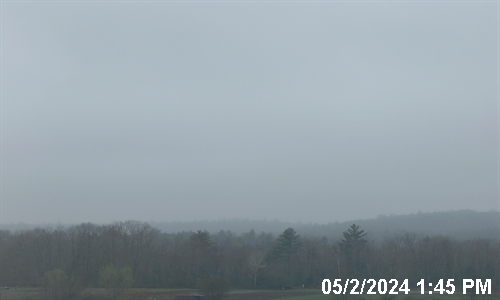
Template:US prominent Template:George Washington Template:U.S. State Highest Points Template:NE 4k ft Template:US state navigation box Template:Mountains of New Hampshire Template:Authority control
- ↑ Script error: No such module "citation/CS1".
- ↑ Script error: No such module "citation/CS1".
- ↑ Script error: No such module "citation/CS1".
- ↑ Script error: No such module "citation/CS1".
- ↑ a b Script error: No such module "citation/CS1".
- ↑ Script error: No such module "citation/CS1".
- ↑ a b c Script error: No such module "citation/CS1".
- ↑ Script error: No such module "citation/CS1".
- ↑ Script error: No such module "citation/CS1".
- ↑ Script error: No such module "Citation/CS1".
- ↑ a b c Condensed Facts About Mount Washington, Atkinson News Co., 1912.
- ↑ Script error: No such module "citation/CS1".
- ↑ a b Doran, Jeffrey J. (2023), Ramble On: How Hiking Became One of the Most Popular Outdoor Activities in the World, Template:ISBN
- ↑ Script error: No such module "citation/CS1".
- ↑ Script error: No such module "citation/CS1".
- ↑ a b c Script error: No such module "citation/CS1".
- ↑ Script error: No such module "citation/CS1".
- ↑ U.S. Trademark Applications Serial Nos. 76690738, 76690735 and 76690740
- ↑ Script error: No such module "citation/CS1".
- ↑ Script error: No such module "citation/CS1".
- ↑ Script error: No such module "citation/CS1".
- ↑ Script error: No such module "citation/CS1".
- ↑ a b c d Cite error: Invalid
<ref>tag; no text was provided for refs namedNWS Gray, ME - ↑ a b Script error: No such module "citation/CS1".
- ↑ a b c Cite error: Invalid
<ref>tag; no text was provided for refs namedMount Washington Normals, Means, and Extremes - ↑ Cite error: Invalid
<ref>tag; no text was provided for refs namedNCDCtxt - ↑ Script error: No such module "citation/CS1".
- ↑ Script error: No such module "citation/CS1".
- ↑ Script error: No such module "citation/CS1".
- ↑ Script error: No such module "citation/CS1".
- ↑ Script error: No such module "Citation/CS1".
- ↑ Script error: No such module "citation/CS1".
- ↑ a b Script error: No such module "Citation/CS1".
- ↑ Script error: No such module "citation/CS1".
- ↑ Script error: No such module "citation/CS1".
- ↑ Script error: No such module "Citation/CS1".
- ↑ Script error: No such module "citation/CS1".
- ↑ Eusden, J.D., Jr., 2005, Bedrock geology of the Presidential Range, New Hampshire, New Hampshire Geological Survey
- ↑ Script error: No such module "citation/CS1".
- ↑ Script error: No such module "citation/CS1".
- ↑ Template:Cite peakbagger
- ↑ Template:Cite magazine
- ↑ Script error: No such module "citation/CS1".
- ↑ Script error: No such module "citation/CS1".
- ↑ Script error: No such module "citation/CS1".
- ↑ Script error: No such module "citation/CS1".
- ↑ Script error: No such module "citation/CS1".
- ↑ Script error: No such module "citation/CS1".
- ↑ a b Script error: No such module "citation/CS1".
- ↑ Script error: No such module "citation/CS1".
- ↑ Script error: No such module "citation/CS1".
- ↑ Script error: No such module "citation/CS1".
- ↑ Script error: No such module "citation/CS1".
- ↑ a b Script error: No such module "citation/CS1".
- ↑ Script error: No such module "citation/CS1".
- ↑ Script error: No such module "citation/CS1".
- ↑ Script error: No such module "citation/CS1".
- ↑ Script error: No such module "citation/CS1".
- ↑ Script error: No such module "citation/CS1".
- ↑ Script error: No such module "citation/CS1".
- ↑ Script error: No such module "citation/CS1".
- ↑ Script error: No such module "citation/CS1".
- ↑ "Radio Engineering Labs, Inc. (WMTW photograph)" (advertisement), Broadcasting, May 15, 1944, page 49.
- ↑ "Mt. Washington blaze disrupts communications" Template:Webarchive by Richard Fabizio, February 16, 2003 (seacoastonline.com)
- ↑ "Ultra-High" Template:Webarchive by Perry Ferrell, Jr., All-Wave Radio, April 1938, page 195. The five reported experimental stations were W1XER, W1XR, W1XW, W1XOY and W1XMX.
- ↑ "Building a Radio Tower atop Mount Washington" Template:Webarchive, by Daniel Dancis, February 12, 2019.
- ↑ "Yankee Starts Operation of FM Atop Mountain", Broadcasting, January 1, 1941, page 18-C.
- ↑ "Boston Games on FM", Broadcasting, April 14, 1941, page 42.
- ↑ "New Calls Named For FM Stations", Broadcasting, October 4, 1943, page 49.
- ↑ "WMNE, KSTL-FM Are Relinquished" Template:Webarchive Broadcasting, October 4, 1948, page 85.
- ↑ Script error: No such module "citation/CS1".
- ↑ "Mount Washington, N.H.: The TV Years, 1954-2002" Template:Webarchive by Scott Fybush, February 6–13, 2002 (fybush.com)
- ↑ Script error: No such module "citation/CS1".
- ↑ Script error: No such module "citation/CS1".
- ↑ Script error: No such module "citation/CS1".
- ↑ Script error: No such module "citation/CS1".
- ↑ Script error: No such module "citation/CS1".
- ↑ Globe Pequot Press, Guiford, Connecticut - Template:ISBN
- ↑ Script error: No such module "citation/CS1".
- ↑ Script error: No such module "citation/CS1".
- ↑ Script error: No such module "citation/CS1".
- ↑ Script error: No such module "citation/CS1".
- ↑ Script error: No such module "citation/CS1".
- ↑ Script error: No such module "citation/CS1".
- Pages with script errors
- Pages with broken file links
- Mount Washington (New Hampshire)
- Highest points of U.S. states
- Places in Native American mythology
- Mountains of Coös County, New Hampshire
- Mountains of New Hampshire
- Mountains on the Appalachian Trail
- New England Four-thousand footers
- One-thousanders of the United States
- Sacred mountains of the United States
- Tourist attractions in Coös County, New Hampshire
- Towers in New Hampshire
- White Mountains (New Hampshire)
- Pages with reference errors