Lilium lancifolium: Difference between revisions
imported>OAbot m Open access bot: pmc updated in citation with #oabot. |
imported>OAbot m Open access bot: doi updated in citation with #oabot. |
||
| Line 60: | Line 60: | ||
== Cat toxicity == | == Cat toxicity == | ||
A case study of the successful treatment of a cat that ingested this particular species was published in 2007.<ref>Berg | A case study of the successful treatment of a cat that ingested this particular species was published in 2007.<ref>{{cite journal |last1=Berg |first1=Rebecca I.M. |last2=Francey |first2=Thierry |last3=Segev |first3=Gilad |title=Resolution of acute kidney injury in a cat after lily (''Lilium lancifolium'') intoxication |journal=Journal of Veterinary Internal Medicine |date=2007 |volume=21 |issue=4 |pages=857–859 |doi=10.1111/j.1939-1676.2007.tb03032.x |pmid=17708410 |url=https://doi.org/10.1111/j.1939-1676.2007.tb03032.x |doi-access=free }}</ref> | ||
== Uses == | == Uses == | ||
| Line 86: | Line 86: | ||
==External links== | ==External links== | ||
{{Commons | {{Commons|position=left}} | ||
{{Taxonbar|from=Q266317}} | {{Taxonbar|from=Q266317}} | ||
Latest revision as of 07:21, 15 July 2025
Template:Short description Template:Speciesbox
Script error: No such module "For".
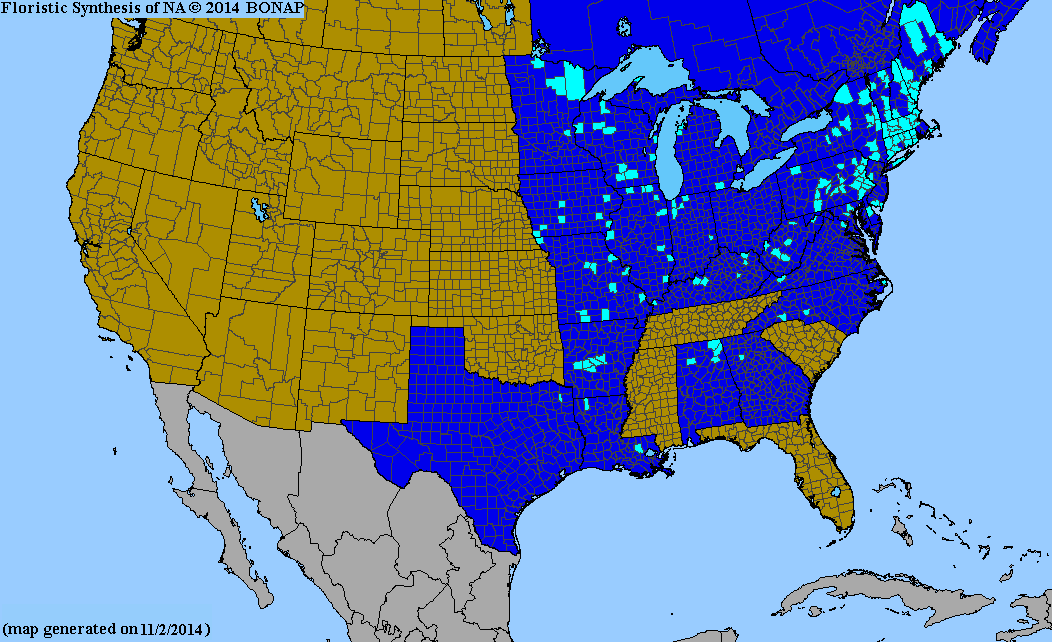
Lilium lancifolium (syn. L. tigrinum) is an Asian species of lily, native to China, Japan, Korea, and the Russian Far East.[1] It is widely planted as an ornamental because of its showy orange-and-black flowers, and sporadically occurs as a garden escapee in North America, particularly the eastern United States including New England,[2] and has made incursions into some southern states such as Georgia.[3]
It has the English name tiger lily, but that name has been applied to other species as well.

Description

Like other true lilies, the flowers are borne on upright stems that are Template:Convert tall and bear lanceolate leaves Template:Convert long and Template:Convert broad. L. lancifolium produces aerial bulblets, known as bulbils, in the leaf axils.[4] These bulbils are uncommon in Lilium species and they produce new plants that are clones of the original plant.[2]
The flowers are odorless.[4] Each lasts a few days and if pollinated produce capsules with many thin seeds.[2]
Extrafloral nectaries on the species were first noted by Zimmerman 1932.[5]
Taxonomy
Varieties
.jpg)
The names of names considered as varieties at some time are: Template:Bulleted list
The Lilium tigrinum flore pleno, the double-flowered variety, had been exported out of Japan by William Bull since 1869.[6]
Names
Scientific names
Botanists for many years considered L. tigrinum (after Ker Gawler[7]) the correct scientific name until it was determined that older name L. lancifolium (after Thunberg[8]) refers to the same species, and the latter became the accepted name.[2]Template:Efn
Vernacular names
Its common name is tiger lily. Although this name is ambiguous across several species, it is correctly applied to this species alone.[2]
Cat toxicity
A case study of the successful treatment of a cat that ingested this particular species was published in 2007.[9]
Uses
It is cultivated and wild foraged in Asia for its edible bulbs.[10] The cultivar 'Splendens' has gained the Royal Horticultural Society's Award of Garden Merit.[11] In Taiwan, both the flower and bulbs are used as food, as are the other related species: L. brownii var. viridulum, L. pumilum and L. candidum.[12]
Notes
References
Bibliography
- Script error: No such module "Citation/CS1".
External links
- ↑ Cite error: Invalid
<ref>tag; no text was provided for refs namedPOWO_537628-1 - ↑ a b c d e Cite error: Invalid
<ref>tag; no text was provided for refs namedflora-of-northamerica-online - ↑ Biota of North America Program 2014 county distribution map
- ↑ a b Cite error: Invalid
<ref>tag; no text was provided for refs namedohwi - ↑ Script error: No such module "Citation/CS1".
- ↑ Script error: No such module "citation/CS1".
- ↑ Ker Gawler, J. G.; Bellenden, John (1809) "Lilium tigrinum, Tiger-spotted Chinese lily". Botanical Magazine 31: plate 1237ff.
- ↑ Thunberg, Carl Peter (1794), Transactions of the Linnean Society of London 2: 333 Template:In lang
- ↑ Script error: No such module "Citation/CS1".
- ↑ Cite error: Invalid
<ref>tag; no text was provided for refs nameddai-nihon-nokai - ↑ Script error: No such module "citation/CS1".
- ↑ Script error: No such module "citation/CS1".